The Best Recipes Light version fish and chips Easy
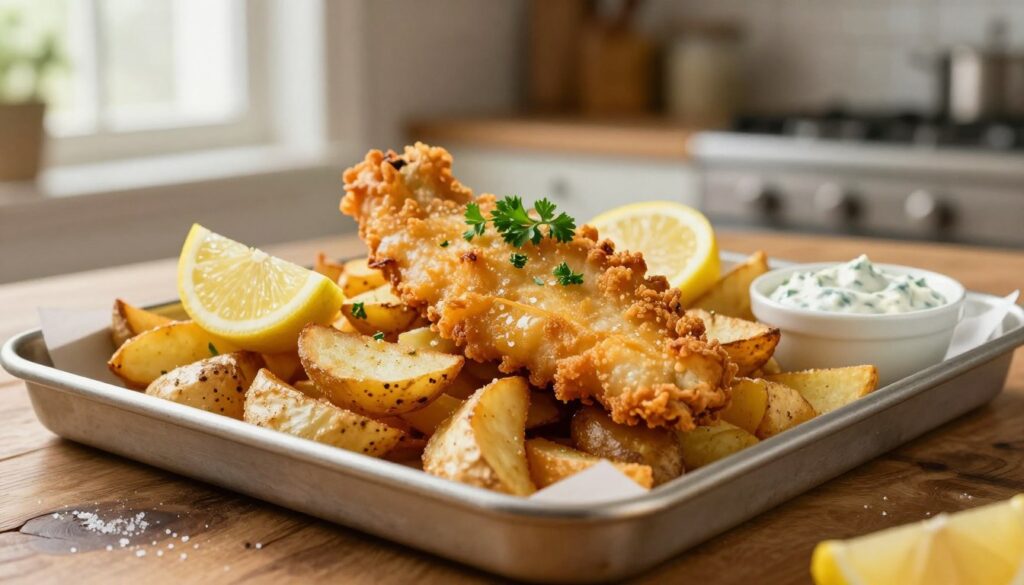
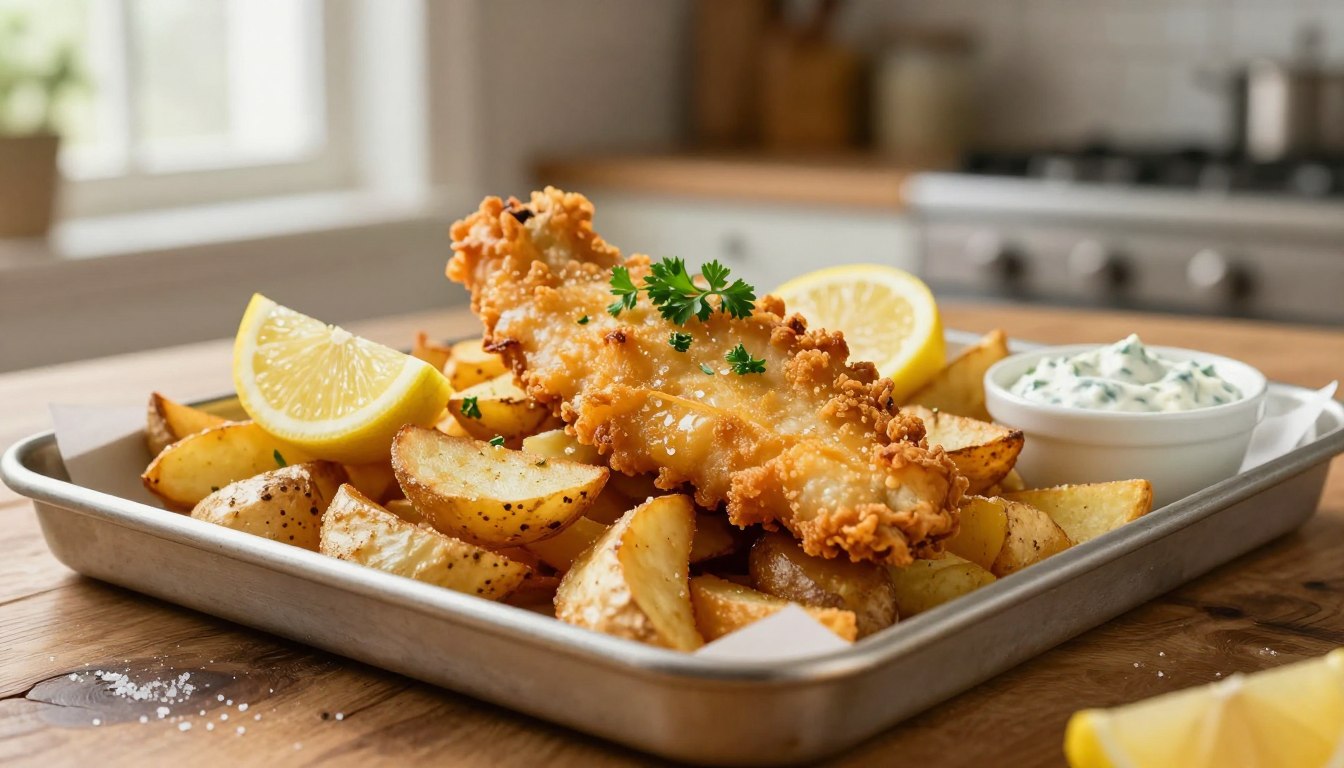
There’s something special about biting into crispy fish and chips on a Friday night. You think of Wisconsin fish fries and British pub classics. The golden coating, the tender fish inside, the perfectly salted potato wedges—it’s comfort food at its best. But, the traditional deep fryer leaves you feeling heavy and guilty.
What if you could enjoy that same delicious experience without the guilt? Your cravings don’t have to disappear. An easy fish and chips recipe can deliver everything you love about this classic dish. The difference is simple: you bake it instead of frying it.
This light fish and chips recipe uses a sheet pan and your oven. Panko breadcrumbs create that signature crispy coating you want. Everything cooks at 400°F in under 30 minutes. You get restaurant-quality results with a fraction of the oil and calories. Cleanup is easy because everything happens on one pan.
This approach transforms a traditionally deep-fried comfort food into a meal you can feel good about. You don’t sacrifice flavor or texture. Instead, you gain time, health benefits, and simplicity. Whether you’re cooking on a busy weeknight or feeding your family something special, this method works. When you explore simple fish recipes, you’ll discover how light versions of classic dishes can become your new favorites.
You’re about to learn what makes this recipe special. From the panko coating secrets to the perfectly seasoned potato wedges, every detail matters. This guide walks you through each step. By the end, you’ll have a reliable recipe you can make again and again.
Key Takeaways
- Baking fish and chips at 400°F creates a crispy coating using minimal oil
- Panko breadcrumbs deliver the crunch you expect without deep frying
- One-pan cooking means faster prep time and easy cleanup
- This light fish and chips recipe cuts calories significantly compared to traditional versions
- White fish varieties like cod and halibut work great for this baking method
- Potato wedges bake alongside your fish for a complete meal
- You can have dinner ready in under 30 minutes
Why This Light Fish and Chips Recipe Is a Game-Changer
You want food that’s tasty but doesn’t make you feel heavy. This light fish and chips recipe is perfect. It uses smart cooking and simple swaps to make a dish that’s both delicious and healthy. You get crispy textures and bold flavors without the extra oil and calories.
Switching from frying to baking changes everything. Your fish is tender from a buttermilk marinade, not beer batter. Potato wedges get crispy in the oven, not in hot oil. This makes a healthy fried fish alternative that’s light and refreshing.
The Healthier Alternative to Traditional Deep-Fried Fish
Traditional fish and chips are heavy with beer batter and deep frying. This lighter version is a smart choice. Oven-baking cuts down on oil and keeps the crispy coating you love. The buttermilk marinade tenderizes the fish beautifully, adding flavor without extra weight.
This approach is special because it’s healthy:
- It has fewer calories than deep-fried versions
- It’s lower in saturated fats for a healthier heart
- It keeps more protein and nutrients from the fish
- It’s easier to digest with lighter cooking
- It brings out natural flavors without too much oil
A flavor-packed fish recipe with simple ingredients doesn’t need deep frying to taste great. The buttermilk and panko coating method creates texture that rivals traditional methods. You get restaurant-quality results at home without the guilt.
One-Pan Convenience for Busy Weeknights
Your weekdays are busy. You need quick, healthy dinner ideas that don’t take hours. This one-pan method is perfect. Fish fillets and potato wedges bake together on one sheet pan, saving you time and effort.
This saves you a lot:
- No oil splatters to clean up
- Only one pan to wash
- Everything cooks at the same temperature for perfect timing
- Dinner is ready in about 25 minutes
- Less time standing over a hot stove
When you’re tired after work, this method is a lifesaver. It makes healthy fish and chips easy without the stress of traditional cooking. Check out flavor-packed fish recipes with simple ingredients for more quick meal ideas. Your busy Tuesday nights just got a whole lot easier, and your dinner table will thank you for it.
Essential Ingredients for Lighter Oven-Baked Fish and Chips
Creating a healthier version of fish and chips starts with the right ingredients. Each part is crucial for that crispy texture without deep frying. Knowing what each ingredient does will help you make your baked fish and chips.
Start with quality fish. Choose mild, firm fish that stays firm when baked. White fish fillets are perfect for a lighter taste. Add buttermilk to tenderize and flavor the fish, keeping it moist.
The coating is key for that crunchy texture. Use white whole wheat flour for structure and egg whites for adhesion without fat. Whole wheat panko breadcrumbs add a better texture than regular ones. Old Bay seasoning gives that classic seafood flavor.
For the chips, russet potatoes are the best. Their starch content makes the crispiest wedges. Olive oil helps them brown nicely in the oven without adding too many calories.
When making your easy oven-baked fish recipes for beginners, get these essential items:
- White fish fillets (cod, haddock, or pollock)
- Buttermilk (1/4 cup)
- Egg whites (2 large)
- White whole wheat flour (1/4 cup)
- Whole wheat panko breadcrumbs (1 cup)
- Old Bay seasoning (5 teaspoons divided)
- Russet potatoes (2 large)
- Olive oil (1 tablespoon)
- Fresh garlic for seasoning
You can also add fresh thyme, cayenne pepper, or chopped almonds to make your dish your own.
Choosing the Best White Fish for Your Healthy Fish and Chips
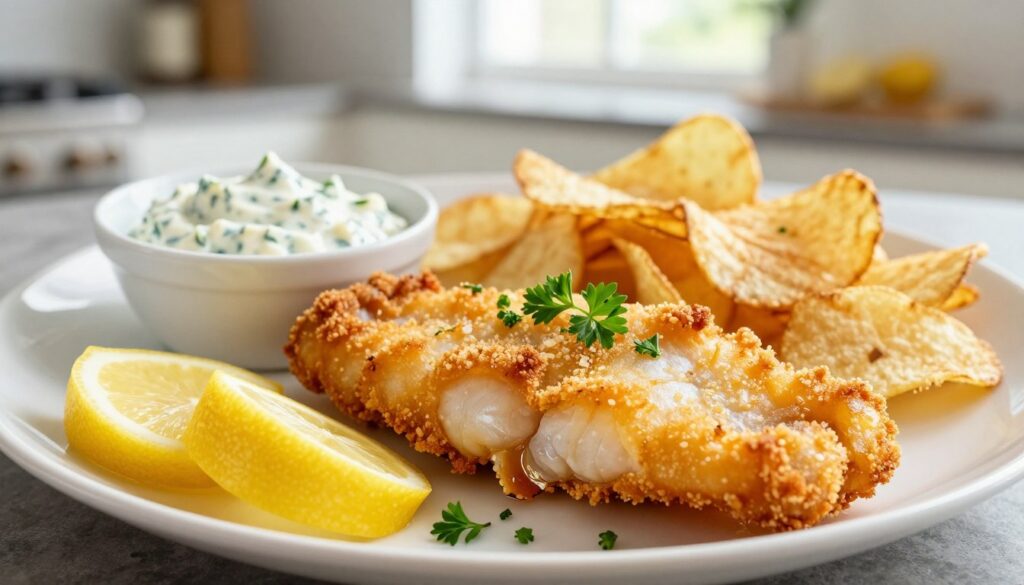
Choosing the right fish is key for a great clean eating fish recipe. The fish you pick affects the dish’s texture, taste, and how it holds up in the oven. You need a firm white fish that won’t fall apart.
When shopping for fish, look for fillets that feel firm. Avoid flaky fish like tilapia or snapper because they break apart easily. Both fresh and frozen fish work well, with frozen being more affordable and just as nutritious.
Cod, Haddock, and Pollock: Budget-Friendly Options
Cod is the top choice for fish and chips. It’s easy to find, affordable, and has a mild flavor with a firm texture. You can find it at most grocery stores.
Haddock has a sweeter taste than cod but is just as firm. It’s also budget-friendly and perfect for your clean eating fish recipe. Pollock is a great, affordable choice that stays firm during cooking.
- Cod: mild flavor, firm texture, most available
- Haddock: slightly sweet taste, similar texture to cod
- Pollock: economical choice, excellent for baking
Premium Choices: Halibut and Salmon Alternatives
Want to splurge? Halibut offers a tender, buttery taste. It’s pricier but gives you restaurant-quality results for your high protein fish meals.
Salmon adds a nutritious twist with omega-3 fatty acids and a rich flavor. It’s more expensive than white fish but offers a unique taste when you’re ready to try something new.
| Fish Type | Price Range | Texture | Flavor Profile |
|---|---|---|---|
| Cod | Budget-friendly | Firm | Mild |
| Haddock | Budget-friendly | Firm | Slightly sweet |
| Pollock | Budget-friendly | Firm | Mild |
| Halibut | Premium | Tender | Buttery |
| Salmon | Premium | Firm | Rich |
Your fish selection sets the foundation for success. Pick what fits your budget and availability, stay away from flaky varieties, and you’re ready to move forward with confidence in creating delicious, nutritious fish and chips at home.
The Secret to Crispy Baked Fish Without Frying
Getting that satisfying crunch is easier than you think. The key to making crispy oven baked fish lies in using the right coating technique and understanding how your oven works. You don’t need a deep fryer to achieve restaurant-quality results at home.
Panko breadcrumbs are your secret weapon. These Japanese-style crumbs are larger and airier than regular breadcrumbs, which means they create way more crunch. When you bite into crispy baked fish made with panko, you get that golden, crunchy texture that makes fish and chips without frying taste just as good as the traditional version.
- Coat your fish in flour first to create a dry surface
- Dip in whisked egg whites for moisture and adhesion
- Press seasoned panko firmly onto all sides of the fish
- Bake at 400°F for maximum crispiness
That pressing motion matters. Don’t just dip your fish. Push the panko coating into the surface so it sticks properly and forms one solid crust. Egg whites work better than whole eggs because they create a lighter coating while still helping everything stick together.
Temperature control is crucial. Preheating your oven to 400°F creates the ideal environment for crisping your fish without drying it out. Space your pieces apart on the baking sheet so hot air circulates evenly around each one.
Want extra crunch? Try mixing finely chopped almonds with your breadcrumbs for a nutty variation. This adds texture and flavor to your crispy oven baked fish. With these techniques, you’ll master the art of making fish and chips without frying that your family will love.
Step-by-Step Guide to Making Easy Light Fish and Chips
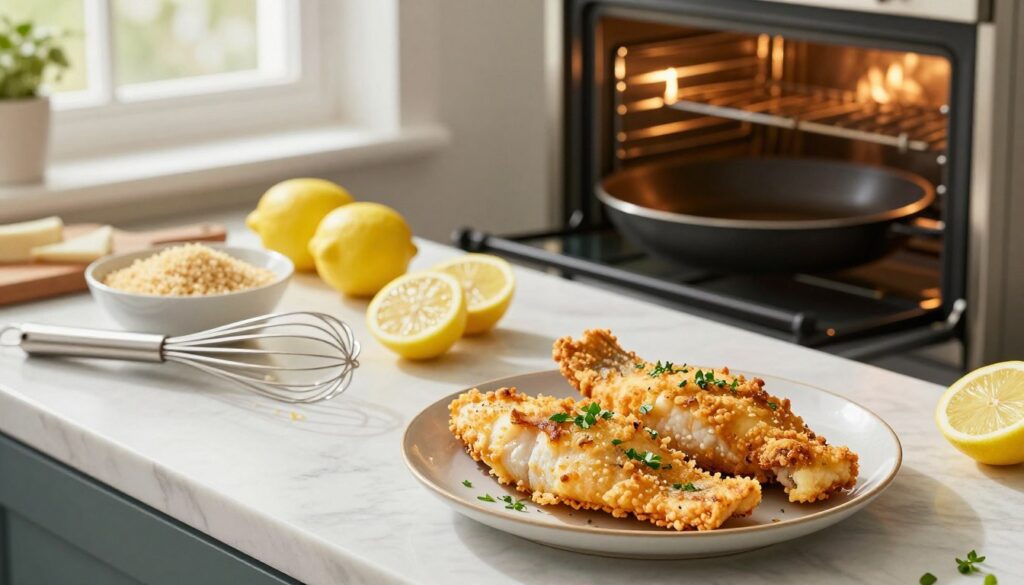
Making homemade fish and chips is easier than you think. This guide will show you how to prepare each part, from marinating the fish to baking it golden. You don’t need deep frying or hard techniques. Just basic tools and fresh ingredients will do.
This whole process takes about an hour. It’s perfect for weeknight dinners when you want something tasty and healthy.
Marinating Your Fish for Maximum Flavor
Begin by mixing a marinade in a ziplock bag. Use buttermilk and 1 teaspoon of Old Bay seasoning. This adds a classic seafood taste without too much salt. Put your fish fillets in and chill for 20 minutes.
This time tenderizes the fish and adds flavor. For meal prep, you can marinate for up to 8 hours. The buttermilk makes the fish tender, not mushy.
Creating the Perfect Panko Coating
Prepare three dishes for dredging. The first is flour, the second is egg whites with ½ teaspoon Old Bay, and the third is panko breadcrumbs with ½ teaspoon Old Bay. This three-step process makes your fish crispy.
Remove the fish from the marinade and coat it in flour first. Then, dip in the egg mixture for stickiness. Press it into the panko breadcrumbs for full coverage. Use one hand for dry ingredients and the other for wet to avoid mess.
Preparing Crispy Oven-Baked Potato Wedges
Cut potatoes into thin wedges. Make them all the same size for even cooking. Toss them in olive oil, salt, pepper, and Old Bay seasoning.
Spread them on a baking sheet and bake at 400°F for 25 minutes. Turn them halfway. After 25 minutes, place your coated fish on a wire rack above the potatoes. Bake for 15 more minutes until the fish is flaky and the coating is golden.
Following these steps makes a delicious meal. For more ideas, check out baked fish and chips recipes. Your homemade version will be healthier than takeout.
| Component | Preparation Time | Temperature | Cook Time |
|---|---|---|---|
| Fish Marinade | 2 minutes | Refrigerated | 20 minutes |
| Potato Wedges | 5 minutes | 400°F | 25 minutes |
| Fish Coating | 5 minutes | Room temperature | Preparation only |
| Combined Baking | Assembled | 400°F | 15 minutes |
“The beauty of this method lies in its simplicity and the remarkable results it produces. You get that satisfying crunch without the guilt of deep frying.”
Looking for quick fish recipes for lunch gives you more ideas. This easy fish recipe works well when you know the science behind it. The buttermilk marinade, the three-step breading, and the dual-rack baking all add up to great flavor and texture. Your kitchen will smell amazing, and your dinner will be both indulgent and healthy.
- Marinate fish 20 minutes minimum for best flavor
- Use consistent potato wedge sizes for even cooking
- Keep one hand dry during breading to avoid buildup
- Place potatoes on lower rack, fish on upper rack
- Check fish for flakiness and golden color before serving
Baking Tips for Golden, Crispy Results Every Time
Getting perfect results from your guilt-free fish and chips starts with understanding the right oven techniques. Success depends on a few key steps. These steps make the difference between soggy and spectacular. Let’s walk through the professional methods that will transform your baking game.
Start by preheating your oven to 400°F. This temperature creates immediate searing that locks moisture inside while crisping the exterior. A properly heated oven is non-negotiable for achieving that restaurant-quality texture. Line your baking sheet with foil and spray it generously with nonstick spray. This simple step prevents sticking, makes cleanup effortless, and promotes even browning across your entire batch.
Arrange your potato wedges in a single layer with space between each piece. Crowding your pan causes steaming instead of roasting, which results in soggy chips instead of crispy ones. Turn your potatoes halfway through the initial baking time to ensure even browning on all sides.
When your potatoes are partially baked, push them toward the pan’s edges before adding your coated fish fillets. This creates dedicated space and prevents your fish from sitting in any potato moisture. For your low calorie fish and chips, follow these doneness guidelines:
| Component | Baking Time | Doneness Indicator | Temperature |
|---|---|---|---|
| Fish Fillets | 4–6 minutes per 1/2-inch thickness | Flakes easily with a fork | 145°F internal temperature |
| Potato Wedges | 25–30 minutes total | Golden brown with crispy edges | Fork-tender inside |
Don’t overcrowd your pan. Space matters because it allows hot air to circulate properly around each piece. Your guilt-free fish and chips will turn out golden and delicious when you follow these professional spacing guidelines. When checking your fish for doneness, use a fork to gently separate the flesh. It should flake easily and look opaque rather than translucent.
These baking techniques come from professional kitchens that understand how proper heat flow creates crispy results. For more detailed baking strategies and alternative methods, explore expert fish cooking techniques that enhance your confidence in the kitchen.
- Preheat oven to 400°F for optimal searing
- Use foil and nonstick spray for even browning
- Leave space between potato pieces for circulation
- Turn potatoes halfway through cooking
- Push potatoes to edges before adding fish
- Check fish doneness at 145°F internal temperature
Mastering these simple but essential steps puts you on the path to creating low calorie fish and chips that taste incredible every single time. Your family will notice the difference quality technique makes.
Delicious Serving Suggestions and Dipping Sauces
Your lighter fish fry needs the perfect sides to make it complete. The right dipping sauces and toppings can turn your meal into something unforgettable. You can choose from classic flavors or lighter options to keep your dish healthy and tasty.
Serving your baked fish and chips the right way can elevate your dining experience. Adding fresh garnishes and quality sauces can make simple ingredients shine. This turns your meal into a restaurant-quality dish that everyone will love.
Classic Tartar Sauce and Malt Vinegar
Tartar sauce is the classic choice for fish and chips. It’s a creamy, tangy mix of pickles and mayo that pairs perfectly with crispy fish. You can buy it at the store or make your own herby tartar sauce with fresh dill, parsley, and cornichons for a fresher taste.
Malt vinegar adds a unique British and Irish pub flavor to your meal. It’s sharp and complex, cutting through the richness of your fish and potatoes. You can drizzle it over your food or serve it on the side for dipping.
Don’t forget to include fresh lemon wedges on your plate. A squeeze of citrus brightens every bite and adds a natural acidity that enhances both the fish and potatoes.
Healthier Yogurt-Based Sauce Options
Greek yogurt is the base for delicious, lighter sauces that fit your wellness goals. These creamy sauces pack a lot of flavor without the extra calories.
- Dijon Yogurt Sauce – Whisk Greek yogurt with tangy Dijon mustard for a protein-rich dip that adds sophistication to your meal
- Basil Yogurt Sauce – Blend fresh basil into Greek yogurt for an herby twist that feels fresh and vibrant
- Herb-Infused Options – Mix in fresh thyme, rosemary, or parsley for personalized flavor combinations
Finish your dish with sea salt and cracked pepper for a professional touch. These simple garnishes enhance flavor and keep your lighter fish fry light.
Nutritional Benefits of This Low-Calorie Fish and Chips Recipe
Choosing this light fish and chips recipe is a smart move. Each serving has 291 calories and 32 grams of protein. This meal is filling and supports your weight loss goals without adding extra calories.
The oven-baking method makes this dish heart-healthy. You get only 5 grams of fat per serving, with just 1 gram from saturated fat. This is much less than the deep-fried versions, which have over 50 grams of fat and 1,000 calories per plate.
Whole wheat panko and flour add 4 grams of fiber per serving. This keeps you full longer and aids in digestion. The white fish, like cod, is lean and high in protein, making it great for weight management.
| Nutrient | Per Serving | Benefit |
|---|---|---|
| Calories | 291 | Supports weight loss goals |
| Protein | 32g | Builds and maintains muscle |
| Total Fat | 5g | Heart-healthy choice |
| Saturated Fat | 1g | Reduces cholesterol risk |
| Carbohydrates | 30g | Sustained energy |
| Fiber | 4g | Improves digestion |
| Cholesterol | 50mg | Low levels for heart health |
Your low fat fish and chips recipe includes potatoes with vitamin C and potassium. The olive oil adds heart-healthy monounsaturated fats. You can make it gluten-free or adjust portions to reduce calories. This makes it easy to fit into any diet plan.
Storage, Make-Ahead, and Reheating Instructions
Planning ahead makes enjoying your light fish and chips easier than you might think. You can prepare several components in advance to save time on busy nights. Your marinated fish stays fresh and flavorful when you plan strategically. The key is understanding which parts you can prep early and which taste best prepared fresh.
Keeping Your Fish and Chips Fresh
Your light fish and chips tastes absolutely best when enjoyed the same day you prepare it. The crispy coating stays perfect, and the flavors shine brightest. If you have leftovers, store them in an airtight container in your refrigerator for up to one day.
When prepping ahead, you can marinate your fish up to 8 hours in advance. This gives the flavors time to develop beautifully. Keep your marinated fish in a sealed container on the lowest shelf of your refrigerator. For gluten free fish and chips, prepare your gluten-free panko coating just before cooking to maintain crispiness.
Store your fish and potato wedges separately after cooking. This prevents moisture from making the coating soggy. Use shallow containers rather than stacking everything together. Keep the tartar sauce in its own container so it doesn’t transfer moisture to your fish.
Best Methods for Reheating Without Losing Crispiness
Never microwave your leftover fish and chips. Microwaves create steam that destroys the crispy texture you worked hard to achieve. Instead, bring your fish to room temperature for 15-20 minutes before reheating.
Place your fish uncovered on a baking sheet and warm it in a 350°F oven for a few minutes until heated through. This gentle method preserves crispiness without drying out your fish. Your potato wedges reheat beautifully using the same approach.
An air fryer fish and chips setup works wonderfully for reheating too. Set your air fryer to 350°F and reheat for 3-5 minutes. This method can actually restore crispiness better than the oven. Air fryers work exceptionally well when you’ve made gluten free fish and chips since the coating needs gentle handling.
| Reheating Method | Temperature | Time Required | Crispiness Result |
|---|---|---|---|
| Conventional Oven | 350°F | 3-5 minutes | Excellent |
| Air Fryer | 350°F | 3-5 minutes | Superior |
| Microwave | N/A | 1-2 minutes | Poor (soggy) |
| Toaster Oven | 375°F | 4-6 minutes | Good |
Watch your fish carefully while reheating. You want it warm throughout without becoming dry or overcooked. A few minutes typically gets everything to the perfect serving temperature.
- Let fish rest at room temperature before reheating for even warming
- Use uncovered baking sheets to allow air circulation
- Avoid stacking fish pieces on top of each other
- Check doneness at the minimum time before adding extra minutes
- Keep potato wedges on a separate section of your baking sheet
Your make-ahead preparation options give you flexibility without sacrificing quality. Whether you prep your marinade the night before or reheat leftovers the next day, these methods keep your dish tasting fresh and delicious.
Conclusion
You now have all you need to make a light fish and chips recipe that rivals any restaurant version. This simple method combines healthy cooking with flavors you love. The one-pan design makes cleanup easy and ensures crispy, golden results every time.
Your light fish and chips recipe is perfect for busy family dinners. It’s high in protein and low in fat, without losing taste or texture. You can have dinner ready in under 30 minutes. It’s great for weeknights or impressing guests on the weekend.
This light fish and chips recipe lets you enjoy comfort food without sacrificing health. You’ve learned to choose the right white fish, make a crispy coating, and bake potato wedges to perfection. Feel free to try different fish, seasonings, or dipping sauces to make it your own.
Start making your light fish and chips recipe this week. It’s a healthier version that deserves a regular spot in your meal planning. You have the skills and knowledge to make something delicious and nutritious in your kitchen. Your best light fish and chips experience is just one dinner away.