The Best Traditional Beef Wellington: The Easy Recipes
Ever thought of cooking something truly special? Maybe you want to impress your family or guests with a dish that feels fancy. But, you might think Beef Wellington is too hard.
It’s not as tough as you think. With the right help, you can make this fancy dish with ease. The secret is in understanding each part of the recipe.
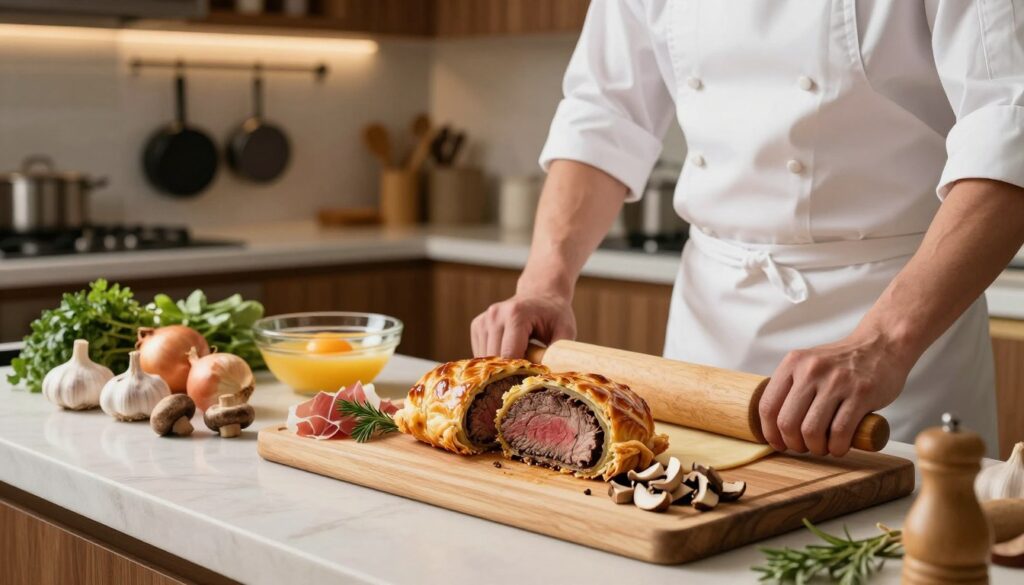
Beef Wellington is all about combining different tastes and textures. You start with a tender beef tenderloin, like the ones from Omaha Steaks. Then, you add mushroom duxelles for a rich flavor and prosciutto for a salty kick. The puff pastry wraps it all up in a golden, flaky package.
This guide will show you how to make Beef Wellington step by step. It’s not about complicated tricks. It’s about knowing the basics and following the process. You’ll learn how to avoid common mistakes that can ruin the dish.
Ready to make your next special occasion unforgettable? You have what it takes to make it happen.
Key Takeaways
- Beef Wellington is achievable for home cooks with proper guidance and patience
- Quality beef tenderloin from trusted sources sets the foundation for success
- Layering ingredients correctly prevents soggy pastry and ensures even cooking
- Temperature control determines whether your meat reaches perfect medium-rare
- Simple techniques like creating a moisture barrier separate restaurant results from ordinary ones
- An easy beef wellington recipe focuses on fundamentals rather than complex skills
- The traditional beef wellington recipe combines tender beef, mushrooms, prosciutto, and pastry into one impressive dish
What Makes Beef Wellington a Timeless Classic
Beef Wellington is a top choice for gourmet dinners. It turns a simple beef tenderloin into something amazing. This classic British recipe is a masterpiece that has wowed people for years.
Beef Wellington is special because it uses a tender cut of beef. But, this cut is mild in flavor. The dish fixes this by adding rich, tasty layers around the beef.
- Mushroom duxelles adds deep, earthy flavors
- Prosciutto brings salty, savory tastes
- Puff pastry adds a buttery, golden texture
- Beef tenderloin provides tender, lean meat
These layers together make the dish a feast for the taste buds. Beef Wellington is perfect for special occasions. It’s a dish that shows off your cooking skills.
Your guests will see why Beef Wellington is so revered. It’s not just a beef dish. It’s a blend of French and British cooking that makes a simple ingredient unforgettable.
Understanding the Essential Ingredients for Success
Choosing the right beef tenderloin is key for a great Wellington. The cut you pick affects how well the meat cooks and how it looks. The tenderloin muscle is the same used for filet mignon steaks.
When you buy a whole tenderloin, it’s thicker in the middle and thinner at the ends. This shape makes cooking tricky. For perfect results, you need your meat to be the same thickness all over.
The center-cut section, called the chateaubriand, is perfect. It’s about 3 pounds and has the same diameter all the way through. Think of it as a filet mignon roast. It’s the best choice for a beef tenderloin wrapped in pastry.
Selecting the Perfect Beef Tenderloin Cut
Look for meat that’s bright red and has good marbling when shopping. The chateaubriand should feel firm and have little moisture. You can find quality beef at specialty butchers or places like Omaha Steaks.
Ask your butcher to remove excess fat and silver skin. This makes cooking easier later.
Some people remove the side muscle pieces for a single piece. Others tie them together with twine for a uniform shape. The twine helps keep everything in place while cooking.
Why Chateaubriand is Your Best Choice
Chateaubriand is great because it’s the same shape all the way through. This ensures even cooking from edge to center. When you wrap it in pastry, evenness is crucial.
A cylindrical shape lets the pastry brown evenly on all sides. Your meat will be perfectly cooked inside.
| Beef Cut | Weight | Shape | Even Cooking | Best Use |
|---|---|---|---|---|
| Whole Tenderloin | 4-6 lbs | Tapered ends | Difficult | Multiple steaks |
| Chateaubriand | 3 lbs | Uniform cylinder | Excellent | Beef Wellington |
| Filet Mignon | 6-8 oz | Uniform round | Excellent | Individual steaks |
Your chateaubriand should be as tight and uniform as possible before wrapping. Just like quality preparation matters in cooking, the shape of your beef is key. This sets you up for success in every step.
The Art of Creating Perfect Mushroom Duxelles
Mushroom duxelles is a French technique that turns simple ingredients into something special. It’s the base of a great beef Wellington. Making mushroom duxelles beef wellington that’s crispy and flavorful takes time and patience. But it’s all worth it.
Mushroom duxelles mixes chopped mushrooms, shallots, and herbs with butter until dry. It’s key to remove moisture. Too much liquid can make the pastry soggy. That’s why you need a thick layer.
Selecting Your Mushrooms for Maximum Flavor
The type of mushroom you choose affects the taste. White button mushrooms are mild. Cremini mushrooms are earthier. Mixing both gives a balanced flavor.
Some people use shiitake or portobello mushrooms for more umami. It’s all about what you like.
| Mushroom Type | Flavor Profile | Best Use |
|---|---|---|
| White Button Mushrooms | Mild and delicate | Balanced blends |
| Cremini Mushrooms | Earthy and robust | Stronger flavor preferences |
| Shiitake Mushrooms | Rich umami depth | Premium Wellington |
| Portobello Mushrooms | Bold and meaty | Adventurous cooks |
The Essential Preparation and Cooking Process
Before cooking, cut mushrooms to the same size. This ensures even cooking and a smooth paste. Uneven pieces can ruin the texture.
Cooking mushroom duxelles takes about 45 minutes on medium heat. This long process helps moisture evaporate. Stir often to achieve the right consistency. Some add sherry, stock, or cream for extra flavor.
“The patience you invest in your duxelles directly translates to the crispness of your pastry crust.”
- Finely chop mushrooms and shallots to uniform size
- Sauté in butter over medium heat
- Stir occasionally for 45+ minutes
- Watch for deep brown color and paste-like texture
- Cool completely before assembling your Wellington
Success with mushroom duxelles beef wellington depends on a dry layer. This layer protects the beef and bakes the pastry perfectly. Take your time with this step.
Working with Puff Pastry Like a Professional
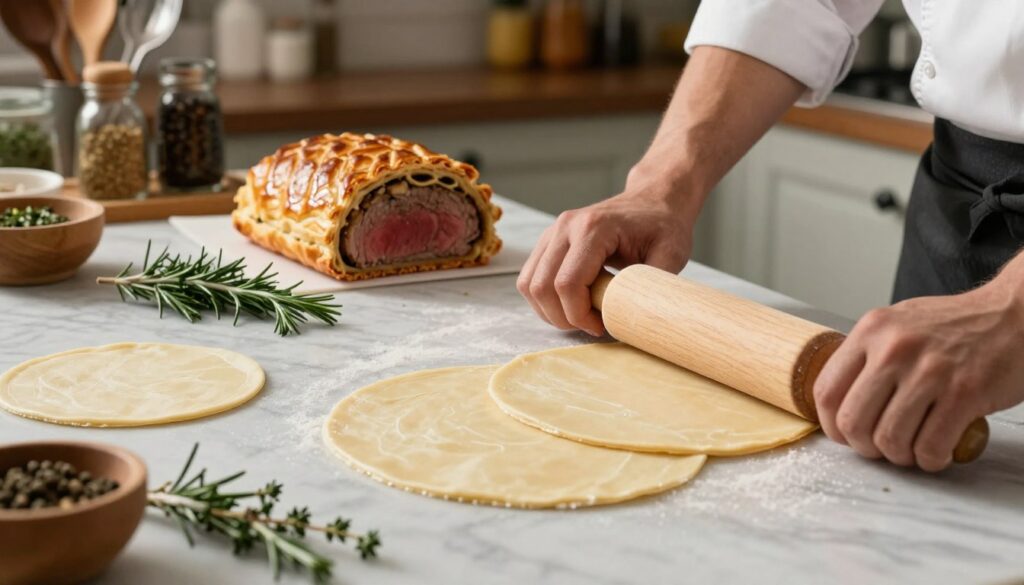
Puff pastry is the star of beef wellington. It turns your dish into something amazing. Puff pastry has layers of dough and butter that puff up when heated, creating a flaky crust.
Working with puff pastry can seem daunting. But, with a few tips, you can master it. Whether you buy it or make it, you’ll get great results.
Choosing Between Store-Bought and Homemade Options
Making puff pastry from scratch is a big job. It needs patience and skill. Most people prefer store-bought for beef wellington.
You can find good puff pastry in the freezer section. Here are some top brands:
- Pepperidge Farm – made with vegetable-based fats, produces excellent results at an affordable price
- Dufour – crafted with real butter for superior flavor
- Trader Joe’s – offers an all-butter puff pastry option
Don’t confuse puff pastry with phyllo dough. They are different. Puff pastry sheets are what you need for flaky texture.
Keeping Your Pastry Cold for Best Results
Temperature control is key with puff pastry. Always keep it cold.
Here’s how to get the best results:
- Defrost puff pastry overnight in your refrigerator
- Let it sit at room temperature for about 4 hours until it becomes pliable
- Work on a silicone mat dusted lightly with flour
- Roll out your dough to the right size, then return it to the refrigerator immediately
- Keep all your ingredients cold until assembly time
If puff pastry warms up too quickly, the butter melts. This messes up the layers. Warm pastry leads to dense, disappointing results.
If your pastry feels too stiff, let it rest a bit. It should be pliable before rolling. Use just enough flour to prevent sticking. Too much flour makes it dry.
By following these temperature tips, your beef wellington will turn out perfectly. It will have a golden-brown, crispy exterior that’s unforgettable.
Traditional Beef Wellington Recipe Step-by-Step
Making beef wellington is not hard. It just needs patience and focus. This guide will help you make a homemade beef wellington that tastes like it’s from a restaurant. It takes time, so plan to spend a whole day or spread it over two days.
First, get all your ingredients and tools ready. This saves you from rushing when you’re putting everything together. A good beef wellington recipe is easy to follow if you’re organized. Read these steps carefully before you start cooking.
Your Complete Beef Wellington Timeline
Knowing the timeline helps you manage your cooking day better. You can do different parts at different times, making it easier to handle the work.
| Phase | Task | Time Required | Can Be Done Ahead |
|---|---|---|---|
| Phase 1 | Sear and chill beef tenderloin | 45 minutes | Yes, up to 8 hours |
| Phase 2 | Prepare mushroom duxelles | 30 minutes | Yes, up to 24 hours |
| Phase 3 | Assemble all components | 40 minutes | Partially, up to 4 hours |
| Phase 4 | Wrap in puff pastry | 25 minutes | Yes, up to 12 hours |
| Phase 5 | Bake and rest | 50 minutes | Not applicable |
Step-by-Step Instructions for Your Beef Wellington
Follow these steps to make a beef wellington recipe that’s easy for anyone to follow:
- Prepare your beef tenderloin – Pat the meat dry with paper towels. This helps create a proper crust when searing.
- Season generously – Use salt and fresh cracked pepper on all sides of the meat.
- Sear in a hot pan – Use a heavy skillet with oil at high heat. Sear all sides for 2-3 minutes per side until golden brown.
- Let beef cool – Place on a cutting board and allow it to reach room temperature.
- Spread duxelles – Apply your mushroom mixture evenly across the top and sides of the meat.
- Wrap with prosciutto – Layer thin slices overlapping slightly to cover the duxelles completely.
- Wrap with puff pastry – Center the beef on thawed pastry. Fold edges up and seal with egg wash.
- Chill before baking – Refrigerate for at least 15 minutes. This keeps the pastry from shrinking.
- Brush with egg wash – Apply beaten egg to create a golden color during baking.
- Bake at 425°F – Cook for 25-35 minutes until pastry is deep golden brown.
- Rest your wellington – Let it sit for 10 minutes before slicing. This ensures a perfect medium-rare center.
“The secret to perfect beef wellington lies not in complexity but in respecting each component and giving yourself adequate time to complete every step without rushing.”
Why This Approach Works
This method shows why each step is important. Searing the beef creates a flavorful crust that locks in juices. The duxelles adds moisture control while contributing rich mushroom flavor. Prosciutto creates a barrier between the beef and pastry, preventing sogginess. Puff pastry provides that elegant golden exterior.
Creating a homemade beef wellington means respecting the process. Don’t skip chilling steps. Don’t rush the assembly. Your effort creates a dish worthy of celebration.
The Critical Role of Prosciutto in Your Wellington
Prosciutto wrapped beef might seem odd, but it’s crucial. It helps prevent a soggy pastry crust, a big challenge for home cooks. Knowing its role changes how you make the dish.
Prosciutto comes in two types, and picking the right one is key. You need to understand the difference to make your beef Wellington perfect.
Understanding Prosciutto Types and Selection
Prosciutto crudo and prosciutto cotto are the two main types. Prosciutto crudo is a raw cured ham, cured and dried for safety. Prosciutto cotto is cooked and won’t work for your Wellington.
For your recipe, use prosciutto crudo. You can get it sliced thin from a butcher or buy it pre-packaged. Choose thin, even slices for a smooth layer.
| Prosciutto Type | Preparation Method | Moisture Content | Best Use for Wellington |
|---|---|---|---|
| Prosciutto Crudo | Salted and air-dried | Low | Yes – Ideal choice |
| Prosciutto Cotto | Cooked ham | High | No – Creates moisture issues |
Creating a Moisture Barrier for Crispy Pastry
Prosciutto wrapped beef is magical for Wellington. It protects against moisture from the beef and mushroom duxelles. Without it, your pastry would be soggy.
The prosciutto layer keeps the pastry dry. Its low moisture content prevents it from absorbing liquids. This keeps your pastry crispy and golden.
To make a good barrier, layer your prosciutto correctly:
- Overlap each slice by about one-third of its width
- Arrange slices to form a complete, seamless blanket
- Fill any gaps or holes where moisture could escape
- Ensure no part of the duxelles touches the pastry directly
Working with prosciutto needs patience and care. Chill the package before unwrapping. Cold prosciutto stays intact, while warm prosciutto tears. Lay out each slice carefully. If a tear occurs, press the meat back into place.
The prosciutto layer isn’t just flavor—it’s an engineering solution that keeps your wellington’s pastry crispy and delicious.
Prosciutto wrapped beef is key to success. By respecting its role and handling it carefully, you ensure a perfect Wellington. Every bite will have tender beef, rich duxelles, and crispy pastry.
Searing and Seasoning Your Beef Tenderloin Properly
The authentic beef wellington technique starts with a key step: searing your beef tenderloin before wrapping it in pastry. This isn’t about cooking the meat all the way through. Instead, you’re making a flavorful brown crust that adds depth and looks great. The searing process takes just a few minutes, yet it makes a big difference in your final dish.
Before you heat up your pan, season your beef with salt and pepper. This is your only chance to season the meat itself, since the puff pastry will cover it during cooking. Don’t be shy with the seasoning—you want bold flavor throughout your wellington.
- Heat your pan until it’s very hot with high smoke-point oil
- Sear all sides of the beef for about 1-2 minutes per side
- Use tongs to hold the meat and sear the ends as well
- Stop when the exterior is deeply browned but the center remains completely raw
If your tenderloin has irregular sections or side muscles, tie them together with butcher twine before searing. This creates a uniform cylindrical shape, which is essential for even cooking throughout your wellington. When thickness varies, some sections cook faster than others, leaving you with uneven doneness.
After searing, let your beef cool completely before assembly. Wrapping warm meat with cold puff pastry causes the butter in the dough to melt, ruining your crust. According to expert guidance on the authentic beef wellington, this cooling step is non-negotiable for success. Place your seared tenderloin on a cutting board and allow it to reach room temperature before moving forward with your assembly.
Assembly Techniques That Prevent Soggy Pastry
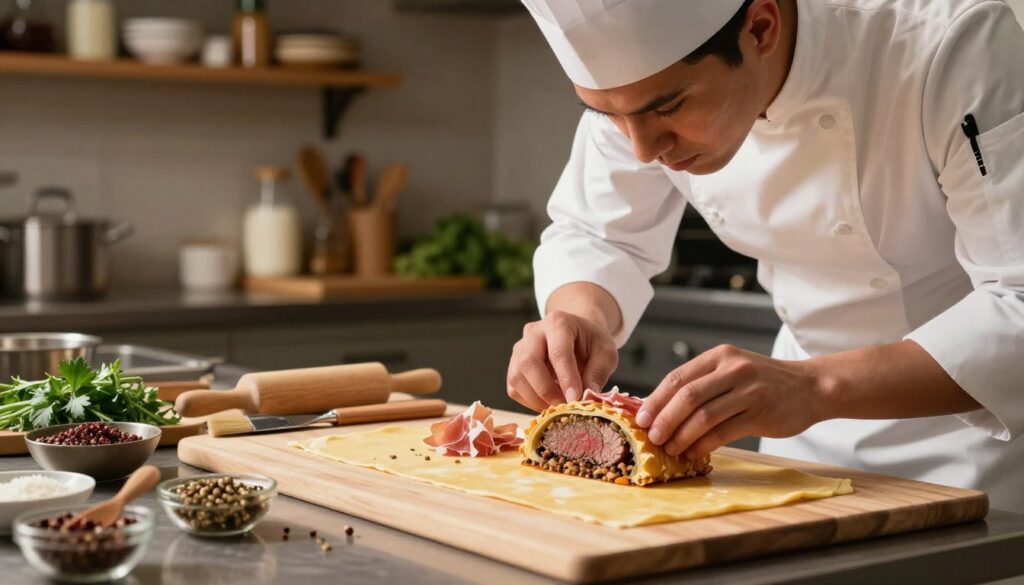
The key to a great beef wellington is how you assemble it. Make sure to remove moisture from your ingredients before wrapping. This step is crucial to avoid a soggy mess. Chefs like Gordon Ramsay always stress the importance of dry ingredients.
Don’t forget to dry your duxelles after cooking. Spread it on a towel and let it cool completely. This step removes excess moisture that could ruin your pastry. Keep all ingredients cold to prevent puff pastry from becoming dense.
The order of your layers is very important. Each part has a role in keeping your pastry dry:
- Prosciutto acts as a barrier between the meat and duxelles
- Cooled duxelles adds flavor without adding moisture
- Proper layering prevents ingredients from shifting during wrapping
Layering Your Ingredients in the Correct Order
Begin by laying out plastic wrap. Place prosciutto slices in rows to cover the area. This barrier is key to keeping moisture out.
Spread cooled duxelles over the prosciutto. Place your cooled beef along one edge, ready for rolling. Use the plastic wrap to roll everything tightly and evenly.
Achieving a Uniform Shape for Even Cooking
A cylindrical shape ensures even cooking. Roll your beef tightly, keeping pressure steady. This helps maintain a consistent diameter.
Chill your wrapped wellington for at least thirty minutes before baking. Cold ingredients make the pastry wrapping easier. This helps your wellington cook evenly and get that crispy pastry texture.
| Assembly Step | Purpose | Temperature Requirement |
|---|---|---|
| Duxelles Preparation | Remove excess moisture | Cooled Completely |
| Prosciutto Layering | Create moisture barrier | Cold |
| Beef Positioning | Center protein component | Completely Cooled |
| Plastic Wrap Rolling | Compress layers uniformly | Work Quickly |
| Final Refrigeration | Firm up assembly | 30 Minutes to 24 Hours |
This method helps avoid common mistakes in beef wellington. Paying attention to moisture and temperature ensures a dish that rivals Gordon Ramsay’s. Stay organized, keep everything cold, and your pastry will be perfectly crispy and golden.
Mastering Temperature Control and Cooking Times
Getting the beef wellington cooking time right is key to a great dish. Temperature control is your secret to success. You need precision, the right tools, and to know how heat works in your oven.
Start by preheating your oven to 425°F. This is crucial. Don’t skip this step. Your oven must be fully heated before your wellington goes in. Place your oven rack in the lower third for even browning and puffing.
A quality leave-in probe thermometer is a game-changer. Unlike instant-read thermometers, it lets you track temperature without losing heat. The Thermoworks RFX has app-based monitoring for easy tracking. For quick checks, use a Thermapen instant-read thermometer.
Proper probe placement is important. Insert the thermometer from the end of your wellington into the beef’s center. This gives you an accurate reading.
Preparing Your Baking Pan and Applying Egg Wash
Prepare your baking sheet with cooking spray or vegetable oil. This prevents sticking and helps with even browning. Apply egg wash to your pastry before baking. This makes the exterior golden brown.
| Temperature Stage | Beef Internal Temperature | Cooking Result | Pastry Appearance |
|---|---|---|---|
| Rare | 120-125°F | Red center | Golden brown |
| Medium-Rare | 130-135°F | Warm pink center | Deep golden brown |
| Medium | 140-145°F | Light pink throughout | Dark golden brown |
| Medium-Well | 150-155°F | Mostly gray | Very dark brown |
Understanding beef wellington cooking time is crucial. It depends on your oven’s temperature and the meat’s size. Most wellingtons bake for 25-40 minutes at 425°F. Watch for pastry browning while monitoring internal temperature. This ensures perfect results every time.
Decorating Your Beef Wellington for Stunning Presentation
Your beef wellington needs a beautiful finish to match its tasty inside. The presentation turns your home dining into a memorable event. Whether you choose simplicity or add decorative touches, the right techniques make a big difference.
Decorating your wellington can be simple or creative. Some just wrap the meat in pastry. Others use pastry scraps for shapes like leaves or flowers. You can also score the pastry for basic patterns. But, the best look comes from mastering lattice techniques.
Before decorating, apply an egg wash. This step gives your pastry that golden color seen in fancy restaurants. Mix a beaten egg with a bit of water, then brush it over the pastry before baking. This trick makes your wellington look like it was made by a pro.
Creating Beautiful Lattice Patterns with Pastry
Lattice patterns make your beef wellington look like it’s from a restaurant. You’ll need a lattice cutter, available on Amazon. These tools make creating diamond patterns easy and impressive.
Start with cold puff pastry, rolled to the size you want. Cold pastry cuts better than warm, which tears. Roll the lattice cutter lengthwise, applying firm pressure. Make sure to cut all the way through the dough.
- Keep your puff pastry cold throughout the process
- Use steady, even pressure when rolling the cutter
- Work lengthwise across your pastry sheet
- Check that cuts go completely through the dough
If the lattice cutter doesn’t cut all the way, use a paring knife to finish. Gently pull apart the lattice to show the spaces between strips. Wrap it in plastic and chill until ready to use.
If your lattice didn’t separate, it’s okay. Place it on your base pastry and use a knife to cut through the top. When baked, the pastry will puff and separate, showing off the diamond openings your guests will love.
Understanding Carryover Cooking to Achieve Perfect Medium-Rare
Many home cooks struggle with beef Wellington because they don’t know when to take it out of the oven. The key is understanding carryover cooking. This is when the meat keeps getting hotter even after it’s removed from the heat. It’s what makes a Wellington go from good to great.
When you cook beef, the outside gets hot fast, but the inside stays cooler. After you take it out of the oven, these areas start to even out. The heat from the outside moves in, making the inside hotter. The size and cooking temperature of your meat affect how much it will heat up while resting.
A 3-pound tenderloin cooked at high heat will see a big rise in temperature. Pulling it at 105°F results in a 135°F internal temperature after 30 minutes. Waiting until it hits 110°F or 115°F will make it even hotter, turning it into medium instead of medium-rare.
For the best results, aim to pull your Wellington at 95–100°F. Set your thermometer to 100°F to ensure it’s perfect.
The Critical Thermometer Technique
Keep your meat thermometer in the meat during the whole resting time. Taking it out lets juices leak out. It’s like removing a cork from a bottle. This way, you can see the temperature rise and know when it’s ready to slice.
- Pull temperature for medium-rare: 105°F maximum
- Expected carryover rise: about 25–30°F
- Final resting temperature: 130–135°F
- Rest time before slicing: minimum 10 minutes
Knowing this makes you more confident in the kitchen. What seems like pulling it too early is actually the key to perfect results every time.
Conclusion
You now know how to make a stunning Beef Wellington for any special event. The secret to success is understanding carryover cooking. When you take your Wellington out of the oven at 105°F, it will rise another 30 degrees as it rests. This knowledge ensures your beef is tender and medium-rare.
The techniques from this guide work together seamlessly. Keep your ingredients cold to get a flaky pastry. Remove all moisture from the mushroom filling to avoid a soggy crust. Use prosciutto ham to keep the beef and pastry dry. Each step is crucial for a perfect Wellington.
Take your time making this dish. Don’t rush and read the Beef Wellington recipe before starting. Have all your ingredients and tools ready. Many home cooks have achieved restaurant-quality results with these tips.
Your family and guests will be impressed by your Beef Wellington. It’s perfect for Christmas, New Year’s Eve, anniversaries, or any celebration. You have the skills and knowledge to make it. Now, it’s time to create something truly special.