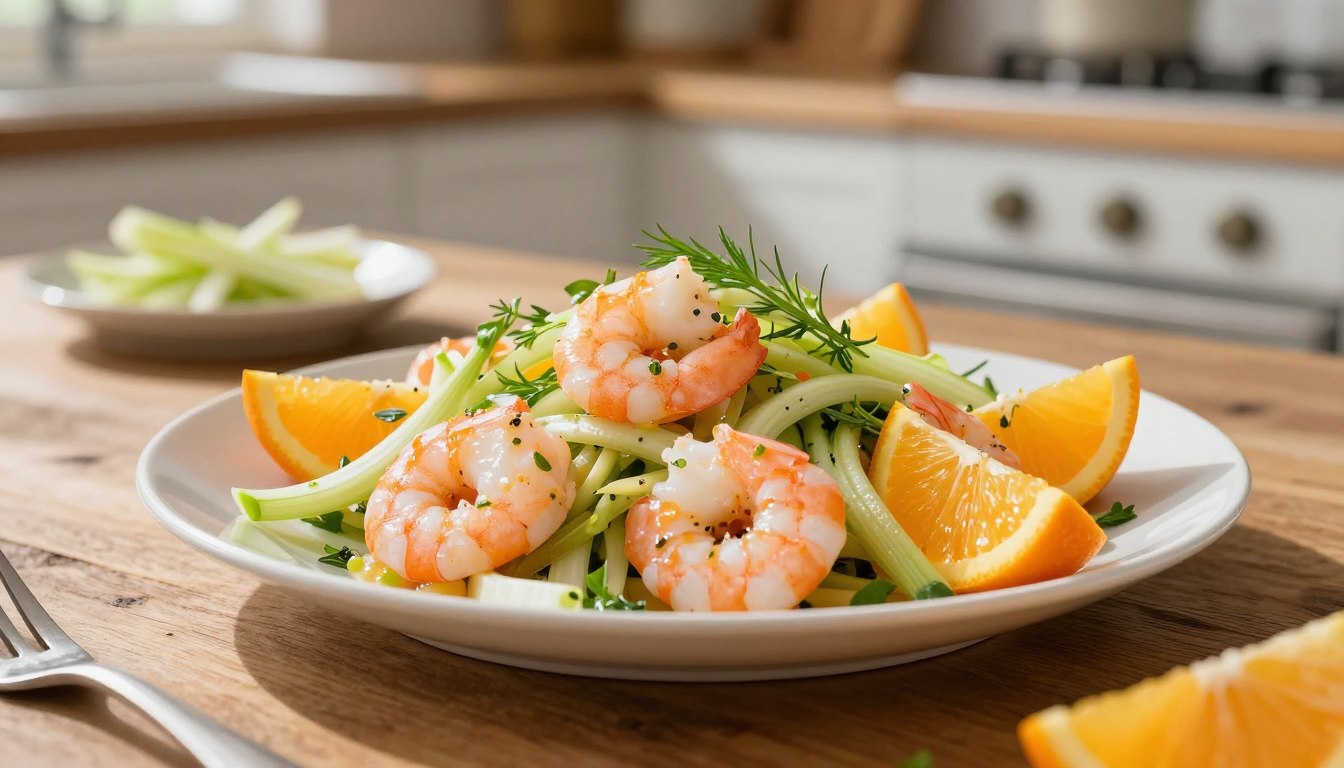
The Best Shrimp, fennel and orange salad Easy
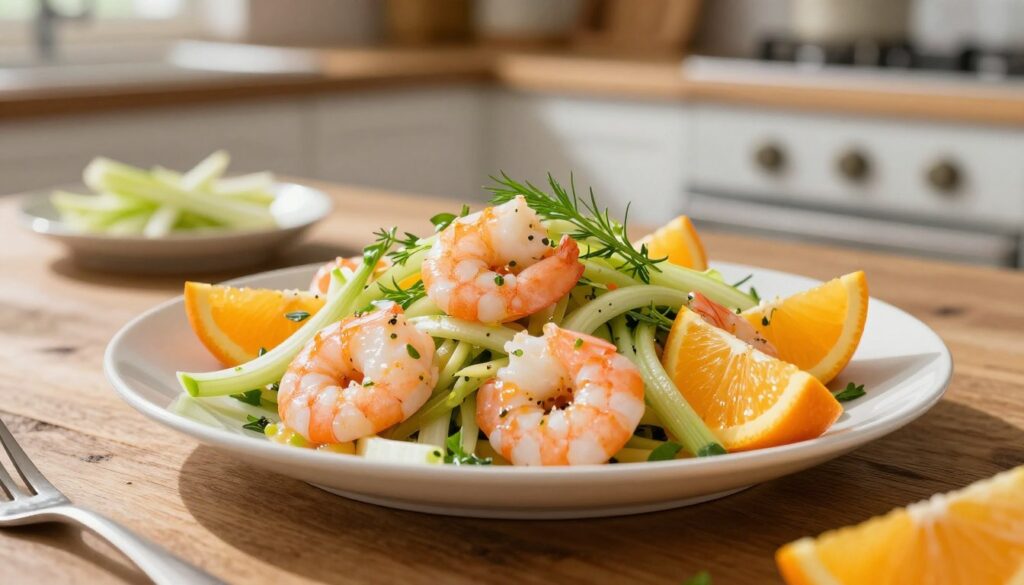
One of my favorite kitchen moments is when I first tasted a citrusy shrimp salad. It was a mix of cold, juicy orange, warm, charred shrimp, and crisp fennel. This salad brings a refreshing joy to your table in under an hour.
This easy shrimp fennel orange salad recipe is perfect for any day. It pairs grilled or pan-seared shrimp with shaved fennel, sweet orange segments, and creamy avocado. It’s served over baby kale or mixed greens, making it a seafood salad that’s both elegant and simple to make.
This salad is the best choice when you want a high-protein dish that’s easy to prepare. It’s great for those following Paleo, Whole30, or clean-eating plans. It serves four and cooks up in about 45 minutes total.
Key Takeaways
- A fresh, citrus-forward seafood salad that serves four and takes about 45 minutes total.
- Combines grilled or skillet shrimp with shaved fennel, orange segments, avocado, and mixed greens.
- Fits Paleo, Whole30, gluten-free, and other clean-eating plans.
- Recipe is flexible: use navel, cara cara, or blood oranges and adjust vinaigrette to taste.
- Great for quick dinners, spring and winter citrus seasons, and light entertaining.
Why you’ll love this shrimp fennel orange salad
https://www.youtube.com/watch?v=7BsnngJsdCE
This salad is a burst of citrus and freshness. It’s like a fancy restaurant dish, but you can make it at home. The mix of juicy orange segments and a zesty dressing is a treat for your taste buds.
The dressing is made with fresh orange and lemon juices. It also has minced shallot and a bit of Dijon. This salad is perfect for spring or Mother’s Day, with its lively and clean flavors.
Crunchy fennel contrasts with tender shrimp
Fennel adds a crunchy, anise-like flavor that’s a nice contrast to the soft shrimp. The mix of textures makes every bite exciting. Adding avocado or baby arugula adds creaminess and a peppery kick.
Light, healthy and suitable for many diets
This salad is great for those following Paleo, Whole30, or gluten-free diets. It’s packed with protein, fiber, and citrus. It’s a meal that’s both satisfying and light.
Ingredients you’ll need for the best shrimp, fennel and orange salad
This list makes the salad bright, fast, and reliable. Start with quality shrimp/prawns. Choose crisp fennel bulb and fronds and sweet navel oranges or a mix for color. Add greens like arugula and creamy add-ins such as avocado. Gather vinaigrette components for a quick dressing.
Shrimp/prawns: size, peeled and deveined
Use 1 lb large or jumbo shrimp/prawns, peeled and deveined. This is right for four servings. If you like, keep the tails on for presentation. Make sure the shrimp are the same size for even cooking.
Fennel bulb and fronds: how to choose and store
Choose a firm fennel bulb with pale, tight layers and bright green fronds. A half small bulb is about 1 cup thinly sliced. Use the fronds for garnish and dressing. Store bulbs in the fridge wrapped in a damp towel to keep them crisp.
Oranges: navel, cara cara, or blood orange options
Two navel oranges give segments for the salad and juice for the dressing. Swap one navel for a cara cara or blood orange for deeper color. If you want more dressing, squeeze a third orange for extra citrus.
Greens and add-ins: arugula, baby kale, avocado
Use 4 cups arugula or 4–6 cups mixed baby greens as a base. Add one medium Hass avocado, sliced, for creaminess. Toss-ins like thinly sliced shallot, toasted almonds, or feta add texture and flavor.
Vinaigrette components: citrus juices, olive oil, shallots, Dijon/honey variations
Keep vinaigrette components simple. Use juice of 1 orange, 3 tablespoons lemon juice, 1/4 to 1/2 cup extra-virgin olive oil, minced shallot, kosher salt, and cracked black pepper. For a tangy finish, whisk in 1 tablespoon Dijon with 1 teaspoon honey. Try garlic-olive oil or orange-infused oil for a sweeter edge.
Yield guideline: these amounts serve four. Prep the vinaigrette just before tossing. This keeps the fennel crisp and the arugula lively in this easy shrimp salad.
How to prep fennel and oranges like a pro
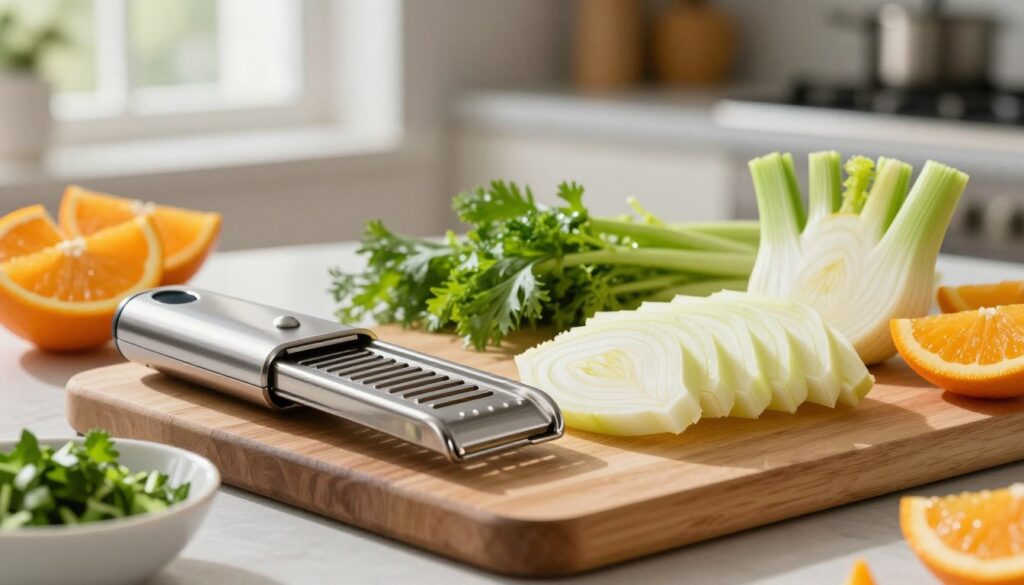
Begin with a clean workspace and tools. You’ll need a chef’s knife or mandoline, a cutting board, and a bowl for scraps. This setup helps you work faster and keeps flavors vibrant.
Cleaning, coring, and thinly slicing fennel
First, trim the stalks and remove any bruised parts. Cut the bulb in half lengthwise and remove the core. Use a mandoline on a low setting to slice the bulb thinly.
Save the stalks for stock or chop them for salads. Pat the slices dry to help vinaigrette stick better.
Removing orange peel and pith for clean segments
Choose oranges like navel, Cara Cara, or blood oranges. Cut off both ends and remove the peel and pith in long strips. Work carefully to avoid wasting fruit.
To segment oranges, peel them and slice along each membrane. Discard seeds and any bitter parts. Keep the segments in their juices for dressing.
Using fennel fronds and orange zest for garnish and dressing
Strip half the fronds from the stalks and save the fluffiest sprigs. Chop the rest finely and add to the salad for a fresh herbal taste.
Microplane some peel for a zesty dressing. Use it sparingly to avoid bitterness. For more tips, see this guide at Garlic & Zest.
Master these steps to shave minutes off prep time. You’ll get consistent results every time.
Marinating and seasoning shrimp for maximum flavor
You want shrimp that taste bright, not flat. Start with a simple citrus-based marinade. It’s made from reserved orange juice, fresh lemon juice, extra-virgin olive oil, and minced shallot. Toss 1 lb peeled, deveined jumbo shrimp in the mixture, season with kosher salt and freshly ground black pepper, and let the flavors begin to meld.
Simple acid and oil blend
Use the reserved vinaigrette from your dressing to create a quick shrimp marinade orange juice mix. Add a touch of Dijon for depth if you like, or a small clove of crushed garlic for a fresher bite. The citrus-based marinade brightens the shrimp without masking fennel or avocado in the salad.
Seasoning basics
Keep shrimp seasoning minimal: kosher or sea salt and cracked black pepper will let the citrus shine. If you prefer a richer profile, stir a teaspoon of Dijon and a drizzle of honey into the vinaigrette before tossing the shrimp. For safety, discard any marinade that touched raw shrimp unless you boil it first into a sauce.
Marinating time and safety
Plan a short marinating time for shrimp. About 30 minutes is ideal to absorb flavor without the acid cooking the flesh. Over-marinating in citrus can make shrimp mushy. Always refrigerate during marinating and cook the shrimp until opaque and just firm to the touch.
For a tested reference on quantities and a clear step-by-step approach, see this recipe for grilled shrimp that follows the same vinaigrette and timing logic: grilled shrimp, avocado & fennel.
| Item | Amount | Notes |
|---|---|---|
| Shrimp | 1 lb jumbo, peeled & deveined | Toss in vinaigrette and chill |
| Vinaigrette base | Juice of 1 large orange + 3 tbsp lemon | Reserve 1/2 cup for dressing; use rest to marinate |
| Olive oil | 1 tbsp | Helps carry aromatics and fat-soluble flavors |
| Shallots | 3 tbsp minced | Adds mellow onion flavor |
| Salt & pepper | To taste; kosher salt recommended | Season before and after cooking for best balance |
| Marinating time | About 30 minutes | Do not exceed ~30 minutes with citrus; refrigerate |
| Cooking time | ~1.5 minutes per side (jumbo) | Grill until opaque and firm |
Cooking methods: grill, skillet, or grill pan
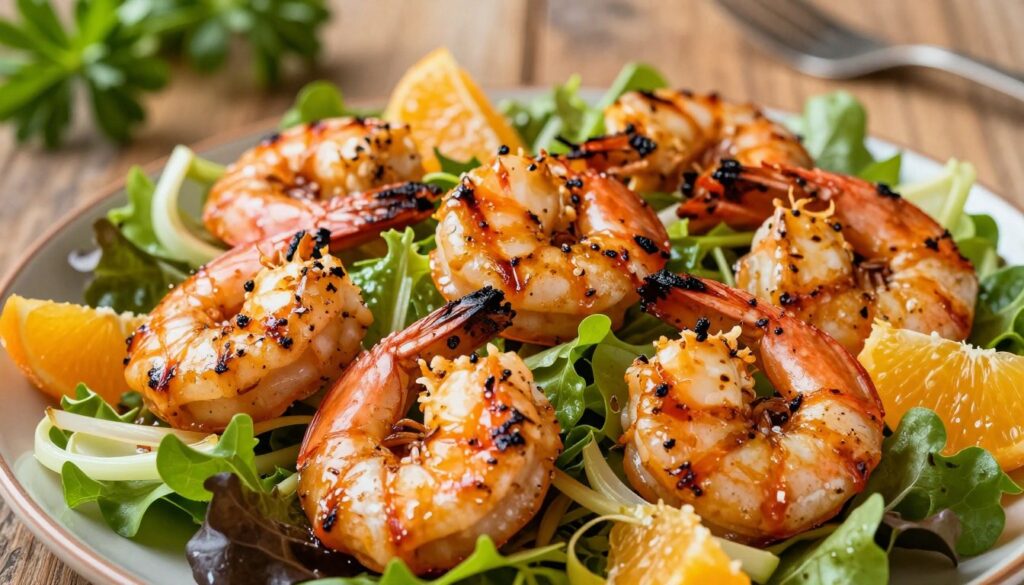
Choose the cooking method that fits your time and gear. A hot grill gives a smoky char that pairs well with citrus. A heavy skillet or cast-iron grill pan gives a fast, even sear that locks in juices. Both methods work for a light fennel and orange salad, and you can find pairing ideas at this fennel-orange salad guide.
Grilling for quick char
Preheat to medium-high so grates are hot. For jumbo shrimp, plan about 1.5 minutes per side of grilling shrimp time until the flesh is opaque and the edges show light char. Turn once; avoid flipping repeatedly. Move shrimp to a plate as soon as they’re done so residual heat doesn’t overcook them.
Skillet sear for caramelized crust
Heat a skillet with 2 tablespoons olive oil until it shimmers. Add even-size prawns and cook skillet seared prawns roughly 3 minutes per side for large prawns, until pink and opaque. A very hot pan gives a quick crust and keeps total cook time low. Remove promptly to preserve texture.
Tips to avoid overcooking and keep shrimp tender
- Use even-size shrimp so cooking finishes at the same time.
- Watch closely; shrimp change from translucent to opaque almost instantly.
- Pull shrimp the moment they turn opaque to avoid overcooking shrimp — residual heat will finish them.
- Leave tails on for presentation or off for ease of eating in a salad.
- Rest briefly before adding to the greens so juices redistribute and the salad stays crisp.
Step-by-step assembly: building the salad
Begin by placing baby greens on four plates. Choose arugula or mixed greens to keep the salad stable. This step is crucial for a restaurant-quality shrimp fennel orange salad.
Layering the components
Next, add thinly sliced fennel, orange segments, and avocado slices. Arrange them to highlight color and texture. Place warm shrimp on top to keep the fennel crisp and the orange juice vibrant.
How much vinaigrette to use
Save about 1/2 cup of vinaigrette for later. Use the rest to marinate the shrimp, if you like. For dressing, drizzle about 2 tbsp per serving. This helps balance the flavors.
If tossing, mix greens, oranges, and fennel in a bowl. Add prawns and coat lightly with vinaigrette. This way, everything stays fresh. Use Dijon in your dressing for better flavor.
Finishing touches
Finish with pepper, sea salt, and chopped fennel fronds. These add a nice aroma and look. They make each bite special.
Top with citrus zest or microgreens for a pop of color. For more plating tips, check out this guide on restaurant-style salads you can make at.
Variations and swaps to make it your own
Make this salad your own with a few simple swaps. Swap prawns for shrimp if you like smaller seafood. This makes serving and cooking easier. You can leave shrimp tails on for a pretty look or off for easier eating.
Choose your greens based on what you like. Arugula adds a peppery kick, baby kale gives it body, and mixed greens offer a mild taste. Skip the avocado for a lighter salad or if you’re following Whole30 or paleo.
Experiment with different citrus for flavor and color. Mix navel, cara cara, and blood oranges for a stunning salad. Check out fennel and orange salad tips for segmenting and combining fruit.
Change the dressing to alter the salad’s mood. Use garlic-infused olive oil for a savory taste. Or mix Dijon and honey with olive oil and orange juice for sweetness. Try an orange-olive oil emulsion or other dressings for a bright finish.
Add nuts like pistachios, almonds, or walnuts for texture. Swap burrata for fresh mozzarella, goat cheese, or feta for creaminess. Mint, chives, or parsley add freshness and pair well with seafood.
For more ideas, see variations shrimp fennel orange salad notes. Mixing citrus and keeping options open makes this salad perfect for any meal.
Make-ahead and meal-prep tips for quick dinner salad nights
Getting dinner ready fast is all about smart prep. You can save time and keep things fresh by prepping parts ahead and assembling just before eating. Use airtight containers to keep things separate, like items that might steam or wilt if stored together.
How to store cooked shrimp and keep fennel crisp
After cooking and cooling, put shrimp in a shallow airtight container. Chill it quickly and use within 48 hours. For reheating, warm it gently over low heat or quickly in a hot skillet to keep it tender.
To keep fennel crisp, wrap shaved fennel in a paper towel. Then, seal it in a plastic container. The towel absorbs moisture that makes fennel limp.
Prep components in advance: segment oranges, shave fennel, make vinaigrette
Segment oranges and store them in a single layer to avoid crushing. You can prep oranges ahead without losing flavor. Shave fennel with a mandoline and keep fronds for garnish.
Make vinaigrette the day before. An olive oil dressing with zest and garlic gets better with time when it rests at room temperature for a few hours.
Best practices for assembling just before serving to preserve texture
Keep greens and dressing separate until serving. Toss greens with a bit of vinaigrette, then add fennel and orange segments. Add shrimp last so they sit on top.
Save avocado slices for just before eating to avoid browning. These tips help you enjoy a fresh make-ahead shrimp salad any night.
| Component | Prep Window | Storage Method | Tip |
|---|---|---|---|
| Cooked shrimp | Up to 2 days | Airtight container in fridge | Cool quickly, reheat briefly or serve cold |
| Shaved fennel | 1–2 days | Paper towel + sealed container | Keep separate from dressing to keep fennel crisp |
| Orange segments | 1–2 days | Single layer in shallow container | Prep oranges ahead to save time; avoid stacking |
| Vinaigrette | 3–5 days | Jar in fridge, bring to room temp before use | Make ahead to let flavors meld; shake before dressing |
| Greens | 1–3 days | Paper towel + perforated container | Store separately from vinaigrette to prevent wilting |
Nutritional highlights and portion guidance
This shrimp, fennel, and orange salad is both nutritious and easy to portion. The nutrition can vary based on the dressing, avocado, and portion sizes. Use the numbers below as a guide for planning meals or tracking macros.
Approximate nutrition per serving
One common version (1/4 of the recipe) has about 283.5 kcal. It has roughly 26 g protein, 12 g fat, 19 g carbs, and 6 g fiber. A bigger version with extra oil, avocado, or larger portions can have about 482 kcal per serving. This version has near 36 g protein, 21 g fat, and 42 g carbs.
Protein, fats, and fiber
Shrimp is the main source of protein, making this a high-protein seafood salad. Olive oil and avocado add healthy fats. Fennel and greens add fiber and volume, helping you feel full on fewer calories.
Why it works for weight loss and clean eating
The recipe is vegetable-forward and uses lean seafood. It’s a healthy shrimp salad for weight loss if you watch the dressing amounts. Use about 2 tablespoons of vinaigrette per serving to control energy intake. This advice keeps the dish aligned with paleo, Whole30, gluten-free, and dairy-free diets.
Portion guidance
- Use 1 lb shrimp and about 4 cups mixed greens to make four balanced servings.
- Reserve roughly 1/2 cup total vinaigrette; that gives about 2 tbsp per person.
- Adjust avocado and oil to lower or raise the calories per serving shrimp salad as needed.
Track the ingredients you add to tailor this salad to meet calorie targets. It’s flavorful and filling. The mix of lean protein, fiber, and healthy fats makes it great for clean eating or weight-management plans.
Serving suggestions and occasions
This bright shrimp, fennel, and orange salad is perfect for light meals and special events. It’s great for a casual spring or summer lunch, a chic Mother’s Day salad, or a garden party centerpiece. You can also enjoy leftovers for dinner and pack them for lunch the next day.
Present the salad on a large platter with whole shrimp or prawns on top for a stunning look. For casual meals, offer crusty bread and bowls for guests to serve themselves. Pair it with white wine, like a crisp Sauvignon Blanc or an unoaked Chardonnay, to enhance the citrus and fennel flavors.
Scaling the recipe for parties? Plan for 1 lb shrimp per four servings. Keep dressing and avocado separate until serving. Assemble the salad on-site to keep the texture fresh. For potlucks, bring the components and toss just before serving to keep the greens crisp.
Quick service checklist
- Serve immediately after dressing for best texture and flavor.
- Offer crusty bread and simple sides so the salad remains the star.
- Chill wines and sparkling water in advance if you plan to pair with white wine.
Looking for more ideas? Check out a short roundup of high-protein fish recipes at high-protein fish recipes for a healthy lifestyle.
Conclusion
You can easily make the best citrus shrimp salad with fennel at home. This salad is light, refreshing, and uses simple ingredients. It tastes like a restaurant dish. Just follow the steps to make a quick seafood salad with orange dressing in under 45 minutes.
Prep the ingredients ahead to make weeknight dinners quicker. You can also pack leftovers for lunch. The recipe is flexible. Swap oranges, change greens, or tweak the vinaigrette to your liking. For more fresh, fast salad ideas, check out this inspiring salad roundup.
Try the shrimp salad recipe as is, then experiment with different variations. Share your ratings and comments after cooking. This dish is perfect for a quick weeknight meal or a special occasion. It’s full of flavor and is healthy too.