How to Make Swordfish: fish, flavor, grilled, filleted
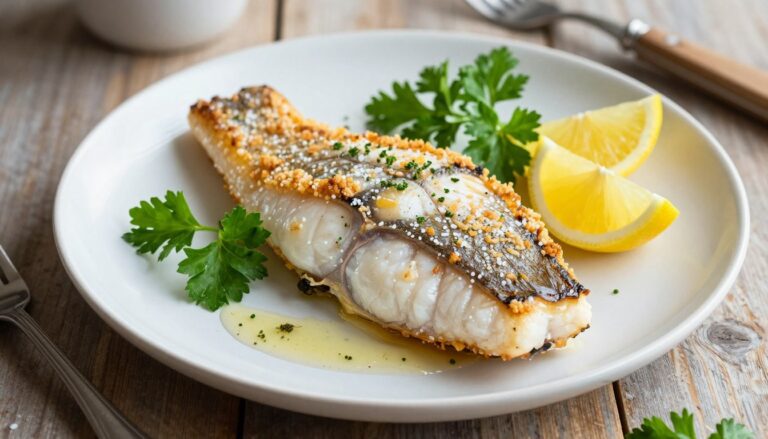
When you first taste swordfish, it changes everything. It’s tender and meaty, unlike flaky white fish. It tastes rich and satisfying, almost like eating steak from the ocean. Swordfish might be what you’ve been waiting for if you’ve been hesitant about cooking fish at home.
Many people avoid fish because of the strong “fishy” taste or how flaky fish falls apart. Swordfish is different. It’s known as the “Prime Rib of the Sea” for its firm, steak-like texture. Your grilled swordfish recipe doesn’t need to be complicated to taste restaurant-quality.
The best part? You can learn how to cook swordfish in about 15 minutes with just three simple ingredients: swordfish steaks, neutral oil with a high smoke point, and seasoning. Whether you choose to grill your steaks or explore a swordfish fillet recipe, this versatile fish adapts to whatever cooking method you prefer. You don’t need professional skills to create something delicious.
This guide walks you through everything you need to know about preparing and cooking swordfish at home. From selecting the best steaks to mastering grill techniques and creating flavor combinations that excite your taste buds, you’ll gain the confidence to cook swordfish like a pro. Every technique in this article is designed for home cooks who want real results without unnecessary complexity.
Key Takeaways
- Swordfish has a meaty, firm texture that appeals to people who typically dislike flaky fish
- A basic grilled swordfish recipe requires only swordfish steaks, high-smoke-point oil, and seasoning
- Learning how to cook swordfish takes less than 30 minutes from start to finish
- Swordfish works well with various marinades or simple dry seasoning options
- You can prepare swordfish steaks or explore a swordfish fillet recipe depending on your preference
- Swordfish’s exceptional fat content makes it ideal for grilling and searing
- Even beginner cooks can create restaurant-quality results with proper technique and fish recipes for every cooking style
Why Swordfish is Called the Prime Rib of the Sea
Swordfish is known as the “Prime Rib of the Sea” for good reason. It offers a dining experience that rivals premium beef. When you bite into a perfectly cooked swordfish steak, you’ll notice its firm, dense flesh. This makes it a satisfying meal unlike other fish.
Understanding what makes swordfish special is key to making a healthy dinner. Unlike delicate white fish, swordfish stays firm through cooking. Its mild flavor is sweet, not fishy, making it perfect for a variety of seasonings.
Understanding Swordfish’s Meaty Texture and Mild Flavor
Swordfish gets its meaty texture from being a powerful ocean predator. Its active lifestyle builds dense muscle tissue. This makes it behave like a quality steak when you cook it.
The mild flavor of swordfish is great for home cooks. You can add a variety of seasonings without worrying about strong fishy tastes. Try these:
- Lemon and garlic combinations
- Mediterranean herbs like oregano and basil
- Simple salt, pepper, and olive oil
- Asian-inspired soy and ginger profiles
- Cajun spice blends
Nutritional Benefits of Swordfish for Your Health
Choosing swordfish for dinner is good for your health. It’s packed with nutrients that support your body’s functions.
| Nutritional Component | Health Benefits |
|---|---|
| Lean Protein | Supports muscle growth, repair, and maintenance |
| Omega-3 Fatty Acids | Reduces inflammation, supports heart and brain health |
| Vitamin B12 | Boosts energy production and nerve function |
| Vitamin D | Strengthens bones and supports immune system |
| Selenium | Protects cells and enhances immune response |
A healthy swordfish recipe for dinner is full of high-quality protein with minimal calories. It gives your body the nutrients it needs without excess fat. Swordfish is a great choice for a nutritious meal that’s also delicious.
Selecting and Preparing Quality Swordfish Steaks
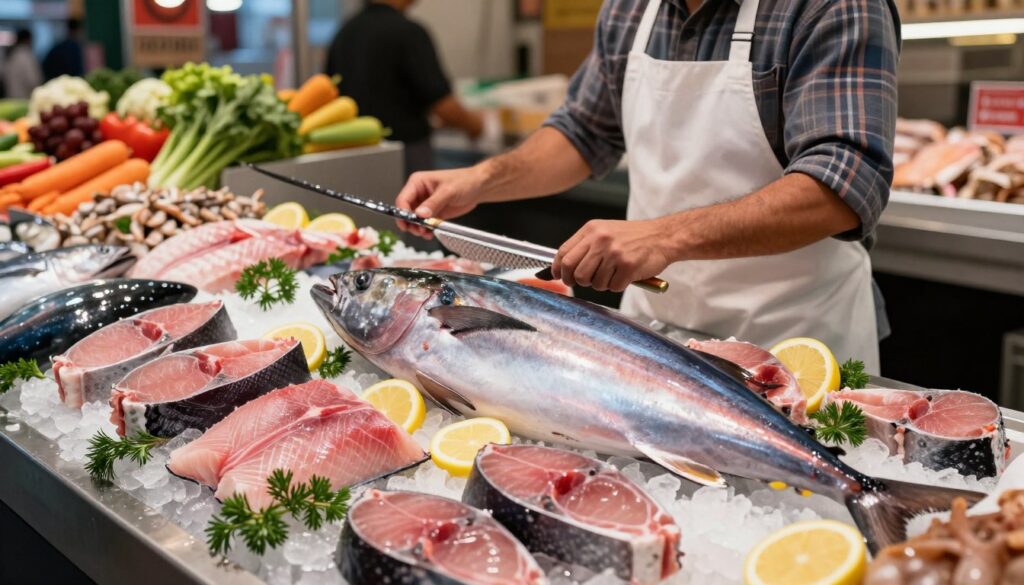
Finding the right swordfish is key to a great meal. At the seafood counter, look for steaks that are firm and moist. They should have a slight translucent look. Avoid dull or dried-out flesh.
Fresh swordfish smells like the ocean, not strongly fishy. This smell is a good sign.
The thickness of your swordfish is important. Choose steaks that are 1 to 1.5 inches thick. This size cooks evenly.
Thinner cuts dry out too fast, while thick ones char before cooking inside. Thicker pieces also keep more juices, making the fish tender and flavorful.
Many stores sell flash-frozen swordfish steaks, which is great. This method keeps the fish fresh and flavorful. You can freeze them for months and thaw them slowly in the fridge before cooking.
Preparation Steps Before Cooking
Before grilling, let your fish come to room temperature. This takes about 30 minutes. It helps the heat cook the steak evenly.
Rinse your steaks under cold water and pat them dry with paper towels. Dry fish gets better grill marks and browns more beautifully.
- Select steaks 1 to 1.5 inches thick
- Check for firm, moist, translucent flesh
- Smell for a clean, fresh ocean scent
- Thaw frozen steaks overnight in the refrigerator
- Bring fish to room temperature before grilling
- Pat dry with clean paper towels
By following these steps, you’re ready to grill swordfish steaks with confidence. You’ll get great results every time.
How to Cook Swordfish: Essential Techniques and Tips
Cooking swordfish right means knowing two key things: picking the right oil and getting the internal temperature just right. These tips work for grilling, pan searing, or other cooking methods. They help keep your fish juicy and full of flavor every time.
When cooking, you need to be precise and pay close attention. Swordfish is firm and meaty, perfect for high heat. Cook it for 4 to 5 minutes on each side for a 1-inch steak. Adjust the time based on your fish’s thickness.
Choosing the Right Oil for High-Heat Cooking
The oil you choose is crucial. Use oils with a high smoke point for high-heat cooking. This prevents the oil from burning and giving off bitter flavors.
- Canola oil—neutral taste, smoke point around 400°F
- Avocado oil—mild flavor, smoke point around 520°F
- Grapeseed oil—light taste, smoke point around 420°F
Avoid using extra virgin olive oil for high heat. It burns easily and can ruin your dish. Brush oil directly on the swordfish, not the grill or pan. This prevents sticking and dangerous flare-ups.
Determining the Perfect Internal Temperature
The FDA says to cook swordfish to 145°F for safety. But many chefs prefer to stop at 135 to 140°F. This is because the fish will continue to cook a bit after it’s removed from the heat.
Let your cooked swordfish rest for 5 to 10 minutes. This helps the heat distribute evenly and keeps it tender. Swordfish dries out quickly if it’s overcooked. Use a meat thermometer to check the thickest part of your steak.
| Swordfish Internal Temperature | Doneness Level | Chef Preference |
|---|---|---|
| 135-140°F | Medium-Rare | Most preferred for juiciness |
| 145°F | Medium | FDA food safety standard |
| 150°F+ | Medium-Well to Well-Done | Risk of dryness |
Whether grilling or pan searing, controlling the temperature is key. Use a reliable instant-read thermometer to avoid mistakes. The cooking time may change based on the fish’s thickness and the heat, but the temperature always tells the truth.
Creating Flavorful Marinades for Swordfish
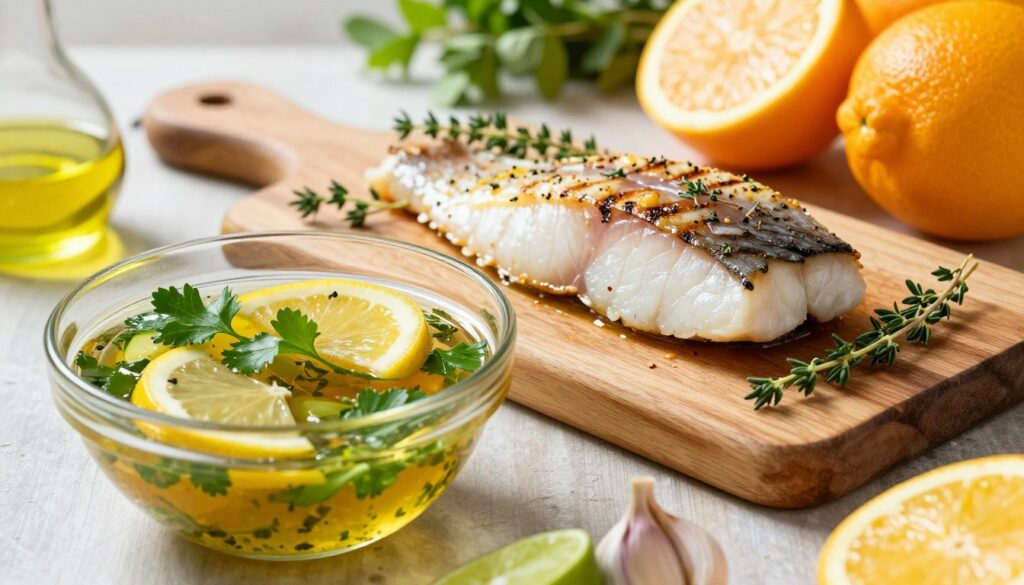
Swordfish has a mild, sweet flavor that pairs beautifully with marinades. The best marinade balances acidity, oil, and aromatics to enhance the fish’s natural taste. When marinating swordfish, you’re adding flavor and keeping the fish moist during cooking.
Timing is key when marinating swordfish. Unlike tougher meats, swordfish is delicate. Acidic ingredients can “cook” the fish if left too long. Keep marinating time between 10 and 30 minutes for the best results.
You can draw inspiration from different culinary traditions. A Mediterranean approach uses extra virgin olive oil, fresh lemon juice, minced garlic, lemon zest, oregano, and red pepper flakes. For an Asian-inspired flavor, combine soy sauce, fresh ginger, garlic, and a touch of Dijon mustard to create an umami-packed marinade that transforms your swordfish.
The best marinade for swordfish steaks starts with a quality oil base. Use equal parts oil and acid (like lemon juice) as your foundation. Add aromatics like minced garlic and shallots. Layer in herbs such as parsley, thyme, dill, or basil for brightness and complexity.
| Marinade Style | Key Ingredients | Marinating Time | Best For |
|---|---|---|---|
| Mediterranean | Olive oil, lemon juice, garlic, oregano, herbs | 15-20 minutes | Grilled or pan-seared swordfish |
| Asian-Inspired | Soy sauce, ginger, garlic, Dijon mustard, lemon | 10-15 minutes | Grilled swordfish with Asian sides |
| Simple Citrus | Olive oil, fresh lemon juice, garlic, salt, pepper | 20-25 minutes | Versatile for any cooking method |
Consider adding optional ingredients to customize your marinade. Capers and cherry tomatoes bring briny, tangy notes. White wine adds depth. Fresh herbs like basil or parsley provide brightness. Hot sauce or red pepper flakes deliver heat for those who enjoy spicy flavors.
Proper marinating technique ensures even flavor distribution. Use zip-top bags for easy coating and cleanup. Flip the bag halfway through marinating. For detailed guidance on the most versatile fish recipe preparation methods, you’ll find comprehensive techniques that work with marinades.
- Pat fish dry before marinating to help marinade adhere better
- Never marinate longer than 30 minutes to avoid over-cooking the delicate flesh
- Reserve a small portion of marinade before adding raw fish for basting
- Allow fish to reach room temperature for 5 minutes after marinating
- Experiment with honey for sweetness or additional herbs for complexity
Don’t be afraid to develop your own signature style. Start with a basic formula, then adjust based on your taste preferences. Add honey for sweetness, increase garlic for boldness, or experiment with different herbs. The key is keeping marinating swordfish simple enough that flavors complement rather than compete with the fish’s natural taste.
Mastering the Grill: Step-by-Step Grilling Instructions
Getting your grill ready is key to grilling swordfish steak well. Your prep work can make your meal either great or a letdown. Setting up your grill right is crucial for a moist, tasty dish.
Preheating Your Grill to the Ideal Temperature
First, clean your grill grates well. Use a brush to get rid of old food and grime. This step helps your swordfish taste better.
Then, heat your grill for about 20 minutes. Aim for medium-high heat between 350-400°F. This heat is perfect for swordfish, giving it a nice sear and keeping it moist.
To check the heat, hold your hand 6 inches above the grates. If you can only hold it for 3-4 seconds, it’s ready. A hot grill helps your fish cook fast and come off easily.
Achieving Perfect Grill Marks and Preventing Sticking
Before grilling, brush oil on the fish, not the grates. This trick helps keep the fish moist and prevents it from sticking. The oil acts as a shield, keeping moisture in.
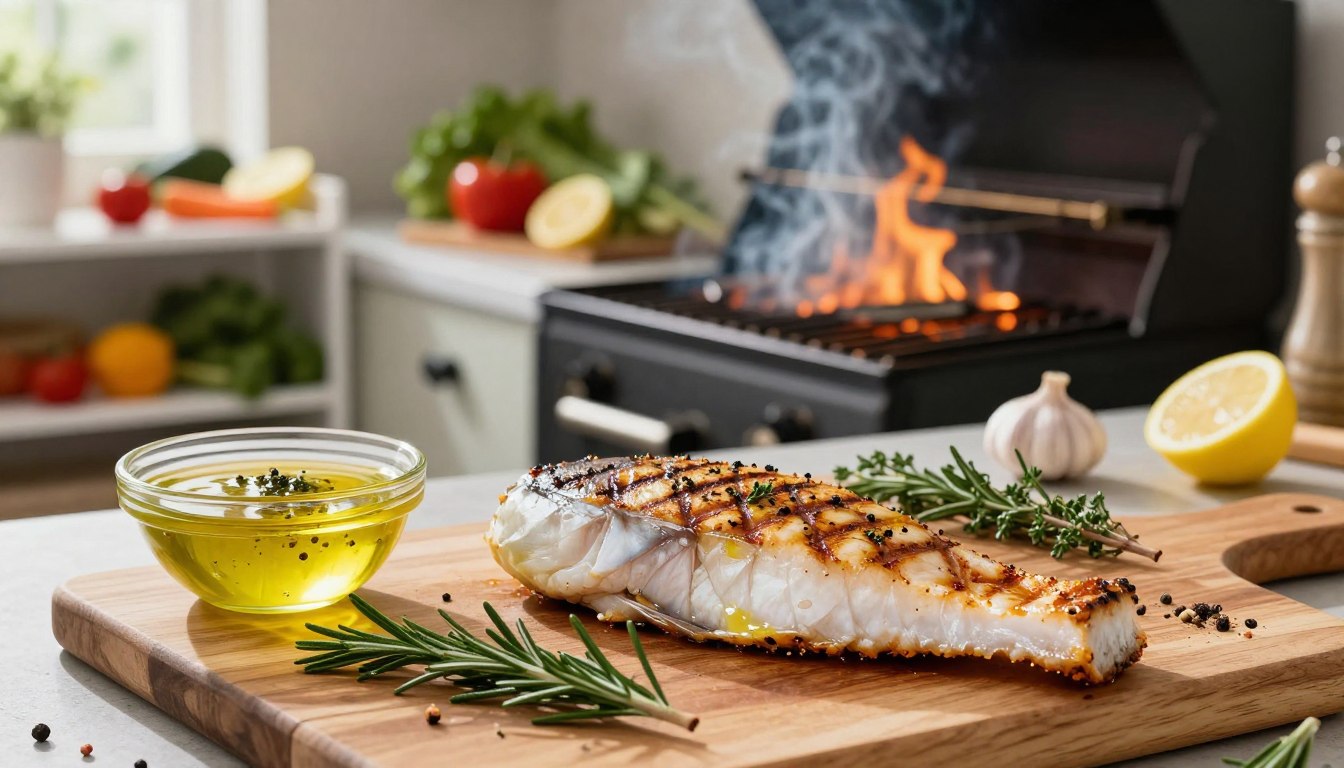
Place your swordfish steak on the grill at a 45-degree angle. Here’s a guide for grilling time:
- Grill for 2 minutes on the first side
- Rotate a quarter turn to create crosshatch grill marks and grill for another 2 minutes
- Flip the steak carefully using tongs
- Grill for 4-5 minutes on the second side, depending on thickness
Don’t move your fish too much. Let each side cook long enough for nice grill marks. When grilling swordfish, patience is key.
Keep an oily paper towel handy for touch-ups. Before flipping, dab the fish with the oiled towel. This keeps it from sticking without causing flare-ups.
For firm fish like swordfish, cooking it right means using the grill’s heat wisely. Let the grill do its job. Avoid pressing down or moving the fish too much, as this can dry it out.
“A well-prepped grill and properly oiled fish are your tickets to grilling success.”
The quarter-turn method not only makes great grill marks. It also ensures even heat, so your swordfish cooks well. Your guests will be impressed by the perfect marks.
Testing for Doneness and Avoiding Overcooking
Knowing when your swordfish is perfectly cooked is key. It makes a big difference between a juicy, tender meal and a dry one. Swordfish dries out quickly because it has low fat content. Luckily, there are several ways to check if it’s ready.
Start by looking for visual signs. Swordfish turns from translucent to opaque when cooked. It should look solid and white, not glassy. Press the thickest part gently with your finger. It should feel firm but still springy, not hard or mushy.
Try the skewer test like chefs do. Use a thin wooden skewer or cake tester in the thickest part of the fish. If it slides through easily, it’s done. Any resistance means it needs more cooking time.
An instant-read thermometer is the most accurate. Insert it into the center of the steak and aim for 135°F. Remove it at this temperature and let it rest for five minutes. This allows the heat inside to cook it further, reaching the safe 145°F recommended by the FDA.
| Doneness Test Method | What to Look For | Timing |
|---|---|---|
| Visual Check | Flesh turns opaque and white throughout | Immediate observation |
| Touch Test | Firm texture with slight spring-back | Quick press with finger |
| Skewer Test | Skewer slides through with no resistance | 30 seconds per test |
| Thermometer Test | Internal temperature reads 135–140°F | Less than one minute |
| Fork Flake Test | Fish flakes easily when nudged with fork | Immediate check |
The fork flake test is also useful. Gently push the flat side of a fork into the thickest part. If it breaks into flakes easily, it’s done. If it resists, it needs more time.
Resting is crucial for keeping your swordfish moist. When you remove it from the grill, the juices spread throughout during the five-minute rest. This step is what makes the difference between a tender steak and a tough one.
These tips work whether you’re grilling or making baked swordfish recipes at home. The key is to remove the fish slightly early, before it reaches the final temperature. It will finish cooking perfectly during the resting period, ensuring a moist and tender texture every time.
- Remove swordfish at 135°F for best results
- Let it rest five minutes before serving
- Use a combination of tests for confidence
- Never skip the resting phase
- Remember that carryover heat completes the cooking
Mastering these doneness tests takes the guesswork out of cooking swordfish. You’ll know exactly when it’s perfect, without any dry spots.
Delicious Topping and Serving Suggestions
Your grilled swordfish steaks need toppings that make them even better. The right toppings can turn your easy mediterranean grilled swordfish recipe into a showstopper. Whether you like fresh herbs or rich flavors, these ideas will make your dinner special.
Try out different flavor combinations to match swordfish perfectly. Lemon and lime add a bright touch. Herbs like basil and thyme add depth. Garlic and butter give a luxurious taste that’s unforgettable.
Mediterranean-Inspired Olive and Pistachio Salsa
Make a vibrant salsa that brings Sicilian coastal flavors to your plate. It’s perfect with grilled swordfish and adds texture and brightness.
Start by mixing these ingredients in a bowl:
- Castelvetrano olives (buttery and mild Sicilian olives), pitted and halved
- Roasted pistachios, roughly chopped for nutty crunch
- Fresh lemon zest and juice for brightness
- Raw honey to balance salty and acidic flavors
- Minced garlic for depth
- Fresh parsley for color and herbaceous notes
- Extra virgin olive oil to bind everything together
Mix garlic, lemon zest, and juice with honey. Add pistachios, parsley, and olives. Drizzle in olive oil and mix well. Let it sit for 15 to 30 minutes to blend flavors. This topping adds Mediterranean charm to your dish.
Asian-Inspired Soy and Ginger Marinade Options
Swordfish loves umami-rich Asian flavors. Mix soy sauce, ginger, garlic, and Dijon mustard for a sauce that complements the fish.
Use these ingredients in two ways:
- As a marinade before grilling for deeper flavors
- As a glaze or drizzle after cooking for fresh taste
The lemon caper sauce approach shows how finishing sauces can elevate grilled swordfish. Apply this to your Asian-inspired toppings.
For a simple touch, use grilled lemon, olive oil, and Maldon sea salt. This lets your swordfish shine without overpowering flavors.
Pairing Your Grilled Swordfish with Perfect Sides
Your grilled swordfish needs dishes that make it shine. The right sides turn a simple meal into a showstopper. Choose sides that match the flavors from your marinade or toppings.
Grilled veggies add color and nutrition, matching the swordfish’s smoky taste. Try zucchini, bell peppers, asparagus, or eggplant. They get nice char marks and pair well with the swordfish’s mild flavor.
Roasted or grilled potatoes add a hearty touch. Baby Yukon gold potatoes with olive oil, garlic, and rosemary are a great choice.
Fresh salads offer a refreshing contrast. A peppery arugula salad with Parmigiano and pine nuts adds elegance. A simple green salad with lemon vinaigrette is light and refreshing. Seasonal tomato salad is perfect in summer.
Other starches can also complete your meal. Rice pilaf with herbs and lemon adds a Mediterranean twist. Simple pasta aglio e olio won’t overpower the fish. Creamy risotto adds richness without overwhelming the swordfish’s flavor.
| Side Dish Category | Best Options | Flavor Profile Match | Season |
|---|---|---|---|
| Grilled Vegetables | Zucchini, Bell Peppers, Asparagus, Eggplant | Smoky and Charred | Year-Round |
| Roasted Potatoes | Baby Yukon Gold with Garlic and Rosemary | Earthy and Savory | Year-Round |
| Fresh Salads | Arugula with Parmigiano, Tomato Salad, Greek Salad | Light and Refreshing | Spring/Summer |
| Starches | Rice Pilaf, Pasta Aglio e Olio, Risotto | Complementary and Satisfying | Year-Round |
| Seasonal Vegetables | Green Bean Salad, Root Vegetables, Fresh Greens | Seasonal Freshness | Varies by Season |
Your side dishes should match your swordfish’s flavors. Mediterranean flavors go well with olive and herb sides. Asian marinades pair with stir-fried bok choy or sesame green beans. Steamed broccoli adds nutrition. Warm focaccia bread soaks up flavors.
Think about seasonal options for your menu. Summer is for crisp salads and fresh tomatoes. Cooler months are for roasted root veggies and heartier starches. Mixing and matching sides creates a perfect plate for your grilled swordfish.
Conclusion
You now know how to grill swordfish like a pro. This dish is simple, needing just three ingredients and 15 minutes. The hard part is finding good swordfish at your local market or store.
Remember, the key to grilling swordfish well is to choose thick steaks. Use the right oil for a perfect sear. Always check the internal temperature to avoid overcooking. Start with simple oil and seasoning to build your confidence.
As you get better, try different marinades and toppings. These techniques also work for pan-searing, baking, and broiling. You can cook swordfish in many ways, making it perfect for any meal.
Cooking swordfish at home is better than eating out. You save money and enjoy top-quality food. You choose the ingredients and flavors, making every meal special. Get some swordfish, fire up your grill, and make a meal that’s as good as any fancy seafood restaurant.