The Best Easy Sole: fillet, baked, meunière Ideas
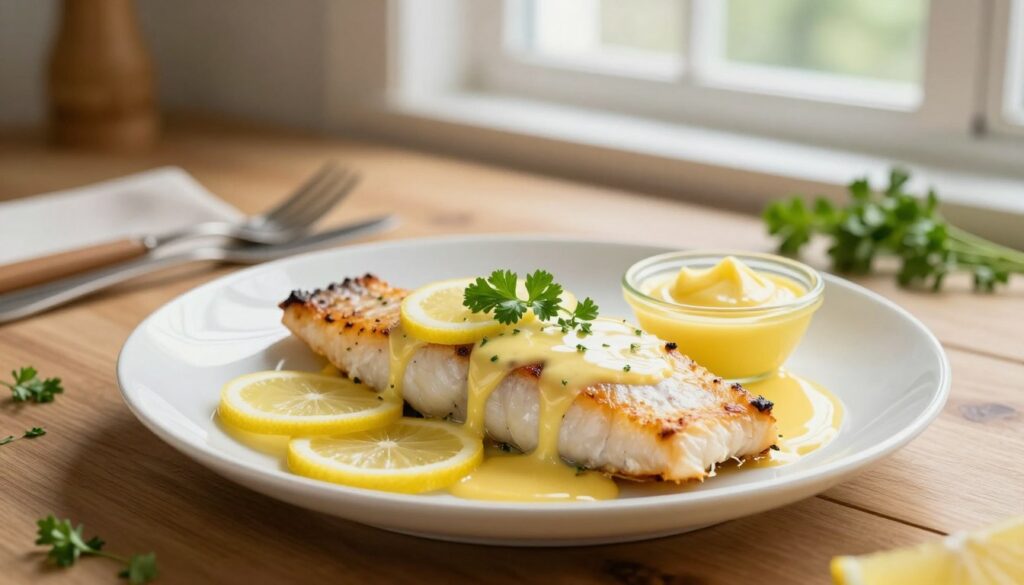
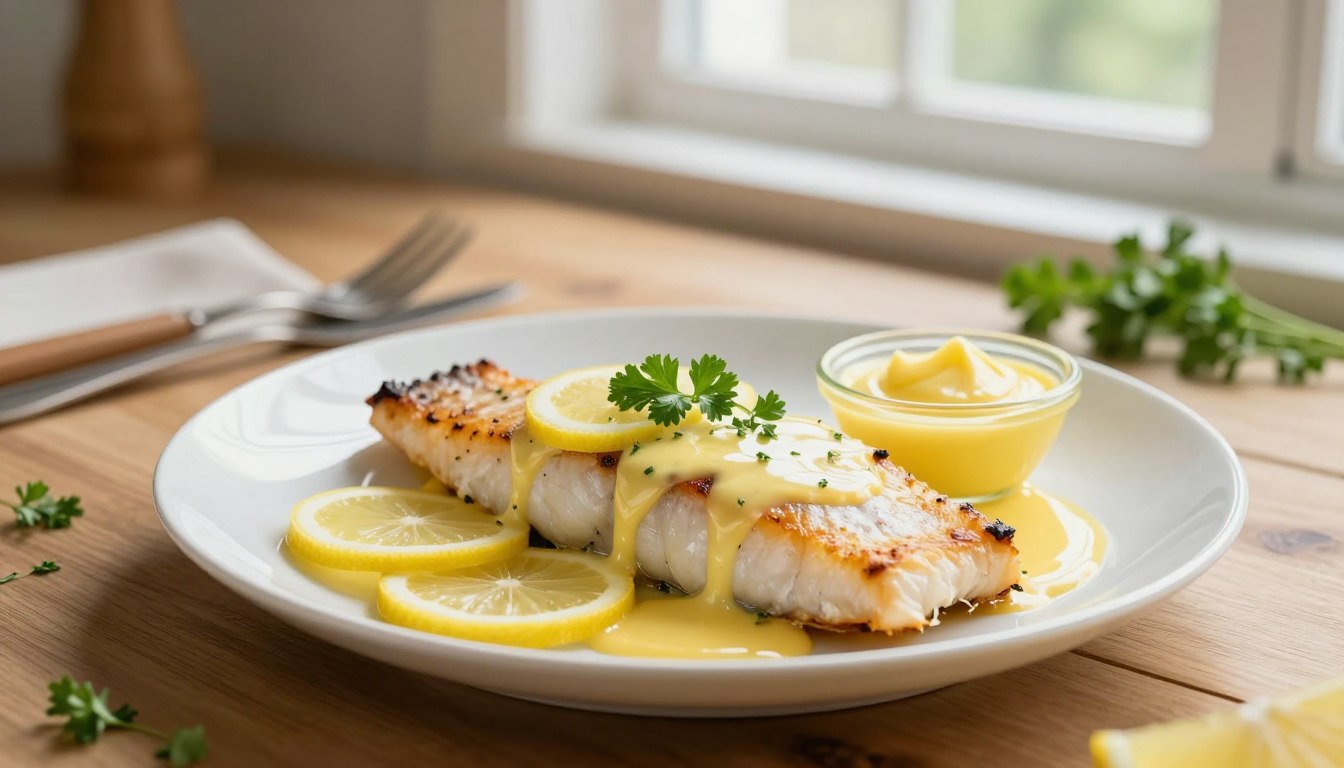
There’s something magical about enjoying a perfectly cooked sole. The fish flakes easily with your fork. The buttery sauce shines under the light. It feels like dining at a fancy French restaurant, right in your home.
Many think cooking sole needs years of training. But, the truth is, sole is very easy to cook. You just need a few quality ingredients and simple techniques to make amazing meals.
Julia Child loved French cooking, starting with sole meunière. This dish has only six ingredients. The fish is lightly browned, then finished with a rich brown butter and lemon sauce. If Julia could inspire millions, you can too.
An easy sole recipe offers many options. You can pan-fry for a crispy crust or bake with aromatics. Or, try the elegant meunière method with its silky butter sauce. Each way tastes incredible.
Sole is also a smart choice for your family. The Monterey Bay Aquarium says sole is a “best choice” for sustainable fishing. It’s good for your health and the ocean. Check out flavor-packed fish recipes with simple ingredients to see how versatile sole can be.
Key Takeaways
- Sole meunière is a classic French dish with just six ingredients that tastes elegant but cooks simply
- You don’t need professional chef training to master an easy sole recipe at home
- Pan-frying, baking, and meunière methods all work beautifully with sole fillets
- Sole is a sustainable fish choice rated as “best choice” by Monterey Bay Aquarium
- Quality ingredients and proper technique are your only requirements for restaurant-quality results
- An easy sole recipe takes minimal time but delivers maximum flavor and elegance
Why Sole Fish Recipe Deserves a Place in Your Kitchen
Sole is a great choice for dinner more often than you might think. It’s elegant yet simple. Cooking it can make your meals feel like they’re from a restaurant, but it’s quick and easy. Plus, you don’t need special ingredients or skills to make it delicious.
Sole is perfect for your meal plan for several reasons. It cooks fast, tastes great, and pairs well with many flavors. Whether you’re a beginner or a pro, sole can be cooked in many ways to suit your taste.
The Humble Origins of a French Classic
The term “meunière” comes from French, meaning “miller’s wife.” This shows that french sole meunière wasn’t always fancy. It came from simple, working-class kitchens where cooks used basic ingredients.
Julia Child found sole meunière in France and it sparked her love for French cooking. She showed that even simple dishes can be extraordinary. Try making sole fillets with lemon and thyme to bring out the fish’s flavor.
Health Benefits of Cooking with Sole
Healthy sole recipes are great for those watching their diet. Sole is a fish from the Atlantic and Mediterranean, known for its taste and nutrition.
Here are some health benefits:
- It’s a top source of lean protein for muscles
- It’s low in fat and calories
- It’s rich in B vitamins for energy
- It has omega-3 fatty acids for heart health
- It’s easy to digest and gentle on your stomach
Choosing healthy sole recipes for dinner supports your taste and health. It cooks fast, making it ideal for busy nights.
Understanding Sole: Types and Selection Tips
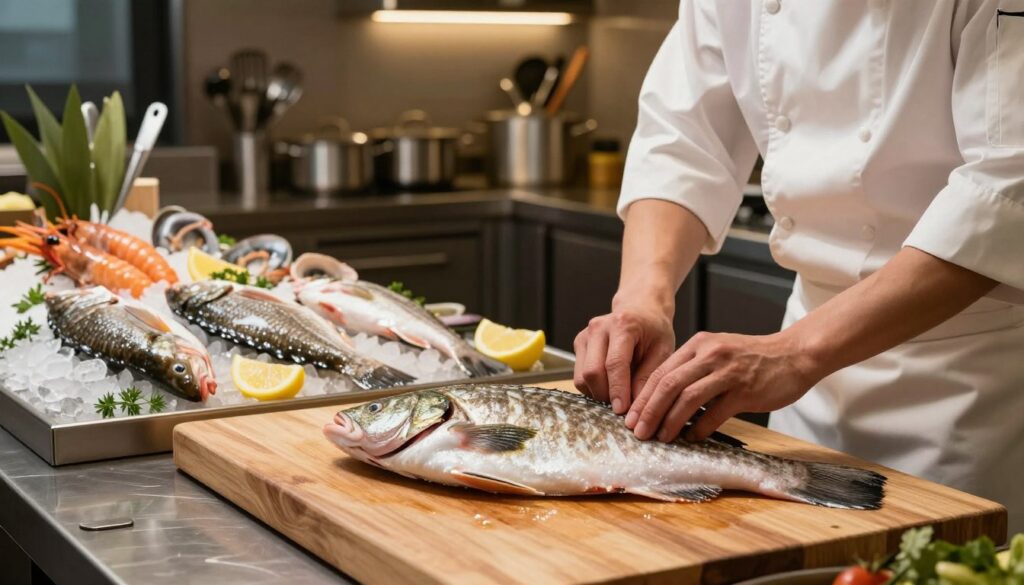
When planning fresh sole dinner ideas, you’ll find not all sole fish are the same. Your fishmonger can help you choose the best for your budget and skill. Knowing the differences between types helps you make smart choices for your kitchen and wallet.
Dover Sole vs Lemon Sole: What’s the Difference
Dover sole and lemon sole have different prices. Dover sole is pricier because it’s found only in the Atlantic Ocean and Mediterranean Sea. This limited area makes shipping costly, and catching it is hard work.
Chefs love Dover sole for its rich flavor and soft texture. It’s worth the cost for special meals.
Lemon sole is a more affordable choice. It’s not a true sole but belongs to the plaice family. You can learn more about lemon sole preparation and how it’s tasty and budget-friendly. Both types are great for your dinner plans, so pick based on your budget and what’s available.
| Feature | Dover Sole | Lemon Sole |
|---|---|---|
| Price Range | Premium/Expensive | Affordable/Budget-Friendly |
| Habitat | Atlantic Ocean & Mediterranean Sea | British Isles & Northern Europe |
| Flavor Profile | Rich, Delicate, Complex | Mild, Sweet, Tender |
| Fish Family | True Sole | Plaice Family |
| Best For | Special Occasions & Fine Dining | Weeknight Dinners & Practice |
How to Choose Fresh Sole at Your Fishmonger
Choosing fresh sole involves what you see and smell. Look for fish with bright, clear eyes and shiny skin. The flesh should feel firm when gently pressed. Fresh sole should smell like the ocean, not fishy or sour.
Ask your fishmonger to fillet the fish since sole is delicate and small fillets can tear easily. Knowing portion sizes is key for your dinner plans. In Paris, a serving is three fillets, showing how small they are. Your fishmonger can guide you on the right amount for your needs.
There are different cooking styles for sole, depending on the fillet size and thickness. Ask if the fillets are skin-on or skinless, as this affects how you cook them. This choice impacts your dover sole preparation method and cooking time.
- Check for bright, clear eyes and shiny skin
- Press gently to ensure firm flesh
- Smell for fresh ocean scent, not fishy odors
- Ask your fishmonger to fillet the fish
- Request skin-on fillets for grilling or pan-frying
- Plan for three fillets per person as a typical serving
Building a relationship with your local fishmonger changes how you cook sole. They’ll let you know when fresh fish arrives and can adjust fillet thickness for your cooking method. Whether it’s for a weekend dinner or a quick meal, your fishmonger is your go-to for the perfect fish.
Essential Ingredients for Perfect Sole Dishes
Creating outstanding sole dishes starts with quality ingredients. Since sole recipes are simple, each ingredient is crucial. Gather your ingredients before cooking, for dishes like lemon butter sole.
The foundation is the fish itself. You need fresh sole fillets that are firm and mild. Dover sole is traditional, but flounder and lemon sole are good substitutes. Your ingredient list is surprisingly short, making cooking accessible and elegant.
- High-quality butter – Unsalted, preferably European-style or locally made
- Mild olive oil – Won’t overpower the delicate fish flavors
- All-purpose flour – Or gluten-free alternatives like cornstarch
- Fresh lemons – For bright, squeezed-fresh juice (about 2 tablespoons per lemon)
- Kosher salt – For proper seasoning
- Freshly ground black pepper – Adds depth without harshness
- Fresh parsley – For color and finishing freshness
Butter quality is key. European-style butter has more fat, making the sauce richer. This ingredient makes a big difference in cooking methods. The oil-butter mix prevents butter from burning and adds flavor.
Using fresh-squeezed lemon juice improves flavor. Bottled juice tastes flat compared to fresh. Fresh parsley adds color and a subtle herb note.
Optional capers add briny complexity. Some cooks add flour to butter for a silkier sauce. Knowing these ingredients helps master pan-frying and develop your style.
Start with these ingredients, and you’re set to make restaurant-quality sole at home.
The Classic Sole Meunière Recipe
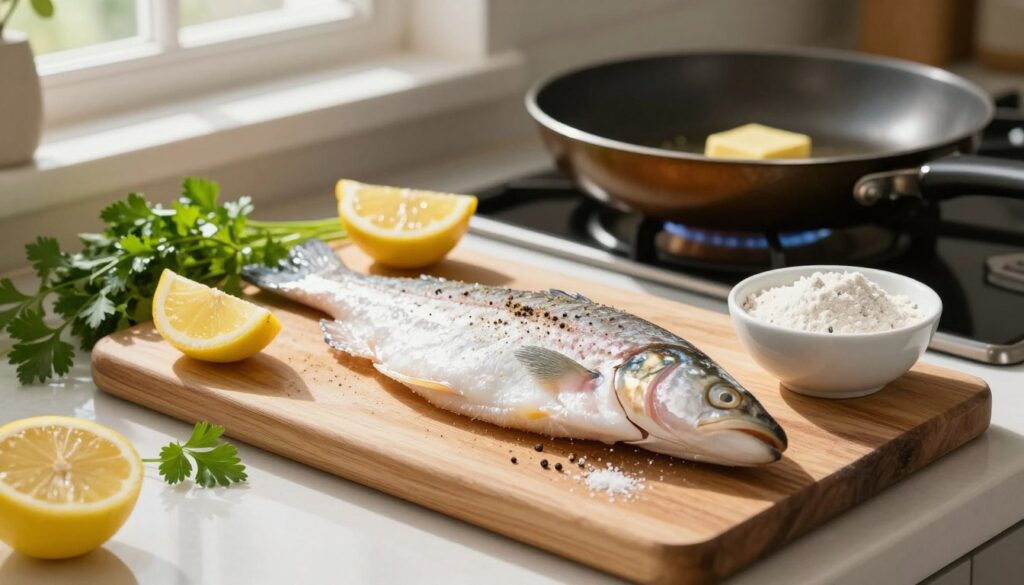
The sole meuniere recipe is at the heart of French cooking. It turns simple ingredients into a dish fit for a restaurant, all from your kitchen. The beauty of this recipe is its simplicity. With just a few quality ingredients and the right technique, you can create a masterpiece in minutes.
Before cooking, gather all your ingredients and prepare your workspace. This is called mise en place. It helps you stay organized while your fish cooks. Make sure you read through the instructions before starting.
Step-by-Step Guide to Browning Butter
Browning butter makes your sole meuniere recipe stand out. This method creates a nutty, caramelized sauce that’s key to the dish. Here’s how to do it:
- Rinse your sole fillets under cold water and pat them dry with paper towels
- Season both sides with salt and pepper
- Dredge each fillet in flour, shaking off excess
- Heat olive oil and butter in a nonstick skillet over medium heat until shimmering
- Cook fillets until golden, about 2-3 minutes per side, basting with pan butter
- Remove the fish carefully and set aside on a warm plate
Now, add more butter to your pan and let it melt completely. This takes about 1-2 minutes. The butter will foam and bubble as water evaporates. Listen for a nutty aroma and look for a light brown color. Do not leave it unattended because butter burns quickly once it reaches that perfect stage.
Achieving the Perfect Golden Crust
Getting a golden crust on your sole meunière recipe requires attention to detail. Your pan temperature must be just right. Too hot, and the flour burns before the fish cooks through. Too cool, and you’ll get a pale, soggy coating instead of a crispy exterior.
| Cooking Step | Temperature | Time Duration | What to Watch For |
|---|---|---|---|
| Initial Pan Heating | Medium Heat | 2-3 minutes | Butter foams gently, oil shimmers |
| First Side of Fillet | Medium Heat | 2-3 minutes | Golden-brown color develops, edges look crispy |
| Second Side of Fillet | Medium Heat | 2-3 minutes | Matching golden color, fish flakes easily |
| Browning Butter Sauce | Medium-High Heat | 1-2 minutes | Turns amber, smells nutty, no black bits |
Stir in fresh lemon juice to your brown butter sauce and season with salt and pepper. Pour this golden liquid over your prepared fish and garnish with fresh parsley. Serve your sole meunière recipe immediately while everything stays hot and crispy. The timing matters because this classic French dish is meant to be enjoyed fresh from the pan.
“Good food is the foundation of genuine happiness.” — Auguste Escoffier
Your sole meuniere recipe success depends on keeping everything moving quickly once you start cooking. Don’t overcrowd your pan because this lowers the temperature and steams the fish instead of crisping it. Work with one or two fillets at a time if needed. Each element—the perfectly browned butter, the golden crust, the bright lemon—comes together for an unforgettable meal.
Easy Baked Sole Fillet with Lemon Butter
Baking is a great way to cook without much effort. It lets you make many dishes at once. Baked sole fillet is perfect when you’re busy with other tasks.
It’s easy to make baked sole fillets. Just preheat your oven to 400°F and put the fillets in a dish. They cook in 10 to 15 minutes. They’re done when they flake easily and are 145°F inside.
Making the lemon butter sauce is simple. You need lemon juice, melted butter, and fresh parsley. You can pour it over the fish before baking or after. It’s up to you.
Key Advantages of Baking Sole
- Less active cooking time at the stove
- Easier cleanup with minimal splattering
- Cook larger quantities without batching
- Perfect for meal preparation alongside other dishes
- Keeps delicate fillets moist and tender
Tips for Success with Baked Sole Fillets
| Step | Details |
|---|---|
| Prepare the dish | Line with parchment paper to prevent sticking and ease cleanup |
| Season the fillets | Use salt, pepper, and fresh herbs for enhanced flavor |
| Add lemon butter | Place thin butter pats and lemon slices on top of each fillet |
| Check for doneness | Fish should flake easily and reach 145°F internal temperature |
| Rest before serving | Let baked sole fillet rest for 2 minutes after removing from oven |
To keep your fish moist, don’t overbake it. Start checking at 10 minutes. It cooks fast. When it’s opaque and flakes, it’s ready.
Pan Fried Sole Techniques for Crispy Perfection
Learning to pan fry sole can turn your weeknight meals into something special. The secret is in controlling the heat and using the right techniques. Cooking pan fried sole at home is a skill that chefs use every day.
What makes pan fried sole so great is how simple it is. With just a few minutes and the right steps, you can make a dish that wows everyone. Let’s look at the key techniques that make all the difference.
Temperature Control and Timing Tips
Medium heat is perfect for pan frying sole. It helps create a golden crust without burning the fish. If the heat is too high, the outside will burn before the inside is cooked. If it’s too low, the fish will steam instead of sear.
Timing is also crucial. Here’s what to do:
- Cook the bottom side for 2-3 minutes until golden brown
- Flip carefully and add a tablespoon of butter
- Cook and baste the other side for about 1 minute
- Watch for opaque flesh to know when your fish is done
Basting adds moisture and flavor to your pan fried sole. Tilt your pan and spoon the melted butter over the fish often. This keeps the fish tender and gives it a restaurant-style finish.
Preventing Your Fish from Sticking to the Pan
A large nonstick skillet is essential for pan frying sole. Non-stick surfaces prevent sticking and make cleaning up easier. Make sure your pan is hot before adding the fish.
Here are key steps to avoid sticking:
- Use enough fat—butter or oil helps prevent sticking
- Let your pan heat fully before adding the fish
- Wait for a golden crust to form before flipping—the fish will release when ready
- Use gentle pressure if you must move the fish
When cooking for many, cook pan fried sole in batches. Overcrowding leads to steaming instead of searing. Keep the first batch warm in a low oven. This ensures each piece gets the right amount of cooking and stays crispy.
| Cooking Stage | Time | Temperature | What to Look For |
|---|---|---|---|
| First side | 2-3 minutes | Medium heat | Golden-brown crust forms |
| Flip and baste | 1 minute | Medium heat | Flesh turns opaque white |
| Final basting | 30 seconds | Medium heat | Fish flakes easily with a fork |
The whole process takes just minutes. Pan fried sole is perfect for busy weeknights when you want something fancy without the hassle.
Quick Sole Fish Dinner Ideas for Busy Weeknights
You don’t need to spend hours cooking to impress your family. Learning to cook sole fish opens up quick dinner options. Sole is one of the fastest proteins to prepare, ready in under 15 minutes.
Smart preparation is key. Before cooking, gather all your ingredients and measure them. This method, called mise en place, is crucial for cooking delicate fish quickly. Your prep work is done before you start cooking.
Classic sole meunière takes just 13 minutes total—five minutes to prepare and eight minutes to cook. This speed makes weeknight cooking easy, even after long days.
Try these quick fish dinner recipes for impressive results:
- Lemon butter sole with fresh herbs and garlic
- Sole with white wine and capers for a light, bright flavor
- Herb-crusted sole with panko breadcrumbs
- Mediterranean-style sole with tomatoes and olives
- Simple pan-fried sole with fresh lemon juice
Each recipe uses basic pantry ingredients and simple techniques. You won’t need exotic ingredients or complex steps. Sole’s delicate flavor shines with minimal effort.
Simplicity is the ultimate sophistication when cooking with quality ingredients like fresh sole.
Choose a quick fish dinner recipe based on what you have and your schedule. These options make cooking sole fish a breeze, impressing your family without keeping you in the kitchen.
Perfect Side Dishes to Serve with Sole
Sole is a delicate and elegant fish that deserves thoughtful side dishes. The right accompaniments enhance your meal without overpowering the subtle flavor of the fish. Whether you’re using grilled sole techniques or preparing pan-fried fillets, your choice of sides makes a real difference. Simple, complementary sides allow the natural taste of sole to shine while creating a balanced, satisfying dinner.
Classic French Pairings
French cooking teaches us that simplicity is elegant. Traditional pairings focus on letting the main ingredient take the spotlight. Steamed potatoes are the time-honored choice because they soak up the delicious lemon butter sauce without competing with the fish’s delicate flavor.
- Steamed new potatoes with fresh parsley
- Buttered haricots verts (tender green beans)
- Creamy rice pilaf
- Crusty French baguette for sauce soaking
- Simple butter and lemon glazed vegetables
These classic sides follow the French philosophy of letting your sole be the star. The mild flavors work beautifully with grilled sole techniques and other cooking methods.
Modern Accompaniments for Sole
Contemporary cooking brings fresh creativity to sole dinners. Today’s sides offer more variety and visual appeal while keeping the focus on your fish.
| Side Dish | Preparation Method | Flavor Profile | Cooking Time |
|---|---|---|---|
| Herb and Garlic Mashed Potatoes | Boiled, mashed with butter and fresh herbs | Creamy and aromatic | 20-25 minutes |
| Lemon Garlic Green Beans | Sautéed with garlic and lemon zest | Fresh and bright | 8-10 minutes |
| Roasted Asparagus | Tossed with olive oil, roasted until tender | Earthy and slightly sweet | 12-15 minutes |
| Oven Fried Potatoes with Mushrooms | Roasted with onions and herbs | Rich and savory | 25-30 minutes |
| Quinoa Pilaf | Cooked with vegetable broth and vegetables | Nutty and light | 18-20 minutes |
Grilled sole techniques work wonderfully with roasted vegetables that add color and nutrition to your plate. Sautéed spinach with garlic offers an easy green option, while colorful roasted vegetables bring visual appeal.
Timing is everything when preparing your meal. Start your potato sides first since they take longest. Save quick vegetables for the final minutes so everything arrives hot and fresh. Choose your accompaniments based on the season and your personal taste preferences to create meals you’ll love serving again and again.
Wine Pairing and Serving Suggestions
Your dinner deserves the perfect wine to make it special. Pairing the right wine with sole makes your meal unforgettable. The goal is to find wines that enhance the flavors of your dish without overpowering them.
White wines are the best match for sole. A lightly oaked Chardonnay pairs well with sole meunière. Its buttery richness complements the brown butter sauce. Chablis is also great, with its mineral notes and acidity that balance the dish. Sauvignon Blanc is another good choice, but choose bottles that aren’t too tart or grassy.
When choosing wine, remember to match its intensity to your food’s. Sole is delicate, so avoid heavy, oaky wines. Instead, opt for light-bodied whites that let the fish’s flavors shine.
Serving Your Sole with Style
Temperature is key when serving. Use warm plates for sole, like in meunière dishes. This keeps the fish hot and the butter sauce warm. Serve the fish right after cooking to keep it at the best texture and temperature.
- Garnish with fresh lemon wedges and herbs like parsley or dill
- Choose individual plating for elegant presentations
- Serve family-style for casual, relaxed dinners
- Pour wine at the same temperature as your meal
Your taste is the most important thing. Drink whatever wine you like with your meal. There’s no rule that should come before your own preferences.
Conclusion
You now know how to make elegant sole dishes at home. Whether you bake, pan-fry, or make meunière-style, it’s easy. Sole is simple to cook and tastes great.
Start your sole cooking journey with these tips. You don’t need expensive Dover sole to make tasty meals. Lemon sole is a great choice and is cheaper. It tastes just as good.
Quality ingredients and prep make cooking easy. Check out the top 7 Dover sole recipes to see how versatile it is. Each fillet is perfect for one person, so you can avoid leftovers.
Sole meunière and other dishes taste best when fresh and hot. The texture changes when it cools. This makes planning meals easier since you only cook what you need.
The French have loved this fish for years, and so can you. Julia Child and many home cooks have enjoyed its elegance. Try a recipe that catches your eye. Make French cooking a part of your weeknights. Your family and friends will love the fresh taste.