
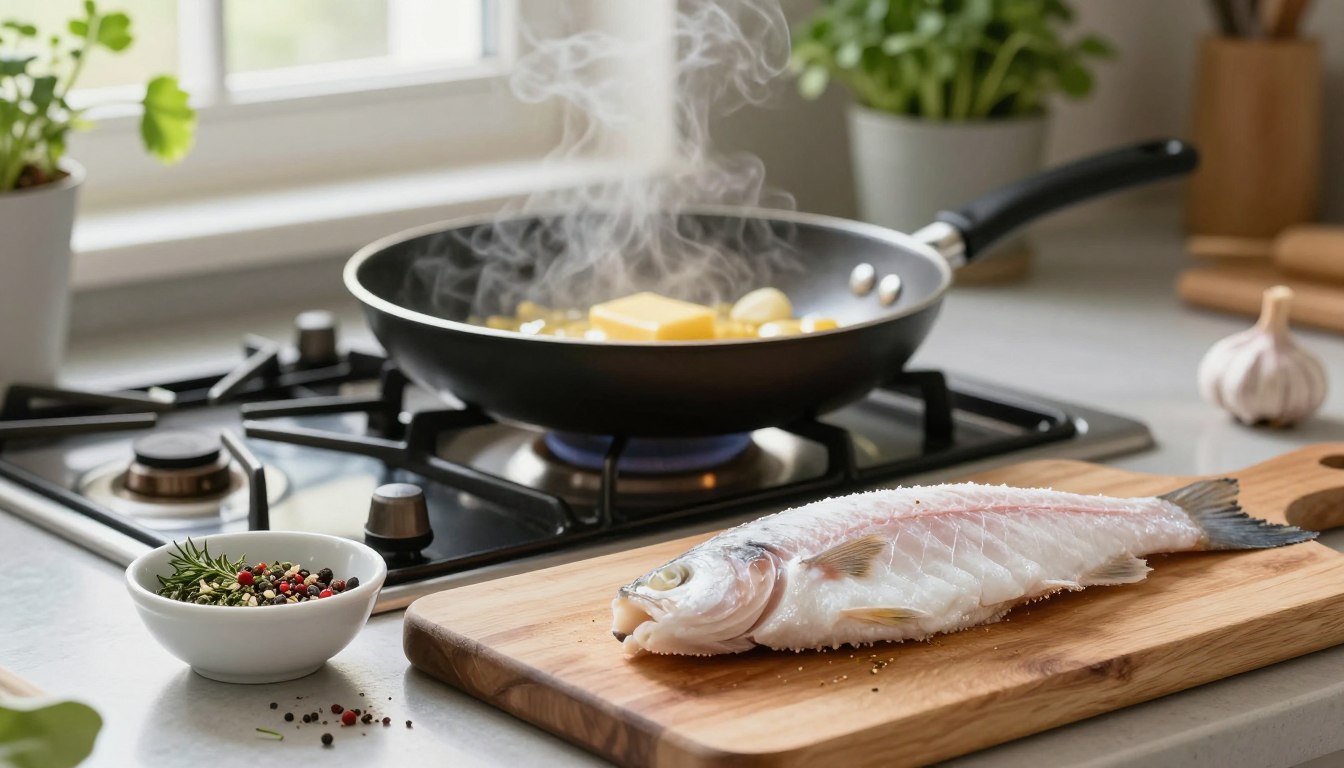
How to Cook Frozen Fish That Tastes Fresh
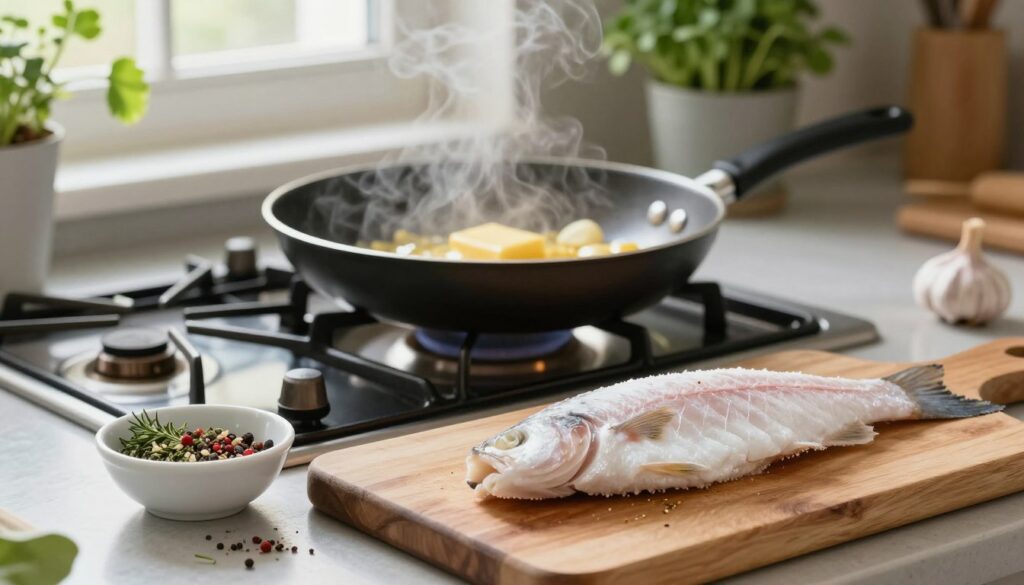
Some weeknights, I don’t have the time—or the patience—to hunt down “fresh” seafood. I still want dinner to taste clean, bright, and comforting, not bland or watery.
That’s why I keep frozen fish on hand. Modern freezing can lock in peak quality. The results can be surprisingly close to what you’d get at the seafood counter.
This article is my practical guide for quick, healthy meals. I’ll share how to cook frozen fish so it flakes nicely, browns well, and tastes fresh.
I’ll also be honest about the downside: frozen fish can pick up a dull “freezer” flavor, or turn soft from extra water. The good news is you can make frozen fish taste fresh with a few habits that don’t add much time.
Throughout these frozen fish recipes, I’ll use methods I use all the time. A safe fridge thaw, a quick cold-water rinse when I’m in a rush, a simple milk soak to soften fishy notes, and fast marinades that wake up flavor in minutes.
Key Takeaways
- Frozen fish can taste nearly fresh when it’s frozen at peak quality and cooked with care.
- Watery texture and “freezer” flavor usually come from poor handling, ice crystals, or bad thawing.
- My baseline for how to cook frozen fish starts with smart thawing and thorough drying for better browning.
- A short milk soak can help make frozen fish taste fresh by reducing strong odors and harsh flavor.
- Quick marinades work fast on fish and can bring back brightness without masking the seafood.
- This frozen seafood cooking guide is built for weeknights: simple steps, safe temps, and reliable results.
Why Frozen Fish Can Taste Fresh (and When It Doesn’t)
I choose frozen seafood for quick meals without sacrificing taste. When done right, it offers a clean flavor and firm texture. The key is understanding the process before cooking and making smart choices.
Some people say frozen fish always tastes bad. Often, it’s because the fish was frozen too slowly or handled poorly after. These mistakes are easy to spot in the kitchen.
Flash-freezing at peak quality preserves flavor and nutrients
Many fish are frozen quickly after catching, keeping them fresh. This method forms small ice crystals that protect the fish’s flavor and moisture. This way, the fish tastes cleaner and feels fresher when cooked.
I also check the fish’s appearance after thawing. A good fillet should be even in color and firm, not soft. These signs help me choose the best cooking method.
What causes that “frozen” taste and watery texture
The “freezer” taste comes from oxidation and dehydration, not cold. If the packaging lets air in, the fish can dry out. Watery texture happens when ice melts into the flesh and spills out while cooking.
Fattier fish can be tricky to cook from frozen. As it heats, extra liquid can make it watery. I avoid heavy sauces to keep it tasting fresh.
How handling and thawing mistakes create mushy fish
Mushy fish often comes from bad thawing. If it sits in liquid, it can soften and lose its texture. Once it’s mushy, spices can’t fix it.
To avoid mushy fish, I control moisture. I thaw it gently, dry it quickly, and cook it fast. These steps help keep the fish firm and flavorful for quick meals.
| What I notice | What it often means | What I do next |
|---|---|---|
| Thin glaze of ice, fillet feels firm | Good freeze, less moisture loss | Pat dry, season, and cook with high heat for better browning |
| Dry white patches or rough edges | Freezer burn and surface dehydration | Trim spots, use a gentler method like baking with a little oil |
| Lots of liquid in the bag after thawing | Cell damage or slow thaw in pooled moisture | Drain well, blot thoroughly, then cook quickly to reduce steaming |
| Soft, bendy texture before cooking | Over-thawed or mishandled fish | Choose moist-heat cooking and avoid aggressive searing |
How I Choose the Best Frozen Fish at the Store
In most U.S. grocery stores, a lot of the best seafood has been previously frozen. Even when it says “fresh,” it’s often been frozen. So, I don’t see the freezer as a last choice. Instead, it’s a quick way to get quality seafood for weeknights and my favorite frozen fish recipes.
Before I look at prices, I think about how I’ll cook it. This habit makes cooking frozen fish simple. It helps me avoid the soft, watery results that some people dislike.
Picking lean vs. fatty fish for different cooking methods
Lean fish works best when cooking from frozen. Cod, pollock, haddock, and tilapia stay firm and flake well with high heat.
Fatty fish, like salmon and swordfish, need care. They can become limp if seared straight from frozen. So, I use gentler methods or thaw them carefully to keep their rich texture.
What to look for in packaging to avoid freezer burn
I look for a tight seal and even fish with minimal air in the bag. Bags with too much air can dry out the fish faster.
I also avoid bags with heavy ice or thick crystals. These signs often mean the fish has been exposed to temperature swings. This can dry out the surface and dull the flavor in frozen fish recipes.
| What I check | What “good” looks like | What I avoid | Why it matters for cooking |
|---|---|---|---|
| Seal and air space | Snug wrap or vacuum-style pack with little air | Puffy bag, loose plastic, or gaps around the fish | Less air helps prevent dehydration and off flavors |
| Ice and frost | Light glaze is fine; fish surface looks smooth | Chunky ice, snow-like frost, or big crystals | Ice build-up can mean moisture loss and uneven heating |
| Fish shape | Fillets lie flat and look evenly cut | Curled pieces or shattered thin edges | Even thickness improves timing and browning |
| Color through the pack | Natural color with no gray patches | Dull spots or dry-looking edges | Dry edges can taste stale after frozen fish fillet cooking |
Best frozen cuts for weeknight cooking: fillets vs. steaks
For quick meals, I choose fillets. They cook fast at high heat, broil well, and can go straight to a pan. This makes fillets perfect for many frozen fish recipes without extra prep.
Steaks are better when I have more time. They’re thicker, so they release more moisture as they heat up. If I use steaks, I cook them slower and patiently to avoid a hard crust.
Food Safety Basics I Follow for Frozen Seafood Cooking
When I cook from the freezer, safety is key. This guide focuses on clean hands, cold temperatures, and clear steps. It keeps flavors high and risks low.
I use simple tools: a thermometer, paper towels, and a clean cutting board. These habits are crucial, whether I’m cooking frozen fish in the oven or making a quick skillet meal.
Why I avoid thawing fish on the counter
I never thaw fish on the counter. The outside warms up quickly while the inside stays cold. This warm zone is a breeding ground for bacteria.
To thaw safely, I use the fridge or cold water. Then, I cook it right away. This tip saves time and ensures food safety.
Safe temperature target for doneness: 145°F internal
I cook fish to 145°F internal at the thickest spot. I also check the texture. When it flakes easily and looks opaque, it’s ready.
This is crucial for frozen fillets, as their thickness varies. A thermometer is the best way to ensure consistent results.
How I handle raw fish packaging, rinsing, and cleanup
I open the package in the sink and discard any liquid. Then, I remove the fish and rinse it under cold water to remove ice crystals. I pat it dry to ensure it browns well.
After that, I sanitize the sink and counter and change the towels. Clean surfaces, clean hands, and no raw seafood contact with ready-to-eat foods are key.
| Step I follow | What I do | Why it helps | Common mistake I avoid |
|---|---|---|---|
| Thawing decision | Thaw in the fridge or use cold water, then cook promptly | Keeps the fish out of the temperature danger zone | Leaving fish on the counter “just for a bit” |
| Temperature check | Probe the thickest part until it reaches 145°F | Gives a measurable doneness standard for food safety | Guessing by time alone |
| From-frozen prep | Remove packaging, quick cold rinse, then pat dry | Reduces ice crystals and improves searing or roasting | Cooking with a wet surface that turns soggy |
| Cleanup routine | Trash liquids, wash tools, sanitize sink and counters | Limits cross-contamination in a busy kitchen | Reusing the same board or towel for produce |
My Best Way to Thaw Frozen Fish Without Getting Mushy
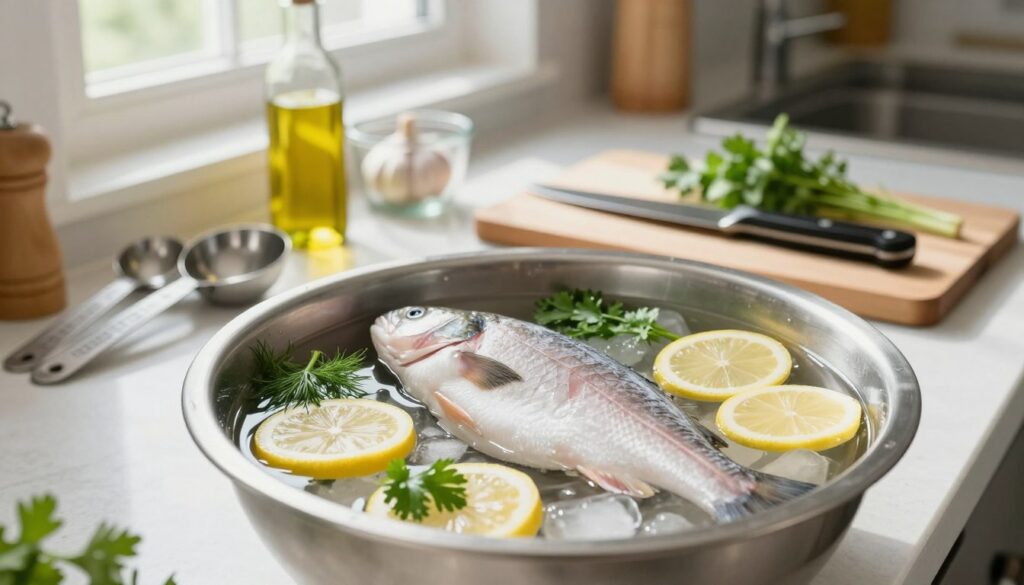
Thawing frozen fish is a key part of cooking, not just a step. Rushing it makes the fish soft and wet. But slowing down gives me a flaky texture and better flavor.
This approach helps me cook frozen fish better, whether baking, pan-searing, or air-frying. My goal is to reduce water in the fish and control it in the pan.
Overnight refrigerator thawing for the best texture
Thawing fish in the fridge overnight keeps it firm. This way, I avoid a soft bite. It also keeps the fish safe by staying cold.
I avoid thawing on the counter. Warm edges and cold centers cause uneven texture. Plus, it can sit in the danger zone too long.
How I keep fillets from sitting in excess liquid
To manage moisture, I use a simple trick. I wrap the fillets in a dish so melt water runs away. This keeps the fish dry and helps it stay juicy after cooking.
If the fish is unwrapped, I place it in a shallow dish. I make sure it’s slightly raised so water collects below. Before cooking, I pat it dry to get a nice crust.
When partial thawing is enough for even cooking
On busy nights, I use a quick thaw method. For thin cuts, I rinse off ice under cold water. Then, I dry it well and cook it.
This method works well for thin, uniform fillets. It ensures even cooking, so the fish cooks through without getting chewy.
| Thaw approach I use | Best for | How I set it up | What it changes in the cook |
|---|---|---|---|
| Overnight fridge thaw | Most fillets when I want the cleanest texture | Covered dish in the refrigerator, positioned so liquid drains away | More even seasoning, better flake, and a stronger start for the best way to cook frozen fish |
| Moisture-control thaw | Delicate white fish that waterlogs fast | Fillet kept slightly raised so runoff collects below, then patted dry | Drier surface for browning and a better chance at juicy fish from frozen |
| Partial thaw (de-ice) | Thin, quick-cooking fillets on a tight schedule | Brief cold-water rinse to remove ice crystals, then thorough drying | More even cooking and less steaming during frozen fish fillet cooking |
Quick Thaw Hacks for Busy Nights
When I’m in a rush, I still aim for clean flavor and a firm bite. I use a quick, safe trick to keep frozen fish meals perfect without making the fillet soft.
Rinsing under cold water to remove ice crystals fast
If I forget to thaw, I rinse the frozen fish under cold water. This removes ice crystals quickly. I make sure the water is gentle and don’t let the fish sit in warm water.
This trick is one of my top frozen fish tips. It speeds up prep without risking food safety. Then, I season and cook it by baking, broiling, or pan-cooking, depending on the cut.
What I do after rinsing: pat dry for better browning
After rinsing, I pat the fish dry with paper towels. This includes the top, bottom, and edges. Skipping this step means the fish won’t brown well because of excess moisture.
Once dry, I brush on olive oil, add salt and pepper, and keep spices simple. This small step ensures better color and a cleaner finish when cooking fish from frozen.
How thickness changes timing and technique
Thickness is key. Thin fillets go from rinse to seasoning quickly. Thicker pieces take longer and may release more liquid as they heat.
| Cut thickness | Rinse & prep approach | Best next move | Timing cue I watch |
|---|---|---|---|
| Thin fillets (about 1/2 inch) | Cold rinse until ice is gone, then pat very dry | Hot pan sear or high-heat bake with oil and spices | Edges turn opaque quickly; surface stays dry enough to brown |
| Medium fillets (about 3/4 inch) | Cold rinse, dry well, rest 2–3 minutes on towels | Oven bake on a preheated sheet or covered start, then uncover | Less puddling on the pan; flakes begin at the thickest point |
| Thick cuts (1 inch or more) | Cold rinse longer, dry, then portion into thinner pieces if possible | Slice into uniform strips for stir-fry-style cooking or bake with a sauce | Moisture release slows once heat penetrates; center turns pearly and firm |
For busy nights, I plan around thickness. Thinner portions for speed, thicker cuts for the oven. This makes quick frozen fish meals predictable, even when cooking from frozen.
The Milk Soak Method I Use to Remove Fishy Flavor
When I’m trying to make frozen fish taste fresh, I use milk first. It’s a simple trick that gets rid of strong smells. It also makes the fish smell sweeter.
Why whole or 2% milk works (and why I skip low-fat)
Milk’s fat pulls fishy smells off the fish’s surface. That’s why I choose whole or 2% milk over low-fat.
This trick works best with mild fish like cod and tilapia. It’s perfect for quick weeknight meals where I want a clean taste.
Overnight milk soak in the fridge for maximum freshness
To refresh frozen fillets, I put them in a dish and cover them with milk. I add fresh herbs like dill or parsley for extra flavor.
Then, I refrigerate them for at least 8 hours. This slow soak makes the fish juicy and ready for cooking.
Quick 10–20 minute milk soak for already-thawed fillets
If the fish is thawed, I soak it for 10–20 minutes. This quick soak removes any freezer smell and keeps the fish fresh.
But I don’t soak thin fillets too long. They can get too soft if they sit in liquid too long.
Pat dry but don’t rinse for better browning when baking or pan-frying
After soaking, I pat the fish dry with paper towels. I don’t rinse off the milk. This helps the fish brown better when cooked.
Any leftover milk goes down the drain. I don’t reuse it after it’s touched raw fish.
| My milk soak choice | Best use case | Soak time | What I do right after |
|---|---|---|---|
| Whole milk | Stronger odor, thicker fillets, or when I want the cleanest finish | 8+ hours (refrigerated) | Pat dry; season; bake or sear for juicy fish from frozen |
| 2% milk | Everyday meals and mild fish where I still want a fresh taste | 8+ hours (refrigerated) | Pat dry; don’t rinse; cook hot for better browning |
| Whole or 2% (quick soak) | Already-thawed fillets that smell a bit “fishy” | 10–20 minutes (refrigerated) | Pat dry well; go straight to pan or oven |
Marinades That Help Make Frozen Fish Taste Fresh
When I’m working on frozen fish recipes, I rely on marinades to enhance flavor. A good marinade adds aroma, helps seasoning stick, and makes the fish taste fresh.
How citrus and infused oils cut lingering frozen flavors
I start with citrus—lemon, lime, or orange zest—to brighten the fish. I mix it with olive oil or infused oils to keep the fish moist and flavorful.
For oven baked frozen fish, I use a simple mix: olive oil, lemon, garlic, salt, and black pepper. This works well with cod, tilapia, pollock, haddock, and shrimp without being too heavy.
My timing rule: fish absorbs marinade quickly (often about 15 minutes)
My rule for cooking frozen fish with marinade is short and strict. If the fish is thawed and dry, I marinate for about 15 minutes.
Long marinating can make the fish surface soft, which is bad with lemon juice or vinegar. For more flavor, I brush extra marinade on near the end instead of marinating too long.
Seasoning ideas that work across most fish types
After rinsing and drying the fish, I season it well. This helps the heat build flavor. I change up the seasoning depending on the meal, and it works for broiling, grilling, or pan-frying.
| Marinade profile | What I mix | Best fit | What it does for flavor |
|---|---|---|---|
| Lemon-herb olive oil | Olive oil, lemon zest, parsley, garlic, salt, pepper | Cod, tilapia, pollock | Brightens and keeps the fish tasting light |
| Orange-ginger soy | Orange zest, low-sodium soy sauce, ginger, a little oil | Salmon, mahi-mahi, tuna | Adds savory depth without hiding the fish |
| Smoky paprika oil | Olive oil, smoked paprika, garlic powder, black pepper, pinch of salt | Catfish, haddock, cod | Builds a warm crust and rounds out lean fillets |
| Dill and mustard | Olive oil, Dijon mustard, dill, lemon juice, salt | Trout, salmon, Arctic char | Cuts richness and keeps bites tasting fresh |
These are my go-to options for frozen fish recipes. They also work well for oven baked fish, as the oil prevents dryness and the aromatics perfume the pan.
Frozen Fish Without Thawing: When It Works and When I Avoid It

On busy nights, I cook fish from frozen and still get a fresh taste. But, not all fish works well without thawing. The type of fish, its fat level, and cooking heat matter a lot.
Before cooking, I prepare the fish well. I remove it from the package, rinse off ice glaze, and pat it dry. This prep helps achieve browning, not just steaming.
Why fatty fish can turn limp and watery from frozen
Cooking salmon or swordfish straight from frozen can be tricky. The outside might overcook while the inside is still raw. This leads to a soft surface and a watery taste.
For crisp edges or skin, I avoid cooking fatty fish from frozen. It’s better to thaw them first.
Why lean fish can cook better straight from frozen
Lean fish like cod and tilapia work better from frozen. They release less liquid, staying firmer as they cook. I still dry the surface well for better results.
For quick weeknight meals, tilapia is my go-to. It’s the best way to cook frozen fish without thawing.
| Fish type | Frozen texture risk | What I cook from frozen | Method I avoid from frozen |
|---|---|---|---|
| Salmon (fatty) | Higher chance of a watery surface and soft bite | Gentle roast with steady heat | Hard sear for “crispy” results |
| Swordfish (fatty) | Can turn steamy and limp as liquid pools | Moist, sauce-friendly stovetop cooking | Fast high-heat searing |
| Cod (lean) | More stable flakes with less pooling | Roast or controlled pan cook | Long, slow simmer without support (can dry out) |
| Tilapia (lean) | Lower risk of sogginess when dried well | Roast, then finish uncovered for color | Overcrowded pan that traps steam |
What I do if I must cook fatty fish from frozen
If I have to cook fatty fish from frozen, I choose poaching or slow-roasting. These methods keep the fish moist and even.
I also use liquid-based dishes on the stove, like swordfish in cherry tomato sauce. This way, the fish’s juices blend into the sauce, making it workable. For me, this is the best approach when time is short.
Oven Baked Frozen Fish That Stays Juicy
When I want oven baked frozen fish that tastes clean and tender, I use high heat and a simple setup. This method keeps the texture firm while the surface browns nicely.
I aim for juicy fish from frozen, not a dry fillet. The small steps below make a big difference, more than extra sauces.
My high-heat method: 450°F with oil, seasoning, and parchment
I preheat my oven to 450°F for quick heat. Then, I rinse the fish under cold water to melt ice crystals. I pat it dry with paper towels.
I lay the pieces in a single layer on a parchment-lined sheet pan or baking dish. I rub both sides with olive oil or a neutral oil, then season with salt, pepper, and dried herbs. If I have a lemon, I add zest or a few thin slices on top.
Why I loosely cover with foil for the first half
For oven baked frozen fish, I loosely tent foil over the pan for the first half. This holds in gentle steam so the center warms through without getting tough.
Halfway in, I remove the foil so the top can dry a bit and take on color. That’s how I get juicy fish from frozen with fewer watery drips on the pan.
Typical timing guidelines
| Cut and thickness | Oven setup | Typical time at 450°F | Best result |
|---|---|---|---|
| Thin fillets (about 1/2 inch) | Parchment + foil first half | 12–15 minutes | Moist, quick weeknight texture for frozen fish recipes |
| Average fillets (about 3/4 inch) | Parchment + foil first half | 15–18 minutes | Even flakes with minimal edge dryness |
| Thick cuts or steaks (about 1–1 1/4 inch) | Parchment + foil first half | 20–25 minutes | Steady heat-through for juicy fish from frozen |
How I confirm it’s done
I check doneness two ways. The fish should flake easily with a fork at the thickest point, and the center should read 145°F on an instant-read thermometer.
If it’s close but not there yet, I give it 2 more minutes and recheck. That quick check keeps oven baked frozen fish from going past tender and helps me stay consistent across frozen fish recipes.
Frozen Fish Pan Fried and Pan-Seared for a Golden Crust
For a crispy edge on frozen fish, I skip thawing. I rinse the fillets under cold water to melt ice. Then, I dry them well with paper towels to prevent steaming.
To cook frozen fish on the stovetop, I heat a skillet over medium-high heat. I add 1 tablespoon of neutral oil or a small knob of butter. Once it shimmers, I place the fish and let it sear without moving.
I sear for 2–3 minutes per side until golden. Then, I lower the heat, cover, and cook 5–7 minutes more. This method works well for thick fillets or those with heavy ice.
For a slower pace, I sear in neutral oil, flip after 3–4 minutes, and then cover. I keep the lid on to set the middle, then uncover for the last minute to protect the crust.
| Step | What I Do | Why It Helps |
|---|---|---|
| Quick rinse | Cold-water rinse to remove loose ice, then drain well | Limits extra water that can cool the pan and soften browning |
| Dry thoroughly | Pat dry top, bottom, and edges; re-dry after seasoning if needed | Dry fish sears faster and forms a more even crust |
| Sear without crowding | Cook in batches so each piece has space around it | Maintains heat and prevents steaming |
| Temperature check | Use an instant-read thermometer and aim for 145°F in the thickest part | Keeps the center safe and moist without overcooking the outside |
The biggest crust killers are moisture and a packed pan. I season right before cooking and leave space between fillets. This way, frozen fish pan fried can taste fresh, with a crispy outside and a tender inside.
Healthy Frozen Fish Dinner Ideas and Quick Frozen Fish Meals
When I’m hungry and in a rush, I turn to simple frozen fish recipes. A hot oven, broiler, or simmer can transform a fillet into a healthy meal quickly. I also plan for leftovers, making quick meals on busy days.
Sheet-pan fish with lemon, herbs, and vegetables
My go-to is a parchment-lined sheet pan at 450°F. I mix broccoli, green beans, or asparagus with olive oil, salt, and pepper. Then, I add lemon slices and herbs like parsley or dill for extra flavor.
This method is reliable because everything cooks together. Halfway through, I check the fish and rotate the pan to avoid over-browning. It’s a simple yet healthy meal I can make any night.
Broiler-friendly breadcrumb topping for lean fillets
For lean fish like cod or tilapia, I use a quick topping method. A thin mayo layer, then seasoned breadcrumbs, gets golden under the broiler. It’s like upgraded fish sticks, without frying.
I season the breadcrumbs with garlic powder, paprika, black pepper, and salt. This adds bold flavor to the crust. It’s a fast and easy recipe for a quick meal.
Stovetop simmered fish in sauce when I want extra moisture insurance
For fear of dryness, I opt for a saucy pan. Cherry tomatoes, olive oil, and broth simmer until thickened. Then, I add the fish and cover it. Gentle heat keeps the fish tender, and the sauce fills in any gaps.
This method works well with firmer fish like swordfish. It’s also great for making quick meals because the sauce can top pasta or rice.
Easy fish dinner ideas using leftovers for bowls, tacos, and salads
If I bake or broil extra, I use the fish as a protein base. Flaked fish is perfect in rice bowls with cucumber and avocado, or in tacos with cabbage and lime. A cold salad with greens, beans, and vinaigrette is another easy option.
| Leftover plan | What I add | Why it works on weeknights |
|---|---|---|
| Grain bowl | Microwaved rice or quinoa, frozen corn, salsa verde, lime | Warm base + bright topping keeps the fish tasting fresh |
| Tacos | Corn tortillas, shredded cabbage, Greek yogurt, hot sauce | Fast assembly and strong crunch for contrast |
| Big salad | Romaine, white beans, cherry tomatoes, olive oil, vinegar | No reheating needed, high protein, light cleanup |
These add-ons make one cook into several meals. With a few staples in the fridge, frozen fish recipes become fast and flexible all week.
Conclusion
Frozen fish can taste as fresh as the day it was caught. This is because it’s flash-frozen at its peak quality. My guide on cooking frozen seafood shows you how to make it taste just like fresh.
My top tip for cooking frozen fish is to thaw it smartly. I thaw it in the fridge to keep its texture right. If I’m in a hurry, a quick cold-water rinse helps, followed by drying it to get a nice crust.
If the fish tastes too fishy, I soak it in milk. This helps tone down the smell. I keep marinades short to keep the fish firm. Then, I cook it to 145°F to make it flaky and moist.
For frozen fish, I follow a simple rule. Lean fish like tilapia and cod works best without thawing. But fattier fish like salmon and swordfish might get watery. So, I use poaching, slow-roasting, or a saucy pan method. This makes cooking frozen fish recipes easy and reliable.



One Comment