
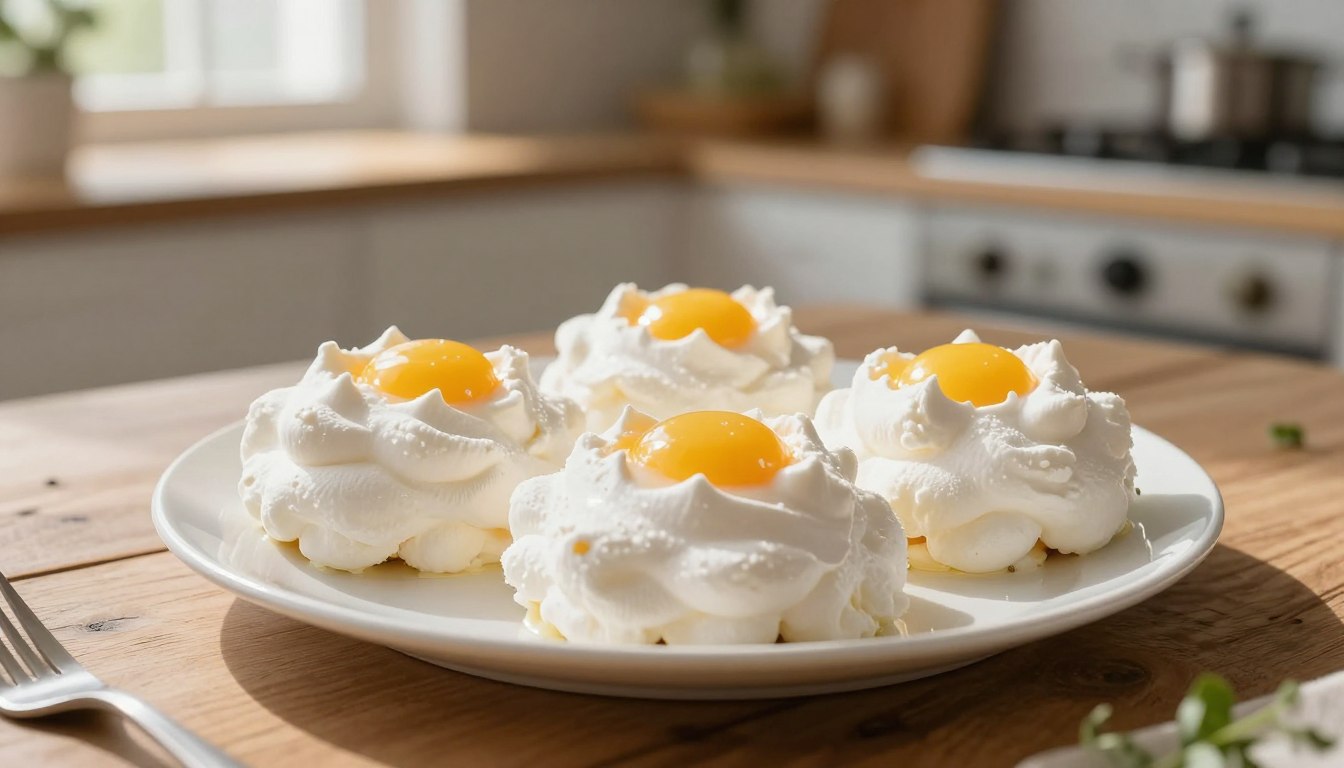
The Best Easy Cloud Egg Recipe Ideas
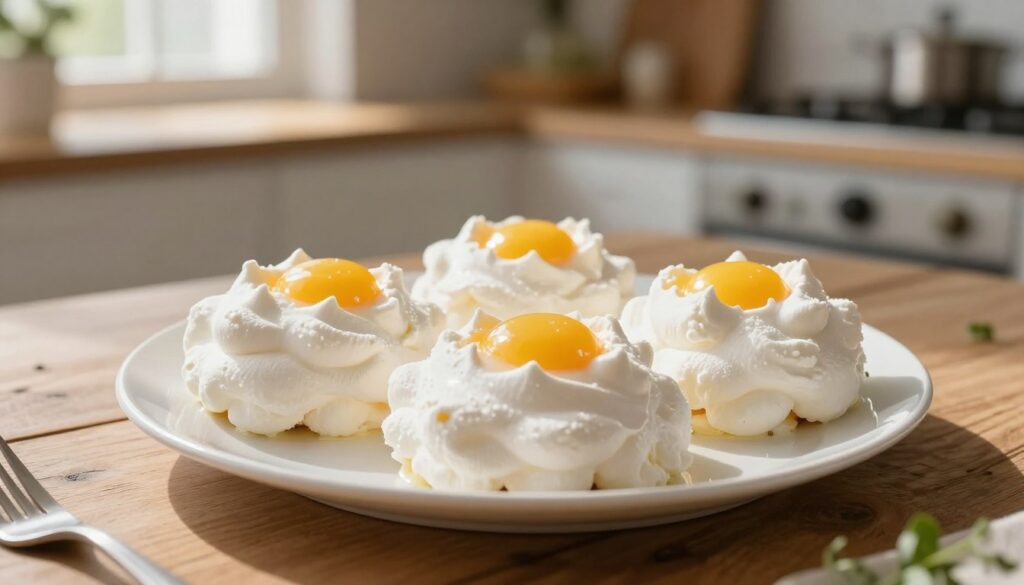
Ever seen someone crack an egg into a bowl and thought, “That’s it?” Cloud eggs turn that simple act into magic. They look like real clouds on your plate. The trick is whipping egg whites until they’re stiff and airy. Then, place a runny yolk in the center.
Maybe you’ve seen cloud eggs on social media and wondered if they’re easy to make. The answer is yes, they are. You can whip up easy cloud eggs in under 20 minutes. You don’t need fancy equipment or cooking skills.
A fluffy cloud egg recipe makes breakfast both delicious and beautiful. Your family will think you spent hours cooking. But the truth is, it’s incredibly simple.
This guide will teach you everything about cloud egg recipes. We’ll start with the classic version. Then, we’ll explore creative variations to match your taste. Whether you’re looking for a low-carb breakfast or a dish to impress on Instagram, cloud eggs are perfect.
By the end of this guide, you’ll be confident in making beautiful cloud eggs every time. Ready to learn why this 17th century French dish is now a hit at breakfast tables in America?
Key Takeaways
- Cloud eggs take less than 20 minutes from start to finish
- The recipe requires just eggs and basic seasonings to get started
- Fluffy cloud eggs work great for low-carb and keto diets
- Easy cloud eggs offer endless flavor variations for every taste
- This dish looks fancy but stays simple enough for beginners
- You can prepare ingredients ahead to speed up morning cooking
- Common mistakes are easy to fix once you know what to watch for
What Are Cloud Eggs and Why They’re Taking Over Breakfast
Cloud eggs are a big hit on Instagram right now. They turn simple eggs into something amazing. You start by whisking egg whites until they’re stiff and glossy. Then, a golden yolk goes in the middle.
When baked, they become light and airy. They look as good as they taste. Serving them makes your breakfast table feel like a fancy restaurant.
The viral cloud egg trend has taken over social media. These eggs are stunning to look at. Their white and yellow colors make for a beautiful plate that grabs attention.
Food lovers love them because they’re both beautiful and nutritious. They offer a great mix of looks and taste.
The History Behind This 17th Century French Dish
Cloud eggs aren’t new. They come from 17th century France. Back then, cooks were experimenting with egg whites.
They wanted to make dishes light and airy. Beating egg whites to stiff peaks was key. This technique helped shape French cooking and spread worldwide.
This method stayed popular for centuries. It was in classic cookbooks and fancy restaurants. Now, anyone can make it at home.
Why Cloud Eggs Became an Instagram Sensation
Cloud eggs became a hit on social media. Food bloggers and home cooks shared their experiences around 2020. Videos of the whites puffing up in the oven got millions of views.
They’re perfect for Instagram because they look amazing. The golden yolk in white peaks is a feast for the eyes. People love to make and share them online.
For more on making cloud eggs, check out this detailed cloud egg recipe guide. It has step-by-step instructions and tips for perfect results.
| Cloud Egg Feature | What Makes It Special | Why People Love It |
|---|---|---|
| Visual Appearance | Fluffy white peaks with golden yolk center | Instagram-worthy and impressive to guests |
| Preparation Time | About 10-15 minutes total | Quick enough for busy weekday mornings |
| Nutritional Value | High protein, low carbohydrate | Supports healthy eating goals |
| Texture Quality | Light and airy, never dense | Completely different from regular eggs |
| Customization Options | Works with cheese, herbs, and meats | Endless flavor possibilities |
Cloud eggs are a mix of history, technique, and social media appeal. They make breakfast special.
How to Make the Perfect Cloud Egg Recipe
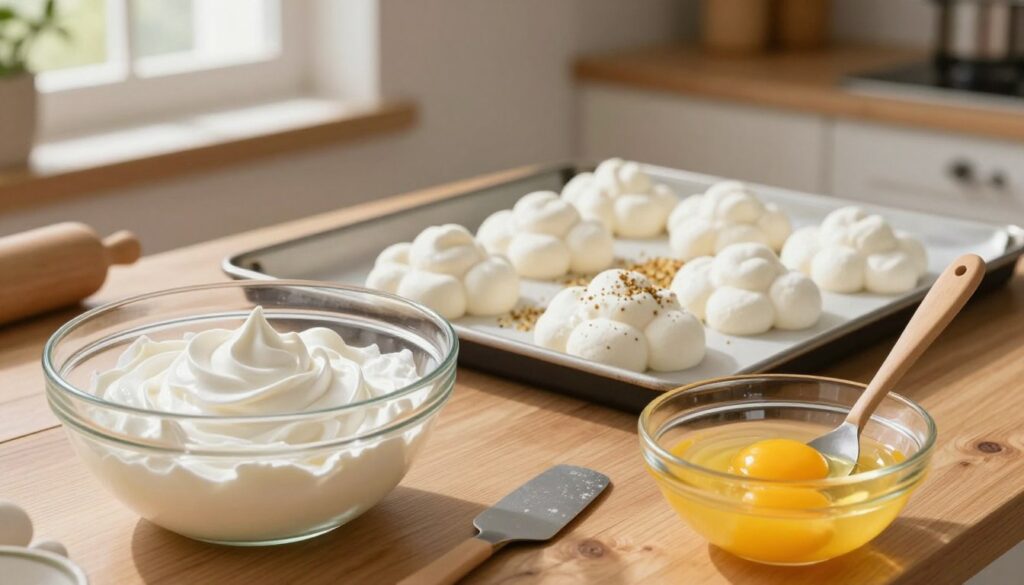
Making cloud eggs is simpler than you might think. This method turns egg whites into fluffy clouds, making your breakfast look fancy. You only need basic ingredients and a few steps to achieve this.
To start, gather your ingredients. You’ll need 4 to 8 large eggs, salt, pepper, and a greased baking sheet. For extra flavor, add bacon bits, shredded cheese, or fresh chives. This dish is all about simplicity.
- Preheat your oven to 350 to 355 degrees Fahrenheit
- Separate egg whites from yolks carefully, keeping yolks whole
- Beat egg whites with an electric mixer until stiff peaks form
- Gently fold in your chosen mix-ins like bacon or cheese
- Spoon mixtures onto your prepared baking sheet, spacing them 2 inches apart
- Create small wells in the center of each mound
- Bake for 4 minutes until whites set and turn light golden
- Slide one yolk into each well carefully
- Bake for 1 to 2 additional minutes
- Serve immediately while still warm
Timing is essential when you’re making baked cloud eggs. Your egg whites should triple in volume when beaten correctly. Watch for golden edges as your visual cue that they’re done. The yolks should stay slightly runny for the best taste and texture.
This easy cloud eggs tutorial delivers restaurant-quality results in under 15 minutes. Once you master the basic technique, you’ll find countless ways to customize your cloud eggs with different flavors and toppings.
Essential Tips for Cloud Egg Success
Making perfect whipped egg white breakfasts takes practice and the right techniques. You need to master several key skills before you start cooking. The difference between fluffy, gorgeous cloud eggs and disappointing, flat ones comes down to following these insider tips. Once you learn these strategies, you’ll be able to make restaurant-quality cloud eggs at home every time.
Separating Egg Whites Without Breaking the Yolks
A separated egg recipe starts with careful egg separation. The last thing you want is a broken yolk ruining your entire batch of whites. Take your time during this crucial step to ensure clean separation.
You can use two popular methods to separate eggs:
- The shell method: crack the egg and gently pass the yolk between shell halves
- The hand method: crack the egg into your hand and let whites slide between your fingers
Here’s a smart trick: separate each egg over a small bowl before adding the white to your main mixing bowl. This way, one broken yolk won’t destroy your entire batch. You can keep yolks in their original shells or transfer them to individual greased bowls for easier handling later.
Achieving Stiff Peaks Every Time
Stiff peaks are the secret to egg white fluffy texture. When you lift your beaters, the peaks should stand straight up without drooping at all. You need the right equipment and conditions to reach this stage consistently.
Follow these tips for perfect stiff peaks:
- Use a large bowl since whites will triple or even quadruple in volume
- Start with room temperature eggs, not cold ones from the refrigerator
- Use an electric mixer for faster, more reliable results
- Whip for 3-5 minutes until peaks stand tall and glossy
Room temperature whipped egg white breakfast ingredients whip up much faster and create better volume than cold eggs. A large bowl gives you the space you need for all that expansion.
Preventing Deflated or Chewy Egg Whites
Timing and temperature control matter most for texture. Over-baking is your biggest enemy here. When egg whites bake too long, they become chewy and deflate completely, ruining your dish.
| Issue | Cause | Solution |
|---|---|---|
| Chewy texture | Over-baking at high heat | Bake at 350°F for 3-4 minutes only |
| Deflation | Too much baking time | Watch closely and remove when edges turn golden |
| Sticking to pan | Ungreased parchment paper | Grease parchment paper thoroughly before placing eggs |
| Uneven cooking | Inconsistent oven temperature | Use an oven thermometer to verify temperature |
Always grease your parchment paper before placing cloud eggs on it. This simple step prevents sticking and makes plating easy. Watch your eggs closely during baking since every oven cooks differently. Your cloud eggs are done when the edges turn light golden and the centers still feel slightly soft to the touch.
Classic Cloud Eggs with Bacon, Cheese, and Chives
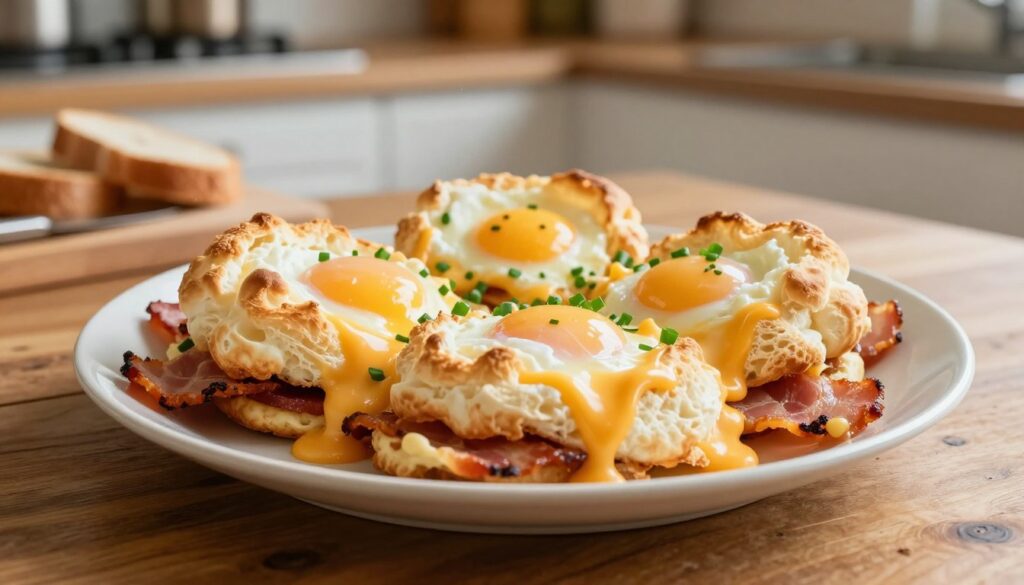
The mix of bacon, cheese, and chives is a timeless favorite for cloud eggs breakfast. It’s a recipe that many home cooks keep coming back to. This combination creates magic when baked together.
Understanding your ingredients is key. Crispy bacon adds smokiness and salt. Sharp cheddar cheese brings richness and melts nicely. Fresh chives add brightness and a mild onion taste, tying everything together.
To make a baked egg whites recipe at home, you need the right ingredients. Here’s what you’ll need for eight servings:
- 8 large eggs, separated into whites and yolks
- 4 strips cooked bacon, crumbled into small pieces
- 1/2 cup finely grated sharp cheddar cheese
- 1 tablespoon thinly sliced fresh chives
- Salt and pepper to taste
- Extra chives for garnishing
Preparation is crucial for your baked egg whites recipe. Cook your bacon until it’s very crispy, then crumble it. Grate your cheese finely so it spreads evenly. Slice your chives thinly for the best flavor and texture.
When your cloud eggs come out of the oven, add more fresh chives on top. This classic method is your starting point for exploring new variations.
Creative Flavor Variations for Your Cloud Eggs
Mastering the basic fluffy egg recipe opens up endless possibilities. Cloud eggs are perfect on their own but also great for adding your own twist. Your fridge is full of ingredients to make your cloud eggs taste like they came from a fancy restaurant. You can add fresh herbs, veggies, or extra protein to match your taste and what you have.
Herb-Infused Cloud Eggs
Herbs add a sophisticated flavor to your egg whites without extra calories. Chives or green onions add a mild onion taste that goes well with many ingredients. Thyme brings earthy notes, while sage adds a robust, savory flavor. A little rosemary adds strong flavor, and chili flakes add a spicy kick.
Experiment with different herbs to create your own blend. Try thyme with mushrooms or sage with caramelized onions. These combinations turn simple cloud eggs into something special.
Vegetable-Loaded Cloud Egg Ideas
Mushrooms add deep umami flavor to your eggs. Sweet caramelized onions add richness. Chopped spinach boosts nutrition but make sure to squeeze out excess liquid. Bell peppers, zucchini, and tomatoes also work well.
- Sautéed diced mushrooms
- Caramelized onions
- Chopped spinach (liquid removed)
- Diced bell peppers
- Diced zucchini
- Cherry tomatoes
Protein-Packed Cloud Egg Combinations
Adding cooked and crumbled breakfast sausage adds savory flavor. Diced ham brings a classic breakfast taste. Diced cooked pancetta adds an Italian twist. Use the flavor combination guide to find your favorite.
| Protein Option | Best Paired With | Flavor Profile |
|---|---|---|
| Breakfast Sausage | Sage, caramelized onions | Savory, seasoned |
| Diced Ham | Swiss cheese, chives | Classic breakfast |
| Pancetta | Spinach, garlic | Italian elegance |
| Bacon | Cheddar, chives | Smoky, salty |
Your creativity is key. Try mushrooms with thyme, spinach with nutmeg, or sausage with caramelized onions. These combinations keep cloud eggs exciting and prevent boredom at breakfast.
Low-Carb and Keto-Friendly Cloud Egg Benefits
Cloud eggs are a great choice for a healthy breakfast that’s low in carbs. They’re perfect for those on a keto diet or watching their carb intake. These fluffy eggs are not only nutritious but also delicious.
Cloud eggs have a great mix of nutrients. They have almost no carbs, with only about 1 gram per serving. You’ll get 8 to 16 grams of protein, depending on what you add. This keeps you full all morning. The healthy fats from egg yolks and ingredients like bacon or cheese give you energy that lasts all day.
Making a low carb egg recipe like cloud eggs is a smart choice for weight loss. Each serving has about 91 calories. The egg whites add volume without extra calories, making it a filling breakfast that won’t ruin your diet.
Here’s why cloud eggs are great for your health:
- Nearly zero carbohydrates per serving
- High-quality protein for muscle maintenance
- Rich in vitamin A, B vitamins, and iron
- Contains calcium for bone health
- Provides satiety that lasts for hours
- Works seamlessly with keto macros
If you’re tracking macros, cloud eggs fit well into your keto diet. You can add cheese, bacon, or avocado to meet your dietary needs. This way, you can enjoy a delicious breakfast without worrying about your diet.
How to Prep Cloud Eggs Ahead of Time
Planning a special brunch can feel overwhelming. But, cloud eggs don’t have to stress you out. Knowing what you can prepare ahead of time is key. This way, your quick egg recipes become manageable, and you can relax in the kitchen.
What You Can Prepare in Advance
The good news is that you can do most of your work days before serving. Cloud eggs are made from simple components, and each one stores differently. Here’s your prep timeline:
- Separate your eggs up to 2 days ahead, storing whites in one airtight container and yolks in another
- Cook and chop bacon up to 3 days in advance, storing it in a covered container
- Grate your cheese up to 3 days before serving
- Slice fresh chives up to 2 days ahead
Keep all components properly covered in your refrigerator. This makes your simple oven recipes feel effortless when guests arrive.
Why Fully Made Cloud Eggs Don’t Store Well
You cannot bake cloud eggs the night before and expect great results. The whipped egg white structure is delicate. Once baked and cooled, the whites collapse and become rubbery. The yolks continue cooking and turn overcooked. Cloud eggs demand immediate serving after baking.
The bright side? Since all your components are ready, actual cooking takes just 8-10 minutes. You’ll beat the egg whites into stiff peaks, arrange your toppings, and bake. Your brunch timeline becomes stress-free, and you spend time with guests instead of working in the kitchen.
Serving Suggestions and Pairing Ideas
Now that you’ve learned to make cloud eggs, it’s time to find the best ways to serve them. Cloud eggs are very versatile and pair well with both light and hearty foods. They’re perfect for easy brunch ideas or impressing guests.
Start by serving cloud eggs on crispy toast. You can put them on regular, sourdough, whole grain, or toasted English muffin. Cutting into it and letting the yolk flow over the bread makes it even better. This turns your cloud eggs into a light, yet satisfying meal.
Classic Breakfast Pairings
Pair your cloud eggs with these classic dishes for a complete meal:
- Crispy bacon strips or sausage links
- Golden hash browns or breakfast potatoes
- Traditional baked beans for a British-style breakfast
- Fresh fruit on the side
Lighter Breakfast Options
For a healthier breakfast, try these options with cloud eggs:
- Sliced avocado for a creamy touch
- Fresh tomato slices
- Sautéed spinach
- A simple side salad with light vinaigrette
Garnishing and Final Touches
Add a touch of elegance to your cloud eggs with these finishing touches:
- Sprinkle flaky sea salt and freshly cracked black pepper
- Add fresh herbs like chives or dill
- Drizzle hot sauce for a spicy kick
- Finish with truffle oil for a luxurious touch
Cloud eggs are great for brunches with friends. Imagine a table with cloud eggs, fresh fruit, yogurt parfaits, and mimosas. Your guests will love the look and taste of this dish.
Common Cloud Egg Mistakes and How to Avoid Them
Making perfect cloud eggs for breakfast under 15 minutes needs focus. Even skilled cooks face problems that can mess up a batch. Knowing what goes wrong helps you succeed every time. Most issues come from a few common mistakes. Once you know these, you can avoid them and serve beautiful cloud eggs every time.
Cloud eggs require the right technique at every step. Small mistakes can lead to disappointing results. Your eggs might turn out rubbery, deflated, or stuck to the pan. Some people struggle to whip their egg whites properly. Understanding these problems lets you fix them. This section will guide you through the most frequent mistakes and how to prevent them.
Timing Issues That Ruin Your Eggs
The baking time is crucial for cloud eggs. The first stage lasts 4 minutes at 350°F. The whites should set and turn golden at the edges, not brown. It’s important to watch your oven closely. Many people overbake during this stage, making the whites chewy and deflated when you add the yolks.
The second baking stage is even shorter—just 1 to 2 minutes. This brief window keeps your yolks runny and delicious. If you bake longer, your yolks overcook and lose that gorgeous creamy center. Set multiple timers on your phone so you don’t forget about the eggs. Look for whites that appear just set with a slight golden color.
| Baking Stage | Temperature | Time | What to Watch For | Common Mistake |
|---|---|---|---|---|
| First Bake (Whites Only) | 350°F | 4 minutes | Golden edges, set whites | Overbaking causes chewy texture |
| Second Bake (With Yolks) | 350°F | 1-2 minutes | Runny yolk center | Overcooking loses runniness |
Equipment and Setup Problems
Your equipment choices are key before you start mixing. Using a bowl that’s too small is a disaster since egg whites triple in volume. You need a large bowl—at least 4 quarts. Make sure your bowl is completely dry and grease-free. Any moisture or fat prevents proper whipping. Wipe your bowl and beaters with a clean, dry cloth before starting.
Parchment paper setup is important for breakfast ideas under 15 minutes. If you don’t grease it well, your finished eggs stick and tear when you remove them. Brush the paper generously with butter or cooking spray. Crowding your baking sheet causes uneven cooking. If your sheet is small, bake in batches instead. Using old eggs that have been in your fridge for weeks also prevents proper whipping. Fresh eggs whip to stiff peaks much faster.
- Use a large, clean, dry mixing bowl (at least 4 quarts)
- Ensure beaters are spotless and moisture-free
- Grease parchment paper thoroughly with butter
- Avoid crowding—space clouds 2 inches apart
- Choose the freshest eggs available
- Keep your baking sheet level in the oven
- Check oven temperature with a thermometer
Breaking yolks during separation ruins a batch. Use the small bowl method. Crack your egg into a small cup first, then transfer it carefully to the whites. This gives you a second chance if a yolk breaks. Never let any yolk drip into your whites—even a tiny bit prevents proper whipping. Achieving stiff peaks takes 3 to 5 minutes of beating with an electric mixer. If your whites aren’t reaching stiff peaks, check for yolk contamination or moisture.
Conclusion
You now have all the info to make stunning cloud eggs at home. This dish is elegant yet simple, great for breakfast, brunch, or a surprise breakfast in bed. It’s quick, taking less than 20 minutes, so you can impress without spending hours cooking.
Start by mastering the basic technique with bacon, cheese, and chives. Once you get the hang of it, you can have fun. Try different herbs, add fresh veggies, or use your favorite toppings. Cloud eggs are versatile, fitting everyone’s taste. They’re perfect for those on a keto diet or anyone looking for a low-carb meal.
Even though cloud eggs don’t keep well, you can prep your ingredients early. This makes hosting easier and lets you enjoy your guests more. The baking method ensures your yolks stay runny, solving the common problem of overcooked eggs.
Cloud eggs are perfect for a lazy brunch with friends, Mother’s Day, or a special treat on a Tuesday. Cooking should be enjoyable and rewarding, and cloud eggs are both. Try them today, share your creations, and join a community of cloud egg lovers.