How to Make Mediterranean Diet Dinners
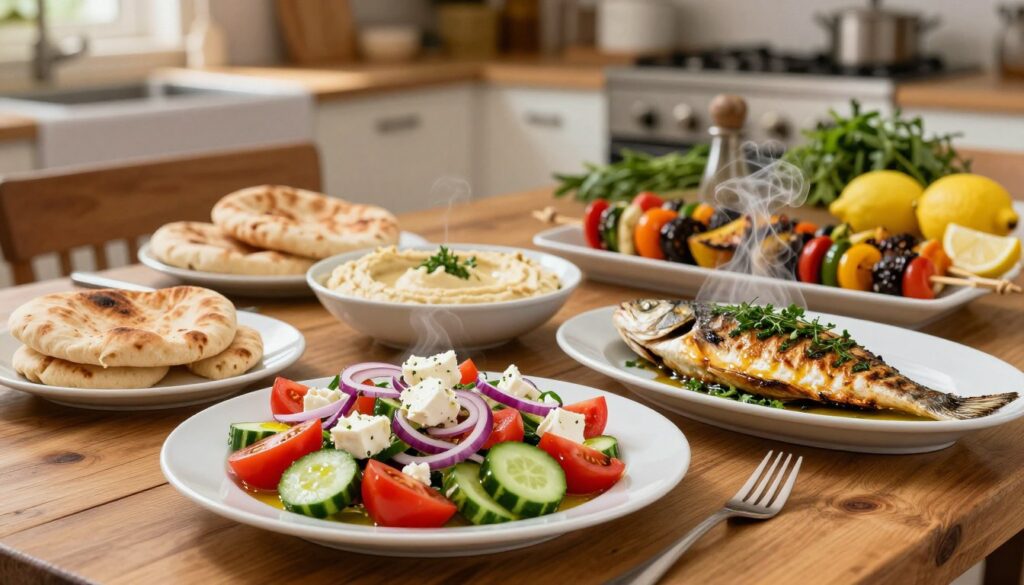
Ever feel overwhelmed by planning a healthy dinner? You want something good for you but also tasty. What if dinner could be both?
The Mediterranean diet is the answer. It’s not strict; it’s a celebration of fresh foods and flavors. It makes dinner a joyful, nourishing time.
Look at the love for dishes like “Red Lentil Soup” with over 39,000 five-star ratings. Or “Salmon and Tomatoes in Foil” loved by thousands. These are more than recipes; they show food can be delicious and good for you.
This guide will show you how easy and rewarding these dinners are. You’ll learn to fill your plate with colorful veggies, grains, and lean proteins. They’re all mixed with fragrant herbs and golden olive oil. It’s about making meals that are good for you without losing flavor. For a full month of Mediterranean diet meals, these ideas are your starting point.
Key Takeaways
- The Mediterranean eating style focuses on fresh, whole foods and is known for its vibrant, satisfying flavors.
- Popular, highly-rated recipes prove that nutritious dinners can also be incredibly delicious and crowd-pleasing.
- This approach emphasizes vegetables, herbs, lean proteins, and healthy fats like olive oil.
- It transforms dinner from a chore into a nourishing and enjoyable daily ritual.
- Many meals are designed for easy weeknight preparation, with options for make-ahead and leftovers.
- The flexibility allows for numerous plant-based options as well as simple grilled or roasted proteins.
- Starting with a few core recipes can help you build a sustainable and enjoyable routine.
How to Understand the Core Principles of the Mediterranean Diet
Ever wondered what makes a meal truly Mediterranean? It’s about a few key principles. This isn’t just a diet; it’s a way of living. It celebrates good food and good health. To make your dinners authentic, you need to grasp these core ideas first.
The foundation is simple: eat mostly plants. Think vibrant vegetables, fruits, legumes, nuts, and whole grains. These aren’t side dishes; they’re the stars of your plate. Next, healthy fats like olive oil are used liberally, not sparingly. Herbs and spices replace excess salt, adding layers of flavor without the sodium.
But it’s more than ingredients. The Mediterranean lifestyle values freshness, simplicity, and the joy of sharing meals. As noted in a practical guide to the Mediterranean, this pattern is linked to remarkable health benefits. It’s because of its balanced, whole-food approach.
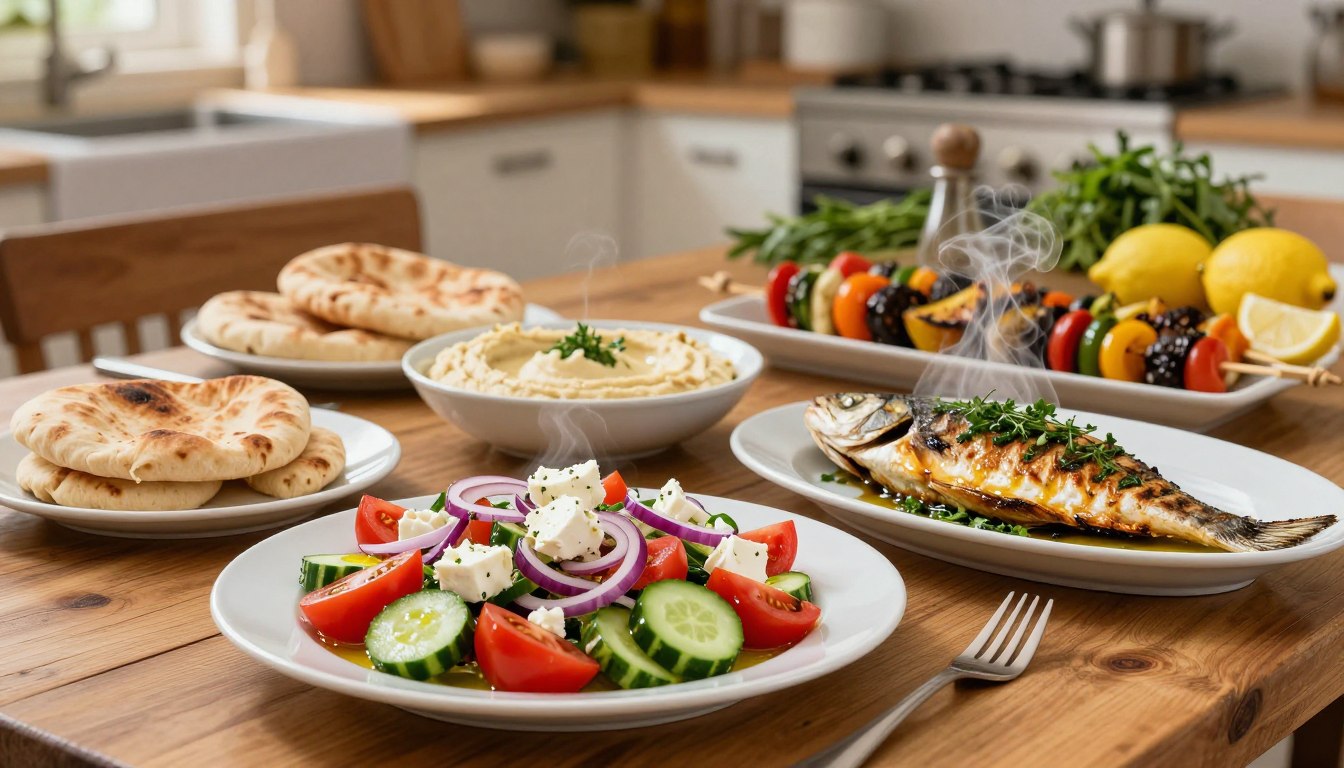
So, what are typical Mediterranean meals? They are colorful, satisfying, and built from these principles. Let’s look at some beloved examples.
A classic Greek Salad, with over 2,347 ratings online, showcases the plant-based principle perfectly. It’s a crisp mix of tomatoes, cucumbers, onions, and olives, dressed simply with olive oil and oregano.
Then there’s Hummus from ‘Jerusalem’, boasting 2,237 ratings. This creamy chickpea spread, garnished with paprika and more olive oil, is a staple for dipping and spreading.
For a heartier example, consider Farro With Blistered Tomatoes, Pesto and Spinach, a dish with a impressive 7,952 ratings. It combines a nutritious ancient grain with roasted vegetables and a herb-based sauce.
These dishes tell a story. They are built on whole foods, rich in fiber and healthy fats. They are seasoned boldly with herbs, not heavy sauces. Most importantly, they are meant to be enjoyed slowly, in good company.
When you start planning your dinners, remember this core philosophy. Fill most of your plate with plants. Drizzle generously with olive oil. Use herbs like basil, mint, and rosemary to wake up flavors. This is how you turn a simple weeknight meal into a true Mediterranean experience.
How to Reap the Health Benefits with Every Meal
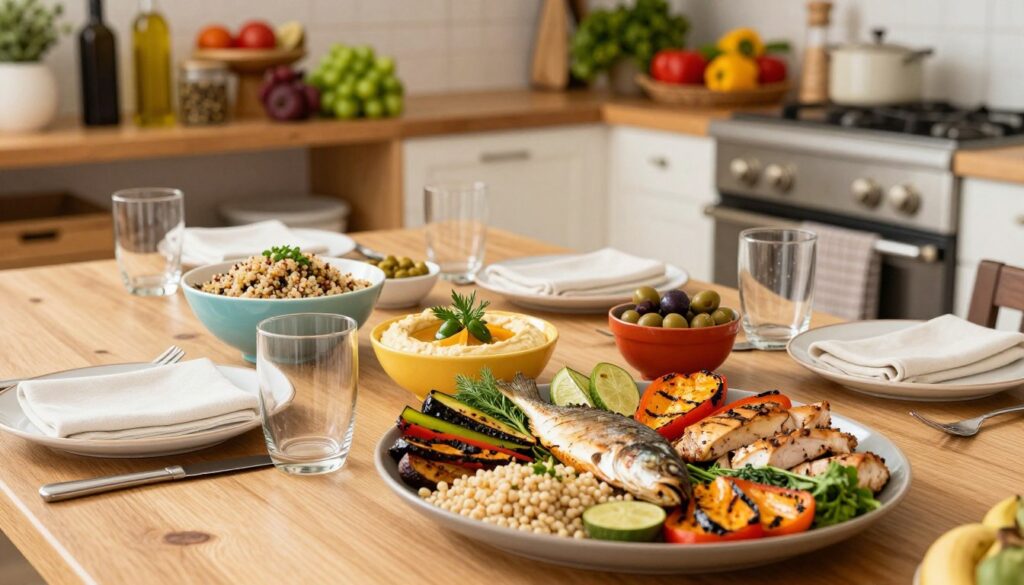
If you’ve ever wondered, “is the Mediterranean diet good for weight loss?“, you’re looking at just one part of a bigger health picture. The answer is yes, and the benefits go beyond just losing weight. Every meal you make is a chance to feed your body with foods that boost your health.
The secret is in how they work together. Foods like olive oil, nuts, plants, and lean proteins do more than just taste good. They support your body in ways that single foods can’t.
Your heart benefits from the healthy fats in olive oil and nuts. These fats help keep your cholesterol levels in check. The fiber in veggies, legumes, and whole grains helps you feel full and satisfied. Plus, the antioxidants in plants fight inflammation, which can cause many diseases.
This all leads to a longer, healthier life. Every Mediterranean-style meal you make is a step towards a better future. To get the most benefits, eat a variety of whole foods. Fill your plate with plants, use herbs and spices for flavor, and choose fish or legumes as your main protein.
For great ideas, check out “Healthy Soups and Stews” or dishes like the “Kale and Butternut Squash Bowl With Jammy Eggs”. It has 571 community ratings and is tagged as “Healthy”. It’s a tasty and nutritious meal.
Turning dinner into a daily health ritual is powerful. By making these choices every day, you’re not just eating. You’re healing and strengthening your body. For a detailed plan, look at a Mediterranean diet meal plan for recipes and guidance.
Your First Step: How to Stock a Mediterranean Pantry
Before you start cooking, your pantry is key. A well-organized pantry with core ingredients makes cooking fun. You won’t need to rush to the store for ingredients.
Think of your pantry as a toolbox. With the right staples, you’re ready for a meal in minutes. This guide will help you stock up.
Essential Healthy Fats: Olive Oil and Beyond
Fat is good here, adding flavor and nutrition. Extra-virgin olive oil is essential. Use it for dressing salads and sautéing veggies.
Don’t forget nuts and seeds. Almonds, walnuts, and pine nuts add crunch. Tahini is great for creamy dressings. Try olive oil in baking for a moist Olive Oil Cake.
- Must-Haves: Extra-virgin olive oil, raw nuts (almonds, walnuts), seeds (pumpkin, sesame), tahini.
- Pro Tip: Store nuts in the freezer to keep them fresh for months.
How to Build a Plant-Powered Arsenal
Plants are the heart of this diet. Make beans, lentils, and fresh produce easy to find. Start with canned and dried legumes.
For your fresh vegetables diet foundation, have alliums, hearty greens, and longer-lasting veggies. Add seasonal picks. A can of white beans with cherry tomatoes, herbs, and olive oil makes a quick Cherry Tomato and White Bean Salad. For more ideas, check out this guide to essential Mediterranean pantry items.
“A pantry full of beans and grains is a pantry full of possibilities. It turns ‘I have nothing to eat’ into ‘What shall I create today?'”
Selecting Your Whole Grains and Lean Proteins
This is where your meals get staying power. Whole grains mediterranean style means more than just rice. Stock versatile options like farro, quinoa, bulgur, and whole-wheat pasta. Farro is great for grain bowls, while quinoa cooks quickly.
For proteins, choose lean and varied. Keep canned tuna and sardines for emergencies. Store frozen fish and chicken breast. Beans and lentils are also good protein sources. A bowl of Simple Beans on Toast is a classic, satisfying meal.
To compare your grain options, here’s a quick guide:
| Grain | Cooking Time | Best Uses |
|---|---|---|
| Farro | 25-30 min | Salads, soups, pilafs |
| Quinoa | 15 min | Bowls, stuffing, breakfast |
| Bulgur | 10-15 min | Tabbouleh, side dish |
| Whole-Wheat Pasta | 8-10 min | Primavera, with pesto |
With healthy fats, plants, and grains & proteins, your kitchen is set. You’ve taken the most important step. Now, let’s make delicious dinners with these staples.
How to Plan a Week of Mediterranean Dinners
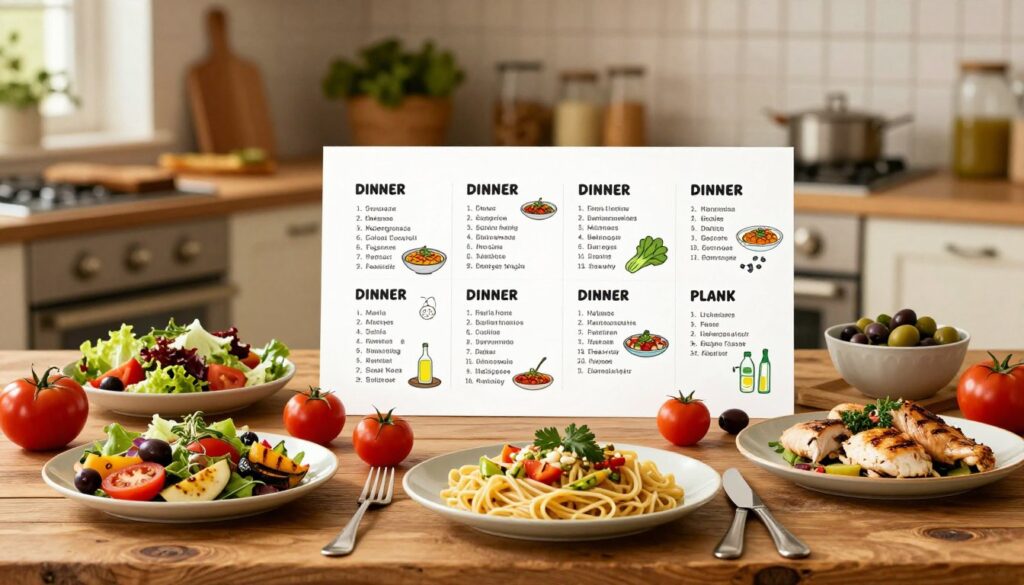
Want to eat better? Start with a plan. A clear weekly plan for Mediterranean diet dinner plans makes healthy eating easy. It turns it from a chore to a fun routine.
This week’s meals are inspired by the web. They mix proteins, veggies, and grains in tasty ways. Let’s make dinner something to look forward to every night.
Here’s a balanced dinner plan to start. Each meal is full of flavor and satisfaction.
| Day | Dinner Idea | Key Components |
|---|---|---|
| Monday | Hearty Red Lentil Soup | Plant protein, carrots, celery, spinach, whole-grain bread |
| Tuesday | Greek Chicken with Cucumber-Feta Salad | Lean chicken, tomatoes, olives, feta, olive oil dressing |
| Wednesday | Sheet-Pan Feta with Chickpeas and Tomatoes | Baked feta, chickpeas, cherry tomatoes, bell peppers, oregano |
| Thursday | Mediterranean Tuna Salad Stuffed Peppers | Canned tuna, olives, capers, bell peppers, lemon juice |
| Friday | Simple Shrimp and Garlic Sauté over Zoodles | Shrimp, zucchini noodles, garlic, white wine, parsley |
| Saturday | Homemade Whole-Wheat Pizza with Veggies | Whole-wheat crust, tomato sauce, mushrooms, onions, artichokes |
| Sunday | Herb-Roasted Chicken with Lemon Potatoes | Whole chicken, potatoes, rosemary, thyme, lemon |
The plan changes proteins each day. You’ll try poultry, fish, shellfish, legumes, and a meatless day. This keeps your meals exciting and nutritious.
Vegetables shine every night. They’re in soups, salads, roasted, and stuffed. Your meals will be a colorful mix of produce.
Smart prep is your best friend. Spend a bit of time on the weekend to prep for the week. Here are quick tasks to make weeknights easier:
- Wash and chop vegetables: Store onions, peppers, and carrots for easy use.
- Cook a batch of grains: Prepare farro, quinoa, or brown rice for sides.
- Make a versatile dressing: Mix olive oil, lemon juice, garlic, and herbs.
- Pre-portion proteins: Divide chicken or fish for quicker cooking.
This framework helps you build a lasting habit. Your Mediterranean dinners will bring joy and health into your life.
Feel free to change days as needed. The goal is to be flexible but structured. Next, we’ll explore cooking techniques to bring these plans to life.
How to Master Key Mediterranean Cooking Techniques
The Mediterranean diet’s flavors come from special cooking methods. Learning these techniques can turn simple ingredients into amazing meals. It’s not about being a pro, but knowing how heat and spices work together.
Mastering a few basics will make you confident in cooking healthy dinners every night. Let’s explore the key methods that enhance your food’s taste.
Step 1: Sautéing and Roasting for Deep Flavor
Sautéing and roasting are key in Mediterranean cooking. They use dry heat to caramelize sugars, creating rich flavors. The trick is to control the heat and trust your ingredients.
For sautéing, pour extra virgin olive oil into a hot pan. Add garlic or onions first to build flavor. Then, add your main ingredients, cooking until they’re tender-crisp. This method keeps moisture and color in.
Roasting uses low, steady heat. It brings out sweetness and texture. Toss vegetables with oil and herbs, then spread them on a baking sheet. You get crispy edges and a soft inside. Try Roasted Cauliflower With Feta, Almonds and Olives for a great example.
Step 2: Grilling Fish and Vegetables Perfectly
Grilling adds a smoky char to many dishes. It’s a low-fat way to cook. For grilled fish mediterranean style, start with a clean, oiled grill.
Pat your fish dry before brushing it with oil. This prevents sticking. Place the fish skin-side down if it has skin, and don’t move it for a few minutes. This allows those beautiful grill marks to form and helps the fish release naturally.
The same principle applies to vegetables. Slice them uniformly so they cook evenly. Zucchini, eggplant, and bell peppers are classic choices. Grilling concentrates their flavor and adds smokiness. Try Simple Grilled Sardines for an authentic taste.
Step 3: Using Herbs and Spices Like a Pro
Fresh herbs are the heart of Mediterranean cuisine. They add bright, aromatic flavors without heavy sauces. Learning to use mediterranean herbs and spices effectively will transform your cooking.
Think of herbs in two categories: tender and woody. Tender herbs like parsley, basil, and mint are best added at the end of cooking. Woody herbs like rosemary, thyme, and oregano can handle longer cooking times. Add them early to infuse their flavor into oils and sauces.
Don’t be afraid to use spices too. Cumin, paprika, and cinnamon are common in many dishes. Toasting whole spices in a dry pan for a minute before grinding releases their essential oils. This technique, seen in dishes like Mole Verde for its complex herb blend, highlights how layering flavors creates depth.
These mediterranean diet cooking tips are your foundation. With practice, sautéing, grilling, and seasoning will become second nature. Every dinner will be a celebration of fresh, healthy flavor.
Sample Mediterranean Diet Dinners: Step-by-Step Recipes
Let’s dive into three delicious Mediterranean diet dinners. These healthy mediterranean recipes are easy to make and packed with flavor. You’ll find a mix of protein options, including a fantastic vegetarian mediterranean dish. Each recipe comes with a shopping list, simple steps, and chef’s tips for success.
| Recipe | Prep Time | Cook Time | Key Features | Perfect For |
|---|---|---|---|---|
| One-Pan Lemon Herb Chicken | 15 mins | 35 mins | Minimal cleanup, sweet & savory flavors | Family dinners |
| Grilled Salmon with Greek Salad | 20 mins | 10 mins | High in omega-3s, fresh and light | Quick, impressive meals |
| Hearty Lentil & Vegetable Soup | 10 mins | 30 mins | Completely plant-based, freezer-friendly | Meal prep & cozy nights |
1. One-Pan Lemon Herb Chicken with Roasted Vegetables
This dish is a complete, balanced meal cooked on a single sheet pan. The chicken turns juicy and tender, while the vegetables caramelize into sweet, tender bites. It’s a quintessential example of easy mediterranean meals that deliver maximum flavor with minimal effort.
Ingredients You’ll Need
- 4 boneless, skinless chicken breasts
- 1 lb baby potatoes, halved
- 2 bell peppers (any color), sliced
- 1 red onion, cut into wedges
- 3 tbsp extra virgin olive oil
- 2 lemons (one juiced, one sliced)
- 3 cloves garlic, minced
- 1 tbsp dried oregano
- 1 tsp dried thyme
- Salt and black pepper to taste
- Fresh parsley for garnish (optional)
Step-by-Step Instructions
- Preheat your oven to 425°F (220°C).
- In a large bowl, toss the potatoes, bell peppers, and onion with 2 tablespoons of olive oil, salt, and pepper. Spread them on a large, rimmed baking sheet.
- In the same bowl, combine the chicken breasts with the remaining olive oil, lemon juice, minced garlic, oregano, thyme, salt, and pepper. Rub the mixture all over the chicken.
- Nestle the chicken among the vegetables on the sheet pan. Place the lemon slices on top of the chicken and vegetables.
- Roast for 30-35 minutes, or until the chicken is cooked through (internal temperature of 165°F) and the vegetables are fork-tender and slightly browned.
- Remove from the oven, let the chicken rest for 5 minutes, then garnish with fresh parsley if desired. Serve immediately.
Pro Tips for Success
Even Cooking: For uniform pieces, pound the chicken breasts to an even thickness before seasoning.
Veggie Swap: Feel free to use zucchini, carrots, or asparagus instead of bell peppers. Just adjust roasting times for harder vegetables.
Boost Flavor: Add a handful of pitted Kalamata olives or a sprinkle of feta cheese in the last 5 minutes of roasting for an extra Mediterranean kick.
2. Simple Grilled Salmon with Greek Salad and Farro
This meal is a powerhouse of nutrition and color. Perfectly grilled salmon pairs with a crunchy, herbaceous Greek salad and nutty farro. It’s one of those healthy mediterranean recipes that feels both light and deeply satisfying.
Ingredients You’ll Need
- 4 salmon fillets (about 6 oz each), skin-on
- 1 cup uncooked farro
- 2 cups cherry tomatoes, halved
- 1 English cucumber, diced
- 1/2 red onion, thinly sliced
- 1/2 cup pitted Kalamata olives
- 4 oz block feta cheese, cubed
- 1/4 cup extra virgin olive oil
- 2 tbsp red wine vinegar
- 1 tsp dried oregano
- Salt and pepper to taste
- Fresh dill or parsley for garnish
Step-by-Step Instructions
- Cook the farro according to package directions (usually simmered in water or broth for about 20 minutes). Drain and set aside.
- While the farro cooks, prepare the Greek salad. In a large bowl, combine tomatoes, cucumber, red onion, olives, and feta cheese.
- In a small jar, whisk together olive oil, red wine vinegar, oregano, salt, and pepper. Pour half of the dressing over the salad and toss gently. Set aside.
- Preheat a grill or grill pan to medium-high heat. Pat the salmon fillets dry and brush lightly with olive oil. Season with salt and pepper.
- Grill the salmon, skin-side down first, for 4-5 minutes. Carefully flip and cook for another 3-4 minutes, until the flesh flakes easily with a fork.
- Fluff the cooked farro and divide it among plates. Top with a salmon fillet and a generous scoop of Greek salad. Drizzle the remaining dressing over everything and garnish with fresh herbs.
Pro Tips for Success
No-Stick Grill: Ensure your grill grates are very clean and lightly oiled before adding the salmon to prevent sticking.
Grain Shortcut: Use pre-cooked farro from the refrigerated section of your grocery store to cut the prep time in half.
Salad Crispness: For the best texture, assemble the Greek salad just before serving so the vegetables stay crisp and the feta doesn’t soften too much.
3. Hearty Lentil and Vegetable Soup
This comforting, fiber-rich soup is a star among vegetarian mediterranean dishes. It’s incredibly forgiving, packed with protein, and gets better with time, making it ideal for meal prep. A bowl of this soup is like a warm hug from the Mediterranean.
Ingredients You’ll Need
- 2 tbsp extra virgin olive oil
- 1 yellow onion, diced
- 3 carrots, diced
- 3 celery stalks, diced
- 4 cloves garlic, minced
- 1 cup brown or green lentils, rinsed
- 1 can (14.5 oz) diced tomatoes, with juices
- 6 cups vegetable broth
- 2 tsp ground cumin
- 1 tsp smoked paprika
- 1 bay leaf
- 4 cups fresh spinach
- Salt and black pepper to taste
- Juice of 1 lemon
Step-by-Step Instructions
- In a large pot or Dutch oven, heat the olive oil over medium heat. Add the onion, carrots, and celery. Cook, stirring occasionally, for about 8 minutes until the vegetables soften.
- Add the minced garlic and cook for another minute until fragrant.
- Stir in the rinsed lentils, diced tomatoes with their juices, vegetable broth, cumin, smoked paprika, and bay leaf. Bring to a boil.
- Once boiling, reduce the heat to low, cover the pot, and let it simmer for 25-30 minutes, or until the lentils are tender.
- Remove the bay leaf. Stir in the fresh spinach and cook just until wilted, about 2 minutes.
- Turn off the heat. Season the soup with salt and pepper to your liking. Finish by stirring in the fresh lemon juice just before serving.
Pro Tips for Success
Flavor Builder: For a deeper flavor base, let the onions and carrots cook until they just start to caramelize before adding the garlic.
Texture Choice: Use red lentils for a quicker-cooking, creamier soup. They will break down more and create a thicker consistency.
Make it Heartier: Add a cup of cooked farro or small pasta like ditalini in the last 10 minutes of cooking for an even more substantial meal.
These three healthy mediterranean recipes prove that eating well doesn’t require complicated techniques. Each dish brings the sun-drenched flavors of the Mediterranean right to your table.
How to Whip Up Quick Mediterranean Dinners on Busy Nights
Forget the drive-thru; a delicious, heart-healthy dinner is closer than you think. Your stocked Mediterranean pantry is the ultimate shortcut. With a few staple ingredients, you can create satisfying meals that honor the diet’s principles in less time than it takes for delivery.
These recipes prove that healthy eating doesn’t require hours in the kitchen. They use canned beans, pasta, and jarred staples for maximum flavor with minimal fuss. Let’s dive into two fail-proof quick mediterranean dinner ideas that have earned rave reviews for their simplicity and taste.
15-Minute White Bean and Spinach Sauté
Inspired by the beloved “Greens and Beans” recipe with over a thousand ratings, this one-skillet wonder is a nutrient powerhouse. It combines creamy cannellini beans, vibrant spinach, and garlic for a dish that feels both rustic and refined.
Here’s how to make it:
- Sauté aromatics: Heat a generous glug of olive oil in a large pan. Cook minced garlic and a pinch of red pepper flakes until fragrant.
- Add greens and beans: Toss in a few handfuls of fresh spinach until wilted. Then, stir in a can of drained and rinsed white beans to warm through.
- Finish with zest: Squeeze fresh lemon juice over the top and sprinkle with grated Parmesan or salty feta cheese. For a crunchy finish, top with toasted breadcrumbs.
Serve it with a slice of whole-grain bread to soak up the flavorful oil. This dish is incredibly versatile—try it with kale or Swiss chard for a different twist.
Pantry-Pasta Puttanesca in 20 Minutes
This bold, savory pasta is a classic for a reason. Using the “Sardine Pasta Puttanesca” method—marked “Easy” with nearly 1,500 ratings—it delivers deep, complex flavor from ingredients you likely already have.
The sauce comes together in the time it takes your pasta to boil. Start by sautéing anchovies or a can of sardines (for omega-3s) in olive oil until they melt into the base. Add capers, chopped olives, and crushed red pepper for a salty, spicy kick.
Stir in a can of diced tomatoes and let it simmer for just 5-10 minutes. Toss with your cooked whole-wheat or legume-based pasta, and finish with fresh parsley. The result is a robust and satisfying meal that feels anything but rushed.
The secret to fast Mediterranean cooking is building layers of flavor with high-quality pantry staples.
With these two recipes in your back pocket, a hectic schedule is no longer an excuse to abandon your healthy goals. They are proof that wholesome, flavorful food can be your fastest option.
How to Meal Prep Mediterranean Dinners for the Week
Meal prepping is a game-changer for enjoying Mediterranean diet dinners all week. It makes healthy eating easy and convenient. By spending a few hours on the weekend, you can have delicious, nutrient-rich meals ready to go. This makes it simple to stay on track with your health goals.
A good mediterranean diet meal prep plan uses two key strategies. First, batch cooking meals that get even better with time. Second, component prepping—having grains, veggies, and proteins ready for quick assembly.
Choose recipes that keep well. These are great for your prep day:
- More-Vegetable-Than-Egg Frittata: With over 2,890 ratings, this dish is a hit. Bake it on Sunday, slice it, and enjoy a protein-packed dinner with a salad any night.
- Tuscan Farro Soup: Boasting 7,073 ratings, this soup is a freezer favorite. Make a big batch, portion it, and have a comforting meal ready to reheat.
- Overnight Oats & Chia Seed Pudding: With 11,084 and 1,006 ratings, these are more than breakfast. They’re great healthy desserts or quick snacks, keeping your kitchen full of good options.
Smart storage is key. Cool cooked foods before packing. Use airtight glass containers for the fridge (meals last 3-4 days) and freezer-safe bags or containers for longer storage (up to 3 months). Label everything with the date.
Consistency in healthy eating is less about willpower and more about preparation. When good food is the easiest choice, you always win.
Your weekly dinner assembly line is simple. With prepped components, a nourishing meal comes together in minutes. Pair reheated farro soup with whole-grain bread. Top pre-cooked lentils with fresh herbs, feta, and olive oil. Or toss pre-grilled chicken into a salad of pre-chopped cucumbers and tomatoes.
This mediterranean diet meal prep strategy saves time on busy evenings. It reduces decision fatigue and ensures a healthy dinner every night. You invest a little time upfront for delicious rewards all week.
How to Adapt Recipes and Avoid Common Mistakes
The secret to how to start mediterranean diet easily is to tweak recipes for your life. You don’t have to follow every step exactly. Recipes are like guides, not strict rules.
This flexibility makes the Mediterranean diet sustainable. You can change dishes to fit your taste, needs, and fridge contents.
Let’s talk about substitutions. If a recipe calls for edamame but you don’t have it, no worries. Use fresh peas or canned white beans instead. For pine nuts, try walnuts or almonds.
Adjusting flavors is also key. If a Mole Verde is too spicy, just cut down the chili and add more herbs. Your kitchen, your rules.
Here are some classic Mediterranean swaps that always work:
- Olive Oil: Can replace butter or other oils in most sautés or roasts.
- Fresh Herbs: Use dried herbs if needed, but use half the amount and add early.
- Any Fish: If a recipe calls for salmon but you have cod, go for it! Cooking times might vary slightly.
- Grains: Farro, quinoa, bulgur, and brown rice can often be swapped in salads and sides.
- Beans: Chickpeas, cannellini beans, and lentils can usually replace each other.
Now, let’s tackle common mistakes. Knowing these can make starting the Mediterranean diet easier.
The biggest mistake? Overcooking grains and veggies. They should be tender but still crisp. Another mistake is using too much salt too soon. Let garlic, lemon, and herbs be the main flavors.
Here are the top three mistakes to avoid:
- Neglecting Prep: Chop veggies and measure spices before cooking. This prevents burning and stress.
- Using Low-Quality Oil: Use extra virgin olive oil for that authentic flavor. Cheap oils won’t give you the same taste.
- Skipping the Plants: Don’t focus too much on fish or chicken. Vegetables and whole grains should be the main part of your plate.
For more great Mediterranean diet hacks, check out this resource. It’s full of expert tips.
Be open to trying new things. If garlic burns, start again with lower heat. If soup is too bland, a splash of red wine vinegar can help. Every “mistake” is a chance to learn and become a better cook.
This ability to adapt and troubleshoot is key. It turns the Mediterranean diet into your own healthy eating style.
Conclusion
You now have all you need to make tasty Mediterranean diet dinners. This guide showed you the basics of this healthy eating style. You learned how to set up your kitchen with key items like extra virgin olive oil, whole grains, and lean proteins.
Learning simple cooking techniques brings out rich flavors. Recipes like One-Pan Lemon Herb Chicken and Grilled Salmon with a fresh Greek salad are easy to follow. These recipes show that healthy dinners don’t have to be hard.
The Mediterranean diet is all about enjoying food and finding balance. It focuses on plant-based meals with fresh herbs and spices. Even on busy nights, you can whip up something like a pantry pasta puttanesca.
Meal prep helps you keep these healthy dinners ready all week. Start with recipes from places like BBC Good Food. Then, add your own twist with different veggies or proteins.
Your journey to better eating starts in your kitchen. Dive into the world of Mediterranean diet dinners for a healthier future.