
How to Make Caviar fish Russian beluga

Imagine the delicate pop of a single, perfect pearl of roe against your palate. This luxurious experience is more than just a meal. It connects us to the ancient waters of the Caspian Sea. Whether you dream of the legendary Beluga or the rich, nutty notes of a Russian sturgeon, understanding the craft behind these delicacies is truly fascinating.
At its core, this delicacy consists of unfertilized sturgeon eggs. While the ingredients remain simple, the process requires significant skill and precision to achieve a high-quality result. If you are curious about the journey from the water to your table, you can explore how caviar is made to master the basics of this artisanal craft.
By learning these fundamental techniques, you take the first step toward creating a product that rivals professional delicacies. Let us embark on this journey together to uncover the secrets of this timeless culinary art.
Key Takeaways
- Genuine caviar is derived exclusively from unfertilized sturgeon eggs.
- The process demands extreme precision to ensure the highest quality and texture.
- Beluga, Osetra, and Sevruga are among the most prized varieties globally.
- Modern production has shifted toward sustainable aquaculture to protect wild populations.
- Proper handling and temperature control are essential for maintaining flavor and freshness.
Understanding the Art of Caviar Preparation
Turning raw fish eggs into a culinary masterpiece is a long-standing tradition. It involves strict standards. When you start your caviar preparation guide, you join a centuries-old craft. This helps you see the delicate steps needed to make simple roe into a luxury item.
Once, caviar was a simple food for fishermen on the Volga River. But, with the rise of Russian aristocracy, it became a symbol of wealth. Now, you can make this luxury in your kitchen by following a fresh caviar process.
The History and Cultural Significance of Caviar
For ages, making roe was a secret among master curers. They knew that the fish’s environment and handling were key. By following these old methods, your caviar will honor the craft’s legacy.
“Caviar is the ultimate expression of the sea, captured in a single, perfect sphere.”
Defining Quality in Fresh Roe
To get professional results, learn to spot top-quality roe. The term Malossol means “little salt” and is the industry’s top mark. It shows the roe has just enough salt to keep its natural flavor.
When checking your roe, look for firm, distinct eggs. They should keep their shape and have a consistent color. The smell should be fresh, like the ocean, not too fishy. This caviar preparation guide helps you judge your roe against these standards.
| Quality Indicator | Premium Standard | Acceptable Range |
|---|---|---|
| Egg Texture | Firm and resilient | Soft but intact |
| Salt Content | Malossol (3-5%) | Moderate (5-7%) |
| Aroma | Clean, oceanic | Mildly briny |
| Color Uniformity | Consistent hue | Slight natural variation |
Mastering these quality signs boosts your confidence in your fresh caviar process. Every batch you make is a chance to get better and achieve that perfect pop of world-class roe.
Selecting the Best Fish for Homemade Caviar
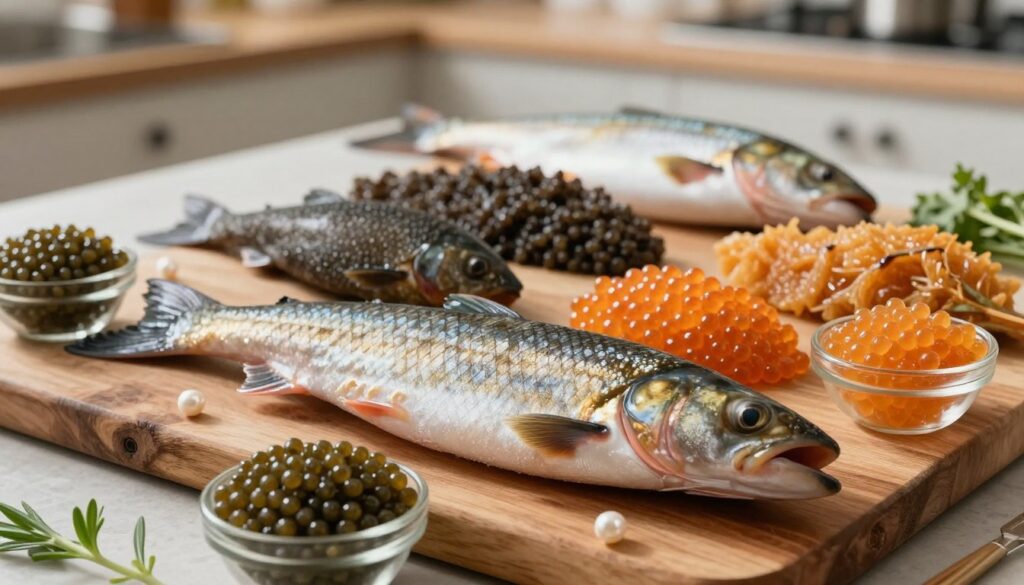
Finding the right fish for homemade caviar is important. The fish’s health and type affect the taste. Freshness is key for a great result.
Identifying Suitable Fish Species
Sturgeon is often the first choice for caviar. But, other fish like paddlefish, trout, and salmon are also good. They offer different tastes and textures.
Farming fish is a better way to get roe. It’s better for the planet. Make sure to learn about the fish you choose.
Sourcing Fresh Eggs Responsibly
Getting your ingredients right is crucial. Look for suppliers who care about animals and the planet. This makes your caviar better for everyone.
Working with local fishmongers or farms gets you the freshest roe. Freshness stops spoilage and keeps the eggs perfect. It’s good for the food chain and your dish.
Evaluating Egg Maturity and Quality
Check the roe before you start. It should be firm, plump, and the same size. Avoid soft or cloudy eggs for the best results.
The color of the eggs also matters. A bright, even color means the fish was healthy. This ensures your caviar is top-notch.
Essential Tools and Safety Precautions
To make homemade caviar from fish, you need the right tools. Follow the best caviar making tips for a delicious and safe product. A clean workspace is key to success.
Sanitation Standards for Raw Food Preparation
Hygiene is crucial when working with raw products. Make sure all surfaces, hands, and utensils are clean before starting. Raw roe can quickly grow bacteria, so a clean environment is essential.
Here are important steps for a clean workspace:
- Wash your hands thoroughly with unscented soap.
- Sanitize all stainless steel bowls and utensils with food-grade sanitizer.
- Keep your workspace cool to prevent the eggs from spoiling during the process.
Required Equipment for Processing Roe
The right tools make processing eggs easier. You don’t need a professional kitchen but specific items are necessary. The wrong tools can damage the eggs and affect the texture.
Fine Mesh Sieves and Bowls
A high-quality fine mesh sieve is crucial for separating eggs from membranes. Choose a sieve that’s gentle but effective. Use stainless steel bowls to keep ingredients organized and chilled.
Temperature Control Tools
Temperature control is key when working with roe. Even the best fish for homemade caviar can spoil if too warm. Always use a digital thermometer to check the roe’s temperature.
An ice bath is a simple way to keep the right temperature. Place your roe bowl in a larger bowl with ice and water. This simple technique keeps the eggs firm and fresh while curing.
How to Make Caviar from Fresh Fish Eggs
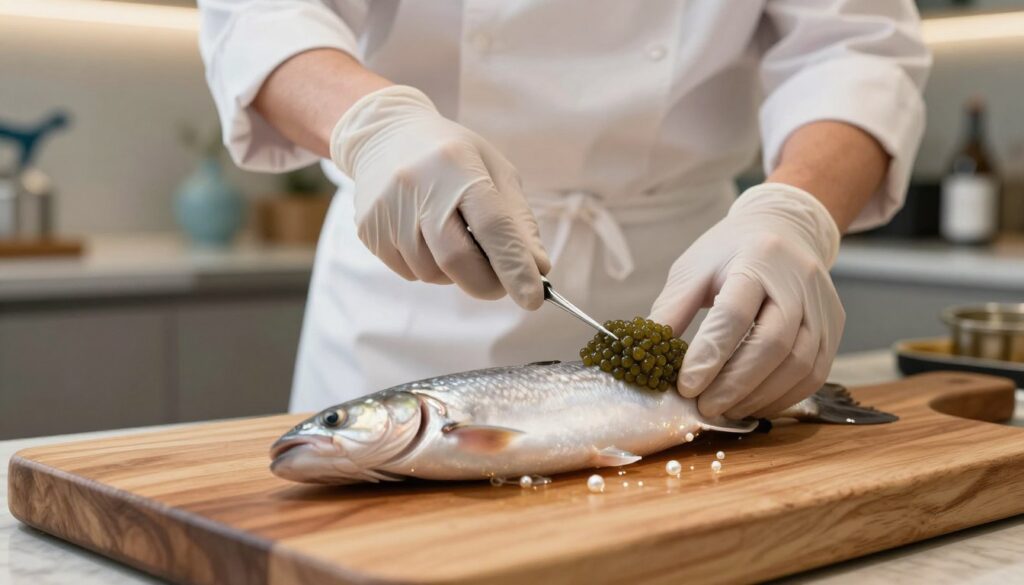
Learning how to make caviar from fresh fish eggs at home is a rewarding journey. It needs a gentle touch to keep the delicate pearls intact and flavorful. By following these steps, you can turn raw roe into a high-quality delicacy.
Extracting the Egg Sacs
The first step is to carefully remove the egg sacs, or skeins, from the fish. Use a sharp, clean knife to make a small incision along the belly of the fish. Be extremely cautious not to puncture the sacs, as this will cause the eggs to spill and lose their structure.
Once the incision is made, gently pull the sacs out with your fingers. Place them immediately into a chilled bowl to maintain their freshness. Keeping the roe cold is a vital part of the fresh caviar process.
Cleaning and Rinsing the Roe
After extraction, you need to clean the roe to remove any blood or impurities. Prepare a bowl of ice-cold water mixed with a small amount of sea salt. These steps to make caviar at home help firm up the outer membrane of the eggs.
Gently swirl the sacs in the water. Use a fine-mesh strainer to lift the roe out, allowing the dirty water to drain away. Repeat this rinsing process until the water runs clear.
Separating Eggs from the Membrane
Removing the eggs from the surrounding membrane is the most technical part of the preparation. You want to separate each individual pearl without breaking them. There are two primary caviar making techniques used by professionals to achieve this.
Using a Mesh Screen Technique
The mesh screen method is highly effective for larger batches. Place a clean, food-grade wire mesh screen over a bowl. Gently rub the egg sacs against the screen using a circular motion. The individual eggs will pass through the mesh, while the tough membrane stays on top.
Manual Separation Methods
If you prefer a more hands-on approach, you can use manual separation. Carefully use your fingertips to tease the eggs away from the membrane in a bowl of cold water. This method is slower but allows for maximum control over the integrity of each egg. Always work slowly to ensure the best possible texture for your final product.
Mastering the Russian Caviar Preparation Method
The Russian way of curing roe is the top choice for experts. This caviar preparation guide keeps the fish eggs’ natural taste and softness. By following these steps, you can make high-quality caviar at home.
The Malossol Technique Explained
Malossol means “little salt” in Russian. It’s key to caviar making techniques that let the roe’s flavor shine. Using just a little salt keeps the fish’s taste in the spotlight.
This method is all about balance and care. It needs patience and a light touch to keep the eggs perfect. For a step-by-step guide on making caviar, mastering this technique is crucial.
Balancing Salt Ratios for Flavor
Getting the salt right is crucial. Use fine-grain sea salt for even coating. Aim for 3% to 5% salt by weight of the roe.
Too little salt, and it spoils fast. Too much, and it becomes tough. Always weigh your ingredients carefully for consistent results.
The Curing Process for Authentic Texture
The curing stage is key in your step-by-step russian caviar recipe. Mix the salt with the eggs gently. Then, let them rest in a cool place.
This step makes the eggs firm but still “pop” nicely. You’ll also notice a glossy look. Here’s how different salt levels affect your caviar:
| Salt Percentage | Texture Profile | Shelf Life |
|---|---|---|
| 3.0% | Very delicate and soft | Short (1-2 weeks) |
| 4.0% | Balanced and firm | Moderate (3-4 weeks) |
| 5.0% | Slightly chewy | Long (6+ weeks) |
Traditional Techniques for Beluga Caviar Recipe
Mastering a caviar recipe means aiming for the Beluga standard. This variety is the top of luxury, needing a careful approach. By focusing on precision, you can turn fresh roe into a luxury item.
Understanding the Beluga Standard
The Beluga standard is about egg size, color, and firmness. Look for large, shiny eggs in light gray to deep charcoal. A true beluga caviar recipe needs these eggs to stay whole during curing.
To keep this standard, control the environment tightly. Consistency is key for a great batch. Freshness is crucial, as it affects the final taste.
Handling Delicate Roe Varieties
Preparing beluga caviar means being gentle. These eggs are very fragile. Use special tools like fine-mesh sieves or soft spatulas to avoid damage.
Here are some tips for handling your roe:
- Keep your workspace cold to prevent the eggs from getting soft.
- Use cold, filtered water for rinsing.
- Work in small batches for even salt distribution and less handling.
Achieving the Signature Texture and Pop
The “pop” when the egg bursts is key for high-end roe. It comes from the right moisture and curing time. A good caviar recipe balances these to enhance flavor and texture.
Patience is crucial during curing. You need to let the salt soak in just right. This way, your homemade caviar will have a unique texture that’s a delight to eat.
How to Salt and Preserve Fish Roe
Getting the right amount of salt is key to making caviar at home. The correct steps to make caviar at home ensure it’s safe and tasty. Curing removes moisture and makes the eggs firm.
Choosing the Right Type of Salt
The salt you use is as important as the roe. Use pure, non-iodized sea salt or curing salt for diy caviar. Table salt can give a bad taste to your caviar.
“The curing process is not merely about adding salt; it is a precise chemical interaction that defines the texture and longevity of the roe.”
Here’s a guide to help you pick the best salt:
| Salt Type | Purity Level | Best Use Case |
|---|---|---|
| Fine Sea Salt | High | Quick curing for delicate roe |
| Kosher Salt | Medium | General purpose, easy to measure |
| Curing Salt | Very High | Long-term preservation and safety |
Determining Curing Times
Learning how to salt and preserve fish roe takes patience. The curing time varies with egg size and desired firmness. Smaller eggs cure faster, while larger ones take longer.
For more on making caviar at home, check out this guide. Start with a small amount of salt. You can always add more, but can’t take it away once curing starts.
Natural Preservation Methods
Keeping the right environment is crucial for how to make caviar from fresh fish eggs at home. Temperature control is key. Store the roe in an airtight glass container to prevent moisture loss.
Keep the jars in the coldest part of your fridge. This will help them last longer. A stable, cool environment keeps the eggs fresh for your next event.
Troubleshooting Common Caviar Making Issues
Even skilled home chefs face problems when making caviar. Whether you’re following a step-by-step russian caviar recipe or trying new methods, small issues can arise. Knowing how to solve these problems can greatly improve your skills.
Preventing Mushy or Broken Eggs
Excessive heat or rough handling can make eggs mushy. Always keep your roe cold during all stages. Warm water or room temperature can quickly ruin their quality.
Be very gentle when handling the egg sacs to avoid breaking them. If eggs break during cleaning, use a softer touch or a finer mesh screen. Keeping things cold is a key best caviar making tip for that perfect pop.
Correcting Over-salted Batches
It’s easy to add too much salt when learning how to salt and preserve fish roe. If your batch tastes too salty, don’t throw it away. A quick, gentle rinse in cold, mild brine can often fix it.
This method helps remove excess salt without harming the eggs. Pat them dry right away to prevent losing more texture. If the saltiness is just a bit off, serve the roe with unsalted items like blinis or crackers.
Managing Moisture Levels During Curing
Right moisture levels are key for a successful caviar recipe. If the eggs seem too wet after curing, they might not store well or keep their shape. Make sure to drain them well before storing.
- Use a high-quality cheesecloth to gently pat the eggs dry.
- Let the roe rest in a tilted container to drain excess liquid.
- Check the container daily and remove any moisture to keep the eggs firm.
By paying attention to these details, you’ll become more confident in your skills. Regular practice helps you troubleshoot and achieve professional-grade results every time.
Storing and Serving Your Homemade Delicacy
After curing, proper handling is key to a memorable meal. Whether you followed a beluga caviar recipe or a simpler method, the final steps are crucial. Taking care of your product now ensures every bite is fresh and flavorful.
Proper Refrigeration and Shelf Life
To keep your homemade caviar fresh, store it in a cold place. The best temperature is around 32°F (0°C). Always store your roe in an airtight glass container to prevent oxidation and odors.
Your product can last one to two weeks if stored right. Check its quality often because the eggs spoil quickly with temperature changes. If you notice bad smells or color changes, throw it away for safety.
Ideal Serving Temperatures
Serving your delicacy chilled is crucial. This preserves its signature texture and pop. Many like to keep the dish cold by placing it in a bowl of crushed ice.
Don’t let the product sit at room temperature for too long. This can harm the quality of the eggs. Keeping the dish cold ensures the flavor stays crisp and clean. This is how beluga caviar is traditionally prepared and served.
Pairing Suggestions for Your Homemade Caviar
Choosing the right accompaniments can enhance your homemade caviar. Traditional pairings focus on neutral bases to highlight the roe’s flavors. Serve it with warm, buttery blinis or lightly toasted brioche.
Adding a dollop of crème fraîche or sour cream adds a creamy contrast. Finely minced chives or shallots add brightness. These classic combinations make your homemade caviar a sophisticated appetizer that guests will love.
Conclusion
Turning your kitchen into a place for gourmet creations is exciting. It connects you to old traditions and lets you add your own special touch. You now know how to handle delicate ingredients with care.
Starting with russian caviar takes patience and attention to detail. Each batch you make makes you more confident. You’ll see your homemade caviar is as good as store-bought.
Want to try something new? You might like a simple pan fried fish dish. It’s a quick way to make fresh fillets with a great crust. It goes well with the fancy flavors of your cured eggs.
Keep trying different fish to see how they change the taste and texture. Every try gets you closer to making perfect russian caviar. Share your dishes with friends to show off your skill.