
The Simple Cooking with Seafood: Making the Most of Grocery
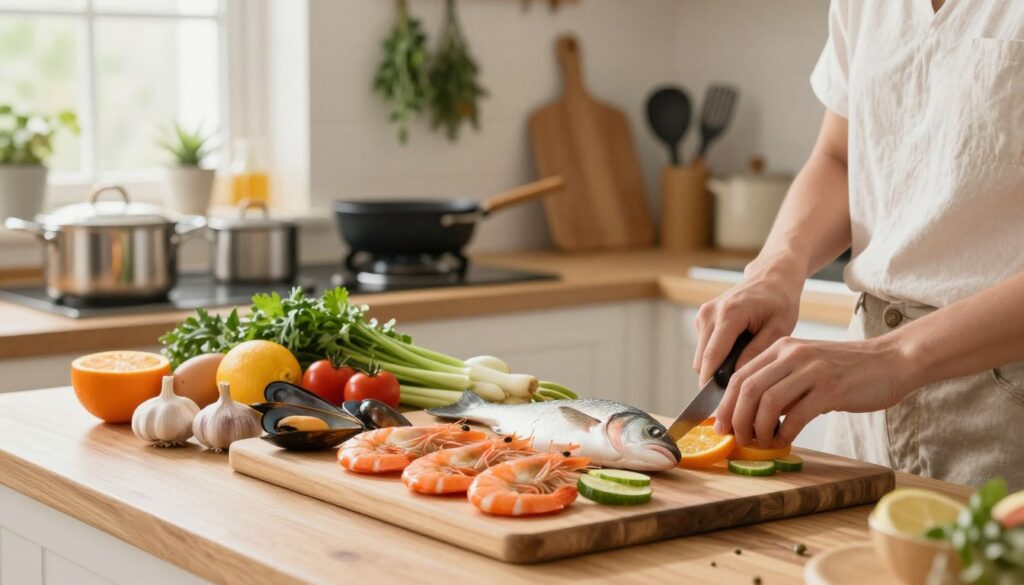
Standing at the seafood counter, you might feel unsure. The ice-packed display looks stunning but new. You might choose chicken instead. This is a common feeling.
Cooking seafood at home can make weeknight dinners special. Seafood cooks faster than meat. It’s also packed with nutrients and serves smaller portions. Plus, you don’t need to be a pro to cook it.
This guide will make cooking seafood at home easy. You’ll learn how to choose the best fish. You’ll discover simple cooking methods that always work. And, you’ll avoid common mistakes that scare people away from seafood.
Preparing fresh fish doesn’t have to be scary. With simple techniques and tips, you can make meals that taste like they came from a restaurant. Check out easy seafood dishes to see how simple it is. Your family will love quick and tasty meals. Let’s get started.
Key Takeaways
- Seafood cooks faster than other proteins, saving you time on busy weeknights
- Fresh seafood provides excellent nutrition and supports a healthier diet for your family
- Simple cooking techniques like pan-searing and steaming produce restaurant-quality results
- Learning to check for doneness takes just a few minutes of practice
- Home seafood recipes offer endless variety to break free from chicken and beef routines
- Proper storage and handling keep your seafood fresh and safe to cook
- Budget-friendly options exist for families who worry about seafood costs
Why Seafood Deserves a Place in Your Weekly Meal Rotation
Getting dinner ready can be tough. Many cooks get stuck in a loop, making the same meals over and over. Seafood is a great way to mix things up, adding variety and quick cooking times to your meals.
By adding seafood to your dinners, you can make your evenings more exciting. You’ll enjoy meals that feel fresh and satisfying.
The Nutritional Powerhouse of Ocean-Fresh Protein
Fish and shellfish are amazing lean protein sources. They offer a lot of protein without too many calories or bad fats. Choosing seafood means you’re getting top-notch nutrition that supports your health.
Seafood is more than just protein. It’s full of omega-3s, which are good for your heart, brain, and overall health. The Mediterranean diet, known for its health benefits, focuses on these nutrients.
| Fish Type | Protein Content | Calories | Key Nutrients |
|---|---|---|---|
| Tilapia Florentine | 29 grams | 249 | Vitamin D, Selenium |
| Parmesan Crusted White Fish | 32.5 grams | 263 | Omega-3, Calcium |
| Salmon with Dill Sauce | 26 grams | 280 | Heart-Healthy Fats, B Vitamins |
Healthy seafood recipes help you lose weight because they’re filling but not too heavy. You’re making meals that are good for you and help you reach your fitness goals.
Breaking Free from Chicken and Beef Monotony
Feeling stuck at 5 p.m. and wondering what to make for dinner is common. Instead of chicken or beef, try new fish recipes for a change. Seafood is just as easy and exciting as other proteins.
Seafood adds variety to your cooking. You can try:
- Delicate white fish with subtle, mild flavors
- Rich salmon bursting with natural oils and depth
- Sweet shrimp with tender texture
- Briny shellfish bringing oceanic complexity
- Canned tuna and salmon for convenient pantry meals
Each type offers unique flavors and textures. This makes your meal planning exciting. The Mediterranean diet shows how seafood can make your meals feel special and like they’re from a restaurant.
How to Choose Fresh Seafood at the Grocery Store

Exploring the seafood section at your local grocery store can be easy. Learning to pick fresh seafood is simpler than you might think. Knowing what to look for and what questions to ask will boost your confidence. This skill ensures you bring home quality fish that tastes amazing and is good for you.
First, examine the fish itself. Fresh whole fish should have bright pink or red gills—never brown. Look for clear and plump eyes that sparkle, not cloudy or milky ones. When checking fish portions, the flesh should feel firm to the touch. Avoid any pieces with holes or bruising. The smell matters too. Fresh fish smells like clean ocean water or salt air, not a strong or unpleasant fishy odor.
Want to learn more details about selecting quality fish? Check out this simple guide for selecting fish that breaks down every step.
The best fish to buy at grocery store depends on what’s fresh that day. Ask your fishmonger when the seafood arrived and which options are freshest. Beginner-friendly choices include salmon, cod, tilapia, and shrimp. These are forgiving to cook and widely available year-round.
| Fish Type | Fat Content | Flesh Color | Best For |
|---|---|---|---|
| Salmon | Fatty | Dark Orange | Beginners, Grilling |
| Cod | Lean | Light White | Pan-Searing, Mild Flavor |
| Tilapia | Lean | Light White | Budget-Friendly, Versatile |
| Shrimp | Lean | White to Gray | Quick Cooking, Appetizers |
| Mackerel | Fatty | Dark | Bold Flavors, Heart Health |
| Halibut | Lean | White | Elegant Dishes, Firm Texture |
When buying quality seafood, consider pre-prepped options. Peeled shrimp and crab meat save you time without sacrificing quality. These products come already shelled and ready to use. Check the label for added sodium levels. Compare different brands to find options with little to no added salt.
Sustainable seafood choices matter for ocean health. Look for labels like MSC (Marine Stewardship Council) certification. These marks show the fish comes from well-managed fisheries. Choosing sustainable seafood options protects future fish populations. Your grocery store staff can point out which species are currently the best environmental choices.
Frozen fish deserves consideration too. Flash-frozen seafood at sea keeps nutrients locked in. This budget-friendly option works beautifully for weeknight meals. Read labels carefully. Choose frozen options with little to no added sodium. Compare nutritional information across different products to get the best value.
- Check whole fish for bright gills and clear eyes
- Feel fish portions—they should be firm, not mushy
- Smell fresh seafood—ocean-like scent is good, fishy smell means skip it
- Ask your fishmonger about arrival dates
- Look for sustainable seafood choices with MSC certification
- Consider peeled shrimp and pre-prepped crab meat for convenience
- Compare sodium levels on frozen and canned product labels
Building these shopping habits transforms your seafood experience. You’ll feel proud selecting the best fish to buy at grocery store with knowledge and purpose. Quality seafood makes delicious meals your family will love.
Cooking with Seafood at Home: Essential Techniques for Beginners
Learning to cook seafood opens a world of tasty meals in your kitchen. Knowing the basics of seafood cooking lets you make dishes as good as restaurants. Pan-searing and steaming are key skills for beginners. They work well with different fish types, making your seafood both moist and flavorful.
Pan-Searing Fish to Golden Perfection
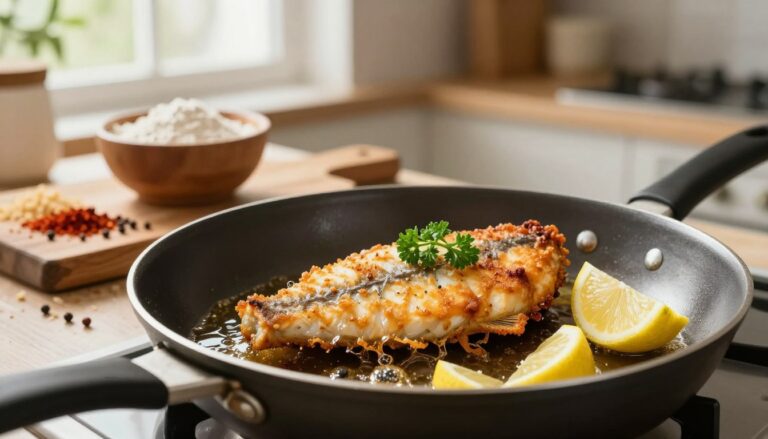
Pan-searing makes a golden crust everyone loves. It’s great for crispy-skinned fish with a tender inside. The secret is in the preparation and patience.
Let your fish sit at room temperature for 20 minutes before cooking. This helps heat spread evenly. Dry the fish with paper towels to help the crust form.
Use a hot cast iron pan and add two tablespoons of oil like grapeseed or canola. When the oil shimmers, your pan is ready. Place the fish skin-side down and cook undisturbed for about 6 minutes for thick fillets. The fish will naturally release when it’s ready to flip. Cook the second side at a lower heat for 3-5 minutes. Your fish is done at 145°F.
| Fish Type | Pan Temperature | First Side Time | Second Side Time | Best Oil Choice |
|---|---|---|---|---|
| Thick White Fish (Bass, Halibut) | High then Medium-High | 6-7 minutes | 4-5 minutes | Grapeseed Oil |
| Thin Fillets (Sole, Flounder) | High then Medium | 4-5 minutes | 2-3 minutes | Canola Oil |
| Salmon Fillet | High then Medium-High | 5-6 minutes | 3-4 minutes | Clarified Butter |
| Tuna Steak | High then Medium-High | 4 minutes | 3 minutes | Safflower Oil |
For pan-seared fish, use a seasoning blend of smoked paprika, parsley, garlic powder, salt, and black pepper. This mix enhances the seafood flavor without overpowering it. Wholey’s Fish N Fin seasoning is a convenient alternative.
Steaming Methods That Preserve Delicate Flavors
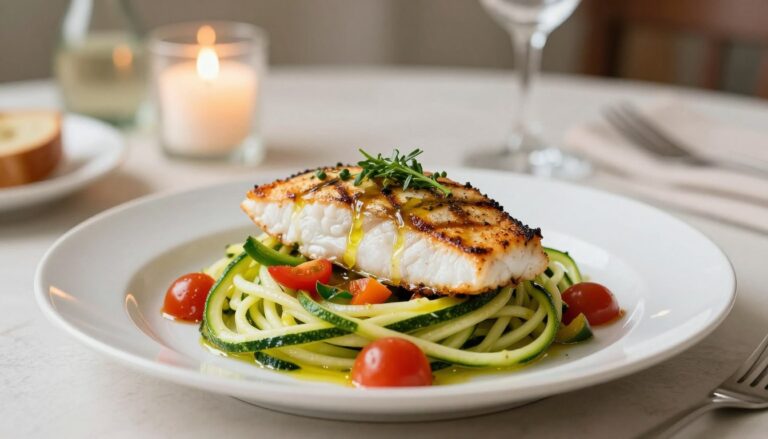
Steaming is a healthy way to cook seafood. It keeps fish moist and brings out delicate textures that pan-searing can’t match.
You don’t need special equipment for steaming. Use a large pot with a steamer insert or a metal colander over simmering water. Make sure the fish is above boiling water for steam cooking.
Try steaming a whole fish with Asian flavors for a restaurant-quality dish. Place the fish on parchment paper in the steamer. Add ginger, green onions, and soy sauce. Steam for 12-15 minutes. The parchment makes cleanup easy and keeps flavors in.
- Line your steamer with parchment paper for easy cleanup
- Add aromatics like ginger, garlic, and green onions for extra flavor
- Include fresh herbs such as cilantro to brighten the dish
- Drizzle with a light buttery sauce after steaming
- Check doneness at the thickest part with a fork—it should flake easily
Steaming in a buttery sauce makes a fancy dish with little effort. Mix melted butter with soy sauce, black pepper, and lemon juice in the steamer base. As the fish cooks, it absorbs these flavors. This method is perfect for white fish. When you learn essential seafood cooking techniques, steaming becomes a reliable tool for healthy meals.
Both pan-searing and steaming deliver restaurant-quality results at home. Master these two methods, and you’ll be able to create quick-fish recipes that taste like fine dining. These skills will help you become more confident in cooking seafood.
Quick Seafood Dinners Under 30 Minutes
Getting dinner ready fast doesn’t mean it can’t be tasty or healthy. Quick seafood dinners under 30 minutes show that even busy nights can have great meals. Seafood cooks faster than chicken or beef, making it perfect for quick meals that taste like they came from a restaurant.
Seafood cooks fast because of its biology. Most fish fillets are done in 8-12 minutes, and shrimp even quicker. This means you can make healthy seafood dinners without spending hours cooking.
Starting a collection of easy seafood recipes begins with the right fish. Fish like tilapia, sole, and cod are quick to cook and easy for beginners. They can be pan-seared, baked, or steamed with simple steps.
Six Dinner Ideas Ready in 30 Minutes or Less
There are many quick seafood dinner options under 30 minutes. These include Mediterranean bowls and Asian fusion dishes. Here are some proven recipes:
- Grilled Salmon with Lemon and Herbs—marinate for 15-20 minutes, grill at 400°F for 8-10 minutes
- Mediterranean Tuna Salad Bowl—uses canned albacore for instant protein without cooking time
- Asian-Inspired Teriyaki Cod—marinates briefly, bakes at 400°F for 12-15 minutes
- Blackened Tilapia Tacos—seasoned fish cooks in minutes, pairs with fresh toppings
- Baked Lemon Garlic Halibut with Vegetables—oven-roasted in 12-15 minutes
- Pan-Seared Mahi-Mahi with Mango Salsa—quick sear in the skillet, serve immediately
| Recipe Name | Cook Time | Prep Time | Total Time | Difficulty Level |
|---|---|---|---|---|
| Grilled Salmon with Lemon and Herbs | 8-10 minutes | 15-20 minutes | 23-30 minutes | Beginner |
| Mediterranean Tuna Salad Bowl | 0 minutes | 10-15 minutes | 10-15 minutes | Beginner |
| Asian-Inspired Teriyaki Cod | 12-15 minutes | 15-20 minutes | 27-35 minutes | Beginner |
| Blackened Tilapia Tacos | 5-7 minutes | 10-15 minutes | 15-22 minutes | Beginner |
| Baked Lemon Garlic Halibut with Vegetables | 12-15 minutes | 10 minutes | 22-25 minutes | Beginner |
| Pan-Seared Mahi-Mahi with Mango Salsa | 6-8 minutes | 10 minutes | 16-18 minutes | Beginner |
Streamlining Your Seafood Cooking Process
Smart prep work is key to stress-free cooking. Read your recipe before starting. Gather all ingredients and chop veggies while your oven heats up.
Use high heat for quick searing and keep the temperature right. This locks in flavor and cooks the fish evenly. Keep basic seasonings like lemon, garlic, salt, and pepper on hand. They can turn simple fish into memorable meals.
Easy seafood recipes don’t need fancy techniques. Focus on getting protein and veggies on the plate fast. Pair your main dish with simple sides like quinoa, roasted veggies, or a light salad.
Meal prep can extend your options all week. Cook extra salmon or tilapia and store it for up to three days. Mix these proteins with fresh greens and toppings for quick meals.
The charm of quick seafood dinners under 30 minutes is their flexibility. Swap proteins and cooking methods to suit your taste and kitchen. Soon, you’ll become confident with beginner seafood recipes and choose seafood for weeknight dinners.
Budget-Friendly Seafood Meals for Families

You don’t have to spend a lot to enjoy tasty seafood at home. Many think cooking fish and shellfish is pricey, but it’s not. By choosing wisely at the store, you can make seafood meals that taste great without breaking the bank. The trick is knowing which products are the best value and how to cook them simply.
Start with budget seafood meals by knowing your options. Canned tuna and salmon are cheap and packed with nutrients. Frozen seafood is also a great deal. With the right cooking methods, you can feed your family seafood without spending a lot.
Making the Most of Canned Tuna and Salmon
Canned tuna and salmon are your go-to for affordable meals. They’re cheap, easy to store, and full of nutrients. Try making salmon patties with smoked paprika, mustard, lemon, and scallions. These patties are great for freezing and reheating, perfect for meal prep.
Turn canned tuna into a tasty dish with a simple mix. Use onions, celery, bell peppers, chile paste, pasta, and tuna. This method lets you use what you have, making dinner memorable.
- Mix canned salmon with breadcrumbs and eggs for budget-friendly patties
- Combine tuna with pasta, olive oil, and fresh herbs for quick meals
- Create tuna salad sandwiches for lunch or light dinners
- Stir canned salmon into rice bowls with vegetables
- Make tuna melts with cheese and tomatoes on whole grain bread
Frozen vs Fresh Seafood: What’s Worth Your Money
Many think fresh seafood is always better. But, flash-frozen seafood is often just as good. It’s frozen at peak freshness, keeping nutrients and flavor better than long-distance fresh fish. Frozen seafood like shrimp or fish fillets is a great value for budget meals.
Don’t overlook frozen seafood in your freezer. Proper thawing and cooking make it taste just as good as fresh. Knowing which seafood freezes well helps you make smart choices that save money.
| Seafood Type | Fresh Price Range | Frozen Price Range | Best For | Freeze Longevity |
|---|---|---|---|---|
| Shrimp | $12-18 per pound | $6-10 per pound | Stir-fries, pasta, seafood meal prep ideas | 3-4 months |
| Cod or Tilapia Fillets | $10-16 per pound | $5-8 per pound | Pan-searing, baking, weeknight dinners | 6-8 months |
| Salmon Fillets | $14-22 per pound | $8-12 per pound | Grilling, baking, healthy meals | 6-8 months |
| Canned Tuna | N/A | $0.60-1.50 per can | Salads, pasta, affordable meals | 2-5 years |
| Canned Salmon | N/A | $1.00-2.50 per can | Patties, salads, seafood meal prep | 2-5 years |
Thaw frozen seafood in the fridge, not at room temperature. This keeps it fresh and safe. Many frozen seafood types cook well straight from the freezer, just add a few minutes to cooking time. By choosing frozen seafood, you get quality at a lower price, making meals affordable without losing taste or nutrition.
Smart shopping means seeing frozen seafood as a quality, affordable choice. Stock up on shrimp, white fish, and salmon when they’re on sale. This supports your meal prep and ensures you’re always ready for quick, healthy dinners.
Simple Ways to Cook Seafood for Beginners
https://www.youtube.com/watch?v=xAkjTKHuu4g
Learning to cook seafood is easy and doesn’t need fancy skills or expensive tools. If you’re new to cooking fish, start with methods that are almost guaranteed to work. The key is to pick simple seafood cooking methods for beginners that help you build confidence.
A basic baked salmon recipe is a great place to start. The oven does most of the work, making it easy. Just add a mix of light brown sugar, smoked paprika, and garlic powder on top. Pat the fish dry, season it lightly, and let the oven do the rest. Your salmon will be ready in about 15 minutes at 400°F.
When starting, fresh seafood cooking tips are crucial. Fish cooks fast, which is both good and challenging. Aim for an internal temperature of 145°F, where the fish turns opaque and flakes easily. It’s safer to slightly undercook than overcook, as the fish will continue cooking after it’s removed from the heat.
Quick Stovetop Methods
A shrimp garlic skillet is quick to make and tastes amazing. Heat butter in a pan, add minced garlic, then toss in your shrimp. Cook for 2-3 minutes on each side until they’re pink and opaque. That’s all you need to do.
Once you get the hang of basic techniques, you can try 19 easy seafood recipes. Sheet pan dinners are great for beginners, letting you roast fish over spinach. This method absorbs flavors from the fish and requires little technique.
Oven-Based Success
Baking is the most forgiving method for beginners. Easy oven-baked fish recipes show you only need a sheet pan, parchment paper, and basic seasonings. Most fish bakes well at 350–400°F, requiring minimal attention.
- Pat fish dry before cooking
- Use parchment paper to prevent sticking
- Season simply with salt, pepper, and olive oil
- Don’t overcook—flaky texture is your target
Seafood cooking doesn’t need complicated techniques or special tools. With these simple methods, you’ll find cooking fresh fish at home is easier than ordering takeout.
Seafood Safety Tips and Storage Guidelines
Handling and storing seafood right is key to keeping it fresh and safe. Whether you buy fish at the store or get it fresh from the market, knowing how to store it is crucial. This section will give you essential tips and help you avoid mistakes that can spoil your dinner.
How to Store Seafood After Buying
Getting your seafood home fast is important. Once you buy it, refrigerate it immediately. Store it in the coldest part of your fridge, usually the back of the bottom shelf, where it stays at 40°F or below.
Fresh finfish should be used within 1 to 2 days. Keep it on ice or wrapped tightly in plastic wrap. For longer storage, wrap fillets in moisture-proof bags in the freezer. Salmon patties can be frozen for up to a month, great for meal prep.
Live shellfish like mussels and clams need special care. Place them in a shallow pan covered with moistened paper towels and refrigerate. Use mussels and clams within 2 to 3 days. Oysters can last up to 7 to 10 days when stored properly.
When thawing frozen seafood, refrigerate it overnight or use cold running water in a sealed bag. Never thaw at room temperature, as bacteria grow fast.
| Seafood Type | Storage Method | Shelf Life |
|---|---|---|
| Finfish | Refrigerate on ice or wrapped tightly | 1-2 days |
| Mussels & Clams | Shallow pan with moistened towels | 2-3 days |
| Oysters | Shallow pan with moistened towels | 7-10 days |
| Frozen Fish | Moisture-proof wrapping in freezer | 3-6 months |
Common Seafood Cooking Mistakes to Avoid
Many home cooks struggle with seafood because they’re not aware of common cooking pitfalls. The biggest error? Overcooking. Fish cooks fast, and overdoing it turns tender, flaky flesh into dry rubber. Use a meat thermometer to cook fish to an internal temperature of 145°F in the thickest part.
Other seafood cooking mistakes to avoid include:
- Not preheating your pan properly, which causes sticking and prevents browning
- Moving fish around too much while cooking—let it sit to develop a golden crust
- Forgetting to watch the heat when making seafood chowders or soups, which can scorch your dish
- Skipping cross-contamination prevention by using the same cutting board for raw and cooked foods
Watch the heat and stir frequently when preparing seafood to prevent scorching. Keep your hands, utensils, and preparation area clean. Raw seafood juices should never drip onto cooked or ready-to-eat foods.
Following these seafood safety tips and understanding how to store seafood after buying makes you a confident home cook. You’ll enjoy restaurant-quality meals while keeping your family safe from foodborne illness.
Building Your Seafood Pantry: Staples and Seasonings
Having a well-stocked seafood pantry makes cooking easy and quick. It lets you cook fresh fish and shellfish with confidence. Your pantry turns simple seafood into restaurant-quality dishes at home.
Begin by stocking up on essential seasonings. These bring out the best in seafood. Keep these items ready:
- Smoked paprika for subtle smokiness
- Garlic powder and fresh garlic cloves
- Chile powder and cayenne for heat
- Old Bay seasoning and Tony’s Cajun Seasoning for classic flavor
- Fresh herbs like dill, cilantro, and parsley
- Lemon and lime for bright, fresh notes
Asian-inspired seafood cooking needs specific pantry items. Stock soy sauce, fish sauce, rice vinegar, and fresh ginger. These ingredients add depth and new flavors to your meals.
Your dairy section should have butter, heavy cream, and half-and-half for rich sauces. Quality extra virgin olive oil and neutral oils are must-haves. Don’t forget mustard, honey, and sherry vinegar for more flavors.
Keep canned tuna and salmon for quick dinners. Capers, sun-dried tomatoes, and quality canned beans are great for emergencies. When you explore fish recipes for any fish variety, you’ll see how these pantry basics help with shellfish too.
Keep fresh scallions and green onions in your fridge. They add brightness and make dishes special. With these essentials, your seafood shopping becomes strategic and stress-free.
Conclusion
You now have everything you need to start cooking with seafood at home with real confidence. You learned how to pick fresh fish and master key cooking techniques. You also learned how to keep your seafood safe from purchase to plate.
Remember, cooking with seafood at home doesn’t have to be complicated or expensive. Start with simple recipes like baked salmon or a quick shrimp sauté. Every cook, no matter how experienced, started exactly where you are right now.
When you walk into your grocery store this week, stop at the seafood counter with your head held high. You know how to spot quality fish and know which cooking methods bring out the best flavors. Explore the techniques available to you like grilling, poaching, and discover which ones you enjoy most.
Use this guide whenever you need a refresher or want to try something new. Your confidence in cooking with seafood at home will grow with each meal you prepare. Start your seafood cooking journey today, and watch how this simple skill transforms your table and brings excitement back to your everyday meals.