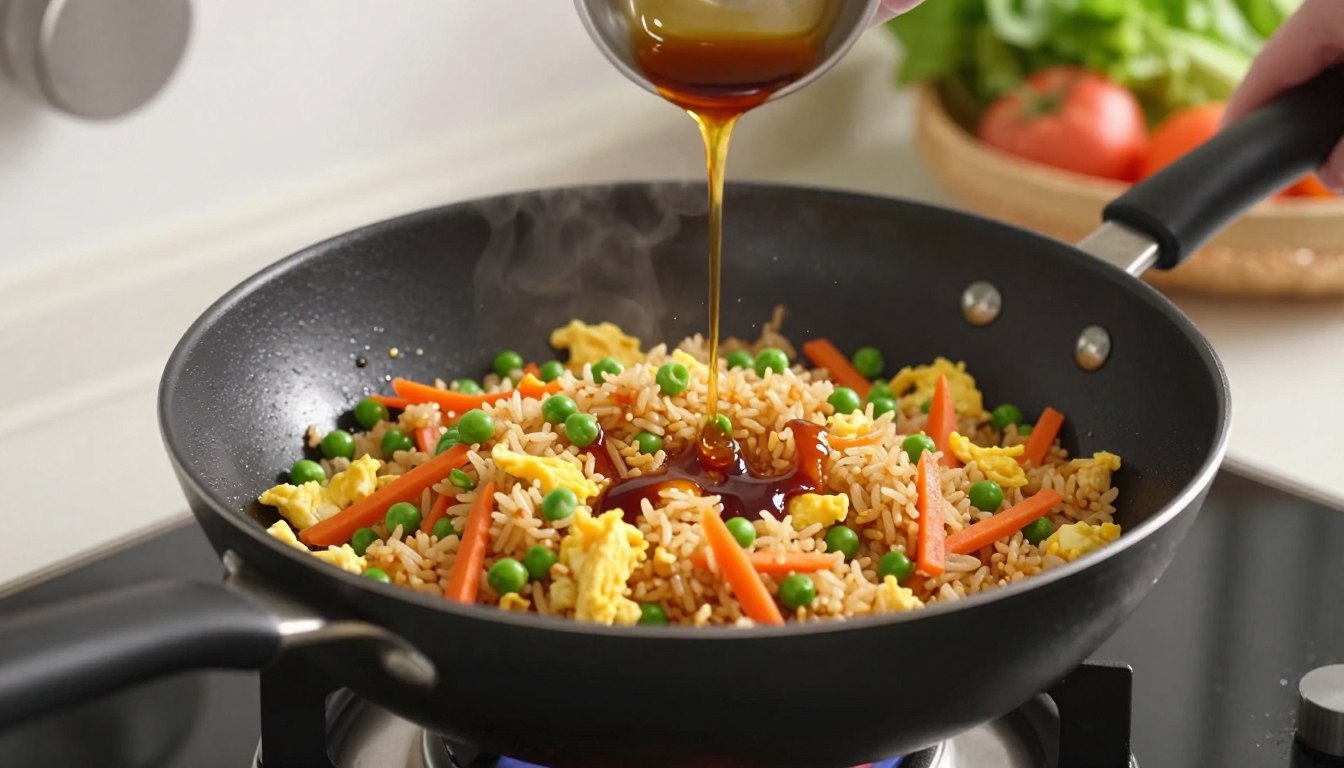
The Best Easy Fried Rice Recipes for Busy Weeknights
Ever feel like dinner time is sneaking up on you and the fridge is almost empty? Your family is hungry, and time is running out. That’s when quick fried rice saves the day. It turns leftovers into tasty meals in just 15 minutes.
Fried rice is more than just fast. It’s about enjoying your evenings without stress or expensive takeout. You don’t need fancy tools or expensive ingredients. Just rice, some pantry items, and basic cooking skills.
Easy fried rice recipes are simple. They use just eight basic ingredients you likely have at home. You can customize it by adding or removing ingredients. Your kids will love helping make it, and they’ll enjoy eating it too.
This guide will teach you how to make quick fried rice at home. You’ll learn why day-old rice is better, the best pan to use, and how to avoid mistakes. Plus, you’ll get a 15-minute recipe to make tonight.
Key Takeaways
- Quick fried rice comes together in 15 minutes using basic pantry ingredients you already have
- Day-old refrigerated rice creates better texture and prevents mushy, clumpy results
- A standard skillet works just as well as a wok for making easy fried rice recipes
- Fried rice for busy weeknights transforms leftovers into complete, satisfying meals for the whole family
- High heat and constant stirring are the secrets to achieving crispy, restaurant-quality fried rice at home
- Frozen vegetables work great and actually cook faster than fresh in quick fried rice recipes
- Meal prep becomes simple when you store cooled fried rice in containers for grab-and-go lunches
Why Fried Rice Is the Ultimate Weeknight Dinner Solution
Fried rice is a top pick for busy families on weeknights. It’s quick, affordable, and tastes great. You get a full meal without the hassle of many pots and pans. Plus, you can whip it up with what you already have at home.
Fried rice is simple and flexible. You don’t need fancy stuff or special ingredients. Just use what you have in your pantry.
Save Time with One-Pan Cooking
One-pan fried rice makes cleanup a breeze. Your meal cooks in one skillet or wok. This means less prep and easier cleaning. You can have dinner ready in about 15 minutes, often quicker than takeout.
The cooking process is easy and keeps your kitchen tidy. Just heat your pan, add ingredients one by one, and you’re done. No need to juggle multiple burners or wash lots of dishes.
Transform Leftover Rice into a Complete Meal
Turn yesterday’s rice into today’s tasty dinner. Fried rice is perfect for using up leftovers. You can mix in proteins, veggies, and grains for a balanced meal that tastes like it came from a restaurant.
Leftover rice isn’t waste; it’s the start of a great meal. This way of making fried rice at home quickly with convenient rice reduces waste and makes a delicious dish. Learn more at this link.
Budget-Friendly Ingredients You Already Have
You don’t need to spend a lot to make weeknight fried rice. Your pantry staples are all you need:
- Soy sauce
- Eggs
- Cooking oil (just 2 tablespoons for several cups of rice)
- Whatever vegetables are in your fridge
- Any leftover protein
This is a budget-friendly option. You spend just a few cents per serving and get a meal that tastes like takeout. No need for a special trip to an Asian market. Your regular grocery store has everything you need.
Fried rice makes cooking accessible to everyone. You don’t need fancy gear or a huge pantry to impress your family with a tasty meal.
Essential Ingredients for Restaurant-Quality Fried Rice at Home
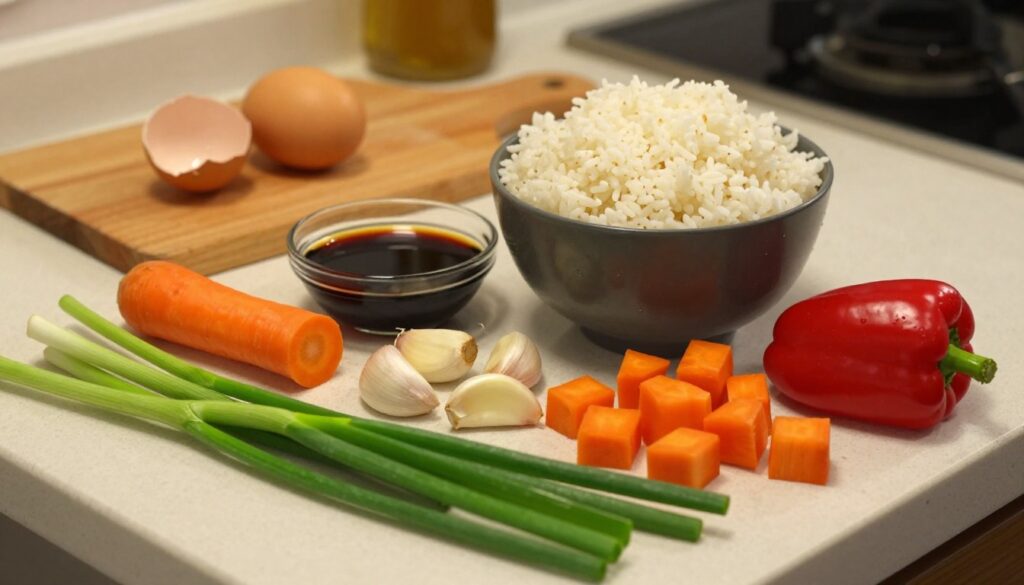
To make the best fried rice at home, start with the right ingredients. You only need about 8 to 10 key items, and most are probably in your pantry or freezer. This makes homemade fried rice a simple and quick meal to prepare.
Your ingredients fall into five main groups. Knowing what each group does helps you make better choices while cooking.
- Rice: Use cold, day-old white rice, like Jasmine or medium-grain. You’ll need 3 cups cooked for a batch.
- Proteins: Eggs are a must, but you can also add cooked chicken, shrimp, pork, or Chinese sausage for more flavor.
- Vegetables: Mix in onions, bell peppers, carrots, peas, green beans, broccoli, zucchini, and corn. Frozen veggies work great too.
- Aromatics and seasonings: Green onions, garlic, and ginger add depth. Soy sauce and sesame oil bring authentic taste.
- Cooking oils: Use vegetable oil for cooking and toasted sesame oil for finishing touches.
Soy sauce is key in homemade fried rice, adding umami and saltiness. Start with 1 to 2 tablespoons and adjust to taste. Add toasted sesame oil at the end to preserve its flavor. According to restaurant-style fried rice preparation, mixing sesame oil with soy sauce and white pepper ensures even seasoning.
| Ingredient | Amount | Purpose |
|---|---|---|
| Cold white rice | 3 cups | Base ingredient; keeps grains separate |
| Vegetable oil | 2 tablespoons | High-heat cooking |
| Soy sauce | 1-2 tablespoons | Umami flavor and saltiness |
| Sesame oil | 2 teaspoons | Nutty aroma and finishing touch |
| Eggs | 2, beaten | Protein and richness |
| Mixed vegetables | 1.5-2 cups | Nutrition, color, and texture |
| White pepper | 1/2 teaspoon | Mild heat without black specks |
| Protein (optional) | 1 cup cooked | Extra protein and flavor |
Making the best fried rice at home is all about flexibility. These ingredients are just guidelines. Feel free to swap peas for broccoli or add extra eggs or tofu. Your creativity in the kitchen is more important than following the recipe exactly.
For dietary needs, use low-sodium soy sauce to control saltiness. Frozen veggies are great because they release less moisture, keeping your rice separate. If you need gluten-free fried rice, try tamari instead of soy sauce. These simple changes make it easy for anyone to achieve restaurant-quality results, no matter their dietary needs.
The Secret to Perfect Quick Fried Rice Every Time
Perfect fast fried rice depends on one key thing: rice moisture. The taste and texture of your dish rely on how you prepare your rice before cooking. Knowing this secret can turn you from making average fried rice to creating top-notch dishes at home.
The most crucial step is before cooking starts. Your rice must be dry and cold. Freshly cooked rice is too moist and grains stick together. This makes your dish mushy and clumpy, not light and fluffy. Day-old rice fixes this problem naturally.
Why Day-Old Rice Works Best
Day-old rice is perfect because it dries out in the fridge overnight. As it cools, the grains firm up and separate. This makes them ideal for frying, coating evenly without becoming mushy.
You can get day-old rice in several ways. Cook rice ahead for fried rice. Use leftover rice from meals. Or, save extra rice from your favorite restaurant. All these options help you make great fast fried rice.
Day-old rice also gets firmer, handling high heat well. This creates the crispy bits that make restaurant fried rice so good. Losing moisture is your secret to perfect texture.
How to Cool Fresh Rice Fast When You’re in a Hurry
Not every weeknight has leftover rice ready. When you’re making fast fried rice without day-old rice, cool it quickly. Spread hot rice in a thin layer on a large baking sheet.
Put the sheet in the freezer for 20 minutes. Stir the rice halfway through. For the fridge, spread the rice and chill for 30 minutes, stirring once at the halfway point.
This quick cooling dries out the rice like overnight refrigeration. It removes excess moisture that would make your rice steam and become mushy. Detailed fried rice recipe guidance says this step is crucial for the right texture.
| Rice Preparation Method | Time Required | Moisture Level | Best For |
|---|---|---|---|
| Day-Old Refrigerated Rice | Prepare 1-2 days ahead | Low (Optimal) | Best texture and flavor |
| Freezer Cooling Method | 20 minutes | Low | Quick weeknight meals |
| Refrigerator Cooling Method | 30 minutes | Low | Spontaneous cooking |
| Freshly Cooked Rice | Immediate | High (Not Recommended) | Results in mushy texture |
Skipping this cooling step leads to clumpy, mushy fried rice. But, taking 20 minutes to cool your rice properly changes everything. This simple trick lets you make perfect fried rice anytime, even on spontaneous weeknights. Your patience in rice preparation pays off with superior results every time.
Kitchen Tools That Make Fried Rice Easier
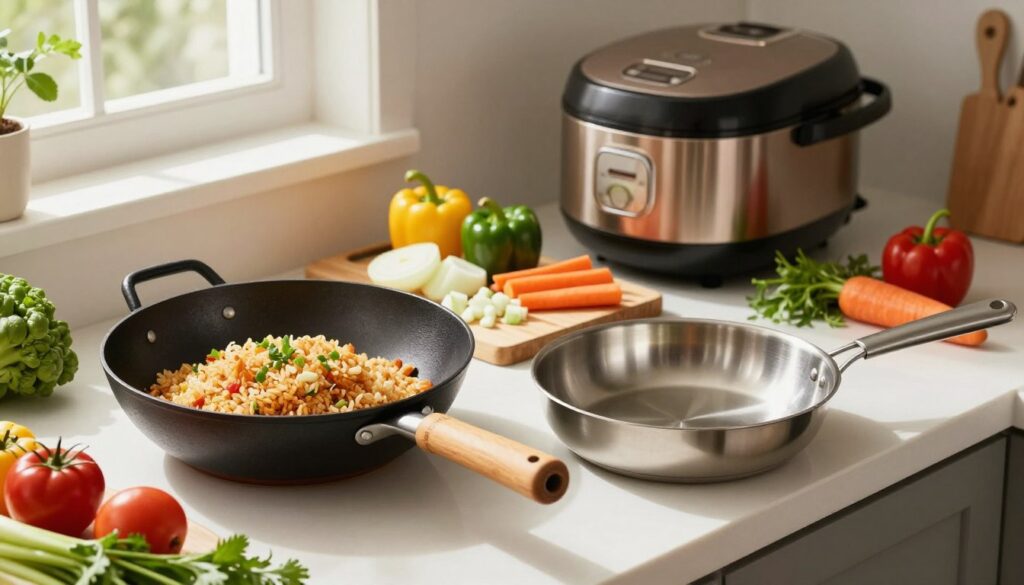
You don’t need fancy tools to make tasty stir fried rice at home. The right tools make cooking easier and faster. Cookware affects how your rice cooks and cleanup.
Do You Really Need a Wok?
A traditional wok is great for stir fried rice. Its sloped sides make tossing ingredients easy. The wide surface helps cook rice evenly.
You don’t need a wok to make great fried rice. A nonstick wok costs about twenty to thirty dollars. It makes cooking easier. If you make stir fried rice often, a wok is a good investment.
If you only make fried rice sometimes, you can skip the wok. A regular skillet works, but you might need more oil and patience.
Best Pan Alternatives for Home Cooks
A large nonstick skillet is perfect for home cooking. Choose a twelve-inch skillet or bigger. This size prevents rice from steaming instead of frying.
Using a heavy-based skillet with sloped sides helps ingredients cook evenly. The nonstick surface means less oil is needed. Carbon-steel skillets also work well after seasoning.
| Cookware Type | Best For | Key Feature | Price Range |
|---|---|---|---|
| Traditional Wok | Regular stir fried rice cooking | Sloped sides, high heat retention | $20-$50 |
| Nonstick Skillet (12-inch) | Occasional fried rice | Wide flat surface, easy cleanup | $30-$80 |
| Carbon-Steel Skillet | Regular cooking, long-term use | Even heating, durable seasoning | $40-$100 |
| Stainless Steel Pan | Emergency backup only | Basic heat distribution | $25-$60 |
The most important thing is pan size. A wide cooking surface lets rice spread out. This prevents steaming and gives you crispy grains.
Your technique is more important than your equipment. The best fried rice recipe comes from proper heat, dry rice, and quick movement. Don’t let a missing wok stop you. Use what you have, follow the right steps, and your fried rice will be amazing.
Simple Fried Rice Recipe Ready in 15 Minutes
You can have a delicious meal ready in no time. A 15 minute fried rice recipe brings restaurant-quality taste to your dinner. It uses common ingredients, perfect for busy evenings.
The secret to 15-minute fried rice is cold, cooked rice. You’ll need 3 to 4.5 cups of day-old rice. This prevents a mushy texture and helps flavors blend well.
Your Complete Ingredient List
- 3 to 4.5 cups cold cooked rice
- 3 tablespoons canola oil (divided)
- 3 eggs, beaten
- 1 cup frozen pea and carrot mixture
- 1/3 cup soy sauce
- 1 teaspoon sesame oil
- 1 green onion, sliced
- 1.5 cups cooked protein (optional: chicken, shrimp, or tofu)
Step-by-Step Instructions for 15-Minute Fried Rice
- Heat your skillet over medium-high heat. Add 1 tablespoon oil and scramble your eggs until cooked through. Remove to a plate and set aside.
- Add remaining oil to the hot pan. Increase heat to high and add your cold rice, breaking up clumps with a spatula.
- Use the fold-and-press technique: press rice against the pan for 30 seconds, then fold and repeat. This creates crispy, golden bits.
- Stir in frozen vegetables and cook for 2 minutes until heated through.
- Pour soy sauce over the rice in stages, stirring between additions for balanced flavor.
- Return eggs to the pan. Drizzle with sesame oil and toss everything together.
- Garnish with green onions and serve immediately.
This 15-minute fried rice recipe cooks in just 8 minutes. It serves four to six people, great for families or meal prep.
Customizing Your Fried Rice with Proteins and Vegetables
Making fried rice at home is fun because you can change it up easily. You probably have everything you need in your kitchen. Whether it’s chicken fried rice on a busy night or shrimp fried rice for the first time, the cooking method is the same. What changes is what you add to the pan.
Best Protein Options for Weeknight Fried Rice
Almost any protein can make your fried rice tasty and filling. The trick is knowing when to add each type.
- Chicken – Use rotisserie chicken, pre-cooked chicken breast, or quickly cook diced raw chicken before adding rice
- Shrimp – Buy frozen pre-cooked shrimp and simply thaw them, or quickly sauté raw shrimp with garlic before mixing into your dish
- Pork – Leftover pork tenderloin, pulled pork, or char siu work beautifully
- Steak – Slice thin and add at the end to stay tender
- Tofu – Press and cube it, then pan-fry until crispy for great texture
- Plant-based options – Chickpeas, tempeh, or edamame add protein and nutrition
Use about 1 to 2 cups of cooked protein for every 4 cups of rice to serve 4 to 6 people generously. Pre-cooked proteins go in near the end just to heat through. Raw proteins should be cooked first and set aside until the final step.
Fresh Versus Frozen Vegetables
Making vegetable fried rice quick doesn’t mean you need fresh vegetables. Frozen vegetables work great and often perform better than fresh ones.
| Vegetable Type | Best Choice | Cooking Tip |
|---|---|---|
| Frozen Peas and Carrots | Add straight from freezer | No prep work needed, adds in 2-3 minutes |
| Frozen Broccoli | Add near the end | Cooks quickly and keeps texture |
| Frozen Corn | Mix in with rice | Thaws fast, adds sweetness |
| Fresh Mushrooms | Add early | Creates umami flavor, needs time to soften |
| Fresh Cabbage | Add early | Provides crunch and bulk for your meal |
| Fresh Carrots | Add early | Diced small, adds sweetness and color |
Frozen vegetables have a big advantage for quick cooking. They need no chopping, release less water than fresh vegetables, and help keep your fried rice from getting soggy. Fresh vegetables like mushrooms, cabbage, and carrots add wonderful flavors. Put heartier fresh vegetables in the pan first so they have time to soften. Frozen vegetables go in toward the end since they cook right away.
The beauty of fried rice is making it exactly how you want. Use what’s in your freezer, refrigerator, or pantry. Buy whatever vegetables are on sale. Pick proteins your family enjoys. Every time you cook, you can create something different and delicious.
Pro Tips for Crispy Restaurant-Style Fried Rice
Getting crispy fried rice at home is easier than you think. The secret is in a few professional techniques. These tips turn simple fried rice into a dish that wows.
Your pan temperature is crucial. Heat it until it’s ready for oil. The oil should shimmer but not smoke. A tiny bit of water should sizzle and disappear fast. This high heat gives fried rice its smoky flavor.
Choosing the right oil is important. Use a neutral oil like canola or vegetable for high heat. Save toasted sesame oil for the end. Adding it too early burns off its flavor, but at the end, it’s perfect.
Get everything ready before cooking. Chop and measure your rice, veggies, proteins, and eggs. This way, you won’t scramble for ingredients when your pan is hot.
The fold-and-press technique makes your rice crispy. Press the rice against the pan for thirty seconds. Then, fold and press again. Scramble eggs separately for fluffy texture, then mix them in.
- Preheat your pan until oil shimmers
- Use neutral oil for high-heat cooking
- Finish with sesame oil in the final minute
- Press rice against the pan, don’t stir constantly
- Scramble eggs separately for better texture
- Let rice sit undisturbed for thirty to forty-five seconds at high heat
In your final minute, stop moving the rice. Let it sit undisturbed for thirty to forty-five seconds. This creates a crispy bottom layer. Fold it back into the rice for a crunchy texture throughout. This trick alone makes your fried rice better than takeout.
Common Fried Rice Mistakes and How to Avoid Them
Making fried rice at home should be easy, but many face texture and flavor issues. Most problems stem from a few common mistakes. Knowing what to avoid helps you make perfect, tasty fried rice every time.
Preventing Soggy or Mushy Rice
Soggy fried rice is a big problem for home cooks. It happens when moisture stays in the pan instead of evaporating. The main causes are easy to spot and fix.
- Using warm or freshly cooked rice instead of cold rice
- Adding too much sauce all at once
- Overcrowding the pan, which causes steaming instead of frying
- Starting with short-grain rice instead of long-grain varieties
Choosing the right rice is key for your fried rice recipe. Always chill your rice for a few hours or use yesterday’s rice. Cold rice has less moisture and cooks better. Add soy sauce and seasonings slowly while cooking, not all at once. Never fill your pan more than halfway. Crowded pans steam instead of fry, making the rice mushy.
Did you make soggy fried rice? Try spreading it on a baking sheet and bake at 300°F for 10 minutes. This can help dry out the excess moisture, though prevention is always better.
Getting the Right Heat Level
Heat control is crucial for perfect fried rice. Fried rice needs high heat to sear the rice and create crispy bits. Many cooks use too low heat, leading to steamed rice instead.
| Heat Level | What Happens | Signs You’ve Got It Right |
|---|---|---|
| Too Low | Rice steams and becomes mushy | No sizzle when ingredients hit the pan |
| Just Right | Rice fries and gets crispy on edges | Oil shimmers, loud sizzle, visible steam |
| Too High | Garlic burns, flavors turn bitter | Smoking pan, burnt smell, fast browning |
Start with medium-high heat for garlic and ginger. Then, turn the heat to high when adding rice. You should hear a sizzle and see steam right away. This heat evaporates moisture fast without overcooking your food.
Different stovetops and pans behave differently. Gas burners adjust quickly, electric coils hold heat longer, and induction cooktops heat evenly. Knowing your equipment helps you control the temperature better and make perfect fried rice every time.
Make-Ahead and Storage Tips for Meal Prep Success
Adding fried rice meal prep to your weekly routine ensures you always have dinner ready. Fried rice cooks in just 15 minutes, making meal prep a great choice. It’s perfect for those nights when cooking seems too much.
Start by cooking a big batch of fried rice. Then, divide it into containers for single or family portions. Stored properly, fried rice stays fresh in the fridge for 4 to 5 days.
You can freeze fried rice for up to 2 months. But, it might lose some crispiness when thawed. Use freezer-safe containers and label them for easy tracking.
Best Reheating Methods for Your Fried Rice
Reheating fried rice in a skillet is the best way to restore its crispiness. Add a bit of oil to a pan over medium heat. Stir in the chilled fried rice and heat for 5 to 7 minutes, stirring occasionally.
If you’ve frozen your portions, thaw them in the fridge overnight. This method preserves the texture better than the microwave.
- Refrigerate fried rice in airtight containers for 4-5 days
- Use the skillet method for best texture and crispiness
- Thaw frozen fried rice overnight in the refrigerator
- Add a teaspoon of water if reheating in the microwave
- Label all containers with preparation dates
Meal prep component cooking is another smart strategy. Prepare rice, chop veggies, and cook proteins ahead. Then, quickly stir-fry your meal prep in just minutes for a fresh dinner.
| Storage Method | Duration | Texture Quality | Best For |
|---|---|---|---|
| Refrigerator | 4-5 days | Excellent | Quick weeknight meals |
| Freezer | Up to 2 months | Fair (texture changes) | Long-term backup meals |
| Skillet Reheating | 5-7 minutes | Crispy and fresh | Restoring quality |
| Microwave Reheating | 2-3 minutes | Soft texture | Quick convenience |
“The beauty of fried rice meal prep is that you spend 15 minutes cooking on Sunday, and your dinners for the week are already planned. That’s real convenience.”
A serving of fried rice has about 350 to 570 calories. This depends on your protein and oil choices. Knowing this helps you track your meals for health goals.
Your fried rice meal prep system makes busy weeknights easier. Store it in the fridge for immediate use or freeze it for later. You’re investing in delicious meals with minimal effort.
Conclusion
You now have all you need to make amazing fried rice at home. This guide has recipes, techniques, and tips to turn leftover rice into a dish that’s just like your favorite takeout. Your family will be impressed by what you can make in just 15 minutes.
Fried rice is all about being flexible and easy to make. You can change up the veggies, proteins, and seasonings to suit your taste. Don’t worry if it’s not perfect the first time. With a few tries, you’ll get the hang of it and find what works best for you.
Once you get the hang of fried rice, you can try many other dishes. You can use these skills for stir-fried rice, noodle dishes, and more Asian-inspired meals. The skills you learn here will help you in many ways. Start making fried rice tonight and try out different versions. Cooking should be fun, and fried rice shows that delicious meals can be quick and easy.