How to Make Quick & Easy One-Pan Salmon Recipes
Some nights, you just want a simple dinner without a mess. You want something that feels good for you but doesn’t take up your whole evening. A one pan salmon recipe is just that: easy to make and with minimal cleanup.
In just 11–20 minutes, you can have a delicious salmon dinner ready. Try using lemon garlic paste, Asian sesame-ginger, or garlic butter to make it extra tasty. It’s perfect for a quick weeknight meal or a spontaneous family dinner.
This guide will show you how to roast salmon with veggies in one pan. You’ll learn how to get the salmon just right and enjoy its health benefits. Serve it with rice, bread, or potatoes for a meal that feels like you spent hours cooking.
Key Takeaways
- One pan salmon recipes save time and cut cleanup for busy weeknights.
- You can make an easy salmon recipe in roughly 11–20 minutes depending on thickness.
- Short marinades or slathers add bold flavor without long wait times.
- Sheet pan methods pair salmon with veggies for a balanced, healthy meal.
- A quick salmon dinner can meet dietary guidance when eaten twice weekly.
Why one-pan salmon recipes are perfect for busy weeknights
One-pan salmon dinners are quick and flavorful, perfect for when time is tight. You can prepare ingredients in minutes and cook on a sheet pan in the oven. This way, you can enjoy dinner while you wrap up a call or help with homework.
These meals fit into a 20–30 minute window. So, you spend less time cooking and more time together as a family.
Benefits of one-pan dinners for your schedule
One-pan meals save you time and effort. Instead of juggling pots, you arrange everything on a tray. Then, you whisk a sauce and roast at high heat for even cooking.
Cleaning up is also easier with one-pan meals. Using foil, parchment, or silicone liners means fewer dishes. For more tips and recipes, check out this one-pan dinner guide.
Health advantages of salmon: omega-3s, protein, and more
Salmon is packed with omega-3s and protein, great for your heart and brain. It may also lower the risk of chronic diseases. Pairing it with roasted veggies makes for a balanced meal.
For a lighter meal, add more veggies and serve with rice or toasted bread. This way, you keep meals satisfying without overdoing it on calories and carbs.
How sheet pan and tray bake methods save time and cleanup
Sheet pan techniques make dinner fast and easy. Cut ingredients evenly for uniform cooking. Spread them out and use high heat for crisp edges.
Add quick-cook items later so everything finishes together. Choose a sturdy sheet pan or oven-safe skillet for reliable results. These meals are quick and flavorful, perfect for busy weeknights.
| Advantage | What to do | Result |
|---|---|---|
| Hands-on time | Prep on a cutting board, whisk a sauce, arrange on pan | Meals ready in 11–30 minutes |
| Cleanup | Line pan with foil or parchment | Fewer dishes, quick washing |
| Flavor | High heat roasting or broiling; season with olive oil, garlic, lemon | Caramelized edges and juicy fish |
| Nutrition | Pair salmon with vegetables and whole grains | Balanced, nutrient-dense healthy sheet pan meals |
| Suitability | Simple steps, few tools | Great for beginners and busy families seeking easy dinner ideas |
Choosing the best salmon for quick one-pan meals
Choosing the right salmon is key for a fast and tasty baked salmon one pan dinner. Look for bright, firm fillets that smell fresh, not fishy. Think about what’s important to you: flavor, cost, or how it’s caught. This will help you pick the best salmon for your simple salmon recipe.
Wild vs. farmed salmon
Wild salmon is often firmer and better for the planet, thanks to groups like Monterey Bay Aquarium Seafood Watch. Sockeye has a bold flavor. Farmed salmon is cheaper and has consistent size and fat content. Both types work well in a one-pan salmon and potatoes dish, just adjust cooking time based on thickness and fat.
Fresh fillets and portion tips
Standard servings are about 6 oz (180 g) per person. Many recipes use four 180 g fillets. Ask the fish counter to trim and remove bones. Fishmongers at places like Whole Foods or local markets can cut fillets to size for even cooking.
Skin-on or skinless for sheet-pan cooking
Skin-on fillets stay together while roasting and can get crispy if seared first. Tray-bake heat might not crisp the skin fully, so choose skinless if you don’t want to serve with skin. Apply slathers or marinades to the top and sides; the skin side under the fillet doesn’t need coating.
| Choice | Pros | Cons | Best use |
|---|---|---|---|
| Wild (e.g., sockeye) | Firmer texture, stronger flavor, higher sustainability ratings | Often pricier, seasonal availability | When flavor matters in baked salmon one pan dishes |
| Farmed (Atlantic) | Affordable, consistent fat, easy to find year-round | Variable sustainability, milder taste | Great for healthy salmon meal prep and family trays |
| Skin-on fillets | Stay intact, potential for crisp skin if seared | May not crisp in sheet-pan roast without extra steps | One pan salmon and potatoes when you want whole fillets |
| Skinless fillets | Easy to eat, quicker to absorb slathers and glazes | Can fall apart more easily while moving | Simple salmon recipe for fast weeknight meals |
Essential tools and pantry ingredients for one-pan salmon recipe success
Having the right tools makes cooking salmon sheet pan dinners quick and easy. A big rimmed sheet pan is key for roasting fish and veggies without a mess. A sharp knife is needed for cutting and portioning.
Also, have a small bowl and whisk for sauces, and a microplane for zest. A sturdy spatula is great for moving food around.
Must-have tools
A rimmed baking sheet ensures even heat and airflow. An instant-read meat thermometer helps avoid overcooking. It’s important to aim for the right pull temps.
A whisk is handy for mixing sauces. Tongs or a spatula make serving easy.
Pan coatings and liners
For sticky glazes, use heavy-duty foil. Parchment paper is good for nonstick, and silicone mats are reusable. These liners save time on cleaning.
If you want air under the fish, place an oven-safe rack in the sheet pan.
Staple pantry flavors
Garlic, fresh lemons, olive oil, and Dijon mustard are must-haves for quick marinades. Brown sugar and tamari or soy sauce add a sweet and savory touch. Sesame oil and ginger are great for Asian flavors.
A bit of butter is perfect for garlic-butter sauces that everyone loves.
With these tools and ingredients, you can whip up a tasty sauce or marinade in no time. For a one-skillet dish that goes well with these items, try one-skillet salmon with lemon orzo.
Quick marinades and slathers that maximize flavor in minutes
You want bold flavor without waiting long. These fast marinades and slathers stick to fillets and roast into sticky, savory finishes. They work in just ten minutes or an hour, adding depth to your dish.
Use a microplane for garlic and ginger. This makes a paste that sticks well to skin or skinless fillets. Thick slathers prevent runoff and keep vegetables saucy when everything shares the tray.
Lemon garlic paste
Mix lemon zest and juice, extra-virgin olive oil, Dijon mustard, grated garlic, salt, and pepper. Rub the paste over the fillets and roast right away. For a deeper flavor, chill the fish up to 1 hour.
Asian-style glaze
Whisk together brown sugar, sesame oil, tamari or Kikkoman soy sauce, grated ginger, and garlic. Toss with carrots and broccoli or brush over the salmon. This makes classic Asian sesame salmon with sticky caramelization when baked at 400°F for 12–20 minutes.
Garlic butter and herb glaze
Melt unsalted butter with minced garlic and chopped parsley, dill, or chives. Brush the butter on before roasting and once more after cooking for a glossy finish. This pairs well with baby potatoes for easy meal prep and family dinners.
Practical tips: slathers like the Dijon-based lemon paste or the soy-sesame sauce are thick enough to stick to the tops of fillets. No need to coat the underside. For freezing, spread the slather, freeze the tray flat or flash-freeze the fillets, then wrap to preserve the paste.
| Style | Key Ingredients | Roast Temp | Best Pairing |
|---|---|---|---|
| Lemon Garlic Paste | Lemon zest & juice, olive oil, Dijon, garlic, salt | 400°F for 11–15 min | Asparagus, cherry tomatoes — lemon salmon baked recipe |
| Asian Sesame Glaze | Sesame oil, tamari, brown sugar, ginger, garlic | 400°F for 12–20 min | Carrots, broccoli — Asian sesame salmon |
| Garlic Butter Herb | Butter, garlic, parsley/dill/chives | 375–400°F for 15–22 min | Baby potatoes — garlic butter salmon one pan |
Fast cooking methods: oven roast, broil, and high-heat sheet pan techniques
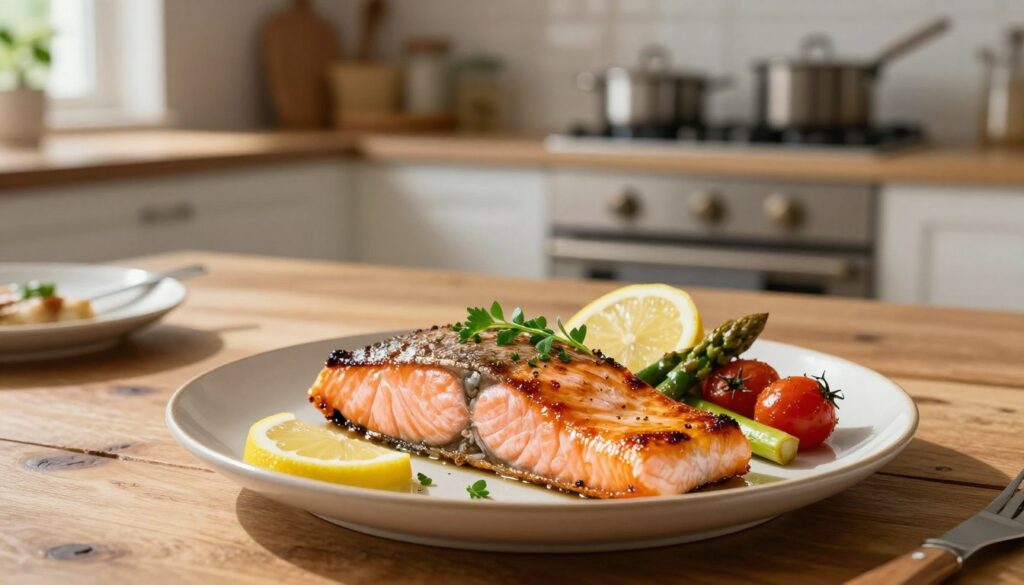
Weekdays are short, and we need quick ways to cook. Roasting salmon on a sheet pan or broiling it fast can make a tasty meal. These methods are great for fast dinners if you plan well.
Temperature and timing tips for tender, moist salmon (pull temps and resting)
Roast at 400°F for even cooking of fish and veggies. Thin fillets cook in 11 minutes. Thicker pieces or dense veggies might take up to 20 minutes.
Use a thermometer to check salmon at 122°F for medium-rare. It will get a bit hotter while resting. For fully cooked, aim for 145°F after resting, following USDA advice.
Let the fillets rest for a few minutes before serving. This lets juices spread and finishes the cooking without extra oven time.
How to get caramelization and sticky glaze without drying the fish
Brush a glaze like honey or maple syrup on the fish. Add a bit of oil to help browning and prevent sticking. Roast at high heat, then broil briefly for extra char.
Keep an eye on the internal temperature to avoid overcooking. Short broiler sessions add caramelization without drying out the fish. Place tender veggies like cherry tomatoes near the edges or add them later to avoid bursting.
When to broil vs roast for best vegetable and fish results
Broil for fast surface browning or blistered tomatoes. It’s perfect for a broiled salmon finish and thin fillets that cook quickly.
Roast for even cooking that suits a roast salmon sheet pan. Roasting at 400°F is predictable and easy for quick dinners.
| Method | Best for | Typical temp | Time range | Tip |
|---|---|---|---|---|
| Roast (sheet pan) | Balanced fish and vegetables | 400°F | 12–20 minutes | Arrange veg by density; pull at 122°F for medium-rare |
| Broil | Fast surface browning, blistered tomatoes | High (top element) | 3–8 minutes | Watch closely; finish glaze with brief broil |
| High-heat sheet pan | Caramelized edges, quick family meals | 425–450°F | 10–16 minutes | Oil surfaces lightly; stagger veg timing for even finish |
These methods make quick dinners easy. With simple timing and a thermometer, you can make a delicious salmon dinner in no time.
Vegetable pairings and portioning for balanced one-pan meals
Choose vegetables that roast in the same time as the fish for simplicity. Thin asparagus, cherry tomatoes, small broccoli florets, and green beans are great with salmon. They add color to your plate.
Cut vegetables to even sizes so they roast together. Slice carrots thin or dice sweet potatoes small. Parboil larger potatoes first.
For a tray with baby potatoes, roast them first. Then add the salmon and quick-cooking veggies.
You can place potatoes on one side and salmon on the other. This prevents juices from pooling. Brush salmon with garlic butter or oil and add lemon slices for flavor.
Plan for about 6 oz of fish per person. Fill the rest of the plate with veggies for a low-carb meal. For a heartier meal, add a starch like steamed rice or roasted potatoes.
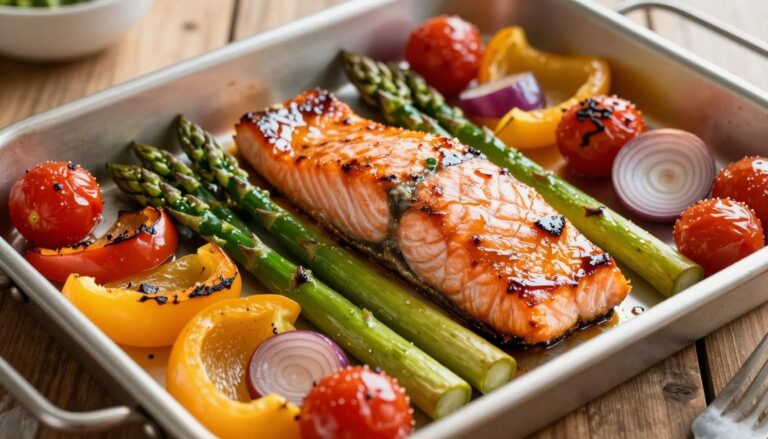
Roasting salmon with vegetables on a half sheet pan is easy. It’s perfect for four servings. If you want to combine fish and starch, try one pan salmon and potatoes. Trim potatoes small or parboil them so everything finishes at once.
For a quick meal, use cherry tomatoes and asparagus around the fillets in the last 10–12 minutes. This method keeps tomatoes blistered and asparagus tender without overcooking the salmon.
For a reliable sheet-pan method, see this recipe. For ideas on pairing garlic butter and roasted greens, explore Redfish Recipes.
| Vegetable | Prep | Roast Time (425°F) |
|---|---|---|
| Asparagus | Trim, keep whole | 10–12 minutes (add with salmon) |
| Cherry tomatoes | Leave on vine or halved | 10–12 minutes (add with salmon) |
| Broccoli florets | Small florets | 18–20 minutes (may start earlier) |
| Carrots | Slice thin or baby carrots | 18–25 minutes (parboil if thick) |
| Baby potatoes | Halve or parboil | 20 minutes head start, then 10–12 with salmon |
| Green beans | Trim ends | 12–15 minutes (add with salmon) |
These combinations make healthy salmon recipes easy to prepare and quick to cook. Swap vegetables by roast time and portion to suit appetites. With a little planning, you get bright flavors, even cooking, and a satisfying plate every time.
Three quick one-pan salmon recipes to try tonight
If you’re looking for a fast dinner, these three one-pan recipes are perfect. They offer big flavors with little effort. Each dish roasts with veggies, making cleanup easy and your meal colorful.
Asian sesame ginger sheet pan salmon with carrots and broccoli (about 20 minutes)
Start by tossing carrot sticks and broccoli florets with oil, salt, and pepper. Then, mix brown sugar with sesame oil, tamari or soy sauce, grated ginger, and garlic.
Put salmon and veggies on a sheet pan. Spoon half the sauce over them. Roast at 400°F for 12–15 minutes until the fish is flaky. Brush with the remaining sauce. Serve over steamed rice for a quick Asian sheet pan salmon in about 20 minutes.
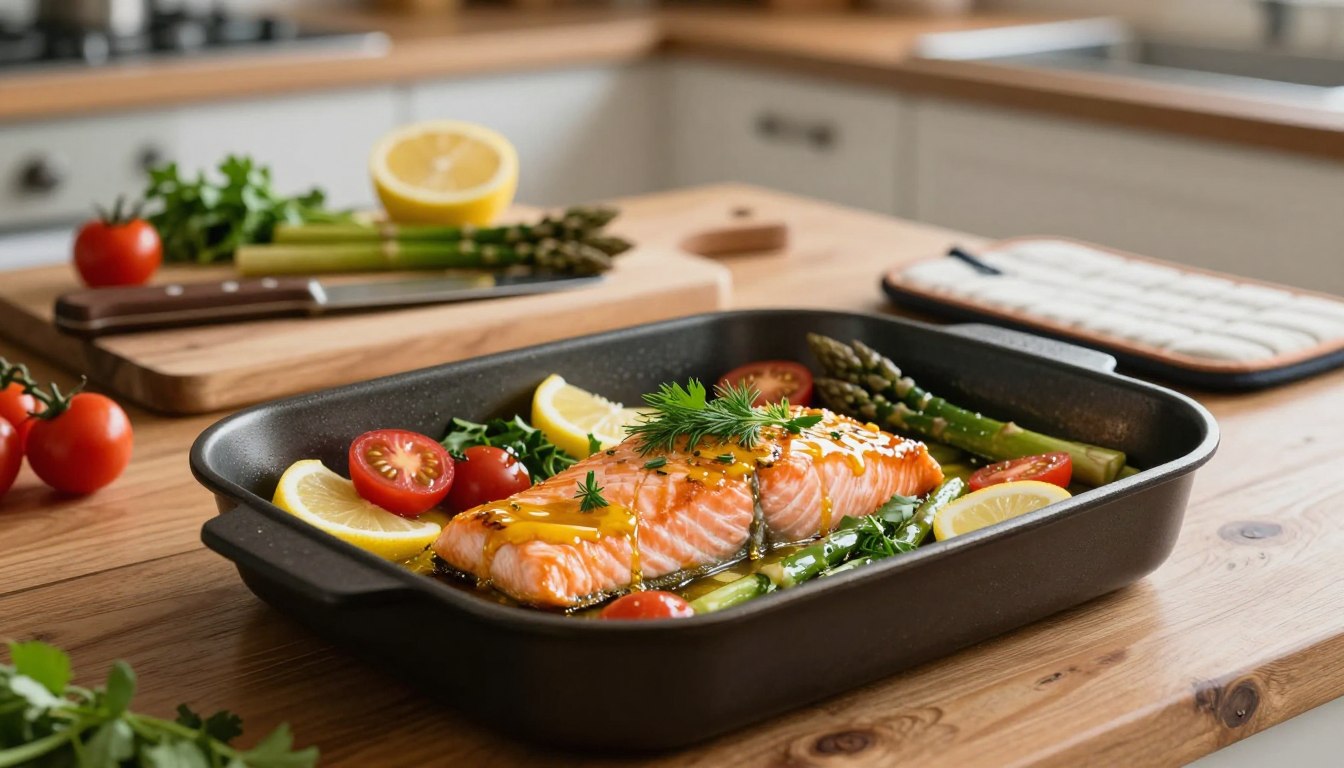
Lemon garlic salmon tray bake with asparagus and blistered cherry tomatoes (about 11–20 minutes)
First, make a lemon garlic paste with lemon zest and juice, olive oil, Dijon, grated garlic, salt, and pepper. Spread it on the salmon fillets. Arrange asparagus and cherry tomatoes tossed in oil alongside.
Roast on high heat or broil for about 11 minutes. Aim for a pull temperature near 50°C / 122°F for juicy fish. Finish with grated Parmesan and lemon wedges. For more details, see this lemon garlic salmon tray bake.
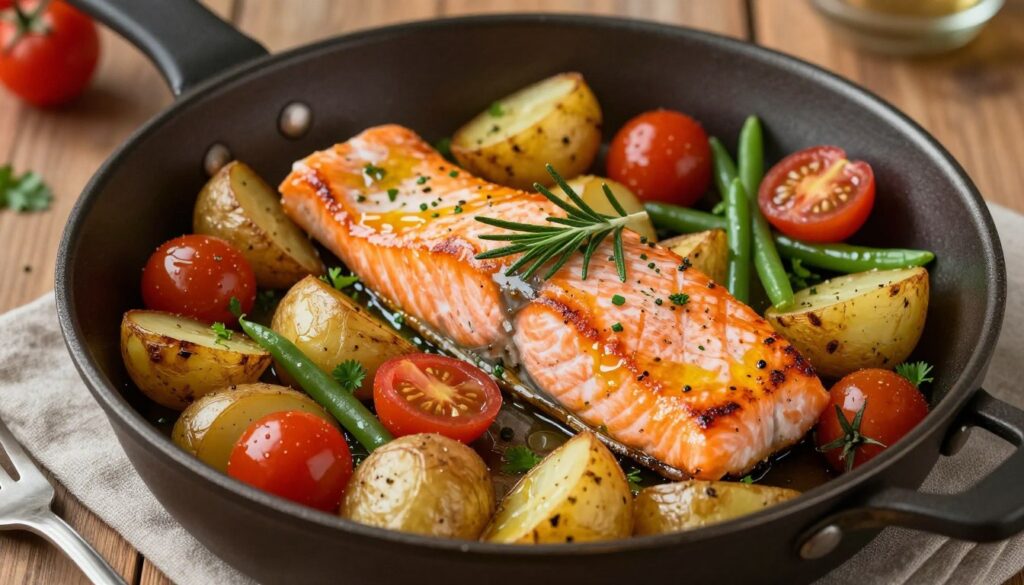
Garlic butter salmon with baby potatoes on a single tray (easy family dinner and meal prep)
Parboil halved baby potatoes until just tender. Then, toss them with oil, salt, and lots of minced garlic. Spread them across the tray for browning while roasting the fish.
Place salmon fillets on top or beside the potatoes. Brush with garlic butter and herb glaze. Roast at 400°F until potatoes are golden and salmon is cooked through. This method is great for leftovers and fits into meal prep plans.
Adjust roasting positions and times based on vegetable thickness. For extra browning, broil for a minute at the end. These recipes are flexible for a 30 minute salmon dinner without losing flavor.
Tips for perfect texture, food safety, and meal prep
Getting the texture right and keeping food safe is key. They help you make healthy salmon meal prep a breeze. This saves time on busy nights.
How to test doneness: visual cues, texture, and thermometer targets
Look for a color change from translucent red to opaque pink. Also, check if the flesh flakes easily with a fork. Press the thickest part gently; it should feel slightly firm, not squishy.
Use an instant-read thermometer for accuracy. Pull salmon at 122°F (50°C) for medium-rare; it will rise to about 127°F (53°C) while resting. For medium, remove at 140°F (60°C) and let carryover bring it to roughly 145°F (63°C). USDA recommends 145°F (63°C) if you want fully cooked fish.
Make-ahead and freezing tips for slathered fillets and assembled trays
For true make-ahead salmon, prepare your slather or marinade and freeze it in a flat pouch. Freeze slathered fillets flat on a tray until firm, then wrap airtight to prevent freezer burn.
If you assemble trays, freeze components separately when possible. Vegetables with high water content can get soggy, so freeze roasted potatoes or blanched greens in one pack and fish in another.
Storage and reheating: keeping leftovers safe and tasty for 3–4 days
Refrigerate cooked salmon within two hours of cooking. Store in airtight containers and use within 3–4 days for best quality and safety.
For storage reheating salmon, warm gently in a 300°F oven in short intervals so the fish stays moist. You can microwave on low power in 20–30 second bursts, covered loosely, and add a little olive oil or a pat of butter to revive texture.
Leftovers work well in salads, grain bowls, and low carb salmon recipes like flaked salmon over greens. Use chilled flakes for sandwiches with toasted bread and roasted tomatoes for a quick, tasty meal.
| Step | What to check | Target temp or timing |
|---|---|---|
| Visual | Color and flake | Opaque pink, flakes with fork |
| Texture | Firmness when pressed | Slightly springy, not mushy |
| Thermometer | Internal temp at thickest point | Pull at 122°F for medium-rare; 140°F for medium; 145°F USDA safe |
| Make-ahead | Slather freezing method | Freeze flat, then wrap airtight |
| Storage | Refrigeration window | Within 2 hours; use in 3–4 days |
| Reheating | Best gentle methods | 300°F oven short intervals or microwave low bursts with oil |
Conclusion
One pan salmon recipes make dinner easy, healthy, and tasty with little cleanup. Quick sauces like lemon-garlic, Asian sesame-ginger, or garlic-butter can transform fresh salmon into a delicious dish. Pairing it with veggies like asparagus, cherry tomatoes, or baby potatoes creates balanced meals without extra dishes.
For a quick and tasty salmon dinner, check the fish’s internal temperature for juiciness. Let it rest briefly before serving. Use foil or parchment to make cleanup easy for your sheet pan dinner. Keep garlic, lemon, olive oil, tamari, mustard, and brown sugar ready to make healthy salmon recipes fast.
Try the three variations in this guide for your favorite one pan salmon recipe. They’re perfect for family meals and make-ahead lunches. For more easy fish breakfasts and stress-free ideas, check out breakfast made easy with fish.