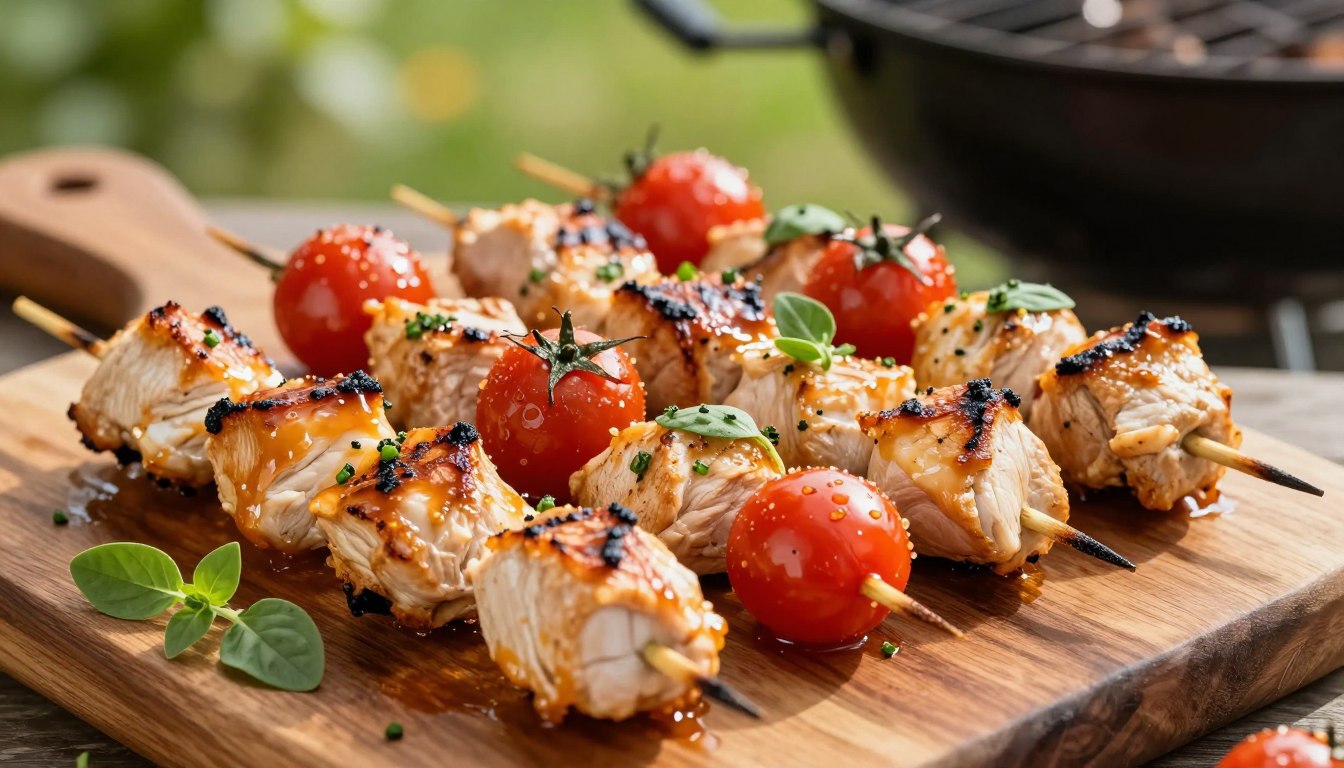
How to Make Chicken tenderloin skewers with tomato and oregano
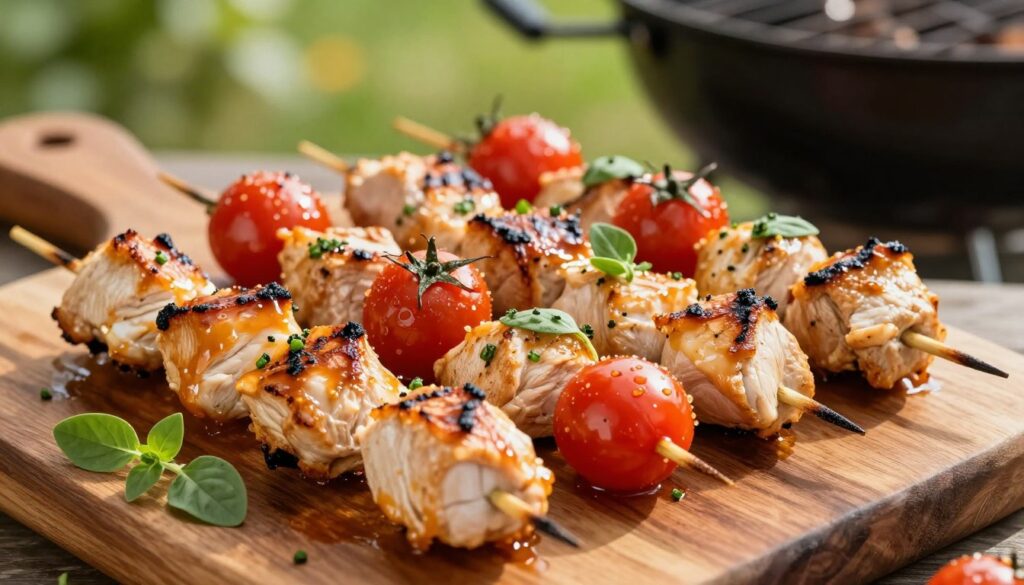
Some nights, you just want dinner to feel special. You’re tired, but the smell of garlic and lemon makes you excited. This easy chicken skewers recipe adds a Mediterranean touch to your weeknight dinner with minimal effort.
With tender chicken and a zesty lemon-oregano marinade, your skewers will be juicy. Whether you grill or bake, the results are delicious. In just 30 minutes of prep and a short marinating time, you’ll have skewers with tomatoes, oregano, and a hint of rosemary.
Grill for a smoky flavor in about 12 minutes, or bake at 450°F until the chicken is 165°F. For a Tuscan twist, check out Tuscan-style Grilled Chicken Kebabs.
Key Takeaways
- The recipe makes roughly six servings and uses an acid-based chicken skewers marinade for tender results.
- Active prep is about 30 minutes; marinating varies from 15 minutes to several hours for deeper flavor.
- Grill for about 8–12 minutes total or bake at 450°F for 15–20 minutes, checking for 165°F internal temperature.
- Serve homemade chicken skewers with brown rice, salads, or grain bowls for a full meal.
- This is an easy chicken skewers recipe that balances lemon, oregano, garlic, and olive oil for bright Mediterranean taste.
Why you’ll love these grilled chicken skewers
These skewers mix bright Mediterranean herbs with tender chicken. They’re perfect for a quick dinner. The lemon, oregano, garlic, and olive oil make every bite zesty.
Adding hot grilled lemon takes it to the next level. It brings out the herbs and citrus.
Bright Mediterranean flavors
Oregano and garlic give the chicken a rich aroma. Cherry tomatoes add sweetness and a bit of acidity. This mix makes the skewers great with simple sides like rice or salads.
Quick, tender results with a simple marinade
A short marinade of 15–60 minutes boosts the flavor. Longer marinating, 4–24 hours, makes the chicken even tender. The lemon juice and olive oil work together beautifully.
This method is easy and doesn’t require many ingredients. It’s a simple way to make delicious chicken skewers.
Versatile for grilling or oven baking
Grill for a smoky taste that’s perfect for outdoor meals. Or bake at 450°F for a light sauce. This method works well for both.
These skewers are lean and have fewer calories. They’re great for healthy meals. You can also add mushrooms, bell peppers, or onions to keep the flavors strong.
Ingredients for homemade chicken skewers with tomato and oregano
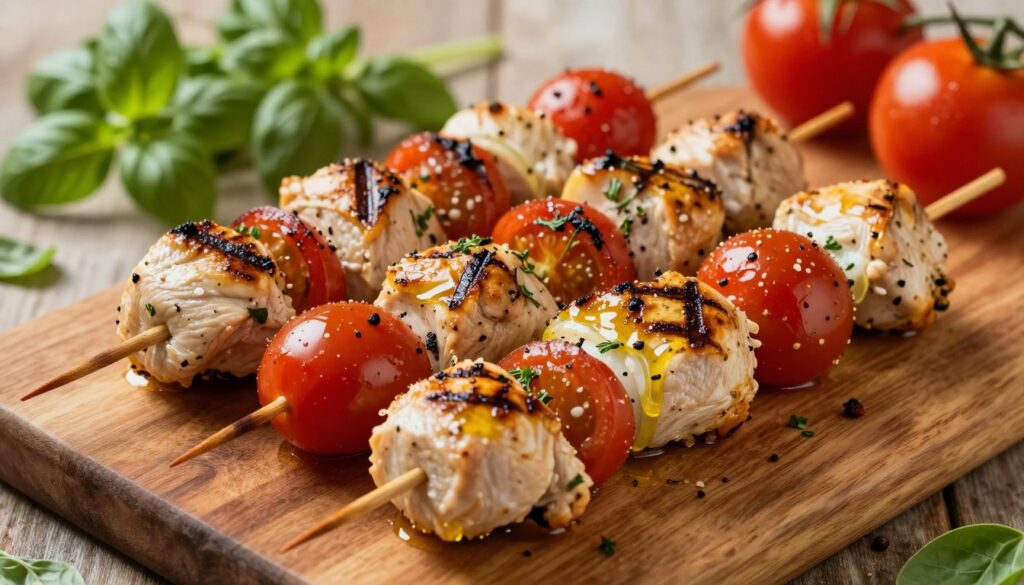
Get your ingredients ready for quick prep and short cooking time. These amounts are perfect for family dinners or small gatherings, covering 1–1.25 pounds of chicken.
Chicken and produce
Start with 1–1.25 pounds of boneless skinless chicken breast or tenderloins. Cut them into 1-inch cubes for even cooking. Add 9–16 cherry or grape tomatoes for color and flavor, depending on your skewer count.
Include cremini or button mushrooms, red or green bell peppers, and red onion. Have a couple of lemons ready for juice and grilled halves to squeeze over your skewers.
Marinade essentials
Use about 2–1/4 cups of extra virgin olive oil or adjust to coat the chicken. Add 1–3 tablespoons of fresh lemon juice or the juice of one lemon. You can also add optional lemon zest for a bright note.
Stir in 2–3 cloves of minced garlic, 1 tablespoon of fresh oregano or 1 teaspoon of dried, salt, black pepper, and a pinch of crushed red pepper flakes for heat. Fresh parsley, rosemary, or thyme can be used as optional herb swaps.
Optional add-ins and garnishes
For a savory twist, try Kalamata olives or sun-dried tomatoes. Garnish with chopped fresh parsley and serve with lemon halves to grill and squeeze.
Offer brown rice, cauliflower rice, or grain bowls alongside. When making chicken kebabs, drain excess marinade before cooking. This reduces flare-ups and ensures safe grilling of your chicken tenderloin skewers.
Tools and equipment for easy chicken skewers recipe
Before you start making your skewers, get the right tools. They make the process easier and safer. The right tools also help you cook evenly, whether you’re making bbq chicken skewers or a sheet-pan roast.
Skewers: metal vs. soaked wooden
Metal skewers are durable and don’t need soaking. They help cook the meat evenly and quickly.
Wooden or bamboo skewers need soaking in cold water for at least 10 minutes. Soaking them longer helps with open-flame grilling, reducing charring and breakage.
Grill, oven, and thermometer recommendations
Heat your grill to medium-high for a nice sear. For oven roasting, use 450°F for juicy and crispy results. A sheet pan is best for even heat.
Check the meat’s internal temperature with an instant-read thermometer. It should be 165°F. After searing, move skewers to indirect heat or lower the grill to medium-high to avoid burning the outside.
Prep bowls, sheet pan, and tongs
Marinate in a large glass or nonmetal bowl to avoid metallic taste. Use a colander or mesh strainer to drain excess marinade before cooking.
Choose a sturdy sheet pan for oven batches and long-handled tongs for safe flipping. A spatula is handy for transferring food. Lightly oil pans or use nonstick spray to prevent sticking.
Other helpful gear
- Cutting board dedicated to raw poultry to avoid cross-contamination.
- Sharp chef’s knife for quick, even cuts.
- Kitchen timer to track grill and oven times.
- Optional grill press or spatula to char lemon halves for serving.
How to make the tomato and oregano marinade
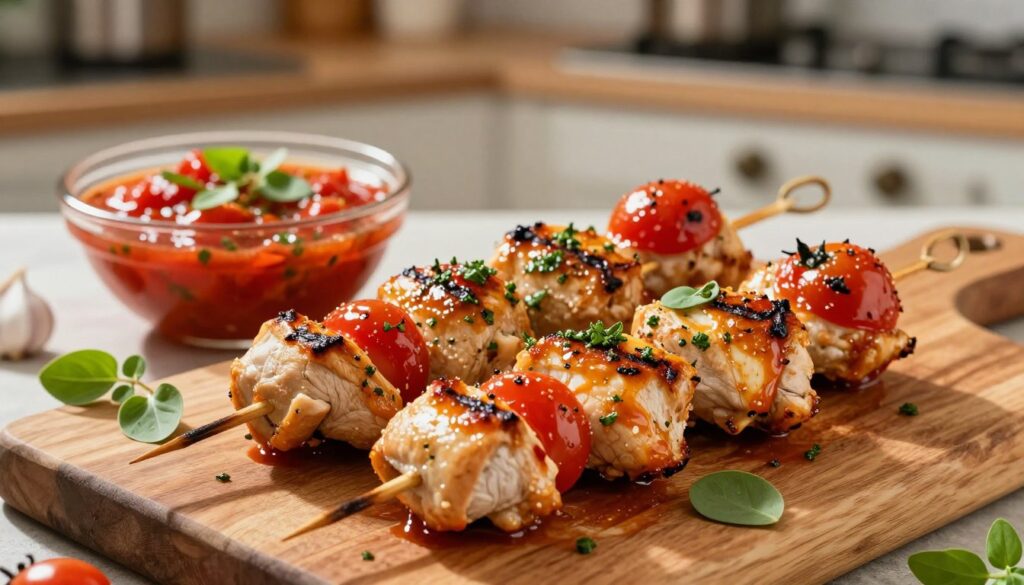
The right mix of tomato and oregano makes chicken skewers unforgettable. Choose ripe tomatoes for sweetness and extra-virgin olive oil to carry flavors. Add fresh garlic for a punch and lemon to brighten it up. Adjust the amounts to your liking and cooking time.
Fresh vs. dried oregano and herb swaps
Fresh oregano and parsley add a green aroma right away. If you only have dried oregano, use one-third the amount of fresh (1 tablespoon fresh = 1 teaspoon dried). Rosemary and thyme are great swaps or additions. Crush rosemary leaves to release their oils for a rustic, Tuscan flavor.
Balancing lemon, olive oil, and garlic
Start with 1–3 tablespoons lemon juice and 2–4 tablespoons olive oil. Add 2–3 crushed garlic cloves. Include lemon zest, a pinch of salt, and black pepper to taste. Red pepper flakes add heat and flavor. Olive oil helps herbs and tomato juices stick to the meat.
Marinating times for best flavor and tenderness
Marinating for 15–60 minutes adds flavor when you’re short on time. For deeper taste and tenderness, marinate 4–24 hours in the fridge. Never marinate too long, and always refrigerate for food safety.
Before grilling, drain excess marinade to prevent flare-ups. These steps ensure your chicken skewers are juicy and cook evenly.
For more weeknight-friendly ideas and leftover marinade uses, see this collection of simple dinners at 25 Easy Dinner Recipes for Busy.
Preparing the chicken tenderloin skewers
Start by trimming and sizing the chicken so every bite cooks evenly. Remove visible fat, then cut tenderloins into roughly 1-inch cubes. If you use boneless breasts, pound them to even thickness or cut into uniform cubes to match the tenderloins.
Cutting and trimming chicken tenderloins or breast
Work with a sharp chef’s knife and a clean cutting board. Trim away connective tissue and white bits. Aim for pieces that are the same size so the chicken cooks at the same rate. Smaller, uniform cubes help you deliver tender results with this chicken kebabs recipe.
Threading chicken, tomatoes, and vegetables on skewers
Thread ingredients in a repeating pattern to lock in moisture and flavor. Try tomato–two chicken pieces–tomato–two chicken pieces–tomato for balance. Alternate mushrooms, bell pepper, and onion between chicken pieces to keep each skewer juicy and colorful.
Leave a small space between items so heat circulates. If you use wooden skewers, soak them about 20 minutes before assembly to reduce burning. This simple approach makes an easy chicken skewers recipe that looks professional.
Safety tips for handling raw poultry
Use separate cutting boards and utensils for raw chicken to avoid cross-contamination. Wash your hands and sanitize surfaces after handling poultry. Marinate in a sealed container in the refrigerator, never at room temperature.
Discard used marinade or bring it to a rolling boil before using it as a sauce. Drain excess marinade through a colander before grilling to limit flare-ups and reduce the risk of undercooked chicken. Check that internal temperature reaches 165°F before serving.
| Step | Action | Reason |
|---|---|---|
| Trim | Remove visible fat and connective tissue | Promotes even cooking and cleaner flavor |
| Cube | Cut into 1-inch pieces or pound breasts | Uniform size ensures consistent doneness |
| Thread | Alternate chicken with tomatoes and veggies | Distributes moisture and flavor across the skewer |
| Soak skewers | Soak wooden skewers 20 minutes | Prevents burning and breaking while cooking |
| Marinate | Refrigerate in sealed container, discard used marinade | Food safety and better flavor absorption |
| Check | Cook to 165°F internal temperature | Ensures safe, juicy chicken every time |
For a tested oven approach and timing, you can cross-check this method with a trusted guide like this chicken skewers oven guide. Use these steps to make reliable chicken tenderloin skewers, whether you follow a chicken kebabs recipe or stick to an easy chicken skewers recipe for weeknight dinners.
Grilling instructions for delicious chicken skewers
For the best grilled chicken skewers, start with a hot grill and a solid plan. Heat the grates until they’re hot enough to sear. Then, adjust to medium-high for even cooking. This method ensures the outside gets a nice brown while the inside cooks safely.
Preheating and grilling temperature guidance
Fire up your gas or charcoal grill to high heat for a quick sear. Once the grates are glowing, turn down to medium-high before adding the skewers. This heat keeps the chicken tenderloin skewers’ surfaces from burning while adding a nice char.
Cook time and turning technique for even char (approximate times)
Small cubes need about 4–6 minutes per side, while larger pieces take up to 6 minutes per side. Close the lid to keep the heat steady. Flip halfway through to ensure even char and keep the chicken juicy.
How to check for doneness and safe internal temperature
Always check with an instant-read thermometer to ensure the chicken is safe. The internal temperature should be 165°F. Clear juices also indicate the meat is cooked through. Let the skewers rest a few minutes before serving to allow juices to redistribute.
For a burst of flavor, grill halved lemons cut-side down for about 2 minutes until they’re browned. Squeeze the lemon juice over the bbq chicken skewers before serving. It adds a fresh touch that enhances the herbs and tomato without overpowering them.
Baking alternative for bbq chicken skewers and indoor cooks
If you can’t grill, baking is a great alternative. It offers bold flavor with less effort. Spread marinated chicken tenderloin skewers or bite-sized pieces and vegetables on a rimmed sheet pan. Preheat your oven to 450°F for a fast roast that locks in juices and color.
Sheet-pan method and oven temperature (450°F guidance)
Lay pieces in a single layer for even heat. Roast at 450°F for about 15–20 minutes, flipping once if needed. Use a meat thermometer to check the chicken reaches 165°F.
Roasting time and how pan juices create a sauce
High heat makes tomatoes and mushrooms release sweet juices. These juices mix with chicken drippings and herbs to form a tasty sauce. Spoon the sauce over rice or grain bowls for extra flavor.
You can skip skewers and bake everything directly on the sheet pan for simpler cleanup. Wrapping smaller portions in foil keeps moisture trapped and reduces washing up.
When to choose baking over grilling
Choose baking on cold or rainy days, for a quick weeknight dinner, or when feeding a large group indoors. Baking avoids flare-ups that can dry meat, so it often yields juicier results than open flame for delicate chicken tenderloin skewers.
For a one-pan dinner idea and timing cues you can use across proteins, check a practical guide to oven methods at sheet-pan and baking techniques. Try this approach when you want bbq chicken skewers flavor without the grill, or when oven-baked chicken skewers fit your schedule better.
Serving suggestions for chicken kebabs recipe
Start with a simple plan: pair your homemade chicken skewers with a starchy base, a fresh salad, and a bright garnish. This balance keeps flavors vibrant and textures varied when you serve a plate of delicious chicken skewers.
Best side dishes: rice, salads, and grain bowls
Serve skewers over One Pot Coconut Jasmine Rice or Dill Lemon Rice for a fragrant companion. Choose brown rice or instant brown rice with sun-dried tomatoes when you want a heartier option. Farro or quinoa grain bowls soak up pan juices and make a filling meal with homemade chicken skewers.
For lighter plates, try Greek Cucumber Salad, Tabbouleh, or a simple green salad like Cactus Club copycat avocado kale salad. Cauliflower rice keeps carbs low while preserving the fresh contrast to grilled meat.
Garnishes and finishing touches: lemon, parsley, olives
Grill lemon halves and squeeze them over hot skewers for instant brightness. Sprinkle minced fresh parsley for color and aroma. Add Kalamata olives or chopped sun-dried tomatoes to deepen savory notes when you plate a chicken kebabs recipe.
Drizzle extra virgin olive oil or spoon pan or sheet-pan juices over rice-served portions to bind flavors and create a light sauce for every bite.
Make-ahead and reheating tips for leftovers
Marinate up to 24 hours ahead for stronger flavor, or keep it short when you need a same-day dinner. Refrigerate cooked skewers and reheat gently in a 350°F oven or a skillet with a splash of water or low-sodium broth to preserve juiciness.
Leftover delicious chicken skewers transform easily into wraps, salad toppers, or reheated bowls over dill lemon rice. For meal prep, store garnishes separately so herbs and olives stay bright.
For a wider variety of side dish ideas that pair beautifully with your chicken kebabs recipe, see this curated list from Bites With Bri: what to serve with chicken kabobs.
Tips to perfect marinated chicken skewers every time
Want to make your marinated chicken skewers perfect? Follow these easy tips. They help you avoid dry meat, prevent flare-ups, and add new flavors. Your chicken tenderloin skewers will impress, whether you grill or bake.
Preventing dry chicken and ensuring tender results
Cut the chicken into the same size pieces for even cooking. Use a thermometer to check for 165°F. This stops overcooking.
Marinate lean meats like breast or tenderloin for up to 24 hours. This tenderizes the meat and deepens the flavor.
Let the skewers rest for a few minutes after cooking. This helps the juices spread evenly, making the chicken moist.
Soaking wooden skewers and safety reminders
Soak wooden or bamboo skewers for at least 10 minutes before grilling. For thicker wood or open flames, soak them longer to avoid burning.
Drain off excess marinade before grilling to prevent flare-ups. Never use the marinade again unless you boil it first for safety.
For a hassle-free option, use metal skewers. They don’t need soaking and cook evenly.
Variations: add mushrooms, bell peppers, or olives
Add cremini mushrooms, bell peppers, red onion, or Kalamata olives to your skewers. They add color and texture. Lemon-oregano marinades work well with these.
Try sun-dried tomatoes or a lemon-lime marinade for a fresh twist. Fresh rosemary or thyme in the marinade adds a nice aroma.
These small changes can make your marinated chicken skewers a hit. They keep the dish easy to make but impress everyone.
Conclusion
Chicken tenderloin skewers with tomato and oregano can be a quick weeknight meal or a fancy weekend dish. Use a marinade with lemon, oregano, and garlic. You can marinate for 15 minutes to 24 hours, depending on your time.
For smoky flavor, grill the skewers. For a quicker, oven-roasted option, try a sheet pan at 450°F. Both ways ensure the meat is juicy and full of Mediterranean taste.
Enjoy the skewers over rice or in a grain bowl. Top with grilled lemon and fresh parsley. Use leftovers in wraps or salads for easy lunches. This recipe is perfect for busy days and summer gatherings.