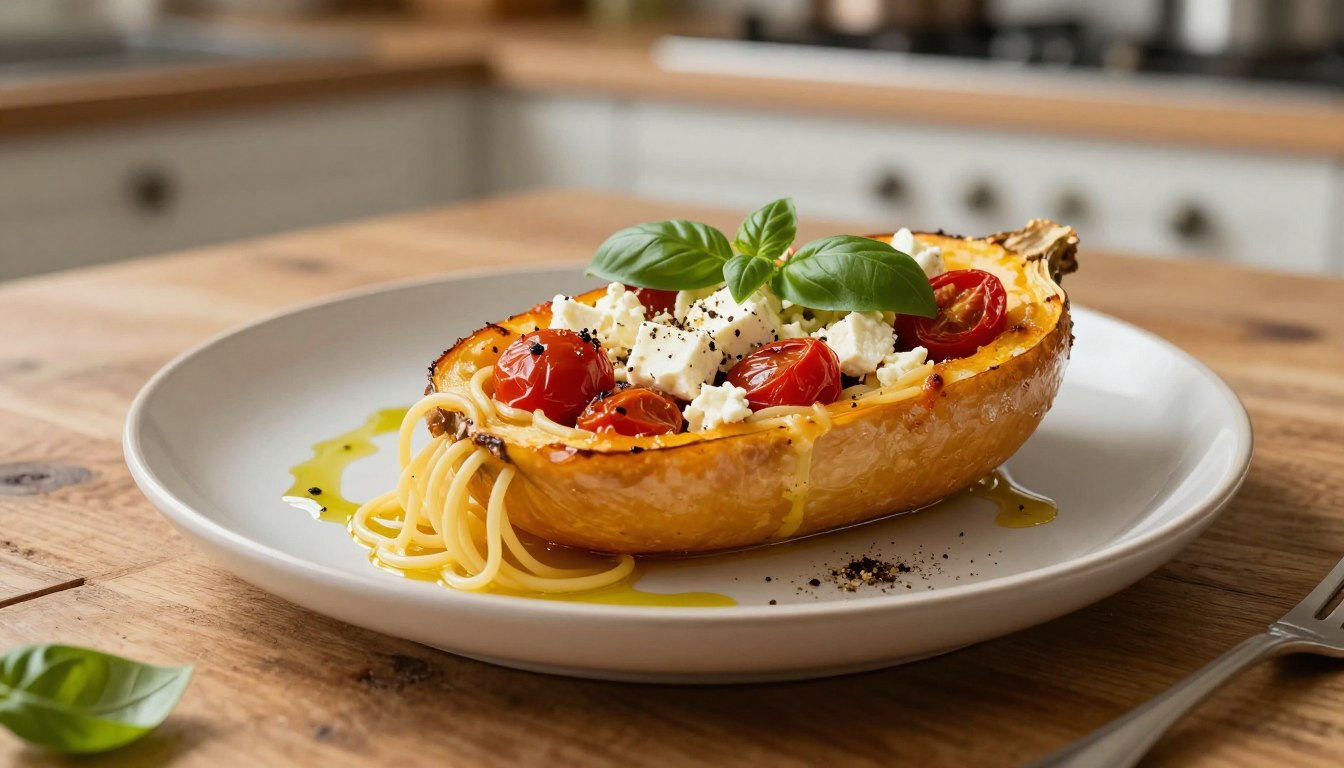
How to Make Baked Feta & Tomato Spaghetti Squash
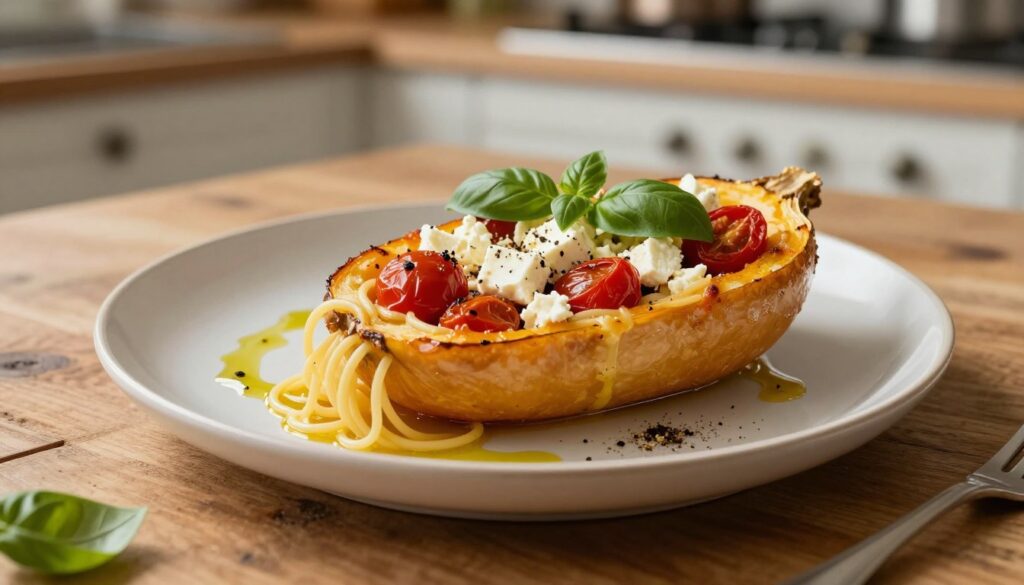
Have you seen that creamy, golden baked feta pasta on TikTok? It’s a viral hit for a reason. But, what if you could enjoy it in a lighter, healthier way? That’s what baked feta spaghetti squash offers.
By using spaghetti squash instead of pasta, this dish becomes truly special. It’s less carb-heavy but still very satisfying. The squash absorbs all the flavors, making it feel like a treat but it’s good for you.
This recipe is quick to prepare, needing just 15 minutes of prep. It has a simple ingredient list. You roast feta cheese and tomatoes until they’re bubbly and caramelized. Then, mix it with spaghetti squash for a low-carb, high-protein dish.
This recipe is special because it’s low in calories but high in satisfaction. One serving has about 130-498 calories. It also has 26.5 grams of carbs, 15 grams of protein, and 36 grams of healthy fat. This mix keeps you full for a long time.
In this guide, you’ll learn everything you need to know. We’ll show you how to pick the perfect squash and how to cut it safely. You’ll learn how to make the creamy tomato and feta mixture that makes this dish irresistible. We’ll also share tips on how to store it so you can enjoy it for days.
Key Takeaways
- Baked feta spaghetti squash takes just 15 minutes to prepare from start to finish
- This low-carb dish contains only 26.5 grams of carbs per serving with 15 grams of protein
- Spaghetti squash provides more fiber and nutrients compared to traditional pasta
- Using block feta creates a creamier texture than pre-crumbled cheese
- This recipe works great for meal prep and stores well in your refrigerator
- You can easily customize this baked feta spaghetti squash with vegetables, proteins, or dairy-free options
- The viral TikTok trend becomes even healthier with this smart ingredient swap
Why Baked Feta Spaghetti Squash Is Your New Favorite Low Carb Meal
This dish is a mix of comfort and smart nutrition. It started as a way to enjoy creamy flavors without too many carbs. You get the feel of traditional pasta but with health benefits.
Choosing a low carb feta squash recipe changes your cooking routine. Spaghetti squash turns into perfect pasta strands. And it tastes great while keeping your diet on track.
The Viral TikTok Trend Gets a Healthy Makeover
Social media went wild with baked feta pasta videos a few years ago. The recipe of roasting feta with tomatoes made a creamy sauce. This version uses squash instead, making it healthier.
The baked feta spaghetti squash keeps all the flavors. The cheese melts into a sauce, and tomatoes get soft. Your squash noodles soak up every bit of flavor.
Health Benefits of Spaghetti Squash Over Traditional Pasta
Now, let’s talk about the health benefits:
- Lower carbs: Spaghetti squash has only 1.5 carbs per ounce, unlike regular pasta
- More fiber: It keeps you full longer and helps your digestion
- Fewer calories: You can enjoy a big portion without the calories
- Packed with nutrients: It has vitamins and minerals pasta can’t offer
Eating tiktok baked feta squash style doesn’t mean missing out on taste. You get a meal that energizes you, not makes you feel heavy. The creamy feta sauce makes it feel like a treat, but it’s actually good for you. That’s why people love it so much.
Essential Ingredients for Baked Feta Spaghetti Squash
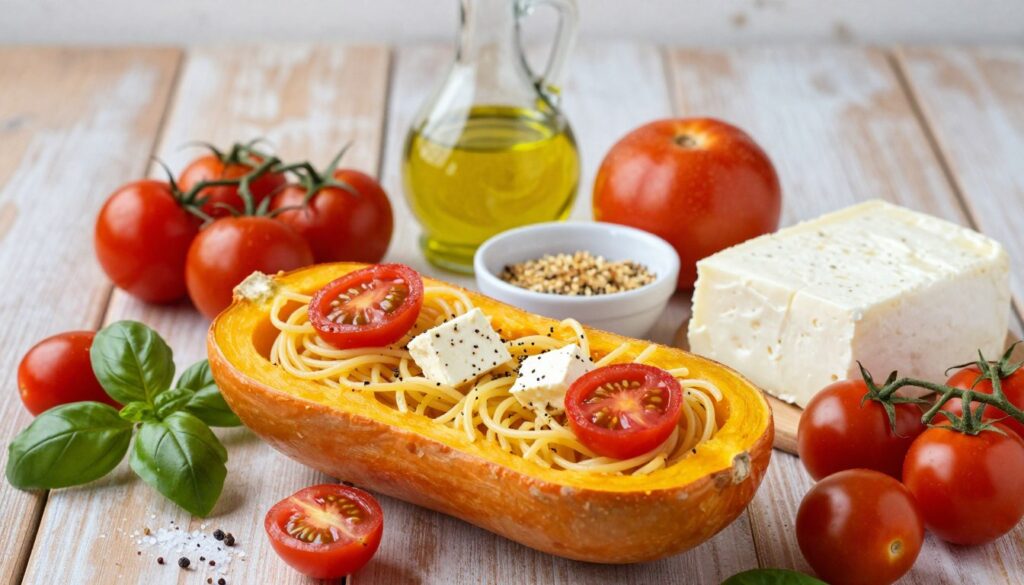
To make a tasty mediterranean spaghetti squash dish, you need the right ingredients. Each one adds flavor and texture. Knowing what you need makes cooking easier and more fun.
Start with quality ingredients for your baked squash with cheese. Make sure to have everything measured and ready before roasting your squash.
Your Complete Ingredient List
Here’s what you need for your mediterranean spaghetti squash recipe:
- One medium to large spaghetti squash (about 4 pounds, which yields roughly 5 cups cooked)
- 8 ounces of block feta cheese (not crumbled)
- 2 pints of cherry or grape tomatoes (about 1.5 cups total)
- 3 to 4 cloves of fresh garlic, minced (approximately 1 tablespoon)
- 2 to 3 tablespoons of extra-virgin olive oil
- 3 tablespoons of pesto or 1 tablespoon of Italian seasoning
- Kosher salt and black pepper to taste
- Pinch of red chili flakes (optional for heat)
- 1/4 cup of fresh basil leaves for garnish
Why These Ingredients Matter
The spaghetti squash is your pasta base. Block feta cheese melts into a creamy sauce, unlike crumbled varieties. Cherry tomatoes become sweet and concentrated when roasted, making a natural sauce.
Fresh garlic adds aromatic depth without overpowering. Extra-virgin olive oil brings rich flavor and healthy fats. Choose between store-bought pesto or Italian seasoning based on your taste preference.
| Ingredient | Amount | Purpose |
|---|---|---|
| Spaghetti Squash | 4 pounds | Base vegetable providing pasta-like strands |
| Block Feta Cheese | 8 ounces | Creates creamy, tangy sauce when melted |
| Cherry Tomatoes | 2 pints | Provides sweetness and natural acidity when roasted |
| Fresh Garlic | 3-4 cloves | Adds aromatic flavor and depth |
| Extra-Virgin Olive Oil | 2-3 tablespoons | Brings richness and helps ingredients blend |
| Pesto or Italian Seasoning | 3 tablespoons or 1 tablespoon | Adds herbal notes and mediterranean flavor profile |
| Fresh Basil | 1/4 cup sliced | Provides fresh finishing touch and bright flavor |
Fresh basil adds brightness at the end, making your dish look and taste like a restaurant. Optional chili flakes let you customize heat levels to your liking.
Choosing and Preparing Your Spaghetti Squash
Getting your spaghetti squash ready is the first step to making a delicious roasted spaghetti squash recipe. You’ll need to pick the right squash and cut it safely. The preparation stage might seem tricky, but with the right tips, you’ll feel confident handling this tough vegetable.
How to Select the Perfect Spaghetti Squash
When you’re shopping for spaghetti squash, look for a large one that weighs around 4 pounds. The squash should have a firm, hard exterior with no soft spots, cracks, or blemishes. Pick one that feels heavy for its size—this tells you the flesh inside is fresh and full of moisture.
Color matters too. You want a rich, golden-yellow squash rather than one with greenish tones. A golden color means the squash is fully ripe and ready to cook. An underripe squash will be harder to prepare and won’t have the best flavor.
| What to Look For | What to Avoid |
|---|---|
| Golden-yellow color | Greenish or pale appearance |
| Firm, hard exterior | Soft or mushy spots |
| Heavy for its size | Light or hollow feeling |
| Smooth skin | Cracks or deep blemishes |
| Around 4 pounds | Very small or oversized |
Safe Cutting Techniques for Hard Squash
Cutting spaghetti squash can be challenging because the walls are very thick and hard. Start by using your sharpest chef’s knife and place your cutting board on a damp paper towel. This prevents the board from slipping while you work.
Here’s a smart trick to make cutting easier: Make small dashes all the way around where you plan to cut, then microwave the squash for 5 minutes. This softens the tough exterior without cooking it completely. After microwaving, cut the squash lengthwise from the stem to the bottom. This creates two long boat-shaped halves—perfect for your roasted spaghetti squash recipe.
- Use your sharpest chef’s knife
- Place cutting board on damp paper towel for grip
- Make small dashes around the squash with your knife tip
- Microwave for 5 minutes to soften the shell
- Cut lengthwise from stem to bottom
- Use steady pressure and maintain good control
Once you’ve cut your squash in half, you’re ready for the next steps. Learn more about cooking methods and assembly in the complete baked feta spaghetti squash guide for detailed instructions on bringing your dish together.
Step-by-Step Instructions for Roasted Spaghetti Squash Recipe
To start, preheat your oven to 400°F. This temperature ensures your squash cooks evenly without burning. Place your spaghetti squash halves on a lined baking sheet, cut-side down for extra tenderness or cut-side up for better flavor.
Brush the cut sides with olive oil and season with salt and pepper. This step enhances the taste and texture of your dish.
The baking time varies based on the squash size. Medium squash takes 30 to 40 minutes, while larger ones may need up to 55 minutes. It’s important to know when your squash is fully cooked.
Testing for Perfect Doneness
There are three simple tests to check if your squash is ready:
- The gentle squeeze test: Press the outside of the squash lightly. When done, it should give slightly under pressure
- The fork test: Insert fork prongs into the flesh. Strands should separate easily from the skin
- The visual check: The flesh should look tender and slightly translucent when fully cooked
If your fork meets resistance, continue roasting for another 10 to 15 minutes. Check progress by removing the baking sheet from the oven periodically. Complete step-by-step instructions for baked feta spaghetti show that patience during this roasting stage sets up your entire dish for success.
| Squash Size | Oven Temperature | Cooking Time | Doneness Sign |
|---|---|---|---|
| Small (under 2 lbs) | 400°F | 25 to 35 minutes | Strands separate easily with fork |
| Medium (2 to 3 lbs) | 400°F | 30 to 40 minutes | Flesh gives slightly when squeezed |
| Large (over 3 lbs) | 400°F | 45 to 55 minutes | Translucent appearance, very tender |
Once your spaghetti squash is tender, you can add your feta and tomato mixture. This roasting foundation makes all the difference in creating a memorable meal.
Creating the Perfect Tomato and Feta Mixture
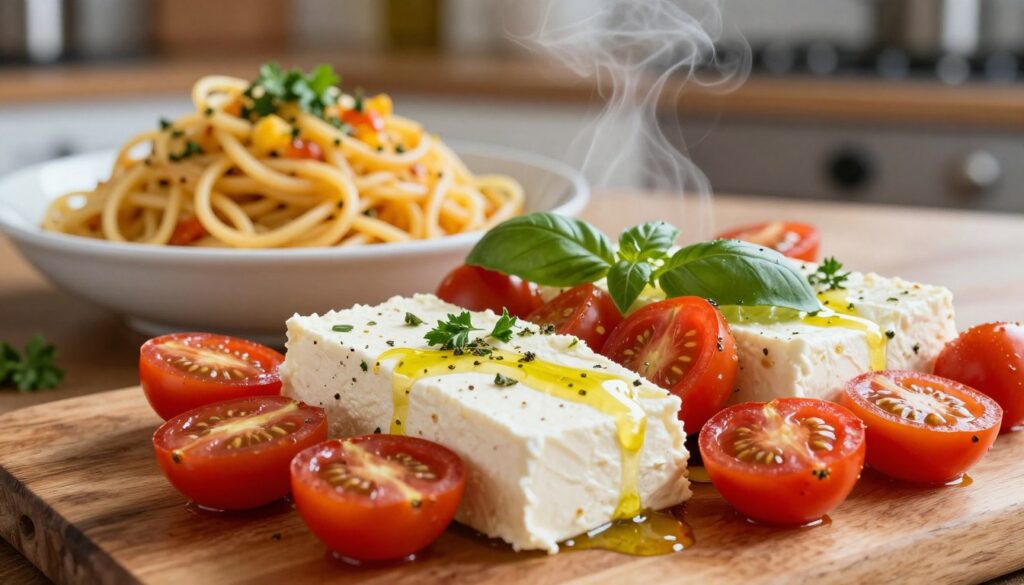
The secret to this baked feta pasta squash dish is the creamy sauce. Your tomato and feta mixture is the key. It turns simple ingredients into a dish you’ll love.
Why Block Feta Works Better Than Crumbled
For this baked feta pasta squash recipe, block feta is a must. It melts better than crumbled feta, thanks to its creamier texture. Crumbled feta often has additives that stop it from melting right.
When you bake a 2-ounce wedge of block feta, it turns into a creamy sauce. This sauce is perfect when mixed with roasted tomatoes and squash. The feta’s flavor gets richer, making it taste better than crumbled feta.
Selecting the Best Tomatoes for Baking
Cherry or grape tomatoes are the best for this recipe. They roast evenly and release sweet juices. These juices mix with the feta to make a delicious sauce.
These tomatoes are always good quality. Big tomatoes can be watery or tasteless outside their peak season. Here’s how to make your tomato and feta mixture:
- Combine 2 pints of cherry or grape tomatoes in a 9×13 baking pan
- Add 2-4 cloves of minced garlic for aromatic depth
- Include 1 tablespoon of Italian seasoning or 3 tablespoons of pesto
- Add a pinch of chili flakes for subtle heat
- Drizzle with 2 tablespoons of quality olive oil
- Season with salt to taste
Put your block of feta in the center of the pan. Surround it with seasoned tomatoes and garlic. Drizzle with oil and stir gently. Bake until tomatoes burst, about 30 minutes. This makes a great base for your feta pasta squash dish.
| Ingredient | Amount | Purpose in Mixture |
|---|---|---|
| Block Feta Cheese | 2 ounces per serving | Creates creamy sauce base |
| Cherry Tomatoes | 2 pints | Provides sweetness and acidity |
| Garlic Cloves | 2-4 cloves, minced | Adds aromatic flavor |
| Italian Seasoning | 1 tablespoon | Brings herbaceous notes |
| Olive Oil | 2 tablespoons | Helps ingredients roast evenly |
| Chili Flakes | Pinch | Adds subtle heat |
Baking Your Mediterranean Spaghetti Squash to Perfection
Now, it’s time to turn your healthy spaghetti squash bake into a tasty Mediterranean dish. You’re all set to mix your ingredients and let the oven do its magic. This process combines everything into a single, flavorful dish that’s almost like a restaurant meal.
Begin by placing feta cheese inside each squash half. Then, spread your tomato-pesto mixture evenly over the feta. You can bake both the squash and the tomato mixture at 400°F in the same oven. This saves time and energy.
Timing Your Bake for Best Results
Your healthy spaghetti squash bake has different cooking times for each part. The tomato mixture needs about 30 minutes to get those beautiful, bursting tomatoes and creamy feta. The squash halves might take 40-55 minutes, depending on their size.
Here’s a smart timing strategy:
- Start the squash halves first at 400°F
- Add the tomato-feta pan after 10-15 minutes
- Watch for tomatoes to burst and release their juices
- Check that squash flesh becomes tender and separates easily
Finishing Your Baked Creation
After everything is done baking, remove the garlic skins. Use a fork to mash the feta and tomato mixture into a creamy sauce. Then, use your fork to mix the squash strands into this sauce, creating pasta-like strands that soak up all the flavors.
If your squash boats overflow and mixing is hard, move everything to a large bowl. Mix well until combined, then return to the squash boats for serving. Your healthy spaghetti squash bake is now ready to enjoy.
Delicious Recipe Variations to Try
Your vegetarian squash casserole can change every time you make it. It’s a great base for your creativity. You can make it your own with what you have, your diet, or your taste. Let’s look at some fun ways to make it your own.
Adding Protein Options
Make your squash casserole more filling with protein. Chicken sausage is a great choice. It adds a savory flavor to your dish.
To add chicken sausage, cook it as directed. Then, cut it into small pieces. Mix it with the feta and tomatoes before baking. This keeps the sausage tender.
- Succulent shrimp sautéed with garlic and olive oil
- Grilled or roasted chicken breast cut into chunks
- Chickpea meatballs for plant-based protein
- Traditional beef meatballs for heartier appetites
Each protein changes the taste while keeping the creamy feta and tomato base.
Making It Vegan or Dairy-Free
You can make your squash casserole vegan or dairy-free without losing flavor. Violife vegan feta tastes similar to regular feta.
| Ingredient Swap | Best For | Flavor Profile |
|---|---|---|
| Violife vegan feta | Vegan diets | Tangy and creamy |
| Goat cheese | Dairy lovers wanting variety | Tangier and earthier |
| Cream cheese | Creamier texture seekers | Rich and smooth |
| Boursin cheese | Herb and garlic lovers | Herbed and flavorful |
Enhance your squash casserole with these tweaks:
- Spicy version: Add one teaspoon of Calabrian chiles or a generous pinch of red pepper flakes to the tomato mixture
- Italian seasoning swap: Use one teaspoon of Italian seasoning instead of pesto if you’re not a pesto fan
- Herb variations: Try fresh basil, oregano, or thyme for different Mediterranean flavors
Your squash casserole becomes a meal that’s just right for you.
Serving Suggestions for Your Healthy Spaghetti Squash Bake
Your baked feta spaghetti squash deserves a beautiful presentation. Start by sprinkling fresh chopped basil on top. This adds vibrant color and a fresh aroma. A few grinds of black pepper complete the look and add a spicy kick.
Your mediterranean spaghetti squash is perfect as a complete meal. Each roasted squash half serves one. For more guests, serve smaller portions as a side dish.
Perfect Side Dish Pairings
Pair your baked feta spaghetti squash with sides that add variety and texture:
- Low Carb Caesar Salad with creamy dressing and crunchy romaine
- Copycat Olive Garden salad featuring tangy Italian dressing
- Strawberry Spinach Salad for fruity sweetness and fresh greens
- Avocado BLT Salad for those wanting something more substantial
Presentation Ideas
Serve your mediterranean spaghetti squash in its shell for a rustic look. Or scoop it into shallow bowls for a refined presentation. Both methods highlight your culinary effort and are easy to clean up.
| Serving Size | Servings Per Recipe | Best For |
|---|---|---|
| One squash half | 2 servings | Main course meal |
| Smaller portions | 4 servings | Side dish with other foods |
Storage and Reheating Tips for Feta Pasta Squash
Your delicious low carb feta squash dish doesn’t have to disappear after one meal. You can enjoy it all week with the right storage and reheating methods. This means less cooking time and more time enjoying great food. Plus, this dish stores beautifully, unlike traditional pasta dishes.
Proper Storage Methods
Let your low carb feta squash cool to room temperature. Then, transfer it to airtight containers. It will stay fresh in the fridge for up to three days. Always store it within two hours of cooking for safety.
Freezing is also a great option. Spaghetti squash freezes better than regular pasta. Here’s how to freeze it:
- Let your healthy spaghetti squash bake cool completely
- Transfer the mixture into freezer-safe zip-top bags
- Remove excess air from the bags
- Label with the date
- Freeze for up to three months
Best Reheating Techniques
Your low carb feta squash tastes fantastic when reheated right. Two simple methods work best:
| Method | Time | Best For |
|---|---|---|
| Microwave | 1-2 minutes in intervals | Quick, weekday meals |
| Skillet | 3-5 minutes over medium heat | Better texture and flavor |
For microwaving, heat in one-minute intervals, stirring between each round. This ensures even warming. Using a skillet is best for texture and flavor. Add your mixture to medium heat, stir gently, and add olive oil or water if needed.
If frozen, thaw your low carb feta squash overnight in the fridge. This prevents it from becoming watery and keeps the texture perfect.
Expert Tips and Tricks for the Best Results
Getting good at a roasted spaghetti squash recipe takes time and the right tips. You need to know how to handle the unique challenges of this vegetable. This way, you can confidently overcome them.
Begin with safety and preparation. Spaghetti squash has hard walls that need a sharp knife and a strong cutting board. Put a damp paper towel under your cutting board to stop it from slipping. This trick keeps your hands safe while you cut through the squash’s tough skin.
Knowing when your squash is done is more important than the time it takes. Every oven is different, and squash sizes vary. Use a fork to test the squash. If the flesh is hard to separate from the skin, roast it for another 10 to 15 minutes.
When making spaghetti squash with feta, choose a block of feta over crumbled. Block feta makes your dish creamier and more even. This simple change makes a big difference in texture.
- Use two forks to gently combine squash strands with your feta mixture
- Let your baked dish rest for 5 minutes after cooking
- Add fresh basil as your final garnish for maximum flavor
- Select DeLallo brand pesto for fresh-tasting results
- Pick cherry tomatoes over larger varieties
These expert tips ensure your spaghetti squash with feta turns out perfectly every time.
Conclusion
You now have everything you need to create a dish that will surprise even your pickiest eaters. The baked feta spaghetti squash recipe proves that healthy eating doesn’t mean boring meals. With just 15 minutes of prep work, you can have a stunning dinner on the table that tastes like pure comfort food.
This recipe is special because it pleases everyone at your table. Feta lovers will adore the creamy, tangy cheese baked into tender squash. Veggie skeptics will find themselves reaching for seconds without even noticing how packed the dish is with vegetables.
The TikTok baked feta squash trend started with pasta, but this spaghetti squash version actually delivers better results. You get more nutrients, fewer carbs, and a lighter feeling that doesn’t weigh you down after dinner.
The beauty of this meal lies in its flexibility. You can add grilled chicken, shrimp, or white beans for extra protein. Swap the feta for dairy-free cheese if that works better for you. Adjust the heat with your favorite seasonings or use different tomato varieties from your farmers market. Your pantry and preferences get to guide the way you cook.
Stop waiting for the perfect moment and make this tonight. Your taste buds will be thrilled, and your body will feel great knowing you’re eating something truly nourishing. This recipe deserves a permanent spot in your weekly dinner lineup. Dive in, enjoy every bite, and discover why so many people have made this their new favorite meal.