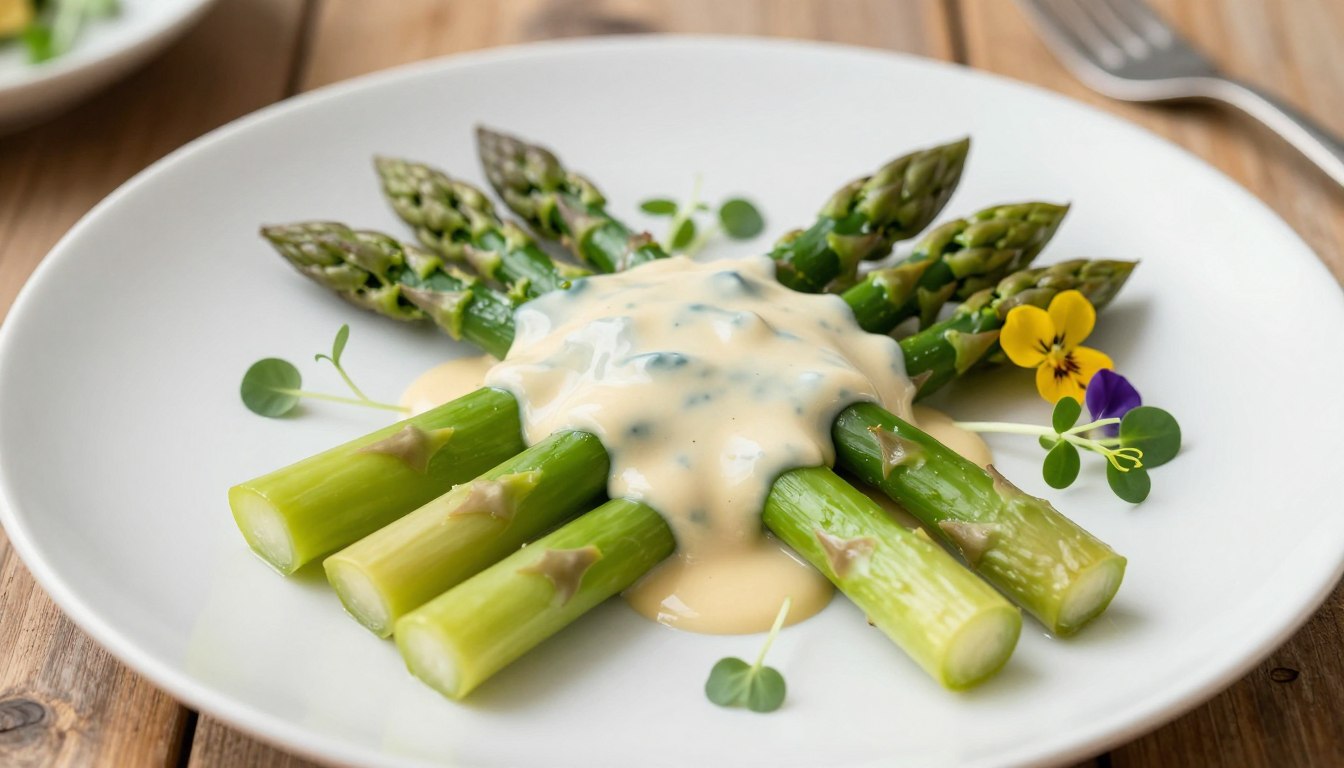
How to Make Asparagus with Dutch dressing
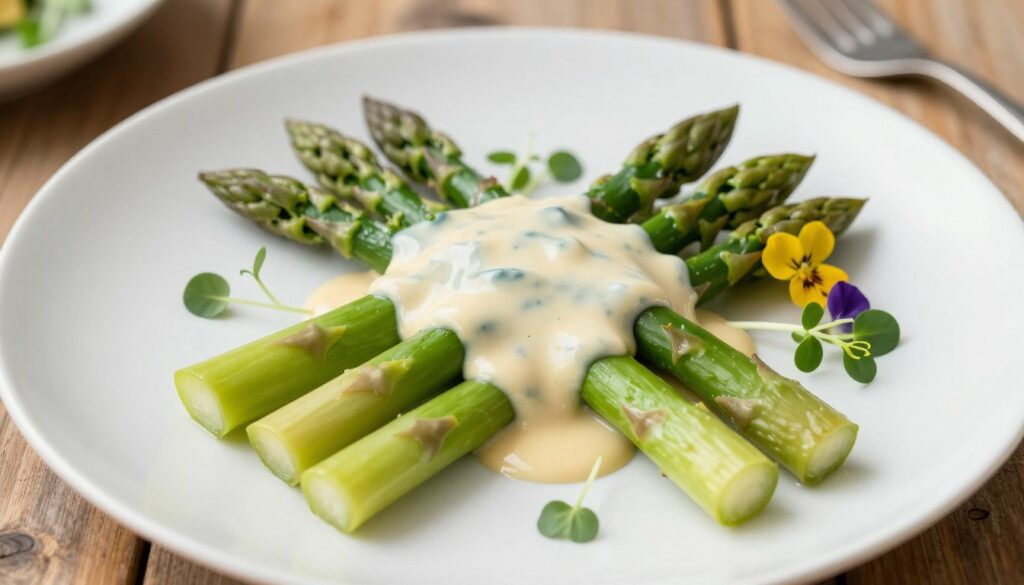
Spring brings fresh flavors and lighter meals. Many think making restaurant-quality dishes is hard. But, asparagus with Dutch dressing is easy to make at home.
Dutch dressing, or hollandaise sauce, is a creamy egg-butter sauce. It makes asparagus spears taste like a gourmet dish. This dish is perfect during spring asparagus season.
Making asparagus with Dutch dressing is simple. It takes only 20 to 30 minutes. You need basic ingredients like eggs, butter, and lemon juice. No special tools or culinary school needed. It impresses guests and is great for any weeknight.
Key Takeaways
- Asparagus with Dutch dressing is a European springtime classic that takes only 20 to 30 minutes to prepare
- Dutch dressing is actually hollandaise sauce, an egg-butter sauce that creates a rich, creamy flavor
- Both white and green asparagus work well, though white asparagus is traditional in Dutch and German cooking
- This restaurant-quality dish uses simple pantry ingredients like eggs, butter, and lemon juice
- Learning how to make asparagus with Dutch dressing step by step is perfect for home cooks of all skill levels
- The combination transforms basic asparagus into an elegant side dish for special dinners or everyday meals
Why Asparagus with Dutch Dressing is a Springtime Classic
Spring brings excitement and tradition in Europe, thanks to asparagus season. A springtime asparagus recipe with Dutch dressing combines centuries of heritage and love for this vegetable. It’s more than taste; it’s culture, seasonality, and a cherished family tradition.
Asparagus and spring are deeply connected in European food culture. In Germany, the asparagus season, called Spargelzeit, is celebrated from mid-April to June 24th. During this time, communities come together to enjoy this special vegetable.
The European Tradition of White Asparagus
European asparagus preparation focuses on white asparagus, a staple in German and Swiss cuisine. This asparagus is grown underground to keep it white. Farmers use soil mounds and white plastic to block sunlight.
This method makes white asparagus unique and valuable. Germans and Swiss eat over 3 pounds per person each year. Germany alone produces over 125,000 tonnes annually, making it a key part of spring dining.
| Country | Consumption Per Capita | Annual Production | Season Duration |
|---|---|---|---|
| Germany | 3+ lbs (1.5kg) | 125,000+ tonnes | Mid-April to June 24 |
| Switzerland | 3+ lbs (1.5kg) | Variable | Spring months |
| Netherlands | High consumption | Significant production | Spring season |
What Makes Dutch Dressing Special
Dutch dressing, or hollandaise, is key to a traditional Dutch asparagus dish. It’s a sauce that turns simple asparagus into something amazing. The sauce combines rich butter, tangy lemon juice, and creamy egg yolks.
This mix creates magic on your plate. You get warmth from butter, brightness from lemon, and silky texture from eggs. This sauce has been loved for generations, making the dish a family favorite.
- Rich, creamy butter base
- Bright lemon juice for tang
- Perfectly emulsified egg yolks
- Luxurious coating that enhances asparagus
Preparing this springtime asparagus recipe is a tradition Europeans have perfected over centuries. The combination of fresh white asparagus and Dutch dressing is the essence of spring cooking. It’s about simple ingredients elevated by time-tested technique and a true love for seasonal eating.
Understanding White Asparagus vs Green Asparagus
White asparagus dutch style is quite different from the green kind you find in most stores. Both types come from the same plant. The main difference is how farmers grow them.
White asparagus grows underground, away from sunlight. This stops it from making chlorophyll, which gives green asparagus its color and stronger taste.
White asparagus has a delicate, slightly sweet, and nutty flavor. It pairs well with rich sauces. Green asparagus tastes more vegetal and grassy, with a bolder earthiness. Your choice depends on what you can find locally and your taste.
Preparing white asparagus is different. Its outer skin is fibrous and can taste bitter. You need to peel it with a vegetable peeler. Green asparagus only needs the woody ends trimmed—no peeling required. This makes it quicker to prepare on busy nights.
| Feature | White Asparagus | Green Asparagus |
|---|---|---|
| Growing Method | Grown underground, shaded from sunlight | Grown above ground in full sunlight |
| Flavor Profile | Delicate, sweet, slightly nutty | Vegetal, grassy, more assertive |
| Preparation | Requires peeling with vegetable peeler | Trim woody ends only |
| Skin Texture | Fibrous outer skin, can be bitter | Tender skin, no peeling needed |
| Traditional Cuisine | Dutch and German dishes | Common in American cooking |
| Cooking Time | 8-12 minutes when boiled | 6-10 minutes when boiled |
When shopping, look for firm spears with tight tips. Avoid slimy or open tips. Fresh asparagus should smell sweet and earthy, not musty. White asparagus may have light purple or pink tips, which is normal and good quality.
White asparagus dutch style cooking is easier once you know these differences. While it takes longer to cook than green, both are great with Dutch dressing. Green asparagus is available year-round, making it easy for spontaneous dinners. White asparagus is a spring treat worth seeking out.
Essential Ingredients for Asparagus with Dutch Dressing
Creating a delicious dutch asparagus recipe starts with the right ingredients. You need quality items for both the asparagus and the sauce. This makes the dish fresh and elegant. Let’s explore what makes each part work well together.
Selecting the Best Asparagus Spears
Choosing the right asparagus is key. Look for firm spears with tightly closed tips at the store or farmers market. The stalks should be straight and sturdy, not limp or bendable.
For white asparagus, pick thick, creamy-white stalks without brown spots. Green asparagus should be vibrant green from tip to stem. Medium to thick spears are best for a satisfying bite.
Buy about 2 pounds of asparagus for 4 people as a side dish. This ensures everyone gets a good portion.
- Look for firm, straight spears
- Check for tightly closed tips
- Choose medium to thick stalks
- Avoid limp or bent spears
- Buy 2 pounds for 4 servings
What You’ll Need for the Dutch Dressing
The best sauce for asparagus needs simple but quality ingredients. You’ll need egg yolks, fresh lemon juice, butter, and seasonings. Each ingredient is crucial for the sauce’s rich, creamy texture.
| Ingredient | Amount | Purpose |
|---|---|---|
| Egg yolks | 3–4 yolks | Creates richness and acts as an emulsifier |
| Fresh lemon juice | ¾–1 tablespoon | Adds brightness and tang to the sauce |
| Unsalted butter | ½ cup (113–117g) | Builds the luxurious creamy texture |
| Fine sea salt | ¼ teaspoon | Enhances overall flavor |
| Cayenne or white pepper | Pinch | Adds subtle warmth and depth |
| Dijon mustard (optional) | ½ teaspoon | Provides extra tang and complexity |
Use room temperature or slightly softened butter for easier sauce preparation. Fresh lemon juice is essential for flavor. Learn more about easy hollandaise sauce preparation to master this classic dutch asparagus recipe.
Adding optional Dijon mustard adds depth to your sauce. Egg yolks create the emulsion that makes the sauce smooth and silky.
How to Prepare White Asparagus Properly
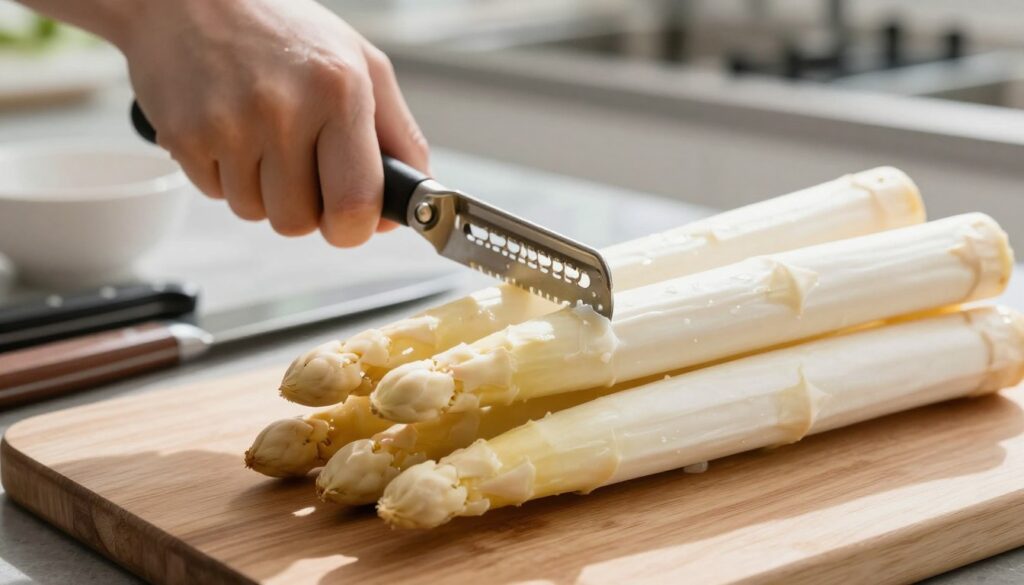
Preparing white asparagus needs a bit of care. But, once you learn the right way, it’s easy and fun. White asparagus has a tender inside and a tough outer layer. You need to remove this outer layer for the best taste.
First, rinse the asparagus spears under cool water to get rid of dirt. Then, dry them with a clean towel. Lay each spear flat on your cutting board. This is important because white asparagus is delicate and can break if you peel it while holding it up.
Start peeling about 1½ inches from the tip of each spear. Use a vegetable peeler and pull it down in smooth strokes toward the cut end. Peel in the direction away from you. Rotate the spear and repeat until all sides are peeled. This step is essential because the outer layer is bitter and stringy.
Next, trim the bottom part. Hold the spear gently and bend it slightly. It will snap at the tough, woody part. Remove about 1-2 inches from the bottom. A helpful tip: save those trimmed pieces and peelings for making vegetable stock at home.
Green Asparagus Preparation
If you’re using green asparagus, skip the peeling step. Just rinse the spears and trim about one inch from the bottom. Green asparagus has a tender skin that doesn’t need removing.
- Rinse asparagus thoroughly under cool water
- Lay white asparagus flat on cutting board (never peel in the air)
- Peel starting 1½ inches from the tip using downward strokes
- Trim 1-2 inches from the bottom woody end
- Save trimmings for vegetable stock
- Green asparagus requires only rinsing and light trimming
Proper preparation is key for asparagus with egg butter sauce. Taking your time ensures perfect texture and flavor every time.
Making the Perfect Dutch Dressing Step by Step
Making hollandaise sauce for asparagus is easier than you think. It’s not about special skills, but about knowing the right steps. With patience and the right technique, you can make a sauce that’s as good as any restaurant’s.
First, get your ingredients ready and set up your space. You’ll need butter, egg yolks, lemon juice, and seasonings. Having everything ready makes the process smoother and keeps you focused.
Creating the Creamy Egg Butter Sauce
Start by heating a saucepan with about an inch of water. Bring it to a simmer. Then, place a heat-safe bowl on top without touching the water.
Pour egg yolks and lemon juice into the bowl. Whisk for two minutes until it’s pale and thick. This step is key to accepting the butter smoothly.
Add cubed butter, salt, and cayenne pepper. Whisk constantly as the butter melts. This prevents the eggs from cooking too fast and gives you a smooth texture.
| Step | Action | Timing |
|---|---|---|
| 1 | Whisk egg yolks with lemon juice | 2 minutes |
| 2 | Add cubed butter and seasonings | Immediately after step 1 |
| 3 | Whisk constantly over double boiler | 1-2 minutes |
| 4 | Sauce should coat the back of a spoon | Ready to serve |
Achieving the Right Consistency
Your sauce should coat the back of a spoon smoothly. If it’s too thick, whisk in warm water or white wine slowly. This will adjust the thickness to your liking.
You can also use an immersion blender for a modern twist. Blend the egg yolks, lemon juice, and seasonings first. Then, slowly add hot melted butter while blending. This method is great for those who prefer less whisking.
- Watch for the sauce to become thick and glossy
- Stop whisking if it looks like it might break
- Thin with water if it becomes too thick
- Never let the bowl touch the simmering water directly
- Keep the heat low and steady throughout the process
Asparagus with warm egg dressing is simple when you know the basics. Mastering this technique lets you make a top-notch sauce at home with confidence.
Cooking Your Asparagus to Tender Perfection
Getting your asparagus cooked just right is key for a tasty dinner. The cooking method is crucial for tender spears, not mushy ones. Use a wide pot or skillet to lay asparagus flat, ensuring even cooking.
Begin by filling your pot with water to cover the asparagus halfway. Add these important seasonings and ingredients to your cooking water:
- 2 teaspoons of salt to season the asparagus from the inside
- 1 tablespoon of butter to add richness and prevent sticking
- 1 teaspoon of sugar to balance any bitterness
- A few lemon slices for subtle brightness
Bring the water to a rolling boil before adding the asparagus. Place them all facing the same direction in the pot. This makes them easy to remove later without breaking.
Once you add the asparagus, reduce the heat to a gentle simmer and cover the pan. Cooking times vary. White asparagus needs 8-12 minutes, while green asparagus cooks faster at just 3-5 minutes for that perfect crisp-tender texture.
Test your asparagus for doneness by piercing the thickest part with a fork. The fork should slide in easily, but your spears should still hold their shape. They should not be limp or falling apart. Using tongs, carefully transfer your cooked asparagus to a serving platter to keep the delicate spears intact.
| Asparagus Type | Cooking Time | Texture Goal | Best For |
|---|---|---|---|
| White Asparagus | 8-12 minutes | Tender throughout | Classic Dutch dressing pairings |
| Green Asparagus | 3-5 minutes | Crisp-tender | Quick asparagus recipe for dinner |
| Thick White Spears | 12-15 minutes | Very tender | European springtime meals |
This straightforward cooking method makes preparing a quick asparagus recipe for dinner achievable on busy weeknights. Your perfectly cooked asparagus pairs beautifully with the Dutch dressing you prepared earlier, creating a restaurant-quality meal at home.
Traditional Ways to Serve Asparagus with Hollandaise
Once you’ve mastered your restaurant-style asparagus recipe at home, it’s time to plate it like a pro. Serving gourmet asparagus with creamy sauce opens up wonderful presentation options. You’ll see that how you arrange and accompany your dish turns it into an elegant centerpiece.
The beauty of asparagus with hollandaise lies in its versatility. You can follow European traditions or create your own modern twist. Your guests will be impressed by the thoughtful plating and the rich flavors that come together on one plate.
The Classic German Presentation
In Germany during Spargelzeit (asparagus season), restaurants serve this dish with a specific formula that you can easily recreate. Arrange your peeled white asparagus spears parallel to each other on the plate. Spoon the warm hollandaise sauce generously over the center while keeping the delicate tips visible.
The traditional trio includes:
- Tender white asparagus bundles with creamy sauce
- Small boiled potatoes tossed with butter and fresh parsley
- High-quality cooked ham slices (such as Black Forest ham)
This combination creates a balanced meal that feels luxurious. Germans traditionally eat this with just a fork since the asparagus is tender enough to cut easily. Your restaurant-style asparagus recipe at home becomes complete when you position the potatoes and ham artfully alongside the asparagus bundles.
Vegetarian and Alternative Serving Options
You don’t need meat to enjoy gourmet asparagus with creamy sauce. Replace the ham with one or two perfectly fried sunny-side-up eggs instead. The runny yolk adds incredible richness and becomes an additional sauce layer on your plate.
| Serving Style | Main Protein | Best For |
|---|---|---|
| Classic German | Cooked ham slices | Traditional dinner experiences |
| Vegetarian | Fried sunny-side-up eggs | Meatless meals with richness |
| Seafood Pairing | Grilled salmon or trout | Light, elegant dinners |
| Simple Garden | None (vegetable focus) | Side dish presentations |
Fresh garnish ideas transform your dish:
- Chopped fresh chives sprinkled on top
- Parsley for added color and flavor
- Lemon zest for brightness
- Lemon wedges served on the side
Grilled salmon, trout, or other delicate fish pairs beautifully with asparagus and hollandaise. These options let you create a restaurant-style asparagus recipe at home that matches your dietary preferences. Lemon wedges allow your guests to adjust the acidity level to their taste, adding sophistication to your presentation.
Tips for Preventing Your Dutch Dressing from Splitting
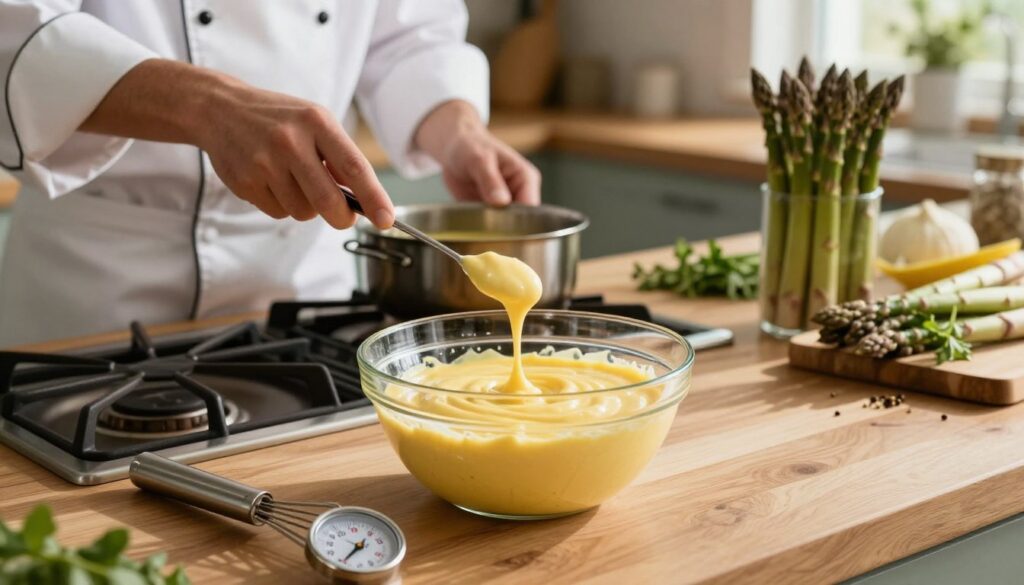
When making Dutch dressing for asparagus, the biggest worry is your sauce splitting. A split sauce looks grainy and separated, ruining your dish’s look. The solution is simple: keep the heat low and whisk constantly.
Understanding what causes splitting is key. Dutch dressing is an emulsion of fat (butter) and water (from eggs and lemon juice). It needs gentle heat and constant stirring to stay together. Too much heat or adding butter too fast can break it down.
Here are the main prevention tips:
- Use barely simmering water in your double boiler, not a rolling boil—you should see small bubbles, not aggressive movement
- Make sure your bowl never touches the hot water; it should be warmed by steam only
- Never stop whisking once you start heating the sauce
- Add cubed room-temperature butter instead of melted butter, as the cubes melt slowly and naturally
- Keep your lemon juice and egg yolks cool before you begin
The foolproof method works because you add all butter at once while whisking over gentle heat. This prevents overheating and splitting. The butter melts slowly as you whisk, keeping everything balanced.
If your sauce does split, act quickly. Remove it from heat and whisk in a teaspoon of cold water or ice. Whisk hard until it comes back together. For a badly split sauce, start fresh with one egg yolk in a clean bowl and slowly whisk the broken sauce into it.
Learning how to make asparagus with lemon teaches you these same principles about balancing heat and emulsions. With these tips, you can make your Dutch dressing without worry.
Serving Asparagus with Dutch Dressing Hot or Cold
Asparagus with hollandaise sauce is perfect for any time of year. You can serve it warm for a fancy dinner or chilled for a summer party. It’s versatile and always a hit, no matter the season.
Hot Service for Dinner Parties
For a classic touch, serve asparagus with hollandaise sauce hot. Cook the asparagus first and keep it warm in a skillet or oven. This keeps it fresh until you’re ready to serve.
Make the Dutch dressing just before serving for the best taste. Keep the sauce warm by placing the bowl over hot water. Stir it now and then to keep it smooth.
- Cook asparagus until tender-crisp
- Prepare hollandaise right before guests arrive
- Keep both warm separately until serving time
- Stir hollandaise sauce every 10-15 minutes
- Plate and serve immediately for best results
Chilled Presentation for Summer Buffets
For a cool twist, serve asparagus with hollandaise sauce cold. Cook the asparagus, then cool it quickly in an ice bath. This keeps it bright green and fresh.
Chill the asparagus and Dutch dressing separately until you’re ready to serve. Let the sauce warm up a bit before serving. This makes it easier to spread over the asparagus.
| Serving Method | Best For | Preparation Time | Storage Duration |
|---|---|---|---|
| Hot Service | Dinner parties and formal meals | Cook fresh before serving | Up to 1 hour warm |
| Chilled Service | Summer buffets and outdoor events | Prepare 2-3 hours ahead | Up to 24 hours refrigerated |
Both hot and cold, asparagus with hollandaise sauce is a crowd-pleaser. It highlights the fresh taste of asparagus beautifully.
What to Pair with Your Asparagus Dish
Your asparagus with Dutch dressing needs the right sides to match its rich flavor. Adding the right dishes turns it into a main event. Whether it’s a main dish or a side, the right choices make your meal better.
Start with classic starches like boiled new potatoes with parsley. They’re soft and don’t overpower the sauce. The potatoes soak up the dressing, making the flavors work together.
Protein Pairings That Work Beautifully
There are great protein options for your asparagus. Here are some ideas for a complete meal:
- Grilled or poached salmon adds elegance and pairs naturally with the creamy sauce
- Pan-seared trout brings delicate flavor without competing for attention
- Roasted chicken breast offers simplicity and clean taste
- Sliced quality ham provides salty contrast that brightens the buttery dressing
- Fried eggs with runny yolks add luxurious richness and extra indulgence
For a vegetarian option, try more eggs or add sautéed mushrooms for earthiness. Grilled steak is perfect for special times.
Wine and Beverage Selections
Choosing the right drink is key. A crisp white wine cuts through the butter nicely. Here are some great picks:
| Wine Type | Why It Works | Best For |
|---|---|---|
| Sauvignon Blanc | High acidity cuts buttery richness | Fish pairings |
| Pinot Grigio | Light and crisp with mineral notes | Chicken dishes |
| German Riesling | Dry variety complements vegetable sweetness | Vegetarian options |
A simple green salad with vinaigrette is a great side. It adds freshness and lightness to your meal.
Asparagus is also nutritious, being low in calories but rich in fiber and vitamins. Your careful choices make your meal both delicious and healthy.
Storing and Reheating Leftover Hollandaise Sauce
You’ve made a delicious batch of Dutch dressing, and now you want to save the leftovers. The good news is that your hollandaise sauce can be stored properly and enjoyed again within a few days. The key is understanding how to handle this rich, creamy sauce so it stays fresh and tastes just as good as the day you made it.
When you finish serving your asparagus with Dutch dressing, transfer any remaining sauce to an airtight container or jar right away. Store it in your refrigerator where it will keep safely for 2 to 3 days. Don’t be surprised when your sauce becomes very thick and solid—almost like butter. This is completely normal and happens because the ingredients settle as the sauce cools.
When you’re ready to use your leftover sauce, the gentle double boiler method works best. Place the cold hollandaise in a heat-safe bowl and set it over a pot of barely simmering water. Whisk constantly as the sauce warms up. Add a teaspoon or two of hot water to help it come back together into a smooth, pourable consistency. This slow, careful approach prevents the sauce from splitting and breaking apart.
Skip the microwave at all costs. Uneven heat will almost surely cause your sauce to separate and become grainy. If you want an even easier approach, simply spoon cold hollandaise directly onto hot, freshly-cooked vegetables. The heat from the vegetables will gently melt the sauce for you—no reheating required.
- Refrigerate leftover hollandaise in an airtight container for 2-3 days
- Use a double boiler and whisk constantly when reheating
- Add hot water gradually to restore smooth consistency
- Never use a microwave for reheating sauce
- Spoon cold sauce onto hot vegetables to melt it naturally
Your cooked asparagus spears also deserve proper storage. Place them in an airtight container and refrigerate for 3 to 4 days. Enjoy them cold in fresh salads with vinaigrette, chop them into omelets, or gently reheat them in a skillet with a little butter. Any unused raw egg whites from making your sauce can be frozen for up to 6 months or kept in the refrigerator for 5 days and used in scrambles or baking recipes.
With these storage and reheating tips, you’ll minimize waste and maximize your enjoyment of this springtime classic long after your first serving.
Conclusion
Asparagus with Dutch dressing is a simple yet fancy dish. It combines tender asparagus with a creamy sauce, making it feel like a restaurant meal. The best part? It’s ready in just 20 to 30 minutes.
This means you can enjoy it on a weeknight or at a dinner party. You don’t need to spend hours cooking. You now have all the steps to make this classic European recipe at home.
Whether you choose white or green asparagus, the process is easy. Proper preparation, like peeling white asparagus, is key. The Dutch dressing sauce is also easy to make, thanks to the guide’s tips.
You can serve it hot or chilled, perfect for any occasion. The dish’s beauty lies in its versatility. It pairs well with roasted potatoes, grilled fish, or tender beef.
Enjoy it as a side or the main event. The first bite of asparagus in tangy sauce is unforgettable. Start with fresh asparagus, follow the steps, and enjoy making something elegant. Your kitchen will smell amazing, and your table will look like a restaurant.