The Best Homemade Salad Dressings for Healthy Eating
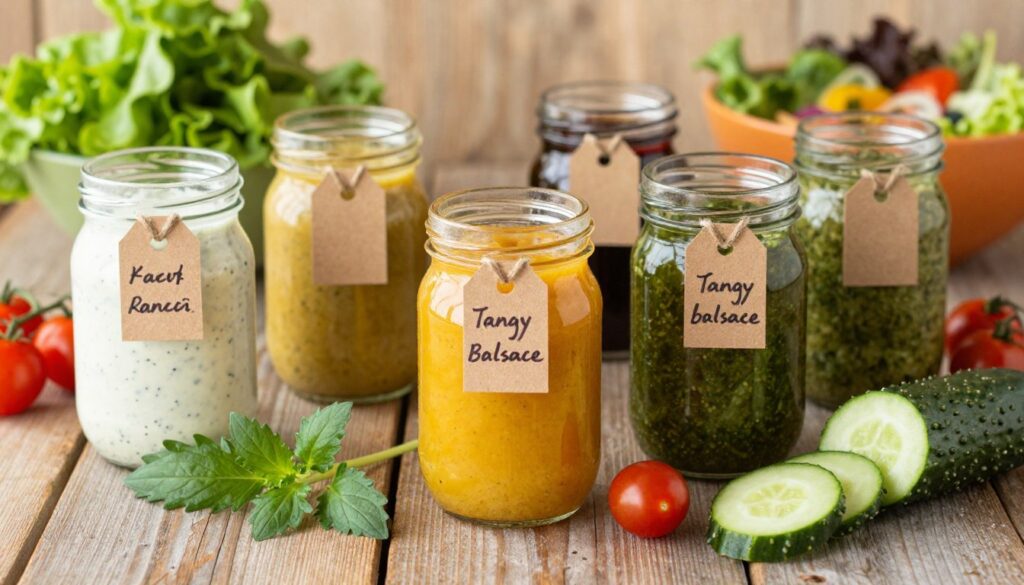
Years ago, I found a secret that changed how I eat veggies: making my own salad dressings. It started as a simple kitchen experiment. But it quickly turned into a passion for making healthy, tasty dressings.
Store-bought dressings always fell short for me. They were full of preservatives and tasted bland. But making my own changed everything. I could pick every ingredient, making dressings that were both delicious and healthy.
Exploring homemade salad dressings opened up a world of fresh ingredients and flavors. These simple recipes helped me enjoy more veggies and live healthier.
Key Takeaways
- Homemade salad dressings offer superior nutrition and taste
- Control ingredients to eliminate unnecessary additives
- Save money by using pantry staples
- Enhance vegetable consumption with delicious dressings
- Create personalized flavors tailored to your preferences
Why Homemade Salad Dressings Are Better for Your Health
Making your own salad dressing is more than just cooking. It’s a way to control what you eat. Store-bought dressings often have hidden preservatives and artificial stuff that’s bad for you.
By making your own dressing, you get many benefits:
- Complete ingredient transparency
- Customizable flavor profiles
- Reduced sodium and sugar intake
- Elimination of artificial chemicals
Mastering Ingredient Control
When you make your own natural salad dressing, you choose every ingredient. No weird stabilizers, no corn syrup, and no useless fillers.
People with dietary needs or health issues can relax. They know exactly what’s in their dressing. This lets them manage allergies and control calories better.
Fresh Flavors Without Compromises
Freshness is the secret weapon of homemade dressings. Unlike store-bought ones, your homemade dressings are full of life and taste. Fresh herbs and quality oils make any salad special.
Choosing homemade dressings means you’re choosing healthier eating. It’s a way to eat more mindfully and intentionally.
Essential Ingredients for Heart-Healthy Salad Dressings
https://www.youtube.com/watch?v=AjOX97aRz00
Making tasty and healthy salad dressings is easy. You just need to know the right ingredients. Clean eating salad dressings don’t need fancy or pricey stuff. Just a few simple things from your kitchen.
The base of a great dressing is good oils. Extra virgin olive oil is top for heart health. But avocado oil is also great, with its light taste and health perks.
- Base Oils: Extra virgin olive oil, avocado oil
- Acid Components: Balsamic vinegar, red wine vinegar, apple cider vinegar
- Flavor Enhancers: Dijon mustard, fresh herbs, garlic, salt, and pepper
Healthy fats are key in dressings. They help our bodies get vitamins and antioxidants from veggies. Skipping fats means losing out on important nutrients!
| Ingredient Category | Top Recommended Options | Health Benefits |
|---|---|---|
| Oils | Extra Virgin Olive Oil | Heart health, antioxidants |
| Acids | Balsamic Vinegar | Improved digestion, low calories |
| Sweeteners | Raw Honey | Natural energy, antimicrobial properties |
Using these key ingredients, you can turn simple dressings into health boosters. They make veggies not just good for you, but also enjoyable to eat.
The Power of Extra Virgin Olive Oil in Your Dressings
Heart-healthy olive oil is a nutritional superstar in salad dressings. It’s not just tasty; it’s a heart wellness hero. It’s packed with amazing health benefits.
Exploring olive oil’s nutritional profile showed me its incredible secrets. The magic lies in oleic acid and polyphenols.
Decoding the Science Behind Olive Oil’s Health Magic
Oleic acid, a monounsaturated fat in olive oil, is great for your heart. Studies show it can:
- Reduce heart disease risk
- Lower bad cholesterol
- Improve insulin sensitivity
- Help control blood sugar
Selecting Your Liquid Gold: Quality Matters
Not all olive oils are the same. To get the most health benefits, follow these tips:
- Choose extra virgin types
- Look for quality seals
- Check the harvest date
- Opt for dark glass bottles
- Store in cool, dark spots
Pro tip: Aim for 2-4 tablespoons daily for best health. Use it on salads, in dressings, or as a dish finisher.
Classic Vinaigrettes: Simple and Nutritious
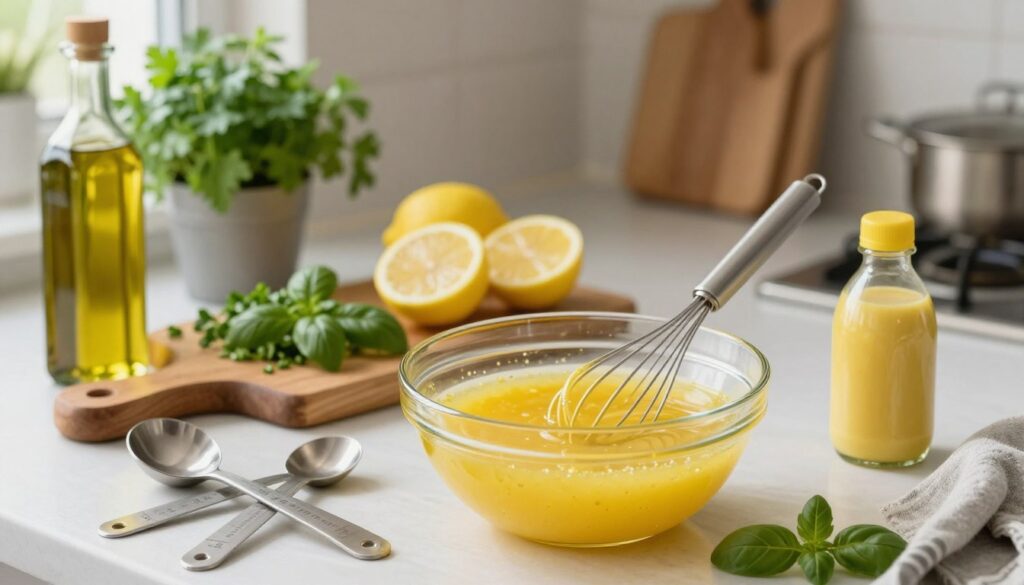
Making your own salad dressing is easy. Vinaigrettes are a great place to start. With just a few ingredients, you can make any salad healthy and tasty.
Homemade vinaigrettes are simple. My favorite recipe is easy to follow:
- Acid: Vinegar or citrus juice
- Oil: Extra virgin olive oil
- Flavor boosters: Herbs, garlic, mustard
The secret to a great vinaigrette is a 1:1.5 acid to oil ratio. It’s low in calories but full of flavor. Here are some tasty vinaigrette options:
- Lemon Vinaigrette: Great for fresh greens and roasted veggies
- Greek Vinaigrette: Zesty with oregano and garlic
- Balsamic Vinaigrette: Rich and versatile
Here’s a quick recipe for a tasty homemade vinaigrette:
¼ cup olive oil
¼ cup rice vinegar
1 Tbsp Dijon mustard
1 tsp minced garlic
Salt and pepper to taste
Whisking these ingredients takes just over a minute. Keep it in the fridge for a tasty vinaigrette whenever you want!
Creamy Homemade Salad Dressings Without the Guilt
Creamy dressings don’t have to ruin your diet. I’ve found tasty ways to make healthy salad dressings for weight loss. These dressings are rich and smooth, yet still good for you.
Imagine a dressing that feels like a treat but helps you stay healthy. My trick is using smart ingredient swaps. This turns old, high-calorie dressings into healthy, tasty dishes.
Greek Yogurt: The Creamy Transformation
Greek yogurt changes the game for creamy dressings. It’s packed with protein, has a thick texture, and offers probiotic benefits. Plus, it’s a low-calorie choice instead of mayo.
My go-to healthy Caesar dressing uses Greek yogurt. It’s tangy, smooth, and just as good as the original. But it has fewer fats.
Dairy-Free Creamy Alternatives
If you want dairy-free salad dressing, plant-based options work great. Cashews and avocados blend into creamy sauces without dairy.
- Cashew-based ranch dressing
- Avocado cilantro lime dressing
- Chipotle-spiced creamy options
“Healthy eating doesn’t mean sacrificing flavor or texture—it means being creative with nutritious ingredients.” – Culinary Nutrition Expert
These dairy-free choices show creamy dressings can be both tasty and healthy. By picking whole foods, you make dressings that are good for you and delicious.
Fresh Herb Dressings for Maximum Flavor
Do you find herbs wilting in your fridge? Making salad dressing at home is a great way to use them up. It turns fresh herbs into tasty, vibrant dressings that make any salad better.
My Green Goddess Dressing is a real game-changer. It’s perfect for making healthy salad dressings at home. You can add any mix of fresh herbs like:
- Parsley
- Basil
- Chives
- Tarragon
- Dill
The zesty Cilantro Lime Dressing is another favorite of mine. It’s great because you can make it three ways: as a light vinaigrette, a creamy avocado version, or a tangy Greek yogurt blend.
“Fresh herbs are nature’s flavor boosters, transforming simple dressings into culinary masterpieces.”
For a savory twist, try an avocado dressing with fresh dill. Or, mix basil and mint for something different. The most important thing is to be creative and use what you have.
My simple lemon-herb vinaigrette shows that salad dressing can be quick and amazing. Using fresh herbs makes dressings that make salads exciting and healthy.
Tahini-Based Dressings: Nutty and Nutrient-Dense
Discovering tahini in homemade dressing recipes changed my kitchen. It turns simple salads into masterpieces with its rich, nutty flavor and great nutrition.
Tahini, a creamy paste from ground sesame seeds, is a key ingredient. It’s smooth and has a unique taste. This makes it great for healthy dressings that make any meal better.
Nutritional Powerhouse of Tahini
I love tahini for more than its taste. It’s packed with health benefits:
- Rich in healthy fats
- Excellent source of plant-based protein
- High in calcium and iron
- Contains essential B vitamins
Creating Delicious Tahini Dressings
Making tahini-based dressings is easy. I always have these two favorites ready:
- Classic Lemony Tahini Dressing: Great for salads, roasted veggies, and grain bowls
- Sesame Ginger Dressing: A zesty option that makes simple salads into restaurant-quality meals
Pro tip: Always have tahini in your pantry for quick, nutritious dressing. With just a few whisks, you can make ordinary ingredients into amazing dishes.
Sweet and Savory Dressing Recipes Using Natural Sweeteners
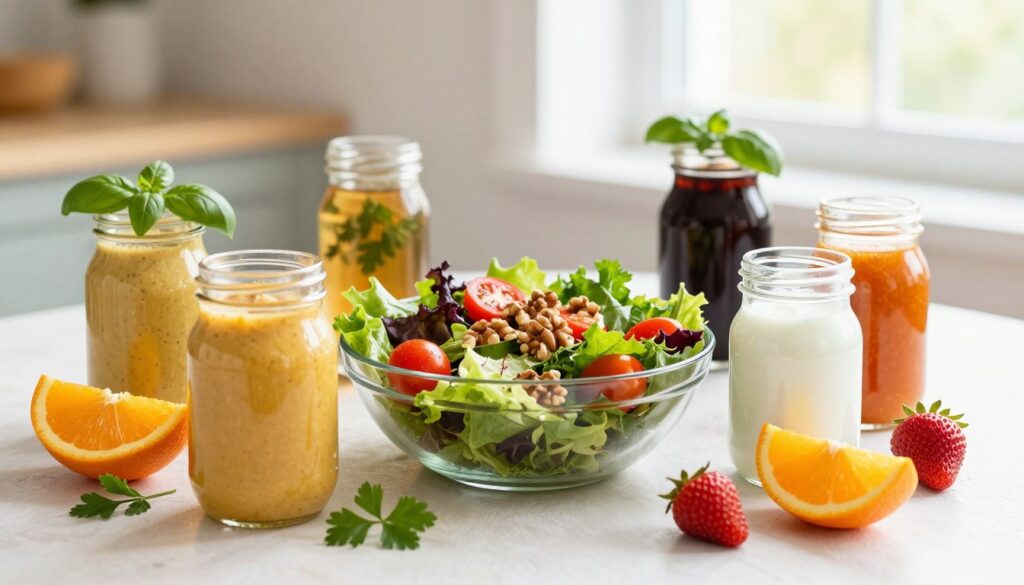
Learning to make healthy salad dressing with natural sweeteners can make your meals exciting. Honey, maple syrup, and other unrefined sweeteners make tasty dressings without too much sugar.
Natural sweeteners add depth and complexity to salad dressings. They keep the dressing healthy while making it taste great. When making dressing, I aim for flavors that highlight vegetables and greens.
Honey Mustard Dressing Recipe
My go-to method for healthy salad dressing is a classic honey mustard recipe:
- 2 tablespoons raw honey
- 3 tablespoons Dijon mustard
- 1/4 cup apple cider vinegar
- 1/2 cup extra virgin olive oil
- Pinch of sea salt
- Fresh cracked black pepper
Chipotle Honey Vinaigrette
For a spicy-sweet dressing, try this:
- 2 tablespoons honey
- 1 minced chipotle pepper
- 3 tablespoons lime juice
- 1/4 cup olive oil
These recipes show how to make healthy salad dressing that’s tasty and good for you. Natural sweeteners add just the right amount of sweetness to veggies without hurting your health goals.
Nutrition Comparison of Sweeteners
| Sweetener | Calories per Tablespoon | Glycemic Index |
|---|---|---|
| Honey | 64 | 55 |
| Maple Syrup | 52 | 54 |
| Refined Sugar | 48 | 65 |
Choosing natural sweeteners and knowing their benefits lets you make healthy, tasty salad dressings. Everyone will love them.
Oil-Free and Low-Calorie Salad Dressing Alternatives
Making tasty oil-free salad dressing is a big win for those watching their calories. Fat is important for absorbing nutrients, but we can still enjoy tasty, low-calorie dressings. I’ll show you how to do it without losing flavor or nutrition.
It’s important to know how to balance nutrition when looking for oil-free dressing. Our bodies need fat to absorb vitamins A, D, E, and K. But, we can cut calories while keeping the dressing tasty and nutritious.
- Use vegetable or chicken broth as a liquid base
- Blend roasted red peppers for creamy texture
- Experiment with citrus juices for bright flavors
- Incorporate mustard or mashed avocado for thickness
My top tip for low-calorie dressing is to tweak the vinaigrette ratio. Use a 1:1.5 acid-to-oil mix to cut calories and keep some healthy fat.
| Dressing Type | Calories per Tablespoon | Key Ingredients |
|---|---|---|
| Traditional Vinaigrette | 120-140 | Olive oil, vinegar |
| Low-Calorie Citrus Dressing | 30-50 | Lemon juice, herbs, minimal oil |
| Broth-Based Dressing | 10-25 | Vegetable broth, herbs, spices |
Remember, moderation and balance are key. While low-calorie dressings help with weight management, don’t forget to include healthy fats in your diet.
How to Store and Preserve Your Homemade Dressings
Storing homemade salad dressings right is key to keeping them fresh and tasty. The right storage can greatly improve the quality and safety of your homemade dressings.
I’ve found a few important tips for storing homemade salad dressings. The right way to store them can help them last longer and taste better.
Choosing the Right Containers
Here’s how to pick the best containers for your homemade dressings:
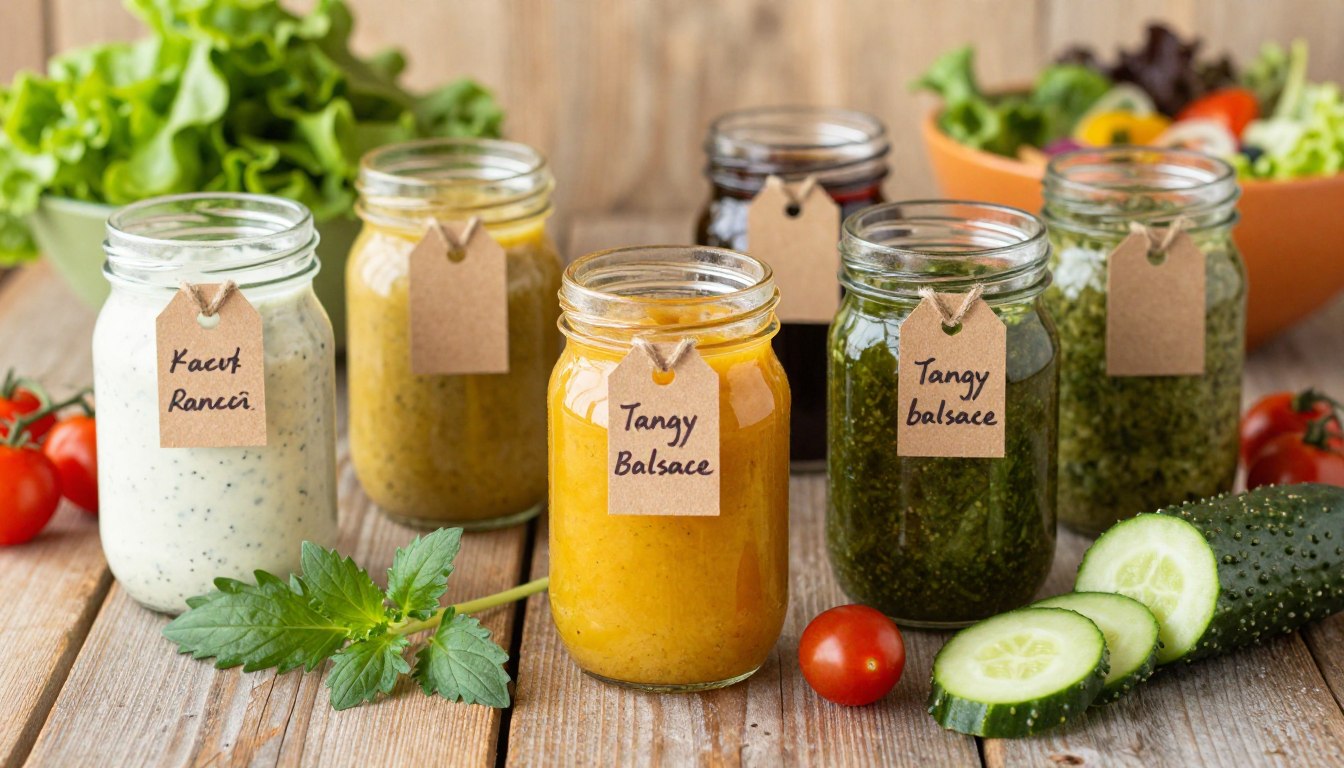
- Use clean, airtight glass containers
- Opt for dark glass bottles for oil-based dressings
- Choose containers with tight-fitting lids
- Always label containers with the preparation date
Refrigeration and Shelf Life Guidelines
Different dressings need different storage:
| Dressing Type | Refrigeration | Shelf Life |
|---|---|---|
| Vinaigrettes | Recommended | 5-7 days |
| Creamy Dressings | Required | 3-5 days |
| Oil-Based Dressings | Optional | 1 week |
I suggest making smaller batches to keep dressings fresh. If a dressing separates, just shake it well. If it smells bad or looks off, throw it away.
Pro tip: Let refrigerated dressings sit at room temperature for a few minutes before serving. This helps them regain their original consistency and flavor.
Creative Ways to Use Homemade Salad Dressings Beyond Salads
My kitchen has found a new love for homemade dressings. They’re not just for salads anymore. These dressings can turn simple meals into exciting dishes with just a little bit.
Here are some cool ways to use your homemade dressings:
- Use as marinades for chicken, fish, or tofu before grilling
- Drizzle over roasted vegetables for instant flavor enhancement
- Create dipping sauces for appetizers and snacks
- Enhance grain bowls and pasta dishes
- Replace traditional condiments on sandwiches
Think about making a simple baked potato better with a zesty herb dressing. Or, add a tangy vinaigrette to your grilled veggies. These dressings can make any meal more exciting.
My top tip is to mix dressings into soups or stews just before serving. It adds a new level of flavor. Always having a few dressings ready means you can make any meal more tasty and fun.
Conclusion
Making your own salad dressings is more than just cooking. It’s a way to change how you eat for the better. We’ve seen how making your own dressings lets you control your diet. You can make your salads taste great with healthy ingredients.
Starting to make delicious, healthy meals is easy. Just use simple ingredients to make your salads better. Homemade dressings mean you know exactly what’s in your food. You can avoid bad stuff and get more flavor and nutrients.
Try out the recipes and techniques we talked about. Start with simple vinaigrettes or creamy ones. Then, try more. Every dressing you make is a step towards eating better. It’s a small effort that makes a big difference in your health.
Your cooking journey starts today. Enjoy making fresh, tasty dressings that are good for you. With a little practice and creativity, you’ll make salads that are not only delicious but also healthy. You’ll be proud to share them with others.
FAQ
How long do homemade salad dressings typically last in the refrigerator?
Are homemade salad dressings really healthier than store-bought versions?
Can I make creamy dressings without using heavy cream or mayonnaise?
Do I need special equipment to make homemade salad dressings?
Are fat-free dressings a good option for weight loss?
How can I use homemade dressings beyond salads?
What are the best oils to use in homemade salad dressings?
How can I make dressings if I have dietary restrictions?
🌐 URL
/best-homemade-salad-dressings-for-healthy-eating