The Best Easy Steamed Pork Bao with
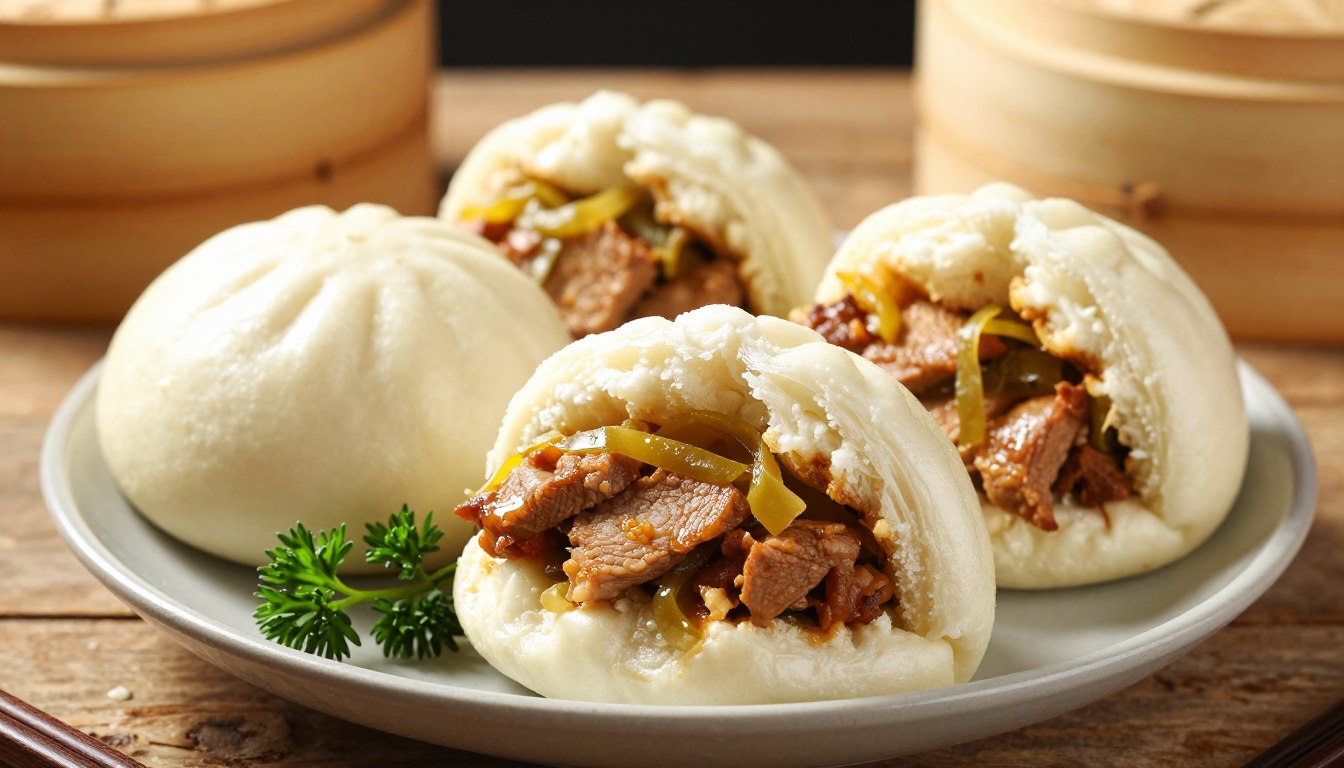
Do you remember that moment when a bao bun opens and you smell the savory sweetness? That’s why you’re here. Maybe you first loved a pork bun from a dim sum cart or a street vendor in George Town, Penang. Now, you want that soft, pillowy bite at home.
This steamed pork bao recipe mixes minced pork with two preserved vegetables. You’ll use salty chai poh and sweet tung choi. Add light soy, sugar, rice cooking wine, and toasted sesame seeds for flavor.
The dough is easy: plain flour, instant yeast, sugar, water, and oil. Knead it briefly and let it rise in the steamer quickly.
Learn how to knead for about 10 minutes and soak the vegetables for 45 minutes. Proof the dough in the steamer for 15 minutes. Then, steam it for 12 minutes and rest for 3–5 minutes before serving.
Key Takeaways
- Steamed pork bao balances minced pork with preserved vegetables for authentic flavor.
- Bun dough uses plain flour, instant yeast, sugar, water, and oil for a soft result.
- Soak preserved vegetables ~45 minutes; dough knead ~10 minutes for best texture.
- Proof in the steamer 15 minutes, steam 12 minutes, then rest 3–5 minutes before serving.
- Recipe adapts to pork belly gua bao or glazed variations while remaining simple for homemade bao.
Why You’ll Love This Steamed Pork Bao Recipe
This recipe is easy and packed with flavor. It combines savory, salty, and sweet notes from preserved vegetables and minced pork. Add light soy, sugar, cooking wine, and pepper for more taste. Toasted sesame seeds give a nutty touch.
The dough turns into soft, white buns. Use plain or Hong Kong flour with yeast and sugar. Knead, rest, and steam for soft, fluffy buns. Try sticky glazed or braised pork belly for a richer taste.
Flavor profile and texture highlights
The filling has a unique flavor from preserved vegetables. This contrasts with the sweetness from sugar and the savory from light soy. It’s a balanced, savory bite.
The dough’s texture is crucial. Proper mixing and kneading make it soft and elastic. Steam at the right temperature and rest the buns to keep them soft. This ensures authentic, shop-like buns.
Quick overview of ease and authenticity
Finding ingredients is easy, whether at Asian stores or regular supermarkets. You’ll need preserved vegetables, light soy, and cooking wine, along with flour and yeast. Prep involves soaking, stir-frying, kneading, portioning, and steaming.
Authenticity is simple. Soak preserved veg to reduce salt, proof buns before steaming, and rest them afterwards. Follow these steps for classic texture and taste every time.
Ingredients for Authentic Pork Bao Filling and Dough
To make your pork bao recipe shine, start by gathering the key ingredients. This includes both the filling and the bun dough. Having everything ready helps you go from prep to steam quickly. Below, you’ll find exact measures and smart swaps for making delicious bao buns at home.
Pork bao filling ingredients
For a real pork bao filling, use 11 oz (300 g) of minced pork or pork belly. Add 2 oz (60 g) of preserved salty vegetables and 2 oz (50 g) of sweet vegetables. This mix gives that special savory-sweet flavor.
Season with 1 tbsp of light soy sauce, 1/2 tbsp of sugar, and 1/2 tbsp of Shaoxing cooking wine. Add a dash of pepper and 1/2 tbsp of corn flour to hold it together. Stir-fry with 2 tbsp of cooking oil and finish with 1 tbsp of toasted sesame seeds.
Bun dough ingredients
For soft buns, mix 9 oz (250 g) of plain flour with 1 tsp of instant dry yeast and 15 g of caster sugar. Add about 5 oz (135 g) of water and 1 tsp of oil. Knead until it’s smooth. Adjust the water based on humidity or flour type.
Notes on substitutions and shopping
If you can’t find Hong Kong flour, all-purpose flour works too. Your buns will still be tasty but not as light. For real flavor, buy preserved vegetables like chai poh and tung choi at an Asian store.
Try different fillings like rindless pork belly or a mix of pork and shrimp. Use ground chicken for a leaner option. Light soy sauce is a good substitute if diluted. Shaoxing wine adds a rich flavor, so use it if you can.
You’ll need a bamboo or metal steamer, parchment squares, and a rolling pin. Having these ready makes the process easier and ensures your buns turn out perfectly.
Preparing Preserved Vegetables: Rinsing, Soaking, and Chopping
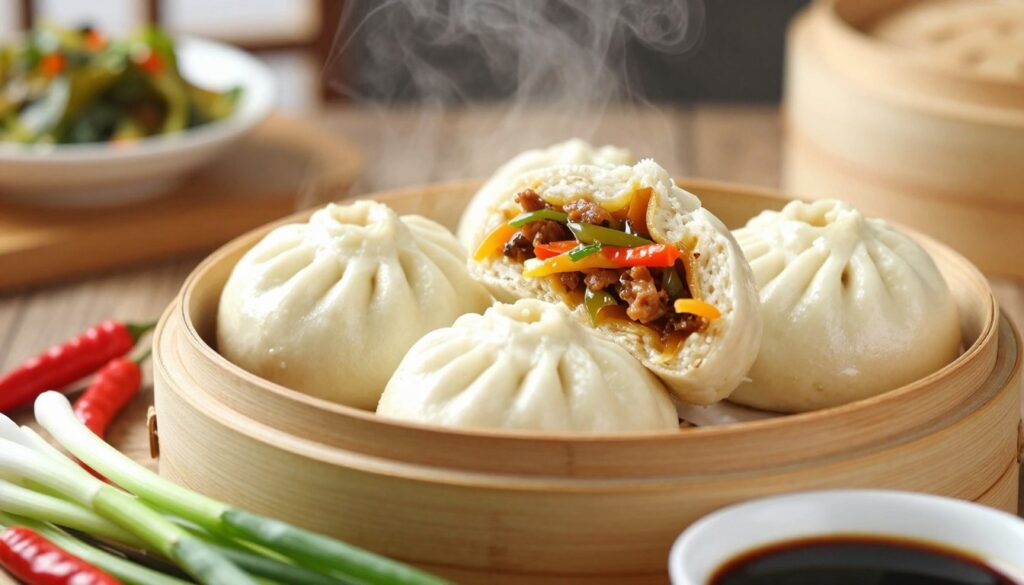
Preserved vegetables add depth to your filling when you learn the right prep steps. Use rinsing and soaking to control salt, tone down strong ferment notes, and bring out a balanced savory-sweet contrast for preserved vegetables bao.
Why rinsing and soaking matters
Packaged preserved vegetables often sit in heavy brine. If you skip rinsing and soaking, the filling can become too salty and flat. Proper prep softens sharp flavors in chai poh and calms sweetness in tung choi so each bite complements the pork.
Soaking also reduces any lingering funk and helps the preserved vegetables for bao blend with minced pork without overpowering the dish. You get a clearer savory profile, not a salty haze.
Step-by-step rinsing and prepping
- Rinse both salty and sweet preserves under cold running water for 20–30 seconds to remove surface brine.
- Place rinsed chai poh and tung choi in a bowl of fresh water. Soak about 45 minutes. For very salty brands, change the water once halfway through.
- After soaking, rinse again and squeeze out excess water using a clean kitchen towel or your hands until mostly dry.
- Finely chop to a size that will mix well with minced pork. Aim for small, even pieces for consistent texture when you stir-fry the filling.
- If you want a milder result, extend the soak or briefly blanch the preserves in boiling water for one minute, then cool and drain.
- Dispose of soaking water down the drain and run the tap to rinse; this removes salty residue safely.
Follow these steps and your preserved vegetables for bao will lift the filling rather than dominate it. If you’re learning how to make steamed pork bao at home, this prep gives you control and a cleaner, more delicious final bao.
Making the Pork Bao Filling: Stir-Fry Tips and Flavor Building
Begin by getting everything ready: rinse and chop preserved vegetables, marinate minced pork if you can, mix corn flour with water, and toast sesame seeds. This prep makes the stir-fry quick and ensures the filling is hot and evenly seasoned.
Heat a wok or large skillet over medium-high. Add 2 tablespoons of neutral oil. Fry the preserved vegetables until they smell great. Then, add the minced pork and stir-fry until it’s fully cooked.
Season with 1 tablespoon light soy sauce, 1/2 tablespoon sugar, 1/2 tablespoon cooking wine, and a bit of pepper. Stir constantly to mix flavors fast. Just before finishing, add corn flour to make the filling glossy.
Turn off the heat and mix in 1 tablespoon toasted sesame seeds. This adds aroma and texture. Let it cool before filling the dough discs. Cooling prevents soggy buns and keeps the buns neat.
For richer flavor, marinate the pork for at least 30 minutes. Use soy, sugar, and cooking wine. High heat and quick stir-frying keep the meat tender and flavorful.
If you want a fattier filling, use pork belly braised in chicken broth with ginger, garlic, rice wine, and sugar for 1.5–2 hours. Reduce the liquid to a sticky glaze or pan-fry slices with a soy-honey glaze. Add pickled carrots, daikon, or fresh cilantro for a bright contrast.
Mixing and Kneading Dough for Soft Fluffy Bao Buns
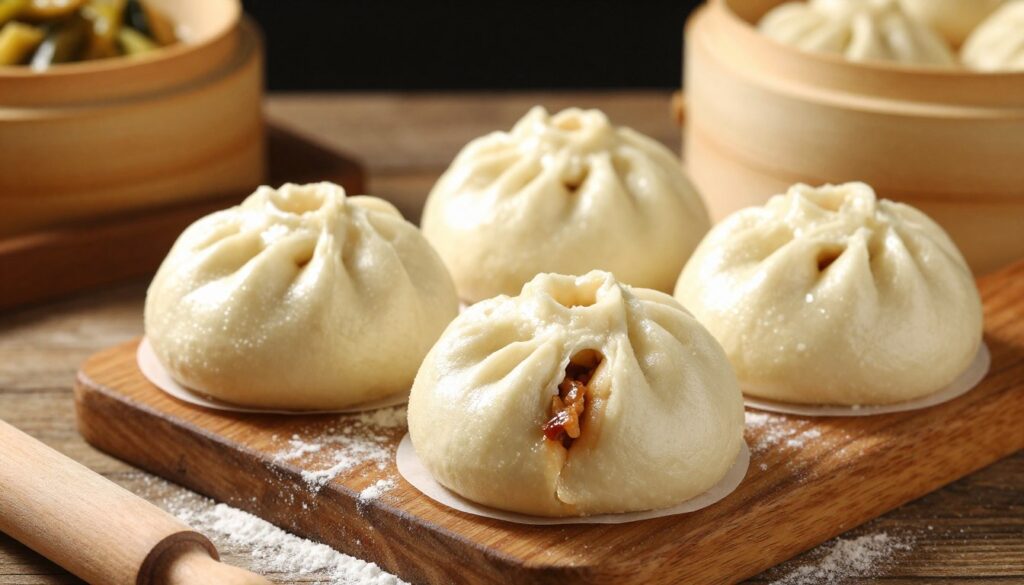
First, get your ingredients ready: 9 oz (250 g) plain flour or Hong Kong flour, 1 tsp instant dry yeast, 15 g caster sugar, 5 oz (135 g) water, and 1 tsp neutral oil. Put them in a bowl and mix until you get a shaggy dough.
Proper dough mixing and kneading
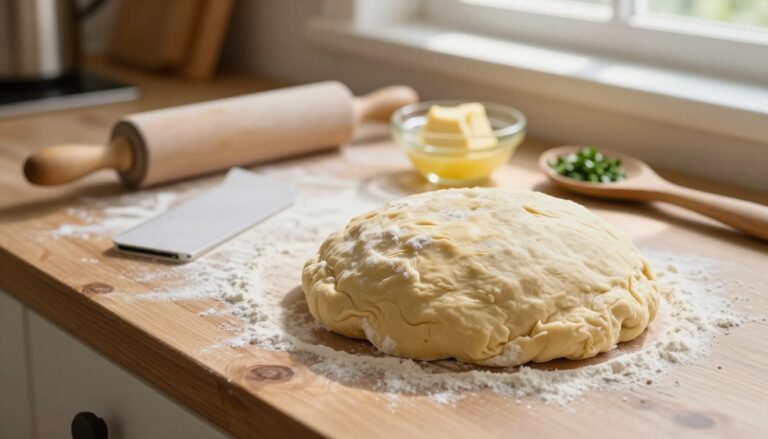
Put the shaggy dough on a lightly floured surface. Knead for about 10 minutes until it’s smooth and elastic. Dust with flour as needed to prevent sticking, but don’t add too much or the dough will get tough.
The dough should feel soft and spring back slightly when pressed. Cover it and let it rest for 5 minutes before rolling and portioning. This short rest helps relax the gluten, making rolling easier.
Tips for achieving pillowy texture
Use Hong Kong flour for a chewier, airier crumb; all-purpose flour is a good substitute. Knead until smooth but not tough to develop enough gluten for structure.
Keep your dough covered and in a warm, draft-free spot while proofing. Portion into roughly 15 pieces of about 35 g each for classic small bao. Roll discs with thinner edges and a slightly thicker center so your soft fluffy bao buns with pork filling hold the filling without tearing.
Proof the portions in the steamer (not over rolling boiling water) for about 15 minutes before steaming. Steam for 12 minutes, then turn off the heat and leave the lid cracked for 3–5 minutes to prevent sudden collapse. These small steps protect the pillowy texture of your chinese steamed buns and help your homemade bao keep their lift and softness.
Shaping, Filling, and Sealing Homemade Bao Buns
Now that your dough has rested, it’s time to shape it into buns. This step requires skill and touch. Proper shaping ensures even steaming and a great taste.
Start by portioning the dough evenly. Roll it into a cylinder and cut it into 15 pieces, each about 35 g. Shape each piece into a round and flatten it slightly, making the center thicker and the edges thinner. This helps the filling stay in the center and prevents the dough from tearing.
When filling and sealing, use cooled filling. Place a spoonful of pork filling in the center of each round. Don’t overfill, as this can cause the dough to split during steaming. You can also add toasted sesame seeds for extra flavor and crunch.
Choose a sealing method that fits your skill level. For a classic pleat, fold and pleat the edge while turning the wrapper between your fingers until it closes tightly. For a quicker seal, gather the edges and pinch firmly at the top. This should leave a smooth base for the bun to sit flat on the parchment square.
Place each sealed bun on a small square of parchment to prevent sticking. Grease the steamer basket or use the paper squares so the buns lift easily. Keep your buns uniform in size for even steaming and soft, delicious bao buns every time.
If you want to make gua bao, steam simple rounds first. After steaming, open each round and layer with braised pork belly, pickles, cilantro, and a peanut-sugar mix. This variation uses the same technique but adds bold toppings for a tasty lunch.
Proofing and Steaming: Timing and Temperature Control
Getting proofing and steaming right is key to a great steamed pork bao. You need a warm, humid proof to let the dough relax and puff. This guide will help you proof and steam your buns so they’re always soft and glossy.
Proofing method in the steamer
Put each bun on a parchment square and line them up in the steamer. Start with cold water, not boiling. Cover and let them proof for about 15 minutes until they puff up.
Watch for visual signs of puffing, not just time. Over-proofing can make the dough collapse. So, check the buns often.
Steaming procedure and resting
After proofing, boil the water and steam the buns for 12 minutes. For bigger buns or frozen ones, add a few more minutes. Following a tested recipe ensures the right timing and texture.
Don’t open the lid while steaming. When done, turn off the heat and slightly open the lid. Let the buns rest for 3–5 minutes. This helps them keep their shape and texture.
For frozen buns, shape and freeze them, then bag them. Steam them from frozen, adding 3–4 minutes. Grease the steamer to prevent sticking. Use a towel to wipe the lid or wrap it to stop water from dripping.
| Step | Temp/State | Time | Notes |
|---|---|---|---|
| Proof in cold steamer | Steamer closed, water cold | ~15 minutes | Puffs visible; avoid over-proofing |
| Bring to boil | Rapid boil | Until steaming starts | High heat for initial steam |
| Steam buns | High to medium-high | 12 minutes (minced pork) | Add time for larger or frozen buns |
| Rest after steaming | Steamer off, lid ajar | 3–5 minutes | Prevents collapse from sudden cool |
| Frozen uncooked method | Frozen straight to steamer | 12–16 minutes | Add 3–4 minutes to chinese bao steaming time |
For a reliable guide on timing and moisture control, check out a trusted recipe for steamed pork buns. The steamed pork buns guide has all the details you need.
Variations and Serving Ideas for Bao Buns with Pork
Try simple swaps and playful toppings to keep your bao buns with pork feeling fresh. Below are easy ways to vary the filling, plus serving and topping ideas that lift each bite. Use these suggestions to match mood, season, or pantry finds.
Alternative pork styles and add-ins
Stick with minced pork and preserved vegetables for a classic that never fails. For a richer take, use a glazed pork belly bao method: simmer pork belly in broth, glaze with soy, honey, and brown sugar, then pan-fry until sticky. A braised pork belly gua bao brings a different texture. Brown the belly, braise with soy, sugar, Shaoxing wine and spices for 1.5–2 hours, then reduce the braising liquid to a glossy glaze.
Mix-ins widen your options. Toss cooked shrimp into the minced pork for a surf-and-turf bite. Add sautéed mushrooms and shredded cabbage to mimic a vegetarian texture. Finish any mix with a splash of sesame oil or a few drops of chili oil if you want heat.
Serving and topping suggestions
Pickled veggies for bao brighten each mouthful. Quick pickles of carrot and daikon, or pickled mustard greens made with rice vinegar, sugar, and a touch of honey, cut richness and add snap. For minced pork buns, top with toasted sesame seeds, thinly sliced scallions, or a drizzle of hoisin or chili oil.
Assemble a pork belly gua bao with cilantro, pickled carrots and daikon, plus a sprinkle of crushed peanuts mixed with a little sugar for that authentic Taiwanese balance. Serve sides like spicy cucumber salad, edamame, or a sriracha mayo that guests can spoon over their buns.
Keep presentation simple and practical. Store steamed buns under a clean towel to stay warm. Serve immediately for best texture and use bao topping ideas that let guests customize each bite.
Make-Ahead, Freezing, and Storage Tips for Pork Bao
Plan ahead to keep your pork bao tasting fresh and to save time on busy nights. These simple steps help you freeze bao buns, store pork filling, and reheat with excellent results. Follow the timeline that fits your routine and label packages so you know what to use first.
Freezing uncooked and cooked buns
If you want to freeze uncooked bao, place filled buns on a tray in a single layer and freeze until solid. Move them to freezer bags and squeeze out excess air. To steam from frozen, add 3–4 minutes to the usual steaming time so the dough cooks through.
For cooked buns, cool them completely before wrapping each one in plastic wrap. Freeze in a single layer or in a container that prevents squashing. Reheat by steaming straight from frozen until warm. This approach makes a reliable make-ahead bao that tastes near-fresh.
To preserve dough texture, freeze buns before proofing finishes if you prefer a slightly tighter crumb. Label packages with the date and try to use them within a month for best quality.
Storing filling and dough
Cooked pork filling should be cooled quickly and stored in an airtight container in the refrigerator. You can store pork filling for 3–4 days. Reheat the filling thoroughly to steaming temperature before refilling buns, or use it cold for a sandwich-style bao.
If you need to store uncooked dough, refrigerate it for a short retard overnight to build flavor. Bring chilled dough back to room temperature before shaping and filling. Keep leftover preserved vegetables in sealed containers in the fridge; pickles will stay good for about a week.
Safety and reheating bao
Always ensure pork reaches a safe internal temperature during initial cooking. When reheating bao, steam until piping hot throughout. Proper reheating bao practices protect taste and food safety so you can enjoy your make-ahead bao without worry.
Steamed pork bao
Steamed pork bao is found everywhere, from Penang’s street carts to San Francisco’s dim sum rooms. These soft buns started as a simple snack from bamboo steamers. They were a quick, warm treat for people on the go.
Street-food roots and regional variations
In Asia, fillings vary based on local ingredients and tastes. Southeast Asian hawker centers often use minced pork with preserved vegetables. This mix is tasty and easy to eat on the go.
Taiwan has its own twist: gua bao. It wraps braised pork belly, pickled greens, cilantro, and a peanut-sugar mix in the bun. In the West, home cooks make glazed pork belly bao with sweet pork, sriracha mayo, and pickled carrots.
Chinese steamed buns come in many flavors, from minced pork to whole slices of pork belly. Each type shows off local tastes and eating habits.
Nutritional snapshot and portion guidance
Pork bao nutrition varies by filling and size. A bun with minced pork and preserved vegetables has about 250 calories, 15 g protein, 12 g fat, and 30 g carbs. A pork belly gua bao can have up to 458 calories, thanks to more fat and rich toppings.
Plan your meals with bao portion sizes. For a main dish, 2–3 small bao per person is good. For a dim sum spread, aim for 4–6 per person if you’re trying several dishes. Cut down on portions for richer pork belly baos. Add pickled veggies and herbs to balance the flavors.
Conclusion
This easy steamed pork bao recipe with preserved vegetables lets you make delicious buns at home. Start by soaking salty chai poh and sweet tung choi for 45 minutes. Then, mix a seasoned minced pork filling with soy, Shaoxing wine, sugar, pepper, cornflour, toasted sesame seeds, and green onion.
For the buns, use a simple yeast dough. It’s made from plain or Hong Kong-style flour, sugar, water, and oil. This dough makes the buns soft and puffy.
Timing is key: knead the dough for 10 minutes and let it rest. Then, proof the shaped buns in the steamer for 15 minutes. Steam them for 12 minutes and let them sit for 3–5 minutes before opening.
You can marinate the pork for more flavor. Use parchment or a lightly greased steamer to prevent sticking. Freezing shaped buns makes for easy make-ahead meals. This method is perfect for weeknight dinners or casual gatherings.
The filling can be changed up: use mushrooms, tofu, or sweet potato glass noodles for a vegetarian option. You can also make glazed pork belly or gua bao. Top with quick-pickles, cilantro, a peanut-sugar mix, sriracha mayo, or hoisin for different flavors.
For more tips and a full guide, visit Sassy Chopsticks steamed pork buns.
With these steps and small tweaks, you’ll have a reliable, freezer-ready staple. Each serving is light but satisfying, with about 103 kcal. The puffy bread and savory filling will leave you well fed. Try this best dim sum style pork bao recipe and enjoy homemade bao that rivals what you get out shopping or at a restaurant.