How to Make Healthy Salads
Your alarm goes off, and you’re already running late. The morning rush is overwhelming, making lunch prep seem impossible. By noon, you might grab expensive takeout or vending machine snacks because you didn’t plan ahead. Does this sound like you?
Many professionals struggle with the same morning rush. This leads to spending $9 or more on pre-made lunch bowls or unhealthy fast food. But, is there a better way?
Making your own healthy salads for work is simpler than you think. With a little planning and the right approach, you can make salads to pack for work that are delicious and affordable. You choose every ingredient, ensuring your meal is both tasty and nutritious.
These salads aren’t boring diet meals. They’re vibrant, tasty, and full of texture and flavor. Learning to make healthy work lunches can actually boost your energy, not drain it.
In this guide, you’ll learn how to make healthy salads for work that fit your schedule and taste. You’ll discover how to make salads that are truly filling. Plus, you’ll find out how to keep your salads fresh and enjoy meal prep.
Key Takeaways
- Preparing your own healthy salads for work saves money compared to buying pre-made options at $9 or more per bowl
- You gain complete control over ingredients when you make salads to pack for work, allowing customization for your dietary needs
- Work lunch ideas healthy and satisfying prevent the afternoon food coma and keep your energy stable
- Proper containers and storage methods keep your salads fresh for days without getting soggy
- Batch prepping and simple assembly techniques fit meal prep into even the busiest mornings
- Creating delicious dressings and combining quality ingredients transforms salads from boring to genuinely crave-worthy
- A few smart strategies turn healthy salads for work into a routine you’ll actually look forward to
Why Healthy Salads for Work Are the Perfect Lunch Solution
Choosing the right lunch can change your whole day. Homemade salads are easy and good for you. They save money and make you feel better.
Save Money and Eat Better
Lunch costs add up quickly. A salad from a restaurant or store can cost $9 to $15. That’s $45 to $75 a week for just lunch.
Making your own lunch saves a lot of money. You pick every ingredient. You can choose organic veggies and quality proteins without extra additives.
Avoid the Afternoon Food Coma
Big lunches can make you feel tired in the afternoon. Your energy drops, and you can’t focus. This is because your blood sugar spikes and then falls.
Healthy salads give you energy all day. They have protein, whole grains, and healthy fats. You stay sharp and focused.
- Feel energized throughout your afternoon
- Maintain mental clarity and focus
- Avoid energy crashes after lunch
- Boost your overall productivity
Healthy meals at work aren’t about missing out. They help you feel great and do more.
Essential Components of a Satisfying Work Salad
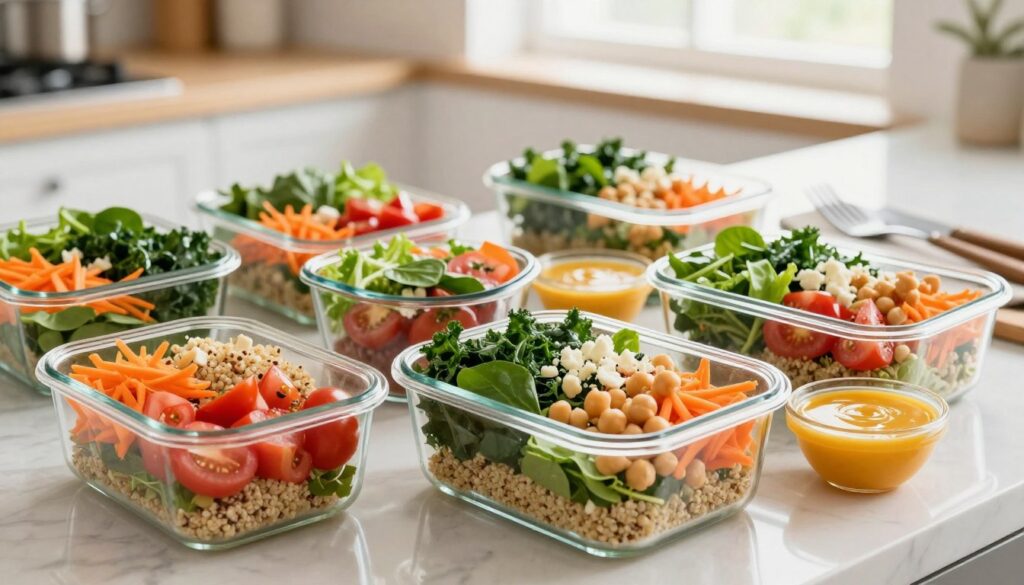
Making a salad that lasts until dinner is more than just lettuce. Your salads need balance. The best salads mix textures, flavors, and nutrients for a full meal. Without these, you’ll be hungry soon and might grab unhealthy snacks.
Think of your salad as a full meal, not just a side. Each part is key to feeling full at work.
- A sturdy base of greens or grains that stays fresh
- Protein sources like beans, chicken, tofu, or nuts to fight hunger
- Healthy fats from avocado, seeds, or nuts for fullness and nutrients
- Vegetables and fruits for fiber, crunch, and sweetness
- A flavorful dressing that ties everything together
Great salads mix different textures in each bite. Crispy veggies and creamy avocado are a perfect match. Chewy grains and crunchy nuts add variety. This mix keeps your meal interesting and enjoyable.
The secret to salads you actually want to eat is mixing elements that surprise your taste buds with each forkful.
Don’t stick to recipes too much. View salad-making as a creative process. Use fresh, tasty, and convenient ingredients. This way, your salads stay fresh and exciting every week.
Choosing the Right Base Greens for Meal Prep
The foundation of your make ahead salads starts with selecting greens that won’t turn into a mushy disappointment by midweek. Your choice of base greens makes the difference between a fresh, satisfying lunch and a wilted mess. The best salads for meal prep rely on sturdy vegetables that hold their texture and even improve in flavor after sitting in the refrigerator for a day or two.
When you build best salads for meal prep, you’re making a smart choice about longevity and taste. Hardy greens give you the freedom to prepare multiple servings on Sunday and enjoy them throughout your work week without sacrificing quality.
Hardy Greens That Hold Up Well
Certain greens are the true champions of meal prep preparation. These vegetables maintain their crunch and structure, making them ideal for make ahead salads:
- Kale becomes more tender and palatable after a day in the fridge. Massage it gently with a bit of lemon juice to soften the tough fibers before assembly.
- Cabbage stays remarkably crisp for nearly a week and works beautifully in slaws. Both green and red varieties hold up exceptionally well.
- Romaine lettuce maintains its structure and doesn’t wilt as quickly as delicate varieties. It’s dependable and keeps its shape throughout the week.
- Shredded Brussels sprouts add a nutty flavor and hold up beautifully when stored properly. They create wonderful texture in best salads for meal prep.
- Radicchio provides a pleasant bitterness and stunning color. It stays firm and adds visual appeal to your containers.
Skip the spring mix and butter lettuce for meal prep work. Save those delicate leaves for salads you’ll eat the same day. Baby spinach can work for make ahead salads but requires extra care—keep it very dry and store it properly to prevent premature wilting.
Mixing Textures and Flavors
Creating interesting combinations elevates your best salads for meal prep from boring to exciting. Blend different greens to build layers of taste and texture:
| Flavor Profile | Green Combination | Texture Result |
|---|---|---|
| Peppery and Mild | Arugula mixed with spinach | Tender with spicy bite |
| Bitter and Sweet | Radicchio with romaine | Crunchy with complex taste |
| Nutty and Crisp | Shredded Brussels sprouts with kale | Firm with rich flavor |
| Fresh and Earthy | Baby kale with shredded cabbage | Mix of tender and crunchy |
Wash your greens thoroughly and dry them completely before assembly. Excess moisture causes premature wilting in your make ahead salads. Store your prepared greens in airtight containers with paper towels to absorb any remaining moisture.
Experiment with greens you haven’t tried before. Building your make ahead salads with variety keeps your lunch exciting all week long.
Adding Protein to Keep You Full All Afternoon
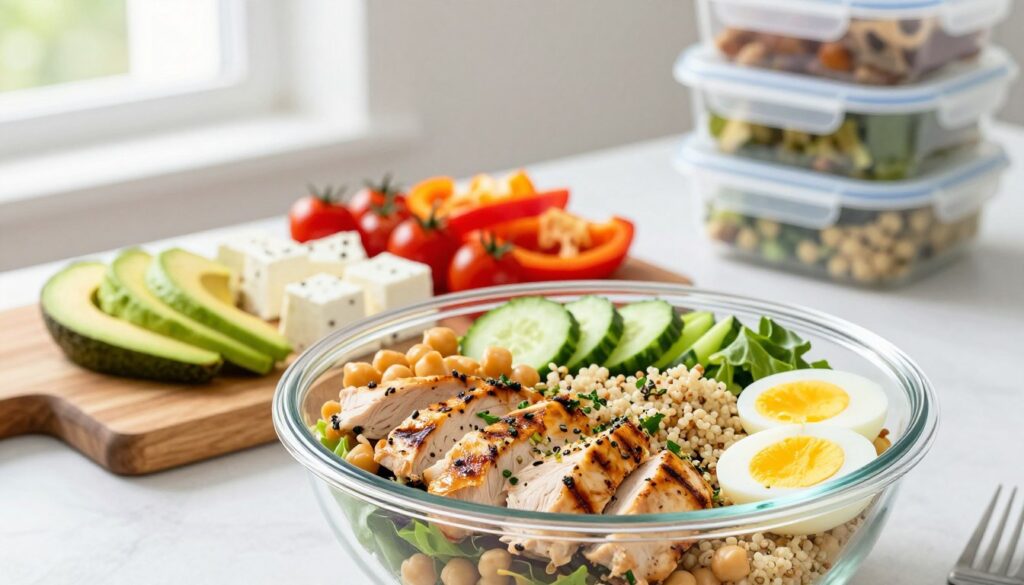
Protein is key to making your meal prep salads for lunch a full meal. Without enough, you might get hungry by mid-afternoon. Adding protein keeps your energy up and your focus sharp all day.
How much protein you need matters. Aim for 4 to 6 ounces per salad, or about 1 cup of beans. This amount helps keep you full until dinner.
Plant-based proteins are great for salads because they stay good in the fridge for days. Chickpeas, lentils, black beans, and edamame are top picks. You can add flavor by seasoning them before mixing into your salad. Try roasted chickpeas with curry powder and smoked paprika for a spiced kick, or seasoned black beans with chili powder for a bold taste.
| Protein Source | Amount Per Salad | Best For | Storage Time |
|---|---|---|---|
| Chickpeas (cooked) | 1 cup | Vegan, high fiber | 5-7 days |
| Grilled chicken breast | 4-6 ounces | Lean protein lovers | 3-4 days |
| Hard-boiled eggs | 2-3 eggs | Quick prep option | 7 days |
| Black beans | 1 cup | Budget-friendly vegan | 5-7 days |
| Tofu (cubed) | 4-6 ounces | Plant-based variety | 4-5 days |
| Almonds or walnuts | 1/4 cup | Healthy fats added | 7+ days |
If you eat animal products, grilled chicken breast is moist and tasty. Hard-boiled eggs are super convenient—you can make a dozen on Sunday. Turkey, canned tuna, and salmon also work well in salads.
Nuts and seeds add protein and healthy fats. Almonds, walnuts, pepitas, and sunflower seeds add crunch and nutrition. Use about 1/4 cup per salad since nuts are calorie-dense.
- Keep protein separate until eating time if it has a wet coating
- Store all proteins in airtight containers at the bottom of your fridge
- Use a cooler pack or insulated lunch bag when carrying your salad
- Prep proteins on Sunday for the entire week ahead
Choosing the right proteins for your meal prep salads keeps you full, focused, and satisfied all afternoon.
Incorporating Whole Grains and Complex Carbs
Whole grains are key to making quick salad bowls for busy professionals into full meals. They are packed with fiber and complex carbs that give you energy for hours. This helps you avoid the slump that comes in the afternoon.
Choosing the right grain can change your salad game. Grilled Chicken & Quinoa Bowl recipes show how grains and proteins work well together. Whether you’re making lunch for Monday or the whole week, knowing your grain options adds variety to your meals.
Best Grains for Make-Ahead Salads
Different grains add unique flavors and textures to your salads. Here are the best ones:
- Quinoa – Cooks in about 15 minutes and has all nine essential amino acids. Its mild, nutty taste goes well with many salads.
- Brown rice – Offers a familiar taste with more fiber than white rice. It stays fresh in containers for up to five days.
- Farro – Becomes sweet and chewy when cooked, adding texture and a pleasant chewiness to your salad bowl.
- Bulgur wheat – Perfect for tabbouleh-style salads and cooks quickly.
- Wild rice – Has an earthy flavor and lots of fiber.
- Millet – A gluten-free option that cooks fast and tastes slightly sweet.
For meal prep, use about ½ to ¾ cup of cooked grains per salad. This amount is just right, without making the salad too heavy.
Cooking and Storing Grains Properly
Proper preparation is crucial for meal prep success. Cook your grains on Sunday to save time. Bring water to a boil, add your grain, and simmer until tender. Always cool grains completely before adding them to salads. Warm grains will make your greens soggy.
Storage is just as important as cooking. Store cooked grains in airtight containers in the fridge for up to five days. Keep grains separate from dressing and wet ingredients to stay fresh. Portion grains into individual containers on Sunday for quick assembly on busy mornings. Freeze cooked grains for up to three months for longer storage.
| Grain Type | Cooking Time | Storage Duration | Best For |
|---|---|---|---|
| Quinoa | 15 minutes | 5 days refrigerated | Complete protein meals |
| Brown Rice | 30-40 minutes | 5 days refrigerated | Hearty, sustaining bowls |
| Farro | 25-30 minutes | 5 days refrigerated | Chewy texture preference |
| Bulgur Wheat | 12-15 minutes | 5 days refrigerated | Quick prep options |
| Millet | 15-20 minutes | 5 days refrigerated | Gluten-free alternatives |
Mastering grain preparation and storage helps you make quick, nutritious salad bowls. These bowls keep you energized and satisfied all afternoon at work.
Healthy Salads for Work That Stay Fresh for Days
Many worry if make-ahead office salads stay fresh by day three. The answer is yes, they can stay crisp and tasty for days. Just keep your dressing separate and add it just before eating. This keeps your greens from getting soggy.
Dressing has oils and acids that can make veggies lose their crunch. By storing dressing in a small container, your salads stay fresh all week. Just add the dressing at lunchtime for the best taste.
Not all veggies keep well in the fridge. Hardy vegetables like cabbage, broccoli, and carrots stay crisp for days. Greens like kale and romaine are better than delicate mixed greens. Tomatoes and cucumbers, though, should be stored separately and added at lunchtime.
Here’s a smart way to pack your containers:
- Start with grains or beans to keep wet ingredients away from greens
- Layer hardy veggies next
- Put your greens on top
- Keep dressing separate until you’re ready to eat
Some salads even taste better after a day or two. Slaws and bean-based salads get better as they marinate. According to salad recipes from Love and Lemons, lentil salads are great for days. Letting bean and lentil salads chill for at least an hour before serving enhances flavors.
Use airtight containers to keep your food fresh. Prepping lunches on Sunday sets you up for a week of healthy eating. With these tips, your healthy lunch ideas for work will stay fresh and delicious all week.
| Vegetable Type | Storage Duration | Best Preparation | Storage Tip |
|---|---|---|---|
| Cabbage (shredded) | 3-4 days | Raw or slightly dressed | Can be dressed in advance |
| Broccoli (florets) | 3-4 days | Raw or lightly roasted | Keep separate from dressing |
| Bell Peppers (sliced) | 3-4 days | Raw | Store with other hardy vegetables |
| Carrots (grated or sliced) | 3-4 days | Raw | Keep separate from dressing |
| Kale | 2-3 days | Massaged lightly | Sturdy greens hold up well |
| Romaine | 2-3 days | Raw | Layer on top of container |
| Tomatoes | 1-2 days | Raw | Store in separate container |
| Cucumbers | 1-2 days | Raw | Add at lunchtime for crispness |
Proper storage temperature is key. Keep your containers in the coldest part of the fridge. This slows down wilting and keeps bacteria away. Prepping salads on Sunday means fresh lunches all week.
Creating Flavorful Dressings Without Excess Oil
The secret to amazing salads is in your dressing. Store-bought dressings often have bad stuff like preservatives and unhealthy fats. But, you can make tasty dressings at home with simple ingredients.
Your salads deserve dressings that are delicious without heavy oils. Homemade dressings are quick to make and keep your salads fresh all week.
Creamy Dressing Alternatives
Forget mayonnaise and heavy cream. You can make creamy dressings with plant-based and protein-packed ingredients. These alternatives make your salads satisfying without too many calories.
- Tahini base – Blend sesame paste with lemon juice and garlic for Middle Eastern flair
- Nut butters – Cashew or almond butter creates Thai-inspired sauces perfect for Asian salads
- Avocado cream – Ripe avocado mixed with lime juice makes a smooth, green dressing
- Silken tofu – Transform it into ranch or Caesar-style dressings with proper seasonings
- Greek yogurt – Use plain yogurt for a tangy, protein-rich base
Add a splash of water or vegetable broth to get the right consistency. A high-speed blender makes your dressings super smooth.
Bright and Tangy Vinaigrettes
Vinaigrettes make your salads pop. They’re made with acid and flavor boosters. Lemon juice adds brightness, balsamic vinegar brings sweetness, apple cider vinegar is tangy, and red wine vinegar has a Mediterranean taste.
| Vinaigrette Style | Key Ingredients | Best With |
|---|---|---|
| Carrot Ginger | Fresh ginger, rice vinegar, sesame oil | Asian-inspired green salads |
| Cilantro Lime | Fresh cilantro, lime juice, garlic | Mexican-style vegetable salads |
| Honey Mustard | Dijon mustard, honey, apple cider vinegar | Mixed greens with fruits |
| Tahini Lemon | Tahini, lemon juice, cumin | Hearty grain-based salads |
Dijon mustard adds flavor and keeps dressings mixed. Maple syrup balances the acidity. Fresh herbs like basil and dill add a nice aroma. Use three parts acid to one part oil (or less) plus seasonings. This way, you can make custom dressings for your healthy lunches. Homemade dressings are cheaper and taste fresher than store-bought ones.
Best Containers and Packing Methods for Office Salads
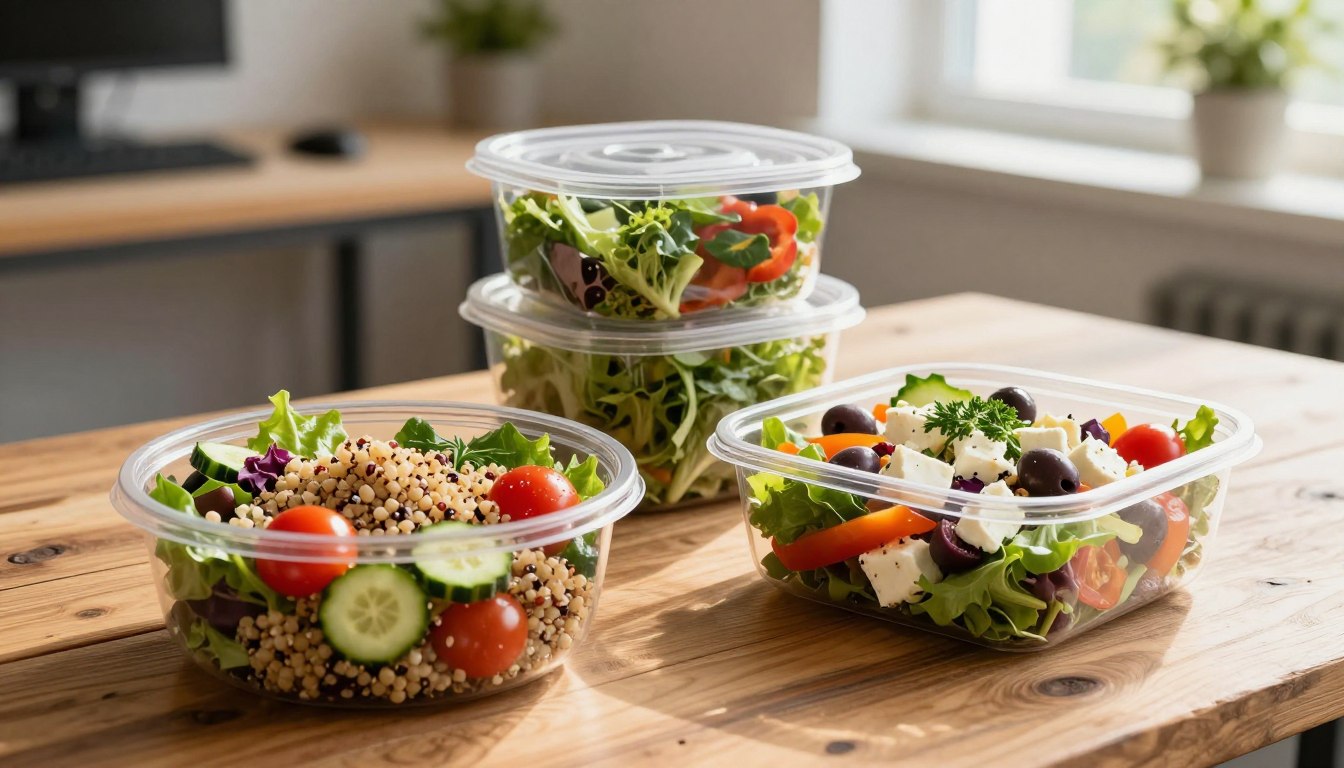
Choosing the right packed salad containers is key to keeping your lunch fresh. Quality containers protect your salad during your commute. They keep ingredients fresh until lunchtime.
Your container choice depends on your lifestyle and preferences. Some like one large container, while others prefer separate compartments.
Popular Container Options for Portable Salad Recipes
- Mason Jar Salads – Wide-mouth quart-sized jars are great for layering. Start with dressing at the bottom, add hardy vegetables next, then grains and protein, and finish with greens on top. When sealed properly, these stay fresh for up to five days.
- Bento-Style Lunch Boxes – Multiple compartments keep each ingredient separate. Pack greens, grains, proteins, and dressing in different sections to prevent sogginess and maintain crisp textures.
- Brabantia Lunch Bowls – These containers feature a middle compartment perfect for keeping dressings and crunchy toppings away from your greens until eating time.
What to Look for in Packed Salad Containers
| Feature | Why It Matters |
|---|---|
| Leak-Proof Seals | Prevents dressing from leaking into your bag during transport |
| 4-6 Cup Capacity | Holds a full meal-sized salad with room for all ingredients |
| Stackable Design | Saves refrigerator space during meal prep week |
| Dishwasher-Safe | Makes cleanup quick and effortless after eating |
Consider if your container fits in your work fridge. Also, think about whether you prefer eating directly from it or transferring to a plate. These details help you choose containers that fit your daily routine.
Quick Assembly Tips for Busy Mornings
Getting out the door on time doesn’t mean skipping a nutritious lunch. Organized meal prep salads can be grabbed in seconds. Planning ahead keeps mornings stress-free.
Spending one to two hours on a busy day, like Sunday, changes your week. Wash, chop, and cook all salad parts at once. This way, quick healthy salads are ready in minutes during the week.
Batch Prep Strategies
Start by washing and drying all your vegetables together. Chop everything at once and store each vegetable type in its own airtight container lined with paper towels. The paper towels absorb excess moisture, keeping your produce crisp throughout the week.
Cook a large batch of your favorite grain—quinoa, farro, or brown rice—and prepare double portions of protein. Hard-boiled eggs, roasted chickpeas, and grilled chicken all work wonderfully. When you learn how to meal prep salad components, you create a “salad bar” approach where you mix different ingredients each day, preventing boredom and keeping things fresh.
- Roast multiple sheet pans of vegetables at the same time
- Use an Instant Pot for hands-off grain cooking
- Prepare two to three different dressings in small jars for variety
- Store proteins in individual portions for easy grabbing
The Mason Jar Method
The mason jar technique creates grab-and-go salads that stay fresh for days. This layering method prevents sogginess and keeps your greens crisp until lunchtime arrives.
| Layer Order | Ingredients | Purpose |
|---|---|---|
| Bottom (Layer 1) | Dressing (2-3 tablespoons) | Flavor foundation and moisture barrier |
| Layer 2 | Hardy vegetables (tomatoes, cucumbers, carrots, peppers) | Absorbs dressing gradually without wilting |
| Layer 3 | Grains (quinoa, brown rice, farro) | Adds substance and separates layers |
| Layer 4 | Protein (beans, chicken, tofu) | Keeps you full all afternoon |
| Top (Layer 5) | Leafy greens and toppings | Stays crisp away from moisture |
Use wide-mouth jars for easier layering and eating. Don’t overstuff your jars—leave a little space at the top. When you’re ready to eat, simply shake everything together or pour into a bowl. This method for creating fast high-protein lunch ideas works perfectly when life gets hectic.
If you prefer fresher daily prep, pre-washed vegetables and cooked proteins mean you can assemble a custom salad in under five minutes while your morning coffee brews. Find the prep method that fits your lifestyle best.
Conclusion
You now have all the tools to make healthy salads for work. Choose sturdy greens, add protein and whole grains, and use smart storage. This way, you can make meals that last all week. It only takes a couple of hours on Sunday.
Start small and build up. You don’t need to make five salads if two are enough. Find your favorite flavors and textures. Use what works for you, like mason jars, containers, or quick prep.
Healthy salads at work can change your day. They save you money and give you energy. You’ll stay focused and avoid afternoon crashes.
It’s time to get started this weekend. Set aside time to prep your ingredients. Pack your containers with care. Enjoy the fresh taste of your salad.
Healthy meals at work are an investment in your health and wallet. Your future self will thank you for starting today.
FAQ
How long can I store prepared salads in the refrigerator before they go bad?
What’s the best way to prevent my salad from getting soggy by lunch?
How much protein should I include in each work lunch salad?
What are the best grains to use for make-ahead office salads?
Can I cook grains in advance and how should I store them?
What are some good creamy dressing alternatives that don’t use heavy cream?
How do I build a vinaigrette that actually tastes good?
What’s the best container for packing salads to work?
How do I use the mason jar method for meal prep salads?
How can I make meal prep less time-consuming on weekends?
What are the hardiest greens for meal prep that won’t turn into mush?
How much money can I save by making healthy salads at home instead of buying them?
FAQ
How long can I store prepared salads in the refrigerator before they go bad?
Your meal prep salads can last three to five days if stored right. Keep dressing separate from greens and veggies. Use airtight containers to prevent oxidation.
Hardy greens like kale and romaine stay crisp longer. Store moisture-rich items like tomatoes and cucumbers in small containers for freshness.
What’s the best way to prevent my salad from getting soggy by lunch?
Always store dressing separately and add it just before eating. This prevents veggies from getting soggy. Use the mason jar method for easy layering.
Layer dressing at the bottom, then hardy veggies, grains, protein, and leafy greens. Keep each component separate until ready to eat.
How much protein should I include in each work lunch salad?
Aim for 4 to 6 ounces of animal protein or 1 cup of plant-based protein. This keeps you full and focused. Nuts and seeds add protein and healthy fats.
What are the best grains to use for make-ahead office salads?
Choose grains that keep their texture and flavor when refrigerated. Chewy farro, fluffy quinoa, and brown rice are great options. Gluten-free options like quinoa and rice work well too.
Use ½ to ¾ cup of cooked grains per salad for balance.
Can I cook grains in advance and how should I store them?
Yes, batch cooking grains is a great time-saver. Cook large batches on Sunday and cool them completely. This prevents greens from wilting.
Cooked grains can be refrigerated for up to five days or frozen for longer. This makes meal prep even more efficient.
What are some good creamy dressing alternatives that don’t use heavy cream?
Try tahini with lemon and garlic for a Middle Eastern dressing. Cashew butter makes a tasty Thai peanut sauce. Avocado blended with lime is creamy and green.
Silken tofu can be turned into ranch or Caesar dressing. Thin nut butters with water or broth for the right consistency.
How do I build a vinaigrette that actually tastes good?
Use the classic vinaigrette formula: three parts acid to one part oil plus seasonings. Choose fresh lemon or lime juice for brightness.
Add Dijon mustard for flavor and emulsification. A touch of maple syrup or dates balances acidity. Fresh herbs add aromatic complexity.
What’s the best container for packing salads to work?
Choose containers based on your needs. Brabantia lunch bowls have handy compartments for keeping dressings separate. Bento boxes offer multiple compartments for different ingredients.
Wide-mouth mason jars are great for the jar salad method. Look for leak-proof lids and microwave-safe materials.
How do I use the mason jar method for meal prep salads?
Start with 2 to 3 tablespoons of dressing at the bottom of a wide-mouth jar. Layer hardy veggies, grains, protein, and extras like nuts. Top with leafy greens.
Sealed jars keep salads fresh for up to five days. Shake the jar to mix everything perfectly.
How can I make meal prep less time-consuming on weekends?
Dedicate one to two hours on Sunday for batch prep. Wash, dry, and chop all veggies at once. Store each type in airtight containers.
Cook a large batch of grain and double batch of protein. Use your Instant Pot for hands-off cooking. The “salad bar” approach offers flexibility and variety.
What are the hardiest greens for meal prep that won’t turn into mush?
Sturdy greens like kale, cabbage, and romaine are great. Shredded Brussels sprouts and radicchio also hold up well. Save delicate greens for same-day salads.
Massage kale with lemon to soften its fibers. Mix different greens for interesting textures and flavors.
How much money can I save by making healthy salads at home instead of buying them?
Making your own salads saves a lot of money. Store-bought salads cost around , while homemade ones cost to . This saves to weekly, or
FAQ
How long can I store prepared salads in the refrigerator before they go bad?
Your meal prep salads can last three to five days if stored right. Keep dressing separate from greens and veggies. Use airtight containers to prevent oxidation.
Hardy greens like kale and romaine stay crisp longer. Store moisture-rich items like tomatoes and cucumbers in small containers for freshness.
What’s the best way to prevent my salad from getting soggy by lunch?
Always store dressing separately and add it just before eating. This prevents veggies from getting soggy. Use the mason jar method for easy layering.
Layer dressing at the bottom, then hardy veggies, grains, protein, and leafy greens. Keep each component separate until ready to eat.
How much protein should I include in each work lunch salad?
Aim for 4 to 6 ounces of animal protein or 1 cup of plant-based protein. This keeps you full and focused. Nuts and seeds add protein and healthy fats.
What are the best grains to use for make-ahead office salads?
Choose grains that keep their texture and flavor when refrigerated. Chewy farro, fluffy quinoa, and brown rice are great options. Gluten-free options like quinoa and rice work well too.
Use ½ to ¾ cup of cooked grains per salad for balance.
Can I cook grains in advance and how should I store them?
Yes, batch cooking grains is a great time-saver. Cook large batches on Sunday and cool them completely. This prevents greens from wilting.
Cooked grains can be refrigerated for up to five days or frozen for longer. This makes meal prep even more efficient.
What are some good creamy dressing alternatives that don’t use heavy cream?
Try tahini with lemon and garlic for a Middle Eastern dressing. Cashew butter makes a tasty Thai peanut sauce. Avocado blended with lime is creamy and green.
Silken tofu can be turned into ranch or Caesar dressing. Thin nut butters with water or broth for the right consistency.
How do I build a vinaigrette that actually tastes good?
Use the classic vinaigrette formula: three parts acid to one part oil plus seasonings. Choose fresh lemon or lime juice for brightness.
Add Dijon mustard for flavor and emulsification. A touch of maple syrup or dates balances acidity. Fresh herbs add aromatic complexity.
What’s the best container for packing salads to work?
Choose containers based on your needs. Brabantia lunch bowls have handy compartments for keeping dressings separate. Bento boxes offer multiple compartments for different ingredients.
Wide-mouth mason jars are great for the jar salad method. Look for leak-proof lids and microwave-safe materials.
How do I use the mason jar method for meal prep salads?
Start with 2 to 3 tablespoons of dressing at the bottom of a wide-mouth jar. Layer hardy veggies, grains, protein, and extras like nuts. Top with leafy greens.
Sealed jars keep salads fresh for up to five days. Shake the jar to mix everything perfectly.
How can I make meal prep less time-consuming on weekends?
Dedicate one to two hours on Sunday for batch prep. Wash, dry, and chop all veggies at once. Store each type in airtight containers.
Cook a large batch of grain and double batch of protein. Use your Instant Pot for hands-off cooking. The “salad bar” approach offers flexibility and variety.
What are the hardiest greens for meal prep that won’t turn into mush?
Sturdy greens like kale, cabbage, and romaine are great. Shredded Brussels sprouts and radicchio also hold up well. Save delicate greens for same-day salads.
Massage kale with lemon to soften its fibers. Mix different greens for interesting textures and flavors.
How much money can I save by making healthy salads at home instead of buying them?
Making your own salads saves a lot of money. Store-bought salads cost around $9, while homemade ones cost $3 to $4. This saves $25 to $35 weekly, or $1,200 to $1,700 annually.
Homemade salads also let you control ingredient quality and portion sizes. This ensures you’re getting the best nutrition for your body.
What foods should I keep separate in my packed salad containers?
Keep moisture-rich items like tomatoes and cucumbers in small containers. Store dressing separately and add it just before eating. Nuts and crispy toppings should also be kept separate.
This prevents sogginess and keeps your salads fresh and crunchy.
Can I prepare different salad varieties throughout the week to avoid boredom?
Absolutely! Use the “salad bar” approach to prep individual components. This way, you can mix and match different combinations each day. This keeps your salads interesting and allows you to follow your cravings.
What should I do if I prefer fresh salad components rather than batch prepping everything?
If you prefer fresh prep, use a hybrid approach. Wash, dry, and chop veggies, cook grains and proteins, and mix dressings on the weekend. Then, assemble a custom salad in under five minutes each morning.
This way, you get the freshness you prefer while saving time during busy weekdays.
How do I ensure my grilled chicken stays moist when stored in the refrigerator?
Cook chicken at a moderate temperature and use a meat thermometer. Cool it to room temperature before storing. Lightly coat with olive oil or store in chicken broth to prevent drying.
Cut chicken into bite-sized pieces for even moisture distribution. This keeps your salads juicy and flavorful all week.
Are there any vegetables that shouldn’t be included in make-ahead salads?
Yes, avoid using ripe avocados and very soft tomatoes in advance. They become mushy and release water. Instead, use hardy veggies like cabbage, broccoli, and bell peppers.
Save fresh veggies for adding at lunchtime. This keeps your salads crisp and visually appealing.
What’s the difference between meal prepping salads in containers versus mason jars?
Both methods work well, each with its own benefits. Mason jars offer a stackable system and airtight seals. They’re great for layering.
Compartmentalized containers offer more flexibility and are convenient for eating at your desk. Choose based on your lifestyle and preferences.
How do I ensure my salads provide enough sustained energy throughout my workday?
Include enough protein (4 to 6 ounces or 1 cup plant-based) and whole grains (½ to ¾ cup cooked) in your salads. Add healthy fats from nuts, seeds, or avocado.
Use flavorful dressings to make the meal satisfying. Balanced meals prevent energy crashes and keep you focused all day.
Can I freeze prepared salad components for longer storage?
Yes, you can freeze cooked grains and proteins for up to three months. Thaw them overnight in the fridge before using. Fresh veggies don’t freeze well, so freeze only proteins and grains.
This strategy allows you to maintain variety in your salads while saving time.
What are some creative protein options beyond chicken and beans?
Try hard-boiled eggs, tofu, tempeh, lentils, or even seitan. These options add variety to your salads and provide different flavors and textures.
,200 to
FAQ
How long can I store prepared salads in the refrigerator before they go bad?
Your meal prep salads can last three to five days if stored right. Keep dressing separate from greens and veggies. Use airtight containers to prevent oxidation.
Hardy greens like kale and romaine stay crisp longer. Store moisture-rich items like tomatoes and cucumbers in small containers for freshness.
What’s the best way to prevent my salad from getting soggy by lunch?
Always store dressing separately and add it just before eating. This prevents veggies from getting soggy. Use the mason jar method for easy layering.
Layer dressing at the bottom, then hardy veggies, grains, protein, and leafy greens. Keep each component separate until ready to eat.
How much protein should I include in each work lunch salad?
Aim for 4 to 6 ounces of animal protein or 1 cup of plant-based protein. This keeps you full and focused. Nuts and seeds add protein and healthy fats.
What are the best grains to use for make-ahead office salads?
Choose grains that keep their texture and flavor when refrigerated. Chewy farro, fluffy quinoa, and brown rice are great options. Gluten-free options like quinoa and rice work well too.
Use ½ to ¾ cup of cooked grains per salad for balance.
Can I cook grains in advance and how should I store them?
Yes, batch cooking grains is a great time-saver. Cook large batches on Sunday and cool them completely. This prevents greens from wilting.
Cooked grains can be refrigerated for up to five days or frozen for longer. This makes meal prep even more efficient.
What are some good creamy dressing alternatives that don’t use heavy cream?
Try tahini with lemon and garlic for a Middle Eastern dressing. Cashew butter makes a tasty Thai peanut sauce. Avocado blended with lime is creamy and green.
Silken tofu can be turned into ranch or Caesar dressing. Thin nut butters with water or broth for the right consistency.
How do I build a vinaigrette that actually tastes good?
Use the classic vinaigrette formula: three parts acid to one part oil plus seasonings. Choose fresh lemon or lime juice for brightness.
Add Dijon mustard for flavor and emulsification. A touch of maple syrup or dates balances acidity. Fresh herbs add aromatic complexity.
What’s the best container for packing salads to work?
Choose containers based on your needs. Brabantia lunch bowls have handy compartments for keeping dressings separate. Bento boxes offer multiple compartments for different ingredients.
Wide-mouth mason jars are great for the jar salad method. Look for leak-proof lids and microwave-safe materials.
How do I use the mason jar method for meal prep salads?
Start with 2 to 3 tablespoons of dressing at the bottom of a wide-mouth jar. Layer hardy veggies, grains, protein, and extras like nuts. Top with leafy greens.
Sealed jars keep salads fresh for up to five days. Shake the jar to mix everything perfectly.
How can I make meal prep less time-consuming on weekends?
Dedicate one to two hours on Sunday for batch prep. Wash, dry, and chop all veggies at once. Store each type in airtight containers.
Cook a large batch of grain and double batch of protein. Use your Instant Pot for hands-off cooking. The “salad bar” approach offers flexibility and variety.
What are the hardiest greens for meal prep that won’t turn into mush?
Sturdy greens like kale, cabbage, and romaine are great. Shredded Brussels sprouts and radicchio also hold up well. Save delicate greens for same-day salads.
Massage kale with lemon to soften its fibers. Mix different greens for interesting textures and flavors.
How much money can I save by making healthy salads at home instead of buying them?
Making your own salads saves a lot of money. Store-bought salads cost around $9, while homemade ones cost $3 to $4. This saves $25 to $35 weekly, or $1,200 to $1,700 annually.
Homemade salads also let you control ingredient quality and portion sizes. This ensures you’re getting the best nutrition for your body.
What foods should I keep separate in my packed salad containers?
Keep moisture-rich items like tomatoes and cucumbers in small containers. Store dressing separately and add it just before eating. Nuts and crispy toppings should also be kept separate.
This prevents sogginess and keeps your salads fresh and crunchy.
Can I prepare different salad varieties throughout the week to avoid boredom?
Absolutely! Use the “salad bar” approach to prep individual components. This way, you can mix and match different combinations each day. This keeps your salads interesting and allows you to follow your cravings.
What should I do if I prefer fresh salad components rather than batch prepping everything?
If you prefer fresh prep, use a hybrid approach. Wash, dry, and chop veggies, cook grains and proteins, and mix dressings on the weekend. Then, assemble a custom salad in under five minutes each morning.
This way, you get the freshness you prefer while saving time during busy weekdays.
How do I ensure my grilled chicken stays moist when stored in the refrigerator?
Cook chicken at a moderate temperature and use a meat thermometer. Cool it to room temperature before storing. Lightly coat with olive oil or store in chicken broth to prevent drying.
Cut chicken into bite-sized pieces for even moisture distribution. This keeps your salads juicy and flavorful all week.
Are there any vegetables that shouldn’t be included in make-ahead salads?
Yes, avoid using ripe avocados and very soft tomatoes in advance. They become mushy and release water. Instead, use hardy veggies like cabbage, broccoli, and bell peppers.
Save fresh veggies for adding at lunchtime. This keeps your salads crisp and visually appealing.
What’s the difference between meal prepping salads in containers versus mason jars?
Both methods work well, each with its own benefits. Mason jars offer a stackable system and airtight seals. They’re great for layering.
Compartmentalized containers offer more flexibility and are convenient for eating at your desk. Choose based on your lifestyle and preferences.
How do I ensure my salads provide enough sustained energy throughout my workday?
Include enough protein (4 to 6 ounces or 1 cup plant-based) and whole grains (½ to ¾ cup cooked) in your salads. Add healthy fats from nuts, seeds, or avocado.
Use flavorful dressings to make the meal satisfying. Balanced meals prevent energy crashes and keep you focused all day.
Can I freeze prepared salad components for longer storage?
Yes, you can freeze cooked grains and proteins for up to three months. Thaw them overnight in the fridge before using. Fresh veggies don’t freeze well, so freeze only proteins and grains.
This strategy allows you to maintain variety in your salads while saving time.
What are some creative protein options beyond chicken and beans?
Try hard-boiled eggs, tofu, tempeh, lentils, or even seitan. These options add variety to your salads and provide different flavors and textures.
,700 annually.
Homemade salads also let you control ingredient quality and portion sizes. This ensures you’re getting the best nutrition for your body.
What foods should I keep separate in my packed salad containers?
Keep moisture-rich items like tomatoes and cucumbers in small containers. Store dressing separately and add it just before eating. Nuts and crispy toppings should also be kept separate.
This prevents sogginess and keeps your salads fresh and crunchy.
Can I prepare different salad varieties throughout the week to avoid boredom?
Absolutely! Use the “salad bar” approach to prep individual components. This way, you can mix and match different combinations each day. This keeps your salads interesting and allows you to follow your cravings.
What should I do if I prefer fresh salad components rather than batch prepping everything?
If you prefer fresh prep, use a hybrid approach. Wash, dry, and chop veggies, cook grains and proteins, and mix dressings on the weekend. Then, assemble a custom salad in under five minutes each morning.
This way, you get the freshness you prefer while saving time during busy weekdays.
How do I ensure my grilled chicken stays moist when stored in the refrigerator?
Cook chicken at a moderate temperature and use a meat thermometer. Cool it to room temperature before storing. Lightly coat with olive oil or store in chicken broth to prevent drying.
Cut chicken into bite-sized pieces for even moisture distribution. This keeps your salads juicy and flavorful all week.
Are there any vegetables that shouldn’t be included in make-ahead salads?
Yes, avoid using ripe avocados and very soft tomatoes in advance. They become mushy and release water. Instead, use hardy veggies like cabbage, broccoli, and bell peppers.
Save fresh veggies for adding at lunchtime. This keeps your salads crisp and visually appealing.
What’s the difference between meal prepping salads in containers versus mason jars?
Both methods work well, each with its own benefits. Mason jars offer a stackable system and airtight seals. They’re great for layering.
Compartmentalized containers offer more flexibility and are convenient for eating at your desk. Choose based on your lifestyle and preferences.
How do I ensure my salads provide enough sustained energy throughout my workday?
Include enough protein (4 to 6 ounces or 1 cup plant-based) and whole grains (½ to ¾ cup cooked) in your salads. Add healthy fats from nuts, seeds, or avocado.
Use flavorful dressings to make the meal satisfying. Balanced meals prevent energy crashes and keep you focused all day.
Can I freeze prepared salad components for longer storage?
Yes, you can freeze cooked grains and proteins for up to three months. Thaw them overnight in the fridge before using. Fresh veggies don’t freeze well, so freeze only proteins and grains.
This strategy allows you to maintain variety in your salads while saving time.
What are some creative protein options beyond chicken and beans?
Try hard-boiled eggs, tofu, tempeh, lentils, or even seitan. These options add variety to your salads and provide different flavors and textures.
FAQ
How long can I store prepared salads in the refrigerator before they go bad?
Your meal prep salads can last three to five days if stored right. Keep dressing separate from greens and veggies. Use airtight containers to prevent oxidation.
Hardy greens like kale and romaine stay crisp longer. Store moisture-rich items like tomatoes and cucumbers in small containers for freshness.
What’s the best way to prevent my salad from getting soggy by lunch?
Always store dressing separately and add it just before eating. This prevents veggies from getting soggy. Use the mason jar method for easy layering.
Layer dressing at the bottom, then hardy veggies, grains, protein, and leafy greens. Keep each component separate until ready to eat.
How much protein should I include in each work lunch salad?
Aim for 4 to 6 ounces of animal protein or 1 cup of plant-based protein. This keeps you full and focused. Nuts and seeds add protein and healthy fats.
What are the best grains to use for make-ahead office salads?
Choose grains that keep their texture and flavor when refrigerated. Chewy farro, fluffy quinoa, and brown rice are great options. Gluten-free options like quinoa and rice work well too.
Use ½ to ¾ cup of cooked grains per salad for balance.
Can I cook grains in advance and how should I store them?
Yes, batch cooking grains is a great time-saver. Cook large batches on Sunday and cool them completely. This prevents greens from wilting.
Cooked grains can be refrigerated for up to five days or frozen for longer. This makes meal prep even more efficient.
What are some good creamy dressing alternatives that don’t use heavy cream?
Try tahini with lemon and garlic for a Middle Eastern dressing. Cashew butter makes a tasty Thai peanut sauce. Avocado blended with lime is creamy and green.
Silken tofu can be turned into ranch or Caesar dressing. Thin nut butters with water or broth for the right consistency.
How do I build a vinaigrette that actually tastes good?
Use the classic vinaigrette formula: three parts acid to one part oil plus seasonings. Choose fresh lemon or lime juice for brightness.
Add Dijon mustard for flavor and emulsification. A touch of maple syrup or dates balances acidity. Fresh herbs add aromatic complexity.
What’s the best container for packing salads to work?
Choose containers based on your needs. Brabantia lunch bowls have handy compartments for keeping dressings separate. Bento boxes offer multiple compartments for different ingredients.
Wide-mouth mason jars are great for the jar salad method. Look for leak-proof lids and microwave-safe materials.
How do I use the mason jar method for meal prep salads?
Start with 2 to 3 tablespoons of dressing at the bottom of a wide-mouth jar. Layer hardy veggies, grains, protein, and extras like nuts. Top with leafy greens.
Sealed jars keep salads fresh for up to five days. Shake the jar to mix everything perfectly.
How can I make meal prep less time-consuming on weekends?
Dedicate one to two hours on Sunday for batch prep. Wash, dry, and chop all veggies at once. Store each type in airtight containers.
Cook a large batch of grain and double batch of protein. Use your Instant Pot for hands-off cooking. The “salad bar” approach offers flexibility and variety.
What are the hardiest greens for meal prep that won’t turn into mush?
Sturdy greens like kale, cabbage, and romaine are great. Shredded Brussels sprouts and radicchio also hold up well. Save delicate greens for same-day salads.
Massage kale with lemon to soften its fibers. Mix different greens for interesting textures and flavors.
How much money can I save by making healthy salads at home instead of buying them?
Making your own salads saves a lot of money. Store-bought salads cost around , while homemade ones cost to . This saves to weekly, or
FAQ
How long can I store prepared salads in the refrigerator before they go bad?
Your meal prep salads can last three to five days if stored right. Keep dressing separate from greens and veggies. Use airtight containers to prevent oxidation.
Hardy greens like kale and romaine stay crisp longer. Store moisture-rich items like tomatoes and cucumbers in small containers for freshness.
What’s the best way to prevent my salad from getting soggy by lunch?
Always store dressing separately and add it just before eating. This prevents veggies from getting soggy. Use the mason jar method for easy layering.
Layer dressing at the bottom, then hardy veggies, grains, protein, and leafy greens. Keep each component separate until ready to eat.
How much protein should I include in each work lunch salad?
Aim for 4 to 6 ounces of animal protein or 1 cup of plant-based protein. This keeps you full and focused. Nuts and seeds add protein and healthy fats.
What are the best grains to use for make-ahead office salads?
Choose grains that keep their texture and flavor when refrigerated. Chewy farro, fluffy quinoa, and brown rice are great options. Gluten-free options like quinoa and rice work well too.
Use ½ to ¾ cup of cooked grains per salad for balance.
Can I cook grains in advance and how should I store them?
Yes, batch cooking grains is a great time-saver. Cook large batches on Sunday and cool them completely. This prevents greens from wilting.
Cooked grains can be refrigerated for up to five days or frozen for longer. This makes meal prep even more efficient.
What are some good creamy dressing alternatives that don’t use heavy cream?
Try tahini with lemon and garlic for a Middle Eastern dressing. Cashew butter makes a tasty Thai peanut sauce. Avocado blended with lime is creamy and green.
Silken tofu can be turned into ranch or Caesar dressing. Thin nut butters with water or broth for the right consistency.
How do I build a vinaigrette that actually tastes good?
Use the classic vinaigrette formula: three parts acid to one part oil plus seasonings. Choose fresh lemon or lime juice for brightness.
Add Dijon mustard for flavor and emulsification. A touch of maple syrup or dates balances acidity. Fresh herbs add aromatic complexity.
What’s the best container for packing salads to work?
Choose containers based on your needs. Brabantia lunch bowls have handy compartments for keeping dressings separate. Bento boxes offer multiple compartments for different ingredients.
Wide-mouth mason jars are great for the jar salad method. Look for leak-proof lids and microwave-safe materials.
How do I use the mason jar method for meal prep salads?
Start with 2 to 3 tablespoons of dressing at the bottom of a wide-mouth jar. Layer hardy veggies, grains, protein, and extras like nuts. Top with leafy greens.
Sealed jars keep salads fresh for up to five days. Shake the jar to mix everything perfectly.
How can I make meal prep less time-consuming on weekends?
Dedicate one to two hours on Sunday for batch prep. Wash, dry, and chop all veggies at once. Store each type in airtight containers.
Cook a large batch of grain and double batch of protein. Use your Instant Pot for hands-off cooking. The “salad bar” approach offers flexibility and variety.
What are the hardiest greens for meal prep that won’t turn into mush?
Sturdy greens like kale, cabbage, and romaine are great. Shredded Brussels sprouts and radicchio also hold up well. Save delicate greens for same-day salads.
Massage kale with lemon to soften its fibers. Mix different greens for interesting textures and flavors.
How much money can I save by making healthy salads at home instead of buying them?
Making your own salads saves a lot of money. Store-bought salads cost around $9, while homemade ones cost $3 to $4. This saves $25 to $35 weekly, or $1,200 to $1,700 annually.
Homemade salads also let you control ingredient quality and portion sizes. This ensures you’re getting the best nutrition for your body.
What foods should I keep separate in my packed salad containers?
Keep moisture-rich items like tomatoes and cucumbers in small containers. Store dressing separately and add it just before eating. Nuts and crispy toppings should also be kept separate.
This prevents sogginess and keeps your salads fresh and crunchy.
Can I prepare different salad varieties throughout the week to avoid boredom?
Absolutely! Use the “salad bar” approach to prep individual components. This way, you can mix and match different combinations each day. This keeps your salads interesting and allows you to follow your cravings.
What should I do if I prefer fresh salad components rather than batch prepping everything?
If you prefer fresh prep, use a hybrid approach. Wash, dry, and chop veggies, cook grains and proteins, and mix dressings on the weekend. Then, assemble a custom salad in under five minutes each morning.
This way, you get the freshness you prefer while saving time during busy weekdays.
How do I ensure my grilled chicken stays moist when stored in the refrigerator?
Cook chicken at a moderate temperature and use a meat thermometer. Cool it to room temperature before storing. Lightly coat with olive oil or store in chicken broth to prevent drying.
Cut chicken into bite-sized pieces for even moisture distribution. This keeps your salads juicy and flavorful all week.
Are there any vegetables that shouldn’t be included in make-ahead salads?
Yes, avoid using ripe avocados and very soft tomatoes in advance. They become mushy and release water. Instead, use hardy veggies like cabbage, broccoli, and bell peppers.
Save fresh veggies for adding at lunchtime. This keeps your salads crisp and visually appealing.
What’s the difference between meal prepping salads in containers versus mason jars?
Both methods work well, each with its own benefits. Mason jars offer a stackable system and airtight seals. They’re great for layering.
Compartmentalized containers offer more flexibility and are convenient for eating at your desk. Choose based on your lifestyle and preferences.
How do I ensure my salads provide enough sustained energy throughout my workday?
Include enough protein (4 to 6 ounces or 1 cup plant-based) and whole grains (½ to ¾ cup cooked) in your salads. Add healthy fats from nuts, seeds, or avocado.
Use flavorful dressings to make the meal satisfying. Balanced meals prevent energy crashes and keep you focused all day.
Can I freeze prepared salad components for longer storage?
Yes, you can freeze cooked grains and proteins for up to three months. Thaw them overnight in the fridge before using. Fresh veggies don’t freeze well, so freeze only proteins and grains.
This strategy allows you to maintain variety in your salads while saving time.
What are some creative protein options beyond chicken and beans?
Try hard-boiled eggs, tofu, tempeh, lentils, or even seitan. These options add variety to your salads and provide different flavors and textures.
,200 to
FAQ
How long can I store prepared salads in the refrigerator before they go bad?
Your meal prep salads can last three to five days if stored right. Keep dressing separate from greens and veggies. Use airtight containers to prevent oxidation.
Hardy greens like kale and romaine stay crisp longer. Store moisture-rich items like tomatoes and cucumbers in small containers for freshness.
What’s the best way to prevent my salad from getting soggy by lunch?
Always store dressing separately and add it just before eating. This prevents veggies from getting soggy. Use the mason jar method for easy layering.
Layer dressing at the bottom, then hardy veggies, grains, protein, and leafy greens. Keep each component separate until ready to eat.
How much protein should I include in each work lunch salad?
Aim for 4 to 6 ounces of animal protein or 1 cup of plant-based protein. This keeps you full and focused. Nuts and seeds add protein and healthy fats.
What are the best grains to use for make-ahead office salads?
Choose grains that keep their texture and flavor when refrigerated. Chewy farro, fluffy quinoa, and brown rice are great options. Gluten-free options like quinoa and rice work well too.
Use ½ to ¾ cup of cooked grains per salad for balance.
Can I cook grains in advance and how should I store them?
Yes, batch cooking grains is a great time-saver. Cook large batches on Sunday and cool them completely. This prevents greens from wilting.
Cooked grains can be refrigerated for up to five days or frozen for longer. This makes meal prep even more efficient.
What are some good creamy dressing alternatives that don’t use heavy cream?
Try tahini with lemon and garlic for a Middle Eastern dressing. Cashew butter makes a tasty Thai peanut sauce. Avocado blended with lime is creamy and green.
Silken tofu can be turned into ranch or Caesar dressing. Thin nut butters with water or broth for the right consistency.
How do I build a vinaigrette that actually tastes good?
Use the classic vinaigrette formula: three parts acid to one part oil plus seasonings. Choose fresh lemon or lime juice for brightness.
Add Dijon mustard for flavor and emulsification. A touch of maple syrup or dates balances acidity. Fresh herbs add aromatic complexity.
What’s the best container for packing salads to work?
Choose containers based on your needs. Brabantia lunch bowls have handy compartments for keeping dressings separate. Bento boxes offer multiple compartments for different ingredients.
Wide-mouth mason jars are great for the jar salad method. Look for leak-proof lids and microwave-safe materials.
How do I use the mason jar method for meal prep salads?
Start with 2 to 3 tablespoons of dressing at the bottom of a wide-mouth jar. Layer hardy veggies, grains, protein, and extras like nuts. Top with leafy greens.
Sealed jars keep salads fresh for up to five days. Shake the jar to mix everything perfectly.
How can I make meal prep less time-consuming on weekends?
Dedicate one to two hours on Sunday for batch prep. Wash, dry, and chop all veggies at once. Store each type in airtight containers.
Cook a large batch of grain and double batch of protein. Use your Instant Pot for hands-off cooking. The “salad bar” approach offers flexibility and variety.
What are the hardiest greens for meal prep that won’t turn into mush?
Sturdy greens like kale, cabbage, and romaine are great. Shredded Brussels sprouts and radicchio also hold up well. Save delicate greens for same-day salads.
Massage kale with lemon to soften its fibers. Mix different greens for interesting textures and flavors.
How much money can I save by making healthy salads at home instead of buying them?
Making your own salads saves a lot of money. Store-bought salads cost around $9, while homemade ones cost $3 to $4. This saves $25 to $35 weekly, or $1,200 to $1,700 annually.
Homemade salads also let you control ingredient quality and portion sizes. This ensures you’re getting the best nutrition for your body.
What foods should I keep separate in my packed salad containers?
Keep moisture-rich items like tomatoes and cucumbers in small containers. Store dressing separately and add it just before eating. Nuts and crispy toppings should also be kept separate.
This prevents sogginess and keeps your salads fresh and crunchy.
Can I prepare different salad varieties throughout the week to avoid boredom?
Absolutely! Use the “salad bar” approach to prep individual components. This way, you can mix and match different combinations each day. This keeps your salads interesting and allows you to follow your cravings.
What should I do if I prefer fresh salad components rather than batch prepping everything?
If you prefer fresh prep, use a hybrid approach. Wash, dry, and chop veggies, cook grains and proteins, and mix dressings on the weekend. Then, assemble a custom salad in under five minutes each morning.
This way, you get the freshness you prefer while saving time during busy weekdays.
How do I ensure my grilled chicken stays moist when stored in the refrigerator?
Cook chicken at a moderate temperature and use a meat thermometer. Cool it to room temperature before storing. Lightly coat with olive oil or store in chicken broth to prevent drying.
Cut chicken into bite-sized pieces for even moisture distribution. This keeps your salads juicy and flavorful all week.
Are there any vegetables that shouldn’t be included in make-ahead salads?
Yes, avoid using ripe avocados and very soft tomatoes in advance. They become mushy and release water. Instead, use hardy veggies like cabbage, broccoli, and bell peppers.
Save fresh veggies for adding at lunchtime. This keeps your salads crisp and visually appealing.
What’s the difference between meal prepping salads in containers versus mason jars?
Both methods work well, each with its own benefits. Mason jars offer a stackable system and airtight seals. They’re great for layering.
Compartmentalized containers offer more flexibility and are convenient for eating at your desk. Choose based on your lifestyle and preferences.
How do I ensure my salads provide enough sustained energy throughout my workday?
Include enough protein (4 to 6 ounces or 1 cup plant-based) and whole grains (½ to ¾ cup cooked) in your salads. Add healthy fats from nuts, seeds, or avocado.
Use flavorful dressings to make the meal satisfying. Balanced meals prevent energy crashes and keep you focused all day.
Can I freeze prepared salad components for longer storage?
Yes, you can freeze cooked grains and proteins for up to three months. Thaw them overnight in the fridge before using. Fresh veggies don’t freeze well, so freeze only proteins and grains.
This strategy allows you to maintain variety in your salads while saving time.
What are some creative protein options beyond chicken and beans?
Try hard-boiled eggs, tofu, tempeh, lentils, or even seitan. These options add variety to your salads and provide different flavors and textures.
,700 annually.
Homemade salads also let you control ingredient quality and portion sizes. This ensures you’re getting the best nutrition for your body.
What foods should I keep separate in my packed salad containers?
Keep moisture-rich items like tomatoes and cucumbers in small containers. Store dressing separately and add it just before eating. Nuts and crispy toppings should also be kept separate.
This prevents sogginess and keeps your salads fresh and crunchy.
Can I prepare different salad varieties throughout the week to avoid boredom?
Absolutely! Use the “salad bar” approach to prep individual components. This way, you can mix and match different combinations each day. This keeps your salads interesting and allows you to follow your cravings.
What should I do if I prefer fresh salad components rather than batch prepping everything?
If you prefer fresh prep, use a hybrid approach. Wash, dry, and chop veggies, cook grains and proteins, and mix dressings on the weekend. Then, assemble a custom salad in under five minutes each morning.
This way, you get the freshness you prefer while saving time during busy weekdays.
How do I ensure my grilled chicken stays moist when stored in the refrigerator?
Cook chicken at a moderate temperature and use a meat thermometer. Cool it to room temperature before storing. Lightly coat with olive oil or store in chicken broth to prevent drying.
Cut chicken into bite-sized pieces for even moisture distribution. This keeps your salads juicy and flavorful all week.
Are there any vegetables that shouldn’t be included in make-ahead salads?
Yes, avoid using ripe avocados and very soft tomatoes in advance. They become mushy and release water. Instead, use hardy veggies like cabbage, broccoli, and bell peppers.
Save fresh veggies for adding at lunchtime. This keeps your salads crisp and visually appealing.
What’s the difference between meal prepping salads in containers versus mason jars?
Both methods work well, each with its own benefits. Mason jars offer a stackable system and airtight seals. They’re great for layering.
Compartmentalized containers offer more flexibility and are convenient for eating at your desk. Choose based on your lifestyle and preferences.
How do I ensure my salads provide enough sustained energy throughout my workday?
Include enough protein (4 to 6 ounces or 1 cup plant-based) and whole grains (½ to ¾ cup cooked) in your salads. Add healthy fats from nuts, seeds, or avocado.
Use flavorful dressings to make the meal satisfying. Balanced meals prevent energy crashes and keep you focused all day.
Can I freeze prepared salad components for longer storage?
Yes, you can freeze cooked grains and proteins for up to three months. Thaw them overnight in the fridge before using. Fresh veggies don’t freeze well, so freeze only proteins and grains.
This strategy allows you to maintain variety in your salads while saving time.
What are some creative protein options beyond chicken and beans?
Try hard-boiled eggs, tofu, tempeh, lentils, or even seitan. These options add variety to your salads and provide different flavors and textures.
FAQ
How long can I store prepared salads in the refrigerator before they go bad?
Your meal prep salads can last three to five days if stored right. Keep dressing separate from greens and veggies. Use airtight containers to prevent oxidation.
Hardy greens like kale and romaine stay crisp longer. Store moisture-rich items like tomatoes and cucumbers in small containers for freshness.
What’s the best way to prevent my salad from getting soggy by lunch?
Always store dressing separately and add it just before eating. This prevents veggies from getting soggy. Use the mason jar method for easy layering.
Layer dressing at the bottom, then hardy veggies, grains, protein, and leafy greens. Keep each component separate until ready to eat.
How much protein should I include in each work lunch salad?
Aim for 4 to 6 ounces of animal protein or 1 cup of plant-based protein. This keeps you full and focused. Nuts and seeds add protein and healthy fats.
What are the best grains to use for make-ahead office salads?
Choose grains that keep their texture and flavor when refrigerated. Chewy farro, fluffy quinoa, and brown rice are great options. Gluten-free options like quinoa and rice work well too.
Use ½ to ¾ cup of cooked grains per salad for balance.
Can I cook grains in advance and how should I store them?
Yes, batch cooking grains is a great time-saver. Cook large batches on Sunday and cool them completely. This prevents greens from wilting.
Cooked grains can be refrigerated for up to five days or frozen for longer. This makes meal prep even more efficient.
What are some good creamy dressing alternatives that don’t use heavy cream?
Try tahini with lemon and garlic for a Middle Eastern dressing. Cashew butter makes a tasty Thai peanut sauce. Avocado blended with lime is creamy and green.
Silken tofu can be turned into ranch or Caesar dressing. Thin nut butters with water or broth for the right consistency.
How do I build a vinaigrette that actually tastes good?
Use the classic vinaigrette formula: three parts acid to one part oil plus seasonings. Choose fresh lemon or lime juice for brightness.
Add Dijon mustard for flavor and emulsification. A touch of maple syrup or dates balances acidity. Fresh herbs add aromatic complexity.
What’s the best container for packing salads to work?
Choose containers based on your needs. Brabantia lunch bowls have handy compartments for keeping dressings separate. Bento boxes offer multiple compartments for different ingredients.
Wide-mouth mason jars are great for the jar salad method. Look for leak-proof lids and microwave-safe materials.
How do I use the mason jar method for meal prep salads?
Start with 2 to 3 tablespoons of dressing at the bottom of a wide-mouth jar. Layer hardy veggies, grains, protein, and extras like nuts. Top with leafy greens.
Sealed jars keep salads fresh for up to five days. Shake the jar to mix everything perfectly.
How can I make meal prep less time-consuming on weekends?
Dedicate one to two hours on Sunday for batch prep. Wash, dry, and chop all veggies at once. Store each type in airtight containers.
Cook a large batch of grain and double batch of protein. Use your Instant Pot for hands-off cooking. The “salad bar” approach offers flexibility and variety.
What are the hardiest greens for meal prep that won’t turn into mush?
Sturdy greens like kale, cabbage, and romaine are great. Shredded Brussels sprouts and radicchio also hold up well. Save delicate greens for same-day salads.
Massage kale with lemon to soften its fibers. Mix different greens for interesting textures and flavors.
How much money can I save by making healthy salads at home instead of buying them?
Making your own salads saves a lot of money. Store-bought salads cost around , while homemade ones cost to . This saves to weekly, or
FAQ
How long can I store prepared salads in the refrigerator before they go bad?
Your meal prep salads can last three to five days if stored right. Keep dressing separate from greens and veggies. Use airtight containers to prevent oxidation.
Hardy greens like kale and romaine stay crisp longer. Store moisture-rich items like tomatoes and cucumbers in small containers for freshness.
What’s the best way to prevent my salad from getting soggy by lunch?
Always store dressing separately and add it just before eating. This prevents veggies from getting soggy. Use the mason jar method for easy layering.
Layer dressing at the bottom, then hardy veggies, grains, protein, and leafy greens. Keep each component separate until ready to eat.
How much protein should I include in each work lunch salad?
Aim for 4 to 6 ounces of animal protein or 1 cup of plant-based protein. This keeps you full and focused. Nuts and seeds add protein and healthy fats.
What are the best grains to use for make-ahead office salads?
Choose grains that keep their texture and flavor when refrigerated. Chewy farro, fluffy quinoa, and brown rice are great options. Gluten-free options like quinoa and rice work well too.
Use ½ to ¾ cup of cooked grains per salad for balance.
Can I cook grains in advance and how should I store them?
Yes, batch cooking grains is a great time-saver. Cook large batches on Sunday and cool them completely. This prevents greens from wilting.
Cooked grains can be refrigerated for up to five days or frozen for longer. This makes meal prep even more efficient.
What are some good creamy dressing alternatives that don’t use heavy cream?
Try tahini with lemon and garlic for a Middle Eastern dressing. Cashew butter makes a tasty Thai peanut sauce. Avocado blended with lime is creamy and green.
Silken tofu can be turned into ranch or Caesar dressing. Thin nut butters with water or broth for the right consistency.
How do I build a vinaigrette that actually tastes good?
Use the classic vinaigrette formula: three parts acid to one part oil plus seasonings. Choose fresh lemon or lime juice for brightness.
Add Dijon mustard for flavor and emulsification. A touch of maple syrup or dates balances acidity. Fresh herbs add aromatic complexity.
What’s the best container for packing salads to work?
Choose containers based on your needs. Brabantia lunch bowls have handy compartments for keeping dressings separate. Bento boxes offer multiple compartments for different ingredients.
Wide-mouth mason jars are great for the jar salad method. Look for leak-proof lids and microwave-safe materials.
How do I use the mason jar method for meal prep salads?
Start with 2 to 3 tablespoons of dressing at the bottom of a wide-mouth jar. Layer hardy veggies, grains, protein, and extras like nuts. Top with leafy greens.
Sealed jars keep salads fresh for up to five days. Shake the jar to mix everything perfectly.
How can I make meal prep less time-consuming on weekends?
Dedicate one to two hours on Sunday for batch prep. Wash, dry, and chop all veggies at once. Store each type in airtight containers.
Cook a large batch of grain and double batch of protein. Use your Instant Pot for hands-off cooking. The “salad bar” approach offers flexibility and variety.
What are the hardiest greens for meal prep that won’t turn into mush?
Sturdy greens like kale, cabbage, and romaine are great. Shredded Brussels sprouts and radicchio also hold up well. Save delicate greens for same-day salads.
Massage kale with lemon to soften its fibers. Mix different greens for interesting textures and flavors.
How much money can I save by making healthy salads at home instead of buying them?
Making your own salads saves a lot of money. Store-bought salads cost around $9, while homemade ones cost $3 to $4. This saves $25 to $35 weekly, or $1,200 to $1,700 annually.
Homemade salads also let you control ingredient quality and portion sizes. This ensures you’re getting the best nutrition for your body.
What foods should I keep separate in my packed salad containers?
Keep moisture-rich items like tomatoes and cucumbers in small containers. Store dressing separately and add it just before eating. Nuts and crispy toppings should also be kept separate.
This prevents sogginess and keeps your salads fresh and crunchy.
Can I prepare different salad varieties throughout the week to avoid boredom?
Absolutely! Use the “salad bar” approach to prep individual components. This way, you can mix and match different combinations each day. This keeps your salads interesting and allows you to follow your cravings.
What should I do if I prefer fresh salad components rather than batch prepping everything?
If you prefer fresh prep, use a hybrid approach. Wash, dry, and chop veggies, cook grains and proteins, and mix dressings on the weekend. Then, assemble a custom salad in under five minutes each morning.
This way, you get the freshness you prefer while saving time during busy weekdays.
How do I ensure my grilled chicken stays moist when stored in the refrigerator?
Cook chicken at a moderate temperature and use a meat thermometer. Cool it to room temperature before storing. Lightly coat with olive oil or store in chicken broth to prevent drying.
Cut chicken into bite-sized pieces for even moisture distribution. This keeps your salads juicy and flavorful all week.
Are there any vegetables that shouldn’t be included in make-ahead salads?
Yes, avoid using ripe avocados and very soft tomatoes in advance. They become mushy and release water. Instead, use hardy veggies like cabbage, broccoli, and bell peppers.
Save fresh veggies for adding at lunchtime. This keeps your salads crisp and visually appealing.
What’s the difference between meal prepping salads in containers versus mason jars?
Both methods work well, each with its own benefits. Mason jars offer a stackable system and airtight seals. They’re great for layering.
Compartmentalized containers offer more flexibility and are convenient for eating at your desk. Choose based on your lifestyle and preferences.
How do I ensure my salads provide enough sustained energy throughout my workday?
Include enough protein (4 to 6 ounces or 1 cup plant-based) and whole grains (½ to ¾ cup cooked) in your salads. Add healthy fats from nuts, seeds, or avocado.
Use flavorful dressings to make the meal satisfying. Balanced meals prevent energy crashes and keep you focused all day.
Can I freeze prepared salad components for longer storage?
Yes, you can freeze cooked grains and proteins for up to three months. Thaw them overnight in the fridge before using. Fresh veggies don’t freeze well, so freeze only proteins and grains.
This strategy allows you to maintain variety in your salads while saving time.
What are some creative protein options beyond chicken and beans?
Try hard-boiled eggs, tofu, tempeh, lentils, or even seitan. These options add variety to your salads and provide different flavors and textures.
,200 to
FAQ
How long can I store prepared salads in the refrigerator before they go bad?
Your meal prep salads can last three to five days if stored right. Keep dressing separate from greens and veggies. Use airtight containers to prevent oxidation.
Hardy greens like kale and romaine stay crisp longer. Store moisture-rich items like tomatoes and cucumbers in small containers for freshness.
What’s the best way to prevent my salad from getting soggy by lunch?
Always store dressing separately and add it just before eating. This prevents veggies from getting soggy. Use the mason jar method for easy layering.
Layer dressing at the bottom, then hardy veggies, grains, protein, and leafy greens. Keep each component separate until ready to eat.
How much protein should I include in each work lunch salad?
Aim for 4 to 6 ounces of animal protein or 1 cup of plant-based protein. This keeps you full and focused. Nuts and seeds add protein and healthy fats.
What are the best grains to use for make-ahead office salads?
Choose grains that keep their texture and flavor when refrigerated. Chewy farro, fluffy quinoa, and brown rice are great options. Gluten-free options like quinoa and rice work well too.
Use ½ to ¾ cup of cooked grains per salad for balance.
Can I cook grains in advance and how should I store them?
Yes, batch cooking grains is a great time-saver. Cook large batches on Sunday and cool them completely. This prevents greens from wilting.
Cooked grains can be refrigerated for up to five days or frozen for longer. This makes meal prep even more efficient.
What are some good creamy dressing alternatives that don’t use heavy cream?
Try tahini with lemon and garlic for a Middle Eastern dressing. Cashew butter makes a tasty Thai peanut sauce. Avocado blended with lime is creamy and green.
Silken tofu can be turned into ranch or Caesar dressing. Thin nut butters with water or broth for the right consistency.
How do I build a vinaigrette that actually tastes good?
Use the classic vinaigrette formula: three parts acid to one part oil plus seasonings. Choose fresh lemon or lime juice for brightness.
Add Dijon mustard for flavor and emulsification. A touch of maple syrup or dates balances acidity. Fresh herbs add aromatic complexity.
What’s the best container for packing salads to work?
Choose containers based on your needs. Brabantia lunch bowls have handy compartments for keeping dressings separate. Bento boxes offer multiple compartments for different ingredients.
Wide-mouth mason jars are great for the jar salad method. Look for leak-proof lids and microwave-safe materials.
How do I use the mason jar method for meal prep salads?
Start with 2 to 3 tablespoons of dressing at the bottom of a wide-mouth jar. Layer hardy veggies, grains, protein, and extras like nuts. Top with leafy greens.
Sealed jars keep salads fresh for up to five days. Shake the jar to mix everything perfectly.
How can I make meal prep less time-consuming on weekends?
Dedicate one to two hours on Sunday for batch prep. Wash, dry, and chop all veggies at once. Store each type in airtight containers.
Cook a large batch of grain and double batch of protein. Use your Instant Pot for hands-off cooking. The “salad bar” approach offers flexibility and variety.
What are the hardiest greens for meal prep that won’t turn into mush?
Sturdy greens like kale, cabbage, and romaine are great. Shredded Brussels sprouts and radicchio also hold up well. Save delicate greens for same-day salads.
Massage kale with lemon to soften its fibers. Mix different greens for interesting textures and flavors.
How much money can I save by making healthy salads at home instead of buying them?
Making your own salads saves a lot of money. Store-bought salads cost around $9, while homemade ones cost $3 to $4. This saves $25 to $35 weekly, or $1,200 to $1,700 annually.
Homemade salads also let you control ingredient quality and portion sizes. This ensures you’re getting the best nutrition for your body.
What foods should I keep separate in my packed salad containers?
Keep moisture-rich items like tomatoes and cucumbers in small containers. Store dressing separately and add it just before eating. Nuts and crispy toppings should also be kept separate.
This prevents sogginess and keeps your salads fresh and crunchy.
Can I prepare different salad varieties throughout the week to avoid boredom?
Absolutely! Use the “salad bar” approach to prep individual components. This way, you can mix and match different combinations each day. This keeps your salads interesting and allows you to follow your cravings.
What should I do if I prefer fresh salad components rather than batch prepping everything?
If you prefer fresh prep, use a hybrid approach. Wash, dry, and chop veggies, cook grains and proteins, and mix dressings on the weekend. Then, assemble a custom salad in under five minutes each morning.
This way, you get the freshness you prefer while saving time during busy weekdays.
How do I ensure my grilled chicken stays moist when stored in the refrigerator?
Cook chicken at a moderate temperature and use a meat thermometer. Cool it to room temperature before storing. Lightly coat with olive oil or store in chicken broth to prevent drying.
Cut chicken into bite-sized pieces for even moisture distribution. This keeps your salads juicy and flavorful all week.
Are there any vegetables that shouldn’t be included in make-ahead salads?
Yes, avoid using ripe avocados and very soft tomatoes in advance. They become mushy and release water. Instead, use hardy veggies like cabbage, broccoli, and bell peppers.
Save fresh veggies for adding at lunchtime. This keeps your salads crisp and visually appealing.
What’s the difference between meal prepping salads in containers versus mason jars?
Both methods work well, each with its own benefits. Mason jars offer a stackable system and airtight seals. They’re great for layering.
Compartmentalized containers offer more flexibility and are convenient for eating at your desk. Choose based on your lifestyle and preferences.
How do I ensure my salads provide enough sustained energy throughout my workday?
Include enough protein (4 to 6 ounces or 1 cup plant-based) and whole grains (½ to ¾ cup cooked) in your salads. Add healthy fats from nuts, seeds, or avocado.
Use flavorful dressings to make the meal satisfying. Balanced meals prevent energy crashes and keep you focused all day.
Can I freeze prepared salad components for longer storage?
Yes, you can freeze cooked grains and proteins for up to three months. Thaw them overnight in the fridge before using. Fresh veggies don’t freeze well, so freeze only proteins and grains.
This strategy allows you to maintain variety in your salads while saving time.
What are some creative protein options beyond chicken and beans?
Try hard-boiled eggs, tofu, tempeh, lentils, or even seitan. These options add variety to your salads and provide different flavors and textures.
,700 annually.
Homemade salads also let you control ingredient quality and portion sizes. This ensures you’re getting the best nutrition for your body.
What foods should I keep separate in my packed salad containers?
Keep moisture-rich items like tomatoes and cucumbers in small containers. Store dressing separately and add it just before eating. Nuts and crispy toppings should also be kept separate.
This prevents sogginess and keeps your salads fresh and crunchy.
Can I prepare different salad varieties throughout the week to avoid boredom?
Absolutely! Use the “salad bar” approach to prep individual components. This way, you can mix and match different combinations each day. This keeps your salads interesting and allows you to follow your cravings.
What should I do if I prefer fresh salad components rather than batch prepping everything?
If you prefer fresh prep, use a hybrid approach. Wash, dry, and chop veggies, cook grains and proteins, and mix dressings on the weekend. Then, assemble a custom salad in under five minutes each morning.
This way, you get the freshness you prefer while saving time during busy weekdays.
How do I ensure my grilled chicken stays moist when stored in the refrigerator?
Cook chicken at a moderate temperature and use a meat thermometer. Cool it to room temperature before storing. Lightly coat with olive oil or store in chicken broth to prevent drying.
Cut chicken into bite-sized pieces for even moisture distribution. This keeps your salads juicy and flavorful all week.
Are there any vegetables that shouldn’t be included in make-ahead salads?
Yes, avoid using ripe avocados and very soft tomatoes in advance. They become mushy and release water. Instead, use hardy veggies like cabbage, broccoli, and bell peppers.
Save fresh veggies for adding at lunchtime. This keeps your salads crisp and visually appealing.
What’s the difference between meal prepping salads in containers versus mason jars?
Both methods work well, each with its own benefits. Mason jars offer a stackable system and airtight seals. They’re great for layering.
Compartmentalized containers offer more flexibility and are convenient for eating at your desk. Choose based on your lifestyle and preferences.
How do I ensure my salads provide enough sustained energy throughout my workday?
Include enough protein (4 to 6 ounces or 1 cup plant-based) and whole grains (½ to ¾ cup cooked) in your salads. Add healthy fats from nuts, seeds, or avocado.
Use flavorful dressings to make the meal satisfying. Balanced meals prevent energy crashes and keep you focused all day.
Can I freeze prepared salad components for longer storage?
Yes, you can freeze cooked grains and proteins for up to three months. Thaw them overnight in the fridge before using. Fresh veggies don’t freeze well, so freeze only proteins and grains.
This strategy allows you to maintain variety in your salads while saving time.
What are some creative protein options beyond chicken and beans?
Try hard-boiled eggs, tofu, tempeh, lentils, or even seitan. These options add variety to your salads and provide different flavors and textures.
FAQ
How long can I store prepared salads in the refrigerator before they go bad?
Your meal prep salads can last three to five days if stored right. Keep dressing separate from greens and veggies. Use airtight containers to prevent oxidation.
Hardy greens like kale and romaine stay crisp longer. Store moisture-rich items like tomatoes and cucumbers in small containers for freshness.
What’s the best way to prevent my salad from getting soggy by lunch?
Always store dressing separately and add it just before eating. This prevents veggies from getting soggy. Use the mason jar method for easy layering.
Layer dressing at the bottom, then hardy veggies, grains, protein, and leafy greens. Keep each component separate until ready to eat.
How much protein should I include in each work lunch salad?
Aim for 4 to 6 ounces of animal protein or 1 cup of plant-based protein. This keeps you full and focused. Nuts and seeds add protein and healthy fats.
What are the best grains to use for make-ahead office salads?
Choose grains that keep their texture and flavor when refrigerated. Chewy farro, fluffy quinoa, and brown rice are great options. Gluten-free options like quinoa and rice work well too.
Use ½ to ¾ cup of cooked grains per salad for balance.
Can I cook grains in advance and how should I store them?
Yes, batch cooking grains is a great time-saver. Cook large batches on Sunday and cool them completely. This prevents greens from wilting.
Cooked grains can be refrigerated for up to five days or frozen for longer. This makes meal prep even more efficient.
What are some good creamy dressing alternatives that don’t use heavy cream?
Try tahini with lemon and garlic for a Middle Eastern dressing. Cashew butter makes a tasty Thai peanut sauce. Avocado blended with lime is creamy and green.
Silken tofu can be turned into ranch or Caesar dressing. Thin nut butters with water or broth for the right consistency.
How do I build a vinaigrette that actually tastes good?
Use the classic vinaigrette formula: three parts acid to one part oil plus seasonings. Choose fresh lemon or lime juice for brightness.
Add Dijon mustard for flavor and emulsification. A touch of maple syrup or dates balances acidity. Fresh herbs add aromatic complexity.
What’s the best container for packing salads to work?
Choose containers based on your needs. Brabantia lunch bowls have handy compartments for keeping dressings separate. Bento boxes offer multiple compartments for different ingredients.
Wide-mouth mason jars are great for the jar salad method. Look for leak-proof lids and microwave-safe materials.
How do I use the mason jar method for meal prep salads?
Start with 2 to 3 tablespoons of dressing at the bottom of a wide-mouth jar. Layer hardy veggies, grains, protein, and extras like nuts. Top with leafy greens.
Sealed jars keep salads fresh for up to five days. Shake the jar to mix everything perfectly.
How can I make meal prep less time-consuming on weekends?
Dedicate one to two hours on Sunday for batch prep. Wash, dry, and chop all veggies at once. Store each type in airtight containers.
Cook a large batch of grain and double batch of protein. Use your Instant Pot for hands-off cooking. The “salad bar” approach offers flexibility and variety.
What are the hardiest greens for meal prep that won’t turn into mush?
Sturdy greens like kale, cabbage, and romaine are great. Shredded Brussels sprouts and radicchio also hold up well. Save delicate greens for same-day salads.
Massage kale with lemon to soften its fibers. Mix different greens for interesting textures and flavors.
How much money can I save by making healthy salads at home instead of buying them?
Making your own salads saves a lot of money. Store-bought salads cost around , while homemade ones cost to . This saves to weekly, or
FAQ
How long can I store prepared salads in the refrigerator before they go bad?
Your meal prep salads can last three to five days if stored right. Keep dressing separate from greens and veggies. Use airtight containers to prevent oxidation.
Hardy greens like kale and romaine stay crisp longer. Store moisture-rich items like tomatoes and cucumbers in small containers for freshness.
What’s the best way to prevent my salad from getting soggy by lunch?
Always store dressing separately and add it just before eating. This prevents veggies from getting soggy. Use the mason jar method for easy layering.
Layer dressing at the bottom, then hardy veggies, grains, protein, and leafy greens. Keep each component separate until ready to eat.
How much protein should I include in each work lunch salad?
Aim for 4 to 6 ounces of animal protein or 1 cup of plant-based protein. This keeps you full and focused. Nuts and seeds add protein and healthy fats.
What are the best grains to use for make-ahead office salads?
Choose grains that keep their texture and flavor when refrigerated. Chewy farro, fluffy quinoa, and brown rice are great options. Gluten-free options like quinoa and rice work well too.
Use ½ to ¾ cup of cooked grains per salad for balance.
Can I cook grains in advance and how should I store them?
Yes, batch cooking grains is a great time-saver. Cook large batches on Sunday and cool them completely. This prevents greens from wilting.
Cooked grains can be refrigerated for up to five days or frozen for longer. This makes meal prep even more efficient.
What are some good creamy dressing alternatives that don’t use heavy cream?
Try tahini with lemon and garlic for a Middle Eastern dressing. Cashew butter makes a tasty Thai peanut sauce. Avocado blended with lime is creamy and green.
Silken tofu can be turned into ranch or Caesar dressing. Thin nut butters with water or broth for the right consistency.
How do I build a vinaigrette that actually tastes good?
Use the classic vinaigrette formula: three parts acid to one part oil plus seasonings. Choose fresh lemon or lime juice for brightness.
Add Dijon mustard for flavor and emulsification. A touch of maple syrup or dates balances acidity. Fresh herbs add aromatic complexity.
What’s the best container for packing salads to work?
Choose containers based on your needs. Brabantia lunch bowls have handy compartments for keeping dressings separate. Bento boxes offer multiple compartments for different ingredients.
Wide-mouth mason jars are great for the jar salad method. Look for leak-proof lids and microwave-safe materials.
How do I use the mason jar method for meal prep salads?
Start with 2 to 3 tablespoons of dressing at the bottom of a wide-mouth jar. Layer hardy veggies, grains, protein, and extras like nuts. Top with leafy greens.
Sealed jars keep salads fresh for up to five days. Shake the jar to mix everything perfectly.
How can I make meal prep less time-consuming on weekends?
Dedicate one to two hours on Sunday for batch prep. Wash, dry, and chop all veggies at once. Store each type in airtight containers.
Cook a large batch of grain and double batch of protein. Use your Instant Pot for hands-off cooking. The “salad bar” approach offers flexibility and variety.
What are the hardiest greens for meal prep that won’t turn into mush?
Sturdy greens like kale, cabbage, and romaine are great. Shredded Brussels sprouts and radicchio also hold up well. Save delicate greens for same-day salads.
Massage kale with lemon to soften its fibers. Mix different greens for interesting textures and flavors.
How much money can I save by making healthy salads at home instead of buying them?
Making your own salads saves a lot of money. Store-bought salads cost around $9, while homemade ones cost $3 to $4. This saves $25 to $35 weekly, or $1,200 to $1,700 annually.
Homemade salads also let you control ingredient quality and portion sizes. This ensures you’re getting the best nutrition for your body.
What foods should I keep separate in my packed salad containers?
Keep moisture-rich items like tomatoes and cucumbers in small containers. Store dressing separately and add it just before eating. Nuts and crispy toppings should also be kept separate.
This prevents sogginess and keeps your salads fresh and crunchy.
Can I prepare different salad varieties throughout the week to avoid boredom?
Absolutely! Use the “salad bar” approach to prep individual components. This way, you can mix and match different combinations each day. This keeps your salads interesting and allows you to follow your cravings.
What should I do if I prefer fresh salad components rather than batch prepping everything?
If you prefer fresh prep, use a hybrid approach. Wash, dry, and chop veggies, cook grains and proteins, and mix dressings on the weekend. Then, assemble a custom salad in under five minutes each morning.
This way, you get the freshness you prefer while saving time during busy weekdays.
How do I ensure my grilled chicken stays moist when stored in the refrigerator?
Cook chicken at a moderate temperature and use a meat thermometer. Cool it to room temperature before storing. Lightly coat with olive oil or store in chicken broth to prevent drying.
Cut chicken into bite-sized pieces for even moisture distribution. This keeps your salads juicy and flavorful all week.
Are there any vegetables that shouldn’t be included in make-ahead salads?
Yes, avoid using ripe avocados and very soft tomatoes in advance. They become mushy and release water. Instead, use hardy veggies like cabbage, broccoli, and bell peppers.
Save fresh veggies for adding at lunchtime. This keeps your salads crisp and visually appealing.
What’s the difference between meal prepping salads in containers versus mason jars?
Both methods work well, each with its own benefits. Mason jars offer a stackable system and airtight seals. They’re great for layering.
Compartmentalized containers offer more flexibility and are convenient for eating at your desk. Choose based on your lifestyle and preferences.
How do I ensure my salads provide enough sustained energy throughout my workday?
Include enough protein (4 to 6 ounces or 1 cup plant-based) and whole grains (½ to ¾ cup cooked) in your salads. Add healthy fats from nuts, seeds, or avocado.
Use flavorful dressings to make the meal satisfying. Balanced meals prevent energy crashes and keep you focused all day.
Can I freeze prepared salad components for longer storage?
Yes, you can freeze cooked grains and proteins for up to three months. Thaw them overnight in the fridge before using. Fresh veggies don’t freeze well, so freeze only proteins and grains.
This strategy allows you to maintain variety in your salads while saving time.
What are some creative protein options beyond chicken and beans?
Try hard-boiled eggs, tofu, tempeh, lentils, or even seitan. These options add variety to your salads and provide different flavors and textures.
,200 to
FAQ
How long can I store prepared salads in the refrigerator before they go bad?
Your meal prep salads can last three to five days if stored right. Keep dressing separate from greens and veggies. Use airtight containers to prevent oxidation.
Hardy greens like kale and romaine stay crisp longer. Store moisture-rich items like tomatoes and cucumbers in small containers for freshness.
What’s the best way to prevent my salad from getting soggy by lunch?
Always store dressing separately and add it just before eating. This prevents veggies from getting soggy. Use the mason jar method for easy layering.
Layer dressing at the bottom, then hardy veggies, grains, protein, and leafy greens. Keep each component separate until ready to eat.
How much protein should I include in each work lunch salad?
Aim for 4 to 6 ounces of animal protein or 1 cup of plant-based protein. This keeps you full and focused. Nuts and seeds add protein and healthy fats.
What are the best grains to use for make-ahead office salads?
Choose grains that keep their texture and flavor when refrigerated. Chewy farro, fluffy quinoa, and brown rice are great options. Gluten-free options like quinoa and rice work well too.
Use ½ to ¾ cup of cooked grains per salad for balance.
Can I cook grains in advance and how should I store them?
Yes, batch cooking grains is a great time-saver. Cook large batches on Sunday and cool them completely. This prevents greens from wilting.
Cooked grains can be refrigerated for up to five days or frozen for longer. This makes meal prep even more efficient.
What are some good creamy dressing alternatives that don’t use heavy cream?
Try tahini with lemon and garlic for a Middle Eastern dressing. Cashew butter makes a tasty Thai peanut sauce. Avocado blended with lime is creamy and green.
Silken tofu can be turned into ranch or Caesar dressing. Thin nut butters with water or broth for the right consistency.
How do I build a vinaigrette that actually tastes good?
Use the classic vinaigrette formula: three parts acid to one part oil plus seasonings. Choose fresh lemon or lime juice for brightness.
Add Dijon mustard for flavor and emulsification. A touch of maple syrup or dates balances acidity. Fresh herbs add aromatic complexity.
What’s the best container for packing salads to work?
Choose containers based on your needs. Brabantia lunch bowls have handy compartments for keeping dressings separate. Bento boxes offer multiple compartments for different ingredients.
Wide-mouth mason jars are great for the jar salad method. Look for leak-proof lids and microwave-safe materials.
How do I use the mason jar method for meal prep salads?
Start with 2 to 3 tablespoons of dressing at the bottom of a wide-mouth jar. Layer hardy veggies, grains, protein, and extras like nuts. Top with leafy greens.
Sealed jars keep salads fresh for up to five days. Shake the jar to mix everything perfectly.
How can I make meal prep less time-consuming on weekends?
Dedicate one to two hours on Sunday for batch prep. Wash, dry, and chop all veggies at once. Store each type in airtight containers.
Cook a large batch of grain and double batch of protein. Use your Instant Pot for hands-off cooking. The “salad bar” approach offers flexibility and variety.
What are the hardiest greens for meal prep that won’t turn into mush?
Sturdy greens like kale, cabbage, and romaine are great. Shredded Brussels sprouts and radicchio also hold up well. Save delicate greens for same-day salads.
Massage kale with lemon to soften its fibers. Mix different greens for interesting textures and flavors.
How much money can I save by making healthy salads at home instead of buying them?
Making your own salads saves a lot of money. Store-bought salads cost around $9, while homemade ones cost $3 to $4. This saves $25 to $35 weekly, or $1,200 to $1,700 annually.
Homemade salads also let you control ingredient quality and portion sizes. This ensures you’re getting the best nutrition for your body.
What foods should I keep separate in my packed salad containers?
Keep moisture-rich items like tomatoes and cucumbers in small containers. Store dressing separately and add it just before eating. Nuts and crispy toppings should also be kept separate.
This prevents sogginess and keeps your salads fresh and crunchy.
Can I prepare different salad varieties throughout the week to avoid boredom?
Absolutely! Use the “salad bar” approach to prep individual components. This way, you can mix and match different combinations each day. This keeps your salads interesting and allows you to follow your cravings.
What should I do if I prefer fresh salad components rather than batch prepping everything?
If you prefer fresh prep, use a hybrid approach. Wash, dry, and chop veggies, cook grains and proteins, and mix dressings on the weekend. Then, assemble a custom salad in under five minutes each morning.
This way, you get the freshness you prefer while saving time during busy weekdays.
How do I ensure my grilled chicken stays moist when stored in the refrigerator?
Cook chicken at a moderate temperature and use a meat thermometer. Cool it to room temperature before storing. Lightly coat with olive oil or store in chicken broth to prevent drying.
Cut chicken into bite-sized pieces for even moisture distribution. This keeps your salads juicy and flavorful all week.
Are there any vegetables that shouldn’t be included in make-ahead salads?
Yes, avoid using ripe avocados and very soft tomatoes in advance. They become mushy and release water. Instead, use hardy veggies like cabbage, broccoli, and bell peppers.
Save fresh veggies for adding at lunchtime. This keeps your salads crisp and visually appealing.
What’s the difference between meal prepping salads in containers versus mason jars?
Both methods work well, each with its own benefits. Mason jars offer a stackable system and airtight seals. They’re great for layering.
Compartmentalized containers offer more flexibility and are convenient for eating at your desk. Choose based on your lifestyle and preferences.
How do I ensure my salads provide enough sustained energy throughout my workday?
Include enough protein (4 to 6 ounces or 1 cup plant-based) and whole grains (½ to ¾ cup cooked) in your salads. Add healthy fats from nuts, seeds, or avocado.
Use flavorful dressings to make the meal satisfying. Balanced meals prevent energy crashes and keep you focused all day.
Can I freeze prepared salad components for longer storage?
Yes, you can freeze cooked grains and proteins for up to three months. Thaw them overnight in the fridge before using. Fresh veggies don’t freeze well, so freeze only proteins and grains.
This strategy allows you to maintain variety in your salads while saving time.
What are some creative protein options beyond chicken and beans?
Try hard-boiled eggs, tofu, tempeh, lentils, or even seitan. These options add variety to your salads and provide different flavors and textures.
,700 annually.
Homemade salads also let you control ingredient quality and portion sizes. This ensures you’re getting the best nutrition for your body.
What foods should I keep separate in my packed salad containers?
Keep moisture-rich items like tomatoes and cucumbers in small containers. Store dressing separately and add it just before eating. Nuts and crispy toppings should also be kept separate.
This prevents sogginess and keeps your salads fresh and crunchy.
Can I prepare different salad varieties throughout the week to avoid boredom?
Absolutely! Use the “salad bar” approach to prep individual components. This way, you can mix and match different combinations each day. This keeps your salads interesting and allows you to follow your cravings.
What should I do if I prefer fresh salad components rather than batch prepping everything?
If you prefer fresh prep, use a hybrid approach. Wash, dry, and chop veggies, cook grains and proteins, and mix dressings on the weekend. Then, assemble a custom salad in under five minutes each morning.
This way, you get the freshness you prefer while saving time during busy weekdays.
How do I ensure my grilled chicken stays moist when stored in the refrigerator?
Cook chicken at a moderate temperature and use a meat thermometer. Cool it to room temperature before storing. Lightly coat with olive oil or store in chicken broth to prevent drying.
Cut chicken into bite-sized pieces for even moisture distribution. This keeps your salads juicy and flavorful all week.
Are there any vegetables that shouldn’t be included in make-ahead salads?
Yes, avoid using ripe avocados and very soft tomatoes in advance. They become mushy and release water. Instead, use hardy veggies like cabbage, broccoli, and bell peppers.
Save fresh veggies for adding at lunchtime. This keeps your salads crisp and visually appealing.
What’s the difference between meal prepping salads in containers versus mason jars?
Both methods work well, each with its own benefits. Mason jars offer a stackable system and airtight seals. They’re great for layering.
Compartmentalized containers offer more flexibility and are convenient for eating at your desk. Choose based on your lifestyle and preferences.
How do I ensure my salads provide enough sustained energy throughout my workday?
Include enough protein (4 to 6 ounces or 1 cup plant-based) and whole grains (½ to ¾ cup cooked) in your salads. Add healthy fats from nuts, seeds, or avocado.
Use flavorful dressings to make the meal satisfying. Balanced meals prevent energy crashes and keep you focused all day.
Can I freeze prepared salad components for longer storage?
Yes, you can freeze cooked grains and proteins for up to three months. Thaw them overnight in the fridge before using. Fresh veggies don’t freeze well, so freeze only proteins and grains.
This strategy allows you to maintain variety in your salads while saving time.
What are some creative protein options beyond chicken and beans?
Try hard-boiled eggs, tofu, tempeh, lentils, or even seitan. These options add variety to your salads and provide different flavors and textures.