How to Make Savoyard-Style Baked Tartiflette: The Traditional Recipe
Comfort food warms us from the inside out. Imagine coming in from the cold and wanting something hearty. That’s what a savoyard tartiflette recipe offers. It’s a dish from the French Alps, with creamy potatoes, crispy bacon, sweet onions, and melted cheese.
Many think making tartiflette is hard. But it’s actually easy. This guide shows you how to make a real savoyard tartiflette at home. You can do it in Minnesota, Texas, California, or anywhere in the U.S.
Tartiflette is more than just potatoes and cheese. It comes from the Haute-Savoie region of the French Alps. It’s a tradition after skiing. Now, you can enjoy it at your dinner table.
You’ll learn to choose the right potatoes and find great cheese. The dish will have a golden, bubbly top. This guide makes it easy and fun.
Key Takeaways
- A traditional tartiflette recipe combines potatoes, bacon, onions, and cheese in a simple, rustic way
- You don’t need special equipment or rare ingredients to make a savoyard tartiflette recipe at home
- Choosing the right potatoes makes a big difference in texture and taste
- Reblochon cheese is traditional, but several American cheeses work beautifully as alternatives
- Proper layering and baking technique creates that signature golden, bubbly top
- This French Alpine dish is perfect for cold-weather entertaining and family dinners
- You can easily customize tartiflette with variations that match your taste preferences
What Is Tartiflette and Why You’ll Love This Alpine Comfort Food
Tartiflette is a delicious baked potato dish from the French Alps. It mixes tender potatoes, smoky bacon, sweet onions, and creamy cheese. This mix creates a comforting meal that’s more than just food.
This dish is simple yet special. You don’t need fancy ingredients to make it. When you cook it, it turns into a golden, bubbly masterpiece. It’s a way to connect with Alpine traditions that have warmed families for years.
Knowing where tartiflette comes from makes it even more enjoyable. It shows how the Savoie region’s history and cheese-making shaped this beloved dish. Let’s dive into what makes tartiflette a special part of French mountain culture.
The Origins of Tartiflette in the French Alps
The Savoie region is known for its skiing, winter sports, and amazing food. It became part of France in 1860, giving it a unique character in its cuisine. The people of Savoie developed strong food traditions due to mountain living and harsh winters.
Tartiflette is a modern dish that evolved from “péla.” In the 1980s, the Savoie region created it to celebrate local potatoes. It became a hit across France and beyond, showcasing Alpine cooking’s hearty style.
The Savoie region is famous for its cheese-making. Fondue and raclette, like tartiflette, are creamy and indulgent. The success of tartiflette comes from generations of cheesemakers and farmers in these valleys.
What Makes This Dish the Ultimate Winter Comfort Food
A warm tartiflette on a cold winter night is magical. It welcomes you with its creamy warmth, whether you’ve been skiing or just dealing with the cold. The mix of melted cheese, crispy bacon, and soft potatoes offers comfort beyond just filling your stomach.
The flavors in tartiflette work together beautifully. Potatoes soak up the bacon’s smoky flavor. Sweet caramelized onions add depth and sweetness. The Reblochon cheese melts into every crevice, creating creamy pockets of goodness. Each bite is indulgent but not overwhelming.
This dish brings people together. Whether it’s a casual dinner or a special occasion, tartiflette feels both homey and impressive. When you learn to make authentic french tartiflette, you join a tradition of Alpine hospitality and warmth. It nourishes your body and soul, making it perfect for moments of comfort.
| Alpine Comfort Dish | Main Ingredients | Best Season to Enjoy | Regional Origin |
|---|---|---|---|
| Tartiflette | Potatoes, Reblochon cheese, bacon, onions | Fall and Winter | Savoie, French Alps |
| Fondue | Gruyère cheese, Emmental, white wine | Fall and Winter | Savoie, French Alps |
| Raclette | Raclette cheese, potatoes, cured meats | Fall and Winter | Savoie, French Alps |
| Péla | Potatoes, cheese, local ingredients | Year-round | Savoie, French Alps (Traditional) |
Understanding tartiflette’s origins makes every bite special. You’re not just eating a meal—you’re experiencing Alpine history and culture.
Essential Ingredients for an Authentic Savoyard Tartiflette Recipe
To make an authentic French tartiflette, you need to know what ingredients are key. This Alpine dish needs quality parts that work well together. You can find these ingredients in American stores, even when some are hard to find.
Choosing the Right Potatoes for Your Tartiflette
Potatoes are the base of your tartiflette. You should use waxy potatoes like Yukon Gold or red potatoes. These potatoes keep their shape when cooked, preventing your dish from becoming mushy. You’ll need about 2.25 pounds of potatoes, peeled and cut into quarters.
When shopping, look for potatoes that are firm and have no soft spots. Avoid any with sprouts or green tinges. Keeping them in a cool, dark place will keep them fresh until you’re ready to cook.
Finding Reblochon Cheese or the Best Alternatives in the United States
Reblochon cheese from France has been hard to find in the U.S. since 2004. It’s because it’s made with unpasteurized raw milk. But, you can still make a great tartiflette with similar cheeses found in American markets.
The traditional recipe calls for about one pound of cheese. You have several good choices. Look for these alternatives at specialty cheese shops or well-stocked grocery stores:
- Taleggio (Italian, creamy, slightly tangy)
- Époisses (French, pungent, incredibly soft)
- Saint-Nectaire (French, nutty, semi-soft)
- Raclette (Swiss, melts beautifully)
- Brie or Camembert (familiar options with good melting properties)
- Fontina Val d’Aosta (Italian, rich and creamy)
Choose a cheese with a soft rind that melts well. The cheese is the star of this dish, so quality is important.
Selecting Quality Bacon and Other Key Ingredients
You’ll need about one-quarter pound of bacon, cut into small cubes or lardons. Ask for slab bacon or thick-cut bacon from your butcher. This gives better texture in the dish. Smoked varieties add great flavor.
| Ingredient | Amount | Tips for Selection |
|---|---|---|
| Potatoes (Yukon Gold) | 2.25 pounds | Firm, unblemished, medium-sized |
| Bacon (slab or thick-cut) | 0.25 pounds | Smoked varieties work best |
| Onions (pink or red) | 2 large or 10 shallots | Peel and dice into even pieces |
| Garlic cloves | 2 cloves | Fresh, not pre-minced |
| Dry white wine | 0.75 cup | Crisp, unoaked varieties preferred |
| Soft-rind cheese | 1 pound | High quality, room temperature before use |
| Crème fraîche or heavy cream | 0.25 cup | Full-fat versions work best |
| Butter | As needed | Unsalted, for cooking and baking |
| Salt and pepper | To taste | Season gradually throughout cooking |
For onions, choose pink or red varieties for a sweeter taste. Two large onions or ten pink shallots work well. Peel and dice them evenly for uniform cooking.
Use a dry white wine you’d drink. Sauvignon Blanc or Pinot Grigio are good choices. You’ll need about three-quarters of a cup.
Choose between crème fraîche and heavy cream for the dish. Crème fraîche adds a tang, while heavy cream makes it richer. Use unsalted butter for cooking to control the salt.
Get fresh garlic cloves instead of pre-minced. Have salt and pepper ready for seasoning as you go. With these ingredients, you’re set to make a great tartiflette.
The Best Cheese Options When Reblochon Isn’t Available
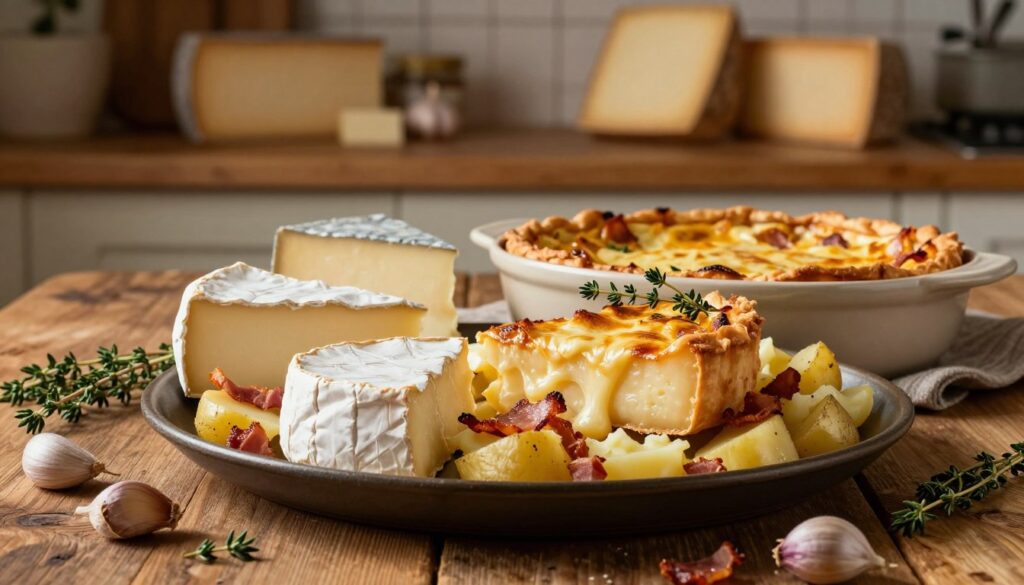
Finding Reblochon cheese in the US can be tough. This French cheese is known for its nutty taste and creamy feel. It’s perfect for tartiflette. When Reblochon is hard to find, you can use other cheeses that work great.
Look for cheeses with soft rinds, made from cow’s milk, and melt well. Your local cheese shop can guide you to the best substitute.
- Préféré de nos Montagnes – Your closest match to authentic Reblochon
- Delice du Jura – Another excellent French Alpine choice with similar melting qualities
- Jasper Hill Willoughby – A Vermont-made cheese with comparable soft rind and creamy interior
- Jasper Hill Moses Sleeper – Rich and buttery with good melting properties
If these options aren’t available, consider these widely accessible choices:
| Cheese Name | Origin | Best For Tartiflette | Availability in US |
|---|---|---|---|
| Brie | France | Creates creamy sauce, milder flavor | Widely available |
| Camembert | France | Good melting, slightly earthier taste | Widely available |
| Taleggio | Italy | Strong aroma, excellent melting texture | Specialty stores |
| Tomme de Savoie | France | Alpine character, firm yet melts well | Specialty stores |
| Beaufort | France | Nutty flavor, semi-firm consistency | Specialty stores |
| Gruyère | Switzerland | Richer taste, less creamy than Reblochon | Specialty stores |
Don’t be shy to ask your cheese monger for special orders. Many shops can get Préféré de nos Montagnes or Delice du Jura if you ask early. Even common cheeses like Brie or Camembert make a tasty tartiflette. So, enjoy the journey of finding the perfect cheese for your tartiflette.
Step-by-Step Instructions for Making Traditional Tartiflette
Making tartiflette is easy when you break it down into steps. This guide will help you make a true Alpine dish. You’ll prepare your ingredients and layer them into a dish your family will love.
Preparing and Boiling Your Potatoes Properly
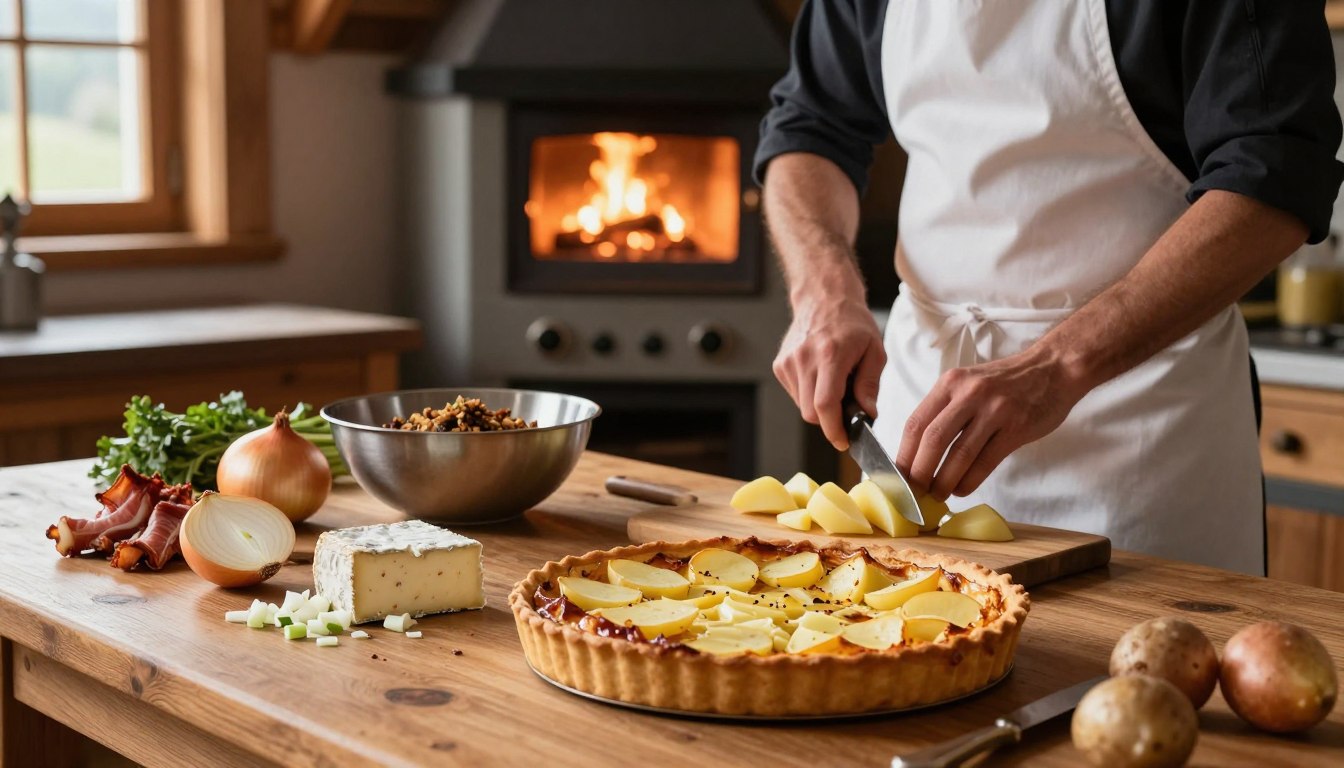
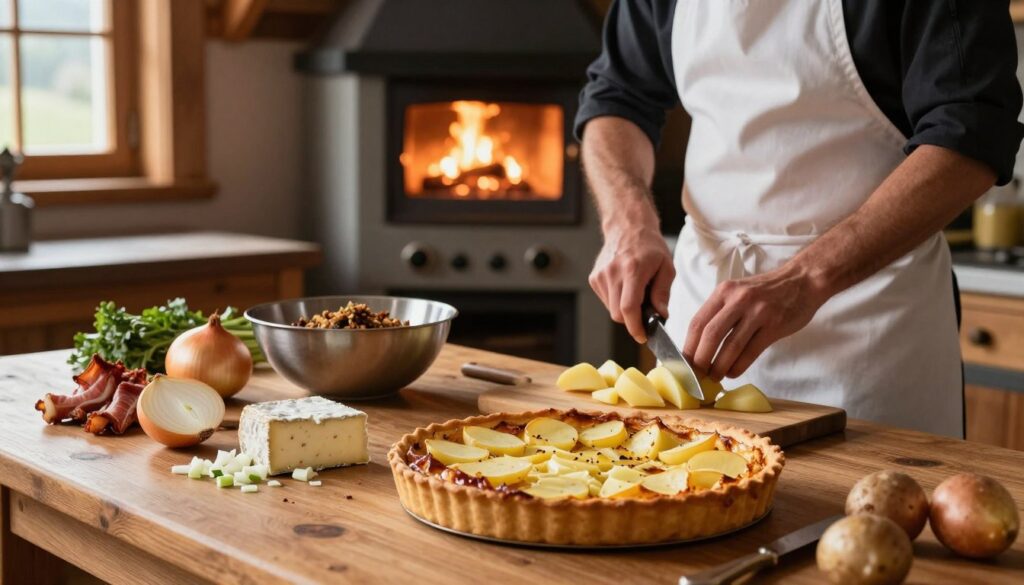
To start, boil whole potatoes in their skins. This keeps them firm and prevents them from falling apart.
Put cold salted water in a large pot and add your potatoes. Bring it to a boil over medium heat. Cook for 20 to 30 minutes until they’re tender.
Drain the potatoes and let them cool. Once cool, peel and slice them into thin rounds. Make sure the slices are even so they cook well.
| Potato Cooking Guide | Details |
|---|---|
| Water Type | Cold salted water |
| Potato Preparation | Whole, unpeeled |
| Cooking Time | 20-30 minutes |
| Doneness Test | Paring knife pierces easily |
| Slicing Thickness | ¼-inch rounds |
Cooking the Bacon and Onion Mixture
While your potatoes cool, prepare the bacon and onion mix. Start by cooking diced bacon in a cold skillet over medium heat. This method ensures crispy bacon without burning.
Cook the bacon for about 8 minutes, stirring occasionally, until it’s golden and crispy. Remove most of the bacon, leaving about 1 tablespoon of fat in the pan for cooking the onions.
Add sliced onions to the remaining bacon fat and season with salt and pepper. Cook for 5 to 7 minutes, stirring often, until they’re soft and golden. Add a splash of white wine to deglaze the skillet, scraping up brown bits. Let the wine simmer for 3 to 5 minutes until it mostly evaporates, leaving behind concentrated flavor.
- Start bacon in cold pan for even cooking
- Cook for 8 minutes until crispy
- Remove bacon, keep 1 tablespoon fat
- Add onions to pan
- Season with salt and pepper
- Cook onions 5-7 minutes until soft
- Add white wine to deglaze
- Simmer 3-5 minutes until reduced
Layering and Assembling Your Tartiflette
Now, it’s time to build your tartiflette with beautiful layers. Use a 10-inch cast iron skillet or a 3-quart baking dish. Place the dish on a baking sheet for easy handling.
Start by spreading half of your sliced potatoes evenly across the bottom of your dish. Season this layer with salt and pepper. Top with half of your bacon and onion mixture, then half of your cheese (whether you’re using Reblochon or a substitute).
Repeat the layers: remaining potatoes seasoned with salt and pepper, remaining bacon mixture, and remaining cheese. Drizzle cream or dollop crème fraîche over the top layer. Arrange your final cheese slices on top with the rind side facing up—this creates that beautiful golden crust.
- Layer half the potatoes in dish
- Season with salt and pepper
- Add half the bacon-onion mixture
- Spread half the cheese
- Repeat all layers
- Drizzle cream or crème fraîche on top
- Arrange final cheese slices rind-side up
- Ready for baking at 375°F (190°C)
Your assembled tartiflette is now ready for the oven. You’ve successfully completed the assembly stage of how to make traditional savoyard tartiflette step by step, and your dish will bake into a creamy, cheesy masterpiece.
Baking Your Tartiflette to Golden Perfection

The final step in making your baked tartiflette is bringing all the layers together. This step is crucial for a perfectly melted, bubbling dish. Start by placing your oven rack in the center and preheating to 375°F (190°C). This ensures even heat for your tartiflette.
Before baking, consider putting your dish on a baking sheet. This catches any cheese or cream that might spill over. Your tartiflette will look amazing when it comes out golden and bubbly.
Bake your tartiflette for 35 to 40 minutes. But, don’t just rely on the timer. Look for these signs that your dish is ready:
- The cheese on top turns golden brown
- Bubbles form vigorously around the edges
- The entire surface shows a light brown color
- Cream and cheese bubble throughout the dish
Different ovens heat differently. Trust what you see and smell. The aroma in your kitchen means your dish is almost done. For the best results, follow guidance on how to cook perfect for that golden, bubbling finish.
When your tartiflette is perfectly golden, take it out of the oven. Let it rest for 5 to 10 minutes. This allows the layers to set, making it easier to serve and preventing burns from the cheese. Your tartiflette is now ready to wow your family and friends.
Tips for Serving and Pairing Your Baked Tartiflette
Your tartiflette dish needs the right touch to shine. This French comfort food is rich and satisfying. It’s even better with the right sides and drinks.
What to Serve Alongside Your Tartiflette
Several sides can make your tartiflette better. A crisp green salad with tangy dressing is key. It contrasts the cheese and potatoes nicely.
Crusty French bread or a warm baguette is a must. It’s perfect for soaking up the cheese sauce. Add some traditional French pickles for a refreshing touch.
- Green salad with vinaigrette dressing
- Crusty baguette or French bread
- Cornichons (small gherkins)
- Pickled onions
- Charcuterie selection for a complete Alpine feast
Wine Pairing Suggestions for This French Alpine Dish
The right wine can elevate your tartiflette. White wines are best because they’re crisp and acidic. Savoie region wines like Apremont or Roussette are perfect.
In the US, try Chardonnay, Alsatian Gewürztraminer, or Chablis. They’re great for balancing the cheese. Light French reds like Beaujolais are also good if you like reds.
| Wine Type | Specific Recommendation | Why It Works | Availability in US |
|---|---|---|---|
| Savoie White | Apremont or Roussette | Authentic regional pairing with crisp acidity | Limited but available at specialty shops |
| Burgundy White | Chablis | Mineral notes complement creamy cheese | Widely available |
| Alsatian White | Gewürztraminer | Slightly sweet profile balances richness | Easily found in most stores |
| Burgundy White | Chardonnay | Crisp and versatile with cheese dishes | Very widely available |
| Beaujolais Red | Light Beaujolais | Fresh and fruity without heavy tannins | Readily available |
Enjoy your tartiflette warm right after baking. The right sides and wine make it feel like a French Alpine meal at home. Choose a chilled white wine to match the creamy texture and rich flavors.
Storage, Reheating, and Make-Ahead Tips
Your homemade tartiflette recipe is best when fresh from the oven. But, life can get busy. Leftovers can still be delicious if stored and reheated right. Knowing how to store, reheat, and prepare your french tartiflette recipe ahead of time lets you enjoy it whenever you want.
Leftovers are great if stored correctly. Keep any remaining portions in a covered baking dish in your fridge for up to 3 days. Use foil to cover it tightly to prevent the cheese and potatoes from drying out. When reheating, it’s important to do it right.
Reheating in your oven is the best way. Set your oven to 350°F (175°C). Keep the foil on for the first 15 minutes. Then, remove it to let the top get bubbly and warm. Reheating time is 15 to 20 minutes, depending on the amount.
Oil might separate from the cheese when reheating. This is normal, like with leftover macaroni and cheese. Don’t worry, it still tastes great once heated through.
Make-Ahead Preparation Strategies
Planning ahead makes cooking easier. For your homemade tartiflette recipe, prepare parts like potatoes and bacon-onion mixture up to two days in advance. Store them in separate containers in your fridge. Then, just combine and bake fresh when you’re ready.
Avoid assembling the whole casserole too early. Sliced cheese can dry out. Prepare potatoes and bacon first. Assemble just before baking or a few hours ahead. If assembled early, let it sit at room temperature for 30 minutes before baking. This helps it cook evenly.
| Preparation Method | Storage Time | Best Practice |
|---|---|---|
| Cooked Potatoes | Up to 2 days | Store in airtight container in refrigerator |
| Bacon-Onion Mixture | Up to 2 days | Keep in separate covered container |
| Assembled (Uncooked) | Up to 4 hours | Cover with foil, bring to room temperature before baking |
| Fully Cooked Leftovers | Up to 3 days | Cover tightly with foil, reheat at 350°F |
| Frozen Tartiflette | Up to 1 month | Wrap in foil, thaw overnight, reheat slowly |
Freezing is great for preparing even further ahead. Wrap your fully cooked tartiflette in foil. It will keep in your freezer for up to one month. Let it thaw overnight in your fridge before reheating slowly.
- Use the right size baking dish for storage to minimize air exposure
- Keep foil handy for both storage and reheating
- Label your containers with dates so you know how long items have been stored
- Always bring refrigerated assembled tartiflette to room temperature before baking
- Reheat covered to prevent drying while maintaining that delicious texture
Your homemade tartiflette recipe deserves proper care from cooking through eating. With these tips, you can make your french tartiflette recipe whenever convenient and still enjoy authentic Alpine flavors.
Creative Variations and Customization Ideas for Your Tartiflette
Mastering the traditional tartiflette recipe opens up a world of possibilities. This French Alpine dish is incredibly versatile. You can tailor it to your liking, dietary needs, and style of dining. Let your creativity run wild in the kitchen.
Making Vegetarian Tartiflette
It’s simple to make a vegetarian version of tartiflette. Just leave out the bacon and add sautéed mushrooms, leeks, or zucchini. These veggies bring a rich flavor that’s similar to meat. Mushrooms, in particular, add a deep, earthy taste.
For a smoky touch, sprinkle some smoked paprika on top. This trick gives a smoky flavor without using meat. Remember, most cheeses used in tartiflette are made with animal rennet, so finding vegetarian cheese can be tricky.
- Sautéed cremini or portobello mushrooms
- Leeks cooked until tender
- Zucchini and bell peppers
- Smoked paprika for depth
- Fresh thyme for herb flavor
Your vegetarian tartiflette becomes a comforting dish for those who follow a plant-based diet.
Individual Serving Presentations
Turn your tartiflette into elegant servings using small ramekins or cast iron skillets. This is perfect for dinner parties. Each guest gets a warm, freshly baked dish.
Top each serving with fresh chives or parsley for a pop of color and taste. You can prep these ahead and bake just before serving. Here are some creative ways to use leftover tartiflette:
- Fill savory crepes for a sophisticated lunch
- Top flatbreads with tartiflette for a unique pizza alternative
- Serve with a fried egg on top for decadent breakfast or brunch
- Layer in puff pastry for hand-held pastries
These ideas keep the essence of traditional tartiflette while allowing you to put your own spin on it.
Conclusion
You’ve learned about tartiflette, from its origins in French Alpine ski chalets to making it at home. This dish combines simple ingredients in a magical way. Soft potatoes, crispy bacon, sweet onions, and melted cheese make a golden, comforting masterpiece.
Making tartiflette is simple. You don’t need special skills or rare ingredients. Even if you can’t find Reblochon cheese, you have great substitutes. The joy of this dish is in the process and the warm meal it creates.
Tartiflette should be a regular part of your meals. It’s great after a long day, perfect for family dinners, and impressive for special events. Serve it with a salad and wine, or reheat it when you need a comforting meal. This classic dish is ready to become a tradition in your home. Start cooking and see why it’s loved for generations.