The Best Grandma’s style beef cheek Easy Recipes
Walking into a kitchen filled with the smell of slow-cooked meat and wine is magical. Your grandma knew this secret. She made meals tender and flavorful with patience and love.
Beef cheeks turn an ordinary dinner into something special. You’re about to learn why this recipe is a favorite in many American kitchens.
For years, beef cheeks were hidden in butchers’ shops. Home cooks and restaurants kept them a secret. Now, big stores like Woolworths and Coles sell them, making it easy to make grandma’s dish at home.
This recipe combines French cooking with American home cooking. Beef cheeks are so tender, they melt in your mouth. They’re better than any other slow-cooked beef. One batch feeds 6 to 8 people, and the flavors get even richer over the next few days.
This recipe is more than just cooking meat. It’s about making memories and starting traditions. It connects you to generations of cooks who know that great meals bring people together.
Key Takeaways
- Beef cheeks are now available at Woolworths and Coles for easy home cooking
- This grandma beef cheek recipe uses French braising methods for restaurant-quality results
- The comfort food beef recipe serves 6 to 8 people and improves over multiple days
- Beef cheeks melt in your mouth better than other slow-cooked cuts
- Slow cooking creates rich flavors and fills your home with amazing aromas
- This recipe is affordable and uses budget-friendly ingredients
- No special skills required to make this traditional family favorite
Why Grandma’s Beef Cheek Recipe Is the Ultimate Comfort Food
Your grandmother knew a secret about beef cheeks. This affordable cut becomes magical with patience and the right method. Slow cooking makes it tender, like expensive steaks. The trick is in how heat breaks down the meat and fat, making it melt in your mouth.
Comfort food is more than just food. It’s like a warm hug that brings back happy memories. Grandma’s beef cheeks dish does just that. It fills your home with delicious smells, inviting everyone to slow down and enjoy each other’s company. These meals create special moments where everyone talks more and bonds stronger.
The Secret Behind Traditional Slow-Cooked Beef Cheeks
The secret is in low and slow cooking. Grandma’s recipe uses a low heat of about 300°F for 3.5 hours. This gentle heat breaks down the meat’s tough fibers. It turns collagen into gelatin, making the meat silky. The fat also melts, adding flavor without making it greasy.
Grandma didn’t need fancy words to know this. She just knew that:
- Low temperatures prevent the meat from becoming tough
- Extended cooking times allow flavors to develop completely
- Braising liquid carries seasonings deep into the meat
- The process is forgiving and hard to overcook
What Makes Beef Cheeks Superior to Other Cuts
Beef cheeks are better than other slow-cooking cuts like chuck steak or brisket. They have more marbling, which melts during cooking. This makes the meat incredibly tender and flavorful.
| Cut of Beef | Tenderness After Braising | Flavor Intensity | Cost Per Pound |
|---|---|---|---|
| Beef Cheeks | Extremely Tender | Rich and Deep | Budget-Friendly |
| Chuck Steak | Tender | Moderate | Moderate |
| Brisket | Tender | Strong | Moderate to High |
The muscle structure of beef cheeks makes them perfect for braising. When cooked right, they fall apart easily. This makes them great for home cooks who want impressive results without complicated steps.
Grandma’s beef cheeks recipe celebrates simplicity and patience. You don’t need fancy skills or expensive tools. Just time, the right temperature, and ingredients that bring out natural flavors. That’s what Grandma knew all along.
Understanding Beef Cheeks: The Budget Cut That Melts in Your Mouth
Beef cheeks come from the facial muscles of cattle. These muscles are tough because they work hard all the time. But, when you slow-cook them, they become incredibly tender and flavorful.
Beef cheeks are special because of their structure. They have connective tissue that breaks down with slow cooking. This makes them silky and tender, unlike fast-cooked steaks.
Beef cheeks are great for family dinners because they’re affordable. You can find them in most supermarkets now. For a big meal, you’ll need about 2.2 pounds of trimmed beef cheeks for 6 to 8 people.
When buying beef cheeks, look for a deep red color and marbling. The fat on the surface will melt and add flavor during cooking. You don’t need to remove it before cooking.
Knowing how to pick quality beef cheeks boosts your cooking confidence. Look for color, marbling, and size. Learning about how to cook beef cheeks will show you their superior taste and texture.
- Beef cheeks work constantly, making them naturally dense
- Connective tissue breaks down during slow cooking
- Deep red color indicates quality and freshness
- Visible marbling means better flavor development
- 6 to 8 ounces per person is the ideal serving size
Chuck steak can be a substitute, but nothing beats beef cheeks. Their unique texture and flavor come from their muscle composition. Your grandma was right to choose this cut for braising. It’s unmatched in taste and texture.
Essential Ingredients for Your Grandma Beef Cheek Recipe
To make a delicious beef cheek braise, start with the right ingredients. You’ll need olive oil, plain flour, and beef stock. These basics are key to tender meat and a rich, flavorful gravy.
Here’s what you’ll need for your cooking adventure:
- 1 kilogram beef cheeks, cleaned and cubed
- 2 brown onions, sliced
- 4 garlic cloves, crushed
- 2 large carrots, cut into chunks
- 200 grams brown mushrooms
- 200 grams streaky bacon, diced
- 500 milliliters red wine
- 500 milliliters beef stock
- 1.5 teaspoons porcini powder
- 2 bay leaves
- 1 sprig of fresh rosemary
- Sea salt and black pepper to taste
- Plain flour for coating
- Olive oil for searing
Choosing the Right Red Wine for Braising
Choosing the right wine is crucial for your beef cheek braise. Dry red wines like merlot, pinot noir, or cabernet sauvignon are perfect. They add depth and complexity to your stew.
Don’t spend too much on wine. A mid-range merlot, priced between eight and fifteen dollars, works great. The cooking process makes the wine’s differences less noticeable. Just pick a dry wine you like drinking.
| Wine Type | Price Range | Flavor Profile | Best Use |
|---|---|---|---|
| Merlot | $8-$15 | Smooth, berry notes | Safe choice for beginners |
| Pinot Noir | $10-$20 | Light, earthy tones | Adds elegance to gravy |
| Cabernet Sauvignon | $10-$18 | Bold, structured tannins | Creates deeper flavor |
Fresh Vegetables and Aromatics You’ll Need
Brown onions are key for flavor when caramelized. They’re sweeter than white onions. Crushed garlic adds aromatic depth to your stew.
Carrots add sweetness that balances the wine’s acidity. Brown mushrooms bring earthy umami. Porcini powder adds incredible richness to your gravy.
Streaky bacon adds smoky, salty flavor. Fresh herbs like bay leaves and rosemary add authentic taste. For more ideas, check out specialty beef cheek recipes.
Plain flour coats the meat and thickens the gravy. Olive oil for searing and beef stock for simmering complete your list. With these ingredients, you’re ready to make a memorable meal.
Kitchen Equipment for Perfect Braised Beef Cheeks
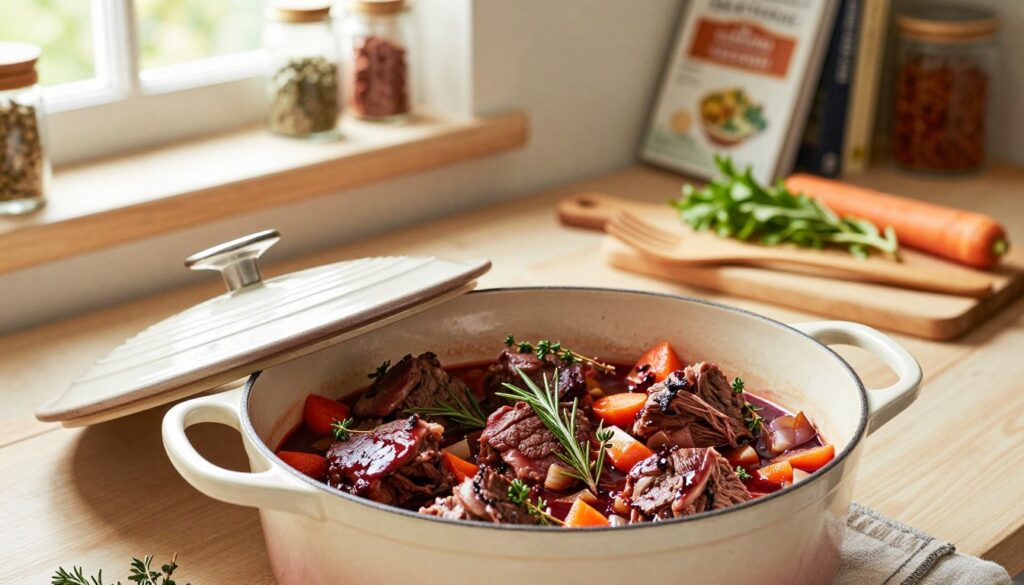
Starting a beef cheek recipe is easier with the right tools. You’ll need a quality Dutch oven or enameled cast-iron pot. These pots spread heat evenly and keep moisture in during braising. A 5.5 to 7-quart Dutch oven is perfect for 6 to 8 servings.
Dutch ovens from Le Creuset, Staub, and Lodge are top choices. They go from stovetop to oven smoothly. The tight lid keeps steam in, making the beef cheeks tender.
If you don’t have a Dutch oven, no worries. You can use any large pot with a tight lid. Slow cookers and Instant Pots also work, but cooking times will differ.
Here are the must-have tools:
- Quality tongs for turning meat without piercing it
- A sturdy wooden spoon for stirring
- A solid chopping board for prep work
- A sharp knife for trimming and cutting
Warm your Dutch oven slowly on low to medium heat. Avoid high heat to prevent damage. This way, your pot will last for many delicious meals.
Preparing Your Beef Cheeks: Trimming and Seasoning Tips
Preparing beef cheeks for cooking is easier than you think. Unlike expensive cuts, beef cheeks don’t need much trimming. The fatty membrane and connective tissue break down during cooking, adding moisture and flavor.
Begin by drying your beef cheeks with paper towels. This step is key to prevent moisture from stopping browning. Then, season them well with salt and pepper on all sides. Lightly coat the beef cheeks in flour for a flavorful crust and to thicken the gravy.
How to Properly Seal Beef Cheeks for Maximum Flavor
Sealing beef cheeks is about searing, not stewing. This step locks in flavor and renders the fat, adding depth to your dish. Heat your pot over medium-high with a bit of oil, then add your beef cheeks.
Follow these steps for the best results:
- Let each side develop a golden-brown crust for 2-3 minutes
- Avoid crowding the pot; work in batches if needed
- Turn using tongs rather than forks to prevent piercing the meat
- Don’t worry if the centers aren’t cooked through—that comes later
The Maillard reaction creates complex flavors during searing. Your beef cheeks will cook for hours in the oven. Focus on getting that golden exterior for an extraordinary dish.
Step-by-Step Instructions for Old Fashioned Beef Cheeks
Making homemade beef cheek stew is easy with a simple guide. Each step enhances the flavors, making your kitchen smell amazing. This traditional method is a delight to follow.
First, heat your oven to 150°C (300°F). This low heat cooks the meat gently, turning it tender. While it heats, coat your beef cheeks in flour and sear them in a hot pot. This step creates a flavorful crust.
Next, sauté onions in oil until they’re soft. This sweetens them and removes any raw taste. Add bacon and cook for 2-3 minutes, letting the fat mix with the oil. Then, add garlic for just 30 seconds, as it burns easily.
Now, pour in red wine and beef stock, scraping the pot bottom. These brown bits, called fond, add depth to your stew. Add porcini powder, carrots, and herbs, stirring well.
- Place beef cheeks back into the pot
- Add the lid and increase heat to medium until simmering
- Transfer the entire pot to your preheated 150°C oven
- Cook for 2.5 hours
- Remove pot from oven and add mushrooms
- Return to oven for 1 more hour
- Check that meat is fork-tender and gravy coats the back of a spoon
- Season with sea salt and pepper
- Serve your homemade beef cheek stew hot
| Step | Temperature/Time | Key Action | Expected Result |
|---|---|---|---|
| 1 | Preheat Oven | Set oven to 150°C (300°F) | Oven reaches gentle cooking temperature |
| 2 | Seal Beef Cheeks | Coat in flour, sear in hot pot | Golden crust forms on meat |
| 3 | Build Flavor Base | Sauté onions, bacon, garlic (low heat) | Aromatics soften and flavor develops |
| 4 | Deglaze Pot | Add wine, stock, deglaze with scraping | Brown bits dissolve into liquid, flavor deepens |
| 5 | Combine Ingredients | Add carrots, porcini, herbs; return beef cheeks | All flavors begin to meld |
| 6 | Stovetop to Oven | Bring to simmer on stovetop, transfer to oven | Gentle, even cooking begins |
| 7 | Oven: 2.5 hours | Cook covered at 150°C | Meat becomes very tender, flavors concentrate |
| 8 | Add Mushrooms | Stir in mushrooms, return to oven | Mushrooms stay firm, don’t turn mushy |
| 9 | Oven: 1 hour | Cook covered at 150°C | Vegetables finish cooking, gravy thickens |
| 10 | Final Check | Meat should be fork-tender, gravy coats spoon | Stew reaches perfect doneness |
| 11 | Reduce Gravy (if needed) | Remove beef cheeks, simmer on stovetop | Gravy reaches desired thickness |
| 12 | Season & Serve | Add sea salt and pepper to taste | Homemade beef cheek stew ready to eat |
The magic happens in the oven. Low heat breaks down the meat, making it tender. Watch for signs: the meat should fork apart, and the gravy should coat a spoon smoothly.
If your gravy is too thin, simmer it on the stovetop until thick. Then, add the meat back in. Season with sea salt and pepper just before serving. Your homemade beef cheek stew is now ready.
The Art of Slow Cooking: Oven Temperature and Timing
Mastering your rustic beef cheek recipe starts with understanding slow cooking. The key is to get your oven temperature just right. Cook at 150°C (300°F) for 3.5 hours. This temperature turns tough meat into tender, melt-in-your-mouth goodness.
As the meat cooks, something magical happens. The collagen in the beef breaks down into gelatin. This gelatin makes the meat silky. At the same time, fat renders out, basting the meat and concentrating flavors.
- Start at 150°C (300°F) for the first 2.5 hours
- Add mushrooms and any remaining vegetables after 2.5 hours
- Continue cooking for 1 more hour (3.5 hours total)
- Check meat tenderness with a fork—it should fall apart easily
When to Add Mushrooms and Other Vegetables
Vegetables don’t all go in at the same time. Carrots and onions need 3.5 hours to become tender. Mushrooms, on the other hand, cook quickly and should be added in the final hour. If you add them too early, they become slimy.
Cut large mushrooms in half, but leave smaller ones whole. This keeps them from breaking apart during cooking.
| Vegetable Type | Add When | Reason | Prep Instructions |
|---|---|---|---|
| Carrots | At the start (0 hours) | Need full cooking time to become sweet and tender | Cut into 2-inch pieces |
| Onions | At the start (0 hours) | Break down slowly to thicken and flavor the braising liquid | Quarter or leave in large chunks |
| Mushrooms | After 2.5 hours | Cook quickly and prevent becoming mushy or waterlogged | Leave whole or halve if very large |
Creating the Perfect Red Wine Gravy
The braising liquid in your rustic beef cheek recipe becomes liquid gold when you know how to finish it properly. Once your beef cheeks are tender, remove them carefully and set aside. This liquid is now your gravy base, and it’s loaded with flavor from hours of cooking.
For a smooth, restaurant-quality gravy, use a handheld stick blender to puree the braising liquid into a silky sauce. This blends all those vegetables and thickened broth into one luxurious coating. Pour this rich red wine gravy over your beef cheeks when serving.
If your gravy seems too thin, don’t worry. Remove the beef cheeks and simmer the stew on the stovetop until you reach your desired thickness. The liquid will reduce and flavors will concentrate even more. Taste and adjust seasoning at this point. Sometimes a rustic beef cheek recipe needs just a pinch more salt or a crack of black pepper at the end.
For a chunkier, rustic look, skip the blender and serve your beef cheeks swimming in the thick braising liquid with visible vegetables. Both styles taste equally delicious—pick whichever presentation appeals to you.
Best Side Dishes to Serve with Tender Beef Cheek Recipe
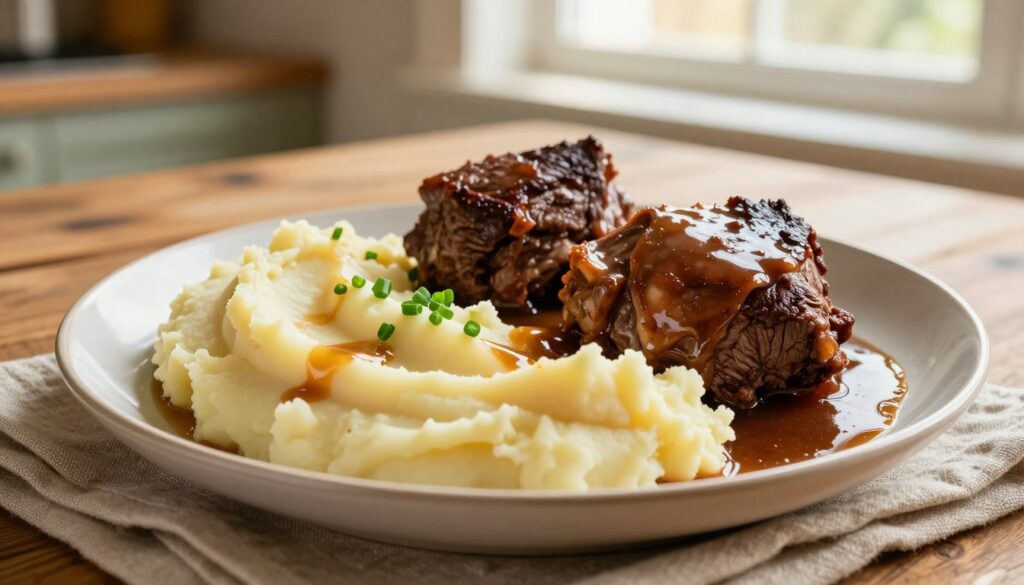
Your classic comfort food beef cheeks deserve delicious sides that match their rich flavors. Simple pairings are key. You want your sides to let the tender beef cheeks be the meal’s star. Choose sides that balance textures and flavors, soaking up every bit of red wine gravy.
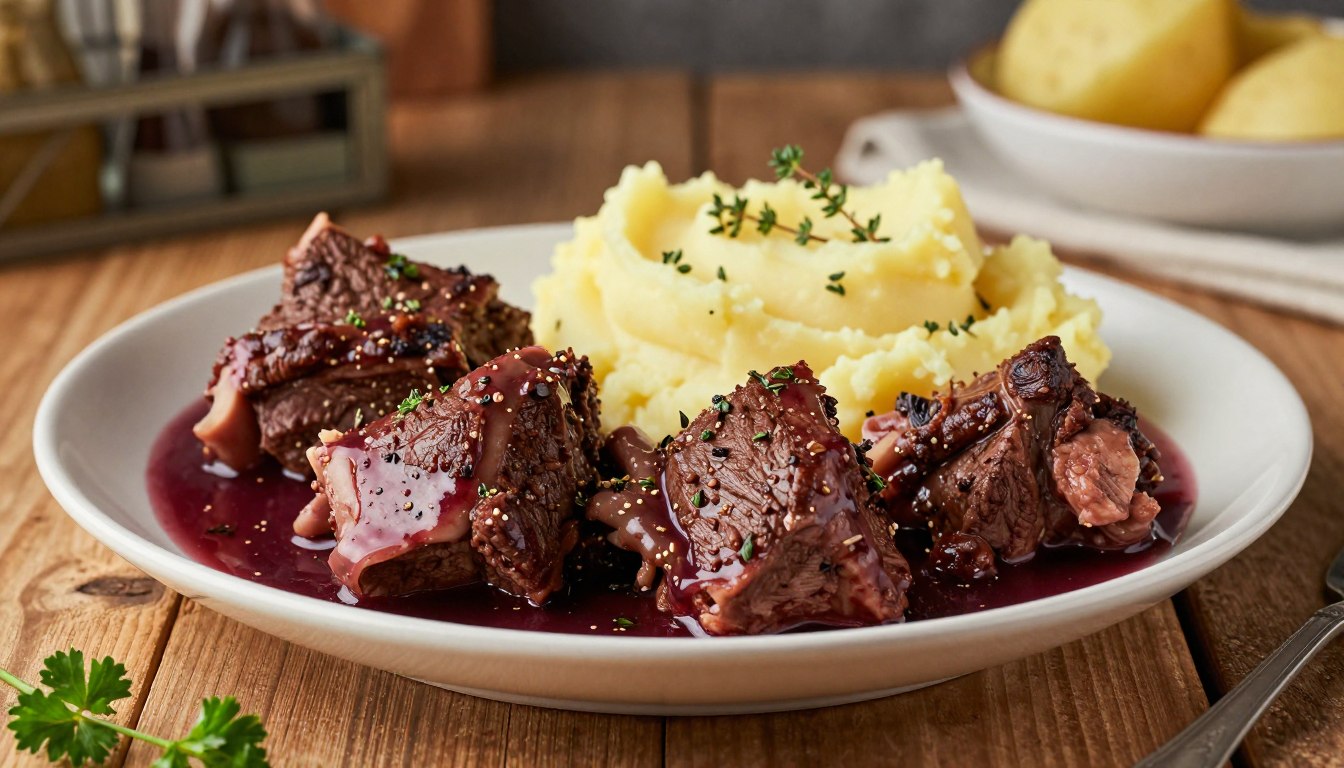
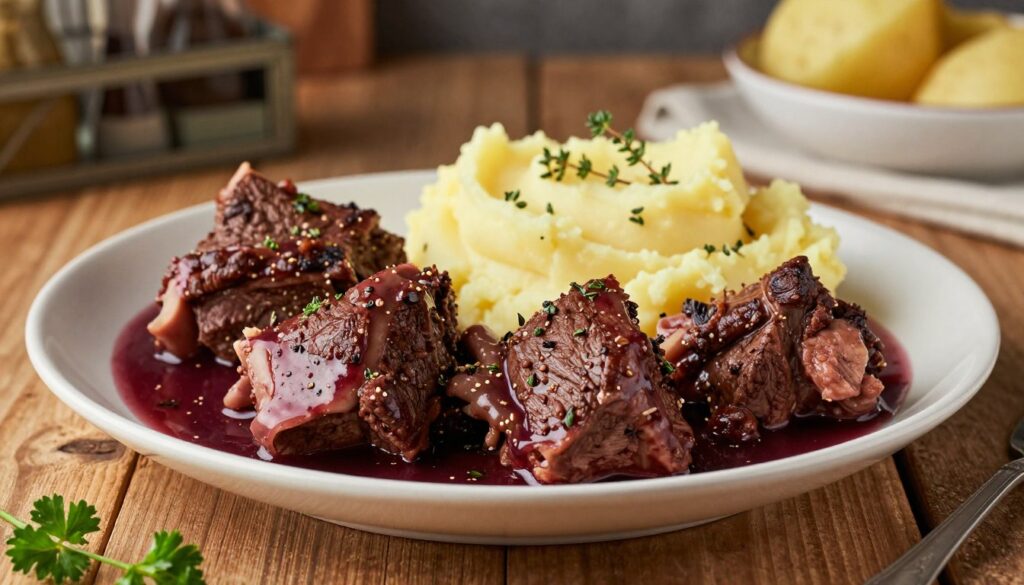
Start with creamy mashed potatoes, a classic with braised beef cheeks. Use Yukon Gold or Russet potatoes for their buttery taste. Cook until tender, then mash with warm milk and butter. Avoid overmixing to keep them smooth.
- Sweet potato mash for a sweet, healthier choice
- Steamed green beans for simplicity and freshness
- Buttered green beans with sea salt for a French twist
- Lightly steamed broccoli florets to retain their bite
- Sautéed spinach for an earthy green option
Colcannon, a mix of mashed potatoes and cabbage or kale, adds a rustic touch. It’s a nod to grandma’s cooking, adding depth and texture.
Don’t forget the bread. A crusty loaf or sourdough is perfect for soaking up gravy. Make sure to mop up every last drop.
| Side Dish | Preparation Time | Best For | Flavor Profile |
|---|---|---|---|
| Creamy Mashed Potatoes | 20 minutes | Everyday family dinners | Mild, buttery, comforting |
| Sweet Potato Mash | 25 minutes | Lighter meals | Naturally sweet, earthy |
| Buttered Green Beans | 15 minutes | Dinner parties | Fresh, elegant, simple |
| Colcannon | 30 minutes | Traditional gatherings | Hearty, rustic, layered |
| Steamed Broccoli | 10 minutes | Quick weeknight meals | Fresh, slightly bitter, vibrant |
For a casual dinner, pair beef cheeks with mashed potatoes and steamed beans. For a dinner party, try Colcannon, buttered green beans, and artisan bread. Your guests will love the thoughtful choices that highlight your beef cheeks.
Pair your meal with red wine. Choose the same red wine used for braising or a medium-bodied Pinot Noir. It complements the beef and sides, making the meal special and satisfying.
Storing and Reheating Your Beef Cheek Stew
One of the best-kept secrets about your beef cheek recipe slow cooker is that it gets better with time. The flavors deepen, the meat becomes even more tender, and the gravy reaches perfect consistency. This makes your beef cheek recipe slow cooker ideal for meal prep and busy weeknights. Let your stew cool to room temperature before storing—but don’t leave it sitting out for more than two hours for food safety reasons. Transfer the cooled stew to airtight containers and refrigerate for up to three days.
When you’re ready to enjoy your beef cheek recipe slow cooker creation again, gentle reheating is key. Return the stew to a Dutch oven and warm it slowly on low heat, stirring occasionally to prevent sticking. If the gravy has become too thick, add a splash of beef stock to reach your desired consistency. Avoid using a microwave when possible, as it can make the meat tough and ruin the texture you worked hard to achieve.
Freezing Tips for Make-Ahead Meals
Your beef cheek recipe slow cooker truly shines when it comes to freezing for later. This dish freezes beautifully and tastes just as delicious as freshly made stew. Cool your stew completely before freezing to prevent condensation and ice crystals from forming. Portion the stew into family-sized servings using freezer-safe containers or heavy-duty freezer bags. Remove as much air as possible to prevent freezer burn.
Label each container with the contents and date before placing in the freezer. Your beef cheek recipe slow cooker meals will keep frozen for up to three months. When you need dinner, thaw overnight in the refrigerator, then reheat gently on the stovetop using the same low-heat method. This approach gives you restaurant-quality dinners ready whenever you need them.
- Cool stew to room temperature before freezing
- Divide into family-sized portions
- Use freezer-safe containers or bags
- Remove excess air to prevent freezer burn
- Label with date and contents
- Freeze for up to three months
- Thaw overnight in the refrigerator
- Reheat slowly on low heat
Creative Ways to Repurpose Leftover Braised Beef Cheeks
Your grandma’s wisdom in the kitchen is priceless. Leftover braised beef cheeks offer a world of tasty possibilities. Turn your slow-cooked stew into new meals that surprise and delight your family.
One amazing way is to make a stunning pie. Fill ramekins or a large pie dish with the stew. Cover with puff pastry, brush with egg wash, and bake at 400°F for 20 to 25 minutes. Serve with oven-baked chips and mushy peas for a British-style meal.
Looking for more ideas? Check out this beef cheek mushroom and vegetable pie for a step-by-step guide to making a delicious pastry-topped dish.
There are many ways to use leftover beef:
- Shred the beef and fill soft tacos with sharp cheddar and pickled onions
- Toss with pappardelle or rigatoni pasta and fresh parmesan cheese
- Serve over creamy polenta for an Italian-inspired dinner
- Layer between crusty bread rolls with horseradish cream for hearty sandwiches
- Top mashed potatoes and broil until golden for shepherd’s pie
Most of these ideas can be ready in under 30 minutes. If your stew is too thin, simmer it to thicken. For pasta, thin it with beef broth. This way, every meal gets a second chance on your table.
Italian-Inspired Variations on Traditional Beef Cheek Recipe
Your grandma’s beef cheek recipe gets a special twist with Italian traditions. Northern Italian braised beef shows centuries of cooking wisdom. It’s all about patience, quality, and respect for great dishes.
Exploring Italian beef cheeks reveals how small changes make big flavor differences. Here are some variations that blend family traditions with Italian cooking:
- Use Barolo or Chianti wines instead of merlot for deeper, more complex braising liquids
- Add pancetta instead of regular bacon for authentic Italian richness
- Incorporate tomato paste or crushed tomatoes for additional depth
- Season with Italian herbs like oregano, thyme, and sage alongside rosemary
- Finish with gremolata (lemon zest, parsley, and garlic) for brightness
Italian regions bring their own flair to your dish. Lombardy uses butter and white wine, while Tuscan recipes add cannellini beans. Piedmontese dishes feature porcini mushrooms for a rich flavor.
In Northern Italy, beef cheeks are a special dish for Sunday family gatherings. It’s like your grandma’s Sunday roast. Serve it over creamy polenta to soak up the sauce.
Whether you stick to the classic recipe or add Italian flair, Italian comfort food is all about slow cooking and quality. It’s about meals that bring people together.
Conclusion
You’ve learned the secrets of a beloved slow-cooked beef recipe. It’s a comfort food that families have cherished for years. It’s not just cooking; it’s about filling your kitchen with amazing smells. It’s about slowing down and sharing meals with loved ones.
This family recipe is simple yet impressive. Beef cheeks become special with slow cooking. Once you prep and put it in the oven, relax. The beef becomes tender and the flavors unforgettable.
This recipe is forgiving. It’s easy to make once you know the basics. Whether it’s a quiet Sunday or a night with friends, this dish is perfect. You can stick to the classic or try new versions. Every time, you’re sharing love and tradition.
Start your own tradition with this recipe today. Make slow-cooked beef cheeks your signature dish. Maybe one day, you’ll pass it down with your own touches and memories. The best recipes are made with care, shared generously, and enjoyed together.