How to Make The Most Common Mistakes When Making Paella
Ever stood in front of a paella pan, watching your rice turn golden, and felt doubt? You’re not alone. Making paella is like stepping into a Spanish kitchen, where tradition meets technique. It demands respect, attention, and a willingness to learn from mistakes.
Paella is more about understanding the craft than following a recipe. Your journey to making authentic Spanish paella begins by recognizing common mistakes as stepping stones. Many home cooks have burned their sofrito or had rice that’s crunchy or mushy.
Knowing these top mistakes when making paella turns them into valuable lessons. You’ll learn that mastering paella is about mastering a technique that Spanish families have perfected over generations. The good news is that once you know what to avoid, you’re already halfway to success.
This guide will walk you through the most common paella mistakes. You’ll learn about selecting the wrong rice variety and miscalculating liquid amounts. You’ll also discover how to fix these issues before they ruin your dish. Each section gives you practical knowledge to build your confidence in the kitchen.
By the end of this journey, you’ll see that paella mistakes are chances to get closer to perfection. Your next paella can make any Valencian proud.
Key Takeaways
- Paella is a technique that requires practice and patience rather than just following a recipe
- Common paella cooking errors happen to both beginners and experienced cooks
- The top mistakes when making paella include wrong rice choice, incorrect liquid ratios, and heat management
- Understanding paella mistakes before you cook helps you avoid expensive failures
- Learning proper techniques for sofrito, socarrat, and ingredient selection transforms your results
- Each mistake offers a chance to improve your cooking skills and create authentic Spanish paella
Understanding Why Paella Mistakes Matter for Your Spanish Rice Dish
Paella is more than just a rice dish. It’s a Spanish classic that requires precision. Unlike other rice dishes, paella can’t recover from small mistakes. It needs attention to detail from start to finish.
The key to paella is that rice is the star. All other ingredients, like chicken or seafood, are there to add flavor to the rice. Even with the best ingredients, poor rice technique can ruin the dish. This is why avoiding common mistakes is so important.
Paella troubleshooting starts with understanding rice, liquid, heat, and timing. These elements must work together perfectly. If one is off, the dish’s taste, texture, and look suffer.
- Rice texture becomes mushy or hard
- The overall dish looks unappealing
- Flavors don’t develop properly
- The dining experience disappoints
“Experience makes teachers, but if we can avoid mistakes, we’d prefer everything turns out right the first time.”
Valencians take paella very seriously. Getting it right honors Spanish culinary tradition. By understanding the importance of each step, you’ll make better choices. Your paella will impress everyone.
Using the Wrong Type of Rice for Your Paella
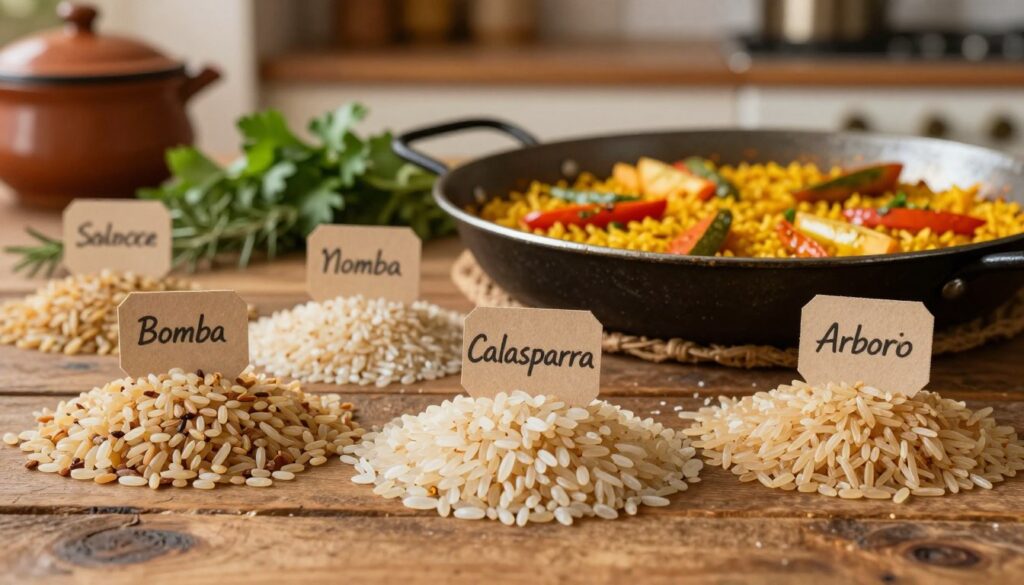
One big mistake beginners make is using any rice from their pantry. They often pick long-grain or basmati rice without knowing it’s wrong. The truth is, not all rice is good for paella. The right rice makes your paella creamy on the outside and fluffy inside, while the wrong one makes it mushy.
Choosing the wrong rice is a common mistake in Spanish paella recipes. Knowing how rice absorbs liquid is key. The best paella rice can soak up a lot of broth without losing its shape. This is because of its special grain structure, which long-grain rice lacks.
Learning about paella rice mistakes starts with knowing which rice works. Your choice affects the whole cooking process.
Why Bomba and Calasparra Rice Make All the Difference
Bomba and Calasparra rice are the top choices for paella. Bomba grows near Valencia, while Calasparra comes from Murcia. Both were made for paella over centuries.
These premium rices have thick grains that stay separate. Bomba rice cooks in 17 to 20 minutes and is forgiving. Calasparra rice gives that authentic Spanish texture. The starch in these grains makes the bottom layer creamy without making the dish mushy.
| Rice Variety | Origin | Cooking Time | Grain Texture | Forgivingness |
|---|---|---|---|---|
| Bomba | Albufera, Valencia | 17-20 minutes | Thick, separate grains | Very forgiving |
| Calasparra | Murcia Mountains | 16-18 minutes | Firm, distinct kernels | Forgiving |
| Senia | Albufera, Valencia | 16 minutes | Creamy, tender grains | Less forgiving |
| Albufera Blend | Valencia | 17-18 minutes | Mixed characteristics | Moderately forgiving |
| Maratelli | Italy/Spain | 18-20 minutes | Extremely resistant | Most forgiving |
If Bomba and Calasparra rice are hard to find, medium-grain Spanish rice is a good substitute. But avoid long-grain and basmati rice at all costs. Also, never wash your rice before cooking, as it needs its starch coating for the right texture.
The Problem with Long-Grain and Basmati Rice Varieties
Long-grain and basmati rice don’t work like authentic paella rice. They’re made for dishes like pilaf or biryani, not paella. They have less starch and absorb liquid differently.
Using long-grain rice in paella makes the grains absorb the broth poorly. You get rice that tastes bland and watery or undercooked and hard. Basmati rice is even worse because it resists liquid absorption. Your paella turns into a wet, soupy mess where the rice doesn’t soak up the flavors.
- Long-grain rice lacks the starch needed for proper texture
- Basmati actively resists liquid absorption
- Both varieties release less starch during cooking
- The final dish lacks that creamy, authentic paella flavor
- Grains become mushy or remain too firm and separate
Knowing these mistakes helps avoid wasting time and ingredients. While long-grain rice might do in a pinch, it won’t give you authentic results. The best choice is to invest in proper Spanish rice varieties. Quality paella starts with the right grain, setting you up for success in every step of your cooking journey.
Getting the Sauce and Sofrito Wrong from the Start
The sofrito is the base of your paella. It’s crucial for the dish’s taste. Many home cooks skip this step, which spoils the whole dish. Understanding sofrito’s role is key to making paella right.
Making sofrito needs patience and low heat. Cook it slowly, using only the pan’s interior burner. Fry the meat gently, not on high heat. This slow cooking blends the flavors into the oil, enriching your dish.
Getting the oil right is vital. You need 25 to 30 milliliters of oil per person. This amount is key because oil floats on water in paella. As the dish cooks, the flavored oil coats the rice, enhancing its taste.
Here are key tips for the sofrito stage:
- Use medium or low heat only—never rush this step
- Keep the interior burner active while other rings stay off
- Fry meat until fats release their flavors into the oil
- Measure your oil carefully at 25-30ml per person
- Wait until sofrito finishes before adding water
One surprising rule is that authentic paella has no onion. Onions add too much moisture, ruining the dish’s texture and flavor.
Respecting the sofrito step is crucial for making paella right. Turn on more burners only after sofrito is done and water is added. Using too much heat can burn the sofrito, ruining the dish.
Common Paella Mistakes with Water and Broth Measurements
https://www.youtube.com/watch?v=ykP3-FBrXXU
Getting the right amount of liquid is key to avoiding mushy or dry paella. Water turns your sofrito into rich broth and absorbs into the rice, giving it that Spanish flavor. But, figuring out how much liquid you need can be tricky.
It depends on your paella pan size, how many you’re serving, the type of rice, and your heat source. Many home cooks struggle with this balance, making it a common mistake.
Understanding liquid measurements is crucial for a perfect paella. The good news is that you can learn the exact techniques experienced cooks use to get it right every time.
Calculating the Perfect Liquid-to-Rice Ratio
The standard rule for paella is using twice as much broth as rice. If you use 1 cup of rice, you need 2 cups of broth. This 2:1 ratio is your starting point, but you might need to adjust based on your ingredients and cooking conditions.
Here’s how to measure your ingredients accurately:
- Use the same cup measure for both rice and broth to maintain consistency
- Pour rice into your paella pan and note where it sits
- Add broth until it reaches roughly double the height of the rice layer
- Experienced cooks use visual markers on their pans to judge liquid levels quickly
- Account for evaporation by adding slightly more broth if your heat source is very high
Different rice types absorb liquids at varying rates. Bomba rice, the preferred choice for authentic paella, absorbs less water than long-grain varieties. Calasparra rice falls somewhere in the middle. If you’re using different rice types, you might need to adjust your liquid slightly. Keep notes about what works best with your specific paella pan and stove.
Signs Your Paella Is Too Soupy or Too Dry
Recognizing problems early helps you make corrections before your dish is ruined. Watch your paella carefully during cooking to spot issues immediately.
| Paella Condition | What It Looks Like | What Went Wrong | How to Fix It |
|---|---|---|---|
| Too Soupy | Rice floating in visible liquid; broth pools on the surface | Too much broth added or cooked for too short a time | Increase heat slightly and let it cook longer without stirring; resist covering the pan |
| Too Dry | Rice grains are hard and crunchy; no visible liquid remains | Not enough broth added or heat was too high | Add broth one spoonful at a time and continue cooking until grains soften |
| Perfect | Rice absorbs all liquid; grains are tender and separate | Correct measurements and timing were followed | Remove from heat and let rest for a few minutes before serving |
When your rice opens up and becomes overcooked, Spanish cooks say the “arroz se ha pasado”—meaning the rice has passed its prime. This happens when too much liquid was added or the cooking time was too long. The grains lose their firm texture and become mushy.
If your paella still looks dry with rice that’s hard to the bite, add liquid gradually. Pour broth one spoonful at a time and wait a moment before adding more. Never cover your paella pan during cooking, as this traps steam and creates mushy texture rather than the dry, fluffy rice you want. Paella differs from risotto because it requires minimal stirring and reaches a specific moisture level where liquid is completely absorbed.
Achieving a mistake-free paella depends on understanding that the rice should absorb all the broth by the time cooking ends. You’ll know you’ve succeeded when each grain is tender and distinct, with no soupy liquid remaining on the surface.
Stirring Your Paella Rice During Cooking
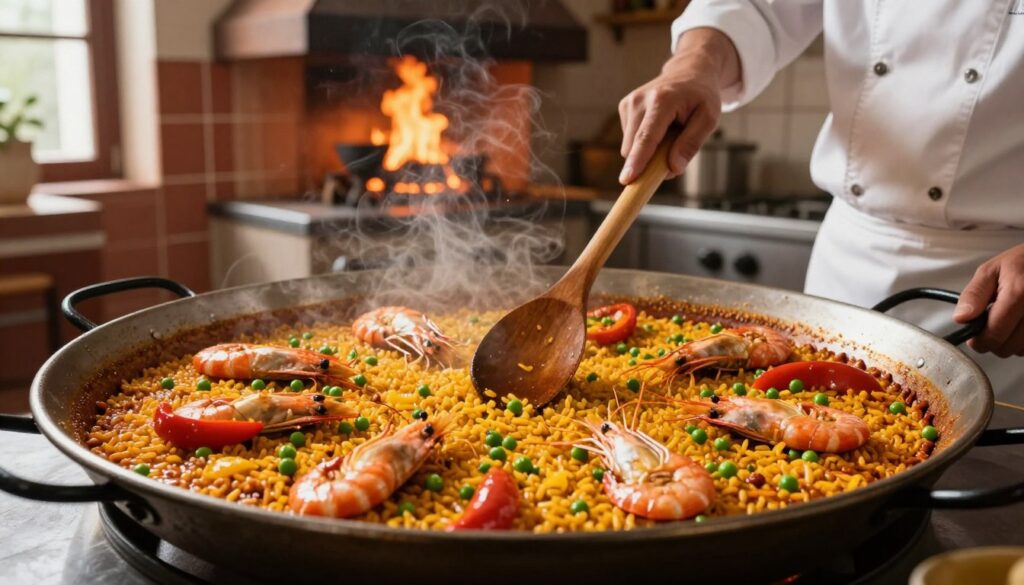
One big mistake in paella is stirring the rice too much. This is opposite of what you do with white or fried rice. You’re used to stirring and checking on your rice often. But with paella, you need to stop this habit.
Stirring paella rice too much makes it sticky and gummy. This messes up your dish. The starch in the rice should stay on the grains, not in the broth. That’s why paella experts don’t stir the pan.
The starch in rice is good for paella. That’s why you don’t wash the rice before cooking. It helps the rice get the right texture and soak up flavors. Just make sure the starch stays on the rice.
There’s one time when you should stir the rice. When you first add it, spread it out evenly. Use a cross or X pattern, moving slowly. Make sure all grains are covered by liquid. After that, don’t touch the pan again.
Paella is a dry rice dish, unlike risotto which needs constant stirring. Once you’ve spread the rice, let it cook without stirring. Trust the cooking process. This patience is key to making great paella.
- Never stir rice after adding it to broth
- Only spread rice initially in an X pattern
- Keep rice fully submerged under liquid
- Leave the pan untouched during cooking
- Never wash rice before adding to the pan
| Cooking Method | Stirring Frequency | Texture Result | Starch Location |
|---|---|---|---|
| White Rice | Frequent stirring | Fluffy, separated grains | Released into water |
| Risotto | Constant stirring | Creamy and moist | Dissolved into broth |
| Paella | No stirring after spreading | Dry, distinct grains | Stays on grains |
It takes discipline to not stir the rice. Your instinct is to help it along. But paella cooking is different. By avoiding this mistake, you learn a key technique that chefs have mastered for centuries.
Adding Ingredients That Don’t Belong in Authentic Paella
Many people make a big mistake when trying to make authentic paella like in Spain. They add whatever ingredients they have. But, authentic paella tips say that less is more. Each ingredient should make the rice taste better, not fight for attention.
Some think chorizo, onions, and peas are must-haves in paella. But, this is a big mistake. Knowing what to add and what not to is key to avoiding mistakes. Once you get it right, making authentic paella is easier.
What Traditional Valencian Paella Should Never Include
Chorizo is a favorite in Spain, but it’s not for paella. Its strong flavor overpowers the rice. Remember, chorizo will make your paella taste like sausage, not rice.
Onions are also a no-go in traditional paella. They add too much moisture and can make the rice soggy. Plus, their flavor can drown out the rice, which should be the main attraction.
Peas are another ingredient that doesn’t belong in authentic Valencian paella. When avoiding mistakes, choose ingredients that complement the rice. Lemon wedges are mostly for looks. If your paella tastes great, you won’t need lemon.
Choosing the Right Paella Variation for Your Ingredients
The secret to making great paella is to pick one type and stick to it. You have three main options:
- Seafood paella – Uses fish, shellfish, and sometimes squid
- Chicken and rabbit paella – The original Valencian style with meat and green beans
- Vegetable paella – Features seasonal vegetables that complement the rice
Mixing types, like seafood with meat, is not traditional. It can make flavors clash. Stick to one type and choose ingredients that work well together.
Make your own sauces and flavor boosters with olive oil, herbs, and spices. Avoid processed sauces with added sugars and unhealthy fats. This way, your dish stays true to Spanish tradition and focuses on flavoring the rice.
Burning Your Paprika and Ruining the Entire Dish
One of the most common mistakes in making paella is mishandling paprika at the wrong heat. This mistake can ruin your dish in seconds. Paprika, or pimentón in Spanish, has natural sugars and oils that burn fast at high heat. Once burned, it gives a bitter taste that ruins your paella.
Knowing when to add paprika is key to making perfect paella. It’s all about a specific sequence to avoid burning this delicate ingredient.
The Critical Timing Sequence
Here’s how to prevent paprika from burning:
- Cook your vegetables first until they’re soft and fragrant
- Remove the pan from direct high heat
- Add your paprika and stir for only 10-20 seconds
- Immediately pour in your liquid to lower the temperature
Adding liquid is your safety net. It cools the pan and stops the paprika from burning.
Choosing Quality Pimentón de la Vera
Choose authentic Pimentón de la Vera from Spain. It’s more expensive than generic paprika, but worth it. Quality Spanish paprika adds authentic flavor and a beautiful golden-red color to your paella.
| Paprika Type | Burning Risk | Flavor Result | Color Quality |
|---|---|---|---|
| Pimentón de la Vera | Low when handled correctly | Rich, authentic Spanish flavor | Beautiful golden-red hue |
| Generic Paprika | Higher burn risk | Flat, one-dimensional taste | Dull orange appearance |
| Overheated Paprika | Guaranteed burn | Bitter, acrid, unrecoverable | Dark brown scorched color |
Protecting your paprika from burning needs careful heat control and timing. Master this and you’ll avoid common paella mistakes.
Socarrat Mistakes and How to Avoid Burning the Bottom Layer
The socarrat is the crispy bottom layer of paella, loved by Valencians. It forms when rice sugars mix with oil and heat. Achieving this golden crust without burning it is the challenge.
Authentic socarrat has amber patches and a light brown color. Burnt rice turns black and tastes bitter, ruining your dish.
Many worry about making mistakes with socarrat. But, understanding the process makes it easier. You don’t need a fancy paella pan. What’s important is consistent heat and the right technique.
You’ll need about 25 to 30 milliliters of oil per person. This oil is key for creating the crust.
Listening for the Right Sound When Making Socarrat
Your ears are your best tool for avoiding mistakes with socarrat. When all liquid is gone, you’ll hear a sizzling sound. This is when the rice starts frying in oil.
Once you hear this sound when making socarrat, count 60 seconds. Then turn off the heat. This timing is crucial to avoid burning the bottom layer.
- Fine crackle sound means rice is frying properly
- Loud squealing or popping indicates excessive heat
- Quiet sizzle suggests you need higher temperature
- Silence means liquid remains—wait longer before timing
Why Your Paella Pan Type Doesn’t Affect Socarrat Quality
Many believe expensive pans make better socarrat. But, it’s a myth. Socarrat is a chemical reaction, not about the pan material.
What matters is even heat distribution. Your pan must heat the rice layer well. The pan material is less important than heat delivery. A basic pan can work as well as a fancy one if it heats evenly.
| Pan Type | Heat Distribution | Socarrat Success |
|---|---|---|
| Carbon Steel | Excellent | Yes, with proper technique |
| Stainless Steel | Good | Yes, with proper technique |
| Enameled Cast Iron | Excellent | Yes, with proper technique |
| Non-Stick Aluminum | Fair | Yes, with proper technique |
After getting your perfect socarrat, use a wooden spoon to gently scrape it. Share the crusty pieces among your guests. Valencians love this delicacy, so everyone should get a taste of that golden crust.
Conclusion
You now know the main mistakes beginners make in paella. Use Bomba or Calasparra rice for the best taste. Also, don’t stir the rice once it starts cooking and listen for the socarrat sound.
Paella mastery doesn’t come naturally. Every pro started where you are. You’ll make mistakes, like burning paprika or getting the liquid wrong. But, it’s all part of learning.
Start by making paella for your family. This way, you can practice without stress. Use authentic ingredients to improve your dish. Each attempt teaches you something new.
When you serve your paella, your hard work is done. Relax, enjoy your meal, and let others clean up. Paella is about sharing and enjoying, not perfection. With practice, you’ll soon see success.