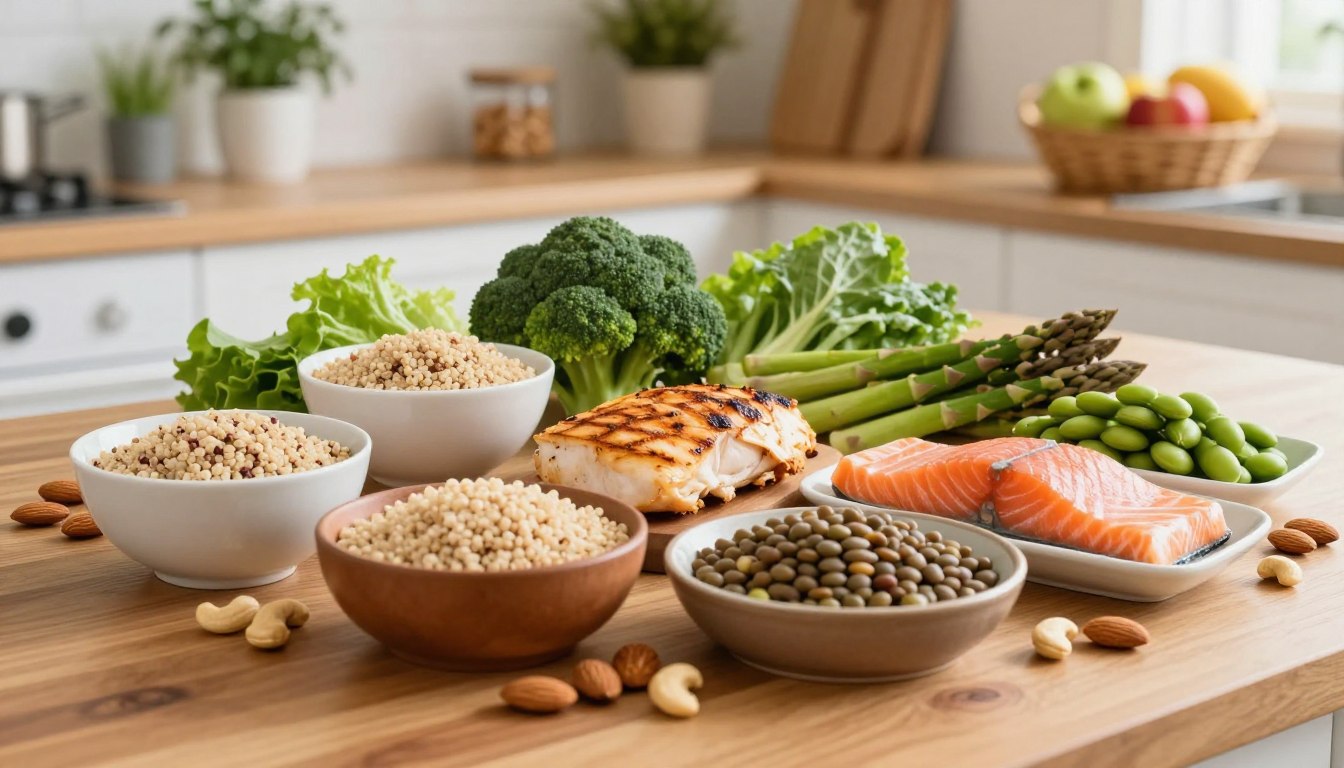
The Best Simple 10 Foods with More Protein
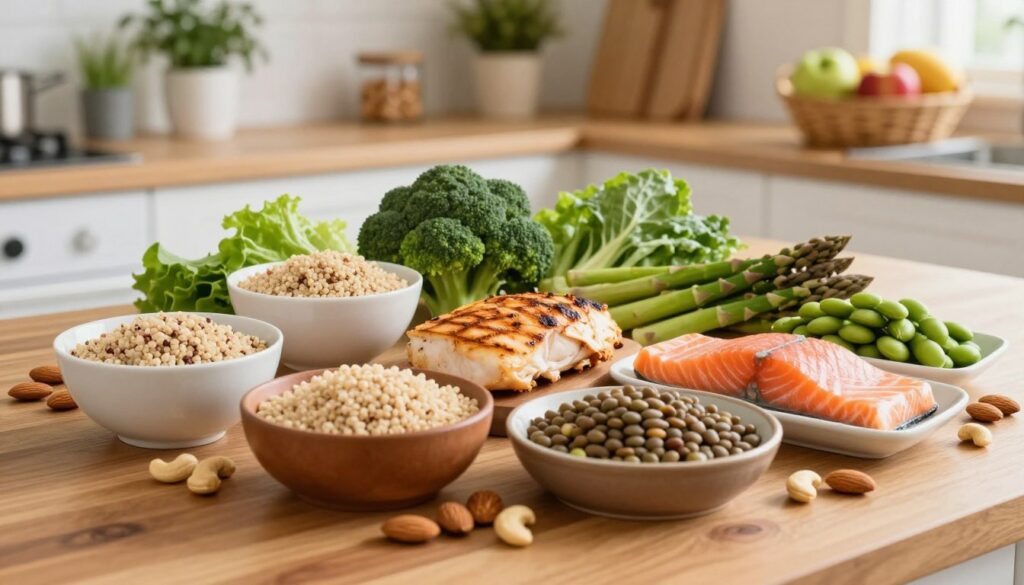
Ever felt tired after eating, or had trouble getting through the afternoon? What you eat affects how you feel. Getting the right nutrients is key to feeling strong and energized.
Protein is vital for your body. It helps build bones, muscles, and blood. Your body uses it to make enzymes and hormones. Proteins are made of amino acids, and nine are essential, meaning you must get them from the food you eat.
Finding quality protein can change your health. Experts, like the American Heart Association, suggest eating healthy sources. This includes plant-based foods, fish, low-fat dairy, and lean meats. For more on building a healthy diet, trusted resources are available.
This guide will show you how to add nutritious, high-protein foods to your meals.
Key Takeaways
- Protein is a fundamental nutrient required for building and repairing muscles, bones, blood, and hormones.
- Nine essential amino acids must come from your diet, as your body cannot produce them.
- Health authorities emphasize choosing lean proteins, plant sources, fish, and low-fat dairy.
- Incorporating a variety of protein sources helps ensure you get all essential amino acids.
- Understanding your protein needs can support energy levels, muscle health, and overall wellness.
Why Your Body Thrives on Protein
Protein does more than just help muscles grow. It fixes tiny muscle tears and keeps your immune system strong. It’s not just for athletes; every cell in your body needs it. Knowing how important protein is helps you make better choices for your health and body.
The Key Benefits of Eating More Protein
Protein is key for building and fixing tissues, like muscles. This is important after working out and as you get older.
It also boosts your metabolism more than carbs or fats. Your body uses more energy to digest protein. This can help with weight management. Plus, it makes you feel full, helping you eat less.
Protein is also crucial for your overall health. It helps fight off illnesses, keeps fluids balanced, and aids in blood clotting. Studies show that eating plant-based protein may protect your brain as you age. The benefits of protein touch every part of your body.
Calculating Your Personal Protein Needs
How much protein do you need? The Recommended Dietary Allowance (RDA) is 0.36 grams per pound of body weight. For a 150-pound person, that’s about 54 grams daily.
But this is just a starting point. If you’re over 50 or very active, you need more. This helps keep your muscles strong.
If you’re trying to lose weight, eating more protein is a good idea. It keeps you full, helps you lose fat, and may speed up your metabolism. Your protein needs change with your lifestyle. Start with the RDA and adjust based on your activity level. This will help you make quick high-protein meals that fuel your body.
What Qualifies as a High Protein Food?
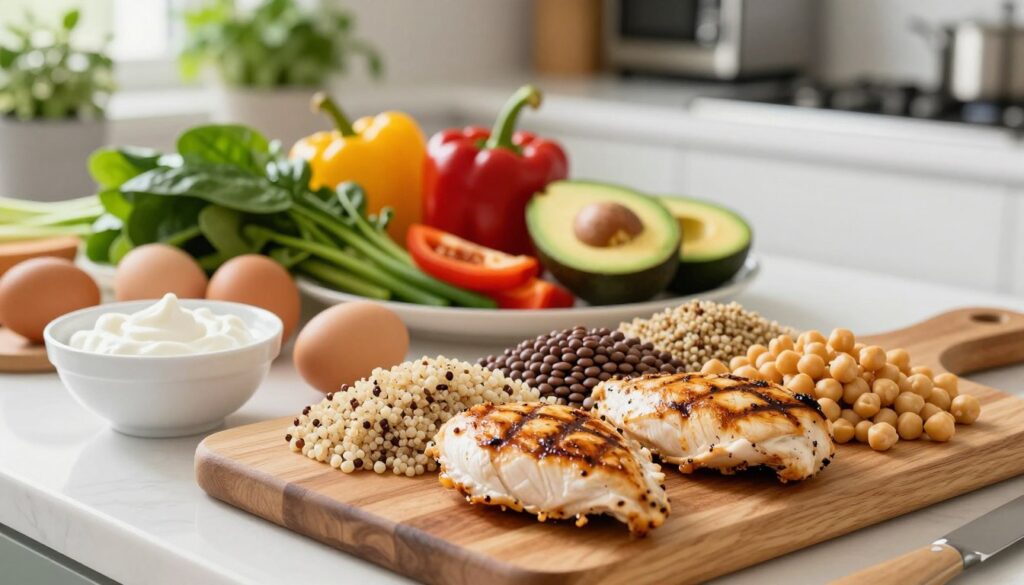
To get the most from a protein-rich diet, you need to know about protein density and quality. Just picking foods high in protein isn’t enough. You want foods that give you lots of protein with few extra calories and all the amino acids your body needs.
Protein Density: Grams Per Calorie
Protein density shows how much protein you get per calorie in a food. This is key for keeping your weight in check. Foods high in protein density help you feel full and meet your protein needs without extra calories.
For example, a skinless chicken breast is very protein-dense. It gives you lots of protein without extra fats or carbs. On the other hand, a fatty cut of steak might have similar protein but more calories from fat.
Eggs are often seen as a top choice for quality protein. But, many foods with more protein than eggs per calorie exist. Lean turkey, white fish like cod, and cottage cheese are all high in protein density.
Choosing foods high in protein density is a smart move for any protein-rich diet. It makes planning meals for weight loss or muscle gain easier. Check out our high-protein breakfast meal prep ideas for examples.
Understanding Complete and Incomplete Proteins
Protein quality is about amino acids. These tiny building blocks are essential for protein. Your body can make some, but nine are “essential” and must come from your food.
Complete proteins have all nine essential amino acids in good amounts. Most animal sources like meat, eggs, and dairy are complete. Some plants, like soybeans and quinoa, are also complete proteins.
Incomplete proteins lack one or more essential amino acids. Most plant-based foods, such as beans, lentils, nuts, and whole grains, are incomplete. This doesn’t mean they’re bad. It just means you need to eat a variety.
By mixing different plant proteins throughout the day—like rice with beans or hummus with whole-grain pita—you can get all the amino acids. This is crucial for a successful vegetarian or vegan protein-rich diet.
So, a truly high-protein food is both dense in protein and offers complete amino acids. Knowing this helps you create balanced meals that support your body perfectly.
The Best High Protein Foods to Stock In Your Kitchen
Starting your protein-rich diet at home is key. Fill your pantry and fridge with healthy, versatile foods. This makes it easy to make tasty meals that boost your energy and help you reach your goals. Let’s look at the top picks in two main categories.
Animal-Based Powerhouses
These foods have all nine essential amino acids your body needs. Choose lean, minimally processed options for the most nutrition.
- Salmon, Tuna, and Mackerel: These fatty fish are great. They’re full of protein and omega-3s, which are good for your heart and brain.
- Skinless Chicken and Turkey Breast: A lean protein choice. They’re good for grilling, baking, or adding to dishes.
- Eggs: Eggs are a complete protein and affordable. Don’t forget the yolk, it has important nutrients like choline.
- Lean Cuts of Beef and Pork: Look for “loin” or “round” cuts. They have high-quality protein with less fat.
It’s best to limit processed meats like sausages and deli meats. They often have a lot of sodium and preservatives.
Plant-Based Protein Champions
This group is key for those looking for vegetarian high protein foods. They are also affordable and high in fiber, which helps with digestion and keeps you full.
- Lentils and Beans: Black beans, chickpeas, and lentils are top choices. Dried versions are cheap and packed with protein and fiber. For more plant protein sources, check out BBC GoodFood.
- Tofu and Tempeh: Made from soybeans, they are complete proteins and great meat substitutes. They soak up flavors well, making them perfect for many dishes.
- Greek Yogurt and Cottage Cheese: These dairy options are high in protein. Greek yogurt has almost double the protein of regular yogurt. Choose plain versions to avoid added sugar.
- Nuts, Seeds, and Quinoa: Almonds, chia seeds, and pumpkin seeds offer protein and healthy fats. Quinoa is a complete protein, great for bowls and sides.
Having these items on hand means you’re always ready for a protein-packed meal. It doesn’t matter your diet or budget.
How to Build Protein-Packed Meals: A Step-by-Step Guide
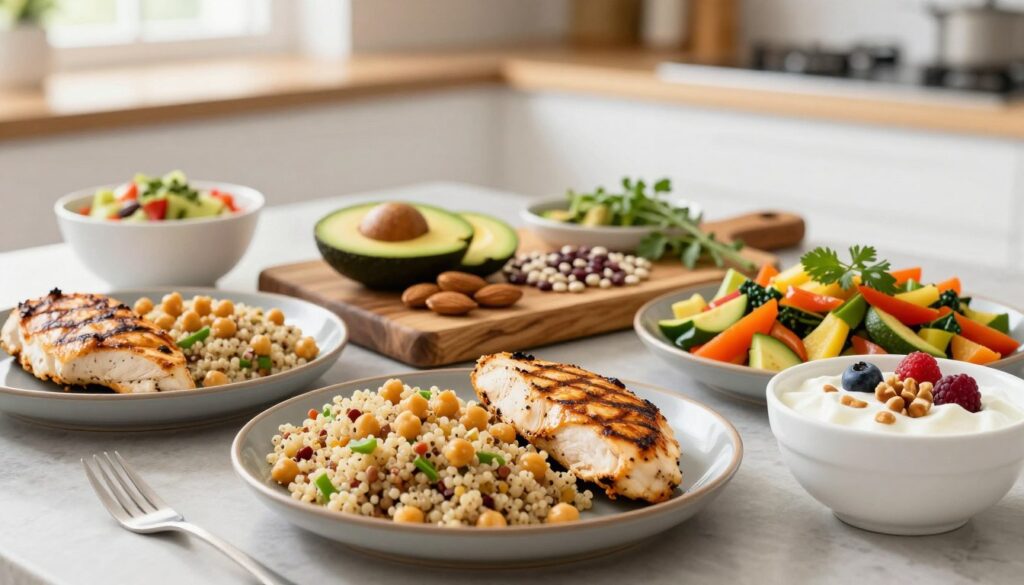
Mastering a simple way to make your meals is key to eating enough protein. This three-step method makes meal prep easy and quick. It helps you create endless simple high protein meal ideas that are balanced and satisfying.
You start with a foundation, add bulk for nutrients, and finish with energy. Let’s break down how to construct your perfect protein-packed meals.
Step 1: Choose Your Primary Protein Source
Every great meal begins with a solid protein anchor. Look back at the lists from the previous section—whether you prefer animal-based powerhouses like chicken or fish, or plant-based champions like lentils and tofu. Your goal is to pick one and make it the star.
For meat, choose lean cuts and trim visible fat. Healthy cooking methods like baking, broiling, or grilling preserve flavor without adding extra oils. A great tip is to incorporate beans or lentils into other dishes. Think adding black beans to an omelet or topping a salad with grilled chicken.
Portion size matters. A serving about the size of your palm is a good visual guide for most adults. This ensures you get enough protein to meet your daily needs without overdoing calories.
Step 2: Add Volume with Non-Starchy Vegetables
Next, load up your plate with low-calorie, high-fiber vegetables. They add crucial volume, vitamins, and texture without many calories. This step is key for feeling full and getting a wide range of nutrients.
Excellent choices include broccoli, spinach, bell peppers, zucchini, and cauliflower. You can enjoy them raw, steamed, or roasted. The key is to feature vegetables prominently.
Flavor them generously with herbs, spices, garlic, or a squeeze of lemon instead of heavy sauces. This keeps your high-protein meal delicious and healthy. A stir-fry or a big side salad are perfect ways to include a variety of veggies.
Step 3: Round It Out with Smart Carbs or Healthy Fats
The final step balances your meal for lasting energy. Depending on your hunger and activity level, add a serving of complex carbohydrates or healthy fats.
Smart carbs like quinoa, brown rice, sweet potato, or whole-grain bread provide sustained fuel. They work well if you have an active day ahead. A hearty lentil soup naturally combines this step with Step 1, offering both protein and carbs.
Healthy fats from sources like avocado, nuts, seeds, or a drizzle of olive oil enhance satiety and help absorb vitamins. They are perfect for creating a more satisfying, calorie-conscious plate.
You don’t always need both. Listen to your body. A bean burger on a lettuce wrap with avocado is a complete, balanced meal using this template. For more inspiration on putting this all together affordably, check out this guide for a low-budget high-protein meal plan.
By following these three steps—protein, veggies, then carbs or fats—you have a flexible template. It empowers you to whip up nutritious, protein-packed meals any day of the week.
7 Easy High Protein Recipes for Any Skill Level
Let’s put all that protein knowledge into practice with delicious, simple recipes anyone can master. You don’t need to be a chef to make satisfying, protein-packed meals. These seven ideas turn basic ingredients into flavorful dishes perfect for breakfast, lunch, or dinner.
1. High-Protein Breakfast Scramble
Start your day with a powerhouse meal that keeps you full for hours. This scramble goes beyond just eggs.
Ingredients:
- 2 large eggs
- 1/4 cup canned black beans, rinsed
- Handful of spinach
- 1 oz shredded cheddar cheese
- Salt, pepper, and a pinch of cumin
How to make it: Whisk the eggs in a bowl. Heat a non-stick pan over medium heat. Pour in the eggs and let them set for a moment. Add the beans, spinach, and seasoning. Gently stir until the eggs are cooked and the spinach wilts. Top with cheese and serve immediately. This quick dish combines complete protein from eggs with fiber-rich beans.
2. No-Cook Greek Yogurt Parfait
For a zero-cook option packed with protein, this parfait is your best friend. Greek yogurt is the star here.
Ingredients:
- 1 cup plain Greek yogurt
- 1/2 cup mixed berries (fresh or frozen)
- 2 tablespoons granola
- 1 tablespoon honey or maple syrup (optional)
How to make it: In a glass or bowl, layer half the yogurt. Add half the berries and a tablespoon of granola. Repeat the layers. Drizzle with honey if you like it sweeter. It’s a perfect easy breakfast or snack that requires no heat.
3. One-Pan Baked Lemon Pepper Salmon
Fish is a fantastic lean protein, and this method couldn’t be simpler. Baking it in foil keeps the salmon moist and flavorful.
Ingredients:
- 1 salmon fillet (4-6 oz)
- 1 lemon, sliced
- 1 tablespoon olive oil
- 1 teaspoon lemon pepper seasoning
- Fresh dill or parsley (optional)
How to make it: Preheat your oven to 400°F. Place the salmon fillet on a piece of foil. Drizzle with olive oil and sprinkle generously with lemon pepper. Lay lemon slices on top. Fold the foil into a packet. Bake for 15-18 minutes. Open carefully and garnish with herbs. Dinner is done with just one pan to clean.
4. Hearty Chicken and Vegetable Stir-Fry
Stir-fries are a classic way to get a balanced meal fast. Using pre-cut veggies makes this even quicker.
Ingredients:
- 1 boneless, skinless chicken breast, cut into strips
- 2 cups mixed stir-fry vegetables (broccoli, bell peppers, snap peas)
- 2 tablespoons low-sodium soy sauce
- 1 clove garlic, minced
- 1 teaspoon grated ginger
How to make it: Heat a tablespoon of oil in a large pan or wok over high heat. Cook the chicken strips until no longer pink, about 5-7 minutes. Remove and set aside. Add the vegetables to the pan and stir-fry for 4-5 minutes until crisp-tender. Add the garlic and ginger, cook for 30 seconds. Return the chicken to the pan, add the soy sauce, and toss everything together. Serve over brown rice or quinoa.
5. Quick and Filling Lentil Chili
This plant-based chili is hearty, cheap, and loaded with protein and fiber. It’s a great meal to make in a big batch.
Ingredients:
- 1 tablespoon olive oil
- 1 onion, diced
- 2 cans (15 oz each) lentils, drained and rinsed
- 1 can (15 oz) diced tomatoes
- 2 tablespoons chili powder
- 1 cup vegetable broth
How to make it: In a pot, heat the oil and cook the onion until soft. Add the chili powder and stir for one minute. Add the lentils, tomatoes, and broth. Bring to a boil, then reduce heat and simmer for 20 minutes. Season with salt and pepper. Top with avocado or a dollop of Greek yogurt.
6. Simple Tofu and Veggie Skewers
Grilling or baking tofu on skewers makes it fun and delicious. Tofu soaks up any marinade you use.
Ingredients:
- 1 block firm tofu, pressed and cubed
- 1 bell pepper, cut into chunks
- 1 red onion, cut into chunks
- 1 zucchini, sliced
- 1/4 cup teriyaki or soy-ginger marinade
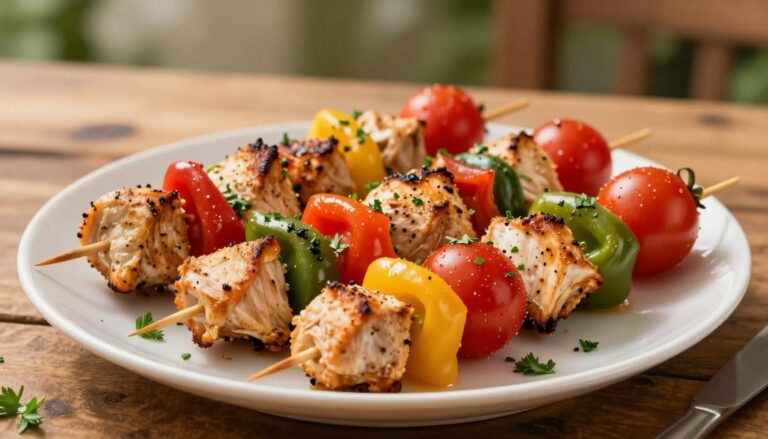
How to make it: Thread tofu and vegetable pieces onto skewers. Brush generously with the marinade. You can grill them on a medium-hot grill for 10-12 minutes, turning occasionally. Or, bake on a lined sheet at 400°F for 20-25 minutes. These are perfect for a simple summer meal.
7. Make-Ahead Cottage Cheese Bowls
Cottage cheese is a protein secret weapon. Preparing these bowls the night before makes your morning effortless.
Ingredients:
- 1 cup cottage cheese
- 1/4 cup diced cucumber and tomato
- 1 tablespoon sunflower seeds or chopped almonds
- Salt, pepper, and a drizzle of olive oil
- Everything bagel seasoning (optional)
How to make it: Scoop cottage cheese into a bowl or container. Top with your diced veggies and seeds. Season with salt, pepper, and a favorite seasoning blend. Cover and refrigerate. In the morning, you have a cool, savory, and protein-rich breakfast ready to go.
| Recipe Name | Primary Protein Source | Approx. Protein (g) | Prep Time | Skill Level |
|---|---|---|---|---|
| Breakfast Scramble | Eggs & Black Beans | 22 | 10 min | Beginner |
| Greek Yogurt Parfait | Greek Yogurt | 20 | 5 min | Beginner |
| Baked Lemon Pepper Salmon | Salmon | 34 | 20 min | Beginner |
| Chicken Stir-Fry | Chicken Breast | 30 | 25 min | Easy |
| Lentil Chili | Lentils | 18 | 30 min | Easy |
| Tofu Veggie Skewers | Tofu | 16 | 30 min | Easy |
| Cottage Cheese Bowls | Cottage Cheese | 25 | 5 min | Beginner |
This table helps you pick the right high protein recipe for your time and energy. As you can see, there are fantastic easy high protein foods for beginners in every category. Mix and match these ideas throughout your week to keep your diet exciting and your protein intake on target.
Smart High Protein Snacks to Fuel Your Day
Smart snacking is key to keeping your energy up and cravings down all day. The right high protein snacks for your daily diet do more than just fill your stomach. They also help keep your blood sugar stable, repair muscles, and keep you full and focused until your next meal.
Planning ahead is crucial. Having good snacks ready prevents you from grabbing unhealthy foods when you’re hungry. Whether you need something to take with you or have a few minutes to spare at home, there’s a protein-packed snack for you.
Grab-and-Go Convenience Snacks
For busy days, these easy-to-eat snacks are lifesavers. Look for single-serve packages to make it easy to control your portions. Many experts recommend nuts, seeds, yogurt, and hard-boiled eggs for their convenience and nutrition.
Here’s a quick comparison of some top picks to keep in your bag, desk, or car:
| Snack | Approx. Protein (g) | Approx. Calories | Key Feature |
|---|---|---|---|
| Single-Serve Greek Yogurt | 15-20 | 100-150 | High in calcium, contains probiotics |
| Hard-Boiled Eggs (2) | 12 | 140 | Complete protein, rich in choline |
| Individual Pack of Almonds (1 oz) | 6 | 160 | Provides healthy fats and fiber |
| Lean Beef Jerky (1 oz) | 9-10 | 80-100 | Savory, long shelf-life, very portable |
| Cottage Cheese Cup | 13-15 | 120-140 | Slow-digesting casein protein, versatile |
Don’t forget about canned fish like tuna or salmon packed in water. They offer a massive protein punch and are shelf-stable. Pair a single-serve pack with a few whole-grain crackers for a complete, satisfying mini-meal.
Quick Homemade Snack Ideas
When you have a few extra minutes, these simple combinations are both nutritious and delicious. The goal is to pair a protein source with a fiber-rich carb or healthy fat for maximum satiety.
- Apple Slices with Peanut Butter: The crisp fiber of the apple pairs perfectly with the creamy, filling fat and protein from a tablespoon of natural peanut butter.
- DIY Trail Mix: Combine a small handful of nuts (almonds, walnuts), seeds (pumpkin, sunflower), and a few dark chocolate chips for a sweet and salty crunch.
- Roasted Chickpeas: Toss canned, rinsed chickpeas with olive oil and spices, then bake until crispy. They are a crunchy, fiber-rich plant-based protein.
- Turkey and Cheese Roll-Ups: Take a slice of deli turkey and roll it around a stick or slice of low-fat cheese. It’s a classic, no-carb protein combo.
- Greek Yogurt Dip: Mix plain Greek yogurt with herbs and spices to create a veggie dip. Enjoy it with bell pepper strips, cucumber, and carrot sticks.
Research from Harvard Health shows that high-protein snacks are key for building muscle and controlling hunger. The key is to be prepared. Spend a few minutes on a Sunday prepping hard-boiled eggs, portioning out nuts, or making a batch of roasted chickpeas. Your future, energized self will thank you.
A Practical Guide to Protein Supplements
Supplements should not replace whole foods but can be part of your nutrition plan. Some groups, like older adults or those trying to build muscle, might need more protein. It’s important to avoid dietary imbalance and be cautious if you have kidney issues.
Protein powders and shakes give you a concentrated dose of nutrition. They are for convenience and precision, not the base of your diet.
When a Protein Powder Makes Sense
There are times when supplements are practical. They solve problems that whole foods might not easily address in your daily life.
Post-Workout Recovery: After intense exercise, your muscles need protein quickly to repair and grow. A fast-absorbing shake is more convenient than a full meal.
Busy Lifestyles: If your schedule is packed, a ready-to-mix powder can help you meet your daily protein needs. It’s a reliable backup for busy days.
Dietary Gaps: Vegetarians, vegans, or picky eaters might struggle to get enough complete protein from food alone. A supplement can efficiently fill that nutritional gap.
Age-Related Needs: Older adults often need more protein per meal to combat muscle loss but may have a smaller appetite. A digestible powder added to foods or drinks can boost intake without adding bulk.
Choosing the Right Type for You
The supplement aisle is crowded with options. Your choice should depend on your dietary preferences, goals, and how your body reacts.
Here is a comparison of the most common protein supplements to guide your decision:
| Type | Source | Best For | Key Considerations |
|---|---|---|---|
| Whey Protein | Milk (a byproduct of cheese) | Fast post-workout recovery, muscle building. | Digests quickly. Contains all essential amino acids. Not suitable for dairy allergies. |
| Casein Protein | Milk (curds) | Slow, sustained release; ideal before bed. | Digests slowly, providing a steady amino acid stream. Also dairy-based. |
| Plant-Based Blend | Pea, soy, rice, or hemp | Vegans, vegetarians, or those with dairy sensitivities. | Look for blends to ensure a complete amino acid profile. Can be gritty in texture. |
| Collagen Peptides | Animal connective tissue (bovine, marine) | Supporting skin, hair, nails, and joint health. | Not a complete protein for muscle synthesis. Mixes easily into hot or cold drinks. |
Whey and casein are classics for athletes due to their completeness and bioavailability. For a dairy-free option, a plant-based blend that combines sources like pea and rice protein is your best bet.
Remember, the goal is to supplement your diet, not dominate it. Whole food sources are better for sustained energy and satiety. For inspiration on creating balanced, protein-rich meals without powders, explore these protein bowl dinner ideas for busy.
Start with one type that matches your primary goal. See how your body responds before making it a regular part of your routine. Always prioritize a diet rich in varied, whole foods first.
Customizing Your Protein Intake for Your Goals
Whether you want to lose weight, build muscle, or follow a plant-based diet, your protein needs change. A one-size-fits-all plan won’t work. Your goal determines how much protein you need and which sources are best. Start by calculating your protein needs and then use these strategies.
For Weight Loss: Prioritizing Satiety and Lean Sources
Protein helps you feel full and keeps muscle when losing weight. Choose high-protein, low-calorie foods. This combo helps you eat less without feeling hungry.
Studies show high-protein diets help with weight loss and prevent weight gain. Eat lean, nutrient-rich foods like chicken breast, fish, legumes, and Greek yogurt. These foods keep you full and boost your metabolism.
For Muscle Gain: Focusing on Timing and Total Intake
To build muscle, you need enough protein daily and at the right times. More protein helps your muscles repair and grow after exercise.
Increase your daily protein intake. Also, eat a protein-rich meal or snack within a couple of hours after working out. This is when your muscles absorb nutrients best.
Good high protein foods for muscle building include chicken, eggs, lean beef, cottage cheese, and whey protein powder. Being consistent with your protein intake and post-workout nutrition is crucial for results.
For Vegetarian and Vegan Diets: Ensuring Completeness
You can meet your protein needs on a plant-based diet. The key is to get all nine essential amino acids, which make up a “complete” protein. Most plant proteins lack some amino acids, but eating a variety daily solves this.
This method, called protein combining, is easy. Pair foods like beans and rice or hummus with whole-wheat pita to get all amino acids. Remember, 1 cup of beans, lentils, or tofu can replace about 2 ounces of meat in a recipe.
Great protein sources for vegetarians and vegans include tofu, tempeh, lentils, chickpeas, quinoa, and hemp seeds. Eating a mix of these daily ensures you get all amino acids.
Common Pitfalls to Avoid on a High-Protein Diet
Starting a high-protein diet is more than just adding protein. It’s also about avoiding common mistakes. These errors can slow your progress. Knowing them helps you enjoy the benefits without the downsides.
Skipping Fiber-Rich Foods
When you focus on protein, you might forget about other important nutrients. Fiber is often overlooked. This can cause digestive issues like constipation and bloating.
Fiber also keeps you full longer. It helps keep your blood sugar stable. Without enough fiber, you miss out on these benefits.
Plant-based proteins are a great choice. Foods like lentils, black beans, and chickpeas are packed with protein and fiber. Make sure to eat vegetables, fruits, and whole grains every day.
Relying Too Heavily on Processed Meats
Deli slices, sausages, and bacon are easy protein sources. But, eating them too much can be risky. Studies show they may increase heart disease and type 2 diabetes risks.
These foods are often high in sodium and preservatives. They don’t have the nutrients of whole foods. It’s better to limit them for your health.
Choose whole-food proteins instead. Options like skinless chicken breast, eggs, and canned tuna are easy to prepare. They’re also affordable and good for daily meals.
Forgetting to Drink Enough Water
Your body needs more water when you eat more protein. This is true, even more so if you eat a lot of animal protein. Not drinking enough can harm your kidneys over time.
Water helps your body get rid of waste from protein breakdown. It keeps your digestion and energy levels up. Drink water all day, not just when you’re thirsty.
Carrying a water bottle is a simple habit. Herbal teas and water-rich foods like cucumbers also help with your fluid intake.
Avoiding these mistakes helps you build a healthy high-protein diet. Choose whole, nutrient-rich foods. A balanced diet using a cheap high protein foods list and easy high protein foods for beginners ensures you get enough protein without the common problems.
Conclusion
Your journey into nutrition is all about strength and energy. Learning about protein is a big step. Now, you know how to find and use high protein foods every day.
A good protein diet is all about balance and variety. It means choosing the right foods, like lean chicken and lentils. Pair these with veggies and smart carbs for full meals.
Use the guides and recipes we shared as your guide. They help you make meals that meet your needs, whether for energy or muscle. For more ideas, check out these fast high-protein lunch ideas.
Begin by filling your kitchen with key high protein foods. Start making simple meals. Listen to your body and adjust as you learn. This knowledge helps you fuel your health for the long run.