How to Make Traditional British Fish and Chips
Biting into crispy fish wrapped in golden batter is magical. It takes you to a seaside town in England, even from thousands of miles away. Fish and chips are more than food; they’re a piece of history that has comforted many for nearly two centuries.
This classic dish has deep roots. It started with Sephardic Jewish immigrants from Spain and Portugal. Charles Dickens mentioned “fried fish warehouses” in 1838. The first fish and chips shop opened in London in the 1860s, started by Joseph Malin, a Jewish immigrant.
During World War II, Winston Churchill called fish and chips “good companions.” The government kept it off the rationing list to boost morale. Soldiers used “fish” and “chips” as passwords during D-Day, showing its importance in British culture.
Making authentic traditional British fish and chips is more than just frying fish and potatoes. It’s about selecting the right fish, using cold beer for the batter, and making thick-cut chips. Every detail matters when making this British comfort food at home.
This guide will teach you how to make this iconic dish. You’ll learn about temperature control and the secrets of fish and chips shops. By the end, you’ll be able to make restaurant-quality fish and chips at home. You won’t need fancy equipment or hard-to-find ingredients. Simple fish recipes can bring great satisfaction when done right.
Key Takeaways
- Fish and chips originated from Sephardic Jewish immigrants and became Britain’s national dish by the 1860s
- Cold beer creates the crispy batter texture that makes traditional fish and chips special
- Proper oil temperature control is essential for achieving golden, non-greasy results
- Russet potatoes work best as an American substitute for British Maris Piper potatoes
- The double-fry method for chips ensures a crispy exterior with a fluffy interior
- Patting fish dry and dredging in flour before battering prevents soggy coating
- Serving with malt vinegar and mushy peas completes the authentic British experience
What Makes Traditional British Fish and Chips So Special
Preparing a proper English fish supper is more than just cooking dinner. It connects you to centuries of history and culture. This beloved dish has shaped British society and fed millions over generations. Understanding its origins helps you see its importance to British identity.
Fish and chips hold deep meaning beyond their ingredients. They symbolize working-class pride, wartime resilience, and national unity. The story behind this iconic meal shows why it’s so dear to British hearts.
The History Behind Britain’s National Dish
Fish and chips didn’t start in Britain. It has roots in Sephardic Jewish traditions. Jewish immigrants brought their pescado frito tradition to England, where they fried fish in thin coatings for the Sabbath. This blended with English chip culture to create something new.
The authentic fish and chips recipe appeared in British literature in the 1800s. Charles Dickens mentioned “fried fish warehouses” in Oliver Twist (1838) and described chips in A Tale of Two Cities. Victorian chef Alexis Soyer noted “Fried Fish, Jewish Fashion” in his 1845 cookbook. The first dedicated fish and chips shop opened in London during this time, marking the birth of the traditional chippy style.
Why Fish and Chips Became a Cultural Icon
Originally, fish and chips was food for the working class. Factory workers and mill workers needed affordable, filling meals. Street vendors served steaming portions wrapped in paper, making it convenient and budget-friendly. This united people across social classes in a unique way.
Fish and chips reached peak cultural importance during World War II. Winston Churchill understood its importance to British people. He refused to ration fish and chips during wartime, knowing morale depended on everyday comforts. British soldiers even used “fish” and “chips” as identification passwords during D-Day operations. A proper English fish supper became a symbol of British strength and unity.
- Sephardic Jewish immigrants introduced fried fish traditions
- Charles Dickens documented fish and chips in the 1800s
- Joseph Malin opened the first chippy in 1860s London
- Working-class families made it their everyday meal
- Winston Churchill protected it from wartime rationing
- 22% of UK residents visit fish and chips shops weekly
Today, making an authentic fish and chips recipe at home keeps a tradition alive for over 150 years. This dish represents resilience, community, and the joy of good food shared with others.
Choosing the Best Fish for Traditional British Fish and Chips
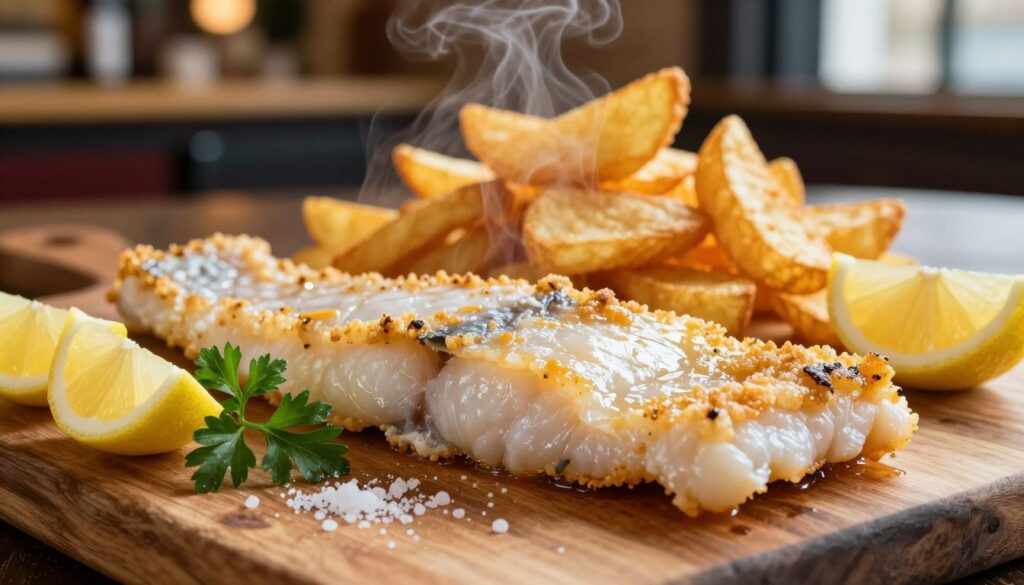
The key to great fish and chips is the fish you choose. It can make a big difference between a good meal and an amazing one. For the best fish and chips, pick something mild, flaky, and holds up well when fried. Two fish are the top picks for fish and chip lovers in Britain and America.
Cod is the top choice for fish and chips. It has a mild taste and a tender, flaky texture. This makes it perfect for battering and frying. If you’ve had fish and chips before, it was probably cod.
Haddock is a great second choice. It tastes slightly sweeter than cod. Both cod and haddock make crispy, tasty fish and chips.
- Plaice—a delicate white fish with a subtle flavor
- Pollock—similar to cod but slightly more affordable
- Hake—a tender fish with a mild taste
When buying fish, look for boneless and skinless fillets. Choose fresh over frozen if you can. Your fillets should be thick and the same size for even cooking. This ensures your homemade fish and chips will be just as good as any restaurant’s.
The Secret to Perfect Beer-Battered Fish
Creating crispy fish and chips starts with mastering the batter. The magic lies in understanding how simple ingredients work together. Cold beer creates tiny air pockets that make the batter light and airy.
What you choose to include in your batter determines whether you get that signature crunch or a soggy mess. Many home cooks miss the mark by rushing this step or using warm ingredients. Temperature control separates a mediocre beer battered cod and chips from one that’s truly restaurant-quality.
Essential Ingredients for Authentic Fish Batter
Your beer battered fish recipe needs just a few core components. According to the secret to perfect beer-battered fish, you’ll want to combine these ingredients:
- All-purpose flour as your base
- Rice flour for extra crispiness
- Baking powder for lift and lightness
- Cold beer (straight from the fridge)
- Salt and pepper to taste
- Optional spices like turmeric or curry powder for depth
Skip the eggs. Many recipes add eggs, but they create a denser, cakier texture. You want shatteringly crisp coating, not cake. The flour and baking powder provide enough structure without them.
Some recipes include vodka alongside beer. The alcohol evaporates quickly during frying, helping your crust dry faster and crisp up more efficiently. This technique works beautifully for beer battered cod and chips because it eliminates excess moisture without affecting flavor.
Why Cold Beer Makes All the Difference
Cold beer isn’t just a suggestion—it’s essential. The carbonation creates CO2 bubbles that expand during frying. These bubbles make your batter incredibly light and airy. The alcohol content also matters. It evaporates much faster than water, meaning your crispy fish and chips dry out quickly and achieve maximum crispiness.
Temperature timing matters too. Mix your batter immediately before frying. Letting it sit makes it heavy and dense. The batter’s effectiveness depends on those bubbles staying intact until cooking. Don’t over-mix either—stirring too much beats out the precious air pockets you worked to create.
| Beer Type | Best For | Alcohol Content |
|---|---|---|
| Light Lager (Carlsberg, Fosters) | Traditional British fish and chips | 4-5% |
| Pale Ale | Fuller flavor profile | 5-6% |
| Pilsner | Crispy, clean finish | 4-5% |
The beer adds that distinctive malty flavor that makes the most versatile fish recipe truly authentic. British traditions emphasize using quality ingredients, and your choice of beer contributes to the final taste. Light lagers work best because they don’t overpower the delicate fish flavor.
Your beer battered fish recipe succeeds when you respect these details. Cold ingredients, proper mixing, and immediate frying create the difference between ordinary and extraordinary fish and chips.
Selecting and Preparing the Right Potatoes for Chips
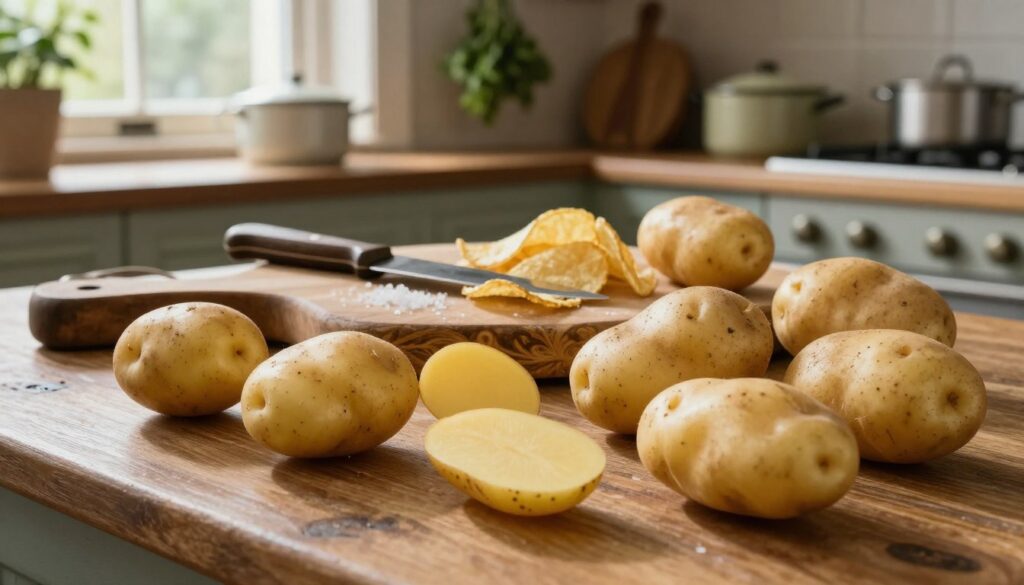
Learning to make British fish and chips starts with the potato choice. Your chips are a key part of the dish, not just a side. The right potato can make your chips fluffy and golden, or soggy and disappointing. Choosing the right potato is crucial for a successful thick cut chips recipe.
The potato type affects texture and taste. Choose floury or baking potatoes for the best results. These have high starch and low moisture, perfect for chips.
Best Potato Varieties for British-Style Chips
British chip shops use Maris Piper potatoes for a reason. They have a fluffy inside and crispy outside. Their high starch and low moisture make them ideal for chips.
American Substitutes for Maris Piper Potatoes
In the U.S., Russet potatoes are the best substitute. They have similar characteristics to Maris Piper. Avoid Yukon Gold potatoes, as they’re too waxy.
Cutting your chips properly is key for authentic results:
- Peel potatoes completely
- Slice into 3-inch lengths
- Cut to ½ to ¾ inch thickness
- Keep them chunky—these are chips, not fries
- Remember they’ll shrink slightly during cooking
When making British fish and chips at home, cut chips thicker. This prevents drying out and helps achieve that golden crunch.
The Triple-Cooking Method for Perfectly Crispy Chips
The secret to making chips like your favorite fish shop is the triple-cooking method. This method makes chips crispy on the outside and fluffy inside. It works by controlling moisture at each step, building texture layer by layer.
When making deep fried fish at home, your chips should get the same care as in professional kitchens. The triple-cooking process may take time, but it’s worth it for the amazing results.
Stage One: Parboiling Your Potatoes
Begin by soaking your cut potatoes in cold salted water. Heat the water to a boil and cook for about 5 minutes. This makes the edges fray and the potatoes tender.
This step does three key things:
- Seasons the potato from the inside out
- Removes excess starch that causes gumminess
- Gives your chips a head start on cooking
After draining, let the potatoes steam until they stop steaming. Then, let them cool to room temperature. Place them in the fridge for at least an hour, or overnight. This step firms them up and helps create a crust.
Stage Two and Three: The Double-Fry Process
Knowing your fish fry temperature guide is key for the next steps. The first fry is at 250°F for 4-7 minutes. This cooks the chips without browning the outside. Let them rest briefly.
The final fry is at 350-375°F for 4-5 minutes. This step gives them a deep golden color. You’ll get chips that are crispy on the outside and fluffy inside.
| Cooking Stage | Temperature | Duration | Purpose |
|---|---|---|---|
| Parboiling | Boiling water | 5 minutes | Remove starch, season, soften |
| First Fry | 250°F (180°C) | 4-7 minutes | Cook through without browning |
| Second Fry | 350-375°F (190-200°C) | 4-5 minutes | Achieve golden color and crispness |
Mastering this method can transform your home cooking. Your chips will be as good as those from a real fish and chips shop. The triple-cooking method is worth the effort for the incredible taste.
Preparing Your Fish for the Perfect Batter Coating
Getting your fish ready is key to making crispy beer battered fish at home. Many home cooks skip this step, leading to soggy fish instead of crispy. Moisture is your enemy when frying, as it causes steam and makes batter greasy.
Spending a few minutes on proper fish preparation can make a huge difference. It ensures your fish turns out golden and crispy.
How to Remove Excess Moisture from Fish
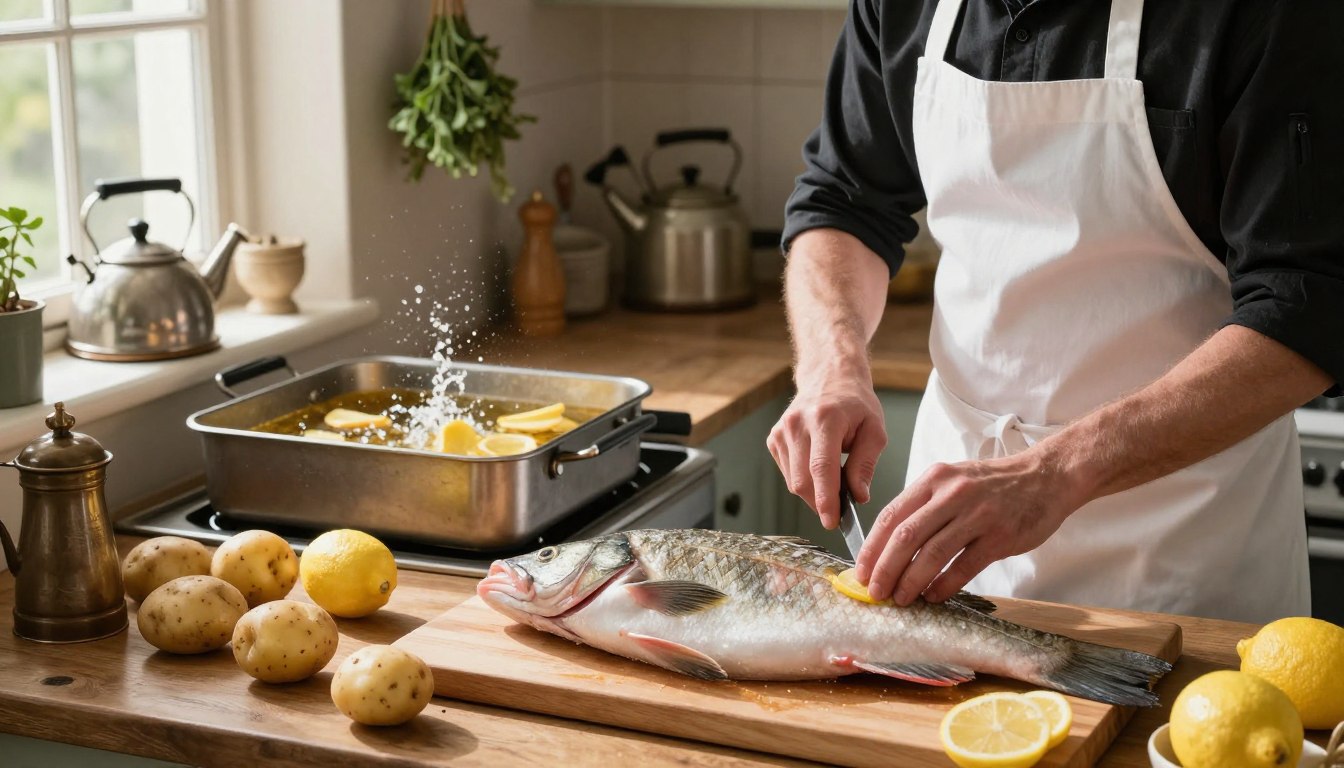
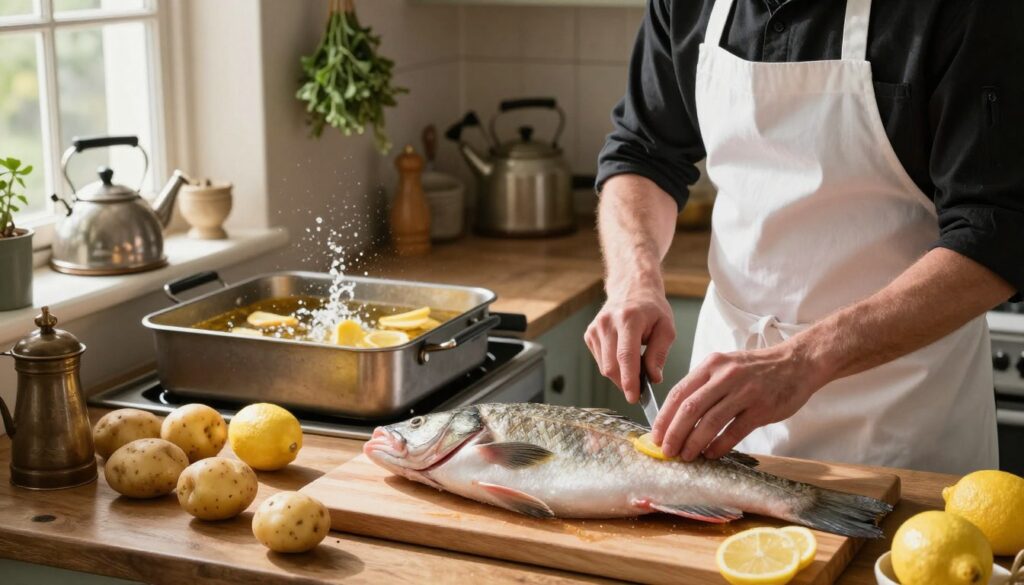
Start by patting your fish fillets dry with paper towels. This step is crucial. Place your fresh cod or haddock fillets on a clean surface and gently press them with paper towels on both sides. Make sure your fillets are boneless and skinless for the best outcome.
Next, sprinkle both sides of your fish with salt and let it sit for about 10 minutes. This draws moisture to the surface through a natural process. After the time is up, pat the fillets dry again with fresh paper towels. You’ll notice liquid on the surface that the salt pulled out. This is exactly what you want to remove.
Choose fillets that are similar in size so they cook at the same rate. Thick-cut pieces work better than thin ones because they give you time to fry the outside until crispy before the inside gets overdone.
The Importance of Dredging Before Battering
Before your fish touches the beer batter, you need to coat it in flour. This dredging step helps the wet batter stick to your fish instead of sliding off during frying. Use a shallow bowl with all-purpose flour or a mixture of flour and cornstarch.
Here’s the exact technique: Take your dry fish fillet and coat all sides by placing it in the flour mixture. Shake off any loose flour so you have just a thin, even coating. Work quickly and dip your floured fish straight into your beer batter. This timing matters because you want the flour coating to stay slightly damp when it meets the batter.
| Preparation Step | Duration | Purpose |
|---|---|---|
| Pat fish dry with paper towels | 2-3 minutes | Remove surface moisture |
| Salt fish and rest | 10 minutes | Draw out deeper moisture |
| Pat dry again | 2-3 minutes | Remove salt and drawn moisture |
| Dredge in flour | 1-2 minutes | Create surface for batter grip |
| Dip in beer batter | Immediate | Coat completely and evenly |
Understanding the traditional fish and chips ingredients list helps you appreciate why each step matters. Your batter needs to grip the fish properly, and your fish needs to be dry so the oil can create that crispy crust. When you follow proper preparation techniques for fish, you set yourself up for success before you even get to the best oil temperature for frying fish and chips.
- Pat fish dry with paper towels on both sides
- Salt fillets and wait 10 minutes for moisture to emerge
- Pat dry a second time to remove all surface moisture
- Use flour or flour and cornstarch mixture for dredging
- Coat all sides of fish with dredging flour
- Shake off excess flour before battering
- Dip into beer batter immediately after dredging
These prep steps take only about 15-20 minutes total but determine whether your fish stays crispy throughout cooking or absorbs oil and becomes soggy. Think of dredging and moisture removal as the foundation for everything that comes next in your frying process.
Mastering the Right Oil Temperature for Frying
Getting your oil to the right temperature is key for making great fish and chips at home. It’s like finding the perfect spot, not too hot and not too cold. This is where many home cooks get it wrong, but with the right tips, you can get it right.
For frying fish, aim for 350°F to 375°F. The best spot is around 360-365°F. If it’s too hot, the batter will burn before the fish is cooked. This makes the outside crispy but the inside raw.
If the oil is too cold, the batter will soak up oil instead of getting crispy. This makes your dinner greasy and soggy. It’s a big no-no for a traditional English dinner.
Chips need different temperatures at different stages. For the first fry, use 250-275°F to cook them gently. For the final fry, increase to 350-375°F to get that crispy golden exterior.
Essential Tools for Temperature Control
You need a reliable thermometer. A deep fryer with a built-in gauge is perfect. For stovetop cooking, get a candy or instant-read thermometer. Don’t guess at temperatures—precision is key.
Choosing Your Frying Oil
Use vegetable or canola oil for their high smoke points and neutral flavors. Beef tallow is the traditional choice, offering a rich flavor that British chip shops love.
- Keep oil depth at least 1 inch (5 inches is better for true deep frying)
- Never fill your pot more than halfway for safety reasons
- Monitor temperature throughout cooking—it drops when you add food
- Replace oil regularly to maintain quality
Step-by-Step Instructions for Frying Fish and Chips
Now it’s time to fry your battered fish and chips. The secret to great homemade fish and chips is timing. You want both hot and crispy when you serve them. Start by frying your chips first. Once they’re golden, toss them with sea salt and warm them in a 200°F oven.
Heat your oil to 350–375°F for frying the fish. Coat each cod fillet in flour, then in cold beer batter. Let excess batter drip off. Gently lower the fish into the hot oil, waiting a few seconds before releasing it to prevent sticking.
The Extra Batter Drizzle Technique for Maximum Crispiness
After about one minute of frying, lift the fish slightly and drizzle extra batter over the top. This creates craggy, extra-crispy bits. Cod’s firm texture holds up well to this technique, making it perfect for fish and chips.
Timing Your Frying for Perfect Results
Total frying time depends on your method. In a deep fryer, it’s about 5–8 minutes. In a skillet, fry 2–3 minutes per side. Look for a deep golden color—pale means undercooked, while dark brown means overdone.
For detailed guidance on achieving the perfect result, check out Mary DiSomma’s expert tips for crunchy.
Use a slotted spoon to remove your fish, letting excess oil drip back into the pan. Briefly drain on paper towels, then serve immediately. Serving fried food right away is key to keeping it crispy.
- Fry chips first at 350°F for 4–5 minutes until deep golden
- Keep warm in a 200°F oven while you prepare the fish
- Heat oil to 350–375°F for frying fish
- Wait one minute, then drizzle extra batter for maximum crispiness
- Fry 5–8 minutes total until deep golden brown
- Drain on paper towels and serve immediately
Traditional Accompaniments and Serving Suggestions
Now that your fish and chips are perfectly fried and golden, it’s time to finish them the traditional way. The magic of British fish and chips lies not just in the cooking but in how you serve and dress your meal. Getting these final touches right transforms your homemade creation into an authentic experience that tastes like it came straight from a London chip shop.
Salt is your first essential companion. Sprinkle flaky sea salt or fine table salt over your chips while they’re still hot and steaming. The heat helps the salt stick and dissolve slightly, seasoning every bite. Don’t be shy with the salt—Brits love their chips properly seasoned.
The next step is where tradition truly shines. Malt vinegar fish and chips is the classic pairing that defines British cuisine. Shake malt vinegar liberally over both your fish and chips. The sharp, tangy flavor cuts beautifully through the richness of the fried food. If you prefer a lighter touch, squeeze fresh lemon juice over the fish instead.
For sauce options, you have several choices. Creating easy homemade tartar sauce for fish brings authentic flavor to your plate. While tartar sauce isn’t traditional in Britain, it’s beloved in America and pairs wonderfully with your crispy fish. A good homemade tartar sauce with fresh dill and capers elevates the entire meal. Curry sauce stands as a beloved British chip shop favorite, along with ketchup and salad cream for those wanting something different.
Consider pairing your fish and chips with simple sides that complement rather than compete. When selecting accompaniments, roasted vegetables or a simple green make excellent choices that keep the focus on your perfectly fried fish.
- Mushy peas—a traditional British staple
- Pickled onions or pickled eggs for tangy flavor
- Buttered bread roll for making a chip sandwich
- Fresh lemon wedges for squeezing
- Curry sauce for dipping
Presentation matters too. Traditionally, fish and chips came wrapped in newspaper, but modern food safety means you’ll serve yours in food-safe paper or cardboard boxes. A small wooden chip fork is the classic touch. Eating at home? Use a proper plate with knife and fork for a more refined dining experience.
“Fish and chips isn’t just food—it’s a British institution that brings people together.”
The beauty of fish and chips lies in its simplicity and the way accompaniments enhance rather than mask the quality of your cooking. Each element—the salt, the malt vinegar, the sauce—plays a role in creating that perfect bite. Your properly fried fish deserves these traditional finishing touches.
Pro Tips for Keeping Your Fish and Chips Crispy
Making traditional british fish and chips at home is all about timing. You can’t fry everything at once. So, you need a plan to keep your chips warm while cooking the fish. The trick is using your oven to keep things warm and crispy.
Getting the temperature and technique right is key. When you learn how to keep chips warm, your oven becomes your kitchen’s best ally.
How to Keep Chips Warm While Frying Fish
Preheat your oven to 200°F before frying your first batch of chips. Once they’re golden and crispy, season them with sea salt right away. Salt sticks better when chips are hot.
Put your finished chips on a wire rack over a parchment-lined baking sheet. Never cover your chips with foil or a lid. Covering traps steam, making your chips soggy. Air circulation keeps them dry and crunchy.
Wire racks are better than paper towels for this step. Paper towels absorb moisture and can trap steam. A wire rack lets air flow around the chips, preventing soggy bottoms and keeping them crispy.
After putting your chips in the oven, start frying your fish. Fresh fish should go straight from the oil to the plate. Serve the fish quickly because the batter is crispiest right after frying.
| Component | Cooking Stage | Temperature | Storage Method |
|---|---|---|---|
| Chips | Finished frying | 200°F oven | Wire rack on parchment sheet |
| Fish | Just fried | Room temperature | Serve immediately |
| Mushy peas and vinegar | Warmed separately | Low heat on stovetop | Small pot or bowl |
Your workflow should look like this:
- Fry all your chips completely and season with salt
- Transfer chips to the warm 200°F oven on a wire rack
- Start frying your fish immediately
- Warm your mushy peas and vinegar on the stovetop
- Serve everything hot and fresh together
Timing is crucial. By the time your fish is done, your chips will still be hot and crispy. Your oven keeps everything warm without overcooking your traditional british fish and chips. This method is perfect for home cooks aiming for restaurant-quality results.
Remember, patience is key. Keep your mushy peas and vinegar warm on low heat while frying. When you follow this simple strategy, everything will be hot and ready to eat.
Conclusion
You’ve learned how to make a classic British dish, fish and chips. This comfort food has been loved for nearly two centuries. It started as a simple meal for working families and became a beloved tradition in the UK.
Now, you can make authentic, pub-quality fish and chips at home. You’ve learned how to choose the right fish and why cold beer is important in the batter. You also know the triple-cooking method for crispy chips and the exact oil temperature for golden results.
Famous places like Whitby, Yorkshire, and Harry Ramsden’s restaurant show the dish’s popularity. Harry Ramsden’s even set a Guinness Record by serving 10,000 portions in one day. Even Paul McCartney loved it growing up in Liverpool.
While the recipe has many steps, they’re not hard. Your homemade version will be hot, crispy, and delicious. You can serve it with traditional sides like malt vinegar and mushy peas. For lighter options, try easy oven-baked fish recipes for beginners.
Now, you can bring a taste of British seaside tradition to your American kitchen. Share your results and enjoy this timeless comfort food with your loved ones.