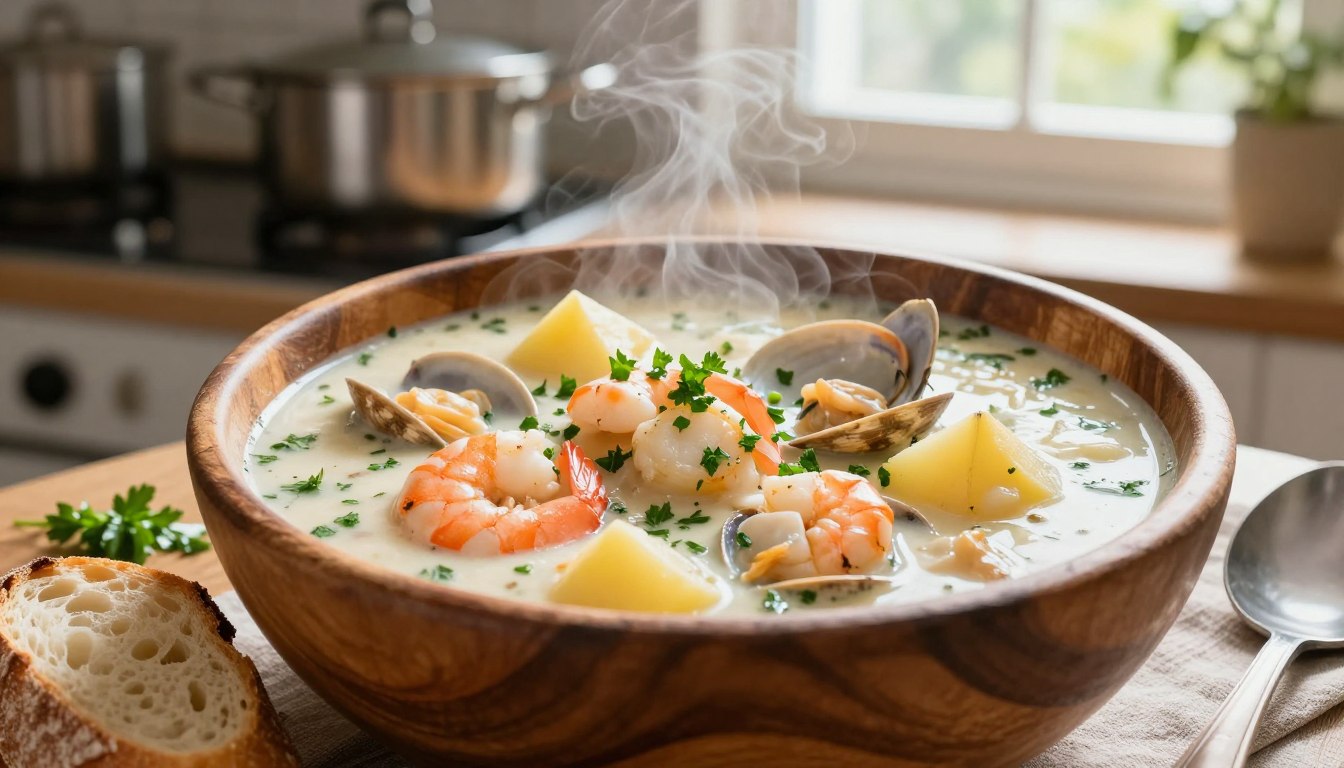
The Best Simple Homemade Seafood Chowder
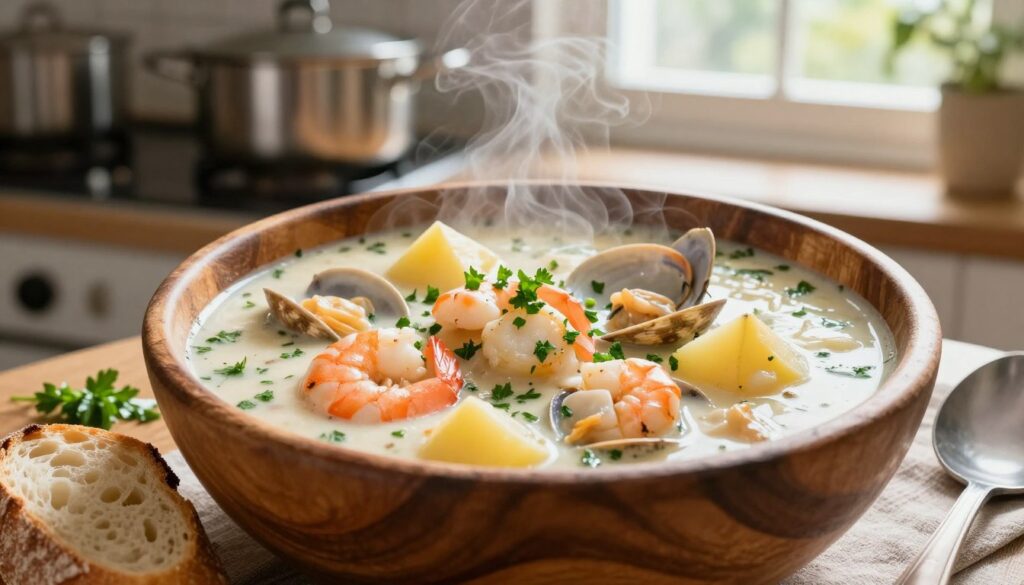
The first time I had homemade seafood chowder, it was magical. It’s comforting to make the best seafood chowder at home. It turns simple ingredients into a rich, creamy dish that warms you up.
Making the perfect homemade seafood chowder is more than just a recipe. It’s about finding the right balance of flavors and using the freshest seafood. This guide will help you make a chowder that’s as good as any restaurant’s.
You’ll learn how to pick the best seafood and build layers of flavor. You’ll also find out how to make a creamy base. This homemade seafood chowder recipe is perfect for any meal, whether it’s a weeknight dinner or a special occasion.
Key Takeaways
- Master the art of creating a restaurant-quality seafood chowder at home
- Learn techniques for selecting the freshest seafood ingredients
- Understand how to build deep, rich flavors in your chowder
- Discover tips for achieving the perfect creamy texture
- Gain confidence in preparing a versatile and impressive dish
Why Homemade Seafood Chowder Beats Store-Bought Every Time
Making your own seafood chowder turns a simple meal into a journey of flavors. It’s a chance to create something special that store-bought chowders can’t match.
Homemade chowder lets you control every ingredient. Store-bought chowders often have preservatives, too much salt, and fake flavors. Making it yourself means you choose what goes into your dish.
- Choose the freshest seafood available
- Control sodium and preservative levels
- Customize flavor profiles
- Select premium ingredients
Your kitchen becomes a place to try new things. Want more shrimp? Or a lighter cream base? Homemade chowder lets you do it all.
“Cooking is love made visible” – Chef Unknown
It’s also more affordable. Buying seafood on sale and mixing it with cheaper options can save money. Plus, making a dish from scratch is rewarding in a way that canned food can’t be.
The smell of homemade seafood chowder makes your kitchen feel cozy. It’s a warmth that store-bought chowders can’t offer.
Essential Ingredients for a Creamy Seafood Soup
Making a great creamy seafood soup starts with top-notch ingredients. The right mix of ingredients turns a simple dish into a memorable meal.
Understanding how each ingredient affects the soup’s taste and texture is key. Let’s look at the main elements that make your seafood chowder stand out.
Selecting the Freshest Seafood for Your Chowder
The quality of your seafood is crucial. Here are some tips for picking the best fish and shellfish:
- Choose fresh, local seafood from trusted fishmongers
- Look for bright, clear eyes in whole fish
- Check for a clean, ocean-like smell
- Ensure shellfish have tightly closed shells
Choosing the Right Potatoes and Vegetables
The supporting ingredients in your chowder are just as important as the seafood. Use waxy potatoes that keep their shape and add depth to your soup.
| Potato Type | Best Use | Texture |
|---|---|---|
| Yukon Gold | Chowder base | Creamy, smooth |
| Red Bliss | Chunky soups | Firm, holds shape |
| Russet | Thickening | Breaks down easily |
Cream, Milk, or Both: Finding Your Perfect Base
Finding the right dairy is key to a rich creamy seafood soup. Try different mixes to find your perfect balance. Some like heavy cream for its richness, while others mix milk and cream for a lighter feel.
- Heavy cream: Maximum richness
- Whole milk: Lighter consistency
- Half-and-half: Balanced approach
Your creamy seafood soup will be a hit when you choose each ingredient with care and passion.
Building Your Homemade Chowder Base from Scratch
Making a homemade chowder base is like creating a work of art. It turns simple ingredients into a rich, flavorful dish. The key is to layer flavors carefully to add depth and complexity.
Begin by cooking bacon or salt pork in a big pot. This step adds a smoky flavor that makes the dish better. Professional chefs say the secret to great seafood is building flavors slowly.
- Render fat from bacon or salt pork
- Sauté aromatics until translucent
- Create a smooth roux for thickening
- Gradually incorporate seafood stock
Next, cook onions, celery, and garlic in the bacon fat. These veggies release sweetness, making a strong flavor base. Mix in flour to make a roux, cooking it a bit to get rid of any raw taste and thicken the mix.
Slowly add seafood stock or clam juice, making sure it’s smooth. For a deeper flavor, use homemade stock made from fish bones and shrimp shells. Add herbs like thyme and bay leaves, then let it simmer to develop rich flavors.
A great chowder base is about patience and layering flavors carefully.
Your homemade chowder base is the foundation of your seafood dish. Take your time, taste as you go, and adjust the seasonings. The end result will be a deeply satisfying chowder that shows off your cooking skills.
Step-by-Step Instructions for Easy Seafood Chowder Recipe
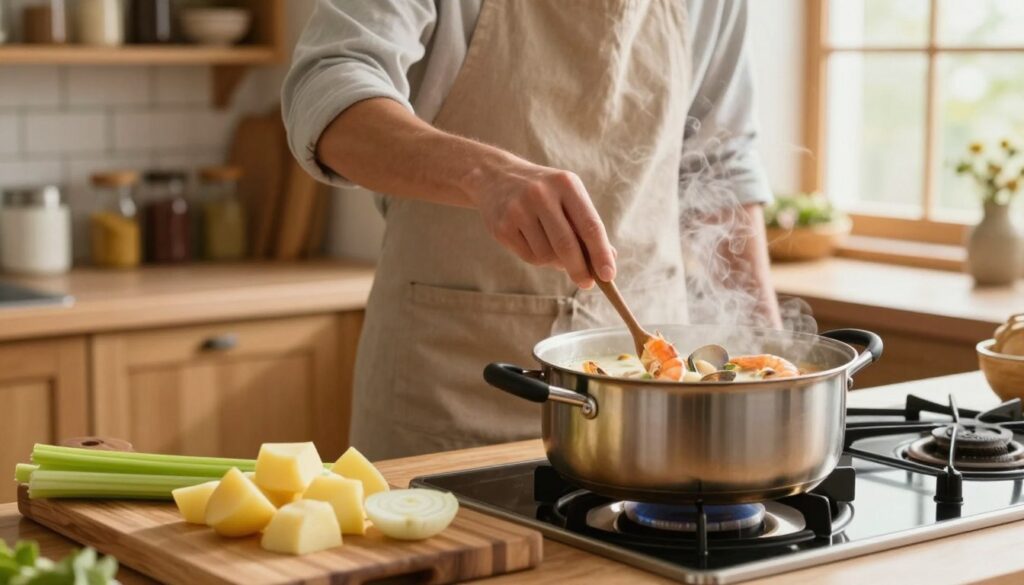
Making an easy seafood chowder recipe needs careful steps and attention. This guide will help you turn fresh seafood into a tasty, creamy soup. It’s sure to wow your family and friends.
First, gather all your ingredients and tools. A great chowder recipe depends on being organized and timing things right.
Preparing and Cutting Your Ingredients
Getting your ingredients ready is key for a delicious chowder. Here’s how to do it right:
- Dice potatoes into uniform 1/2-inch cubes
- Chop onions and celery into fine, consistent pieces
- Cut seafood into bite-sized chunks
- Measure out herbs and seasonings in advance
Layering Flavors for Maximum Depth
Creating complex flavors is what makes a seafood chowder stand out. Start by sautéing vegetables in butter. This creates a rich base for your soup.
“The key to an incredible chowder is developing layers of flavor from the first moment you start cooking.” – Coastal Cooking Magazine
Cooking Times for Each Seafood Component
| Seafood Type | Cooking Time | Preparation Note |
|---|---|---|
| White Fish | 3-4 minutes | Add last to prevent overcooking |
| Shrimp | 2-3 minutes | Cook until pink and curled |
| Clams | 5-7 minutes | Cook until shells open completely |
Timing is everything in this easy seafood chowder recipe. Overcooking seafood makes it tough and rubbery. So, watch your pot closely and remove items as soon as they’re perfectly cooked.
Pro tip: Keep your seafood chowder at a gentle simmer, never a rolling boil, to maintain the delicate texture of the ingredients.
Creating a New England Style Chowder in Your Kitchen
Start by mastering the classic new england style chowder in your kitchen. This seafood soup is more than a recipe. It’s a tradition tied to the sea.
A true new england style chowder has a rich, creamy base. It uses the right ingredients. Your chowder should be a pristine white, thanks to special cooking methods.
- Use fresh, high-quality seafood as the foundation
- Select cream or whole milk for authentic texture
- Include potatoes cut into hearty chunks
- Season sparingly with classic herbs like thyme
Key ingredients for an authentic new england style chowder include:
- Salt pork or bacon for depth of flavor
- Fresh seafood (clams, fish, or mixed varieties)
- Onions for aromatic base
- White potatoes
- Heavy cream or whole milk
While there are regional twists, the core stays the same. Purists say simplicity is key. Let quality ingredients shine. Serve with oyster crackers or in a warm bread bowl for a full experience.
“A great chowder tells a story of the sea, one spoonful at a time.”
Tips for Achieving the Perfect Chunky Seafood Bisque Texture
Making a delicious chunky seafood bisque is more than just mixing ingredients. It’s about getting the texture right. This makes your soup special.
The key is to balance the creamy base with big seafood pieces. You want the soup to be rich but still let each ingredient be noticed.
Balancing Thickness and Creaminess
To get the perfect texture, follow these tips:
- Use heavy cream and whole milk for richness.
- Thicken with a roux of butter and flour.
- Add seafood slowly to avoid overcooking.
- Stir gently to keep chunks intact.
Avoiding Common Mistakes That Make Chowder Too Thin
To avoid a watery bisque, try these expert tips:
- Strain and reduce seafood stock before adding.
- Use cornstarch slurry for quick thickening.
- Let the soup rest for 10-15 minutes to thicken naturally.
- Choose starchy potatoes like Yukon Gold for thickening.
Remember, making the perfect chunky seafood bisque takes practice. Each try will help you get better. Soon, you’ll impress everyone with your signature soup.
How to Make Clam Chowder from Scratch with Fresh Clams
Making clam chowder from scratch is a special treat. Fresh clams add a unique flavor that canned ones can’t match. Live, fresh clams bring a depth of taste that’s hard to find elsewhere.
Choosing the right clams is key for your homemade chowder. You have a few top picks:
- Quahogs: Large hard-shell clams perfect for hearty chowder
- Littleneck clams: Tender and delicate
- Cherrystone clams: Ideal for rich, flavorful broth
Preparing fresh clams needs careful steps. First, clean them well to get rid of sand and grit. Then, soak them in cold, salted water for 20-30 minutes. This helps them get rid of impurities. After that, scrub the shells to remove any dirt.
Steaming is a crucial step in making clam chowder. Here’s how to steam your clams:
- Put cleaned clams in a pot with 1 inch of water or white wine
- Cover and steam over high heat
- Cook until shells open (about 5-7 minutes)
- Strain and save the flavorful cooking liquid
Tip: Chop the clam meat if it’s big, and add it to your chowder near the end. The clam liquor you save is full of flavor. It makes your homemade chowder extra special.
| Clam Type | Quantity for Chowder | Meat Yield |
|---|---|---|
| Quahogs | 3-4 pounds | 1-1.5 cups |
| Littleneck | 3-4 pounds | 1-1.5 cups |
| Cherrystone | 3-4 pounds | 1-1.5 cups |
Remember, making clam chowder from scratch takes time, but the rich, authentic flavor is worth every minute of effort.
Customizing Your Hearty Fish Stew with Different Seafood Combinations
Turning a basic chowder into a hearty fish stew needs creativity and knowing how to mix seafood. Start by picking seafood that tastes good together and feels right in your mouth.
Creating a great hearty fish stew means knowing how different seafood work together. Not all fish are the same, and mixing them right can make your dish amazing.
Best Fish Varieties for Chowder
For your hearty fish stew, choose these top fish:
- Cod: Mild and flaky texture
- Halibut: Firm and meaty white fish
- Haddock: Traditional New England favorite
- Salmon: Rich, distinctive flavor
Adding Shrimp, Scallops, and Lobster
Make your hearty fish stew even better by adding shellfish. They add special textures and tastes. Each seafood adds something unique to your dish.
| Seafood Type | Texture | Flavor Profile |
|---|---|---|
| Shrimp | Tender, slightly springy | Sweet, delicate |
| Scallops | Soft, buttery | Mild, slightly nutty |
| Lobster | Firm, meaty | Rich, luxurious |
By picking and mixing seafood carefully, you’ll make a hearty fish stew that’s both tasty and beautiful. Try different textures, sizes, and flavors to make your own special seafood dish.
Perfecting Your Seafood Soup with Potatoes
Potatoes are the secret to a great seafood soup. They do more than just fill your bowl. They make your chowder rich and satisfying.
The right potato can change your soup. Each type adds something special:
- Yukon Gold: Best all-around choice with buttery flavor and creamy texture
- Russet: High starch content creates thick, fluffy consistency
- Red potatoes: Maintain shape, provide firm bite
Here’s how to prep potatoes for your soup:
- Cut potatoes into uniform half-inch cubes
- Add to simmering broth
- Cook 12-15 minutes until tender
- Gently mash a few pieces to release natural thickening starch
| Potato Type | Texture | Thickening Power |
|---|---|---|
| Yukon Gold | Creamy | Moderate |
| Russet | Fluffy | High |
| Red Potatoes | Firm | Low |
Pro tip: Use about 1 pound of potatoes for every 6 cups of liquid. This ensures the perfect balance in your soup. Remember, potatoes soak up liquid, so adjust the soup’s consistency when reheating.
Storing and Reheating Your Best Seafood Chowder
Keeping your seafood chowder fresh is key. Store it in an airtight container in the fridge for up to three days. Cool it down first to stop bacteria from growing and keep it creamy.
Reheating your chowder needs care. Warm it slowly over low heat, stirring now and then. This prevents scorching and keeps the cream smooth. Use a heavy pot and keep the heat low for even warming.
Try not to microwave it, as it can toughen the seafood and break the cream. If you must, heat in short 30-second bursts, stirring each time. Adding a bit of fresh cream can fix it if it starts to separate.
Proper Storage Techniques for Maximum Freshness
Use glass or ceramic containers with tight lids for storing. Glass keeps flavors in and lets you see what’s inside. Store it in the coldest part of your fridge to keep it fresh and prevent spoilage.
How to Reheat Without Breaking the Cream
Remember, don’t reheat your chowder more than once. Each time can make the seafood and cream less tasty. If you’ve made a lot, portion it out before storing. With these tips, your seafood chowder will taste as good as the day you made it.
FAQ
How long can I store homemade seafood chowder?
Can I freeze seafood chowder?
What are the best types of seafood to use in chowder?
How can I thicken my seafood chowder?
Is seafood chowder healthy?
What’s the difference between New England and Manhattan clam chowder?
Can I make seafood chowder without dairy?
How do I prevent seafood from becoming tough in chowder?
SEO
the-best-simple-homemade-seafood-chowder