
The Best Simple Moroccan Lamb with Shiraz Honey Sauce
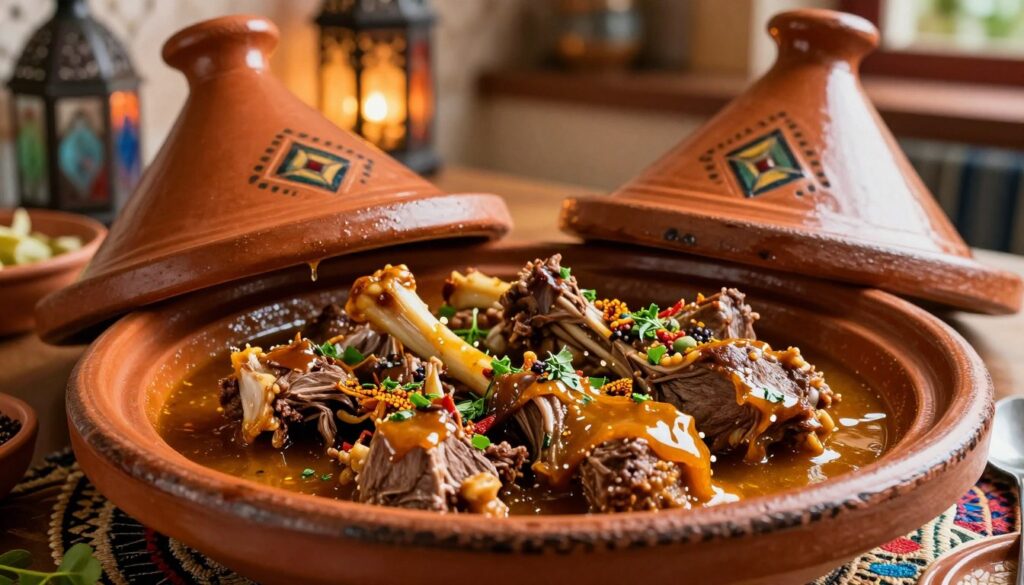
Imagine walking into a kitchen filled with the scent of cinnamon, cumin, and rosemary. Your senses come alive. Your mouth waters. You know something special is cooking in your oven.
You don’t need to be a pro to make this dish. This gourmet Moroccan lamb recipe is easy. It needs just a few quality ingredients and patience. The oven or slow cooker does most of the work.
A bone-in lamb shoulder is key. The fat and connective tissue melt during slow cooking, making the meat tender. Adding Australian Shiraz wine to the pan enriches the sauce. Honey adds sweetness and a beautiful caramelization that balances the spices.
This recipe combines traditional North African flavors with modern cooking. Roast your lamb at 180°C for about 2 hours and 15 minutes covered. Then, finish it uncovered for 30 minutes until the honey glaze is golden. This process is easy and perfect for any dinner.
Learning how to prepare slow-cooked lamb shoulder is a game-changer. Your kitchen will smell amazing. Your family will eagerly wait for dinner. And your meal will taste like you spent hours cooking, even if you didn’t.
Key Takeaways
- Bone-in lamb shoulder is the ideal cut because fat and connective tissue break down into tender, flavorful meat during slow cooking
- Moroccan spice blends including smoked paprika, rosemary, and garlic create authentic North African flavors
- Shiraz wine adds sophisticated depth while honey provides caramelization and sweetness that balances savory spices
- Cook at 180°C for approximately 2 hours and 15 minutes covered, then 30 minutes uncovered for perfect results
- Internal temperature should reach 195–205°F for fall-apart tender meat that shreds easily
- Rest your lamb for 10–15 minutes after cooking to lock in juices and complete the carryover cooking process
- This gourmet Moroccan lamb serves 4–6 people and works perfectly for both casual dinners and special celebrations
Why Moroccan Lamb with Shiraz Honey Sauce Is a Show-Stopping Dish
A sweet and savory moroccan lamb recipe makes your dinner table magical. The mix of tender meat, rich wine, and golden honey turns a simple meal into a memorable one. Your guests will be amazed by the smell and look before they even taste it.
This dish is special because it combines flavors and textures perfectly. The Shiraz wine adds tannins and acidity, balancing the lamb’s richness. Honey caramelizes, giving a glossy finish that looks as good as it tastes. These elements create a depth that keeps your taste buds interested with every bite.
The Perfect Balance of Sweet and Savory
The secret to your sweet and savory moroccan lamb recipe is timing and technique. Honey caramelizes beautifully on the meat’s surface when added near the end. This creates a mahogany crust. The sweetness enhances the savory spices, not overpowering them.
This balance is key because sweet and savory flavors work well together. They create contrast that makes each flavor stand out. Honey adds moisture, keeping the lamb tender and visually appealing. This technique has been perfected over generations, as seen in winning lamb recipes.
Aromatic Spices That Transport You to North Africa
North african lamb cuisine is known for its warm spices that fill the air with an intoxicating aroma. Your aromatic spiced lamb comes to life with these spices:
- Cinnamon for warmth and subtle sweetness
- Cumin for earthy depth
- Coriander for citrus notes
- Ginger for sharp, fresh heat
- Paprika for color and mild flavor
- Cloves for complexity
These spices create a crust on your meat, similar to smoked dishes. Fresh herbs like mint, rosemary, and thyme add to the dish’s profile. When these aromatics hit your nose, they take you to Moroccan souks and family tables where slow-cooked lamb is cherished. Your aromatic spiced lamb becomes more than food—it’s an experience that fills your kitchen with warmth and invitation.
The mahogany color, glistening honey glaze, and aromatic steam when you cut into it all make it special. This is why your Moroccan lamb with Shiraz honey sauce is a must-have on your table.
What Makes This Moroccan Lamb Recipe So Special

This authentic Moroccan lamb dish is special because it combines ancient cooking traditions with modern flavors. It’s inspired by the tagine, a traditional cooking vessel that’s at the heart of Moroccan cuisine.
Slow cooking is the secret to this dish’s magic. It lets spices deeply penetrate the meat over hours. This method turns tough lamb shoulder into tender, shreddable meat. Choosing slow-cooked lamb shoulder means you’re in for a flavor and texture treat.
This festive Moroccan lamb dish is special because of its key elements:
- Bone-in lamb shoulder adds extra flavor and juiciness
- Rosemary and garlic create a fragrant base
- Honey and red wine make a sweet, caramelized glaze
- The cooking method is like traditional tagine techniques, without special equipment
Honey has been a key ingredient in North African cooking for thousands of years. It adds sweetness and acts as a preservative, making simple ingredients extraordinary. This balance of sweet and savory flavors makes your Moroccan lamb dish truly special.
Lamb is deeply rooted in Moroccan culture. It’s a staple at celebrations, holidays, and family gatherings. By making this traditional Moroccan lamb dish, you’re connecting with a rich culinary heritage and creating a memorable meal.
Essential Ingredients for Moroccan Lamb with Shiraz Honey Sauce
To make a great Moroccan lamb dish, you need the right ingredients. Each one adds flavor that makes the dish special. Knowing what you need helps you shop smart.
Choosing the Right Cut of Lamb
The key to a great dish is the lamb cut. A braised lamb shoulder is perfect because it gets tender with slow cooking. You’ll need 2 to 3 pounds of lamb shoulder for 4 to 6 people.
Bone-in lamb is richer in flavor but takes longer to cook. Boneless lamb cooks faster and is easier to serve. Make sure your butcher trims fat but keeps some for flavor.
The Role of Shiraz Wine in Creating Depth
Red wine makes your lamb dish amazing. Shiraz wine sauce adds depth that simple cooking can’t. The wine’s tannins break down the meat as it cooks, making it rich and flavorful.
You’ll need two-thirds cup of Shiraz wine. This wine’s fruity flavors pair well with honey. If Shiraz is hard to find, bold red wines like Côtes du Rhône are good substitutes.
Moroccan Spice Blend Breakdown
A Moroccan spice blend is essential for the dish’s flavor. Mixing your own spices lets you control the taste. Here’s what you need:
- Cumin and coriander lamb adds warm, earthy flavors
- Smoked paprika adds color and smokiness
- Ground ginger adds heat and health benefits
- Turmeric adds earthy warmth
- Garlic powder deepens the savory taste
- Cinnamon, nutmeg, and cloves add warmth and sweetness
- Red pepper flakes add gentle heat
A garlic and ginger marinade adds more flavor. You can also use ras el hanout for convenience. Saffron lamb adds a golden color and floral taste, but it’s pricier.
You’ll also need one cup of water or stock, four tablespoons of honey, fresh rosemary or thyme, and optional vegetables like carrots, onions, and celery.
Step-by-Step Guide to Making Slow-Cooked Moroccan Lamb
Making Moroccan lamb with shiraz honey sauce needs patience and focus. It’s easy once you know each step. Start by preparing your lamb shoulder. Use a sharp knife to score the meat deeply.
These cuts let your spice blend go deep into the meat. They also help create a delicious crust. Cut garlic cloves lengthwise into thin pieces. These will fit into your scoring cuts.
Preparing Your Lamb for Cooking
Next, prepare the meat for cooking. Rub your lamb with oil and press your Moroccan spice mixture into the cuts. Insert the garlic pieces into the slits, spreading them evenly.
If you have time, sear the lamb in a hot pan. This step adds a flavorful crust. It makes your dish even more savory.
Two Cooking Methods for Your Oven Roasted Moroccan Lamb with Shiraz
You have two great ways to cook your slow cooked Moroccan lamb. Knowing both methods helps you choose what fits your schedule and kitchen.
| Cooking Method | Temperature/Setting | Cooking Time (Covered) | Final Stage | Total Time |
|---|---|---|---|---|
| Oven Roasting | 180°C / 356°F | 50-60 minutes per pound | Remove foil, add honey glaze, cook uncovered 30 minutes | 3-5 hours (depending on weight) |
| Slow Cooker | HIGH setting | 3-4 hours on HIGH | Add honey in final 30 minutes if desired | 3-4 hours |
| Slow Cooker | LOW setting | 6-8 hours on LOW | Add honey in final 30 minutes if desired | 6-8 hours |
Oven Roasting Your Moroccan Lamb with Shiraz
For oven roasted Moroccan lamb with shiraz, place your prepared meat in a roasting pan. Add your liquid, a mix of Shiraz wine and beef stock or water. The wine adds depth and richness.
Cover your pan tightly with foil. This locks in moisture and prevents drying. Your spices will develop a bark while staying tender underneath.
Cook your lamb for about 50 to 60 minutes per pound while covered. Remove the foil carefully. Your meat should be tender but not falling apart.
Drizzle honey over the top and cook uncovered for 30 minutes. This stage is where the magic happens. The sauce reduces and concentrates while the honey caramelizes into a glossy coating.
Slow Cooker Method for Easy Preparation
If you prefer the hands-off approach, your slow cooker is your best friend. Pour your broth into the bottom of your slow cooker and add your seasoned lamb along with any vegetables. Cook on HIGH for 3 to 4 hours or on LOW for 6 to 8 hours. The slower cooking time produces exceptionally tender results with deeper flavor development.
- Check your lamb at the midway point to ensure even cooking
- Listen for the meat to shred easily with a fork when done
- Add honey in the final 30 minutes if your slow cooker design allows for it
- Use the remaining cooking liquid to create your sauce
Both methods for slow cooked Moroccan lamb deliver outstanding results. Your choice depends on your schedule and preference. The oven method gives you more control over the final glaze, while the slow cooker method requires minimal attention. Either way, you’ll create a dish that impresses everyone at your table.
How to Achieve Fall-Apart Tender Lamb Every Time

To get your lamb to fall-apart tenderness, you need to understand slow cooking. It’s all about breaking down collagen into gelatin. This makes the meat melt in your mouth. Here, we’ll show you the temperatures, times, and techniques for tender lamb every time.
Cooking Temperature and Time Guidelines
Cooking at the right temperature for the right time is key. Set your oven to 180°C (356°F). Cook a lamb shoulder for about 3 to 4 hours. This slow cooking breaks down connective tissue without drying out the meat.
Make sure the meat reaches 195-205°F (90-96°C) in its thickest part. Avoid the bone, as it heats up differently. Use a meat thermometer to check. The meat should be so tender that a fork slides through easily.
The dark crust on your lamb isn’t burnt. It’s the spice rub forming a flavorful bark. This adds great texture and taste to your dish.
The Importance of Resting Your Lamb
Resting your lamb is crucial for tenderness and juiciness. Let it rest for 10-15 minutes, covered loosely with foil. This allows the meat to relax and reabsorb juices.
Resting also lets the meat’s internal temperature rise slightly. This makes every bite juicier and more flavorful. It’s better than serving it right away.
- Rest meat for 10-15 minutes minimum
- Use loose foil tenting to retain warmth
- Allow carryover cooking to complete the process
- Your easy moroccan lamb will be noticeably juicier
If your lamb isn’t tender enough, don’t worry. Just put it back in the oven for 30 minutes at the same temperature. You’ll get perfectly tender meat that’s even better than before.
Creating the Perfect Honey Glaze Sauce
The magic of your moroccan honey glazed lamb comes down to timing and technique. After your lamb has cooked covered for most of the cooking time, you remove the foil. This exposes the meat for the final glaze. You apply about 4 tablespoons of runny honey, drizzling it evenly across the top of the meat.
Return your lamb to the oven uncovered for 30 minutes. During this time, the honey caramelizes under the heat. It creates a glossy, mahogany-colored coating. The sugars break down, adding complexity that goes far beyond simple sweetness.
The pan juices below hold the real treasure. As your lamb cooks, it releases flavorful drippings that mix with the wine and spices. When honey drips down, it enriches this liquid into a concentrated sauce. This honey glaze sauce becomes the finishing touch that brings everything together.
Creating your lamb with honey reduction involves watching the sauce carefully. The pan juices, rendered lamb fat, wine, and spices blend with honey to create a rich, balanced sauce. Think of it like the honey balsamic sauce method—where you balance sweet with savory elements to achieve depth.
Your moroccan lamb with red wine and honey glaze gets its final touch through proper drizzling technique. After removing the lamb from the oven, let it rest. Then use a spoon to scoop up that caramelized sauce and drizzle it generously over the meat. This creates multiple layers of flavor.
If your sauce seems too thin, return the pan to the stovetop and reduce it further. If it becomes too thick, add a splash of stock or water. You control the sweetness level—add more honey for intense flavor or adjust downward for subtle sweetness.
- Drizzle honey evenly across exposed meat surfaces
- Bake uncovered for 30 minutes to caramelize
- Monitor pan juices as they reduce and thicken
- Taste and adjust sweetness to your preference
- Scoop and drizzle sauce over rested lamb before serving
| Sauce Component | Amount | Purpose |
|---|---|---|
| Runny Honey | 4 tablespoons | Creates caramelized glaze and sweetness |
| Pan Juices | From rendered lamb fat | Adds rich, meaty depth |
| Shiraz Wine | To taste | Balances sweetness with savory notes |
| Beef Stock | Splash as needed | Adds umami and adjusts thickness |
| Spices | From cooking liquid | Contributes Moroccan flavor complexity |
The beauty of your honey glazed lamb lies in its balance. The savory elements—wine, lamb juices, and spices—keep the sweetness from becoming cloying. This isn’t candy-like or overpowering. It’s sophisticated comfort food that tastes restaurant-quality at home. You’ve mastered one of the most impressive techniques in lamb cooking.
Serving Suggestions and Side Dishes for Your Moroccan Feast
Your moroccan lamb recipe needs the right sides to make it complete. The right dishes can turn a simple meal into a feast. Each dish should work together to bring the true taste of North African cuisine to your table.
The dish is very versatile. You can serve it family-style for a casual meal or individually for a fancy dinner. How you present it is just as important as the taste.
Traditional Moroccan Accompaniments
Start with fluffy couscous for your moroccan lamb. It soaks up the sauce perfectly, giving you a true North African taste. Basmati or jasmine rice are also great options for a lighter side.
Vegetable sides add balance to your meal:
- Glazed carrots that echo the sweetness of honey
- Roasted root vegetables seasoned with cumin and coriander
- French green beans or lemon asparagus for freshness
- Mashed cauliflower for a creamy, low-carb option
Fresh herbs like mint, cilantro, or parsley add a burst of flavor. They cut through the richness of the lamb. Harissa on the side lets guests add extra spice to their meal.
Modern Fusion Pairings
You can mix cuisines for new and exciting dishes:
| Cuisine Style | Side Dish Options | Best For |
|---|---|---|
| Mediterranean | Tzatziki, tomato cucumber feta salad, warm pita bread | Casual lamb wraps |
| Middle Eastern | Tabbouleh, Persian salad with herbs | Light, fresh accompaniment |
| Contemporary | Quinoa bowls, tahini drizzle, roasted vegetables | Modern presentation |
Don’t forget about leftovers. Shredded lamb is great in grain bowls or sandwiches the next day. You can also add potatoes and carrots to the roasting pan for extra flavor.
Tips for Making This Recipe Ahead and Storage Options
Planning ahead makes your shiraz wine lamb recipe easy and stress-free. You can prep the lamb 24 to 48 hours before cooking. Score the meat, rub it with spices, and add garlic. Wrap it tightly and refrigerate until cooking time.
This prep improves flavor as spices penetrate deep into the meat. It’s like a dry marinade.
When cooking time comes, take the lamb out of the fridge 15 to 30 minutes early. Letting it sit at room temperature ensures even cooking. This step makes the lamb tender and juicy.
Storing leftovers keeps your shiraz wine lamb recipe delicious for days. Cool the lamb and place it in airtight containers with juices. This keeps the meat moist and flavorful. Leftovers stay fresh for 3 to 4 days.
Freeze cooked lamb for longer storage. Shred the meat and divide it into portions. Frozen lamb lasts up to 3 months. Thaw it overnight in the fridge when you’re ready to eat.
Reheating is key for texture and taste. Warm the lamb gently in a pan with stock or juices. Keep it covered to prevent drying. For crispy edges, try reheating under the broiler briefly. Similar to storing prepared fish meals, keeping moisture in your reheated lamb protects its quality and makes leftovers just as satisfying as the original meal.
Here’s what you need to know about storage:
- Refrigerator storage: Keep leftovers in airtight containers with cooking juices for 3 to 4 days
- Freezer storage: Shred cooked lamb and freeze in portions for up to 3 months
- Thawing: Defrost frozen lamb overnight in the refrigerator
- Reheating: Warm gently in a covered pan with stock or use the broiler for crispy bits
Making extra portions of your shiraz wine lamb recipe isn’t wasteful—it’s smart meal planning. Shredded lamb is great in grain bowls, wraps, sandwiches, and salads. You get multiple delicious meals from one cooking session.
Conclusion
Making Moroccan lamb with Shiraz honey sauce is simpler than you might think. It’s perfect for both new and seasoned cooks. The slow cooking method makes the magic happen, turning simple ingredients into something amazing. Just trust the process and let time do its work on your lamb.
Your kitchen will fill with incredible smells while it cooks. The scents of cinnamon, cumin, and honey bring warmth and comfort. When you serve the dish, everyone will be impressed. The tender lamb and sweet sauce make it a standout at any meal.
This recipe is all about flexibility. You can play with spices, wines, and sides to suit your taste. Understanding how sweet and savory flavors in lamb is key. Start with high-quality lamb from places like Gingin Beef for the best results. Use this recipe as a starting point to explore North African cooking.