
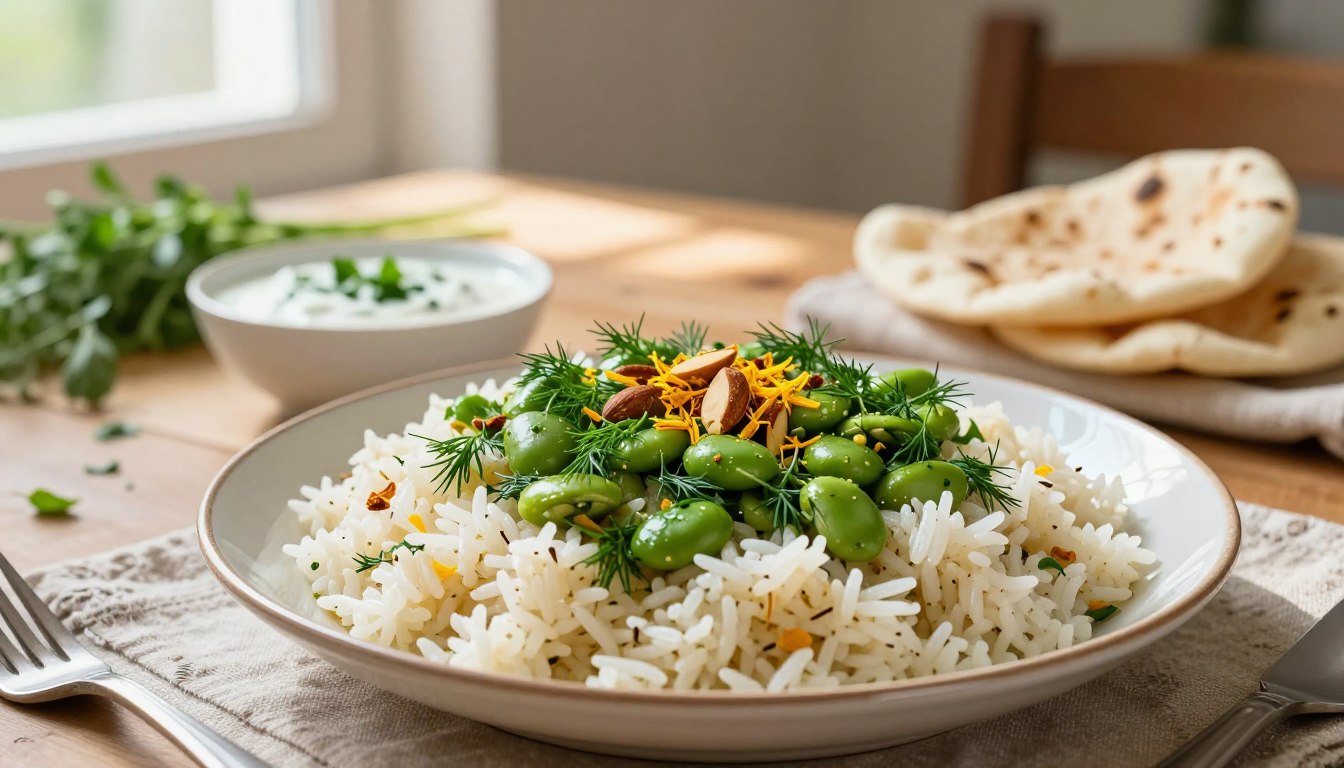
The Best Simple Baghali Polo Persian Dill
Baghali Polo is like a bridge to home. It brings back memories of a pot steaming on the stove. The scent of dill and saffron fills the kitchen.
Or maybe you’re trying this persian rice recipe for the first time. You’ll find it comforting, bright, and delicious.
This dill rice recipe uses basmati, lima or fava beans, and lots of dill. It’s an authentic iranian dill rice with fava beans. You can make it any night of the week.
The method is simple and easy to follow. You’ll get perfectly steamed rice and a crisp tahdig without any fuss. There are tips for substituting frozen beans and using dried dill when fresh isn’t available.
And there’s an easy Persian baghali polo recipe step by step. It works great at home.
Key Takeaways
- Baghali Polo recipe blends basmati rice, dill, and fava or lima beans for a fragrant, protein-rich meal.
- Wash rice until water runs clear and par-cook until an al dente white dot remains for best texture.
- Use dried dill for consistent aroma when steaming between rice layers, or fresh dill for a brighter finish.
- Make a traditional persian baghali polo recipe at home with simple steps for layering, steaming, and finishing with saffron.
- Vegan option: swap butter for neutral oil and skip yogurt-based tahdig while keeping full flavor.
What is Baghali Polo and its place in Iranian cuisine
Baghali Polo is a fragrant Persian rice dish. It’s made with basmati rice, fresh or frozen fava beans, and dill. The name “baghali” means “fava” in Farsi, and “polo” means pilaf-style rice.
Definition and translation
Simply put, baghali polo is fluffy rice mixed with tender broad or lima beans and lots of dill. It often includes saffron and has a golden crust at the bottom. Making it at home involves parboiling, layering, steaming, and revealing the golden crust.
Historical and cultural context
The history of baghali polo is rich in Persian and Middle Eastern cooking. It has cousins like Iraq’s Timman Bagilla. Traditionally, it used fresh broad beans and ghee or butter for flavor. Now, home cooks use frozen fava beans and oil for convenience. Restaurants offer special versions for all occasions.
Why you’ll love this recipe
This recipe is loved for its herb-forward flavor and tender beans. It’s great as a vegetarian dish or with meat. It’s easy to make and freezes well, perfect for busy nights. Follow a simple recipe to enjoy a delicious, aromatic dish that highlights Iranian cuisine.
Ingredients and smart substitutions for the best Baghali Polo recipe
For a great Baghali Polo, you need a few key ingredients and some smart swaps. Start with high-quality white long-grain basmati rice. This rice is special because it smells great and cooks well without sticking.
Rinse the rice until the water is clear. Then, soak it for 3–10 minutes before cooking it briefly.
Fresh fava or broad beans are the traditional choice. But, frozen peeled fava beans are a good time-saver. If you can’t find them, frozen lima beans or cooked chickpeas are good substitutes. If using dried beans, soak them overnight and cook until they’re tender.
Dill is key for flavor. Fresh dill adds a bright aroma, while dried dill is more intense and works well when steamed. Use about three cups of fresh or 1¼ cups of dried dill. Choose based on the texture you prefer.
Butter or ghee adds richness. For a vegetarian or vegan version, use olive oil or sunflower oil. Mixing oil for cooking and adding a bit of butter at the end is a good compromise.
Saffron adds color and scent when used carefully. Crush a few threads, steep them in hot water, and add the saffron water towards the end. This way, you get vibrant color without wasting the spice.
This recipe is naturally gluten-free when using plain rice and beans. Use vegetable stock instead of poultry broth for a vegetarian version. For a richer tahdig, try a potato crust or a yogurt-rice mix with saffron water.
| Ingredient | Traditional Form | Smart Substitutes | Notes |
|---|---|---|---|
| Rice | White long-grain basmati | Any long-grain basmati brand (Soaked 3–10 min) | Parboil 4–5 min; adjust water in rice cooker 1¼–1¾ cups per cup rice |
| Beans | Fresh fava (broad) beans | Frozen peeled fava, frozen lima, cooked chickpeas, edamame | Thaw or cook from frozen; soak dried beans overnight |
| Dill | Fresh dill (3 cups+) | Dried dill (≈1¼ cup) for consistency | Dried is ideal for steaming between layers |
| Fat | Butter or ghee | Olive oil, canola, sunflower, avocado oil | Mix oil for cooking and butter for finishing if desired |
| Saffron | High-quality threads | Small pinch of ground saffron steeped in hot water | Crush threads, steep ~2 tbsp hot water, add at end |
| Dietary swaps | Chicken broth, yogurt tahdig | Vegetable broth, oil-based tahdig, potato or yogurt-rice crust | Keeps dish vegetarian or makes richer crusts |
Tools and prep tips for perfect Persian rice
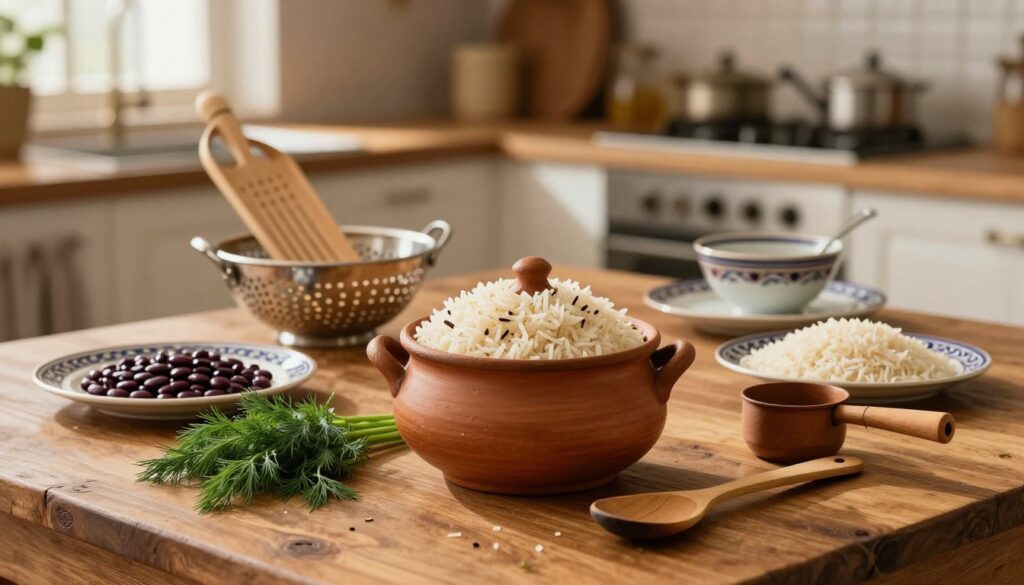
Great Baghali Polo starts with the right tools and prep habits. Use a heavy-bottomed pot with a tight lid for even heat and a crisp tahdig. A rice cooker is a good alternative if you prefer hands-off cooking.
Keep a colander for draining rice and a sharp knife for chopping dill.
Cookware and utensils
Choose cookware that fits your cooking style. A heavy-bottomed pot or nonstick Dutch oven works well for stovetop steaming. For baked tahdig, use a Pyrex or oven-safe dish.
A spatula or large spoon helps layer rice without breaking grains. A fork is useful for fluffing after steaming.
Consider specialty tools like a mortar and pestle for saffron. A salad spinner for dill dries herbs quickly. Measuring cups, a peeler, and an optional glass lid are also helpful.
Prep steps that save time
Start by washing and soaking rice. Rinse the rice 3–5 times until the water is clear. Then, soak it briefly to improve texture.
While soaking, prep dill and beans. This makes assembly faster. If using frozen fava beans, thaw them ahead or warm them in boiling water.
Steep saffron early. Grind threads in a mortar and pestle with sugar, then steep in hot water. This extracts aroma while rice steams.
If using a rice cooker, follow the manufacturer’s water ratios. Let the rice rest in the cooker for a few minutes before steaming.
Ingredient prep reminders
Dry herbs well. Use a salad spinner for dill, then blot on towels. Let them rest to avoid moisture ruining the steam.
For dried dill, use about one-third the volume of fresh. Measure rice-to-water cues by visual signs during parboil. Softened tips and a white dot at the center mean the rice is al dente and ready to drain.
Handle beans properly. Thaw frozen beans in warm water or briefly in the pot. Canned beans should be rinsed and warmed. Keep your prep organized for a meal that serves 6–8. For a practical walkthrough of steps and timing, see this recipe guide.
Step-by-step cooking method (easy Persian Baghali Polo recipe step by step)
First, get a quick overview of the steps. You’ll boil, test, drain, layer, steam, and finish with saffron. Keep your tools ready and a timer set to avoid overcooking.
Boil and test the rice
Start by boiling 2/3 pot water with 3 tbsp salt. Add washed basmati rice and frozen lima or fava beans. Stir gently and keep the lid off to prevent overflow.
Boil the rice for 4–5 minutes until it’s al dente. This means the grains are soft at the tips but still have a white dot in the center. Taste one grain to check if it’s firm; don’t overcook.
Drain the rice and beans in a colander. If the rice is too salty, rinse it briefly with cold water. Shake off excess water.
Layering and steaming
Put 3 tbsp oil or a mix of oil and butter at the bottom of a clean pot. Spread half of the drained rice and beans evenly. Sprinkle a generous layer of dill on top.
Add the remaining rice and beans on top. Use the back of a spoon to make holes for steam to circulate.
Cover the pot and cook on medium until the lid fogs. When it does, drizzle 2 tbsp oil over the rice to help form tahdig. Seal the lid and reduce heat to the lowest setting.
Steam gently for 20–30 minutes. Keep the heat low to cook the rice through without burning the bottom.
Saffron and final finishing
Grind a small pinch of saffron threads and steep them in 2 tbsp hot water. This adds a bright, aromatic finish.
After steaming, remove the lid and pour the saffron water or a few threads over the top. Save some saffron rice for garnish if you like.
Gently fluff the rice with a fork to distribute dill and saffron. Let it rest a couple minutes if it seems tight before fluffing.
Serve the rice with tahdig pieces on the platter. Pair it with grilled lamb, roasted chicken, or a simple cucumber-yogurt salad for balance.
How to make a great tahdig (crispy rice crust) for Baghali Polo
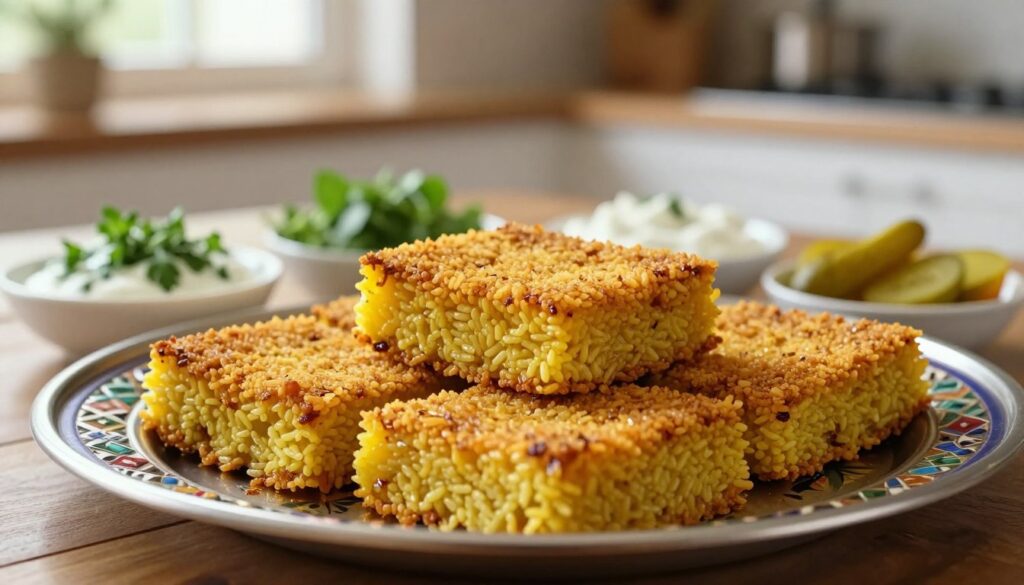
You want a golden, crunchy tahdig that lifts clean from the pot. Start by choosing between the classic tahdig options. This will help you decide if you’ll use thin potato slices, a rice-yogurt crust, or a simple oil-only base for your baghali polo.
Traditional choices to try
Potato crust tahdig gives a rustic, sturdy base that browns evenly. Arrange thin, overlapping slices over hot oil, press gently, then add parboiled rice. A rice-yogurt crust creates a soft, saffron-tinted layer that pulls away in sheets when mixed right.
If you want a saffron yogurt tahdig, mix cooked rice with 2–3 tablespoons yogurt and about 2 teaspoons saffron water. Spread that mixture over the oiled bottom and cover with the rest of the rice for a fragrant, golden finish.
Technique for reliable crispiness
Preheat 2–4 tablespoons of olive oil or butter on medium before adding the crust layer. When you hear a soft sizzle, add potato slices or the rice-yogurt mix. Poke air channels through the rice with a spoon handle so steam escapes evenly.
Watch for lid fogging as your cue to lower the heat. After the pot clouds, drop to the lowest flame and steam low and slow for 20–60 minutes depending on crust thickness. Let the pot rest for a few minutes, then use a spatula to lift an edge to check color.
Vegan and oven alternatives
If you follow a plant-based routine, make a vegan tahdig by skipping butter and using oil-only tahdig. Olive or neutral oil works well for a potato tahdig or an oil-crisped rice base.
For less stove time, assemble layers in an oven-safe dish, drizzle oil, seal tightly with foil, and bake at about 350°F for 45–60 minutes. This oven-baked baghali polo method yields an even crust and reduces monitoring.
For a step-by-step visual guide and timing tips, check this detailed walk-through on Persian rice with crispy tahdig: Persian Rice with Crispy Tahdig.
Serving suggestions and pairings from Iranian cuisine
Baghali polo is best with thoughtful pairings. Choose dishes that balance the rice’s herb flavor and highlight the saffron. Here are traditional, vegetarian, and simple presentation tips to enhance your platter.
Traditional accompaniments
For a classic table, try saffron fish like mahi ba zafferan with dill rice. The floral saffron in the fish complements the grassy dill and fava beans. Braised lamb shanks add richness for those who love slow-cooked meat.
Roasted or stewed chicken and kofta are good if you prefer milder proteins. Serve yogurt-based sides like mast-o-khiar to cool the palate and add creaminess.
Vegetarian meal ideas
For a vegetarian option, make the rice the main dish. Add grilled vegetables like eggplant, zucchini, and bell peppers for smoky contrast. Toss roasted chickpeas or steamed lentils beside the rice for protein.
Top portions with fried halloumi or marinated tempeh for a heartier bite.
Presentation and garnishes
Save a small scoop of saffron-tinted rice to dot the top of the platter for color. Arrange tahdig pieces around the edge or serve them on a separate plate. This way, guests can enjoy the crisp crust.
Use a gentle fork-fluff to mix dill and saffron without breaking grains. Finish with a light sprinkle of chives or a grated garlic-chives mix and a few sprigs of fresh dill. This adds aroma and shine.
Variations and flavor boosts (traditional and modern twists)
Try simple swaps and vibrant flavor boosts to make Baghali Polo your own. Small changes can turn it from classic to contemporary, keeping its Persian soul.
Add-ins and spices:
- Grated garlic and garlic chives in dill rice add a fresh, mild bite.
- Drop a couple of cardamom pods into boiling water for a subtle perfume. Then, discard the pods. This introduces cardamom in rice easily.
- Dissolve a pinch of saffron in rose water and stir it through steamed rice. This creates a light, aromatic finish known as rose water saffron.
- Other add-ins include a pinch of cumin, crushed coriander seeds, or toasted sesame seeds for texture.
Protein variations:
- Baghali polo with chicken is great. Simmer bone-in chicken in broth with bay leaves, cardamom pods, and a cinnamon stick for 30–40 minutes. Remove, brown the pieces, and serve on top of the rice.
- Lamb with baghali polo is excellent. Serve braised lamb shanks or roasted leg of lamb alongside. The rich juices pair well with dill and beans.
- For a lighter or vegetarian plate, swap chicken for tofu or edamame. This keeps protein without meat.
Bean and grain swaps:
- If fava beans aren’t available, use lima beans or chickpeas. Pre-cooked cannellini or edamame are also great. Make sure beans are tender before layering so textures match.
- Try brown basmati or wild rice blends for whole-grain versions. Adjust parboil and steam times, and the tahdig may crisp differently.
- Quinoa or mixed grains are good for a health-forward bowl. But expect a different mouthfeel and shorter crust time.
For a detailed guide on traditional bean and rice techniques, visit this Persian dill rice resource: baghali polo Persian dill rice.
For cross-cuisine inspiration, consider toppings and sauces from Asian bowls. Try a spicy drizzle or a sesame-honey glaze in this recipe roundup to create a new take on the classic: Asian-inspired dinner bowl ideas.
Common problems and troubleshooting for perfect dill rice
Making Baghali Polo can sometimes have small hiccups. This guide helps fix common issues to make your dill rice perfect. Try one change at a time to see what works best for your stove and pot.
Rice is mushy or overcooked
Keep an eye on the boil time and use the white center dot test for doneness. A bite should show a tiny white dot at the core before draining. If it passes, drain quickly to avoid mushiness. To fix soft rice, spread it thin on a tray to cool quickly or rinse briefly under cold water.
No tahdig or soggy crust
Preheat the oil or butter in the pot until it shimmers before adding the rice and crust layer. Use 2–4 tablespoons of oil or butter for a good crust. After the rice fogs, reduce heat to the lowest setting for a slow crust formation. Potato or yogurt layers help the crust release. Avoid lifting the lid during steaming to prevent a soggy crust.
Flavor balance issues
If dill seems weak, add more fresh dill or tuck dried dill between layers. Finely chop fresh dill for even distribution. For salty rice, rinse drained rice briefly with cold water and shake well in a colander. For saffron, grind real saffron threads and steep them in hot water to bloom color and scent, then add near the end.
Below is a quick troubleshooting table to compare causes and fixes at a glance.
| Problem | Likely Cause | Quick Fix |
|---|---|---|
| Rice too soft | Overboiled or over-soaked before steaming | Use al dente rice test, drain rice al dente, spread to cool or rinse briefly |
| No tahdig | Oil not hot enough; heat too high later; lid opened | Preheat oil, use 2–4 tbsp, lower to lowest heat after fogging, avoid opening lid |
| Soggy crust | Too much moisture in pot or added ingredients | Reduce steam time slightly, use potato or yogurt method for barrier |
| Weak dill flavor | Too little fresh herb or uneven distribution | Increase fresh dill, finely chop, layer dried dill between rice |
| Overly salty rice | Too much salt during boiling | Rinse drained rice briefly with cold water and shake in colander |
| Pale or weak saffron | Not bloomed or added too early | Grind saffron, steep in hot water, add near end for vibrant color and aroma |
Conclusion
You can make a classic baghali polo recipe at home with a few steps. Start by using high-quality basmati rice. Then, parboil it until it’s al dente, or has a “white dot” stage.
Next, layer dill and beans on top of the rice. Finish by steaming it gently. This way, you get separate, fluffy grains.
Follow the easy persian baghali polo recipe step by step. Parboil, layer, steam, and finish with saffron. You’ll see how small details make a big difference.
For a crisp crust, focus on the tahdig technique. You can aim for a golden pan tahdig or a simple oven alternative. The right oil, heat control, and timing are key to perfecting it.
Choose between dried dill for even texture or fresh dill for a brighter finish. Also, pick fava or lima beans based on what’s available.
This dish is great for vegetarian, vegan, or meat-based meals. It pairs well with fish, lamb, chicken, or a yogurt salad. If you like to try new things, the iranian cuisine blog offers smart substitutions and troubleshooting tips. This will help you adapt flavors while keeping the dish authentic.