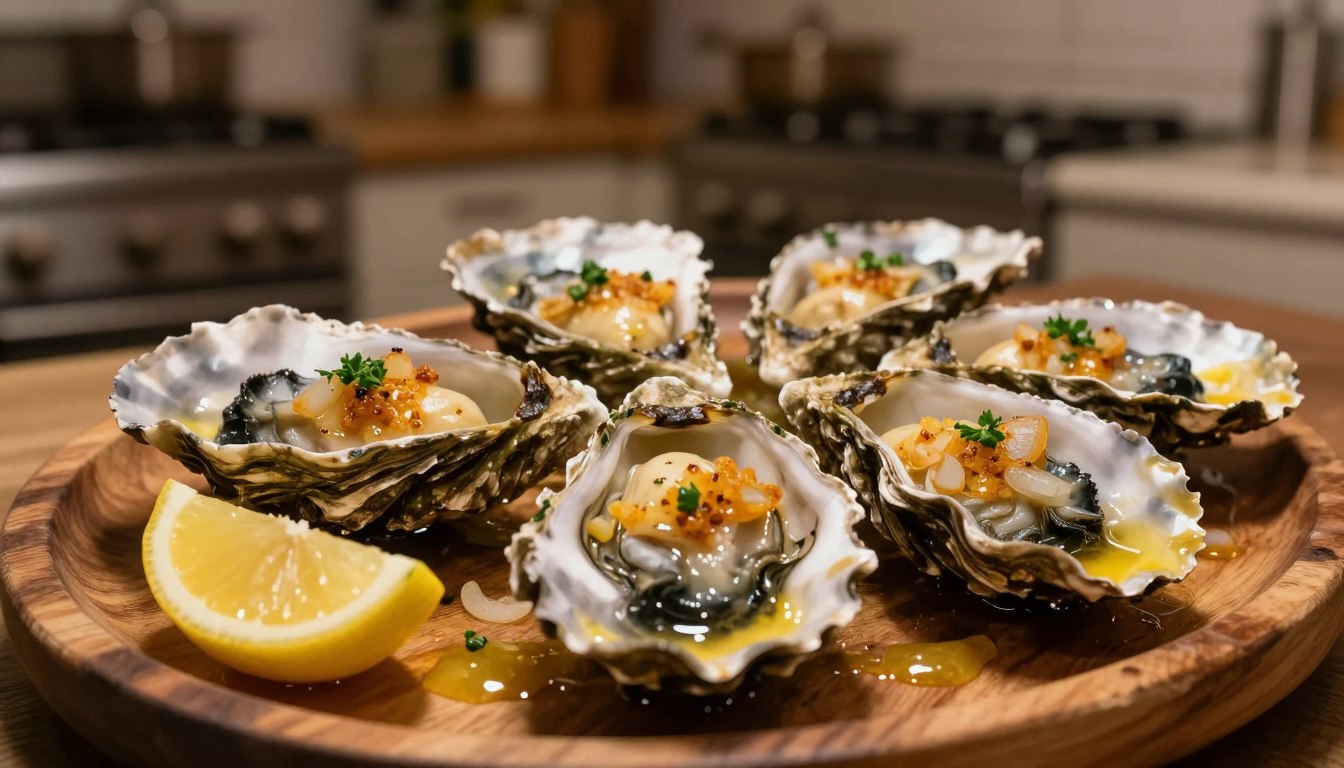
The Best Hot Oysters with Baked Shallot
Do you remember the last time you hosted a dinner party? You felt excited and a bit nervous. Creating a beautiful meal for others is a special gift. But finding the perfect starter can be tough.
You want something luxurious and sophisticated. But you don’t want to spend all night in the kitchen.
This hot oysters recipe is your secret for those special nights. It uses high-quality ingredients and simple steps. You can turn simple shellfish into a gourmet dish that wows your guests.
Learning this easy oyster recipe is easy once you know the basics. We’ll show you how to prepare baked oysters with shallots perfectly. Every bite will be balanced and delicious. Get ready to make your home cooking shine and create a seafood dish that feels like a celebration.
Key Takeaways
- Learn to select the freshest shellfish for the best flavor profile.
- Discover how simple aromatics like shallots enhance the natural brine.
- Master a foolproof technique that minimizes time spent in the kitchen.
- Impress your dinner guests with a dish that looks and tastes professional.
- Gain confidence in preparing elegant seafood starters at home.
Why Baked Oysters Are the Ultimate Gourmet Appetizer
There’s magic in how heat turns a simple mollusk into a fancy treat. Preparing a delicious oyster dish is more than cooking. It’s creating a sensory delight. The oven brings out flavors that raw oysters can’t.
Serving an oyster appetizer brings fine dining to your home. It’s a classy way to welcome guests. Whether it’s a small get-together or a big dinner, baked oysters make your menu shine.
This gourmet oyster recipe boosts the oysters’ natural taste. Adding butter and herbs makes them rich and indulgent. It’s a hit with those who love fine food.
Let’s look at why this dish is a hit in professional kitchens:
| Feature | Raw Oysters | Baked Oysters |
|---|---|---|
| Texture | Slippery and cool | Succulent and tender |
| Flavor Profile | Briny and crisp | Rich and savory |
| Serving Style | Casual/Bar style | Elegant/Gourmet |
| Ease of Prep | Minimal | Moderate |
Learning this technique boosts your cooking skills. It’s as fulfilling as enjoying the dish. Try oven-baked shellfish and see your guests love it.
Essential Ingredients for Your Hot Oysters Recipe
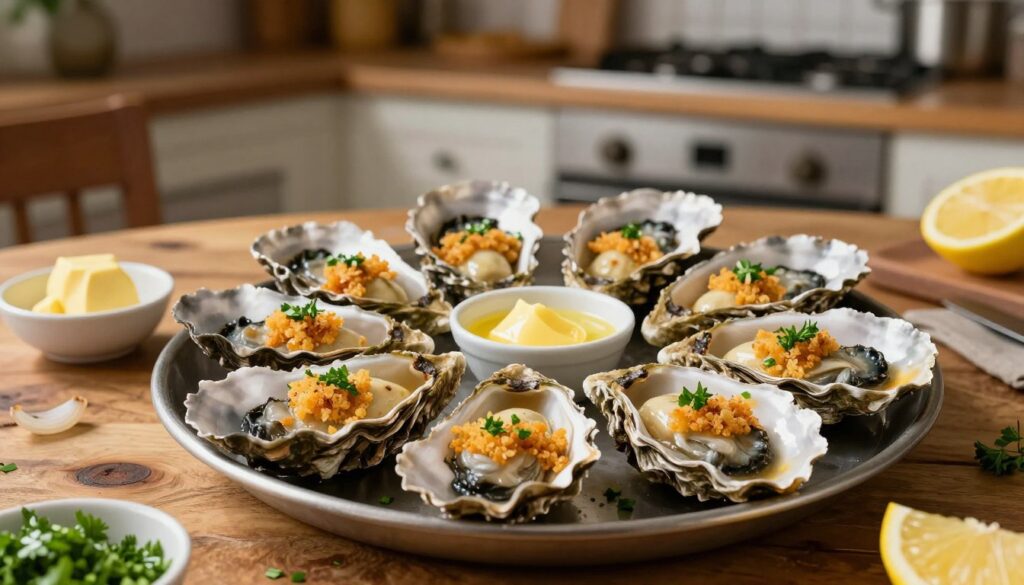
When making a gourmet seafood dish, the quality of your ingredients is key. Choosing the right parts is the base for any great seafood recipe, like oysters. Focus on freshness and balance to make your dish amazing.
Selecting the Freshest Oysters
Start at the fish market. Look for oysters with a fresh, briny smell and feel heavy. If a shell is open, tap it; a healthy oyster will close fast.
Choose from trusted suppliers for safety and taste. The quality of your raw shellfish is crucial for a great seafood recipe.
The Role of Shallots and Butter
Shallots and butter are key for a oyster recipes easy gourmet. Shallots are sweeter than onions and pair well with oysters.
“The secret to a perfect oyster topping lies in the marriage of sweet, sautéed aromatics and high-quality, creamy butter.”
Together, they make a rich texture that covers the oyster well. This base lets you add other flavors.
Flavor Enhancers and Aromatics
To make your hot oysters recipe top-notch, try different herbs and spices. Choose fresh, vibrant ingredients for the best taste.
Here are key additions for your dish:
- Fresh Tarragon: Adds a subtle, anise-like brightness.
- Flat-Leaf Parsley: Provides a clean, herbaceous finish.
- Lemon Zest: Cuts through the richness of the butter.
- Cracked Black Pepper: Offers a gentle, earthy heat.
Mastering these ingredients makes oyster recipes easy gourmet simple and rewarding. Now, you’re set to make your hot oysters recipe.
Preparing Your Workspace and Shucking Oysters Safely
To serve a quick seafood starter, handle your shellfish carefully. Before you start, make sure your oysters are stored right to keep them fresh. Live oysters can stay in a bowl covered with a damp towel in your fridge for 3 to 5 days.
Tools You Need for Success
Having the right tools makes the job easier and more fun. You don’t need a fancy kitchen, but some key items are crucial for safety and efficiency.
- Oyster knife: Pick one with a strong, short blade and a guard.
- Cut-resistant glove: This protects your hand while you work.
- Clean kitchen towel: Use it to hold the oyster in place.
- Sturdy work surface: A stable cutting board helps prevent slipping.
Step-by-Step Shucking Technique
The aim of a perfect quick seafood starter is to keep the oyster liquor inside. Start by placing the oyster on your board with the flat side up and the hinge toward you.
Put the knife tip into the hinge and twist gently until it opens. Then, slide the blade along the top shell to cut the muscle. Carefully lift the top shell, keeping the oyster level to avoid spilling the liquid.
Safety Tips for Handling Shellfish
Always put safety first when using sharp tools and raw shells. Never force the knife if it’s hard to open, as this can cause accidents.
If opening the shell is tough, adjust your grip. Always keep your fingers behind the knife guard or in your safety glove. Taking your time makes the kitchen work stress-free.
Crafting the Perfect Baked Shallot Topping
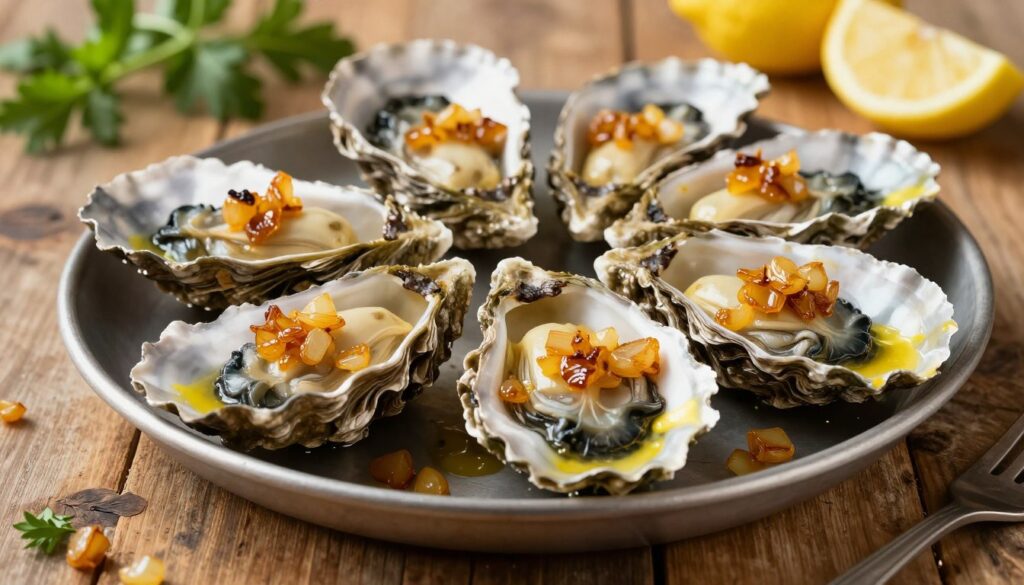
Transform simple shellfish into a gourmet delight with the right topping. The secret to a flavorful oyster recipe is in the balance of aromatics and fats. Focus on these details for a taste that’s both professional and high-end.
Sautéing Shallots to Sweet Perfection
Start by finely mincing your shallots. This way, they melt into the butter. Cook them in high-quality unsalted butter over medium heat for 5 to 6 minutes. They should be tender and beginning to brown.
This step brings out the shallots’ natural sugars, adding a sweet, caramelized flavor. It’s key for any restaurant style oyster recipe that aims to wow guests. Proper caramelization prevents the shallots from tasting raw or too sharp.
Creating the Herb-Infused Butter Base
Once your shallots are golden, it’s time to add flavor. Remove the pan from the heat and mix in fresh, finely chopped herbs like parsley, chives, or tarragon. The butter’s heat will gently release the herbs’ oils without burning them.
“The marriage of butter and aromatics is the cornerstone of classic French-inspired seafood preparation.”
This step creates a luxurious coating for the oyster meat. Mastering these baked oysters with butter and shallots makes a dish that’s both sophisticated and welcoming.
Balancing Flavors for a Restaurant-Style Finish
A flavorful oyster recipe needs a touch of acidity to balance the butter’s richness. A squeeze of fresh lemon juice or a dash of white wine vinegar adds the needed brightness. Always taste before topping the oysters to get the seasoning just right.
| Ingredient | Purpose | Flavor Impact |
|---|---|---|
| Shallots | Base Aromatics | Sweet and Savory |
| Unsalted Butter | Richness | Creamy and Smooth |
| Fresh Herbs | Brightness | Earthy and Fresh |
| Lemon Juice | Acidity | Sharp and Zesty |
Follow this restaurant style oyster recipe for a complex finish. Careful heat and seasoning management will elevate your baked oysters with butter and shallots to fine dining standards.
How to Cook Oysters in the Oven
Learning to cook oysters in the oven opens up a world of flavors. The secret is to keep the temperature just right. This way, the oysters stay tender, not tough.
Preheating and Preparing the Baking Sheet
First, heat your oven to 500°F. This high heat cooks the oysters fast without drying them out. Next, line a baking sheet with a thick layer of rock salt.
The salt keeps the shells steady. It stops them from rolling over. This keeps all the juices inside the shell.
Arranging Oysters for Even Heat Distribution
When your oven is ready, put the shells on the salt. Make sure they’re not too close together. This lets the heat reach each oyster evenly.
Don’t overcrowd the pan. This can make some oysters cook too long. By leaving space, all oysters cook at the same time. This makes them easier to take out of the oven.
Monitoring the Cooking Process
Watch your oven closely as the oysters cook. They usually take just a few minutes to cook. Pull them out when the edges start to curl.
Look for the butter and herbs to simmer. When the shells are hot and the liquid is bubbly, they’re done. Be careful not to spill anything when you take them out.
Alternative Methods for Grilled Oysters
Grilling oysters adds a rustic charm to any gathering. It brings a unique aroma, like a campfire, that complements the oysters’ natural taste. Whether you’re an expert or a beginner, grilled oysters make your event unforgettable.
Setting Up Your Grill for Direct Heat
For the best results, your grill needs high, direct heat. Spread charcoal evenly for consistent heat. For gas grills, turn all burners to high and wait for the grates to heat up.
When grilling, place oysters cup-side down. This keeps juices inside and chars the bottom lightly.
Managing Flare-ups and Cooking Times
Flare-ups can happen when cooking grilled oysters. Keep water ready to control flames. Cook for five to seven minutes, or until the edges curl.
To add crunch, fry shallots before grilling. Use 350°F oil for a golden, crispy topping.
Adding a Smoky Depth to Your Dish
Grilling adds complexity to your dish. Try unconventional oyster recipes for smoky flavors. Wood chips like hickory or applewood can enhance the taste.
| Feature | Baked Oysters | Grilled Oysters |
|---|---|---|
| Heat Source | Convection Oven | Direct Flame |
| Flavor Profile | Clean and Buttery | Smoky and Charred |
| Cooking Speed | Moderate | Fast |
| Best Setting | Indoor Kitchen | Outdoor Patio |
Creative Variations for Your Oyster Toppings
Your kitchen is a great place to try new things with oysters. Start with the basics, then add your own twist. You can make your oysters special for any event, from a backyard party to a fancy dinner.
Adding Spicy Elements for a Bold Kick
Want something spicy? Try spicy oysters for a flavor boost. Just add a bit of hot sauce or red pepper flakes to your butter. It adds a bold kick that’s perfect with the oysters.
Incorporating Cheeses for an Oyster Gratin Style
For a rich appetizer, make an oyster gratin recipe. Top your oysters with Parmesan and Gruyère cheese. Then, bake until the cheese is golden and bubbly. It’s a delicious, cheesy treat.
Experimenting with Citrus and Fresh Herbs
For a lighter touch, add some citrus or fresh herbs. A squeeze of lemon juice can make the oysters taste sweeter. Topping with parsley, chives, or tarragon adds color and a fresh smell. It’s a nice touch for your guests.
Pairing Your Hot Oysters with the Perfect Sides
Pairing hot oysters with the right sides is key to a great dinner party. When you make a fancy oyster appetizer, pick sides that bring out the oysters’ flavor. They should not overpower the taste of the shellfish.
Selecting the Right Wine or Beverage
For baked oysters, choose a crisp white wine. A chilled Sauvignon Blanc or dry Muscadet is perfect. They clean your palate between bites.
If you like bubbles, a dry sparkling wine or Champagne is great. It makes the buttery taste of the oysters feel light and refreshing.
Complementary Appetizers for Dinner Parties
For seafood recipes at dinner parties, start with light dishes. A fresh garden salad with a tangy dressing is a nice contrast to the oysters.
Consider chilled gazpacho or a light veggie platter too. These keep the meal balanced and prevent it from feeling too heavy.
Serving Suggestions for an Elegant Presentation
For elegant appetizer ideas seafood lovers, presentation matters. Always serve hot oysters with fresh lemon wedges. The acidity is key to enhancing the flavors.
Put the oysters on rock salt or crushed ice to keep them warm. Offer warm, crusty sourdough bread to mop up the herb butter.
Common Mistakes to Avoid When Baking Oysters
Preparing appetizers at home is rewarding but comes with pitfalls. Knowing the best way to eat oysters hot is more than just a recipe. It’s about troubleshooting in real-time.
Preventing Overcooking and Tough Texture
Leaving shellfish in heat too long is a common mistake. Oysters are delicate and can become rubbery quickly.
To get the right texture, watch your oven closely. Take the tray out when the edges curl. This means the oyster is cooked but still tender and juicy.
Ensuring Proper Seasoning Balance
When making homemade baked oysters, it’s easy to overdo it with flavors. But, the shellfish’s natural brininess should be the main attraction.
“The secret to a great seafood dish is enhancing the natural flavor rather than masking it with excessive salt or heavy spices.”
Always taste your butter mix before using it. If it’s too strong, add more butter or lemon juice to balance it.
Handling Shell Fragments and Grit
Shell fragments can ruin a dish. Before starting your homemade baked oysters, check each shell well.
Here’s how to avoid a bad bite:
- Rinse the shells under cold water before shucking.
- Wipe them clean with a cloth after opening.
- Look for small shell pieces in the meat.
By being careful during prep, you make sure the best way to eat oysters hot is enjoyable for everyone.
Storing and Reheating Your Oyster Appetizers
Keeping the flavor of your gourmet shellfish fresh is easy with a few simple steps. A baked oyster appetizer tastes best straight from the oven. But, knowing how to store leftovers is key to reducing waste and keeping food safe.
Best Practices for Leftovers
For uncooked shucked oysters, store them in their liquor in an airtight container. For longer storage, freeze them to keep them fresh for later.
After cooking your baked oyster appetizer, eat it within a day or two. Store leftovers in a shallow, airtight container in the fridge’s coldest spot. This keeps them safe to eat.
Maintaining Quality When Reheating
Reheating seafood needs care to avoid a rubbery texture. To keep your baked oyster appetizer tasty, skip the microwave. It can mess up the butter and shallots.
Instead, warm your leftovers on a baking sheet in a low oven, about 300°F. This slow method keeps the butter melted and the rich, savory flavor intact. Following these steps ensures every bite is as good as the first.
Conclusion
Learning to make hot oysters with baked shallots turns your kitchen into a fancy bistro. You now know how to pick fresh shellfish and mix flavors with ease.
Your cooking journey needs patience and focus. Every step, from shucking shells to cooking shallots, gets you closer to being a pro. You’re ready to wow your guests at your next dinner party.
Be proud of making simple ingredients into a fancy meal. Try new herbs or spices to keep your cooking exciting. Your loved ones will love the effort you put into every dish.
Keep getting better at cooking seafood. Each batch of oysters is a chance to get better at timing and presentation. Enjoy making special meals for your family and friends at home.