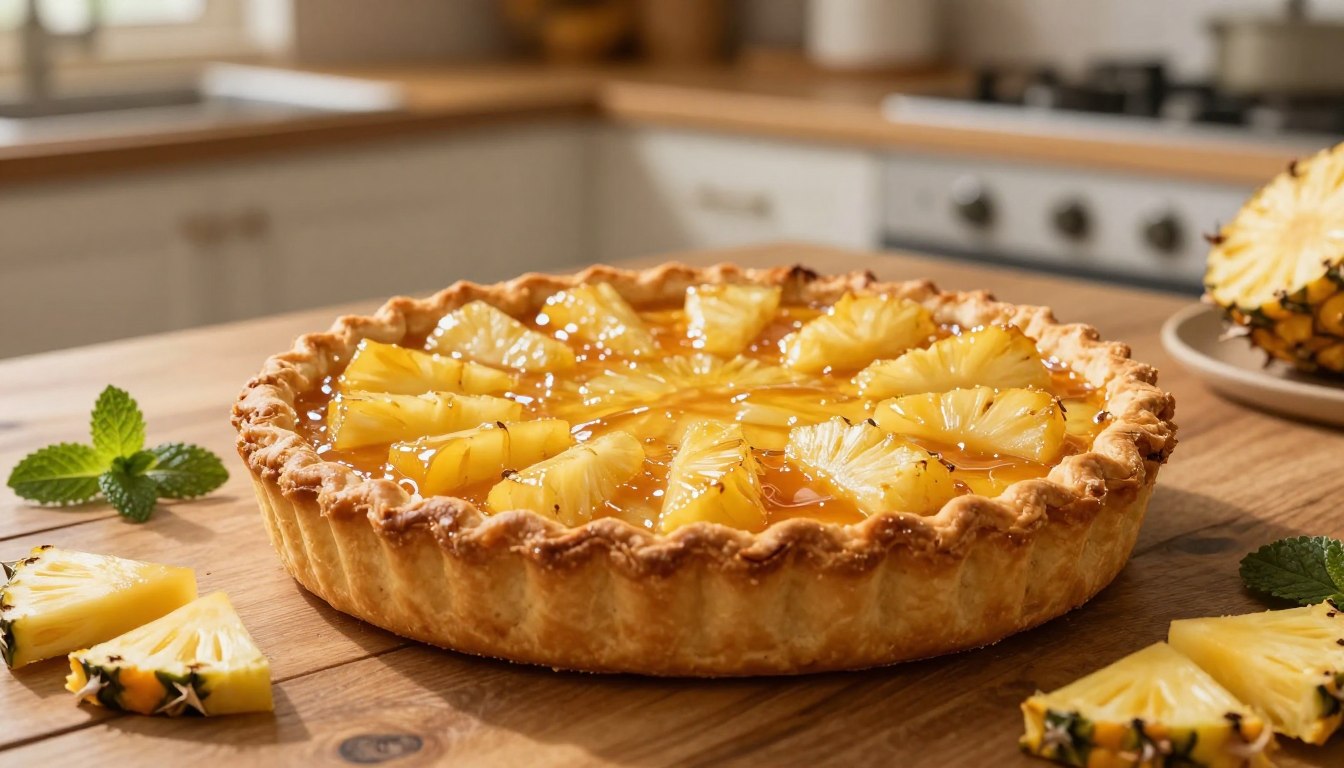
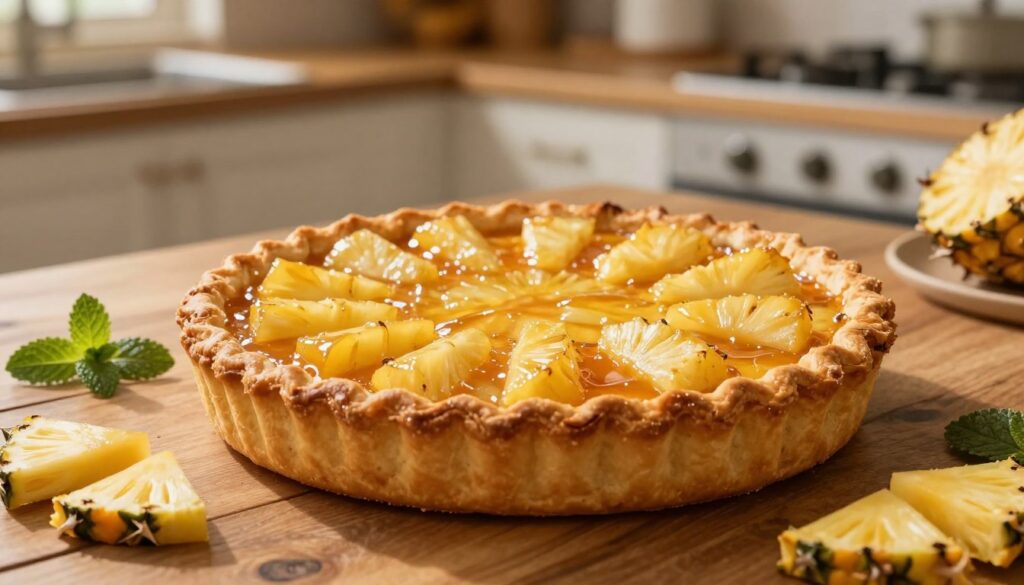
The Best Easy Pineapple Pie Dessert Recipe
Ever wanted a treat that feels like a tropical getaway but is easy to make? That moment when you crave something spectacular but don’t have much energy.
Well, friend, your search is over. This guide introduces a refreshing, creamy treat you can make in about five minutes. It needs just five simple ingredients and absolutely no baking.
We’ll guide you through every step to make this amazing treat. It’s perfect for a last-minute potluck or a sweet treat for yourself. For the full, detailed easy pineapple pie recipe, including key brand tips and fun variations, we’ve got you covered.
Key Takeaways
- This is a completely no-bake dessert, requiring no oven.
- It comes together with only five common ingredients.
- Active prep time is about five minutes.
- It delivers a perfect balance of sweet and tangy tropical flavor.
- The dessert sets firmly in the refrigerator for easy serving.
- It’s ideal for impressing guests with minimal effort.
- Simple customizations, like adding nuts, are encouraged.
What Makes This Pineapple Pie Dessert So Special
This pineapple pie stands out because of its perfect mix of tropical flavor and simplicity. It’s a dessert that tastes like it took all day but is actually easy to make. The sweet-tart filling and buttery crust make it both homemade and impressive.
The easy pineapple pie is loved for its flexibility. You can make it light and fluffy or a classic, comforting pie. Both ways, it leads to a delicious treat.
The filling is the heart of the pie. It’s made with simple ingredients like crushed pineapple, sugar, lemon juice, and cornstarch. This mix creates a flavor that’s both sunny and tangy, without being too sweet.
This dessert tastes like ambrosia pie!
The pie’s charm is also in how it’s served. It’s a hit at any event, from casual barbecues to formal dinners. Expect lots of compliments when you serve it.
When people ask for the recipe, you get to share its simplicity. It’s not a complicated project. This easy pineapple pie dessert is special because it’s easy to make yet impressive. It’s a homemade masterpiece that everyone will enjoy.
Everything You Need for Your Pineapple Pie Dessert
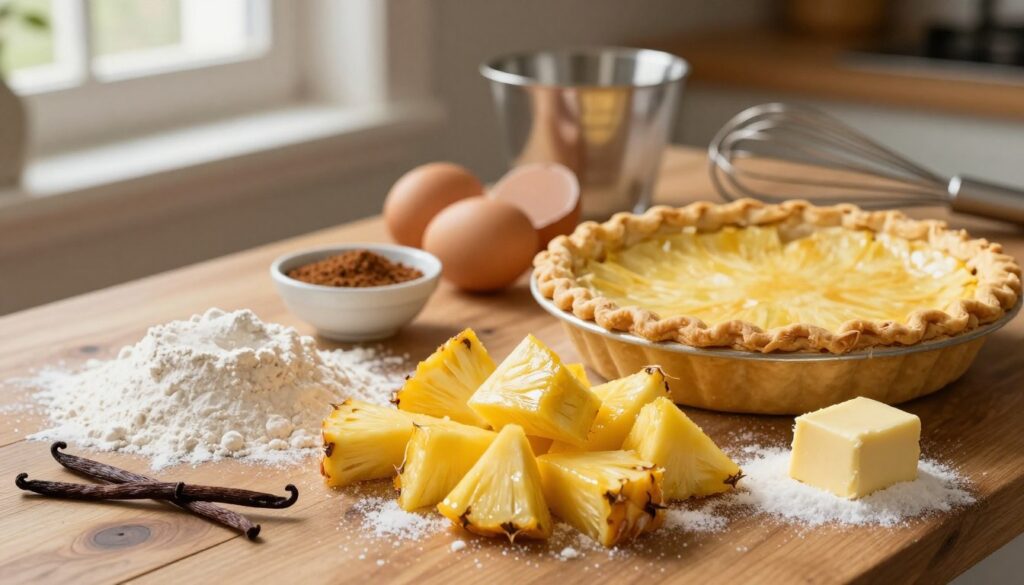
Starting your journey to a delicious homemade pineapple pie is easy with this checklist. Organizing now saves you stress later. You can pick from many crust and filling options, making it easy to fit your schedule and taste.
Whether you want a quick no-bake pie or a homemade masterpiece, having the right tools is crucial. Let’s look at what you’ll need.
Ingredients for the Flaky Pie Crust
Your crust is the base. For a quick option, a 9-inch graham cracker crust is perfect for no-bake pies. You can also use a pre-made, refrigerated pie dough.
For a homemade touch, making a double crust from scratch is rewarding. A classic flaky crust needs:
- All-purpose flour
- Cold butter or shortening
- Salt
- Ice water
Using a classic pineapple pie recipe helps you get the right dough measurements.
Ingredients for the Sweet-Tart Pineapple Filling
This is where your fresh pineapple pie recipe shines. The ingredients vary based on whether you’re making a creamy, chilled pie or a baked, fruit-filled one.
Here’s a clear comparison to help you shop:
| Pie Style | Key Ingredients | Important Notes |
|---|---|---|
| No-Bake Creamy Pineapple Pie |
|
The lemon juice reacts with the condensed milk to thicken perfectly. Draining the pineapple prevents a soggy crust. This style is ideal for stress-free dessert recipes. |
| Traditional Baked Pineapple Pie |
|
Cornstarch is essential for thickening the juicy filling during cooking. Using the pineapple juice adds intense flavor. This method creates a sweet-tart, jammy filling. |
Essential Kitchen Tools and Bakeware
With your ingredients ready, let’s talk tools. You don’t need fancy stuff, but these basics make a big difference.
- For Mixing: A large mixing bowl for your fillings and crust.
- For Cooking: A medium saucepan if you’re making the baked filling on the stovetop.
- For Baking: A standard 9-inch pie dish is a must. A rolling pin is needed if you make your own crust.
- For Measuring: Measuring cups and spoons for accuracy.
- For Finishing: A pastry brush for egg washes and a knife for venting the top crust.
Having these items ready means you can enjoy making your pie!
Step 1: Making Your Foolproof Pie Crust
Before you can enjoy the sweet-tart filling, you need a sturdy yet delicate vessel—the homemade pie crust. This step is key for your classic pineapple pie. You can choose from a pre-made graham cracker crust for a no-bake version or store-bought pastry dough for a quick fix.
But for that authentic, bakery-quality taste, making your crust from scratch is the way to go. It’s simpler than you might think, and we’ll show you how.
Choosing the right base depends on your style and time. Here’s a table to help you decide:
| Crust Type | Best For | Texture & Flavor | Prep Time |
|---|---|---|---|
| Homemade Shortcrust | Traditional baked pies, flaky texture lovers | Buttery, tender, and crisp | 45 mins (plus chilling) |
| Graham Cracker Crust | No-bake pies, quicker desserts | Sweet, crunchy, and nutty | 10 mins |
| Pre-made Refrigerated Dough | Ultra-convenient weeknight baking | Consistently good, slightly less flaky | 5 mins |
Combining the Dough Ingredients
For a traditional baked pie, start with a simple shortcrust. First, gather your cold ingredients. Cold fat is essential for creating steam pockets during baking, which makes the crust flaky.
Here’s your action plan:
- In a large bowl, whisk together 2 ½ cups of all-purpose flour and 1 teaspoon of salt.
- Cut 1 cup of very cold unsalted butter or vegetable shortening into small cubes. Add it to the flour.
- Using a pastry cutter, two forks, or quick pulses in a food processor, work the fat into the flour. Stop when the mixture looks like coarse, pebbly sand with a few larger pea-sized bits of fat remaining.
Now, drizzle in ice-cold water, one tablespoon at a time. Gently mix with a fork after each addition. You typically need 6 to 8 tablespoons. Stop adding water the moment the dough begins to clump together.
Do not overwork it. A slightly shaggy dough is better than a tough, over-mixed one.
Chilling and Rolling Out the Dough
This next phase is the secret to a crust that doesn’t shrink or turn tough. Shape your crumbly dough into a disk. Wrap it tightly in plastic wrap.
Let it rest in the refrigerator for at least 30 minutes, or up to 2 days. This chilling period relaxes the gluten and re-solidifies the fat. Both are crucial for easy rolling and flaky baking.
When ready to roll, lightly flour your work surface and rolling pin. Place the chilled dough disk in the center. Roll from the center outward, turning the dough a quarter turn after every few rolls to maintain a circle.
Aim for a circle about 12 inches in diameter. This gives you enough to fit a standard 9-inch pie dish with some overhang for the edges.
To transfer, gently roll the dough around your rolling pin. Then unroll it over your pie dish. Gently press it into the bottom and sides without stretching. Let the excess dough hang over the rim for now. You’ll trim and shape it later during assembly.
Your foundation is ready. A perfect crust is now waiting for its delicious pineapple filling.
Step 2: Cooking the Perfect Pineapple Filling
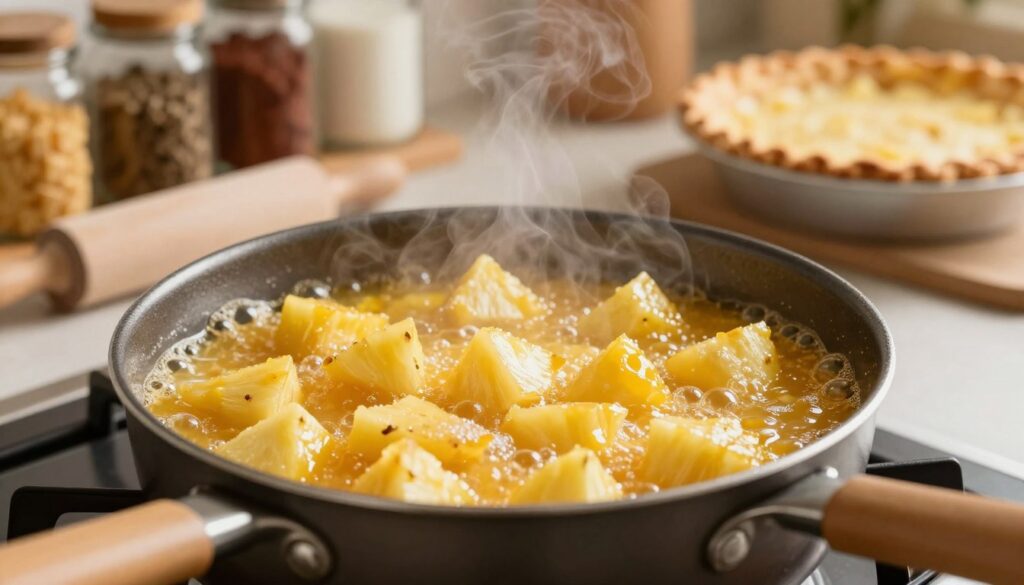
Cooking the pineapple filling is where the magic happens. It turns juices into a glossy, flavorful center. This step defines your pie’s taste and texture. A great pineapple pie filling balances sweet and tart notes with a lush, spreadable consistency.
You’ll use simple ingredients and one saucepan. The process is straightforward but requires your attention. Follow these steps for a filling that won’t soak your crust or turn out runny.
Preparing Your Pineapple (Fresh or Canned)
Your first choice is between fresh and canned pineapple. Both work wonderfully, but they need slight prep.
- Canned Crushed Pineapple: This is the convenient choice. It offers consistent texture and flavor. Be sure to use the juice in the can—it’s packed with flavor.
- Fresh Pineapple: For a brighter, tangier taste, use fresh. Peel, core, and finely chop the fruit. Then, give it a few pulses in a food processor or crush it with a fork.
The key is to crush the fruit. This helps distribute the pineapple flavor evenly throughout the filling. If you only have canned chunks, don’t worry. Pulse them a few times in a food processor or use a little of the canned juice to help break them down.
Thickening the Filling on the Stovetop
Now, transform those pineapple pieces into a thick, luxurious filling. This stovetop method locks in flavor and ensures a perfect set.
- Gather your cooked or crushed pineapple, granulated sugar, cornstarch, and a splash of lemon juice.
- Combine everything in a medium saucepan. If using canned fruit, include the juice from the can.
- Place the saucepan over medium heat. Stir continuously with a wooden spoon or silicone spatula.
You will see the mixture change. It will go from cloudy and thin to thick, glossy, and bubbly. This bubbling is crucial—it means the cornstarch has fully activated.
Once thick, immediately remove the pan from the heat. Let the pineapple pie filling cool for about 15 minutes. It will thicken further as it cools. This slight cooling period also prevents a soggy bottom crust when you assemble the pie.
Your filling is now ready. It should be sweet, tangy, and hold its shape on a spoon. This cooked method gives you far more control over the final texture than a no-bake mix.
Step 3: Assembling the Pie
Now, your traditional pineapple pie starts to come together. This is the time to layer the ingredients. You’ll end up with a golden, flaky dessert.
Take a deep breath and follow these simple steps. You’ve done the prep work, and now you get to see it all come together.
Filling the Bottom Crust
First, roll out half of your chilled pie dough on a lightly floured surface. Carefully lift it and line your 9-inch pie dish. Gently press the dough into the bottom and sides.
Make sure your pineapple filling has cooled slightly. This prevents a soggy crust. Pour the filling into the crust-lined dish. Use a spatula to spread it into an even layer.
Adding Your Top Crust or Lattice
Now, decide on your top. For a classic double crust, simply roll out the second dough disk. Drape it over the filled pie. Trim the excess dough, leaving about a half-inch overhang.
Want that stunning, bakery-style look? Try a lattice top. It’s a lot easier than it looks! Cut the second dough disk into long strips. Weave them over and under each other on top of the filling. It creates a beautiful window to the sweet-tart filling beneath.
Sealing, Fluting, and Brushing
Sealing is crucial. For a double crust, press the top and bottom edges together firmly. You can then crimp or flute them. Use your fingers to create a classic scalloped edge, or press with a fork for a simple pattern.
For that perfect golden finish, give your top crust a brush. A beaten egg wash (one egg mixed with a tablespoon of water) is ideal. Milk or cream also works. This simple step guarantees a glossy, beautifully browned top on your traditional pineapple pie.
Your pie is now ready for the oven. This careful assembly ensures every slice will hold together perfectly.
Step 4: Baking to Golden-Brown Perfection
Now that your pie is ready, it’s time to bake it to golden brown. This step is key for a flaky, crisp crust and a sweet-tart filling. It’s the final step to enjoy your best pineapple pie recipe.
Oven Setup and Initial Bake
First, heat your oven to 425°F (220°C). This high temperature is essential. It helps the crust set quickly, avoiding a soggy bottom.
Place your pie on the center rack. Put a baking sheet on the rack below for easy cleanup. It catches any juices that might spill over.
Bake at 425°F for 15 to 20 minutes. This initial heat gives the crust a good start. You’ll see it puff and start to color.
Monitoring and Finishing the Bake
After the first bake, lower the oven to 350°F (175°C). This lower heat cooks the inside without burning the outside.
Continue baking for 25 to 30 minutes more. Watch your pie closely. It’s done when the crust is deep, golden brown and the filling is bubbling.
If the crust browns too fast, cover it with foil. This protects it while the rest bakes.
The total baking time is about 35 to 45 minutes. When it’s done, the aroma will be amazing. For more pineapple pie inspiration and tips, check out other recipes.
Step 5: Cooling and Serving Your Pineapple Pie
Don’t slice it right away! The last step is all about patience and presentation. This is when your pie turns into a dessert ready to be served. Getting this right makes every bite perfect.
Follow these simple steps for cooling, serving, and storing your pie. You’ll get a dessert that looks as good as it tastes.
The Crucial Cooling Period
This is the most critical phase for the right consistency. Whether it’s no-bake or baked, it needs time to set.
For a no-bake tropical pineapple pie, chill it for at least 2 hours. This lets the filling firm up so it holds its shape.
If you baked your pie, cool it on a wire rack for 3 to 4 hours. The wire rack helps prevent a soggy crust. Slicing into a hot pie will result in a runny mess, as the filling needs time to thicken.
Good things come to those who wait. A little patience here guarantees a perfect slice.
How to Serve It for Maximum Impact
Once your pie is set, it’s time to show it off! Serving it well makes the experience better. Your tropical pineapple pie is great on its own, but a few touches make it special.
Enjoy it warm or at room temperature. Here are some ways to serve it:
- A dollop of freshly whipped cream adds a light, creamy contrast.
- A scoop of vanilla ice cream creates the beloved warm-and-cold combination.
- Sprinkle with chopped pistachios for a pop of color and crunch.
- Top with candied pecans for a sweet, buttery accent.
- A simple dusting of powdered sugar lets the pineapple flavor shine.
Storing and Reheating Leftovers
If you have leftovers, proper storage keeps them fresh. Cover the pie tightly with plastic wrap or aluminum foil, or place it in an airtight container.
Store it in the refrigerator for up to three days. For longer storage, freeze your pineapple pie for up to three months. Wrap it securely in plastic wrap and then foil to prevent freezer burn.
To serve frozen pie, thaw it overnight in the refrigerator. For a warm slice, reheat individual portions in the microwave for 15-20 seconds or in a 300°F oven for about 10 minutes.
This final step ensures your hard work pays off from the first slice to the last. Now, all that’s left is to enjoy your fantastic creation!
Creative Variations and Expert Tips
Your pineapple pie journey doesn’t end with the basic recipe. It’s just the start for endless delicious possibilities. This section is your playground for personalization. We’ll explore fun flavor twists, exciting topping alternatives, and pro-level secrets to ensure every pie you make is a triumph.
Flavor Variations to Try
Which flavors do you like best with pineapple? The filling is a fantastic canvas for your favorite tastes. A simple teaspoon of pure vanilla extract blended into the cooked filling adds a warm, aromatic depth. For a tropical vacation in every bite, stir a handful of sweetened shredded coconut into the pineapple mixture.
Looking for a cozy, spiced note? A pinch of cinnamon or nutmeg works wonders. If you’re mindful of calories, you can easily create a lighter version. Use light sour cream, a low-fat graham cracker crust, light Cool Whip, and sugar-free vanilla pudding mix for a dessert that feels indulgent without the guilt.
Here are a few more quick ideas to spark your creativity:
- Citrus Zest: Add a tablespoon of lemon or orange zest to the filling for a bright, fresh kick.
- Berry Swirl: Gently fold in a few tablespoons of crushed raspberries or strawberries before baking.
- Ginger Snap: Mix in a quarter teaspoon of ground ginger or finely chopped crystallized ginger for a spicy twist.
Topping Alternatives
Move beyond the classic dollop of whipped cream! The right topping can transform your pie into a show-stopping centerpiece. If you want to get fancy, you could use homemade whipped cream in place of the pre-made whipped topping for a richer, purer flavor.
For an ultra-decadent treat, top your pie with a lush coconut cream or drizzle it generously with warm caramel sauce. A toasted meringue adds a beautiful, cloud-like texture and a slight campfire sweetness. For crunch and extra tropical flair, a simple sprinkle of toasted coconut flakes is always a winner.
Pro Tips for a Flawless Pie
These insider secrets are the difference between a good pie and a great one. For your crust, always start with cold ingredients—this is key for a flaky, tender result. Don’t rush the chilling steps; letting the dough rest in the fridge relaxes the gluten and prevents shrinkage.
Always taste your filling before you assemble the pie. Adjust the lemon juice for more tang or a bit of sugar for more sweetness to match your personal preference. For a perfect no-bake pineapple pie with Cool Whip, make sure your condensed milk and whipped topping are fully folded together until no streaks remain. This prevents a grainy texture.
Keep this checklist handy for your next bake:
- Use a glass or dull metal pie dish for even browning; shiny metal pans can reflect heat and lead to a soggy bottom.
- Place your pie on a preheated baking sheet in the oven. This catches any drips and helps cook the bottom crust thoroughly.
- Let the pie cool completely on a wire rack. Cutting into a warm pie is tempting, but it’s the key to a filling that sets up perfectly.
Troubleshooting Your Pineapple Pie Dessert
Having trouble with your pineapple pie? You’re not alone. This guide will help you fix common issues. Baking is both science and art, and even pros face problems. Most pie problems have simple fixes. Let’s look at the solutions to make your next pineapple pie perfect.
Solving a Soggy Bottom Crust
A soggy bottom crust is a big disappointment. It happens when the filling soaks into the dough before it sets.
To fix this, try blind baking. Bake the empty pie crust for 10 to 15 minutes before adding the filling. This creates a barrier. Brush the crust with egg white and cook for a minute for extra protection.
Also, cool your filling slightly before adding it. A cooler filling helps the crust cook better.
Fixing a Runny or Too-Thick Filling
The filling’s texture is crucial. If it’s too runny, it might be the condensed milk’s fault. Eagle Brand is often recommended for a thick filling. Always chill no-bake pies well in the fridge.
For baked pies, a runny filling means the cornstarch didn’t cook enough. Bring the mixture to a full, rolling boil while stirring. This ensures it thickens properly.
If your filling is too thick, add pineapple juice a tablespoon at a time. This will make it smooth again.
Pro Tip: Rinse canned fruit like peaches in water first. This removes excess sugar that can affect the filling’s balance.
Preventing Cracked or Over-Browned Crust
A cracked crust often means the dough was overworked or too dry. Mix your dough just until it comes together. If it’s crumbly, add ice water a teaspoon at a time. This adds moisture without making it tough.
If your crust browns too fast, the oven’s heat is too high. Cover the pie with aluminum foil halfway through baking. This protects the crust while the filling cooks.
Letting your pie cool completely on a wire rack is key. It allows everything to settle and firm up, giving you beautiful slices.
Conclusion
You now have everything needed to create a wonderful pineapple pie dessert. Whether you baked a flaky double-crust pie or whipped up the speedy no-bake version, the result is a truly delicious treat.
This light pie is refreshing with its fresh-tasting pineapple flavor. Its simplicity makes it perfect for any occasion, from a casual weeknight to a special gathering.
Once you try this delicious pineapple pie, it will become a favorite recipe for years to come. For the no-bake method, you can find detailed instructions online at this easy pineapple pie recipe.
So, preheat your oven or pull out your mixing bowl. Your perfect homemade pineapple pie is waiting. Enjoy every sweet and tangy bite!