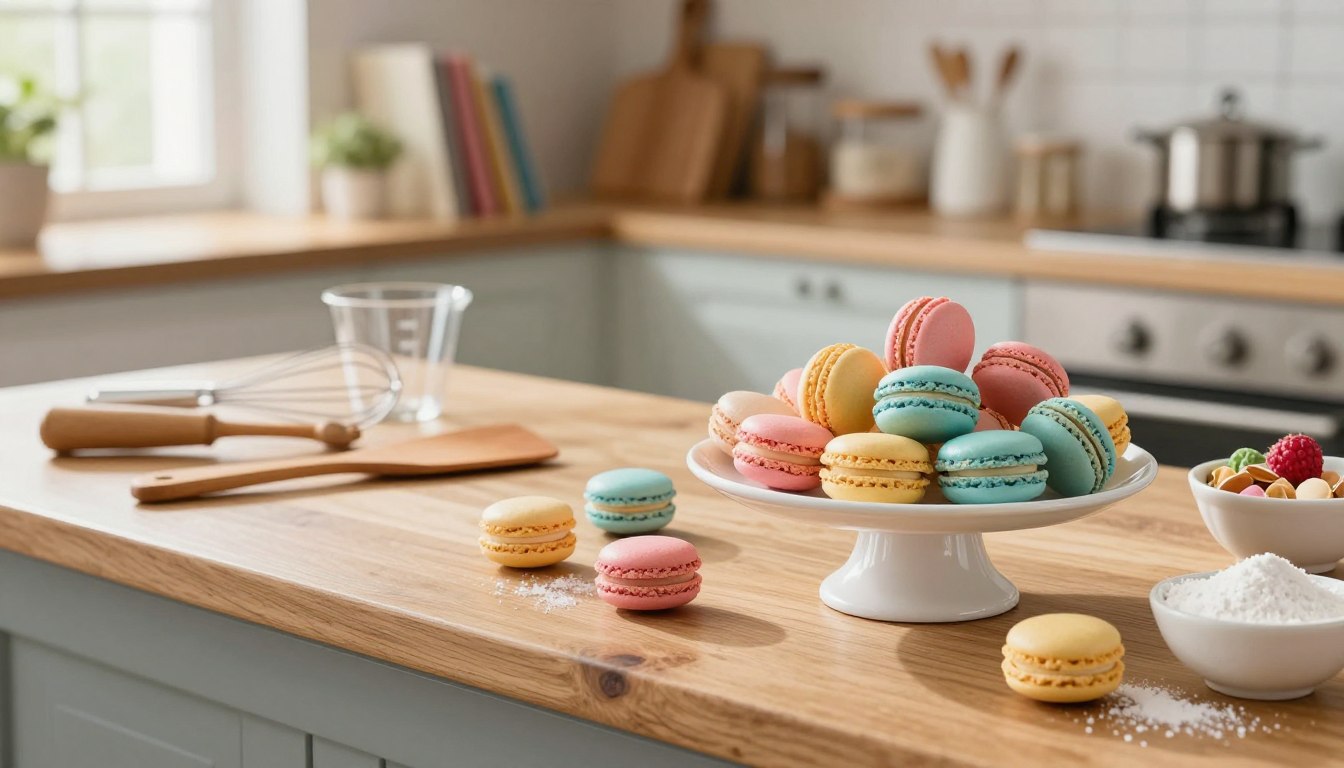
The Best Easy Macarons Recipe
Have you ever looked at a bakery window and felt amazed and defeated? Those small, colorful French treats look perfect but seem hard to make at home. Many people feel scared to try because of the delicate shells and smooth filling.
I still remember my first try at making them; my kitchen was covered in almond flour. But with the right method and ingredients, it became a fun experience. You can feel that pride and accomplishment too.
We’re here to show you that making delicious macarons is possible. Our guide will teach you the basics and what tools you need. You’ll learn to make this elegant treat with confidence.
Key Takeaways
- Use simple tools found in any kitchen.
- Master the folding technique with ease.
- Understand the importance of room temperature eggs.
- Learn how to achieve the perfect cookie texture.
- Follow our guide for a successful outcome.
Why This Is the Best Macarons Recipe for Beginners
Baking cookies shouldn’t be hard. You can make something beautiful in your kitchen without stress. This easy macarons recipe makes it simple, so you can bake with confidence.
Traditional methods can be too hard because they need perfect precision and fancy tools. We made it easy for home bakers. This is the best macarons recipe because it’s clear and works every time.
| Feature | Beginner Approach | Traditional Method |
|---|---|---|
| Complexity | Straightforward steps | Highly technical |
| Success Rate | High for first-timers | Often requires practice |
| Time Commitment | Efficient and focused | Labor-intensive |
Follow this guide to master French cookies without frustration. We made it for macarons for beginners so your first batch looks like it’s from a bakery. You have everything you need to succeed today.
This easy macarons recipe is your guide to success. It helps avoid common mistakes like flat or cracked shells. With the right instructions, baking becomes easy and fun.
Understanding the Basics of Macarons
Success in baking starts with knowing the basics. A macaron is a meringue-based cookie made from almond flour and egg whites. The magic happens when these simple ingredients turn into a delicate, airy shell with a signature “foot.”
When learning about macarons for beginners, it’s important to balance moisture and air. Egg whites give structure, while almond flour adds flavor and texture. Getting this balance right is key to the best macarons recipe.
- Consistency: Your batter must have a “lava-like” flow.
- Stability: A strong meringue prevents shells from collapsing in the oven.
- Patience: Letting the shells dry is crucial for success.
Troubleshooting is part of the learning process. If your shells crack or don’t develop feet, it’s usually a small mistake. We offer tips to quickly fix these issues.
“The beauty of a macaron lies in its delicate balance of texture and sweetness.”
You’re starting a fun culinary journey that rewards patience with delicious treats. Learning these basics means you’re not just following steps. You’re understanding the science behind these special cookies.
Essential Ingredients for Perfect French Macarons
Before you start baking, let’s talk about the key ingredients for macarons. You don’t need a lot to make these French treats. But, the quality and preparation of each ingredient are crucial for success.
Choosing the right ingredients helps avoid common problems like cracked tops or hollow centers. Precision is key when working with delicate meringue-based cookies. High-quality ingredients make baking easier.
Almond Flour: The Foundation of Your Macaron Shells
The most important part of your dry mix is almond flour. Look for “super-fine” and “blanched” flour. Blanched means the skins are removed, giving your cookies a smooth finish.
If your flour is oily or has big chunks, your shells might be lumpy or greasy. Pulse the flour in a food processor for a few seconds to make it finer. But be careful not to turn it into almond butter!
Powdered Sugar and Its Role in Texture
You need powdered sugar for sweetness and airiness. Most U.S. brands have cornstarch, which absorbs moisture and helps the cookie shape.
Sift your sugar and nut flour together to remove clumps. This makes your batter smooth. A smooth batter is the secret to those beautiful, glossy tops everyone loves.
“The secret to a perfect macaron isn’t just the technique, but the respect you show to the ingredients before they even enter the bowl.”
Egg Whites: Fresh vs. Aged
Your egg whites give the cookie lift and volume. Many bakers age their whites in the fridge for 24 hours. This reduces moisture and strengthens the proteins for a stable foam.
If you’re short on time, use fresh eggs at room temperature. Cold whites don’t whip up as well. Be very careful when separating eggs; even a tiny drop of yolk will ruin your meringue.
Granulated Sugar for Stable Meringue
Granulated sugar stabilizes the egg foam. Add it slowly while whisking the whites. This creates a tight, glossy meringue that won’t collapse during folding.
Extra-fine sugar dissolves faster, making it even better. If you only have standard sugar, just keep whisking until it’s smooth. A stable meringue is the backbone of a perfect macaron.
| Ingredient | Main Purpose | Quick Tip |
|---|---|---|
| Almond Flour | Structure and Flavor | Use super-fine and blanched |
| Powdered Sugar | Sweetness and Bulk | Sift twice for smoothness |
| Egg Whites | Lift and Volume | Use room temperature only |
| Granulated Sugar | Meringue Stability | Add slowly while whipping |
Tools and Equipment You’ll Need for Homemade Macarons
Success in French baking starts with the right tools. You don’t need a professional bakery to get great results. Quality matters. The right macarons tools ensure your batter is right and your shells bake evenly.
Preparing your workspace with the right items helps you stay organized and stress-free. Quality gadgets make a difficult project fun. With the right baking tools, you can focus on technique, not fighting with your gear.
Must-Have Baking Tools
A stand mixer is your most important ally. It beats egg whites into a stable, stiff meringue while keeping your hands free. Brands like KitchenAid are popular for their consistent power.
You also need a food processor, like a Cuisinart, to pulse almond flour and powdered sugar together. This step removes lumps and creates a fine powder for smooth, shiny shells. Without this specific equipment for macarons, your cookies might be grainy or bumpy.
Invest in sturdy pastry bags and round piping tips. These baking tools help you control the size and shape of every cookie. A steady hand with a large round tip creates that iconic circular look everyone loves.
Optional but Helpful Equipment
A digital scale is a game-changer for consistency. Measuring by weight is much more accurate than using measuring cups. Most pros agree that precision is the real secret to a perfect batch every single time.
An oven thermometer is another smart addition to your kit. Many home ovens have hot spots or incorrect temperature readings. Knowing the exact heat inside your oven helps you avoid cracked tops or sticky bottoms. These extra macarons tools take the guesswork out of the baking process.
| Tool Name | Primary Role | Importance |
|---|---|---|
| Stand Mixer | Creates stable meringue | Essential |
| Food Processor | Refines dry ingredients | Essential |
| Digital Scale | Ensures exact measurements | Highly Recommended |
| Silicone Mat | Prevents sticking | Recommended |
Having the right equipment for macarons makes a big difference. Gather your macarons tools before you begin so you can enjoy the process. Preparation is the key to mastering these delicate French cookies.
Preparing Your Ingredients: The Key to Easy Macarons
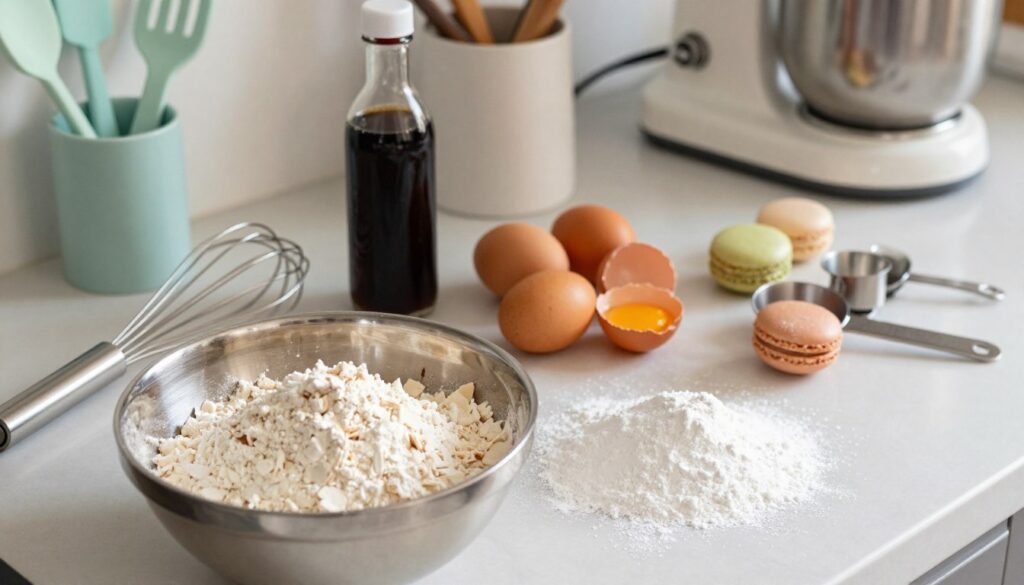
Getting your macarons ingredients ready is key to a stress-free baking day. Organizing well ensures your easy macarons turn out perfect every time. Success with these delicate treats starts long before mixing the batter.
The French call this process “mise en place,” meaning having everything in its place. For this recipe, preparing ingredients correctly prevents common issues like lumpy shells or flat feet. You want to feel calm and ready when the actual mixing begins.
One of the most important steps is sifting your almond flour and powdered sugar together. Even if the flour looks fine in the bag, small clumps can ruin the smooth surface of your shells. Use a fine-mesh strainer to remove any large bits of almond skin or stubborn sugar crystals.
Your egg whites also need special attention before you start the whipping process. Make sure they are at room temperature so they can reach their full volume and maintain stability. Cold egg whites simply will not hold the air needed for a light and airy cookie.
Preparation is the foundation of every successful pastry, including the delicate balance of a macaron.
To help you stay organized, follow this simple preparation checklist. It will guide you through the initial steps before you reach for the electric mixer. Accuracy is your best friend when you are preparing ingredients for this recipe.
| Preparation Step | Action Required | Expected Benefit |
|---|---|---|
| Sifting | Pass dry goods through a sieve | Ensures a smooth, professional finish |
| Temperature Check | Bring eggs to room temperature | Creates a stable and strong meringue |
| Precise Measuring | Use a digital kitchen scale | Provides the accuracy needed for success |
By focusing on your macarons ingredients now, you save yourself from frustration later. High-quality components work best when handled with care and precision. Now that you are ready, you can move forward with confidence to create easy macarons that will impress everyone.
Making the Perfect Macaron Batter Step by Step
The secret to a beautiful cookie lies in how you handle the delicate macaron batter during the mixing process. You will transform simple ingredients into a smooth, glossy mixture that bakes into perfection. Patience is your best friend during this stage of the recipe.
Accuracy matters more than speed when you combine your ingredients. If you follow these steps carefully, you will avoid common pitfalls like cracked tops or hollow centers. Let’s dive into the core steps of creating your batter.
Creating a Stable French Meringue
Everything starts with whipping your egg whites into a strong French meringue. Begin by beating the whites on medium speed until they look like bubbly soap suds. Slowly pour in your granulated sugar while the mixer continues to run.
Increase the speed to medium-high and watch for the peaks to form. You want the meringue to be stiff enough that it stands straight up when you lift the whisk. A stable base is essential for the structure of your shells.
Sifting Dry Ingredients for Smooth Shells
Lumps are the enemy of a professional-looking macaron. You must sift your almond flour and powdered sugar together at least once to remove any large bits. This ensures your macaron batter stays silky and produces a flat, shiny surface.
Discard any coarse pieces of almond that remain in the sieve. If you want an extra-smooth finish, you can pulse the dry ingredients in a food processor before sifting. This small extra effort makes a huge difference in the final texture.
Mastering the Macaronage Technique
The macaronage technique is the specific way you fold the dry ingredients into the meringue. Use a rubber spatula to scrape the sides of the bowl and cut through the center of the mixture. This process removes just enough air to create the right consistency.
Be careful not to over-mix, as this will lead to runny shells that spread too much. You can follow this foolproof macaron recipe to visualize the folding motion. Keep your movements steady and intentional until the ingredients are fully incorporated.
How to Know When Your Batter Is Ready
Determining when to stop folding your macaron batter is an art form. The mixture should fall off your spatula in a continuous, thick ribbon. It should look like warm honey or slow-moving lava as it flows back into the bowl.
Perform the “figure-eight test” to check the readiness. If you can draw an entire figure-eight with the batter without the stream breaking, you are finished. Stop immediately to ensure your macaronage technique remains perfect.
| Batter Stage | Visual Cue | Desired Result |
|---|---|---|
| Meringue | Stiff, glossy peaks | Strong structure |
| Early Folding | Thick and chunky | Incorporating dry goods |
| Final Batter | Lava-like flow | Perfect for piping |
| Over-mixed | Thin and watery | Flat, spread shells |
Piping and Shaping Your Macaron Shells
Turning your batter into perfect circles needs patience and a steady hand. This is when your macaron shells start to look like circles on the baking sheet. If your batter is just right, it will flow smoothly without spreading too much.
First, put a large pastry bag with a medium-sized round tip on it. Hold the bag straight up over your parchment paper or silicone mat when piping. This keeps the batter from spreading into an oval shape.
Press the bag gently until the batter is the size you want. Stop squeezing before pulling the tip away to avoid long “tails”. To keep the surface flat, flick your wrist at the end of each circle.
If you’re not sure about your technique, check out this ultimate French macarons guide. Keeping each shell the same size helps them bake evenly. Use a template under your parchment paper for perfect uniformity.
After piping, tap the baking sheet hard on your counter several times. This step gets rid of air bubbles that could crack your macaron shells in the oven. You might also use a toothpick to pop any air bubbles left on the surface.
| Piping Step | Action Required | Expected Result |
|---|---|---|
| Bag Position | Hold at 90-degree angle | Perfectly round shapes |
| Pressure Control | Squeeze from the top | Consistent shell size |
| Finishing Touch | Quick wrist flick | Smooth, flat tops |
| Air Release | Tap tray on counter | No internal air pockets |
| Shaping Check | Use a template mat | Identical macaron shells |
The Drying Stage: Getting Macarons Crispy on the Outside
Patience is key in the kitchen, and it’s true when making macarons. After piping the batter, don’t rush to bake. This waiting is crucial for crispy macarons with a smooth finish.
Why Resting Your Macarons Matters
Leaving the batter out helps it develop a dry skin. This skin acts as a protective layer. It lets air escape from the bottom, creating the “feet” at the base.
Skipping this step can lead to cracked tops and a soft texture. Taking time to resting macarons ensures your hard work pays off.
“Patience is the secret ingredient that turns a simple batter into a masterpiece.”
How Long to Let Macaron Shells Dry
The drying time varies with your kitchen’s humidity. In dry homes, it’s about 20 minutes. But high humidity can make it longer.
Look for a matte finish before baking. If it’s too humid, use a dehumidifier or fan. This helps get crispy macarons no matter the weather.
| Kitchen Condition | Estimated Time | Visual Cue |
|---|---|---|
| Low Humidity | 20 – 30 Minutes | Dull Surface |
| High Humidity | 60+ Minutes | Slightly Tacky |
| Air Conditioned | 30 – 45 Minutes | Firm to Touch |
Testing If Your Shells Are Ready to Bake
The “touch test” is the best way to check. Run your finger over a shell. If it’s dry and firm, it’s ready.
If it’s still wet, wait ten more minutes. If problems persist, you might need macaron troubleshooting help. Proper drying is key for a great bake.
Baking Tips for Bakery-Style Macarons at Home
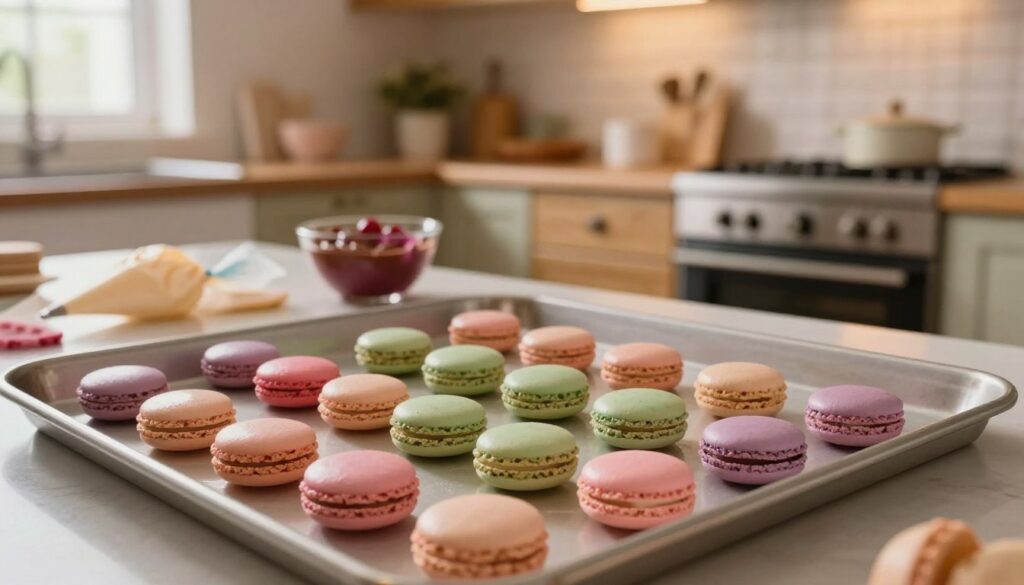
To make your macarons look like they came from a bakery, pay close attention to your oven. This is where patience is key. The shells need to rise and get that classic look. Baking macarons is a science that needs precision and steady heat.
Make sure your kitchen isn’t too humid. High moisture can stop the shells from rising right. Always preheat your oven for at least 20 minutes before baking.
Oven Temperature and Timing
Every oven is different, so using an oven thermometer is crucial. Hot spots in your oven can cause uneven browning or lopsided shells. Knowing the true temperature lets you adjust your trays for bakery-style macarons every time.
A temperature between 300°F and 315°F is best for most home bakers. If your shells are browning too fast, try lowering the heat by 10 degrees. Consistency is more important than speed when baking these delicate cookies.
Achieving That Chewy Inside, Crispy Outside Texture
To get the perfect texture, do the “wiggle test” near the end of the timer. Gently touch the top of a shell and try to move it from side to side. If it wobbles or slides, it needs more time in the oven.
A well-baked macaron should be firm on the base but soft inside. Overbaking makes them too crunchy, while underbaking causes them to stick. Finding this balance is key to baking macarons like a pro.
How to Get Those Perfect Macaron Feet
The ruffled base, known as macaron feet, is a sign of a successful bake. These form when the air in the meringue expands and lifts the top shell. If the shells didn’t dry enough, the steam will burst through the top instead of forming macaron feet.
Using a heavy-duty baking sheet helps distribute heat evenly. This steady warmth encourages the batter to rise straight up. You’ll love the professional look of your macaron feet once you get the timing right.
| Oven Setting | Common Time | Expected Result |
|---|---|---|
| 300°F (150°C) | 12-14 Minutes | Soft and Chewy |
| 315°F (157°C) | 10-12 Minutes | Crisp and Sturdy |
| 285°F (140°C) | 16-18 Minutes | No Browning |
Filling Your Macarons and Flavor Variations
Filling macarons lets you show off your creativity. You’ve worked hard on the shells, so now it’s time for a tasty reward. The filling adds moisture, making the shell soft and delicious.
A classic American buttercream is a great choice for your macarons filling. It’s stable and easy to pipe. Mix softened butter, powdered sugar, and heavy cream for the best taste. Use high-quality, unsalted butter and pure vanilla extract for a rich flavor.
Once you get the hang of basic buttercream, you can try many flavor variations. Add fruit preserves, citrus zest, or crushed cookies to change the taste. Below are some popular options for your homemade treats.
| Filling Type | Best For | Flavor Profile |
|---|---|---|
| Buttercream | Beginners | Sweet and Creamy |
| Ganache | Richness | Deep and Chocolatey |
| Fruit Curd | Tanginess | Bright and Acidic |
Want to try something unique? Here are some tasty flavor variations for your next batch:
- Salted Caramel: Use a thick caramel sauce with a pinch of sea salt.
- Pistachio: Mix finely ground pistachios into your buttercream base.
- Lemon Zest: Add fresh lemon juice and zest for a refreshing bite.
- Espresso: Dissolve instant coffee powder into the cream before mixing.
“The filling is the soul of the macaron; it balances the sweetness of the shell with depth and character.”
When filling macarons, pair shells of similar sizes together first. Pipe a small dollop of your macarons filling onto one shell. Press the second shell on top until the filling reaches the edge for a perfect look.
Macarons Troubleshooting Guide: Fixing Common Problems
Don’t worry if your macarons didn’t look perfect. Every baker faces challenges. These delicate treats need precision, and even small changes in humidity can affect them. Learning to fix macarons troubleshooting is key.
Failed batches can teach you a lot. Most common problems stem from meringue consistency or oven temperature. By figuring out what went wrong, fixing macarons becomes easier next time.
“Success is not final, failure is not fatal: it is the courage to continue that counts.”
Why Are My Macarons Cracked on Top?
Cracked shells often result from air expanding without escape. Not resting shells long enough means they lack a strong skin. This skin lets air out the bottom, creating the feet.
A hot oven can also cause cracks. High temperatures make shells rise too fast, bursting at the top. Always check your oven temperature with a thermometer for consistent heat.
Why Are My Macarons Not Crispy on the Outside?
Soft or sticky shells might be due to humidity. Sugar absorbs moisture, preventing shells from drying properly. Try baking on a dry day or using a dehumidifier.
Underbaking is another reason for softness. If you take them out too soon, the structure isn’t set. Shells should be firm when touched gently.
Hollow Macarons: What Went Wrong?
Hollow shells are a common issue. This usually stems from unstable meringue. Under-beating egg whites can’t support the almond flour.
Over-folding the batter during macaronage can also cause hollows. Aim for a thick, lava-like consistency to keep the centers full.
Solving Flat Macarons Without Feet
Flat macarons without feet often result from over-mixing. Batter spreads instead of rising when too thin. Stop mixing when it flows like a ribbon.
Fats and oils can also prevent feet. Ensure your bowls and whisks are clean and free of grease. Even a small amount of egg yolk can stop the formation of ruffled bases.
| Problem | Possible Cause | Quick Fix |
|---|---|---|
| Cracked Tops | Skipped the resting stage | Rest shells until a skin forms |
| Hollow Shells | Weak meringue peaks | Beat egg whites to stiff peaks |
| No Feet | Over-mixed batter | Fold until the “ribbon” stage |
| Sticky Bottoms | Underbaked shells | Bake for 1-2 minutes longer |
How to Store Your Homemade Macarons for Maximum Freshness
Keeping your homemade macarons fresh is key to enjoying every bite. After baking, focus on freshness to preserve your effort. Homemade macarons are sensitive to humidity and air, so choosing the right storage is crucial.
Use an airtight container to prevent the shells from getting soft or stale. For more details, check out this guide on storing macarons properly. Place them in a single layer or use parchment paper between layers to prevent sticking.
Most bakers suggest letting the filled cookies mature in the fridge for at least 24 hours. This step softens the shell slightly, creating a chewy texture. If you’re busy, like preparing make-ahead breakfasts for the week, you can freeze them.
“The secret to a perfect macaron isn’t just the bake; it’s the patience during the maturation phase.”
For long-term storage, the freezer is ideal for keeping treats ready for guests. You can store homemade macarons for up to three months without losing flavor. Just remember to let them come to room temperature for 20 minutes before enjoying.
| Storage Method | Shelf Life | Best Result |
|---|---|---|
| Countertop | 24 Hours | Eat immediately |
| Refrigerator | 1 Week | Peak freshness |
| Freezer | 3 Months | Future parties |
- Always use a clean, scent-free container.
- Avoid storing them near strong-smelling foods like onions.
- Keep the container sealed until you are ready to serve.
Conclusion
You now have the tools to make the best macarons at home. Success depends on your technique and using top-notch ingredients like Blue Diamond almond flour. These small steps greatly improve your baking.
Making delicate macarons requires patience, but the joy is immense. You can share these treats with friends or enjoy them with coffee. Each batch you bake boosts your skills and confidence.
Baking should be a fun adventure. If you want to try more, check out these easy desserts for any skill level. You don’t need fancy gadgets to make something tasty today.
This marks the beginning of your baking journey. Pick a recipe that suits your mood and start mixing. Every sweet treat you make is a victory in your kitchen.