The Best Authentic Fish Masala Recipe
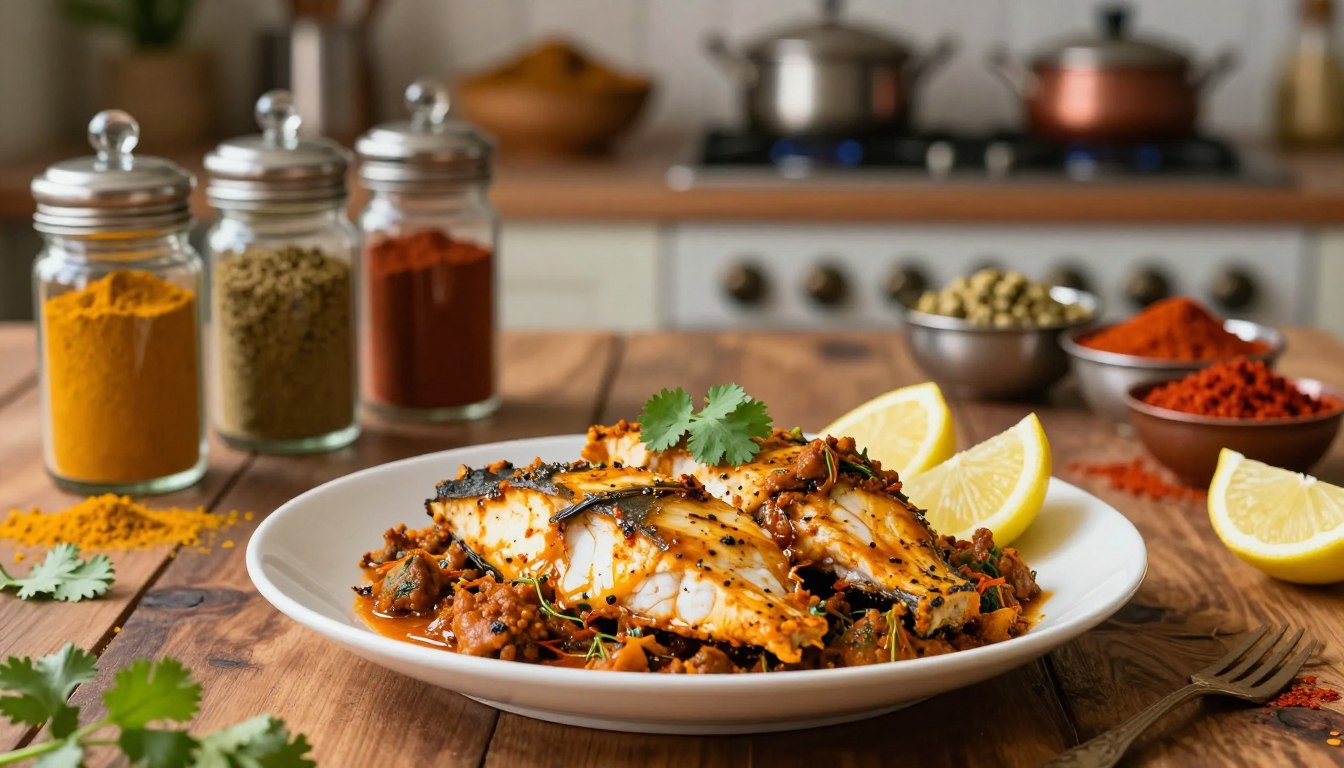
The smell of fish cooking in a spiced gravy is magical. It fills coastal Indian homes with cumin, coriander, and tomatoes. This smell connects you to generations of cooks.
Fish curry is a key part of Asian coastal cooking. Each region in India uses local ingredients like coconut and tamarind. You can make authentic fish masala at home, blending these flavors.
Long ago, fishermen cooked their catch in clay pots over fires. These traditional methods create unique flavors. Today, you can recreate these flavors at home with quality spices and proper cooking.
This traditional Indian fish masala respects the delicate taste of fish. The gravy clings to the fish without overpowering it. You’ll learn the importance of baking or pan-frying for texture and how spices add depth without heat.
Key Takeaways
- An authentic fish masala recipe uses an onion-tomato base that’s universal across North Indian and Punjabi styles
- Fresh fish cooks best when properly prepped and kept moist through gentle heat and oil-based cooking methods
- Traditional spices like cumin, coriander, and ginger create the signature flavor profile of real fish masala
- You can prepare a complete traditional Indian fish masala dish in 15 to 30 minutes with proper planning
- The right cooking technique prevents fish from breaking apart and keeps your gravy at the perfect thickness
- Quality ingredients sourced locally make your fish masala taste closer to what’s cooked in coastal Indian homes
- Learning how to make authentic fish masala at home teaches you techniques that work for any type of fish curry
What Makes an Authentic Fish Masala Recipe Special
Fish masala is a beloved dish in Indian cooking. It’s simple yet full of flavor. When you make an authentic Indian fish masala, you connect with India’s coastal traditions. The secret is in how each ingredient works together.
The traditional method focuses on technique and timing. It shows respect for the fish. This approach makes the dish special.
Real fish curry is made with care. It starts with proper preparation and builds flavor slowly. This way, the dish gets a depth that quick cooking can’t match.
The Traditional Roots of Fish Masala in Indian Cuisine
Fish curry has been a staple in coastal Indian kitchens for ages. Fishermen’s families used fresh catches and local ingredients. In places like Bengal and Kerala, they developed their own ways while keeping the core principles.
The traditional recipe used clay pots and mustard oil. These tools added unique flavors that modern equipment can’t replicate. Knowing these roots helps you see why certain techniques are important today.
- Clay pot cooking added mineral richness to fish curry
- Mustard oil provided distinctive warmth and pungency
- Seasonal spices were ground fresh for maximum potency
- Local fish varieties shaped regional masala blends
Key Flavor Profiles That Define Authentic Fish Curry
The classic method balances spices and fish flavor. Understanding these elements is key to cooking authentically.
| Flavor Component | Source Ingredient | Role in Dish |
|---|---|---|
| Earthiness | Cumin and coriander seeds | Grounds the masala with depth |
| Warmth | Garam masala and turmeric | Creates comfort and cohesion |
| Subtle Bitterness | Kasuri methi (dried fenugreek) | Adds complexity without overpowering fish |
| Pungency | Ginger-garlic paste | Awakens palate and adds bite |
| Brightness | Cilantro and fresh lemon juice | Lifts final dish and balances richness |
| Tanginess | Tomatoes | Creates acidic backbone for gravy |
The onion-tomato masala base is crucial. You brown onions slowly to get a deep golden color. This step adds sweetness and caramel notes that balance the spices. Tomatoes add acidity, preventing the curry from being too rich.
When you mix authentic Indian fish masala spices right, you get something amazing. Ginger and garlic add pungency without overpowering the fish. Cumin and coriander bring warmth. Kasuri methi adds a subtle complexity that grows as you eat.
What makes traditional fish masala special is its simplicity. It uses quality fish and aromatic spices. The classic method shows that less can be more with solid technique and fresh ingredients.
Essential Ingredients for Authentic Fish Masala Recipe
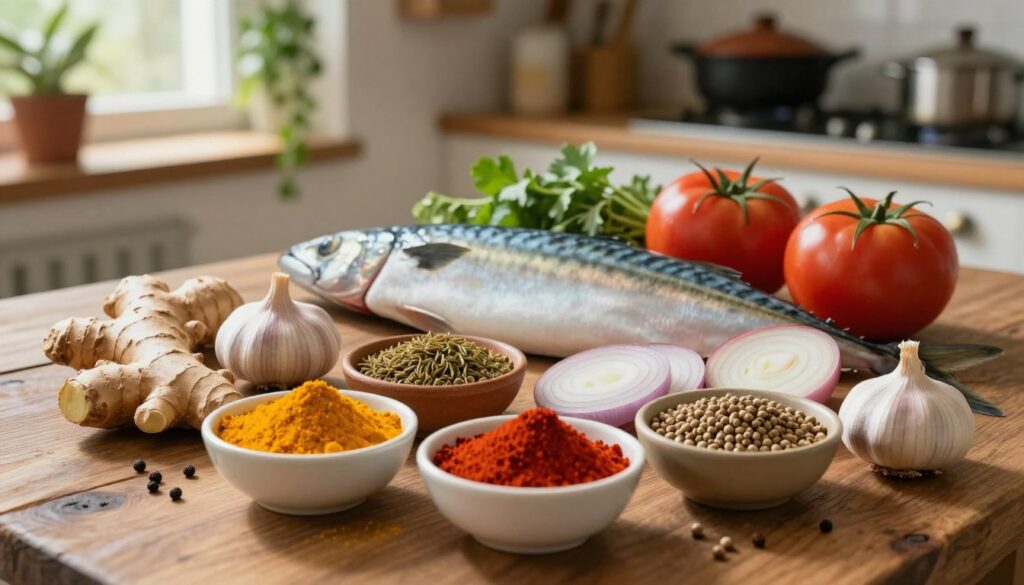
To make a real seafood masala blend, you need to know how each ingredient adds flavor. The base of your fish masala is quality spices. These spices work together to make a dish that’s full of flavor.
The spice mix starts with ground spices that are key to the authentic taste. Turmeric powder gives the dish its golden color and a warm taste. Coriander powder adds a citrusy depth, while cumin powder brings a nutty warmth. Kashmiri chili powder makes the dish bright red without being too hot. These spices are the foundation of your fish masala.
Garam masala is the star of your spice mix. It’s a blend of warming spices that gives your dish its unique flavor. You can buy garam masala or make it yourself for better taste and control.
- Turmeric powder for color and earthiness
- Coriander powder for depth and citrus notes
- Cumin powder for warmth and nuttiness
- Garam masala as your signature spice blend
- Kashmiri chili powder for vibrant red color
- Carom seeds (ajwain) to mask fishy flavors
- Curry leaves for aromatic qualities
- Kasuri methi (dried fenugreek leaves) for authentic flavor
Special ingredients also make your dish better. Carom seeds help get rid of fishy smells and are good for your stomach. Curry leaves add a unique aroma that fresh herbs can’t match. Kasuri methi gives a sweet-bitter taste found in North Indian dishes.
Don’t forget about the base ingredients. Use yellow onions a lot as your base. Fresh ginger and garlic are better than pre-minced. Choose the ripest tomatoes you can find. A good baked fish masala recipe shows how these ingredients make a rich, flavorful dish.
| Ingredient Category | Key Ingredients | Purpose in Dish |
|---|---|---|
| Ground Spices | Turmeric, coriander powder, cumin, garam masala | Create flavor depth and authentic taste |
| Specialty Spices | Kashmiri chili powder, carom seeds, kasuri methi | Add complexity and reduce fishy odors |
| Aromatics | Yellow onions, ginger, garlic, curry leaves | Build flavorful base and enhance aroma |
| Finishing Elements | Fresh cilantro, green chilies, lemon juice | Brighten flavors and add freshness |
Choosing the right oil is important. Neutral oil is good for most kitchens. Mustard oil adds a strong, authentic flavor. Add fresh green chilies, julienned ginger, cilantro, and lemon juice at the end. They make the curry bright and fresh.
Knowing how each ingredient works in your fish masala makes a great dish. Whether you follow a traditional recipe or use American ingredients, each ingredient’s role is key. This way, you get a dish that truly captures the spirit of Indian seafood cooking.
Choosing the Right Fish for Your Masala Curry
Choosing the right fish is key for a great indian fish masala. The fish’s texture and how it absorbs spices are important. Look for firm, white-fleshed fish to keep its shape while cooking.
Traditional choices in India and Pakistan are Pomfret or Rohu. But, these are hard to find in America. Luckily, many local fish work well for this recipe.
Best Fish Varieties for Traditional Fish Masala
There are many great fish options for your seafood masala. Look for firm white fish for the best results. Here are some top picks:
- Cod—affordable, widely available, and holds shape beautifully
- Halibut—premium choice with meaty texture and rich flavor
- Tilapia—budget-friendly and easy to find at any grocery store
- Snapper—delicate flavor that works wonderfully with masala spices
- Mahi mahi—firm texture with subtle sweetness
- Barramundi—sustainable option with excellent taste
- Catfish—traditional choice in many regions
- Haddock—mild and versatile for curry dishes
- Salmon—richer option with added omega-3 benefits
- Sea bream—delicate flesh perfect for seafood masala gravy
- Grouper—firm white fish ideal for curry preparations
- Mackerel (Spanish or King)—bold flavor for adventurous cooks
- Pompano—alternative name for Pomfret-like fish
- Basa—affordable white fish from Asian markets
- Seer fish—specialty option if your Asian market carries it
Fresh Versus Frozen Fish: What Works Best
When buying fresh fish, know what to look for. Check the fish’s eyes—they should be clear and bright. Lift the gills; a reddish color means it’s fresh, while brownish is a sign it’s been sitting too long.
Press the flesh gently; fresh fish springs back right away. It should smell like the ocean, not fishy or sour. Asian markets often have large fish sections where staff will clean and butcher whole fish for you at no extra charge.
Frozen fish can be better than “fresh” fish that’s been sitting on ice for days. Frozen fish is processed quickly after catching, locking in quality. Choose thick fillets or fish steaks measuring at least one inch thick. Thin fillets overcook and break apart during cooking. Thaw frozen fish in the refrigerator overnight, never at room temperature.
| Fish Type | Texture | Price Range | Best Use |
|---|---|---|---|
| Cod | Mild, flaky | Budget-friendly | Everyday curry dishes |
| Halibut | Firm, meaty | Premium | Special occasion meals |
| Tilapia | Delicate, tender | Very affordable | Quick weeknight dinners |
| Snapper | Firm, fine-grained | Moderate | Seafood masala gravy base |
| Barramundi | Firm, buttery | Moderate-premium | Sustainable preparations |
Store fresh fish in the coldest part of your fridge and use it within one or two days. Frozen fish stays good for three to four months in your freezer. Your choice depends on your budget, location, and what your local market offers. Don’t hesitate to ask fishmongers for recommendations—they know which varieties work best for curry cooking.
Preparing Your Fish and Marinade
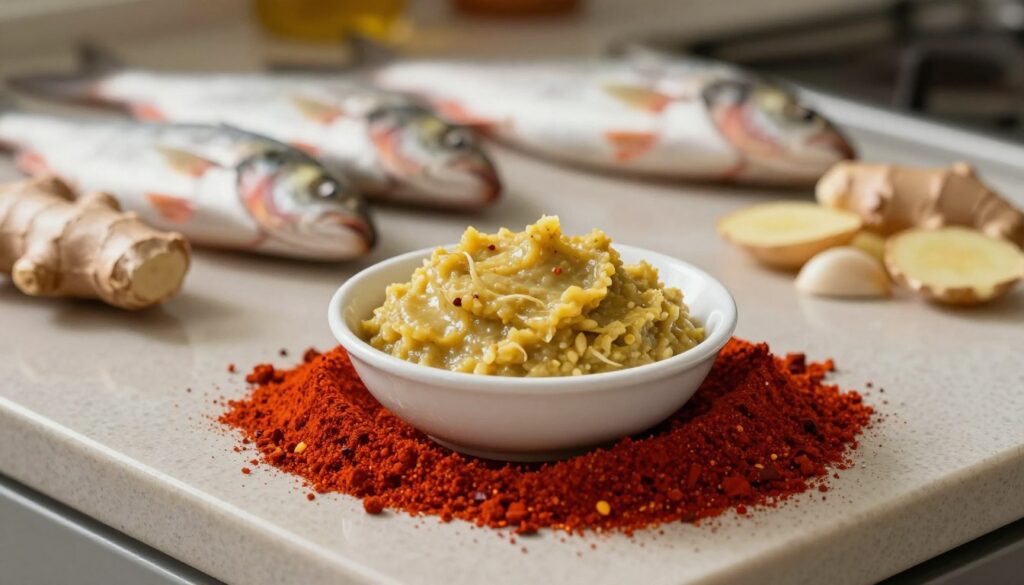
Getting your fish ready for cooking is key to making authentic fish masala. Start by patting your fish dry with paper towels. This step prevents moisture from stopping flavors from soaking in. Cut your fish into uniform pieces about 2 to 3 inches in size. This ensures even cooking throughout. Check carefully for any remaining bones by running your fingers along the flesh.
The marinade is where real flavor begins. Your fresh ginger garlic paste forms the aromatic foundation of this step. Make this paste by grinding equal parts fresh ginger and garlic to the right consistency. This combination masks any fishy smell while adding complex, savory notes to your dish. In a large bowl, combine your homemade fish curry spices with salt and the ginger garlic paste.
Mix in red chili powder for heat and depth. Add turmeric powder, which provides antiseptic properties and a beautiful golden color. Include lemon juice to brighten flavors and firm up the fish flesh. The acid in lemon juice also neutralizes fishy odors naturally.
- Pat fish dry with paper towels
- Cut into uniform 2-3 inch pieces
- Check for remaining bones
- Combine spices in a large bowl
- Add red chili powder to taste
- Mix in turmeric and salt
- Squeeze fresh lemon juice over mixture
- Toss fish gently to coat all surfaces
Gently toss your fish pieces in the marinade without breaking the delicate flesh. Make sure every surface gets coated evenly. For best results, cook your marinated fish right away rather than letting it sit. The acid in the lemon juice can start cooking the fish if left too long, which affects texture and taste.
Consider adding carom seeds (ajwain) to your marinade for extra depth. These seeds provide a thyme-like flavor and help with digestion. This optional ingredient takes your fish masala from good to exceptional. Your preparation work now sets the stage for creating a dish with incredible flavor and the perfect texture.
Building the Perfect Onion-Tomato Masala Base
The key to a great fish curry masala is a well-made onion-tomato base. This step requires patience. Rushing it can lead to a thin, flavorless curry. A good base brings out deep flavors and gives the curry a rich taste.
When you learn how to build a fish curry masala, oil is crucial. Use about one-third cup of oil. It helps bring out the spices’ full flavor. Heat the oil, then add cumin seeds. Wait for them to sizzle and release their aroma.
The Art of Browning Onions for Maximum Flavor
Browning onions takes about eighteen minutes. Don’t rush this step. Chop two yellow onions finely and add them to the hot oil and cumin seeds. They should turn deep golden brown.
- Onions reduce significantly in volume, becoming almost paste-like
- Your kitchen fills with a sweet, nutty aroma
- The color deepens from light gold to rich brown
- The bottom of the pan develops browned bits called fond
If onions darken too quickly, lower the heat. Use one to two tablespoons of water to deglaze the pan. This prevents burning and keeps caramelization going. Scrape up the fond from the bottom for extra flavor.
Creating a Rich Tomato Gravy Foundation
After onions are deep brown, add ginger-garlic paste. Cook for thirty seconds to two minutes until the smell goes away. Then, add your tomatoes. Choose ripe Roma or plum tomatoes for the best flavor.
Add salt to your tomatoes and let them break down. This is where the magic happens. The mixture must cook until oil separates and pools at the edges. Mash the masala with a wooden spoon, encouraging the tomatoes to integrate with your onions into a cohesive paste. Watch the color evolution:
| Stage | Color | Texture | Time |
|---|---|---|---|
| Beginning | Bright red | Chunky tomato pieces | 0-2 minutes |
| Developing | Reddish-brown | Tomatoes breaking down | 2-4 minutes |
| Complete | Deep reddish-brown | Smooth paste with oil separation | 5 minutes total |
The transformation from bright red to deeper reddish-brown shows the raw tomato flavor has cooked out. You now have concentrated, sweet-tart richness. Add curry leaves to hot oil, allowing them to splutter and release their aromatic compounds. Pat your curry leaves dry before adding them—this prevents excess moisture in your base.
This onion-tomato foundation becomes the canvas for your entire fish curry masala. The time you invest here creates the backbone that carries all your spices and fish perfectly into every spoonful.
Spice Blending Techniques for Aromatic Fish Masala
The secret to a great fish curry is in the spice blending. This step turns your onion-tomato base into something amazing. It’s not just mixing spices; it’s a careful process to bring out the best flavors.
When you add spices to hot oil, you start a process called blooming. This lets the spices cook for 30 to 60 seconds. The oil extracts flavors, making the spices more powerful and delicious.
- Coriander powder for an earthy, slightly citrusy foundation
- Cumin powder for warm, nutty undertones
- Turmeric powder for color and subtle bitterness
- Kashmiri chili powder for vibrant red color with gentle heat
- Red chili powder (optional) for extra spiciness if you want a spicy fish masala
- Salt to bring all flavors together
Stir constantly as you add these spices. Watch for the mixture to darken and smell intensely fragrant. If it starts to burn, add water to prevent scorching.
Mustard seeds add sharp, pungent notes when they pop. Fennel seeds add a subtle sweetness. Fenugreek seeds add slight bitterness and complexity.
Timing is key for finishing spices. Add kasuri methi and garam masala near the end. This preserves their delicate aromas.
Your spice choice affects the taste. A restaurant style fish masala uses bold garam masala for deep flavor. You can use a milder version to let the fish flavor shine. Taste your masala before adding fish and adjust the spice level to your liking.
“The magic of spice blending happens when you respect each spice’s unique purpose and timing. Every powder, seed, and leaf plays a role in creating harmony in your final dish.”
Ground spices must be sautéed until they lose their raw smell. This is when you know your spices are bloomed and ready for your fish.
Step-by-Step Cooking Instructions for Authentic Fish Masala
Cooking fish masala involves two key stages. These stages turn your ingredients into a dish that tastes like it’s from a restaurant. This guide will show you how to pan-fry your fish and then simmer it in a flavorful masala base. These steps help your fish stay tender and absorb all the spice flavors.
Whether you’re making an easy fish masala or a quick one for beginners, these steps are easy to follow.
Pan-Frying the Fish for Enhanced Texture
Pan-frying your fish before adding it to the curry is a crucial step. It seals in flavors and prevents the fish from breaking apart. The caramelization adds depth to your dish.
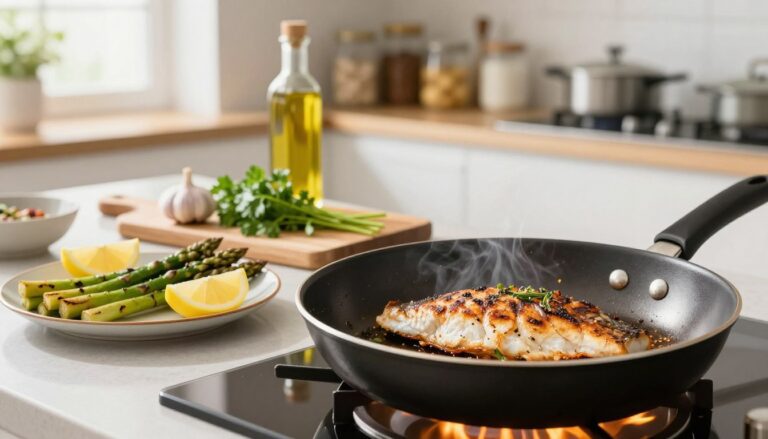
Start by heating a nonstick or cast iron skillet over medium-high heat with one tablespoon of oil. Wait for the oil to shimmer before placing your marinated fish in a single layer. Let each piece cook undisturbed for two minutes on the first side. You’ll know it’s ready to flip when the edges look opaque and the bottom shows a golden-brown color.
Use the two-spatula flipping technique to protect your fish. Position a large, flat fish spatula underneath the piece while using a smaller spatula to steady the top. Flip with one confident motion. Cook the second side for two minutes (four minutes per side for thicker pieces). Your fish should reach an internal temperature of about 120-130°F at this stage. Don’t worry about cooking it completely—the curry will finish the job.
Simmering and Finishing Your Fish Curry
Once your masala base is ready, add between one and one-and-a-half cups of water depending on your preferred consistency. Bring the gravy to a boil, then reduce the heat to a simmer. Let this mixture cook for five to seven minutes. You should see traces of oil glistening on the surface and notice the gravy thickening. This waiting period lets flavors meld together beautifully.
Carefully slide your fried fish pieces into the simmering curry using a spatula. Arrange them in a single layer if possible. A wide, shallow pot works better than a deep one for this step. Cover the pot and cook on medium heat for three to four minutes. Use a wooden spoon to gently flip each piece once, cooking another three to four minutes until the fish bulges slightly and flakes easily with a fork.
Your fish is fully cooked when it reaches 145°F internally. Resist the urge to stir constantly—just flip pieces one or two times. Too much movement causes the delicate fish to break apart. Let the flavors meld undisturbed for two to three minutes after cooking finishes.
Complete your easy fish masala recipe by adding finishing touches that elevate the dish. Sprinkle crumbled kasuri methi (dried fenugreek leaves) for aromatic depth. Add amchoor powder or fresh lemon juice for bright acidity. Top with garam masala, freshly ground black pepper, julienned ginger, and fresh cilantro. These garnishes add visual appeal and fresh flavor contrasts that make your quick fish masala for beginners taste like it came from a professional kitchen.
| Cooking Stage | Temperature/Time | Key Action | Purpose |
|---|---|---|---|
| Pan-Frying (First Side) | 2 minutes | Leave undisturbed | Creates golden crust and caramelization |
| Pan-Frying (Second Side) | 2 minutes (4 for thick pieces) | Gentle flip with two spatulas | Firms up fish structure, reaches 120-130°F |
| Gravy Reduction | 5-7 minutes | Simmer after adding water | Allows flavors to meld and gravy to thicken |
| First Simmer in Curry | 3-4 minutes | Keep covered, no stirring | Begins cooking process, protects texture |
| Flip and Final Simmer | 3-4 minutes | Gently flip once using wooden spoon | Completes cooking, reaches 145°F internally |
| Flavor Melding | 2-3 minutes | Let rest off heat with garnishes | Allows spices to settle and flavors to integrate |
Pro tips for success: If your fish cooks too quickly on the outside, reduce the heat to medium. If your curry becomes too thick, add warm water in small increments. Never overcook fish after adding it to the curry, as this causes pieces to disintegrate. Your step by step fish masala recipe succeeds when you remain patient and avoid excessive stirring.
Regional Variations of Traditional Fish Masala
India’s long coastline stretches from the Arabian Sea to the Bay of Bengal. This creates unique fish curry traditions in each region. Your choice of ingredients and cooking methods depends on local availability and cultural preferences. Understanding these regional styles helps you adapt recipes to match your taste and what’s available in your kitchen.
A south indian fish curry recipe is different from northern versions. In Kerala and coastal Tamil Nadu, cooks use a lot of coconut. Fish masala with coconut makes creamy gravies, with coconut milk as the base. The traditional kerala fish masala focuses on curry leaves, mustard seeds, and fenugreek seeds. Coconut oil is often used instead of regular oil, giving the dish a unique flavor.
North Indian and Punjabi preparations are different. A fish masala recipe without coconut milk uses onion-tomato gravy and bold spices like garam masala and kasuri methi. This makes thicker, drier curries that coat the fish well. The gravy is less soupy than southern versions.
Bengali fish curry traditions blend both approaches. Mustard oil is used as the cooking medium, giving the dish a distinctive flavor. Poppy seed paste or coconut enriches the gravy, while potatoes absorb the delicious sauce. This style is a balance between creamy and spice-forward preparations.
Key Ingredient Differences Across Regions
Each region uses specific ingredients to define its character. Knowing these differences lets you change a recipe’s style by making simple substitutions.
| Region | Primary Ingredients | Cooking Oil | Gravy Style | Signature Elements |
|---|---|---|---|---|
| Kerala/South India | Coconut milk, curry leaves, mustard seeds | Coconut oil | Creamy, thin | Tamarind or kokum for sourness |
| Tamil Nadu | Coconut, red chilies, coriander seeds | Coconut oil | Medium-thick, aromatic | Roasted spice paste |
| Punjab/North India | Onions, tomatoes, garam masala | Vegetable or mustard oil | Thick, dry | Kasuri methi, amchoor |
| Bengal | Poppy seeds, mustard seeds, potatoes | Mustard oil | Medium-thick, aromatic | Panch phoron tempering |
| Goa | Coconut, vinegar, Kashmiri chilies | Coconut oil | Creamy, tangy | Balanced heat and sourness |
For south indian fish masala flavor but no fresh coconut, canned coconut milk is great. If you’re making a fish masala recipe without coconut milk but want richness, cashew paste is a good substitute. Mustard oil is key in Bengali style, but a bit of mustard paste in regular oil can mimic the authentic taste.
Adapting Recipes for Your Preferences
These regional variations are just a starting point for experimentation. You can explore must-try fish recipes for seafood lovers to see how different cultures prepare their fish dishes.
- Add tamarind for Andhra or Tamil influence
- Incorporate amchoor during the finishing stage
- Use yogurt to create extra tang and runnier gravy
- Finish with kasuri methi for Punjabi character
- Add poppy seed paste for Bengali richness
All regional variations aim to enhance the fish flavor without overpowering it. Whether you prefer coconut’s creaminess, tomato’s tanginess, or aromatic spices’ complexity, your adaptation should highlight the fish’s natural taste.
Serving Suggestions and Perfect Pairings
Your indian seafood curry needs the right friends to shine. Serving it right turns a simple meal into a special experience. Choosing between rice and bread changes how the flavors mix and how you enjoy each bite.
For a thinner, soupier curry, rice is the perfect match. The gravy and grains blend well, making a complete dish. Basmati rice is a classic choice, with its light scent. Jeera rice, with its cumin flavor, adds a nice touch without overpowering.
If your curry is thicker, bread is the way to go. Naan, roti, and chapati are great for scooping up fish and gravy. Paratha, with its flaky layers, adds richness and texture. Leftover fish is amazing with fresh paratha the next day.
Traditional Indian Sides That Complement Fish Masala
Adding sides that balance the meal is key. Kachumber salad, with its cool cucumbers, tomatoes, onions, and cilantro, is refreshing. It contrasts well with the spiced fish.
Raita cools you down. Mint raita has a cool menthol taste, while cucumber raita adds crunch. Yogurt in raita helps cool down spicy chilies, making the meal more enjoyable. Your gluten-free fish masala recipe is even better with these sides.
- Papadum adds crispy texture and serves as an edible utensil
- Pickles provide intense, tangy bursts of flavor
- Fresh lime wedges allow personal customization of acidity
- Sliced onions with lemon juice offer sharp contrast
Lassi cools your palate between bites. Nimbu pani refreshes with lemonade simplicity. Coconut milk in your curry pairs well with these sides, making a harmonious meal.
Your gluten-free fish masala recipe is naturally gluten-free with rice. Just check your spice blends are gluten-free for peace of mind.
| Serving Style | Curry Consistency | Best Rice Options | Best Bread Options |
|---|---|---|---|
| Rice-Based Meal | Soupier and thinner | Basmati rice, Jeera rice | Not applicable |
| Bread-Based Meal | Thicker and creamier | Optional steamed rice | Naan, roti, chapati, paratha |
| Mixed Presentation | Medium consistency | Basmati rice | Papadum or thin roti |
For a satisfying meal, consider portion sizes. Plan for 6 to 8 ounces of fish per person, with 1 cup of rice and 3/4 to 1 cup of curry gravy. Your indian seafood curry is at its best with the right accompaniments.
“Fish curry is comfort food at its best, transforming simple ingredients into something truly memorable.”
Finish your dish with fresh cilantro and lime wedges. These touches make your meal look great and let guests customize their experience. Whether it’s a family dinner or a gathering, these pairings ensure every element works together.
Conclusion
You’ve learned how to make authentic homemade fish masala curry. Each step is crucial for deep, complex flavors. The dish combines tender fish, aromatic spices, and rich tomato base for a restaurant-like taste.
This recipe is a mix of nutrition and taste. Fish provides lean protein and omega-3s for health. The spices offer anti-inflammatory and digestive benefits. Serve it with basmati rice, fresh cilantro, and accompanying dishes like naan bread for a complete meal.
Think of this recipe as a starting point, not strict rules. You can adjust spice levels and swap ingredients. Explore regional variations for more flavors. The dish keeps well in the fridge for two to three days, making leftovers even better.
Whether you’re a seasoned cook or new to Indian food, this recipe works. You’ll get restaurant-quality results in your kitchen. This skill opens doors to more Indian dishes and techniques. Share your creation and enjoy the process of making authentic fish masala curry.