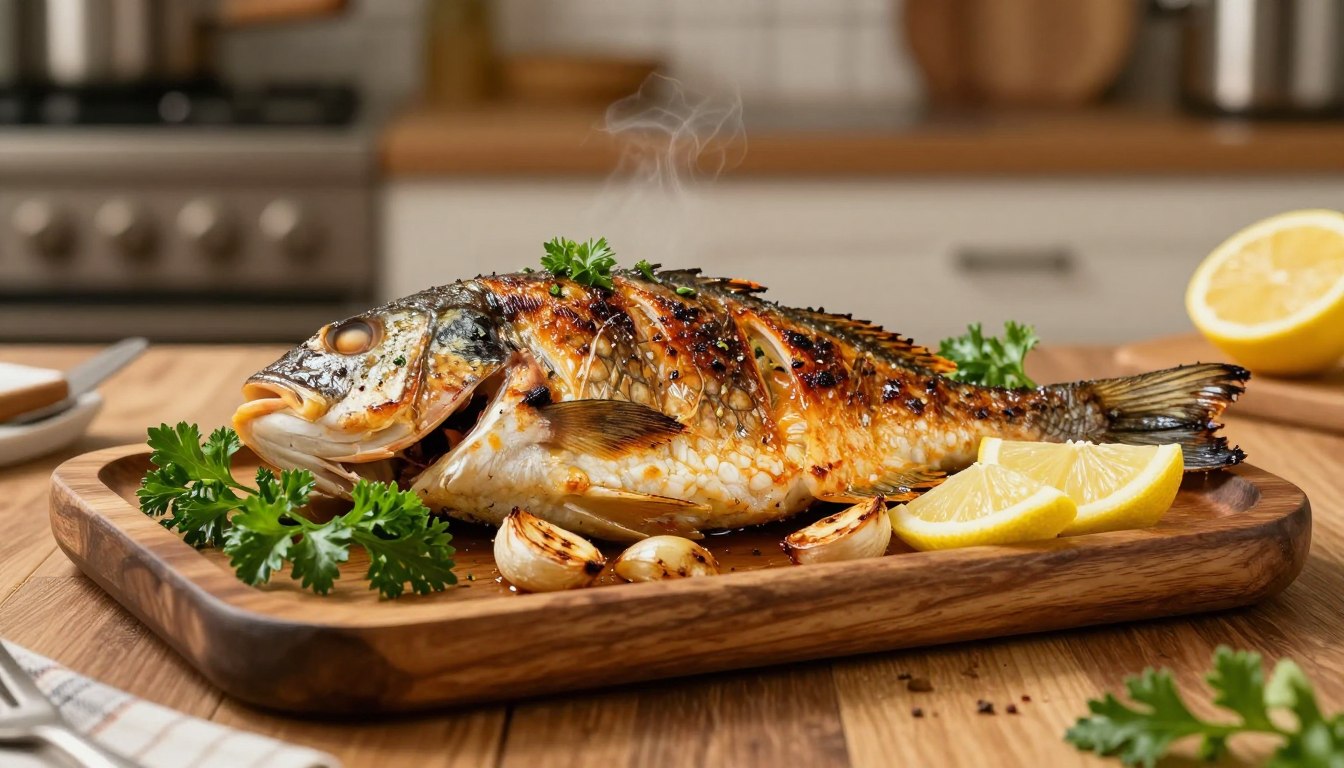
How to Make Whole Baked Snapper with Garlic
Ever seen a beautiful, herb-filled whole fish at a restaurant and thought, “I could never make that at home?” I felt the same for years. But, once you learn how simple and forgiving it is, you’ll feel different.
Baking a whole snapper is a great way to get juicy and tender meat with little effort. It turns a simple ingredient into a stunning dish, perfect for family dinners or special events.
This guide will be your roadmap. We’ll show you how to pick the best fish, prep it with garlic and herbs, and bake it. You’ll see why it’s a fantastic speedy weeknight supper that wows everyone.
Ready to learn how to bake a whole fish? Let’s start. You’re about to add a stunning, healthy meal to your regular menu.
Key Takeaways
- Baking a whole fish is a remarkably forgiving technique that locks in moisture and flavor, resulting in exceptionally tender flesh.
- This method is deceptively simple, requiring minimal hands-on prep time, making it ideal for busy weeknights.
- A whole roasted snapper makes an impressive visual centerpiece for family dinners or entertaining.
- The recipe is highly adaptable, allowing you to use various whole fish like bream, barramundi, or trout based on what’s fresh.
- Stuffing the cavity with garlic, lemon, and fresh herbs infuses the meat with incredible aroma from the inside out.
- It’s a healthy, protein-packed meal that naturally feeds a crowd without complicated side dishes.
- With clear, step-by-step guidance, anyone can confidently prepare this restaurant-quality dish at home.
Why Whole Baked Snapper is the Ultimate Easy & Healthy Recipe
Cooking a snapper whole is the secret to a moist, flavorful fish dinner. This method turns simple ingredients into a spectacular meal. It’s perfect for a healthy meal that doesn’t take hours to make.
Fillets might seem easier, but baking the fish whole is simpler and better. The bones and skin create a steam pocket inside. This keeps the fish moist and flavorful, better than a fillet.
The result is incredibly tender, juicy flesh every time. It’s hard to dry out. This makes it a great easy & healthy recipe for all cooks.
This dish is healthy because it needs little added fat. Just olive oil, fresh herbs, and garlic are needed. The snapper is full of lean protein and omega-3s. It’s a key part of nutritious meal ideas that are satisfying.
The process is famously easy. One home cook called it “dead simple” and “completely effortless.” Most time is spent on prep—scaling, cleaning, and seasoning. Once in the oven, it’s done. It’s a top simple cooking tip for a stress-free dinner.
This dish is also a hit for gatherings. Its impressive look hides how simple it is to make. It makes a beautiful centerpiece for your table without any last-minute panic.
| Feature | Whole Snapper | Fillets |
|---|---|---|
| Moisture & Texture | Bones and skin steam flesh from inside, resulting in supremely juicy meat. | Can easily dry out during cooking due to direct heat exposure. |
| Flavor Depth | Natural fats and collagen from bones enrich the overall taste. | Flavor is more one-dimensional and can be bland. |
| Visual Appeal | Makes a stunning, professional presentation on the plate. | Looks simple and utilitarian. |
| Ease of Cooking | Forgiving; hard to overcook. Minimal active time. | Requires careful timing to prevent dryness. |
If you love a simple, herby fish dish, try this quick Greek snapper recipe. It uses the same brilliant whole-fish principle.
In short, whole baked snapper is a two-for-one deal. You get a stunning, restaurant-quality meal with a simple process. It’s healthy, foolproof, and always a crowd-pleaser.
Understanding the Nutritional Power of Whole Snapper
The whole snapper is not just tasty; it’s also packed with health benefits. It’s a great choice for those who care about their health. It turns a simple dinner into a nutritious meal idea.
Lean Protein for Sustained Energy
Snapper is a top-notch source of lean protein. This protein is key for fixing and building your body’s tissues.
It keeps you full and gives you energy for hours. This makes it a great choice for low-calorie recipes that are both filling and tasty.
Unlike heavy meats, snapper’s protein is easy to digest. You get all the muscle benefits without feeling tired after eating.
Essential Fats and Minerals
The recipe’s wholesome ingredients add more nutrients. Extra virgin olive oil is full of heart-healthy fats.
These fats help your heart and cholesterol levels. Garlic, lemon, and herbs add antioxidants and minerals.
Together, they make a meal that’s both delicious and nutritious. This mix is the key to a nutritious meal idea that nourishes you.
| Key Nutrient | Primary Benefit | Source in This Recipe |
|---|---|---|
| Lean Protein | Builds muscle, promotes satiety | Whole Snapper Fillets |
| Omega-3 Fatty Acids | Supports brain & heart health | Snapper & Olive Oil |
| Vitamin C & Antioxidants | Boosts immunity, fights inflammation | Fresh Lemon Juice & Herbs |
| Allicin & Minerals | Has antimicrobial properties, supports metabolism | Fresh Garlic |
Using these wholesome ingredients ensures your meals are healthy. It shows that low-calorie recipes can be both tasty and satisfying.
Your Complete Grocery List for This Dish
Before you start cooking, let’s go over what you need to buy. This list focuses on wholesome ingredients that make a great meal. With a few key items, you can make something simple into a showstopper.
Good simple cooking tips start with quality shopping. You can find everything at a well-stocked store or fish market. This makes planning dinner ideas for families easier.
Selecting the Freshest Whole Snapper
Your dish’s success starts with a fresh fish. Don’t be shy about checking your snapper at the counter. Use your senses to judge its quality before buying.
Look for these signs of freshness:
| Feature to Check | What to Look For | Why It Matters |
|---|---|---|
| Eyes | Clear, bright, and slightly bulging | Cloudy or sunken eyes indicate age |
| Gills | Bright red or orange underneath the flap | Brown or gray gills mean the fish is not fresh |
| Smell | A clean, briny ocean scent | A strong “fishy” odor is a warning sign |
| Flesh | Firm and springs back when pressed | Mushy or slimy texture means poor quality |
| Scales | Shiny and tightly adhered | Loose or missing scales can mean mishandling |
Always ask your fishmonger to scale and gut the snapper for you. This saves you time and mess at home. A 1.5 to 2 pound fish is perfect for two people.
These ingredients add flavor to your dish. They make it special. You might already have some of these wholesome ingredients at home.
Fresh herbs add brightness. Try parsley and dill, or thyme, rosemary, or oregano for a twist. Garlic and lemon are essential for their zesty flavor.
Here is your complete shopping list organized for easy reference:
| Ingredient | Quantity / Notes | Primary Role |
|---|---|---|
| Whole Red Snapper | 1.5 – 2 lbs (scaled & gutted) | Main protein |
| Fresh Parsley | 1 small bunch | Herb for stuffing & garnish |
| Fresh Dill | 1 small bunch (or rosemary/thyme) | Aromatic herb |
| Garlic Cloves | 4-6 cloves | Key aromatic flavor |
| Lemons | 2 medium | Stuffing, juice, and garnish |
| Extra Virgin Olive Oil | High-quality bottle | Moisture and richness |
| Coarse Salt (Kosher or Sea) | For seasoning | Enhances natural flavors |
This simple list shows that great dinner ideas for families don’t need complicated shopping. With these simple cooking tips for selection, you’re set for a flawless cooking experience. Each item adds a layer of flavor.
The Simple Tools Required for Baking Fish
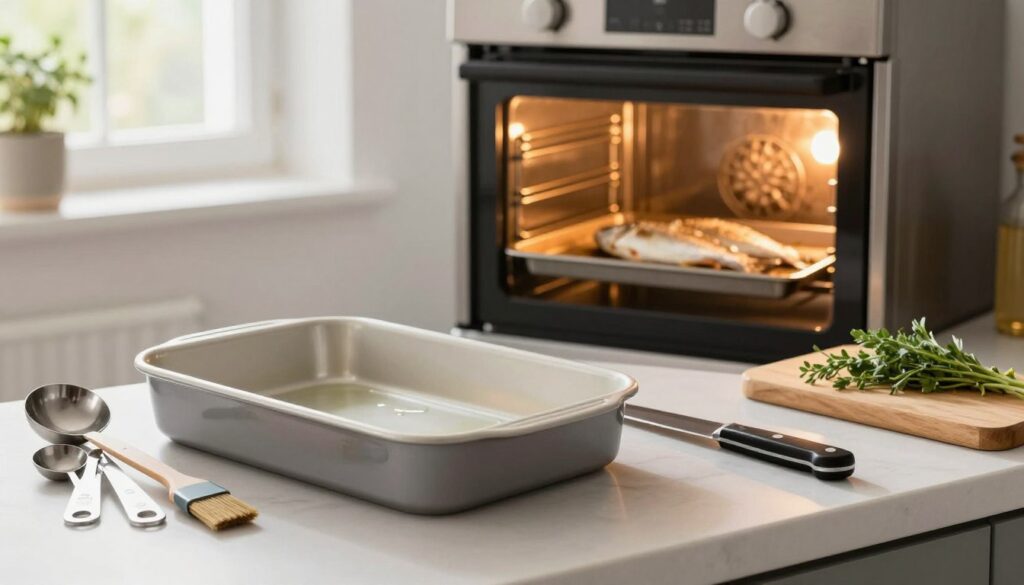
You don’t need a fancy kitchen to make this meal. This is a top simple cooking tip for a easy & healthy recipe. You probably have everything you need already.
Great home cooking is about fresh ingredients and technique, not fancy tools. Your everyday kitchen is perfect for the job.
Let’s look at what you’ll need. A rimmed baking sheet is your main stage. Parchment paper on it makes cleanup easy.
A sharp chef’s knife is key. Use it to make shallow slashes on the fish. This helps the heat and flavors get in.
Kitchen shears are super handy. They help trim fins and tail for a neat look. This step is optional but nice.
The most important tool? A digital meat thermometer. It makes sure your fish is perfectly cooked.
Lastly, kitchen twine is optional but useful. It keeps the fish’s shape and holds lemons or herbs inside.
| Tool | Primary Purpose | Why It’s Important |
|---|---|---|
| Rimmed Baking Sheet & Parchment | Holds the fish during cooking. | The rim contains juices; parchment prevents sticking for an easy & healthy recipe cleanup. |
| Sharp Knife | Scoring the fish skin. | Allows seasonings to flavor the flesh deeply and ensures even cooking. |
| Kitchen Shears | Trimming fins. | Provides a cleaner look and can prevent fins from burning. |
| Digital Thermometer | Checking internal temperature. | Guarantees food safety and perfect doneness (145°F at the thickest part). |
| Kitchen Twine (Optional) | Tying the fish. | Helps the fish maintain its shape and keeps stuffing in place. |
See? It’s not complicated. These simple cooking tips make cooking easy and fun. You don’t need special gear for great meals. For more ideas, check out other easy oven-baked fish recipes. Now, you’re ready to cook.
Step-by-Step Guide: Preparing and Cleaning the Fish
Before cooking your fish in the oven, a few simple steps are key. They ensure even cooking and amazing flavor. This is the most critical part of simple cooking tips for seafood.
Handling a whole fish is easy once you learn the basics. You want a clean, dry fish with strategic cuts for even heat.
How to Properly Rinse and Pat Dry
Don’t rinse your snapper under running water. This can spread bacteria and make the fish soggy. Instead, use a damp paper towel to clean the inside.
Then, dry the fish completely with fresh, dry paper towels. This includes the skin, fins, and inside. Crispy skin starts with a bone-dry surface. Moisture ruins that perfect finish.
A dry fish is a happy fish when it hits the hot oven. This one step makes a world of difference in texture.
Making Strategic Cuts for Even Cooking
Grab a sharp chef’s knife. Make three to four diagonal slashes on each side of the snapper. Cut down until you just feel the backbone. These slashes are not just for decoration.
They help heat reach the thickest part of the flesh evenly. This prevents the thinner tail from overcooking before the center is done. They also create pockets for your garlic-herb seasoning to flavor the fish from the inside out.
Doing this prep in advance is a great healthy meal prep suggestion. Clean, dry, and score your fish in the morning. Refrigerate it and have it ready for a quick dinner. For more foundational techniques, you can master simple cooking tips that apply to many types of fish.
With your snapper prepped, you’re ready to move on to building the flavorful seasoning that will make this dish truly special.
Step-by-Step Guide: Creating the Garlic-Herb Seasoning
This step is all about building layers of flavor using fresh, wholesome ingredients right on your countertop. The seasoning paste you make here will transform your simple snapper into a restaurant-quality dish. It’s a fun, hands-on process that fills your kitchen with an incredible aroma.
Mincing Garlic and Chopping Fresh Herbs
Start with your garlic cloves. You have a choice here that affects the final flavor. Finely slicing the garlic will give you a milder, sweeter taste that infuses gently into the fish. For a more robust and direct garlic punch, mince the cloves finely.
Both methods are excellent simple cooking tips for controlling flavor intensity. Next, grab your fresh herbs. A classic combination is flat-leaf parsley and dill, which offers a bright, clean taste. Roughly chop a hearty bunch—you want about a cup total of loosely packed herbs.
Mixing the Seasoning Paste with Olive Oil
Now, bring everything together. In a small bowl, combine most of your chopped herbs and minced (or sliced) garlic. Add two to three tablespoons of good olive oil, a generous pinch of sea salt, and a crack of black pepper.
Stir it vigorously until it forms a fragrant, slightly chunky paste. This paste is your flavor powerhouse. You’ll use it to coat the outside of the fish and massage it into the slits, ensuring every bite is packed with taste.
The best meals often come from the simplest combinations of fresh, quality ingredients.
If you love the combination of garlic and herbs, you might enjoy exploring other recipes like this grilled salmon with garlic herb butter for another healthy dinner idea. While you could simply stuff the cavity with lemon and herb sprigs, taking the extra minute to make this paste delivers a much deeper, more consistent flavor.
This process celebrates the beauty of working with wholesome ingredients. With these simple cooking tips, you’re not just following a recipe—you’re creating the foundation for an amazing meal.
Step-by-Step Guide: Seasoning and Stuffing the Snapper
Now it’s time to make your snapper a flavor-packed masterpiece. This is where your fish gets all the aromatic goodness. Follow these simple cooking tips to season every layer perfectly.
Stuffing the Cavity with Lemon and Herbs
Begin by seasoning the inside of the fish. A light sprinkle of salt and pepper is key. Then, fill the cavity with lemon slices, herb sprigs, and minced garlic.
Don’t be shy! This stuffing steams the fish, releasing amazing citrus and herbal aromas. It’s a key part of making nutritious meal ideas full of natural flavor.
Think of the cavity as a treasure chest. Fill it with layers: lemon slices, herbs like parsley and dill, and garlic cloves. The more you pack in, the more moisture and taste you get.
Rubbing the Paste Onto the Skin and Into Cuts
Now, focus on the outside. If you made garlic-herb paste, now’s the time to use it. Rub the paste all over the fish’s skin, making sure it’s even.
Pay special attention to the shallow slashes you made earlier. Work the paste deeply into these cuts. This lets the seasoning flavor the meat directly.
No paste? No problem. Drizzle the snapper with olive oil and season the skin with salt and pepper. Press this mixture into the slashes with your fingers.
This two-layer approach—stuffing the interior and coating the exterior—guarantees a delicious result. It’s a simple cooking tip that makes your dish exceptional. You’ll get perfectly seasoned bites, from the flaky outer meat to the succulent center.
Mastering this step is key to consistently great nutritious meal ideas. It shows that big flavor doesn’t need complicated techniques, just careful preparation.
Step-by-Step Guide: Baking Time and Temperature
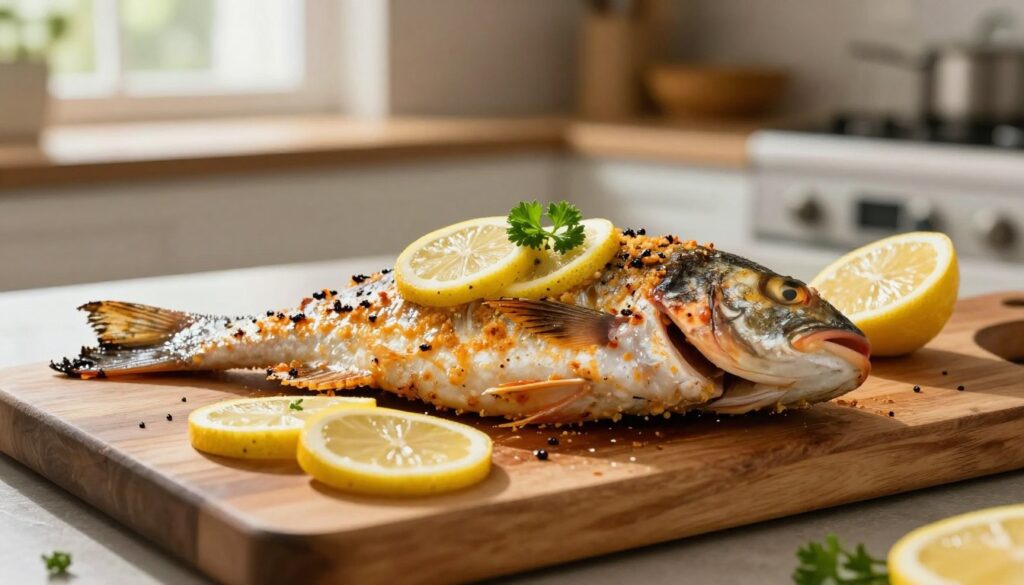
Learning to bake your seasoned snapper is key to a delicious dish. It’s easy and great for quick weeknight dinners. With the right temperature and timing, you’ll get amazing results at home.
Preheating and Preparing the Baking Sheet
First, heat your oven to 425°F (220°C). A hot oven is crucial for even cooking and crispy skin.
Next, get your baking sheet ready. This tip makes cleanup easy. Use parchment paper or aluminum foil.
For flavor and to prevent sticking, add onion slices or lemon rounds. Your fish will steam gently on this bed.
The Baking Process: From Oven to Table
Put your snapper on the sheet and place it in the oven. Now, the magic begins.
The baking time varies by fish size. A good rule is 10 minutes per inch of thickness.
- For a small fish around 1.6 lbs (like 800g), start checking at 20 minutes.
- For a larger 1.5 to 3 lb snapper, plan for 25 to 30 minutes total.
The skin should turn golden brown and the edges crisp.
Check for doneness with these methods:
- The Thermometer Test: Use an instant-read thermometer in the thickest part. It should read 131°F (55°C) for medium doneness.
- The Flake Test: Poke the thickest part with a fork. The flesh should be opaque and flake easily.
Remember, fish cooks a bit more after it’s out of the oven. This is important for simple cooking tips for perfect proteins.
Let the snapper rest for 5 minutes after baking. This makes sure it’s moist. Then, it’s ready to impress at your quick weeknight dinner table.
How to Check for Doneness and Perfectly Plate Your Fish
Knowing when your fish is done is key to making it a stunning dish. This step turns a simple meal into a masterpiece. With a few simple cooking tips, you’ll serve perfect fish every time.
Testing with a Fork and Thermometer
Use an instant-read meat thermometer for the most accurate method. Insert the probe into the thickest part of the fish, avoiding the backbone. Aim for an internal temperature of 135°F to 140°F (57°C to 60°C).
When it hits this range, your fish is cooked to perfection. The temperature will rise a bit as it rests.
Without a thermometer? Try the flake test. Make a small cut near the backbone and use a fork or knife to check. The flesh should be opaque and flaky. If it’s still translucent or feels rubbery, it’s not done yet.
Remember this important step: let the fish rest for about 5 minutes after taking it out of the oven. This helps the juices settle back into the flesh, making it juicy.
Garnishing and Serving Suggestions
Now, it’s time to make your dish look as good as it tastes. Carefully move the snapper to a large platter. This style is perfect for dinner ideas for families where everyone can serve themselves.
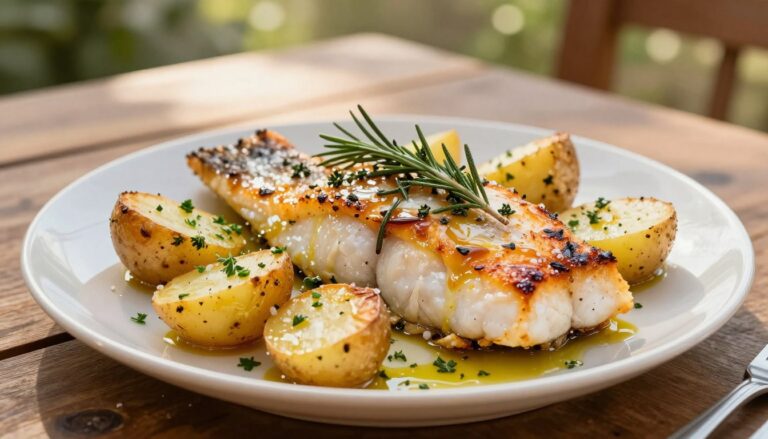
Start by spooning the garlic-herb juices over the fish. Then, add your garnishes. Fresh lemon wedges are essential for a burst of flavor. Sprinkle fresh herbs like dill, parsley, or thyme around the fish.
For more color and taste, consider adding:
- Quick-roasted cherry tomatoes or olives
- Thin slices of fresh lemon or orange
- A light drizzle of high-quality olive oil
- A sprinkle of flaky sea salt
To finish your meal, pair the snapper with simple sides. A crisp green salad, roasted asparagus, or buttery new potatoes are great choices. This turns your baked fish into a complete, impressive dinner idea for families that’s both special and easy.
Creative Variations for Your Next Try
Once you’ve mastered the basic recipe, it’s time to get creative. Baking a whole snapper is a great way to explore new flavors. You can add a global twist without making things too complicated.
Just changing a few herbs or spices can change the whole dish. This simple trick can turn one reliable recipe into many nutritious meal ideas.
A Zesty Lemon-Pepper Version
For a fresh twist, try a lemon-pepper rub. It adds a clean, citrusy flavor to the fish.
Mix two tablespoons of black pepper, the zest of one lemon, and one tablespoon of thyme. Add olive oil to make a paste.
Spread the paste inside and out on the snapper. Add lemon slices and thyme inside. This creates a fragrant, peppery crust.
A Spicy Mediterranean-Inspired Bake
If you like bold flavors, try a Mediterranean spice paste. It adds warmth and smokiness to your dish.
Make a paste with harissa, smoked paprika, garlic, and olive oil. Use preserved lemon and cilantro for the stuffing.
Apply the paste all over. The preserved lemon adds a tangy twist. This dish turns a simple fish into a flavorful centerpiece.
Don’t stop there. Try an Asian-inspired version with soy sauce, ginger, and scallions. Or, go simple with Garlic & Dill Butter sauce.
The key is a whole fish, high heat, and fresh ingredients. This makes every variation perfect for quick weeknight dinners. You’re just a few pantry staples away from a new meal.
| Variation Name | Key Ingredients | Flavor Profile | Prep Tip |
|---|---|---|---|
| Zesty Lemon-Pepper | Lemon zest, cracked black pepper, fresh thyme | Bright, citrusy, and aromatic with a peppery kick | Zest the lemon before juicing it for the cavity. |
| Spicy Mediterranean | Harissa, smoked paprika, preserved lemon, cilantro | Bold, smoky, and warmly spiced with tangy notes | Mix the paste ahead of time for deeper flavor. |
| Asian-Inspired Ginger | Fresh ginger, soy sauce, scallions, sesame oil | Savory, umami-rich, with a hint of sweetness and heat | Brush with glaze in the last 5 minutes of baking. |
Feel free to mix and match ideas from the table. Try different herbs like rosemary or oregano for a unique taste. The goal is to keep your meals interesting and fun.
Each version is healthy, with lean protein and good fats. They show that eating well doesn’t have to be dull. So, grab your snapper and get creative—your next favorite nutritious meal idea is waiting.
Expert Tips for a Flawless Result Every Time
A perfect baked snapper every time isn’t luck—it’s the result of applying simple, proven tips. These simple cooking tips from professional kitchens will elevate your dish from good to exceptional.
Start with the foundation. If your fishmonger hasn’t already done it, ask them to scale and gut the snapper. This saves you a messy step at home. Once you have your fish, the first pro secret is to pat it bone-dry inside and out with paper towels. Moisture is the enemy of crispy skin.
Next, don’t be shy with your knife. Making three or four diagonal slashes on each side of the fish isn’t just for looks. These cuts allow heat to penetrate deeply, ensuring the thickest parts cook as fast as the thinner ones. This is your best insurance against uneven cooking. Pair this technique with a properly preheated, hot oven for the best texture.
The single best tool to banish guesswork is a cheap digital thermometer. Insert it into the thickest part of the flesh, avoiding the bone. You’re aiming for 145°F. Pulling the fish out at this temperature guarantees it’s cooked through but still incredibly moist and flaky. Remember, it will continue to cook a little as it rests.
Speaking of resting, let your snapper sit for 5-7 minutes after baking. This allows the juices to redistribute. For an extra pro touch, consider tying the fish with a few loops of kitchen twine before baking. This helps it keep a neat shape and encourages the lemon and herb stuffing to infuse more flavor throughout the cavity.
One of the smartest healthy meal prep suggestions is to do all the prep work ahead. You can clean, slash, season, and stuff the snapper up to a day in advance. Just cover it tightly and store it in the refrigerator. When dinner time arrives, all you do is bake. This forward-thinking approach makes this easy & healthy recipe incredibly convenient for busy weeknights.
By integrating these simple cooking tips into your routine, you transform this impressive dish into a reliable staple. It’s the ultimate easy & healthy recipe that feels special every single time you make it.
Conclusion
Learning to bake a whole snapper is a big win in the kitchen. You now know how to choose a fresh fish, season it with garlic and herbs, and bake it perfectly.
This dish is a top pick for easy & healthy meals. It offers lean protein and great flavor without hard steps. It’s perfect for family dinners, pleasing everyone with its mild taste and impressive look.
This method is also great for meal prep. You can season the snapper early. Then, a quick bake makes it a fast, healthy meal on a busy night.
Your new skill lets you cook other fish types too. For more ideas, check out our fish recipes for any fish variety. Start with a simple baked fillet or try grilling.
Get a fresh snapper, trust your skills, and enjoy a tasty, healthy dish that gets rave reviews every time.