How to Make Smooth and Creamy Homemade Hummus
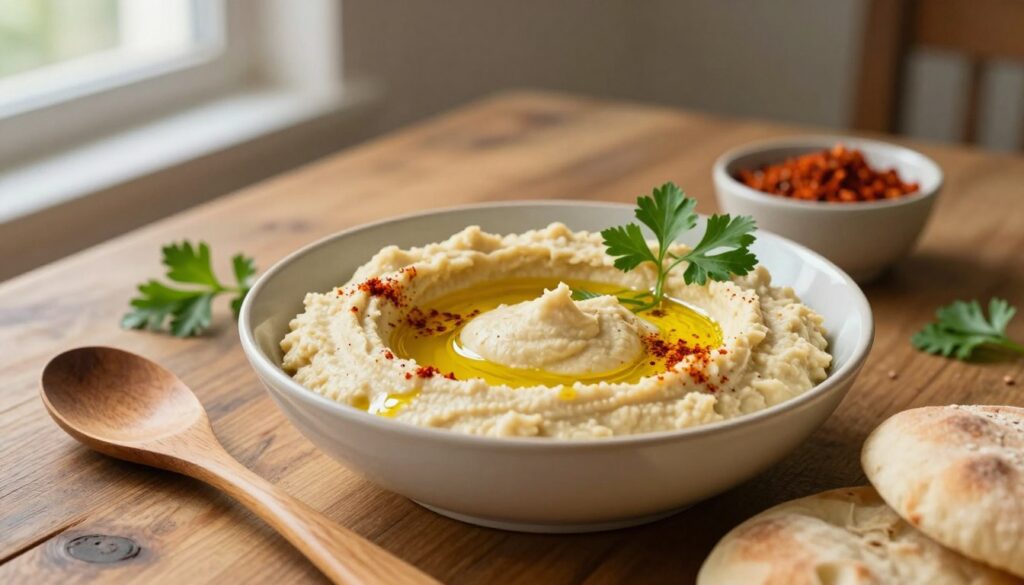
Imagine a spoonful of hummus that feels like summer in a Mediterranean café. That’s what I aim to bring to your kitchen. I want your hummus to be so smooth it spreads like silk on warm pita. This recipe is perfect for quick weeknight meals or snacks for the week, offering restaurant-quality results with simple tools and everyday ingredients.
This guide will teach you to make hummus from scratch in just 5–15 minutes with canned chickpeas. You’ll learn how to achieve ultra-creamy homemade hummus using a food processor, blender, or Vitamix. The key ingredients are chickpeas, tahini, lemon, salt, and a liquid like aquafaba or chickpea cooking water. You’ll also add finishing olive oil and optional flavorings like garlic or smoked paprika.
Expect practical tips that fit into your everyday cooking and meal prep. Later, we’ll cover variations, storage, and troubleshooting. This way, you can find the best hummus recipe for your taste, with or without tahini.
Key Takeaways
- The smooth hummus recipe can be quick: 5–15 minutes of active time with canned chickpeas.
- Core ingredients are chickpeas, tahini, lemon, salt, and a liquid (aquafaba, cooking water, or ice water).
- Tools—food processor, blender, or Vitamix—affect creaminess; technique matters most.
- You’ll learn variations, storage tips, and texture troubleshooting later in the article.
- This guide focuses on practical steps to make creamy homemade hummus you’ll actually use for meal prep and entertaining.
Why homemade hummus beats store-bought creamy chickpea dip
Making hummus at home lets you control the flavor. You decide how much tahini, lemon, and garlic to add. This way, your dip won’t taste bland or processed.
Fresh flavor and control over ingredients
When you make it yourself, you choose the best ingredients. Use extra-virgin olive oil and tahini from brands like Soom or Kevala for a richer taste. You can also skip preservatives and reduce sodium to your liking.
Small changes make a big difference. A bit more lemon adds brightness, a pinch of salt balances, and roasted garlic brings depth. These touches are hard to find in store-bought hummus.
Health benefits of homemade hummus versus processed options
Homemade hummus is made with whole foods. It has chickpeas for protein and fiber, tahini for healthy fats and calcium, and olive oil for good fats. You avoid added oils and emulsifiers found in processed dips.
This makes your hummus a healthier choice. You can control the sodium, avoid preservatives, and adjust the fats to fit your health goals. Whether you want it lighter or richer, you have the control.
Cost savings and batch-making for meal prep
Canned chickpeas make quick hummus in about five minutes. It’s great for snacks or lunches during the week. A batch can yield several cups and is cheaper than store brands.
Make several jars and freeze them without the finish oil. Thaw them later for a cost-effective, ready-to-eat option. Cooking chickpeas from scratch makes the hummus even creamier if you slightly overcook them.
Essential ingredients for creamy homemade hummus
Start with good base ingredients for success. The right chickpeas, tahini, liquid, acid, and oil shape the texture and flavor of your hummus.
Chickpeas: canned versus cooked-from-scratch. Canned chickpeas save time and work well. Reserve some aquafaba for blending. Cooking from scratch? Soak overnight and simmer or use an Instant Pot. Soft beans make a creamy base.
Tahini: why quantity and quality matter. For classic tahini hummus, use fresh, well-stirred tahini. Restaurants often use more tahini for a rich taste. Taste as you go to keep the flavor authentic.
Liquid choices: aquafaba, chickpea cooking water, or ice water. Aquafaba keeps the purée stable and glossy. Cooking water adds body. Ice water makes it lighter and airier.
Acid and seasoning: lemon juice, salt, and optional citric acid. Fresh lemon juice brightens the dip. Start with a small amount of lemon and salt, then adjust. A pinch of citric acid can preserve brightness without extra lemon.
Olive oil and optional flavorings: garlic, cumin, roasted garlic, sumac. Use extra-virgin olive oil for a glossy finish. Raw garlic adds a sharp bite; soak it in lemon to soften. Roasted garlic brings sweetness. Add cumin, smoked paprika, or sumac for Mediterranean flavors. For a dairy-free version, use more aquafaba and oil.
Tools and equipment to get the smoothest hummus
Choosing the right tool is key to your hummus’s texture. A food processor is a top pick for home use. It lets you pulse, scrape, and add liquid as you go. It handles tahini and chickpeas well and is easy to clean.
Food processor versus blender versus Vitamix
A standard blender works for hummus if you have a small, high-speed pitcher. You need to add enough liquid to keep it moving. But, it might leave tiny bits if you stop too soon.
Vitamix hummus is smoother because its motor breaks down fibers and mixes tahini and aquafaba well. You must add liquids carefully to avoid splashing. Sometimes, you need to stop and scrape the sides for even blending.
Why a high-speed blender yields extra-creamy texture
High-speed blenders spin faster and keep blades near the center. This pulls ingredients into continuous circulation. This steady motion makes the emulsion stable and the hummus smooth, like in a restaurant.
For the creamiest hummus, blend in short bursts and add chilled water or aquafaba. Taste and adjust seasoning between pulses.
Simple manual methods if you don’t have appliances
You can make great hummus without machines. Start by whisking tahini, lemon juice, and water into a glossy sauce. Peel chickpeas for a thinner, silkier texture and mash them with a potato masher or the back of a spoon.
Use a mortar and pestle for small batches. Grind garlic and toasted cumin before mixing with the tahini base and chickpeas. These steps make a rustic, flavorful hummus, perfect for an easy recipe.
For a quick comparison of popular small blenders and processors, see this helpful guide.
Prep steps for ultra-smooth texture
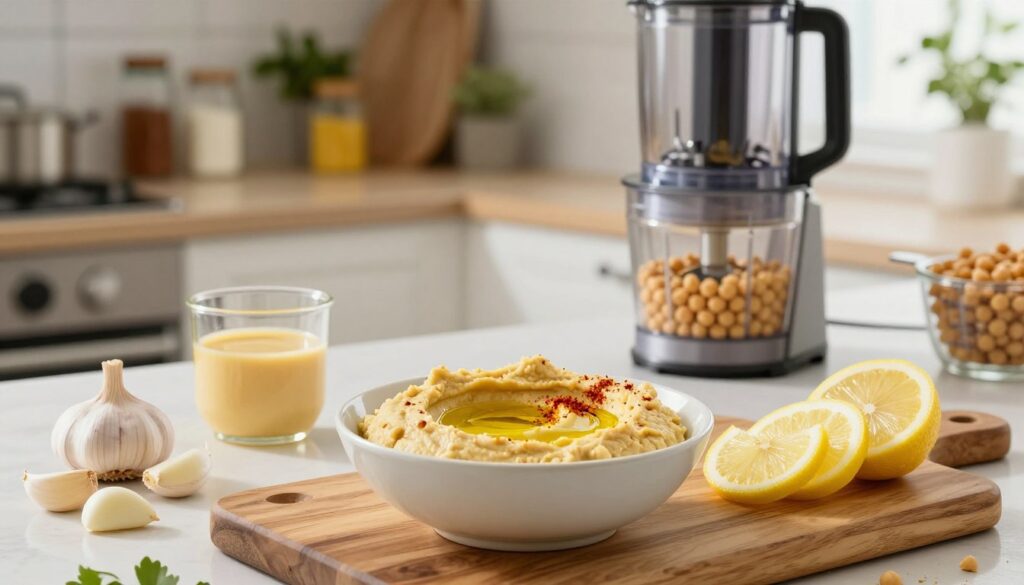
Get your station ready before you blend. Small choices in prep make a big difference when you want a smooth hummus recipe. Follow tight, simple steps so your homemade hummus prep sets you up for success.
How to rinse and drain canned chickpeas
Start by draining the can and saving a small cup of aquafaba if you plan to use it. Rinse the chickpeas under cold running water until the liquid runs clear. This removes the metallic or briny taste from the can and gives a cleaner base for making hummus from scratch.
When and how to peel chickpeas (skins optional)
Peeling is optional but worth it for ultra-smooth texture. Put chickpeas in a bowl of cold water and agitate them gently; skins float and can be skimmed off. If you are using a high-speed blender or food processor, skipping the peel step saves time without a big loss in creaminess.
Chilling ingredients and using ice water for emulsification
Chill your chickpeas and liquids before blending. Cold ingredients help the tahini bind with water for a stable emulsion. Stream ice water slowly into the tahini base while you blend to thicken and silk the hummus. Let your finished batch rest in the fridge for at least an hour to firm and let flavors meld during the final stage of your homemade hummus prep.
| Prep Step | Why it matters | Quick tip |
|---|---|---|
| Drain and rinse canned chickpeas | Removes canning liquid for cleaner flavor | Reserve a small cup of aquafaba for texture control |
| Peel chickpea skins | Improves silkiness when blending by hand | Agitate in cold water and skim floating skins |
| Chill ingredients | Promotes stable emulsion and thicker texture | Use chilled liquids or ice water streamed into tahini |
| Rest in refrigerator | Lets flavors develop and hummus firm up | Chill at least 1 hour before serving |
smooth hummus recipe
Make a silky, crowd-pleasing creamy chickpea dip at home with pantry staples and a few simple techniques. Below you’ll find an ingredient list in US measurements, a clear step-by-step blending method for silky results, and quick fixes for common texture problems so your easy hummus recipe turns out just right.
Ingredients (US measurements)
1 can (14–15 oz/400–425 g) chickpeas, drained (reserve 2–3 Tbsp aquafaba); 1/2 cup well-stirred tahini (8 Tbsp); 2–3 Tbsp fresh lemon juice; 1/4–1/2 tsp fine sea salt; 1/4–3/4 cup ice water or chilled chickpea cooking water/aquafaba (start with 1/4 cup); 1–2 cloves garlic (optional; soak in lemon for 30 minutes); 1–2 Tbsp extra-virgin olive oil for finishing.
Ingredient list with US measurements
Use a good-quality tahini and fresh lemons. If you prefer a milder garlic punch, soak the garlic in lemon juice to tame the bite before blending. Reserve some aquafaba when draining the chickpeas; it helps create the best hummus recipe texture without adding oil.
Step-by-step blending method for silky results
- In your food processor or high-speed blender, combine tahini, lemon juice, salt, and soaked garlic if using. Process until it looks like thick peanut butter.
- With the motor running, stream in ice water or reserved aquafaba slowly. Watch the tahini sauce lighten and emulsify into a glossy, whipped base.
- Add the drained chickpeas and process. Stop to scrape down the bowl as needed and continue until the mixture is smooth and velvety.
- If the dip is too stiff, add reserved liquid a tablespoon at a time while blending until you reach the desired creaminess.
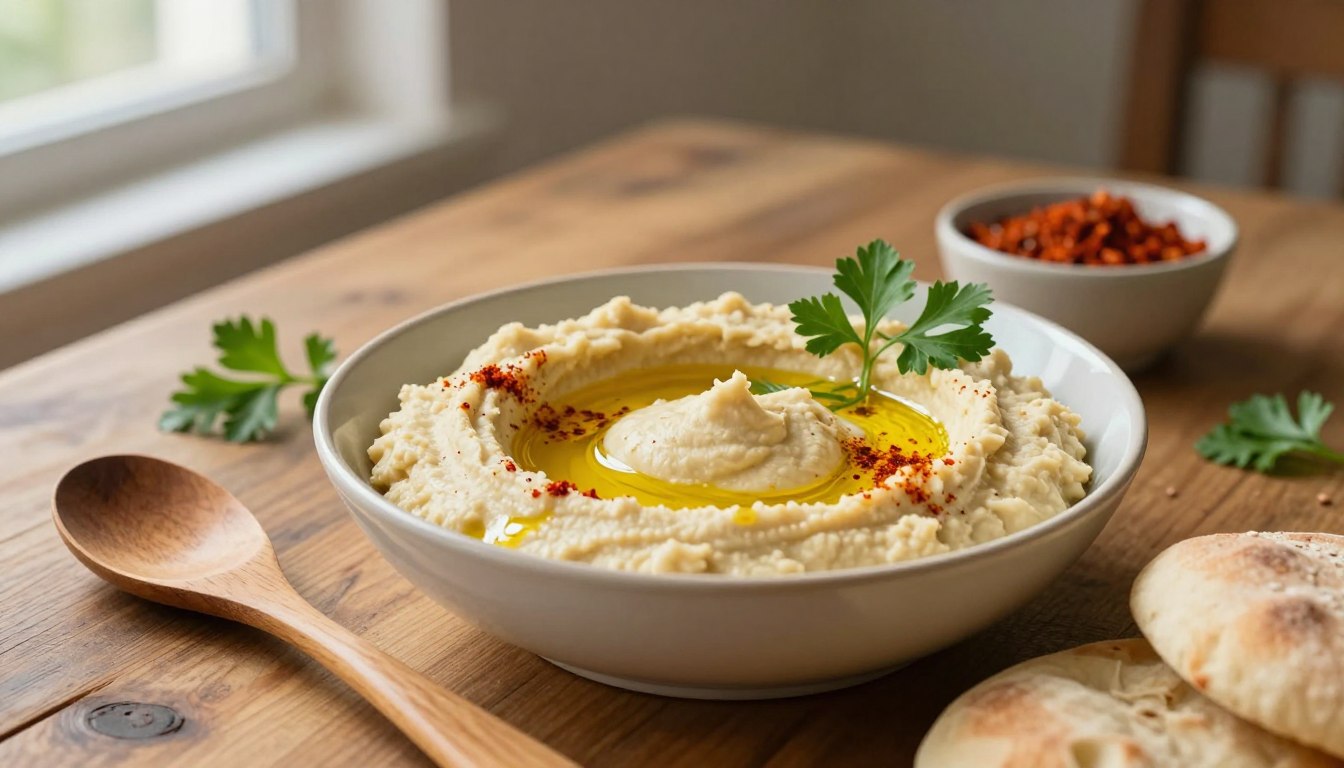
- Taste and adjust lemon, salt, or garlic. Transfer to a serving dish, drizzle with olive oil, and garnish as you like.
Troubleshooting common texture issues
- Too thick: Stream in more ice water or aquafaba while blending. Chill for 20–30 minutes; cold thickens hummus slightly.
- Too runny: Chill first to let it set. If it remains loose, add a few tablespoonfuls of drained chickpeas or another spoonful of tahini and re-blend.
- Grainy or not smooth: Blend longer or switch to a higher-speed blender. Very soft, overcooked chickpeas from scratch often produce the smoothest texture.
- Emulsion breaks: Add a spoonful of tahini and blend briefly to re-stabilize the dip.
Follow these steps and tweaks to craft an easy hummus recipe that tastes like the best hummus recipe you’ve ever had. With little effort you’ll have a restaurant-worthy creamy chickpea dip ready for snacks, sandwiches, and party platters.
Variations: easy hummus and flavor twists
You can make many different dips with just a few pantry items. Try small changes to match your mood, the season, or a party platter.
Classic tahini and lemon-forward versions
For a timeless dip, use a lot of tahini and olive oil. If you like bright flavors, add more lemon juice and less tahini. A little ground cumin adds warmth, while extra lemon makes it lighter.
Spiced and roasted variations
Make spiced hummus by adding smoked paprika, cumin, or cayenne. Roasted garlic or Calabrian chili paste add depth. Finish with extra-virgin olive oil and smoked paprika for looks.
Mediterranean twists with olives, peppers, and herbs
Add chopped Castelvetrano or Kalamata olives for briny contrast. Roast red peppers, peel, and chop them for sweet, smoky notes. Fresh parsley, dill, or mint add a mediterranean touch.
Homemade hummus without tahini (optionnel)
For hummus without tahini, use sunflower seed butter, peanut butter, or aquafaba. Start with 2–3 tablespoons and adjust to taste. It will have a different flavor, so balance with lemon and salt.
Use the chart below to compare quick changes and expected results so you can decide which variation to try next.
| Variation | Key Add-ins | Flavor Profile | Best Pairings |
|---|---|---|---|
| Classic tahini | Tahini, lemon, garlic, olive oil | Rich, nutty, balanced acidity | Pita, roasted vegetables, grilled chicken |
| Lemon-forward | Extra lemon juice, less tahini, parsley | Bright, citrusy, fresh | Salads, seafood, fresh crudités |
| Spiced hummus | Smoked paprika, cumin, cayenne | Warm, smoky, mildly spicy | Spiced meats, flatbreads, pickles |
| Mediterranean hummus recipe | Olives, roasted red pepper, dill | Briny, sweet, herbaceous | Greek salads, feta, crusty bread |
| Homemade hummus without tahini (optionnel) | Sunflower seed butter or extra aquafaba, olive oil | Smoother, slightly different nutty note | Sandwiches, veggie dips, diet-sensitive menus |
Techniques to elevate creaminess and emulsion
To make your homemade hummus extra creamy, focus on creating a stable emulsion and improving texture. Start by making elements that add air and body. A few key steps can change how your hummus feels.
Make a tahini sauce base first.
First, blend tahini with lemon juice, salt, and a bit of cold water. This makes it light and thick, perfect for a smooth base. Many chefs use this method for a lighter, more consistent hummus.
Stream liquid carefully while blending.
With the blender running, slowly add ice water, aquafaba, or chilled chickpea water. This helps mix the tahini sauce and chickpeas well. Aquafaba makes it silkier and foam-like. Stop and scrape the bowl often to check the thickness.
Cook chickpeas until they break down.
When using dried beans, cook the chickpeas until they’re very soft. This makes them blend better. Some add baking soda to the water to help soften them faster. Save some cooking water to chill for blending.
| Technique | What it does | Quick tip |
|---|---|---|
| Pre-whipped tahini sauce | Creates stable, airy base for emulsification | Use cold water and about 1/4 cup lemon per cup tahini |
| Streaming ice water or aquafaba | Builds a silky, whipped texture without thinning too fast | Stream slowly with motor on low, stop at desired body |
| Overcooking chickpeas | Breaks fibers for ultra-smooth, creamy homemade hummus | Add 1/8 tsp baking soda per quart of cooking water |
| Chilling liquids | Preserves emulsion and enhances lift in final dip | Place reserved cooking water in fridge before use |
Try these steps and adjust as needed. With a good tahini base, careful liquid addition, and soft chickpeas, you’ll make hummus that’s as good as the store-bought kind.
How to add and tame garlic for balanced flavor
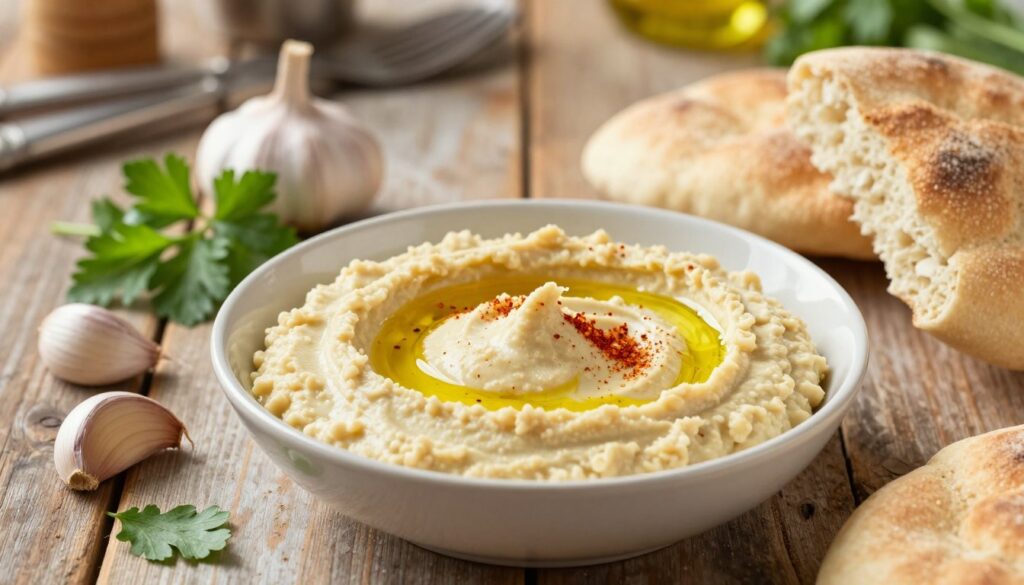
Garlic can make or break your hummus. Use it wisely to keep the spread bright and approachable. For a quick hummus that still tastes layered, simple prep tricks tame the bite and deepen flavor without overwhelming the dish.
Soak raw garlic
Smash one clove and soak it in the juice of half a lemon for about 30 minutes before blending. The acid softens the sharp bite and leaves a sweet, mellow note that plays well in a healthy hummus dip.
Use roasted garlic
Roasted garlic adds a caramelized, smoky sweetness that complements tahini and cumin. Roast whole bulbs or loose cloves until soft and golden, then squeeze the cloves into the blender. Roasted garlic hummus is great when you want a gentler, more complex garlic profile.
How much garlic to use
For family-friendly tastes, start with one small clove per batch. If you prefer a subtler hint, use a quarter to a half clove equivalent by mashing and mixing part of a clove into the mix. Increase to two cloves only if your household likes a pronounced garlic punch.
Quick adjustments
If your batch turns too sharp, add a spoonful of tahini or a splash of olive oil and blend briefly. For a mild, fast option, substitute one roasted clove for a raw clove to keep the recipe a true quick hummus without losing depth.
| Garlic Option | Flavor Effect | Recommended Amount | Best For |
|---|---|---|---|
| Raw, soaked in lemon | Mild, bright, slightly sweet | 1 small clove soaked 30 min | Healthy hummus dip with fresh tang |
| Roasted garlic | Mellow, smoky, caramelized | 1–2 roasted cloves | Roasted garlic hummus and savory twists |
| Partial clove | Very mild hint | 1/4–1/2 clove equivalent | Family-friendly servings and kids |
| Omitted | No garlic; pure tahini and lemon focus | 0 | Traditional or garlic-averse preferences |
Serving, garnishes, and pairing suggestions for healthy hummus dip
Serve your hummus warm or chilled, depending on your preference. A well-made Mediterranean hummus is perfect on its own or as part of a larger spread. Use small bowls for drizzles and toppings, so guests can customize their bites.
Traditional meze platter ideas and Mediterranean pairings
Start a meze platter with warm pita and pita chips. Add sliced bell peppers, baby carrots, snap peas, cherry tomatoes, cucumbers, and a few olives. For creaminess, include labneh or crumbled feta. Grilled halloumi or roasted eggplant can make it more filling.
Garnish ideas: whole chickpeas, sumac, olive oil, toasted pine nuts
Top the dip with extra-virgin olive oil and whole cooked chickpeas. Sprinkle sumac or smoked paprika for color and tang. Toasted pine nuts add a nice crunch. For a bold touch, add crisp fried chickpeas or a spoon of chili paste.
Ways to serve: pita, veggies, sandwiches, baked potatoes, pizza
Use hummus as a dip for raw veggies and pita. Spread it on sandwiches and wraps instead of mayo. Add it to baked potatoes or grain bowls for protein. Try it as a base on flatbreads or pizza with roasted veggies for a twist.
Storage, shelf life, and freezing tips for best hummus
You want your homemade hummus to stay fresh and tasty. Store it in a sealed, airtight container and smooth the surface. For short-term fridge storage, pour a thin layer of olive oil on top to limit air contact and slow oxidation.
Refrigeration timeframe and airtight storage practices
Freshly made hummus keeps between 4 and 10 days in the fridge. Ingredients like raw garlic or fresh herbs can shorten this time. Keep containers cold, avoid double-dipping, and use clean utensils each time to reduce contamination and extend shelf life.
Freezing hummus: how to freeze and thaw without losing texture
Freezing hummus is a great option for longer storage. Portion into freezer-safe containers or ice cube trays for easy defrosting. Omit the finishing oil before freezing; hummus will expand slightly as it freezes, so leave a little headroom.
Thaw slowly in the fridge overnight. Once mostly thawed, stir vigorously, whisk, or briefly pulse in a blender to re-emulsify. Add a splash of aquafaba, ice water, or olive oil to bring back the creamy texture. Use within two to three months for the best results.
Omitting finish oil for freezing and refreshing before serving
Skip the final drizzle of olive oil when freezing. After thawing, refresh flavor and mouthfeel by tasting and adjusting salt, lemon, or tahini. A light whisk with a small amount of liquid will restore a silky feel and improve appearance before you serve.
If you want more tips on freezing hummus, see this helpful guide from a trusted source: how to store hummus.
Tips and common mistakes to avoid for the best hummus recipe
Start with quality tahini and stir it well before measuring. Many experts say tahini is key to a rich, smooth hummus. They use a lot of it for the best flavor.
Don’t blend too little or too fast. This can make your hummus grainy. Blend well, scrape the bowl, and add cold water slowly. Adding ice cubes can also help.
Be careful with lemon and salt. Too much lemon can become bitter. Taste and adjust carefully. Some add vinegar or citric acid for extra brightness.
Peeling chickpeas makes a big difference. It makes your hummus silky. If you’re short on time, cook canned chickpeas to loosen skins.
Don’t mix olive oil into the hummus. It can change the flavor. Instead, drizzle it on top for taste and shine.
Choose fresh tahini. Old or separated tahini can dull the flavor. Taste it first and mix well. Bad tahini is a common mistake to avoid.
Let your hummus chill. It thickens and flavors blend better. If it’s too runny, it will firm up in the fridge.
Here’s a quick guide to avoid common mistakes and make the best hummus:
- Use good tahini and stir before measuring
- Cook or peel chickpeas for smoother texture
- Stream cold water or aquafaba while blending
- Add ice at the end for volume and cooling
- Season gradually; adjust after resting
- Finish with extra virgin olive oil, not in the blender
For more on common mistakes and how to fix them, read this guide before you mix. Follow these tips for a delicious, authentic hummus that’s easy to make.
Conclusion
Creating a smooth hummus recipe is easier than you think. Start with the right mix of chickpeas and tahini. Then, add ice water or aquafaba slowly while blending. This makes the hummus creamy and stable.
For a quick fix, use canned chickpeas. They’re fast and work great for weeknight meals. If you prefer homemade, cook dried chickpeas until they’re soft. Or, use a high-speed blender for a silky texture.
Feel free to add your own twist to the recipe. Try roasted garlic, smoked paprika, or parsley for a unique taste. You can also store it for later. Adjust the lemon, tahini, and garlic to your liking. This way, you’ll always have a delicious dip ready.
Now, you can make smooth hummus at home with confidence. Enjoy it on a platter, with pita, or as a snack. And don’t be afraid to make it your own.