How to Make Sheet-Pan Balsamic Salmon & Asparagus
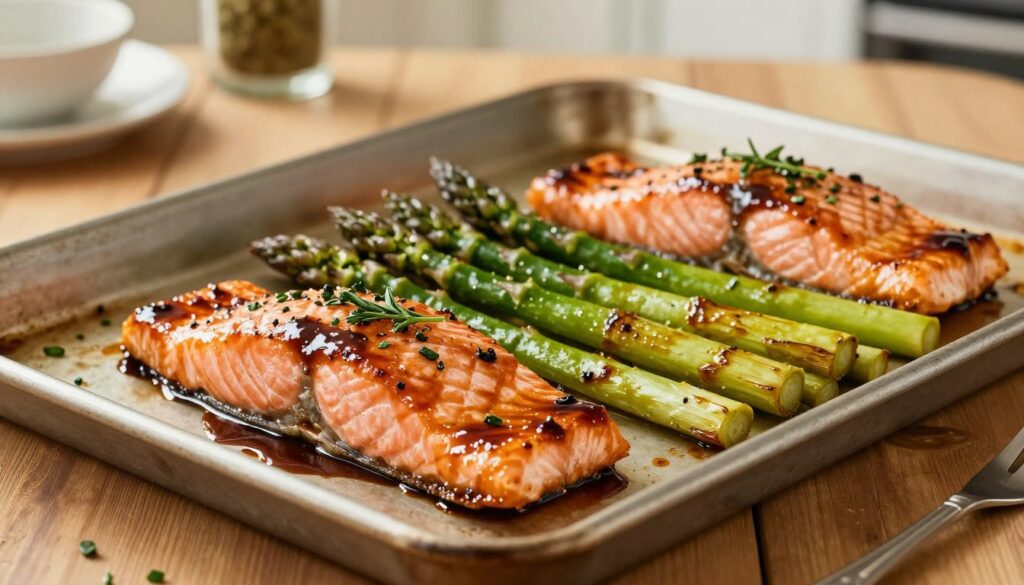
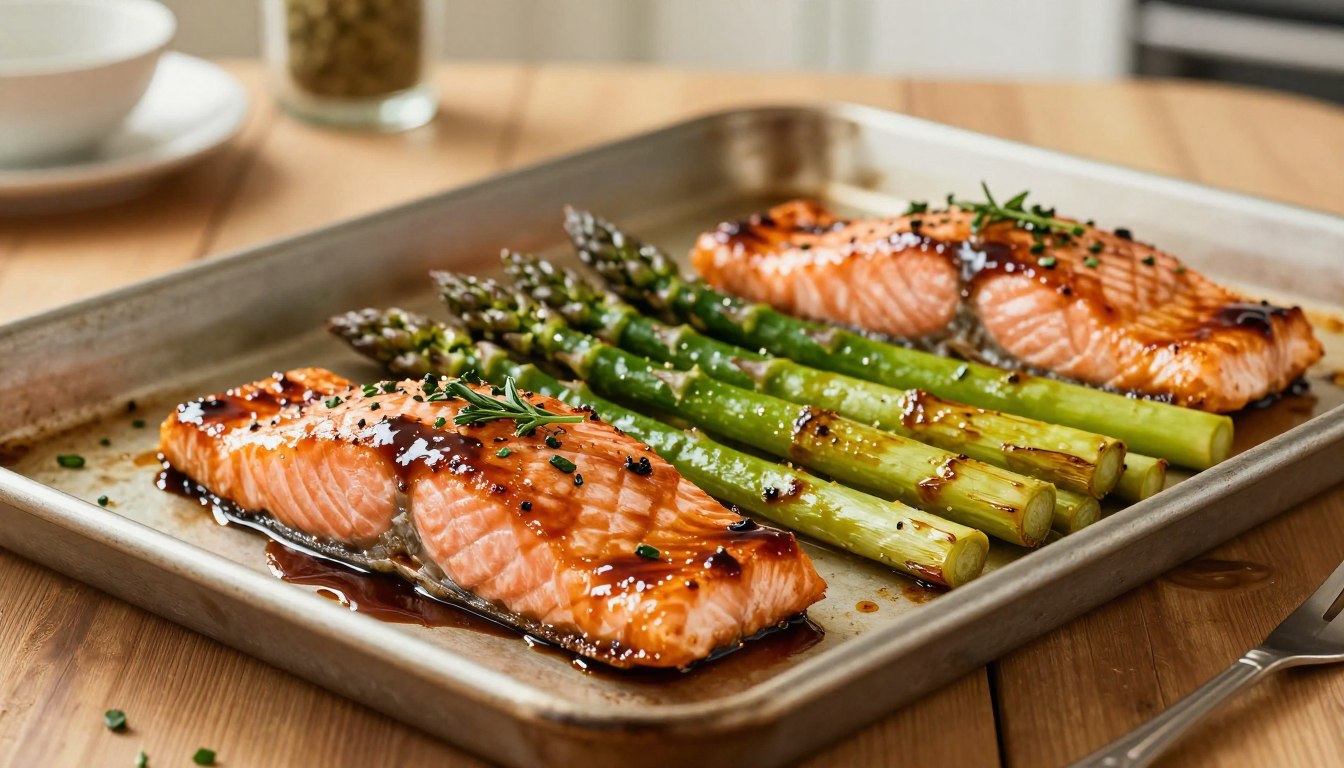
Imagine having dinner that tastes like you spent hours cooking, but it only takes minutes. That’s what happens with sheet-pan balsamic salmon and asparagus. The salmon gets a sweet and tangy glaze that makes it crispy on the outside and soft inside. The asparagus turns golden and crispy at the tips.
Anyone can make this dish, whether it’s for one or a whole family. It’s quick, easy, and tastes like a restaurant meal. This recipe is loved for its simplicity and bold flavors.
The best part is, it all cooks together on one pan. No need to watch multiple burners or clean up a mess. Just one pan with all the tasty drippings.
Key Takeaways
- Sheet-pan balsamic salmon and asparagus takes less than 30 minutes from start to finish
- This one-pan meal requires minimal prep and cleanup
- The balsamic glaze creates a sweet and tangy flavor that caramelizes beautifully
- Both salmon and asparagus roast perfectly at the same temperature
- You can use fresh or frozen salmon for this balsamic salmon recipe
- This dish delivers impressive results even for beginners
- Leftovers store well and reheat easily for meal prep
Why Sheet-Pan Balsamic Salmon & Asparagus Is the Perfect Weeknight Dinner
Are you searching for a simple salmon dinner for weeknights? Sheet-pan balsamic salmon with asparagus is a hit with bold flavors in 30 minutes. It’s great for busy families and professionals who want healthy meals without hassle. You’ll enjoy restaurant-quality taste with little effort.
This dish is a winner because it’s fast, nutritious, and easy. Choosing healthy sheet pan meals means better health and less stress on busy nights. Let’s see why this recipe should be a regular in your meals.
Time-Saving Benefits of One-Pan Cooking
One-pan cooking makes dinner prep easier by avoiding the need for multiple pots and pans. Everything cooks together on one sheet pan, saving you time.
Here’s why it’s so efficient:
- Minimal active cooking time since everything roasts simultaneously
- Hands-off cooking lets you prep other dishes or relax while dinner cooks
- Cleanup is simple with just one pan to wash
- Easy weeknight salmon dinner ready in under 30 minutes from start to finish
Working late or juggling tasks? Those extra minutes are precious. This quick dinner recipe values your time while offering great results.
Nutritional Advantages of Salmon and Asparagus
Salmon is a smart choice for dinner because of its nutritional benefits. Each serving has 36 grams of protein, ideal for muscle building and staying full. The meal has 488 calories, 12 grams of fat, and 6 grams of fiber.
Salmon is rich in omega-3 fatty acids, good for your heart and brain. Asparagus adds vitamins A, C, and K, along with antioxidants. Together, they offer a complete, balanced meal:
- Lean protein from wild or farm-raised salmon
- Essential fiber and vitamins from fresh asparagus
- Healthy fats supporting nutrient absorption
- Balanced macronutrients under 500 calories
You get a complete, balanced meal without complicated recipes or confusing labels.
Essential Ingredients for Balsamic Glazed Salmon
Creating a tasty balsamic glazed salmon recipe begins with the right ingredients. You’ll need quality items that blend well to make a dish that feels like it’s from a restaurant but is easy to make at home. Knowing what each ingredient does helps you choose wisely when shopping. It also prepares you for making an easy balsamic glazed salmon in the oven.
Start with four salmon fillets (about 4-6 ounces each with skin on). Add fresh vegetables to the mix. Asparagus is a great choice for your main vegetable. You can also add Brussels sprouts, cherry tomatoes, mushrooms, or baby potatoes for more flavor and nutrition.
The balsamic glaze is what makes this dish special. Here’s what you’ll need for the sauce:
- Balsamic vinegar (the star ingredient)
- Honey or maple syrup (balances the vinegar’s sharpness)
- Dijon mustard (adds depth and helps bind the sauce)
- Fresh garlic (brings aromatic punch)
- Fresh thyme (adds earthy flavor)
- Extra virgin olive oil (creates a silky texture)
- Sea salt and black pepper (for seasoning)
The honey element is key. It balances the vinegar’s acidity and makes a glossy coating for your salmon. Dijon mustard might seem odd, but it adds depth and helps the sauce emulsify into a smooth, luxurious texture.
Want to save time? Use a pre-made balsamic vinaigrette instead of making your own glaze. Add soy sauce for deeper umami flavors. These tweaks let you tailor your easy balsamic glazed salmon in the oven to your liking.
Choosing the Best Salmon for Your Sheet Pan Dinner
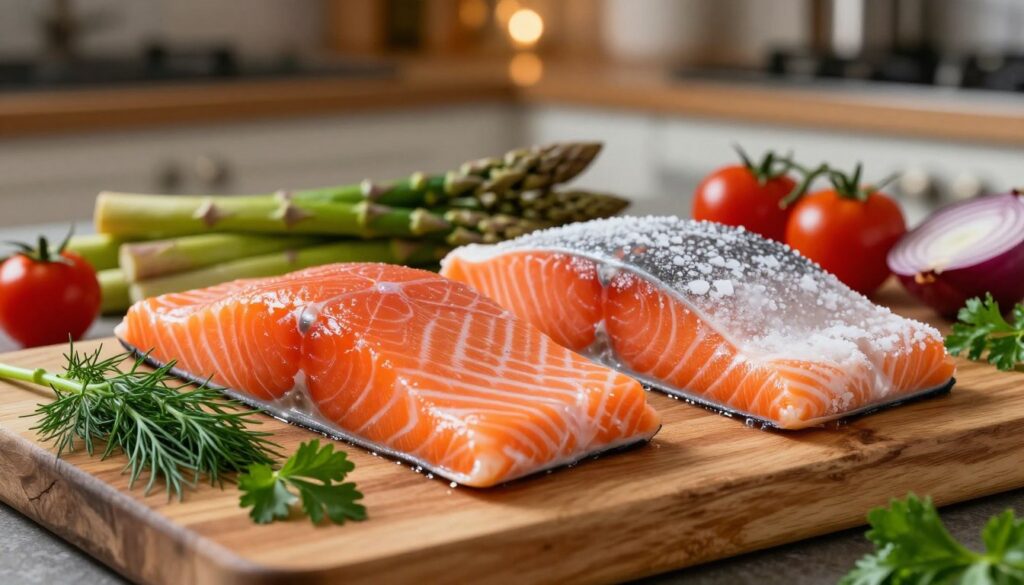
Choosing the right salmon is key for a great sheet pan salmon dinner. It should be tender, flaky, and full of flavor. The type of salmon you pick, whether fresh or frozen, and its cut, affects how it cooks and tastes.
Fresh vs. Frozen Salmon Options
Fresh and frozen salmon both work well for your dinner. Fresh salmon should be firm, smell mildly of the ocean, and have a bright color. It should look vibrant and feel solid.
Frozen salmon is also a great choice. It’s frozen quickly after catching, keeping it fresh. Sometimes, frozen fish is fresher than “fresh” salmon that’s been sitting out for days.
If you choose frozen salmon, thaw it in the fridge overnight. Never refreeze it after thawing. This keeps your dinner safe and delicious.
Recommended Salmon Cuts and Portions
Individual fillets are best for your sheet pan dinner. Aim for 4 to 6 ounces per person. This size cooks evenly and lets you control the doneness. You can also buy a larger piece and portion it later.
Choose skin-on fillets for your recipe. The skin keeps the fish moist and prevents drying. You can remove the skin after cooking if you prefer.
The thickness of the fillets is important for cooking time. Look for ones that are about one inch thick in the middle. This thickness cooks in 12 to 15 minutes without drying out.
| Salmon Variety | Flavor Profile | Fat Content | Best Use |
|---|---|---|---|
| Atlantic | Mild, buttery | Higher fat | Great for beginners |
| King (Chinook) | Rich, robust | Highest fat | Premium choice |
| Sockeye | Bold, distinct | Medium fat | Stronger taste preference |
| Coho | Moderate, clean | Medium fat | Balanced flavor |
When making one-pan dinner recipes for easy cleanup, quality salmon is essential. Different types of salmon offer unique flavors and textures. Atlantic salmon is mild and great for beginners. King salmon is rich for those who like bold flavors. Sockeye has a distinct taste, while Coho is balanced.
Don’t be shy at the fish counter. Ask your fishmonger about fresh options. They can guide you to the perfect salmon for your dinner. Good salmon makes a meal your family will love.
Preparing Your Vegetables for Roasting
Getting your vegetables ready is key when making oven baked salmon with vegetables. It ensures everything cooks evenly and gets those delicious caramelized edges. Preparing vegetables for roasted asparagus and salmon is quick with the right techniques.
Asparagus is the star of this dish. There’s a simple trick to prepare it perfectly. Use the bend and snap method: hold your asparagus about one-third to halfway down from the narrow end with one hand. Place your other hand at the base of the thick end. Bend the spear gently until it snaps naturally. This technique removes only the tough, woody parts while keeping all the tender, delicious portions. Every stalk is different, so this method beats simply cutting off the bottom two inches.
- Cut Brussels sprouts in half for caramelized flat sides
- Slice mushrooms to increase browning surface
- Keep cherry tomatoes whole to burst and release sweet juices
- Cut potatoes into uniform, small pieces for even cooking
- Cube red onions into bite-sized pieces
Size matters when preparing vegetables for roasted asparagus with salmon. Cutting everything to similar sizes ensures all vegetables finish cooking at the same time as your fish. Uneven pieces lead to some vegetables burning while others stay undercooked.
Before roasting, toss your prepared vegetables with olive oil, salt, pepper, and three tablespoons of your balsamic glaze mixture. This coating helps vegetables caramelize beautifully and absorb flavor from the glaze. Spread everything in a single layer on your sheet pan. Overcrowding causes steaming instead of roasting, so give each piece space to breathe.
| Vegetable | Preparation Method | Cooking Time Benefit |
|---|---|---|
| Asparagus | Bend and snap method | Removes tough ends naturally |
| Brussels Sprouts | Halved | Creates caramelized flat surfaces |
| Red Onion | Cubed | Caramelizes evenly throughout |
| Cherry Tomatoes | Left whole | Bursts to release sweet juices |
| Potatoes | Small uniform cubes | Cooks consistently with other vegetables |
For the best results with oven baked salmon with vegetables, consider giving denser vegetables like potatoes a five-minute head start in the oven before adding your salmon. This extra time ensures they’re tender when your fish reaches perfect doneness. Your vegetables will roast alongside the salmon, creating a complete meal on one pan with minimal cleanup.
Creating the Perfect Balsamic Glaze Sauce
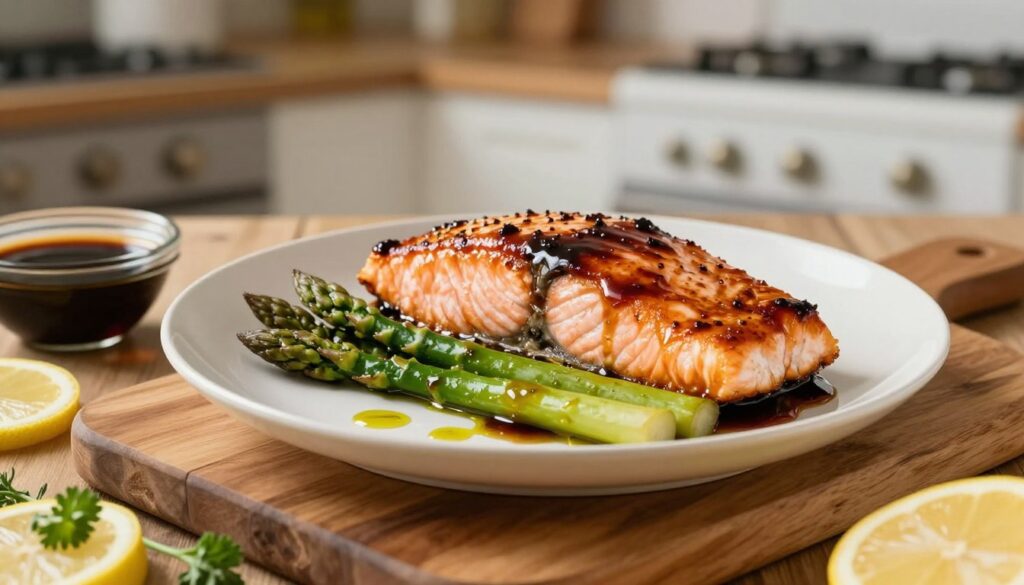
The sauce is the star of your balsamic glazed salmon recipe. It turns simple salmon into a dish that tastes like it took hours to make. You can make this sauce in just two minutes, perfect for a 30-minute sheet pan dinner. The glaze gives your salmon a glossy, caramelized finish that brings all the flavors together beautifully.
Creating the right flavor balance is key to an unforgettable sauce. You want it to taste sweet and tangy, with neither flavor overpowering the other.
Balancing Sweet and Tangy Flavors
The foundation of your balsamic glaze starts with the right mix of vinegar and sweetener. Use 3 tablespoons of balsamic vinegar paired with 2 tablespoons of honey for the perfect balance. Too much vinegar makes it harsh and acidic. Too much honey makes it too sweet and sticky.
Dijon mustard helps bridge these flavors, adding complexity and helping the sauce stick to your salmon. The type of balsamic vinegar you choose is important. Aged balsamic vinegar is richer and smoother. If you prefer, maple syrup or brown sugar can replace honey.
| Ingredient | Amount | Purpose |
|---|---|---|
| Balsamic Vinegar | 3 tablespoons | Provides tangy, slightly sweet base |
| Honey | 2 tablespoons | Adds sweetness and gloss |
| Dijon Mustard | 1 tablespoon | Bridges flavors and helps emulsify |
| Sea Salt | 1/2 teaspoon | Amplifies all flavors |
Enhancing Your Sauce with Herbs and Garlic
Fresh thyme adds an earthy, slightly minty note that pairs beautifully with salmon. Use 1 teaspoon of fresh thyme in your glaze. Always choose minced fresh garlic over garlic powder for stronger flavor. One minced garlic clove adds depth without overpowering the other ingredients.
For a richer variation, try brown butter sauce. Melt 4 tablespoons of butter over medium heat, stirring constantly until it turns golden brown. Remove from heat and stir in 2 tablespoons soy sauce and 2 teaspoons balsamic vinegar. This adds nutty richness and umami depth to your dish.
To prepare any glaze, whisk all ingredients together until well combined. This ensures even coating of the sauce on the salmon. If time is really tight, quality store-bought balsamic vinaigrette works as a quick substitute that still delivers excellent results.
- Whisk ingredients thoroughly for smooth emulsification
- Use fresh herbs instead of dried for better flavor
- Apply glaze directly to salmon before roasting
- Save extra sauce to drizzle after cooking
Step-by-Step Instructions for Sheet-Pan Balsamic Salmon & Asparagus
Making sheet pan balsamic salmon is simple. This recipe is easy to follow, even for beginners. It’s a quick and healthy meal for your family tonight.
First, heat your oven to 450 degrees Fahrenheit. Then, line your baking sheet with foil or parchment paper. This makes cleanup easy. It’s best to prepare everything before you start cooking.
- Make your balsamic glaze and save some for the salmon
- Season your asparagus and other veggies with olive oil, salt, and pepper. Add three tablespoons of balsamic sauce
- Put the veggies on the sheet pan in a single layer, leaving space between them
- Put the pan in the oven and bake for 10 minutes to start cooking the veggies
- Take the pan out and place the salmon fillets skin-side down on the veggies, leaving about an inch between each
- Brush each salmon fillet with the remaining balsamic glaze
- Put the pan back in the oven and bake for another 10 minutes
- Switch to broil on high for three to four minutes to get a caramelized top
Pro tip: Your salmon is done when it flakes easily and looks opaque. You can also check the temperature—it should be 145 degrees Fahrenheit for safety.
It’s important to space out the food when cooking. A crowded pan steams instead of roasts. Make sure everything is in a single layer and not too close to the broiler to avoid burning.
Drizzle any leftover glaze over your dish and serve right away. Your meal is now a restaurant-quality dish, ready in under 30 minutes.
Optimal Baking Temperature and Timing
Getting the right temperature and timing is key to making a delicious sheet-pan dinner. Your oven temperature controls how quickly your salmon cooks and how well your asparagus caramelizes. Too low, and your vegetables won’t get crispy. Too high, and your salmon dries out. Understanding these details takes the guesswork out of cooking and ensures perfect results every time.
You have two solid temperature options for this dish. The best temperature for baking salmon with asparagus ranges from 400°F to 450°F, depending on your preference and oven. At 400°F, you’ll bake everything for 12-15 minutes total, which is perfect for a gentler, more forgiving approach. At 450°F, you roast vegetables for 10 minutes first, then add salmon and bake for another 10-13 minutes. This higher heat creates more caramelization on your asparagus and develops deeper flavors. You can even finish with a quick broil for 2-4 minutes to get a gorgeous, slightly crispy top on your salmon—just watch carefully to prevent burning.
Whether you want a quick oven baked salmon or a 30-minute salmon recipe, timing matters just as much as temperature. The detailed instructions for sheet-pan balsamic salmon recommend preheating to 425°F for balanced, reliable cooking across most home ovens.
Achieving Perfectly Cooked Salmon
Perfectly cooked salmon sits on a fine line between beautifully moist and dry. Your salmon should be opaque and flake easily with a fork. The thicker your fillet, the longer it needs to bake. Most fillets work best at about one inch thick in the middle.
Test your salmon using these methods:
- Visual check: Look for opaque flesh that flakes apart easily
- Touch test: Press gently—it should feel firm but still have slight give
- Temperature method: Aim for 145°F internal temperature (USDA guideline), though many cooks prefer 120-130°F for a juicier center
Watch for signs of overcooking. White albumin (the white stuff) seeping out, a dry texture, and a grayish color all mean your salmon is overdone. Every oven bakes differently, so adjust timing by 1-2 minutes up or down based on your results.
Serving Suggestions and Side Dish Pairings
Your balsamic sheet-pan salmon and asparagus dish is a complete meal. It has about 36 grams of protein per serving. Plus, it’s low in calories and rich in healthy fats and fiber.
If you’re watching carbs, serve it just as it is. This keeps carbs low while keeping nutrients high. For those who like carbs, here are some options:
- Roasted baby potatoes tossed on the pan alongside salmon and asparagus
- Fluffy white or brown rice on the side
- Quinoa or couscous for grain-based nutrition
- Crusty bread to soak up the delicious balsamic glaze
Pair your meal with extra veggies for more nutrition. Try a simple green salad, sautéed spinach, or roasted sweet potatoes. Check out the best healthy side dishes for more ideas.
Make your dish look great by adding fresh herbs like parsley or thyme. Add lemon wedges for a burst of flavor or toasted almonds for crunch. This recipe is perfect for family dinners, meal prep, or impressing guests.
Storage Tips and Meal Prep Ideas
After cooking, your healthy sheet pan meals need the right care. Follow simple steps to store your salmon and asparagus. Let them cool to room temperature, but not for more than two hours. Then, put them in separate airtight containers to keep them fresh.
Store leftover balsamic glaze in a small container. This way, you can drizzle it fresh when reheating. Your meal will stay good in the fridge for up to three days.
Meal prep is easy with this recipe. Spend some time on Sunday to prep your asparagus, balsamic glaze, and salmon. Then, on busy weeknights, you can quickly assemble and bake your meal. Making a double batch means you’ll have meals ready for days.
Reheating Your Leftover Salmon Dinner
Reheating is key to keep your salmon moist. Try these gentle methods:
- Oven method: Warm at 275°F for 10-15 minutes covered with foil
- Microwave method: Use 50% power in 30-second intervals to prevent drying
- Cold option: Enjoy salmon and asparagus chilled on a salad
Before reheating, add water or extra glaze to keep it moist. Get creative with leftovers. Use salmon in grain bowls, pasta, salads, or omelets. This way, you turn one meal into many, reducing waste.
Conclusion
Sheet-pan balsamic salmon and asparagus is more than a recipe. It’s a quick fix for busy weeknights. You can have a delicious meal in under 25 minutes. This means you can go from the grocery store to your dinner table faster than ordering takeout.
Anyone can make this dish, whether you’re new to cooking or a pro. It’s perfect for a weeknight dinner or a special occasion. You’ll have a full meal with salmon, veggies, and a tasty balsamic glaze all on one pan. This makes cleanup a breeze.
This recipe is great for family dinners or impressing guests. You can change up the ingredients based on what you like or have at home. Check out this sheet pan salmon with asparagus recipe to see how easy it is.
You can enjoy fancy food without leaving your house. The orange and balsamic glaze adds a touch of elegance. But the method is simple. Using quality ingredients and bold flavors makes your meals stand out.
Learn more about making weeknight dinners feel like a restaurant. Focus on presentation and timing. These skills are easy to learn and can elevate your meals.
Try this recipe this week. Get the ingredients from the store and make it for your family. They’ll love it, and so will your taste buds. This is a recipe you’ll want to make again and again.