

How to Make Savoyard-Style Baked Tartiflette
Ever felt that deep warmth after being outside on a cold day? Your cheeks are rosy, your fingers numb, and you just want something profoundly warm to soothe your soul.
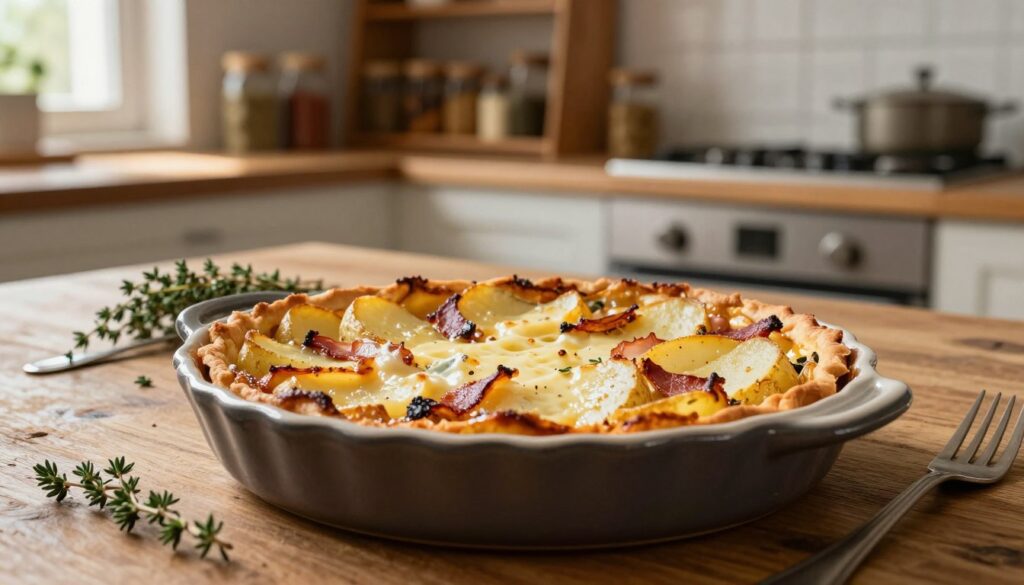
In the French Alps, a dish has been the answer for generations. Imagine the smell of sizzling bacon and sweet onions filling a cozy chalet. Picture a dish coming out of the oven, its top a golden crown of melted cheese over tender potatoes.
This is Tartiflette. It’s more than a cheesy potato bake; it’s the ultimate Alpine comfort food. Hailing from the Savoy region, it’s a favorite among skiers and a staple at family dinners.
Whether you dream of a mountain escape or a cozy meal for a cold night, you’re in the right spot. This guide will show you how to make an authentic savoyard tartiflette recipe in your American kitchen. We’ll cover its history, how to make tartiflette, and tips for finding the right cheese.
Key Takeaways
- Tartiflette is a classic baked gratin from the Savoy (Savoie) region of France.
- It’s a hearty mix of potatoes, onions, bacon, white wine, cream, and cheese.
- This dish is the epitome of comfort food, perfect after winter activities or for a family dinner.
- Our detailed recipe is designed to be approachable for home cooks in the United States.
- You’ll learn how to source key ingredients, like Reblochon cheese, or find great substitutes.
- Creating this dish fills your home with incredible, inviting aromas.
- It’s a guaranteed crowd-pleaser that turns a simple meal into a special occasion.
What is Savoyard Tartiflette? A Hearty Alpine Classic
A traditional Savoyard tartiflette is more than just a potato bake. It’s a tale of Alpine resilience and culinary creativity. Knowing its origins will make your cooking a true cultural journey.
The Humble Origins in the French Alps
This iconic dish was born in the rugged Savoy region. This area became part of France in 1860. It’s known for its harsh winters and farming communities.
Savoyard peasants made tartiflette to use local ingredients. They mixed potatoes, onions, bacon, and Reblochon cheese. This hearty bake warmed families during the cold months.
From Farmhouse Staple to Ski Resort Star
The tartiflette’s rise to fame is a modern story. After World War II, tourism boards and cheese unions promoted it. They saw it as perfect for hungry skiers.
Today, it’s a must-try in Haute-Savoie ski resorts. It’s the ultimate après-ski favorite.
It’s the dish you crave after a day on the slopes—rich, satisfying, and deeply comforting.
This evolution shows the purpose of what is tartiflette and how to cook it. It’s food for sharing and enjoying together.
Defining the “Savoyard-Style” Approach
What makes a “Savoyard-style” tartiflette special? It’s a traditional approach.
It uses Reblochon cheese for its creamy melt and nutty flavor. The layering and slow baking make the top golden and crispy.
The goal is a dish with deep flavor where everything works together. Mastering this will help you make a true traditional Savoyard tartiflette at home.
Your Savoyard Tartiflette Recipe: The Essential Ingredients
Your journey to a perfect homemade savoyard tartiflette starts at the grocery store. This dish’s magic comes from simple, high-quality ingredients. Each one adds flavor, from the earthy potatoes to the creamy, funky cheese. Let’s explore what you need to make this Alpine classic at home.
The Core Four: Potatoes, Reblochon, Bacon, and Onions
These four items are the foundation of your tartiflette. Get them right, and you’re almost there to an authentic taste.
Selecting the Best Potatoes for Baking
Choose potatoes that keep their shape after baking. Waxy or all-purpose varieties are best. They become tender but stay firm.
Yukon Gold potatoes are the top US choice. They have a buttery flavor and firm texture. Avoid starchy potatoes like Russets, as they get too soft.
Reblochon Cheese: The Heart of the Dish (and US Alternatives)
Authentic Reblochon is a soft, washed-rind cheese from raw cow’s milk. It’s creamy inside and has a distinct aroma. It’s the dish’s star.
In the US, you can’t find raw-milk Reblochon. Look for soft, creamy cheeses that melt well.
- Préféré de nos Montagnes: This French cheese is a close US alternative. It’s made from pasteurized milk but tastes like Reblochon.
- Delice du Jura: Another good pasteurized option with creamy texture and mild funk.
- Good Quality Brie or Camembert: These are more common. Remove thick rinds for smoother melting.
Choosing the right cheese is key for a great tartiflette with reblochon flavor.
Understanding Bacon vs. Traditional Lardons
French lardons are small, dry-cured, smoked pork belly strips. They’re meatier and less sweet than American bacon.
For your recipe, thick-cut smoked bacon is a great substitute. Slab bacon is even better. Aim for chewy, savory bites. Avoid sweetened bacon.
The Role of the Onion
Onions (or shallots) add a sweet, aromatic base. They cook down with bacon fat, becoming soft and caramelized. This sweetness balances the cheese and cream.
Yellow onions work well. For a more delicate flavor, try shallots. They add a subtle, sophisticated note to your savoyard tartiflette ingredients.
Flavor Enhancers: White Wine, Cream, Garlic, and Herbs
These elements tie everything together. They add depth, richness, and brightness.
Dry white wine deglazes the pan after cooking bacon and onions. It picks up tasty browned bits and adds acidity. A French Vin de Savoie is traditional, but dry Sauvignon Blanc or Pinot Grigio works well.
Heavy cream or crème fraîche adds luxurious richness. Crème fraîche has a tang that cuts through fat. If you can’t find it, heavy cream is a good substitute.
Garlic and fresh herbs like thyme or bay leaf add the final aromatic touch. They make the dish smell incredible as it bakes.
Your Complete US Grocery Shopping List
Here’s everything you need for a tartiflette that serves 4-6 people. This list makes your trip to the store easy.
| Ingredient | Quantity | US Shopping Notes |
|---|---|---|
| Yukon Gold Potatoes | 2.5 to 3 lbs | Look for firm, medium-sized potatoes. |
| Reblochon-Style Cheese | 1 whole wheel (about 1 lb) | See alternatives listed above (Préféré, Delice du Jura, or Brie). |
| Thick-Cut Smoked Bacon | 8 oz | Slab bacon is ideal; else, get the thickest slices. |
| Yellow Onions | 2 medium | Shallots (about 4-5) can be used instead. |
| Dry White Wine | 1/2 cup | A bottle of Sauvignon Blanc is perfect. |
| Heavy Cream or Crème Fraîche | 1/2 cup | Crème fraîche is near sour cream in the dairy aisle. |
| Garlic Cloves | 2-3 | Fresh is best. |
| Fresh Thyme | 3-4 sprigs | Or 1 teaspoon dried thyme. |
| Butter | For greasing dish | Unsalted. |
| Salt & Black Pepper | To taste |
With this list, you have all the savoyard tartiflette ingredients for success. Now, let’s get your kitchen tools ready and start cooking!
Gathering Your Kitchen Tools
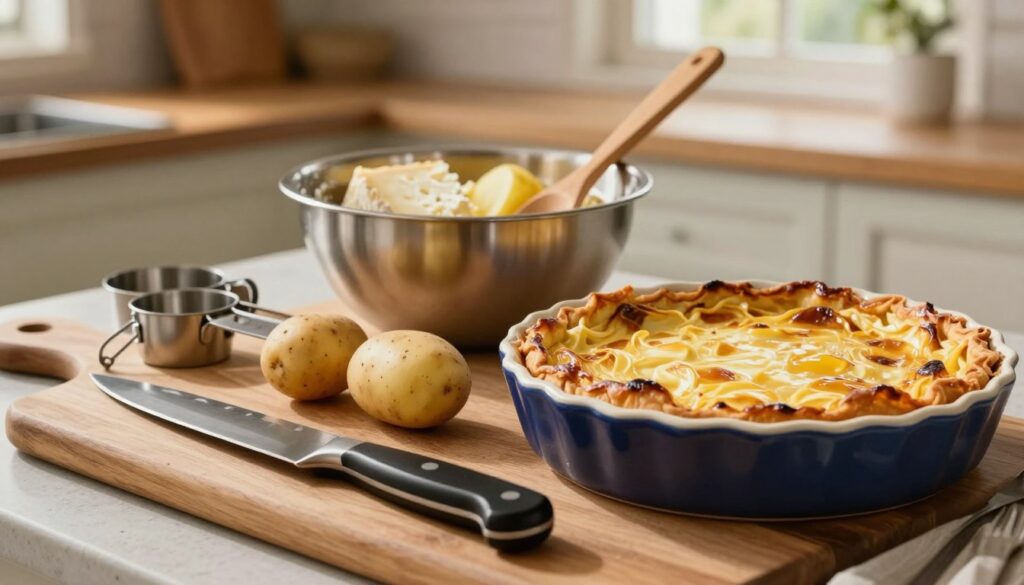
This easy recipe for Savoyard tartiflette doesn’t need fancy gadgets. But, you’ll need some basic tools. Having the right tools makes cooking easier and more fun. You won’t spend time looking for the right pan.
The Ideal Baking Dish: Material and Size
Choosing the right baking dish is key. It impacts how your tartiflette browns and how you serve it. You have a few great options, each with its own charm.
| Material | Best For | Size/Capacity | Notes |
|---|---|---|---|
| Ceramic Gratin Dish | Traditional presentation, even heating | ~3-quart (30 cm x 20 cm x 5 cm) | The classic choice. Butter it well to prevent sticking. |
| Cast Iron Skillet | Superior browning & a rustic look | 10-inch diameter | Go from stovetop to oven. Creates a fantastic crispy edge. |
| Glass/Pyrex Casserole | Easy monitoring & clean serving | 3-quart rectangular dish | You can watch the cheese bubble. A versatile kitchen staple. |
Any of these dishes will work perfectly. Just make sure it’s oven-proof and holds about three quarts. This size lets your layers cook without overflowing. Don’t forget to lightly butter the dish before layering.
Essential Prep Tools: Pots, Pans, and Utensils
With your baking dish picked, get these basic prep tools. You probably have them all already.
- Large Saucepan: For boiling the potatoes until they are just tender.
- Sturdy Skillet or Frying Pan: A 10 or 12-inch pan is ideal for crisping the bacon and softening the onions.
- Sharp Chef’s Knife & Cutting Board: For slicing onions, dicing bacon, and cutting the Reblochon cheese.
- Slotted Spoon: To transfer the cooked bacon and onions from the skillet, leaving excess fat behind.
- Wooden Spoon or Spatula: For stirring your onion and bacon mixture without scratching your pan.
That’s it. With these simple tools ready, you’re all set for success. Your kitchen is now ready for this comforting, easy recipe for Savoyard tartiflette.
Step-by-Step: How to Make Authentic Savoyard Tartiflette
Making tartiflette is simple. Just layer ingredients and bake with care. This traditional French tartiflette recipe step by step guide will help you make authentic Savoyard tartiflette at home.
Follow these steps for the best results. Your kitchen will smell like a French Alpine chalet.
Step 1: Prep All Your Ingredients
Good preparation makes cooking smooth. Get all your ingredients ready before starting.
How to Slice and Parboil the Potatoes
Use waxy potatoes like Yukon Gold. Peel them if you like, but the skin adds texture. Cut them into 1/2-inch thick slices.
Place the slices in a pot of cold, salted water. Bring it to a boil, then reduce heat. Let them simmer for 8-10 minutes. They should be just tender when pierced with a fork but not falling apart.
Drain the potatoes well in a colander. Let them cool and dry slightly. This parboiling step is crucial. It ensures your potatoes cook through evenly in the oven without becoming mushy.
Preparing the Reblochon Cheese
Take your Reblochon out of the fridge about 30 minutes early. This lets it soften for better melting. Do not remove the rind. It adds fantastic flavor and helps hold the cheese together.
Cut the wheel in half horizontally, so you have two thin rounds. Then, slice or cube each round into pieces. Some recipes use slices, others cubes. Cubes melt into lovely pockets, while slices create a more uniform top.
Dicing Bacon and Chopping Onions
Cut your thick-cut bacon into 1/2-inch lardons or small dice. A sharp knife makes this easy. For the onions, peel and chop one large yellow onion into a medium dice. Mince two cloves of garlic and set them aside.
Having everything prepped and in bowls is the secret to an easy oven baked tartiflette with potatoes and bacon.
Step 2: Cook the Bacon and Onion Base
Heat a large skillet or Dutch oven over medium heat. Add the diced bacon. Cook, stirring occasionally, until the fat renders and the bacon starts to crisp. This takes about 5-7 minutes.
Use a slotted spoon to remove the bacon, leaving the fat in the pan. Add the chopped onions to the hot bacon fat. Cook, stirring, until they become soft and translucent, about 5 minutes.
Add the minced garlic and cook for one more minute until fragrant. Now, pour in about 1/2 cup of dry white wine. Scrape up any browned bits from the bottom of the pan. Let the wine simmer for 2-3 minutes until reduced by half. Remove the skillet from the heat.
Stir the cooked bacon back into the onion and wine mixture.
Step 3: Layer the Tartiflette in Your Dish
Take your buttered baking dish. The layering order is key for distributing flavor in every bite.
The Order of Layers for Maximum Flavor
- First Potato Layer: Arrange half of your parboiled potato slices in a single, even layer on the bottom of the dish. Season lightly with salt and pepper.
- First Bacon & Cheese: Spoon the entire warm bacon and onion mixture evenly over the potatoes. Scatter half of your prepared Reblochon pieces over this.
- Second Potato Layer: Add the remaining potato slices in another even layer. Season again.
- The Finishing Touches: If your recipe includes cream, drizzle about 1/4 cup over the top now. Then, cover the entire surface with the remaining Reblochon cheese, rind-side up.
This structure ensures the cheese melts down through the layers. The bacon flavor infuses the whole dish.
Step 4: Bake to Bubbly, Golden Perfection
Your assembled tartiflette is ready for the oven. This final step transforms it into a masterpiece.
Oven Temperature and Baking Time
Preheat your oven to 375°F (190°C). For a crispier top, you can go to 400°F (200°C). Place the dish on the middle rack.
Bake for 35 to 45 minutes. The exact time depends on your oven and dish depth. At 375°F, aim for the longer end of that range. The tartiflette is done when it’s hot all the way through and spectacularly golden on top.
How to Tell When It’s Perfectly Done
Look for three signs. First, the cheese should be completely melted. It will have a beautiful, deep golden-brown color.
Second, the edges should be actively bubbling. You should see little bubbles of creamy fat and wine simmering around the sides of the dish.
Third, insert a knife into the center. It should glide through the potato layers easily. If the potatoes feel firm, bake for another 5-10 minutes.
Let the tartiflette rest for 10 minutes after pulling it from the oven. This allows the layers to set slightly, making it easier to serve. Then, dig into your homemade Alpine feast.
Pro Tips for the Perfect, Authentic Tartiflette
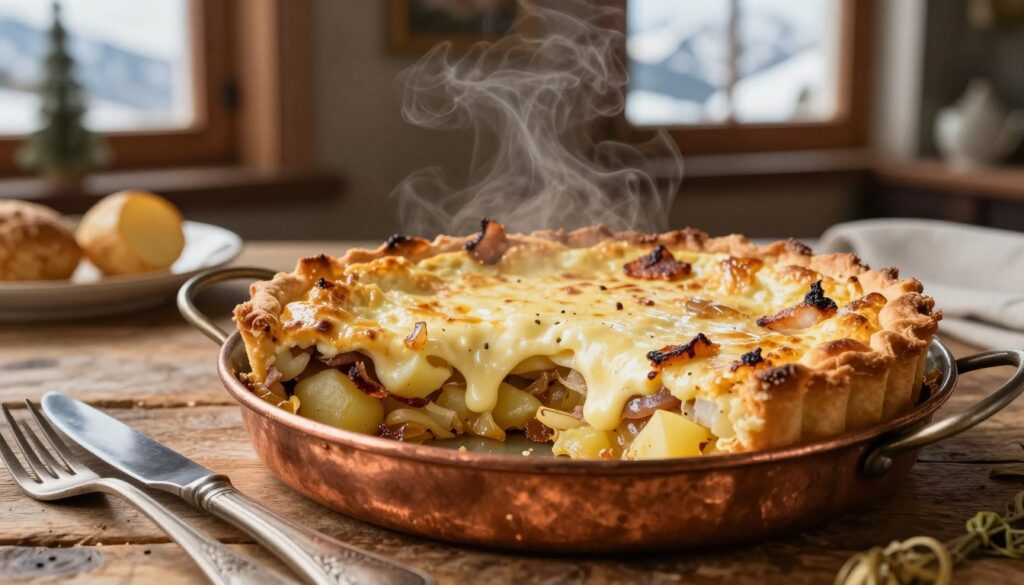
To make tartiflette perfect, you need more than a recipe. It’s about mastering Savoyard traditions. These tips will turn your dish into a rich, comforting masterpiece. They’re the secret to the best savoyard tartiflette recipe in your kitchen.
Mastering the Potatoes: The Foundation
Your potatoes are the dish’s base. Get them right, and everything else works. You want tender, creamy slices that stay firm.
Here’s how the pros do it:
- Boil Them Whole: Boil potatoes whole and unpeeled in salty water. This prevents them from getting soggy. Peel and slice them when they’re just tender.
- Choose Wisely: Use waxy potatoes like Yukon Gold or Red Bliss. Their low starch content makes perfect layers.
- Slice for Success: Slice potatoes about 1/4-inch thick. Too thin, and they disappear; too thick, and they won’t cook right.
Building Deep Flavor with Wine and Aromatics
True flavor depth makes a tartiflette stand out. It’s all about building layers in your skillet.
Start with bacon and onions. You don’t need extra oil. The bacon fat cooks the onions beautifully. When they’re golden and fragrant, you have your flavor base.
Next, add a generous splash of dry white wine. Let it bubble and scrape up browned bits. This captures savory notes. Let the wine reduce by half to concentrate the flavor.
The nutty, melting quality of Reblochon cheese is unmatched. It’s the dish’s soul.
Stir in minced garlic and herbs like thyme before removing from heat. This keeps their bright flavors.
The Secret to a Crispy, Irresistible Top
The golden, crispy top is tartiflette’s crown. It contrasts beautifully with the creamy inside.
Use your cheese wisely. Don’t remove the rind from Reblochon. It adds flavor and becomes chewy and browned. Slice the cheese into 1/4-inch slabs for even melting.
Place the slabs on top, rind-side up. The cheese will melt and bubble, and the rind will crisp. For a golden finish, broil for 2-3 minutes. Watch it closely!
Follow these techniques for a tartiflette that’s more than a casserole. It’s the best savoyard tartiflette recipe experience, with authentic taste and texture from the Alps.
Delicious Variations on the Classic Tartiflette
Tartiflette isn’t just a recipe; it’s a canvas for your creativity. The mix of potatoes, Reblochon, bacon, and onions is wonderfully satisfying. But, it’s also very flexible, fitting what you have or what you like to eat.
Trying new twists can refresh your traditional tartiflette recipe. Let’s explore some tasty ways to make it your own.
Adding Mushrooms, Leeks, or Other Veggies
Adding more veggies can enhance flavor and texture. Sliced mushrooms are a great choice. Their earthy taste goes well with the creamy cheese.
Try sautéing them with the onions until they’re golden. Sweet, tender leeks are also excellent. Slice them thinly before cooking.
Adding a handful of fresh spinach near the end is a good idea. Diced bell peppers or courgettes (zucchini) work well too. Just cook them until they’re soft to remove excess moisture.
Fresh herbs like thyme or rosemary add an aromatic layer. Stir them into the onion base for the best flavor.
Meat Swaps: Ham, Sausage, or Going Vegetarian
Don’t like bacon lardons? You have many other options. Diced cooked ham or crumbled breakfast sausage are easy swaps. For a smoky, spicy kick, try using sliced chorizo.
Creating a vegetarian version is simple. Just leave out the bacon. Add more veggies to make up for it.
Vegetarians need to watch the cheese. Traditional Reblochon is made with animal rennet, not vegetarian-friendly.
Check the label or find a vegetarian Alpine-style cheese. This makes your classic Savoyard tartiflette vegetarian.
Creating a Lighter or Gluten-Free Version
Great news! Traditional tartiflette is naturally gluten-free. The main ingredients—potatoes, cheese, onions, and meat—don’t have gluten.
Just make sure any pre-packaged bacon or sausage doesn’t have gluten. For a lighter version, use half-and-half instead of heavy cream. You can also use less Reblochon cheese. Adding more veggies increases volume without many calories.
These small changes let you enjoy the comforting essence of a classic Savoyard tartiflette any night of the week.
Serving Your Tartiflette: The Full Alpine Experience
Serving your tartiflette turns a meal into a memorable Alpine feast. It’s more than food; it’s the heart of a cozy celebration. To honor this French dish, set the table with key items that balance its rich flavors.
Traditional Accompaniments: Charcuterie and Cornichons
In the French Alps, tartiflette is never alone. A crisp green salad is a must. Dress it with a sharp vinaigrette to cut through the cheese and potatoes.
Next, add tangy bites. Cornichons and pickled onions are essential. Their flavor refreshes your palate between bites.
No Alpine spread is complete without charcuterie. Saucisson sec or similar dry-cured sausage adds a savory touch. And, a basket of crusty bread is a must for scooping up melted Reblochon.
The Perfect Wine Pairing
Choosing the right wine makes your meal better. In Savoy, they prefer a local white. A dry, crisp white from Savoie, like Apremont or Roussette, is perfect.
If you can’t find those, great alternatives work well. A unoaked Chardonnay is fresh and apple-like. Gewürztraminer adds lychee and spice, complementing bacon and cheese. Serve it well-chilled.
What to Serve Alongside for a Complete Meal
Think of your tartiflette as the meal’s star. Build your meal around it with items that prepare and contrast your palate.
Start with a relaxed appetizer. Charcuterie, cornichons, and bread are great for guests to snack on. After the tartiflette, a light finish is perfect. A fruit salad, sorbet, or dark chocolate are all you need.
Your Alpine-inspired menu could be:
- Start: Charcuterie board with cornichons and bread.
- Main Event: Your bubbling, golden tartiflette with a green salad.
- Finish: A light, fruity dessert or a digestif.
This approach makes dinner a true celebration, capturing the spirit of a ski lodge meal at your table.
Storing and Reheating Leftover Tartiflette
Having leftover tartiflette is a rare treat. With the right steps, your second serving can be just as good. This cheesy dish stays tasty, but you need to store and reheat it right.
Follow these easy tips to enjoy your baked tartiflette for days. You’ll make sure nothing goes to waste and every bite is delicious.
How to Store Leftovers Safely
First, let your tartiflette cool down to room temperature. Don’t leave it out for more than two hours. This stops bacteria from growing.
Then, put the tartiflette in an airtight container. You can also cover the baking dish with plastic wrap and foil. This keeps the cheese moist and prevents fridge smells.
Your traditional tartiflette recipe will stay good in the fridge for 2 to 3 days. For longer, freezing is a great choice. Cool it down first, then put it in freezer-safe bags or containers. It will last up to a month.
Remember these key points for storage:
- Cool Quickly: Spread leftovers on a plate to speed up cooling.
- Cover Completely: Use a lid or double layer of wrap.
- Label and Date: Write the contents and date on the container.
Best Methods for Reheating Without Drying Out
Reheating is where the magic happens—or where mistakes can occur. The goal is to warm the dish through without drying out the potatoes or making the sauce greasy. Low and slow is the golden rule.
The oven method is the best way to reheat your baked tartiflette. It evenly revives the crisp top and creamy interior. Preheat your oven to 350°F. Place the leftovers in an oven-safe dish and cover it tightly with aluminum foil.
Bake for 20 to 25 minutes if refrigerated. If frozen, thaw in the fridge overnight first. Then, remove the foil and bake for another 5 to 10 minutes. This final step re-crisps the golden cheese topping.
For a quick fix, the microwave works. Use a microwave-safe dish and cover it loosely. Heat on medium power in 60-second intervals, stirring gently between bursts. This prevents hot spots and helps the cheese melt evenly.
A common issue is oil separating from the cheese sauce upon reheating. Don’t worry. Simply give it a gentle stir after heating. The flavors will still be fantastic.
| Method | Temperature/Time | Key Tips | Best For |
|---|---|---|---|
| Refrigeration | 34–40°F for 2–3 days | Cool first, use airtight container | Short-term storage |
| Freezing | 0°F for up to 1 month | Portion before freezing, thaw in fridge | Long-term storage |
| Oven Reheating | 350°F for 20–30 mins | Cover with foil, then uncover to crisp | Best texture and flavor |
| Microwave Reheating | Medium power, 1–2 mins | Stir intervals, cover loosely | Speed and convenience |
With these steps, your traditional tartiflette recipe gets a delicious second life. Enjoy your cozy meal all over again!
Common Tartiflette Mistakes and How to Avoid Them
Let’s fix the most common tartiflette mistakes for a perfect bake. Even with a great classic tartiflette recipe, small errors can mess up texture and flavor. Knowing what to watch for is key to success.
Avoiding Soggy or Undercooked Potatoes
Potatoes are the base. Get them wrong, and the dish fails. You want tender, fully cooked slices that keep their shape.
Choose the right potato. Waxy types like Yukon Gold or red potatoes are best. They stay firm and don’t get mushy.
How you cook them is crucial. Boil potatoes whole with skins on. Let them cool slightly before peeling and slicing. This prevents them from getting too wet and soggy.
Always check a potato slice for doneness before layering. It should be soft but not fall apart. Undercooked potatoes stay hard even after baking.
Cheese Mistakes: Wrong Type or Improper Melting
Cheese is the star. The wrong type or poor handling can ruin your best baked tartiflette recipe with reblochon cheese.
Reblochon is essential for authenticity. Its creamy, pungent melt is unique. If substituting, use a very ripe, washed-rind cheese like mild Taleggio. Avoid dry or low-fat cheeses.
Preparing the cheese is key. Slice the Reblochon across the wheel, rind and all, into thin pieces. This ensures even melting throughout the layers.
Be mindful of salt. Bacon and Reblochon are salty. You rarely need extra salt in the potatoes or onion mix. Taste as you go.
The cheese should melt into a creamy sauce that binds everything. If it turns oily or separates, the bake was too hot or too long. A moderate oven temperature is best.
Rushing the Process: Patience is Key
Good tartiflette can’t be rushed. Impatience shows in the final dish.
Don’t rush the onions. Cook them low and slow until they’re deeply golden and sweet. This caramelization builds a flavor base that raw or pale onions can’t provide.
Let the white wine reduce properly after adding it to the pan. Cook off the sharp alcohol taste, leaving a concentrated, fruity essence. This takes several minutes over medium heat.
Lastly, let the baked tartiflette rest. When you pull it from the oven, it’s bubbling fiercely. Wait 10-15 minutes before serving. This allows the layers to settle and the cheese sauce to thicken slightly. It will be creamier and easier to slice.
Patience rewards you with harmonious flavors and perfect texture. It’s the final, essential step for your best baked tartiflette recipe with reblochon cheese.
Conclusion
You’ve reached the end of your guide to making a real, creamy Savoyard tartiflette recipe for winter. This famous dish from the French Alps is now yours to make.
Making an easy oven baked tartiflette with potatoes and bacon is like getting “heaven in a bowl.” It’s the ultimate comfort food, perfect for sharing with loved ones.
Remember the important steps: prep your potatoes, add flavor with bacon and onions, and let the Reblochon cheese melt into a golden crust. This makes a meal that’s deeply satisfying.
This Savoyard tartiflette recipe is great for winter meals and can be made your own. Try adding mushrooms or using ham for a new twist. It’s all about your creativity.
Enjoy your tartiflette straight from the oven with cornichons and a dry white wine. It turns a simple dinner into a special Alpine-inspired event.
Your homemade easy oven baked tartiflette with potatoes and bacon will become a favorite tradition. It brings the warmth and joy of a ski chalet to your kitchen. Bon appétit!