How to Make Preparing Lamb is Just
There’s something special about bringing a beautiful roasted lamb to your dinner table. You might feel nervous about preparing lamb for the first time. That feeling is completely normal. Many home cooks worry that lamb is too fancy or too difficult to tackle at home.
Here’s the truth: preparing lamb doesn’t require years of culinary school. In fact, easy lamb preparation is often simpler than roasting chicken. You can create a restaurant-quality meal in your own kitchen with just four easy steps and some basic ingredients you probably already have.
This recipe serves 4 to 6 people and takes only 15 minutes of prep time. Your total cooking time is about 1 hour and 30 minutes. Each serving contains approximately 746 calories. You’ll rub your lamb with fresh herbs, roast it until golden, let it rest, and serve it to eager family and friends.
Key Takeaways
- Preparing lamb is easier than you think and requires no special cooking skills
- Easy lamb preparation needs only four simple steps to create an impressive meal
- How to prepare lamb with boneless shoulder cut makes the process forgiving for beginners
- This complete recipe takes 15 minutes of prep and 1 hour 30 minutes total time
- Lamb cooking tips help you achieve juicy, flavorful results every single time
- The finished dish serves 4 to 6 people at approximately 746 calories per serving
- Fresh herbs and simple seasonings transform basic lamb into something truly special
Why Roasting Lamb is Easier Than You Think
Many home cooks shy away from lamb, thinking it’s hard to cook. But, it’s as easy as roasting chicken. Lamb’s fat keeps it moist and tasty, making it hard to mess up.
Oven baked lamb is super easy to make. Just season your lamb and put it in the oven. Then, you can relax while dinner cooks. This makes it perfect for when you’re hosting guests.
- Season your lamb
- Put it in the oven
- Let it rest after cooking
- Slice and serve
You don’t need to be a pro to cook lamb. Even busy parents can do it. The best lamb cooking techniques are easy and fun. Your first try will impress everyone.
| Cooking Method | Active Time Required | Forgiveness Level | Best For |
|---|---|---|---|
| Oven Baked Lamb | 10-15 minutes | High (due to fat content) | Entertaining and busy schedules |
| Stovetop Lamb | 30-40 minutes | Medium (requires monitoring) | Quick weeknight dinners |
| Slow Cooker Lamb | 5 minutes prep | Very High (long cooking time) | Tender, fall-apart results |
This method is simple and reliable. You don’t have to worry about multiple pans or timers. Your lamb cooks evenly while you do other things. This makes cooking lamb less intimidating.
Choosing the Right Cut: Boneless Lamb Shoulder for Beginners
Choosing the right cut of lamb is key when you’re starting out. Boneless lamb shoulder is perfect for beginners. It’s forgiving, making it easy to get great results.
Boneless lamb shoulder is special because of its fat marbling. This keeps the meat moist and tender, even if you’re a bit off on cooking time. The shoulder’s hard work on the animal makes it tender and flavorful.
Why Boneless Lamb Shoulder is More Forgiving
A 2-pound boneless lamb shoulder roast is great for a family meal. It’s forgiving because of its fat content. This means:
- Moist meat that stays juicy through cooking
- Rich, satisfying flavor from the fat and connective tissue
- Forgiving cooking window that allows slight variations in time
- Natural tenderness without special tricks
Comparing Lamb Shoulder to Leg of Lamb
When choosing your lamb recipe, consider the differences between cuts. Leg of lamb is leaner and looks good on a plate. But, it dries out quickly if overcooked.
| Feature | Boneless Lamb Shoulder | Leg of Lamb |
|---|---|---|
| Fat Content | Higher, more forgiving | Leaner, less forgiving |
| Tenderness Level | Very tender when cooked | Can dry out easily |
| Flavor Profile | Rich and robust | Mild and subtle |
| Price Point | More affordable | Generally pricier |
| Beginner Friendly | Excellent choice | Requires more skill |
Boneless lamb shoulder is a better value and gives better results. Its fat content and tender structure make it hard to mess up. It’s perfect for your first lamb roasting experience. Even a 2.5-pound bone-in lamb roast works well, but you’ll need to adjust cooking times.
Essential Ingredients for Flavorful Lamb Preparation
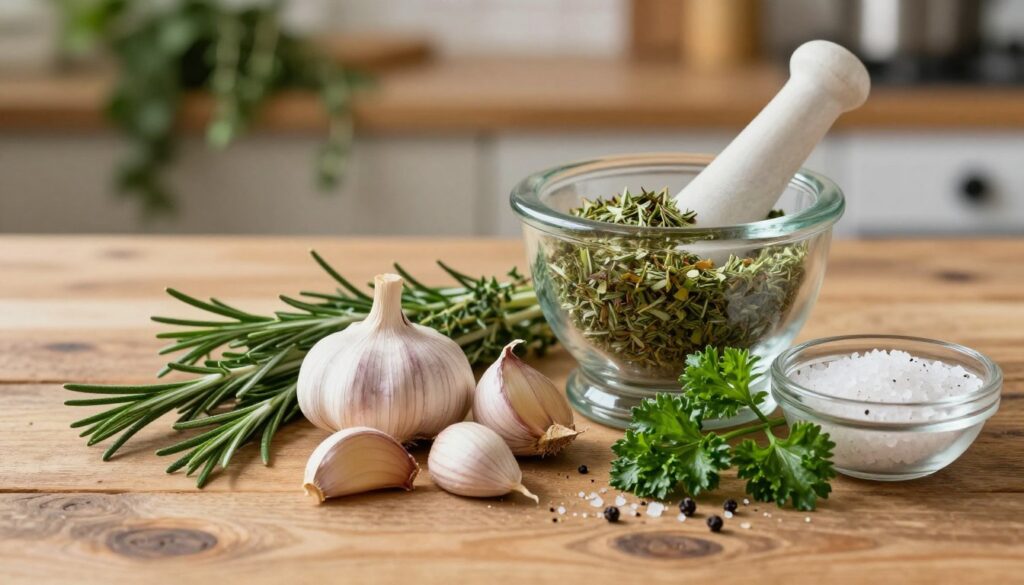
Ready to cook a delicious roasted lamb? The secret is in the ingredients. Seasoning lamb meat is easy and doesn’t need a long list. Most items are in your kitchen or at the local store.
Start with a 2-pound boneless lamb shoulder roast. It’s great for beginners because it stays moist. You can find it at the butcher or in the meat section.
For your garlic herb lamb seasoning, use fresh, quality ingredients. The mix includes:
- 4 cloves of garlic, finely chopped
- 1 tablespoon of fresh rosemary, chopped
- 2 teaspoons of fresh thyme leaves
- 3 tablespoons of extra-virgin olive oil (divided)
- Kosher salt and freshly ground black pepper
Fresh herbs make a big difference. They add a vibrant flavor that dried herbs can’t match. Chopped garlic releases its flavors immediately, enhancing your rub.
| Ingredient | Amount | Purpose |
|---|---|---|
| Boneless lamb shoulder | 2 lbs | Main protein for roasting |
| Fresh garlic cloves | 4 cloves | Flavor base for the rub |
| Fresh rosemary | 1 Tbsp chopped | Classic herb pairing |
| Fresh thyme | 2 tsp leaves | Aromatic depth |
| Extra-virgin olive oil | 3 Tbsp divided | Binding agent and cooking fat |
| Baby potatoes | 2 lbs halved | Roasted side dish |
| Butcher’s twine | 1 bundle | Tying the roast |
You’ll also need 2 pounds of baby potatoes, halved if large. These potatoes roast with the lamb, soaking up juices and fat. It’s a side dish without extra effort.
Don’t forget butcher’s twine from the store. It helps tie the roast for even cooking. Prepping everything before cooking ensures success.
Preparing Lamb with Fresh Herbs and Garlic
Transforming your lamb into something special starts with bold flavors on its surface. Instead of a traditional marinade, try a fresh herb rub. It creates a delicious crust during roasting. This method is quick and gives you restaurant-quality results at home.
Using a paste-like herb mixture is key. It creates an intense flavor layer that penetrates the meat fast. This technique makes your lamb taste amazing.
Creating Your Herb Rub Mixture
Begin by gathering your ingredients. You’ll need four garlic cloves, finely chopped. Add one tablespoon of fresh rosemary and two teaspoons of fresh thyme leaves. Mix in one tablespoon of quality olive oil.
Season your mixture well with kosher salt and black pepper. Lamb loves bold seasoning. Rub the herb paste all over your lamb shoulder. Make sure every surface is coated. This method ensures maximum flavor across the entire roast.
Alternative Seasoning Options for Your Lamb
Your lamb marinade recipe can be anything you like. Try these options:
- Chopped fresh oregano for Mediterranean flavors
- Fresh mint for bright, refreshing notes
- Italian basil for a classic European twist
- Red chili flakes if you want heat and spice
- Ground coriander for earthy, slightly citrusy warmth
Feel free to mix and match these seasonings. The key is to be generous with your choices. Lamb can handle bold flavors, so get creative with your herb blend.
How to Tie Your Lamb Roast for Even Cooking
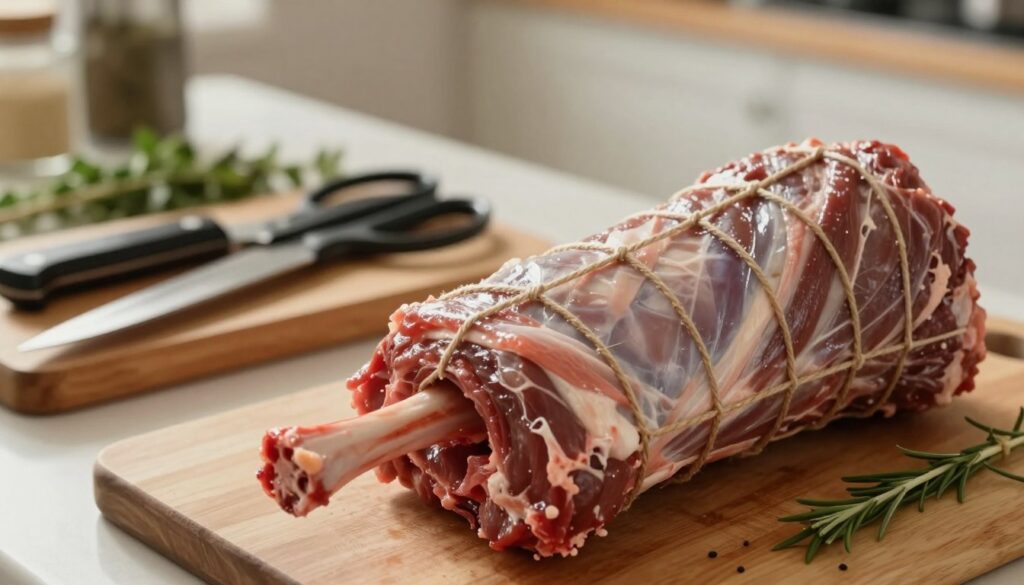
Tying your lamb roast might seem hard, but it’s crucial for success. It makes the roast cook evenly. This way, even the thinnest parts won’t dry out while the thickest parts cook well.
Begin by placing your boneless lamb shoulder on a clean cutting board. Make sure the short end is facing you. This makes tying easier and gives you better control.
- Wrap butcher’s twine around the entire roast lengthwise once
- Twist the twine 90 degrees so it runs perpendicular to the first wrap
- Continue wrapping around the lamb, working down the length
- Space each wrap about one inch apart
- Tie off securely at the bottom and trim excess twine
“A well-tied roast ensures your lamb cooks to perfection with juicy, tender meat throughout.”
Remember, don’t tie too tight. It can squeeze out moisture. You want it snug but not too tight. If you’re new, ask your butcher to help. They can teach you a lot.
Roasting Your Lamb to Perfection at Home
Getting your oven roasted lamb recipe with garlic and rosemary just right takes preparation and attention. The cooking stage is where all your earlier work comes together. Your seasoned meat and potatoes will transform into a delicious meal when you follow the right steps. This section walks you through how to prepare juicy lamb step by step, from oven setup to checking doneness.
Setting Up Your Oven and Baking Dish
Start by preheating your oven to 450°F. Position your oven rack in the lower third. This placement gives you intense heat from below while leaving room for air circulation around your meat.
Use a 13-inch by 9-inch baking dish. A standard 9×13 Pyrex dish works perfectly for your roasted lamb recipe. Toss your halved baby potatoes with the remaining 2 tablespoons of olive oil. Season them generously with salt and pepper.
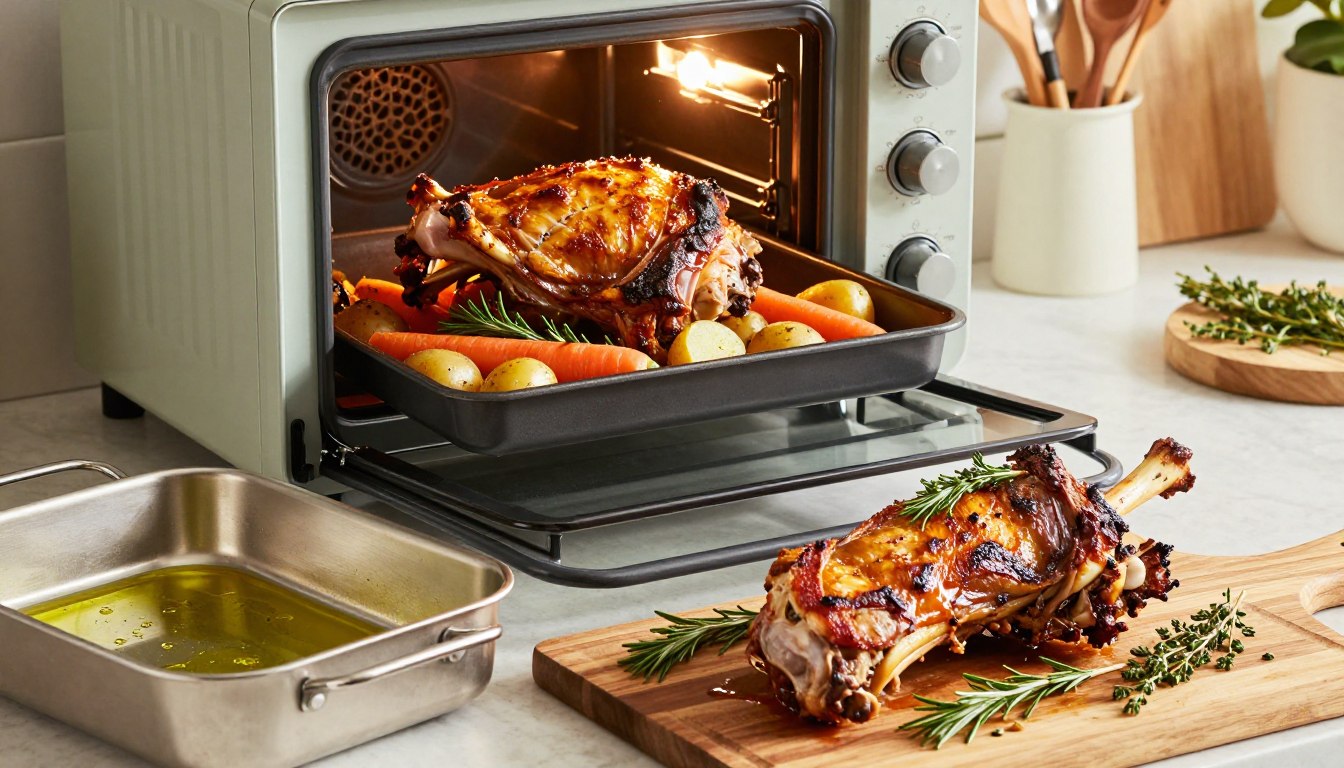
Place your seasoned lamb directly on top of the potatoes. This smart technique serves two purposes. The potatoes stay elevated for even cooking, and they catch all the delicious juices and rendered fat dripping from your meat. Your baking dish becomes a complete one-pan meal.
Monitoring Internal Temperature for Doneness
The key to perfect results is using a meat thermometer. While your roasted lamb recipe needs about 1 hour for a 2-pound roast, cooking times vary. Your specific oven, the lamb’s exact shape, and its starting temperature all matter.
Insert an instant-read thermometer into the thickest part of your lamb, avoiding fat pockets. Look for an internal temperature of 145°F for medium-rare to medium doneness. This temperature gives you slightly pink, juicy meat that’s ideal for lamb.
If your lamb hasn’t reached this temperature after an hour, continue roasting. Check every 10 minutes until you hit your target. A quality meat thermometer removes all guessing from how to prepare juicy lamb step by step. For detailed guidance on roasting techniques and gravy preparation, experienced cooks recommend checking meat temperature rather than relying on time alone.
- Preheat oven to 450°F
- Position rack in lower third
- Use 13″ x 9″ baking dish
- Toss potatoes with oil and seasoning
- Place lamb on top of potatoes
- Insert thermometer into thickest part
- Target 145°F internal temperature
- Check every 10 minutes after 1 hour
Your roasted lamb recipe transforms into a restaurant-quality meal with proper temperature monitoring and careful attention to your oven’s performance.
The Secret to Juicy Lamb: Proper Resting Time
You’ve worked hard to cook your lamb to the perfect temperature. Now, the key to a juicy lamb recipe is letting it rest. This simple step makes a huge difference in the tenderness and moisture of your dish.
When your lamb roasts, heat causes the proteins to contract. This pushes all the moisture to the center of the roast. If you slice into your lamb right away, all those juices will spill out. You’ll end up with dry, disappointing results.
Resting your meat is a great way to tenderize lamb. Here’s what to do:
- Remove your baking dish from the oven when the internal temperature reaches 145°F
- Place the dish on your stovetop or another heat-safe surface
- Wait for a full 15 minutes before touching the meat
- Resist the urge to slice early, even though it smells amazing
- Use this time to set your table or prepare side dishes
During rest time, something important happens inside your lamb. The proteins relax, and the juices spread out evenly. The internal temperature may rise another 5 degrees from residual heat, which is completely normal.
This tenderizing lamb technique is used by professional chefs. After your 15-minute rest, remove the twine and slice your roast. You’ll see how to make lamb tender and juicy with perfectly moist meat. This patience pays off every single time.
Pairing Your Roasted Lamb with the Perfect Sides
Your roasted lamb needs sides that make its flavors pop. The right sides can turn a good meal into an unforgettable one. Exploring lamb recipes and traditional dishes shows that the best meals pair protein with veggies that enhance its taste. Your roasting pan can help create a meal with multiple parts that work well together.
Baby Potatoes That Absorb All the Flavor
Baby potatoes are key to a great side dish. Place them under your lamb in the roasting pan. As the lamb cooks, it drips juices and fat onto the potatoes.
The potatoes soak up these juices, becoming crispy on the outside, creamy on the inside, and full of lamb flavor. Just toss them with olive oil, salt, and pepper before roasting. The lamb does the rest, adding flavor to the potatoes.
Fresh Vegetable Options to Complete Your Meal
Beyond potatoes, lamb goes well with fresh, vibrant veggies. These add color and contrast to your meal. Here are some ideas:
- Sweet peas and carrots for a classic combo
- Creamed spinach to match your herbs
- Roasted or grilled asparagus for a touch of elegance
- Seasonal green beans with garlic
Herby lamb recipes pair well with herb-rich veggies. Choose veggies that match the season. Spring is for asparagus and peas. Summer brings green beans or zucchini. Fall is for root veggies, and winter is perfect for roasted Brussels sprouts.
Creating a complete lamb dinner means thinking about how each part works together. Your lamb dishes will be richer with every element on the plate adding to the experience. Pick veggies that you like and that fit your cooking style.
Storing and Reheating Your Lamb for Later Enjoyment
Your roasted lamb doesn’t have to be eaten in one sitting. Leftover lamb is great for meals all week. With the right storage and reheating, you keep the meat tender and flavorful. This way, you can enjoy your lamb in new and exciting ways.
Let your lamb cool down to room temperature in two hours. Then, put it in a sealed container. Your fridge will keep it fresh for 3 to 4 days. This gives you time to make new dishes with your leftover meat.
Proper Storage Methods
Store your lamb correctly to keep it quality and safe:
- Cool leftover lamb to room temperature before refrigerating
- Place lamb in sealed, covered containers
- Keep refrigerated lamb at 40°F or below
- Use within 3 to 4 days for best quality
For longer storage, freeze your lamb in portions. Wrap each piece in heavy-duty foil. Then, put it in a freezer-proof bag and remove air. Frozen lamb stays good for 2 to 3 months. Always thaw it in the fridge, not at room temperature.
| Storage Method | Duration | Best Use |
|---|---|---|
| Refrigerated in sealed container | 3 to 4 days | Quick weeknight meals and leftovers |
| Frozen in foil and plastic bag | 2 to 3 months | Long-term storage and future meals |
Reheating Your Lamb Gently
Reheat your lamb gently to avoid drying it out. Use a low oven at 300°F and cover it with foil. Warm it slowly until it’s hot. Or, slice it thin and heat it quickly in a skillet with oil or butter.
Leftover lamb is perfect for new dishes. Try adding spices like cumin, cinnamon, and coriander for a Moroccan twist. Use it in tagines or couscous bowls. You can also make slow-cooked dishes by adding broth and spices.
Here are some ideas for using leftover lamb:
- Layer in grain bowls with couscous and vegetables
- Add to fresh salads with herbs and olive oil dressing
- Create Mediterranean sandwiches with pita bread
- Mix into pasta dishes with garlic and tomatoes
- Combine with spices for moroccan lamb recipes
Proper storage and reheating extend your meal’s life. You’ll discover new flavors and enjoy your lamb all week.
Conclusion
You now have all the tools to roast lamb like a pro at home. Just follow four simple steps: seasoning, roasting, resting, and serving. Boneless lamb shoulder is easy to work with. It’s hard to go wrong.
This dish is perfect for busy home cooks. You can prepare it with little effort. This leaves you free to enjoy time with your family while dinner cooks.
The techniques you learned are versatile. You can adjust the herb rub to your liking. The method works for different roast sizes, thanks to a meat thermometer.
You can serve your lamb fresh or save leftovers for later. These skills also work for grilling in the summer. Or, slow-roasting for even more tender meat.
Trust the process and honor each step for the best results. Use your meat thermometer to avoid guessing. Let your lamb rest before cutting into it.
Busy home cooks have made this recipe work. They’ve created impressive meals without stress. Once you roast lamb using these techniques, you’ll wonder why you ever thought it was hard.
Make this recipe your own by trying different herbs, seasonings, and side dishes. Your family and friends will be amazed by what you create.
You have everything you need for success. Your kitchen is ready. Your confidence is building. Your next roasted lamb dinner awaits. Get started, and enjoy the delicious results of your work.