
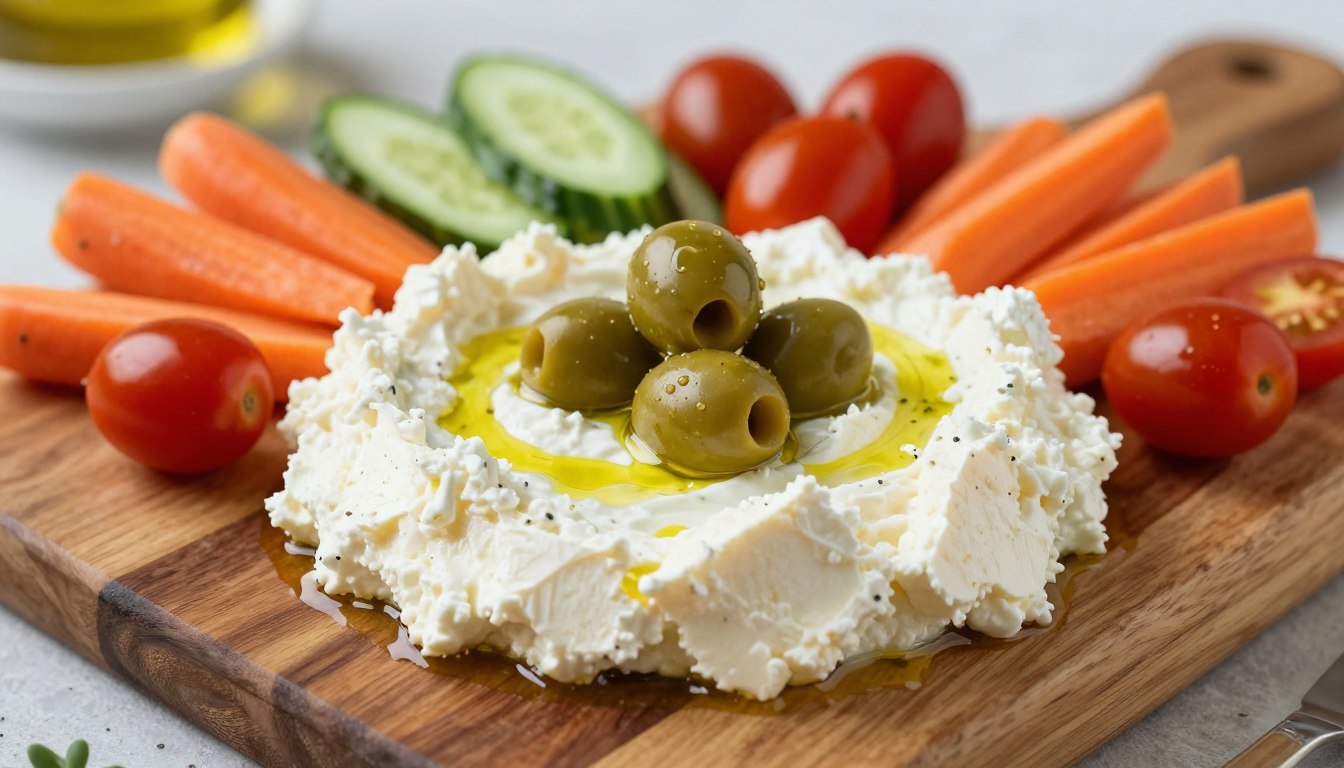
How to Make My Big Fat Greek Appetizer
Gathering around a table with loved ones is magical. A homemade feta appetizer brings sunshine and Mediterranean breezes to your summer gatherings. You don’t need to spend hours cooking or have special skills. It looks like you spent all day making it.
This authentic greek feta dip recipe is your secret to impressing guests easily. It’s ready in just 10 minutes with simple ingredients you likely have at home. Fresh veggies, creamy feta, and premium olive oil create a dish that’s both elegant and comforting. Plus, your kitchen stays cool because there’s no cooking.
The greek feta dip recipe celebrates simplicity. It doesn’t hide flavors with heavy sauces or complicated methods. Each ingredient shines, making a refreshing mix perfect for warm weather. Your friends will love this communal platter, asking for your recipe before they leave.
What makes this homemade feta appetizer special is its flexibility. The measurements are just guidelines. You can adjust ingredients to your liking, making each batch unique. This is the beauty of cooking with instinct and trusting your taste.
Key Takeaways
- This authentic greek feta dip takes just 10 minutes to prepare with no cooking required
- Your homemade feta appetizer serves 8 people and works perfectly for summer entertaining
- The greek feta dip recipe features simple layers of fresh vegetables, creamy feta, and quality olive oil
- Measurements are flexible, so you can adjust this recipe to match your personal taste preferences
- This dish works beautifully as a centerpiece for a Mediterranean mezze table or casual gathering
- Warm pita bread and pickled Pepperoncini are ideal serving companions for your dip
- Fresh, quality ingredients matter more than cooking skills for this stunning appetizer
What Makes This Greek Feta Dip Recipe So Irresistible
A great mediterranean feta dip is more than just cheese and toppings. It’s about how each ingredient works together. This creates a dish that your guests will love talking about.
Quality ingredients are key. They enhance each other, making the dip irresistible.
The Perfect Blend of Mediterranean Flavors
Your traditional feta dip starts with salty, tangy feta cheese. Kalamata olives add depth and complexity. Fresh cucumbers and Roma tomatoes add crunch and sweetness.
Sharp green onions give a subtle bite. Fresh lemon juice brings everything together. Extra virgin olive oil carries these flavors in every bite.
Using cold-pressed olive oil adds a major flavor component. It’s like the glue that holds the flavors together.
Why Fresh Ingredients Matter
Since your traditional feta dip gets no cooking time, every ingredient shines. Quality is crucial. You can’t cook away weak flavors or blend things into submission.
- Feta packed in brine beats pre-crumbled cheese for texture and taste
- Roma tomatoes have lower moisture content and won’t make your dip watery
- English cucumbers contain minimal seeds for better consistency
- Premium extra virgin olive oil like California Olive Ranch makes a real difference
Learning about fresh ingredients in Mediterranean cooking helps. Your creamy feta cheese dip depends on each ingredient’s quality. The simplicity of your recipe means there’s nowhere for mediocre ingredients to hide.
Every tomato, every olive, every drop of oil matters. Investing in better feta and premium oil makes a big difference in your final result.
Essential Ingredients for Authentic Greek Feta Dip
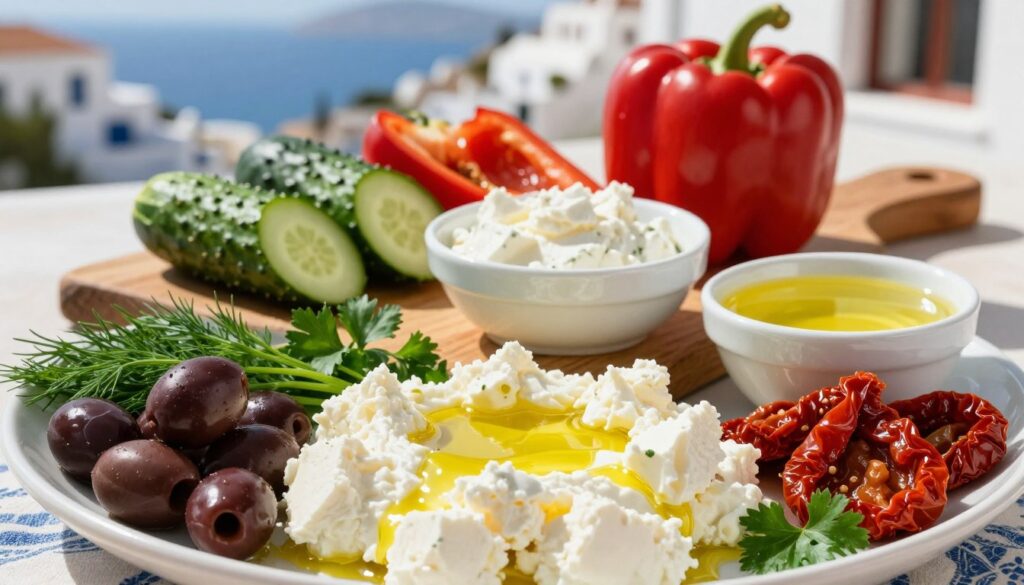
To make an authentic Greek feta spread, you need the right ingredients. Each one is crucial for that unique Mediterranean taste. Choose quality items because they really make a difference.
Building a great feta cheese spread starts with top-notch ingredients. Here’s what you need to know about each part to make a traditional Greek feta dip with olive oil that everyone will love.
Your Core Ingredients
First, gather these key items for your traditional Greek feta dip with olive oil:
- Extra virgin olive oil (1/3 cup) – Choose California Olive Ranch for its floral notes and smooth texture
- Feta cheese (4 ounces) – Opt for Greek feta packed in brine rather than crumbled versions
- Fresh lemon juice (from 1/2 lemon) – Always use freshly squeezed, never bottled
- Cucumbers (1/2 cup diced) – English or Persian varieties work best with minimal seeds
- Tomatoes (1/2 cup diced) – Roma tomatoes offer lower moisture content
- Kalamata olives (1/4 cup chopped) – These deliver briny depth to your spread
- Red onion (1/4 cup diced) – Provides sharp flavor and vibrant color
- Ground black pepper (1/4 teaspoon) – Adds subtle heat without overwhelming
- Pepperoncini – Use Mazzetta or Delallo brand for authentic tang
Optional Variations for Your Feta Spread
When making a feta cheese spread, you can try different flavors. For a whipped version, you’ll need cream cheese, Greek yogurt, and garlic. For a spicy version called Tirokafteri, use roasted red peppers, red wine vinegar, and hot chili peppers instead of some fresh vegetables.
| Ingredient | Standard Recipe | Whipped Version | Spicy Tirokafteri |
|---|---|---|---|
| Feta Cheese | 4 ounces Greek feta | 8 ounces Greek feta | Feta in brine |
| Olive Oil | 1/3 cup extra virgin | Quality olive oil | Good quality floral olive oil |
| Dairy Component | None | 4 oz cream cheese + 2 tbsp yogurt | Greek yogurt (thick, high-fat) |
| Heat Element | Ground pepper | Optional pepper | Hot chili pepper or jalapeno |
| Fresh Vegetables | Cucumber, tomato, onion | Optional toppings | Roasted red peppers |
| Acid Component | Fresh lemon juice | Lemon juice | Red wine vinegar |
Notice that salt isn’t necessary in most recipes because feta cheese and olives already provide plenty of saltiness. Your authentic Greek feta spread will taste rich and balanced without adding extra salt.
Remember, quality is key. When you choose premium feta cheese and excellent olive oil, you create a spread that tastes genuinely Mediterranean. These ingredients work together to give you that authentic flavor your guests will recognize and appreciate.
Greek Feta Dip Recipe: Step-by-Step Instructions
Making an easy feta dip recipe at home is quick and simple. You can choose between a layered or whipped version. These instructions will help you make a tasty Mediterranean appetizer. Your guests will enjoy the fresh, tangy flavors.
Preparing Your Ingredients
First, gather all your ingredients before starting. Warm your pita bread in a 350°F oven. Place it directly on the rack without a pan. While the pitas warm up, prepare each ingredient carefully:
- Crumble or cube your feta cheese for a rustic texture or neat pieces
- Dice your cucumber into uniform pieces
- Chop green onions into thin rings
- Dice Roma tomatoes and remove excess seeds
- Chop Kalamata olives into bite-sized pieces
- Have fresh lemon juice and black pepper ready
Good preparation makes assembly smooth and prevents rushed moments. With everything ready, your dip comes together quickly.
Layering Your Feta Dip
The magic happens in these layering steps. Pour about one-third cup of extra virgin olive oil onto your serving platter. Scatter the crumbled feta cheese evenly across the oil. Then, distribute your diced cucumber and green onion over the feta.
Add the diced tomatoes and chopped olives in a natural, scattered pattern. This rustic arrangement adds to the charm.
For a creamy feta dip, try the whipped version using a food processor. Blend feta cheese, Greek yogurt, roasted red peppers, chili pepper, red wine vinegar, garlic, and olive oil for two to four minutes. Stop processing when you reach the desired consistency.
Final Touches and Presentation
Squeeze fresh lemon juice over the entire platter and grind black pepper on top. Taste and add salt only if needed. Arrange pickled pepperoncini around the edges for visual appeal.
| Component | Amount | Preparation |
|---|---|---|
| Feta Cheese | 8 ounces | Crumbled or cubed |
| Extra Virgin Olive Oil | 1/3 cup | For base layer |
| Cucumber | 1 medium | Diced |
| Green Onions | 2-3 stalks | Chopped |
| Roma Tomatoes | 2 medium | Diced and seeded |
| Kalamata Olives | 1/2 cup | Chopped |
| Lemon Juice | 2 tablespoons | Fresh squeezed |
Add optional garnishes like fresh dill, oregano, or lemon zest for extra Mediterranean flair. Serve your dip within thirty minutes of assembly. This prevents it from becoming watery. Tear warm pita bread into pieces and serve immediately for the best texture and flavor.
Choosing the Best Feta Cheese for Your Dip
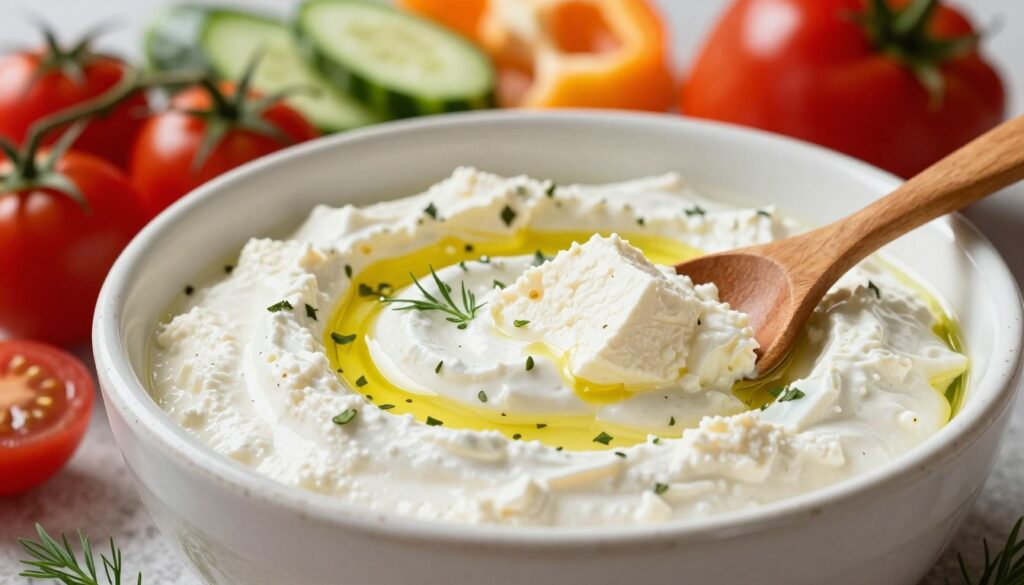
The quality of feta cheese is key to a great creamy feta dip. Choosing the right feta makes your appetizer stand out. Knowing what to look for at the store helps you make the best dip.
At the store, you’ll see many feta options. Imported Greek feta packed in brine is the top choice. It’s kept moist and flavorful in saltwater. Greek feta, made from sheep’s milk or a mix, tastes richer than domestic feta.
Block feta is better than pre-crumbled. Pre-crumbled feta may have additives that ruin the dip’s texture. Crumbling a fresh block yourself gives the best results.
What to Look for When Buying Feta
- Check for feta submerged in brine, not sitting dry in packaging
- Select a block instead of pre-crumbled versions
- Look for Greek, Bulgarian, or French feta as top choices
- Visit your store’s deli case or specialty cheese section
- Consider Mediterranean or Middle Eastern markets for fresher options
Feta Types and Their Characteristics
| Feta Type | Origin | Milk Source | Flavor Profile | Best For |
|---|---|---|---|---|
| Greek Feta | Greece | Sheep or sheep-goat blend | Rich, tangy, complex | Premium creamy feta dip |
| Bulgarian Feta | Bulgaria | Sheep’s milk | Creamy, slightly sweet | High-quality dips |
| French Feta | France | Sheep or cow’s milk | Mild, less salty | Balanced dips |
| Domestic Feta | United States | Cow’s milk | Milder, less complex | Budget-friendly options |
Even on a budget, you can make great dip. Domestic feta from the deli case works well. Just skip the pre-crumbled versions in plastic.
If your feta is too salty, soak it in milk or water for 30 minutes. Store unused feta in brine in an airtight container. This keeps it fresh for future dips.
Creative Variations on Traditional Feta Dip
Once you learn the basic recipe, you can make your easy Greek appetizer unique. Feta dip is very versatile. You can change flavors, textures, and toppings to fit your taste. From creamy to spicy, your dip options are endless.
Whipped Feta Dip with Yogurt
A whipped feta dip makes your traditional dip smooth and light. It uses Greek yogurt or sour cream with feta cheese. This creates a creamy, spreadable dip that’s perfect for a lighter taste.
To make a feta yogurt dip, mix these ingredients in a food processor:
- 8 ounces of crumbled feta cheese
- 2 to 4 tablespoons of Greek yogurt or sour cream
- 2 tablespoons of cream cheese (optional for extra richness)
- 1 clove of garlic, minced
Start by mincing your garlic, then add the dairy ingredients. Process for 2 to 4 minutes until it’s smooth and fluffy. Greek yogurt makes it lighter and tangier, while sour cream makes it richer. Adjust the yogurt for the right consistency.
Spicy Mediterranean Twist
Make your easy Greek appetizer bolder with spicy flavors. Tirokafteri is a Greek version with feta, yogurt, roasted red peppers, and hot chili peppers. It’s creamy, tangy, salty, and spicy.
Add these flavors to your whipped feta dip:
| Ingredient | Amount | Effect on Flavor |
|---|---|---|
| Roasted red peppers | 2 to 3 tablespoons | Adds sweetness and smokiness |
| Hot chili peppers with seeds | 1 to 2 peppers | Creates intense heat and depth |
| Red wine vinegar | 1 tablespoon | Provides acidity and tanginess |
| Crushed red pepper flakes | 1/4 teaspoon | Delivers subtle, warming heat |
| Sun-dried tomatoes | 2 tablespoons, chopped | Adds concentrated tomato flavor |
| Fresh dill or dried oregano | 1 teaspoon | Brings herbaceous Mediterranean notes |
Adjust the spice by adding more chili peppers. For creamier dip, add more yogurt. Red onions add a sharp bite and look great. Lemon zest adds pronounced citrus notes that brighten the dip.
“These variations keep the Mediterranean soul of your recipe but offer new flavors that guests love.”
Both the whipped and spicy dips are great as main appetizers. The yogurt dip is for those who like lighter flavors, while the Mediterranean twist is for spice lovers. Try these to find your favorite easy Greek appetizer.
What to Serve with Your Homemade Feta Appetizer
Your creamy feta dip is the star of any gathering with the right sides. It’s perfect for casual or elegant parties. Choose the best sides to make your feta dip unforgettable.
The dip goes well with many dippers. Each one adds a special touch to your Greek appetizer.
Pita Bread and Chips Options
Warm pita bread is the classic choice for your feta dip. Heat it in a 350°F oven for 5 to 10 minutes until soft. Tear it into pieces for easy dipping.
You can also serve pita chips and crunchy dippers for a fun twist.
There are many other options too. Crispy pita chips are great for guests on the move. Naan bread with olive oil and za’atar adds a Middle Eastern touch. Crostini offer elegance.
Water crackers and artisan flatbreads are sturdy choices. Tortilla chips add a Tex-Mex flair.
- Warm pita bread torn into pieces
- Store-bought or homemade pita chips
- Naan bread with olive oil and za’atar
- Crostini and toasted baguette slices
- Water crackers and artisan crackers
- Tortilla chips for fusion flavor
- Keto chips for low-carb guests
Building a Greek Mezze Platter
Turn your feta dip into the star of a Greek mezze platter. Mezze means small bites, inspired by Spanish tapas. It’s a mix of small dishes for sharing.
Start with your feta dip as the base. Then add other items for flavor and looks.
| Mezze Platter Category | Serving Suggestions | Purpose |
|---|---|---|
| Dips and Spreads | Feta dip, tzatziki, hummus, melitzanosalata (eggplant dip) | Create flavor variety and texture contrast |
| Fresh Vegetables | Grape tomatoes, cucumber spears, bell pepper strips, radishes, carrots | Add crunch and freshness |
| Pickled Items | Pepperoncini, pickled onions, pickled turnips, pickled peppers | Provide tangy, zesty flavors |
| Proteins | Grilled chicken skewers, lamb meatballs, dolmades, marinated olives | Satisfy hunger and add substance |
| Cheeses and Olives | Feta, halloumi, kasseri, Kalamata olives, green olives, mixed varieties | Offer richness and authentic Greek flavors |
| Breads | Warm pita, crostini, naan, crackers | Provide vehicles for scooping and spreading |
Make your mezze platter look good by using different heights. Group similar items together. Use small bowls for dips to keep things neat.
Make sure everything is easy to reach. This way, guests can enjoy at their own pace while chatting.
Your feta dip is great with cold, crisp wines like Assyrtiko or light Greek beers like Mythos. These drinks enhance the Mediterranean flavors and make the meal special. This setup turns your feta dip into the heart of a fun and elegant gathering.
Tips for Making the Perfect Creamy Feta Dip
Making the perfect homemade feta dip is more than just mixing ingredients. It’s about knowing the right techniques and choosing quality ingredients. These tips will help you make a memorable Greek appetizer.
Start by picking high-quality extra virgin olive oil. This oil is raw and adds a lot of flavor to your dip. Look for cold-pressed oils with fruity or peppery notes. This choice will make a big difference in your dish.
When picking ingredients, watch out for moisture. Roma or plum tomatoes are best because they have less water. Grape and cherry tomatoes are also good choices. If you use regular tomatoes, remove the seeds to avoid a watery dip.
Use thick, full-fat Greek yogurt instead of low-fat. Fat-free yogurt will make your dip too thin. Also, use full-fat cream cheese and soften it before blending.
- Build your layered dip on a large, shallow plate rather than a deep bowl
- Treat measurements as guidelines, not strict rules
- Use small garlic cloves to avoid overwhelming raw flavors
- Adjust seasoning with salt, acid (vinegar), and heat (chili pepper)
- Skip adding salt until you taste—feta is already salty enough
Timing matters for your homemade feta dip. Make layered versions no more than 30 minutes before serving. For whipped versions, refrigerate for at least 30 minutes up to overnight. This lets flavors blend and texture firm up.
When whipping your feta, stop as soon as it’s smooth. Over-processing makes the dip thin and separated. Use a slotted spoon for juicy toppings to avoid excess liquid.
Serve your dip at room temperature for the best taste. This lets all the Mediterranean flavors come through.
Storage and Make-Ahead Instructions
Planning ahead makes entertaining easier. Knowing how to store your dip keeps it fresh. You can prepare your feta dip in advance, but timing is key with fresh ingredients.
The whipped feta base can be made 1 to 2 days ahead and stored in an airtight container. This allows the flavors to meld together beautifully. But, the layered version with fresh vegetables needs careful timing.
Fresh tomatoes and cucumbers release juices quickly. This can make your dip watery if left too long. It’s like a fresh salad that wilts in the fridge fast.
How Long Does Feta Dip Last
Your whipped feta base stays fresh for 3 to 4 days when stored right. The layered version with fresh vegetables is best when assembled within 30 minutes of serving. For the whipped feta version from resources on whipped feta preparation, prepare components separately and assemble just before guests arrive.
Always refrigerate your dip within 2 hours of making it. Discard any dip that sits at room temperature for more than 2 hours. If your home is above 90°F, cut this time in half to 1 hour.
| Dip Type | Preparation Timing | Refrigerator Storage | Best Served |
|---|---|---|---|
| Whipped Feta Base | 1-2 days ahead | 3-4 days | Within 30 minutes of assembly |
| Layered with Fresh Vegetables | 30 minutes before serving | Best consumed fresh | Immediately after assembly |
| Vegetable Components | Morning of event | Up to 8 hours | Combined just before serving |
Best Practices for Fresh Vegetables
Fresh vegetables are key to your dip. Handle them carefully. Wash and dry all vegetables before cutting them. A salad spinner is great for drying.
When prepping vegetables ahead, follow these steps:
- Cut vegetables into slightly larger pieces if making ahead, as they release less surface moisture
- Store cut vegetables separately in paper towel-lined containers to absorb excess moisture
- Keep the whipped feta base covered with plastic wrap pressed directly onto the surface
- Store olive oil, vinegar, and oregano separately until the day of serving
- Soak cut cucumbers in ice water for 10 minutes to restore crispness before serving
If your dip becomes watery, drain the excess liquid and add fresh vegetables to refresh it. Leftover dip is great as a topping for pasta salads or grain bowls. This way, nothing goes to waste and you get more use from your delicious creation.
Common Mistakes to Avoid When Making Greek Feta Spread
Making delicious Greek appetizers takes practice and attention to detail. Small mistakes can ruin your feta dip. Knowing what to avoid helps you succeed right away. It’s also important to know the difference between tzatziki and feta dip.
Choosing the right ingredients is key. Don’t use pre-crumbled feta with anti-caking agents. It makes the dip grainy. Instead, buy block feta stored in brine for a creamy texture.
Low-quality olive oil can also mess up your dip. Since the oil is raw, use premium extra virgin olive oil for better flavor.
When preparing, avoid over-processing the dip. Stop when it’s smooth and creamy. Also, make sure cream cheese is at room temperature for even blending. Too much garlic can overpower the taste. Start with a small clove and adjust as needed.
Timing is crucial for texture and taste. Assemble layered dips no more than 30 minutes before serving. This prevents vegetables from making the dip watery. Chilled whipped dips need at least 30 minutes in the fridge for flavors to meld.
Seasoning must be balanced. Feta and olives already have a lot of salt. Taste before adding more salt. Adjust lemon juice and spices to balance the flavors. Remember, feta dip is bolder, while tzatziki is milder.
| Common Mistake | What Happens | The Better Approach |
|---|---|---|
| Using pre-crumbled feta | Grainy, dry texture | Buy block feta in brine |
| Low-quality olive oil | Flat, artificial taste | Choose premium extra virgin oil |
| Over-processing whipped feta | Runny, thin consistency | Stop when smooth and fluffy |
| Cold cream cheese | Lumpy, uneven texture | Soften to room temperature first |
| Too much raw garlic | Harsh, overpowering flavor | Use one small clove, taste as you go |
| Assembling too early | Watery, soggy dip | Assemble within 30 minutes of serving |
| Not chilling whipped version | Loose texture, muted flavors | Refrigerate at least 30 minutes |
| Over-salting without tasting | Inedibly salty dip | Taste first, feta already has salt |
| Using bottled lemon juice | Artificial, flat taste | Squeeze fresh lemons |
| Wet vegetables from washing | Excess moisture dilutes dip | Dry vegetables thoroughly before use |
Serving your dip right is important too. Use a slotted spoon for toppings to keep the base creamy. Serve at room temperature for 15 to 20 minutes after chilling. Cold dips taste dull, but warm ones bring out the flavors.
Greek appetizer recipes need care and respect. Avoiding these mistakes will make your feta spread a hit with your guests and boost your cooking confidence.
Conclusion
You now have everything you need to make an amazing Greek feta dip. It’s easy to make and impresses everyone. You can make it in just 10 minutes with simple ingredients from your local store.
This dip is full of Mediterranean flavors. It looks great whether you layer it or make it smooth. Either way, it’s sure to impress your guests.
This recipe is very versatile and easy to customize. You can keep it classic or try new things. Add some spice, mix in yogurt, or stick with the traditional flavors. Your kitchen is your playground, and this dip is your canvas.
This Greek feta dip is more than just food. It’s a way to bring people together. Imagine sharing it at a barbecue, game day, or dinner with friends. It’s a taste of Greek hospitality and the joy of sharing good food.
Don’t wait to try this recipe. Make it this weekend or for your next event. Your guests will love it and ask for the recipe. You’re ready to make a delicious Big Fat Greek Appetizer. It’s a classic for a reason.