How to Make High-Protein Breakfast Casserole
Waking up hungry is common. You might think skipping breakfast is the only option. But what if you could make a delicious, protein-packed meal in minutes?
A high-protein breakfast casserole is a game-changer. It’s not just another egg dish. It’s a nutritious meal that’s easy to make and reheats quickly. Plus, it’s packed with 17 to 30 grams of protein per serving.
Making a protein breakfast casserole is easy. Start with eggs, cheese, Greek yogurt, and cooked protein. Mix and bake. You can also add veggies, meats, and spices to make it your own.
Whether you’re trying to build muscle, lose weight, or just eat a healthy breakfast, this casserole is a great choice. You can control what goes into it. Choose your protein sources and add your favorite ingredients.
This guide will show you how. You’ll learn about the best protein sources and how to make a creamy casserole. You’ll also get tips on storing it to keep it fresh for days. And, you’ll get a tested protein breakfast casserole recipe that works in real kitchens.
Key Takeaways
- A high-protein breakfast casserole delivers 17 to 30 grams of protein per serving with minimal prep work.
- You can build a basic protein breakfast casserole recipe with just four ingredients: eggs, cheese, Greek yogurt, and cooked protein.
- Eggs and egg whites form the foundation, while lean meats like turkey sausage and ham add extra protein power.
- How to make high protein breakfast casserole involves simple mixing and baking steps that take less than fifteen minutes of active time.
- Proper storage in airtight containers keeps your casserole fresh in the fridge for four to five days or in the freezer for up to one month.
- Common mistakes like watery texture and skipping variety are easy to prevent with the right techniques.
- Meal prepping your casserole on Sunday saves you time and removes morning stress for the entire week.
Why You Need a High-Protein Breakfast in Your Life
Starting your day with enough protein is key for better health and energy. It helps your body get ready for the day. A protein-rich breakfast keeps you full for hours and boosts your fitness.
Choosing a protein-packed breakfast impacts your hunger and muscle building. Recipes with 25 to 30 grams of protein are recommended. This amount helps you stay on track with your goals.
The Benefits of Starting Your Day with Protein
Eating protein in the morning makes you feel full. This stops you from snacking on bad foods later. Your blood sugar stays even, so you won’t crash before lunch.
Protein boosts your metabolism, helping you burn more calories. This small increase can make a big difference in your weight management.
- Reduces hunger and cravings throughout the morning
- Stabilizes blood sugar levels for steady energy
- Increases your metabolic rate naturally
- Keeps you feeling full longer
- Improves mental clarity and focus
How Protein Supports Muscle Building and Weight Management
Protein is crucial for muscle repair and growth, important for athletes. A high protein breakfast gives your muscles the amino acids they need. It’s even more vital for those over 40 to fight muscle loss.
An effective high protein breakfast casserole helps with weight loss too. It keeps you full and supports lean muscle while losing fat.
| Life Stage/Goal | Daily Protein Need | Breakfast Target | Key Benefit |
|---|---|---|---|
| General Adult | 50-60g | 20-30g | Energy and satiety |
| Active/Athletic | 80-100g | 30-35g | Muscle recovery |
| Women 40+ | 100+g | 30-35g | Muscle preservation |
| Weight Loss Goal | 70-90g | 25-30g | Reduced cravings |
Protein also strengthens your bones. Cottage cheese, found in many fitness breakfast recipes, is rich in calcium. This supports both muscle and bone health, making a protein-rich breakfast a smart choice for your health.
Essential Ingredients for Your High-Protein Breakfast Casserole
Creating a healthy breakfast casserole high in protein is simple. You just need four main ingredients. These are eggs, a dairy product, cheese, and your protein source. This makes it easy to start cooking without a long list of ingredients.
Being flexible is key when making a protein-packed breakfast. You can use just a few ingredients and add more as you go. Each ingredient adds texture, flavor, and nutrition to your dish.
Knowing what each ingredient does helps you make better choices. Eggs give your casserole structure and protein, making it fluffy. Dairy products like Greek yogurt or cottage cheese add protein and keep it moist. Cheese adds flavor and helps hold everything together.
The Four Core Building Blocks
Every protein-packed breakfast casserole needs these four things:
- Eggs — The base that gives structure and volume
- Dairy — Greek yogurt, cottage cheese, or milk for creaminess and extra protein
- Cheese — Cheddar, mozzarella, or Monterey Jack for flavor and binding
- Protein Source — Ham, sausage, ground beef, turkey, or vegetarian alternatives
A good healthy breakfast casserole high protein recipe uses 6 large eggs, 1 cup of cheddar cheese, 200 grams of Greek yogurt, and 1 pound of cooked protein. This mix offers a lot of nutrition in each serving.
Optional Add-Ins for Extra Nutrition
Adding vegetables to your breakfast is a great way to boost nutrition. Spinach, bell peppers, onions, or cherry tomatoes add color and flavor without many calories.
| Ingredient Category | Examples | Nutritional Benefit |
|---|---|---|
| Vegetables | Spinach, bell peppers, onions, tomatoes | Fiber, vitamins, minerals |
| Cheese Options | Cheddar, mozzarella, Monterey Jack | Calcium, protein, flavor |
| Dairy Bases | Greek yogurt, cottage cheese, milk | Protein, creaminess, moisture |
| Protein Sources | Ham, sausage, ground beef, turkey | Complete protein, satiety |
Seasonings like salt, black pepper, and fresh herbs add depth without extra calories. Bacon bits can add smoky flavor for those who like it.
Having these ingredients ready makes breakfast easy. You know what each ingredient does, making it simple to customize your dish to your liking and dietary needs.
Choosing the Right Protein Sources for Your Casserole
Creating a healthy breakfast casserole starts with the right ingredients. Your choice of protein affects both taste and nutrition. Knowing each protein source helps make the perfect casserole for you.
Eggs as Your Protein Foundation
Eggs are key in any protein-packed casserole. A large egg has about 6 grams of protein. Using 14 large eggs gives a strong protein base.
Egg whites can also boost protein. They have 3.6 grams of protein per egg, with no fat. Mixing whole eggs and egg whites offers the best balance.
Adding Cottage Cheese for Extra Creaminess and Protein
Cottage cheese makes your casserole creamy and delicious. It has about 28 grams of protein per cup of low-fat cottage cheese. Adding 2 cups of cottage cheese increases protein without heaviness.
Cottage cheese’s texture is unique. You can whip it for a fluffy, light mix. Low-fat versions add protein without extra calories. High-protein egg casserole recipes often use cottage cheese for this reason. One serving has about 17 grams of protein.
Selecting the Best Meat Options: Turkey Sausage, Ham, or Ground Beef
Adding meat boosts your casserole’s protein. You have several good options:
- Turkey Sausage – Italian turkey sausage has great flavor with less fat than pork sausage. Four links add taste without too much sodium.
- Lean Ground Beef or Turkey – Using 93/7 lean ground beef or turkey gives the most protein per recipe, reaching 177 grams. This option is very nutritious.
- Diced Ham – Pre-cooked ham saves time. One pound adds convenience, but increases sodium to about 6,000 milligrams for the whole recipe.
Each meat choice has its benefits. Ground beef and turkey offer the most protein. Turkey sausage is good for heart health. Ham is best for quick preparation.
| Meat Option | Amount | Total Recipe Protein | Sodium Level | Best For |
|---|---|---|---|---|
| Turkey Sausage (Italian) | 4 links | 155g | Moderate | Flavor with heart benefits |
| Lean Ground Beef (93/7) | 1 pound | 177g | Low-Moderate | Maximum protein content |
| Ground Turkey | 1 pound | 177g | Low-Moderate | Maximum protein, lighter option |
| Diced Ham | 1 pound | 161g | High | Quick preparation |
Brown your ground meat and cook sausage before mixing into your casserole. This ensures all ingredients are cooked right. If using ham, just dice it and add it without cooking.
“The key to a successful casserole is making sure all your protein sources are fully cooked and properly prepared before combining.”
For a lighter option, skip meat and use eggs and cottage cheese. This still makes a protein-rich dish. It’s budget-friendly and low in calories, yet nutritious.
Best Vegetables to Add to Your Protein-Packed Breakfast Bake
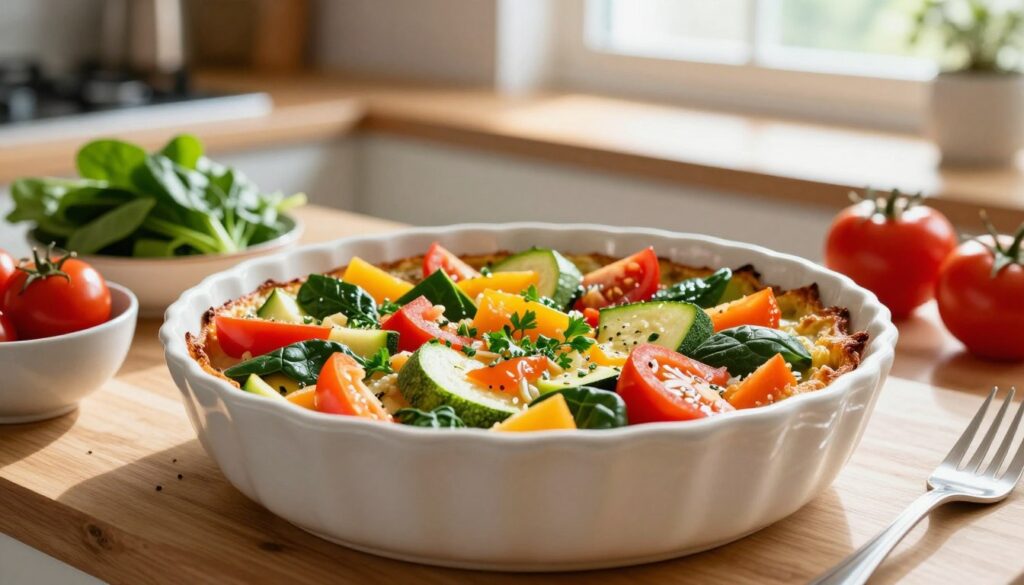
Vegetables make your breakfast casserole recipe super healthy. They add vitamins, minerals, and flavor. The trick is picking veggies that go well with eggs and cheese.
Bell peppers are a top choice for your breakfast bake. They’re full of vitamin C for a strong immune system and brain health. They also have B6, which helps make red blood cells and turn carbs into energy. Organic bell peppers have more nutrients than regular ones.
Other veggies can also make your breakfast casserole great. Here are some good ones:
- Spinach adds iron and barely any calories to your dish
- Onions and garlic provide aromatic depth and antioxidants
- Mushrooms contribute umami flavor and valuable nutrients
- Cherry tomatoes bring juicy, tangy bursts
- Broccoli offers calcium and fiber
- Zucchini adds moisture without extra calories
- Asparagus provides folate and vitamins
Here’s a tip: sauté your vegetables before mixing them into your egg bake recipe. This step removes extra moisture and boosts flavors. It prevents a soggy casserole. Just five minutes in the pan makes a big difference.
| Vegetable | Key Nutrients | Flavor Profile | Best Preparation |
|---|---|---|---|
| Bell Peppers | Vitamin C, B6, carotenoids | Sweet, mild | Diced, sautéed |
| Spinach | Iron, folate | Earthy, mild | Fresh or wilted |
| Mushrooms | Selenium, B vitamins | Earthy, umami | Sliced, sautéed |
| Cherry Tomatoes | Lycopene, vitamin C | Tangy, sweet | Halved, roasted |
| Onions | Antioxidants, quercetin | Sweet when cooked | Diced, sautéed |
| Broccoli | Calcium, fiber | Slightly bitter | Small florets, blanched |
Pick veggies you like and that are in season. Your breakfast casserole will be unique. Feel free to mix veggies to make your egg bake recipe perfect.
Step-by-Step Instructions for Making High-Protein Breakfast Casserole
Making a high protein breakfast casserole is easy. This recipe guides you through each step. You’ll have a healthy breakfast bake ready in no time.
Preparing Your Ingredients
Begin by preparing all your ingredients before mixing. This step makes the process smoother and faster.
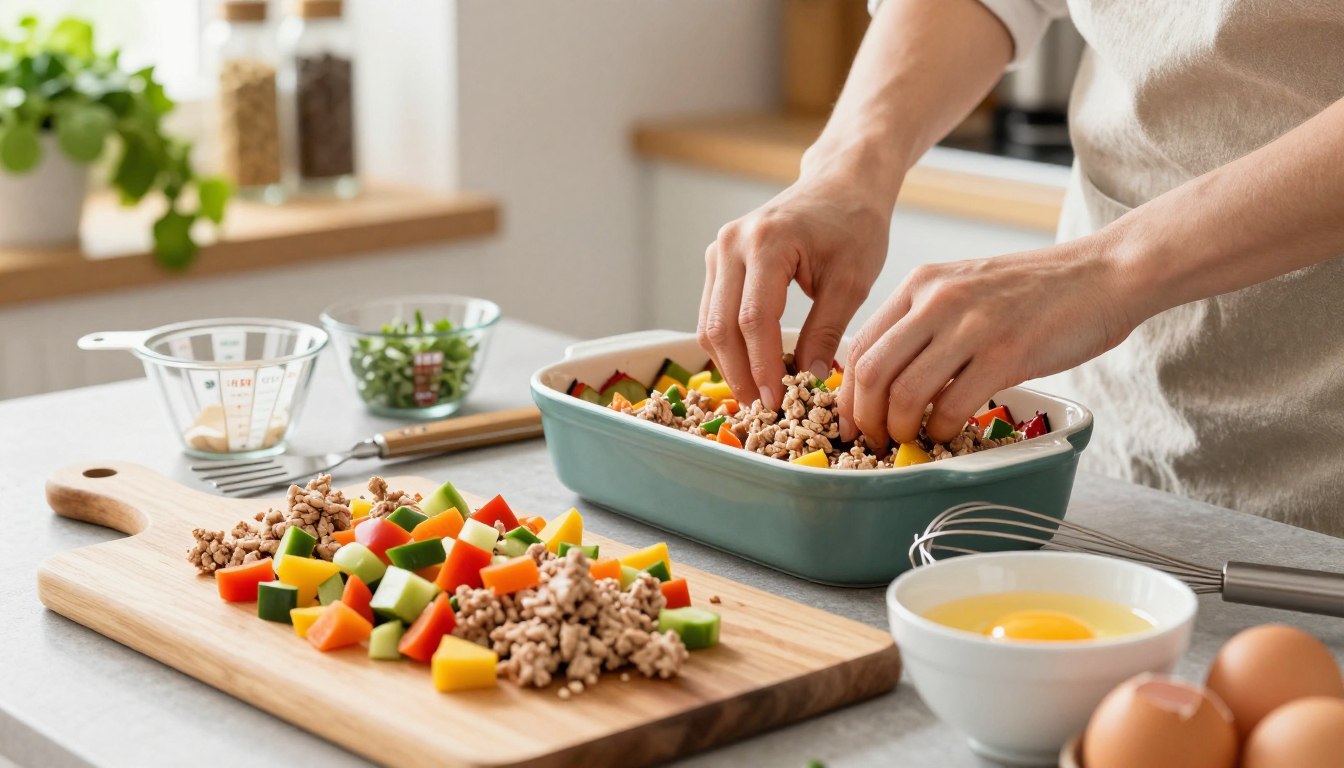
- Chop your vegetables into uniform, bite-sized pieces
- Cook and brown any raw meat proteins until they’re fully done
- Dice pre-cooked ham or sausage into small chunks
- Gather all ingredients in one convenient spot
Mixing the Base Ingredients
Start by mixing eggs with cottage cheese or milk in a large bowl. Whisk until smooth. This is the base of your casserole.
Add chopped vegetables and cooked protein to the egg mix. Stir in seasonings and cheese. Coat a 2-quart baking dish with non-stick spray, then pour everything in carefully.
Baking to Perfection
Your healthy breakfast bake needs the right temperature and timing for best results.
| Baking Temperature | Time Range | What to Look For |
|---|---|---|
| 350°F | 45-50 minutes | Edges brown, center set with minimal jiggle |
| 375°F | 30-35 minutes | Puffed and set throughout |
Insert a knife into the center—it should come out clean when done. Let your easy high protein breakfast recipe cool for 10-15 minutes before cutting. This resting time helps everything set properly and makes serving much easier.
Delicious Flavor Variations to Try
Your easy make ahead protein breakfast casserole can change every week. Try new flavors and ingredients to make it different. This recipe is very flexible. You can make it taste new by changing seasonings and adding fresh ingredients.
Customizing your make ahead protein breakfast is fun. You can make mornings exciting with new flavors. It keeps your breakfasts interesting and fresh.
Italian-Inspired Breakfast Casserole with Basil and Mozzarella
Turn your breakfast into an Italian dish with fresh ingredients. Add torn basil, mozzarella cheese, and cherry tomatoes. Roasted red peppers and Italian turkey sausage with fennel seeds make it special.
Fennel seeds give a unique flavor that goes well with sausage. Mozzarella cheese gets all melty and stretchy, like pizza.
Mexican-Style Protein Casserole with Taco Seasoning
Give your breakfast a spicy twist with Mexican flavors. Mix taco seasoning into your protein and use Mexican blend cheese. Add green onions, jalapeños, and cilantro for extra taste.
Black beans or corn add texture and nutrition. This version is perfect for those who want something more exciting.
Other Creative Combinations Worth Trying
- Garlic and broccoli for a simple, veggie-forward option
- Cayenne pepper with green beans and mushrooms for a spicy kick
- Mediterranean blend with feta cheese, sun-dried tomatoes, and oregano
Keep your breakfast casserole fresh and fun by trying these variations. They make every month a new adventure.
Making Your Breakfast Casserole Low-Carb Friendly
Creating a low carb high protein breakfast doesn’t mean you have to give up taste or feel full. Your breakfast casserole can be perfect for a keto or low-carb diet with the right ingredients. Eggs, cheese, and non-starchy veggies make the base low in carbs.
Lean ground beef or turkey adds 26-30 grams of protein. Ham adds 11.5 grams of carbs per serving. This keeps you within your daily carb limits.
It’s key to know where carbs hide in your low carb breakfast bake. Most carbs come from dairy and veggies. Heavy cream has fewer carbs than milk, and full-fat Greek yogurt has less sugar than low-fat versions.
Choose non-starchy veggies like spinach, mushrooms, zucchini, and bell peppers. Avoid starchy veggies like potatoes or hashbrowns, as they can increase carbs.
- Substitute milk with heavy cream or unsweetened almond milk
- Use full-fat dairy instead of low-fat options
- Load up on spinach, mushrooms, and bell peppers
- Choose lean proteins like ground turkey or chicken breast
- Skip hashbrowns and potato layers entirely
- Add extra cheese for flavor without carb impact
Following high-protein breakfast meal prep strategies makes it easier to stay on track. Batch cooking your low carb breakfast bake on Sunday lets you enjoy it all week. Each serving gives you the protein you need without too many carbs.
Pro tip: A single serving of your high protein low carb breakfast casserole keeps you satisfied until lunch. It also helps you stay in ketosis and supports muscle-building goals.
Meal Prep Tips for Busy Mornings
Mastering meal prep breakfast casserole strategies makes your week easier. Having a healthy casserole ready in the fridge or freezer changes your morning. Just one hour on the weekend can prepare you for the week.
Choose to prep your casserole unbaked or fully cooked. This saves time and keeps your nutrition on track.
How to Store Your Breakfast Casserole
Proper storage keeps your casserole fresh and tasty. It stays good in the fridge for about 5 days. Wrap it tightly in plastic wrap or use airtight containers.
There are two smart ways to store your casserole:
- Store it unbaked in the fridge overnight, then bake it fresh in the morning
- Bake it completely, cool it down, and reheat it throughout the week
Freezing and Reheating Instructions
Freezing your casserole extends its life for up to 3 months. Cut it into slabs and freeze them in bags for easy breakfasts. This is perfect if you don’t eat it within 3-4 days.
Reheating your casserole is quick:
- Microwave individual portions for about 30 seconds
- Reheat larger portions in a 350°F oven for about 15 minutes
- Add your casserole to a wrap with extra toppings for more carbs and variety
Turn your casserole into breakfast sandwiches by placing slices on English muffins or focaccia. Add hot sauce and avocado for extra flavor and nutrition.
Nutritional Breakdown: Calories and Protein Per Serving
Knowing what you eat is crucial for your fitness goals. A high protein egg bake is a great choice for busy mornings. It’s packed with nutrients that help build muscle, manage weight, and keep energy up all day.
The nutritional values change based on the protein you choose. Each option has its own benefits, so pick what fits your lifestyle and goals. These recipes are perfect for anyone tracking macros or just looking for a protein-packed breakfast.
| Ingredient Version | Calories Per Serving | Protein Per Serving | Fat Per Serving | Carbs Per Serving | Sodium Per Serving | Servings Per Recipe |
|---|---|---|---|---|---|---|
| Ham Version | 277 | 26.8g | 13.8g | 11.5g | 988.3mg | 6 |
| Lean Ground Beef/Turkey | 296 | 29.5g | 16.5g | 7.5g | 258.8mg | 6 |
| Cottage Cheese Version | 161 | 17g | 8g | 4g | 521mg | Per Cup |
The ham version has 277 calories and 26.8 grams of protein per serving. It’s a good choice for those who love classic breakfast tastes. But, it has more sodium at 988 milligrams.
The lean ground beef or turkey option has 29.5 grams of protein and 296 calories per serving. It has much less sodium at 258.8 milligrams. It also has only 7.5 grams of carbs, making it great for many diets.
The cottage cheese version is the lightest at 161 calories with 17 grams of protein. It’s perfect for those trying to lose weight and stay full in the morning.
- Whole ham casserole contains 1,667 calories and 161 grams total protein
- Whole beef/turkey casserole contains 1,779 calories and 177 grams total protein
- Fat content ranges from 8-16.5 grams per serving
- Carbs stay low at 4-11.5 grams depending on your version
These recipes offer 17 to nearly 30 grams of protein per serving. That’s like eating three to five eggs in one portion. They help with muscle recovery, keep you full, and balance blood sugar levels in the morning.
The fats in your high protein egg bake come from eggs and cheese. These fats support hormone production and keep you feeling full longer. Whether you’re building muscle, losing weight, or training for sports, this casserole meets your nutritional needs.
Creative Ways to Serve Your Protein Breakfast Casserole
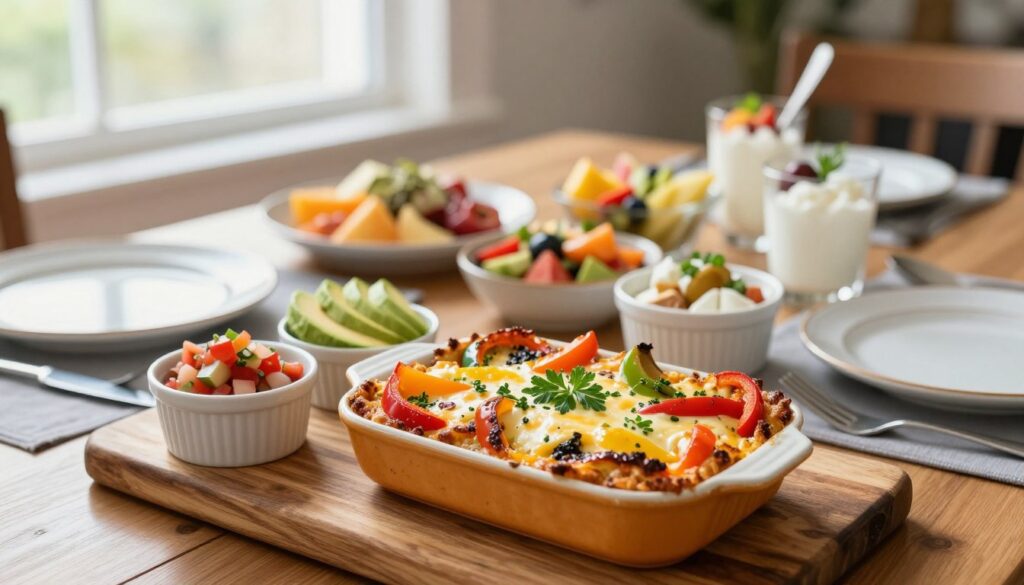
Your egg bake recipe doesn’t have to stay in the baking dish. Turn your overnight breakfast casserole protein into exciting new meals. This can be for any time of day. One basic recipe opens up endless serving possibilities that keep your mornings fresh and interesting.
Make warm slices into portable breakfast sandwiches. Place them between toasted English muffins, bagels, or homemade focaccia. This is perfect for eating on the go before work or school. The egg bake recipe becomes something you can grab and enjoy without any mess.
Try the breakfast burrito method for added flavor and texture. Warm a whole wheat or low-carb tortilla and fill it with a portion of your overnight breakfast casserole protein. Add fresh salsa, sliced avocado, and a sprinkle of cheese, then roll it up tight. This version adds healthy carbs when you need energy for post-workout recovery.
Pairing Options for Every Meal
Serve your casserole with smart side dishes to create balanced plates:
- Fresh fruit on the side for natural sweetness and vitamins
- Roasted potatoes if you want more carbohydrates
- Simple green salad for a lunch-style option
- Whole grain toast for extra fiber
Topping Ideas That Add Variety
Boost your egg bake recipe with creative toppings:
- Hot sauce for a spicy kick
- Fresh herbs like cilantro or chives for brightness
- Sliced avocado for healthy fats
- Greek yogurt or sour cream for creaminess
Your overnight breakfast casserole protein shines at brunch gatherings too. Cut it into small squares and arrange them on a breakfast buffet alongside fresh pastries and fruit. Guests love this hearty, protein-packed option that fills them up without feeling heavy.
One simple recipe becomes multiple different meals throughout the week. This variety prevents breakfast boredom and keeps your mornings exciting and satisfying.
Common Mistakes to Avoid When Making Egg Casseroles
Making a great high protein breakfast casserole takes time and practice. Even skilled cooks can face issues. But, most problems can be fixed with a little knowledge. Knowing these common mistakes will help you make perfect breakfast casseroles every time.
There are a few reasons your casserole might not turn out right. It could be soggy or rubbery. The eggs might puff up and then sink. Or, you might get overcooked edges and a runny center. Each problem has a simple solution.
Preventing a Watery Casserole
Water is the biggest enemy in making breakfast casseroles. Vegetables release a lot of moisture as they cook. Fresh mushrooms, zucchini, and tomatoes are the worst offenders.
To avoid a watery casserole, follow these steps:
- Sauté your vegetables first to cook out excess moisture
- Thaw frozen vegetables completely before adding them
- Squeeze out water from thawed vegetables using paper towels
- Keep your egg-to-dairy ratio balanced for the best texture
Just five to ten minutes of pre-cooking vegetables can make a big difference. It ensures your casserole turns out perfectly.
Achieving the Perfect Texture
The texture of your casserole depends on several factors. Overmixing the egg mixture adds too much air. This makes your casserole puff up and then collapse. Whisk your eggs just until they’re combined, not until they’re fluffy.
Temperature is also key. Bake your casserole at 350 to 375 degrees Fahrenheit. This prevents the edges from cooking too fast and the center from staying runny. Covering the dish with foil for half the baking time helps everything cook evenly.
After baking, let your casserole rest for 10 to 15 minutes. This cooling period allows the proteins to firm up. You’ll get clean slices and the best texture possible.
| Mistake | Cause | Solution |
|---|---|---|
| Watery casserole | Raw vegetables release moisture | Sauté vegetables before adding |
| Collapsed center | Overmixing eggs | Whisk eggs just until combined |
| Uneven cooking | Too high temperature | Bake at 350-375°F with foil cover |
| Difficult to slice | Cutting too soon | Rest 10-15 minutes before serving |
Follow these tips and your best high protein breakfast casserole recipe will turn out perfectly. You’ll create delicious healthy morning recipes that impress your family.
Conclusion
You now have all the info to make your own high-protein breakfast casserole. This dish is perfect for busy mornings. It gives you 17 to 30 grams of protein, keeping you full and energized until lunch.
Whether you choose the simple Greek yogurt version or the hearty turkey sausage option, you’re making a healthier choice. This meal beats processed foods any day.
The high-protein breakfast casserole is very flexible. Start with one basic recipe and then try new flavors. You can add Italian-style basil and mozzarella or Mexican seasoning for a twist.
Make your own mix based on your favorite ingredients. The prep time is just 10 minutes. You’ll have ready-to-eat breakfasts for a week, saving you time.
This dish is great for everyone. Athletes need protein for muscle building, while busy professionals and parents need quick, healthy meals. It’s perfect for anyone looking to eat healthier without spending hours cooking.
You have all the knowledge and tips to make this recipe a regular part of your healthy routine. Start today and see how much easier your mornings will be.