How to Make Easy Vegan Recipes: Your Complete How-To Guide
Ever stood in your kitchen wondering if vegan cooking is for you? You’re not alone. Many feel nervous about vegan cooking, thinking it tastes strange or takes too long.
Vegan recipes are simple and don’t have to be scary. You already know how to cook. You just need to believe that plants can make tasty dinners your family will love. That belief starts here.
This guide is for you. Whether you want to try meatless meals or explore new tastes, you’ll find helpful tips. You don’t have to be fully vegan to enjoy plant-based meals. Just simple techniques and smart swaps for meals that are good for you and fit your busy life.
In these pages, you’ll find that many foods you love are already vegan. From breakfast to dinner, you’ll learn how to prep meals quickly and easily. Real people with busy lives made this guide. You don’t need to be perfect. Just willing to try.
Key Takeaways
- Vegan cooking is delicious, satisfying, and simpler than you think
- You don’t need to go fully vegan to benefit from plant-based meals
- Many foods you already eat are naturally vegan
- Beginner vegan cooking uses the same skills you already have
- This guide focuses on practical advice for busy, real-life schedules
- Smart meal prep saves both time and money each week
Why Vegan Meal Prep Will Transform Your Weekly Routine
Healthy vegan meal prep is a way to care for your future self. It saves you time and mental energy on busy days. This approach changes how you eat and manage your week.
Starting a healthy vegan meal prep routine reduces daily stress. You no longer wonder “what’s for dinner?” multiple times a week. This frees up your mind for work, family, hobbies, and rest.
Reducing Decision Fatigue and Mental Load
Your brain uses energy making food choices. Planning meals for the week saves you from endless deliberation. This clears mental fog and makes mealtime easier.
Building Variety and Nutritional Balance
Plant-based meals become more diverse with planning. You can choose different colored vegetables and legumes for unique nutrients. Red peppers, dark leafy greens, orange sweet potatoes, and purple cabbage all offer benefits.
- Plan meals with different grains like quinoa, brown rice, and farro
- Include varied protein sources such as beans, lentils, tofu, and nuts
- Rotate seasonal vegetables throughout your prep week
- Mix different spice profiles to keep meals interesting
Saving Money While Eating Well
Shopping with a plan for plant-based meals reduces waste and impulse buys. Every ingredient has a purpose. This saves money and ensures you eat well.
| Money-Saving Strategy | Your Benefit |
|---|---|
| Buy ingredients with multiple uses | One chickpea bag works for three recipes |
| Shop sales with your meal plan | Save 20-30% on weekly groceries |
| Reduce food waste | Use every vegetable and legume purchased |
| Skip convenience foods | Homemade meals cost less than takeout |
Healthy vegan meal prep is a kind act to your future self. The tired version of you will be grateful for a nourishing meal. This simple act is a powerful tool for living well.
The Three-Phase Approach to Stress-Free Meal Prep
Meal prep doesn’t have to be a long, stressful task. Breaking it into three easy steps makes it more manageable. This way, meal prep becomes a routine you can follow without stress.
Understanding that meal prep is best done in steps is key. You’re not trying to do everything at once. Instead, you’re creating a flexible plan that fits your life and energy levels. You can do all three phases in one day or spread them out over several days. Both ways work well.
Think of meal prep as building easy vegan dinner ideas from scratch. Start by choosing what you’ll cook, then gather your ingredients, and finish with doing the actual cooking. This structure makes your kitchen routine easier to follow.
Small prep efforts can make a big difference in your week. You might cook grains in an Instant Pot, chop veggies, or make a big pot of beans. Even just preparing one thing, like quinoa or a sauce, can save you a lot of time. Use frozen veggies and pre-cooked food to make quick meals all week
The three-phase method is great because it fits into your real life. You don’t need to spend hours in the kitchen to see benefits. Short prep sessions of 30 minutes or 20 minutes can lead to a week of easier meals. When you focus on easy vegan dinner ideas, you’ll find less stress because the hard work is done.
Your meal prep approach might be different from others, and that’s okay. What’s important is finding a rhythm that fits your schedule and energy. Whether you prep on Sunday or throughout the week, this system is flexible and sustainable.
Choosing Your Main Vegan Recipes for the Week
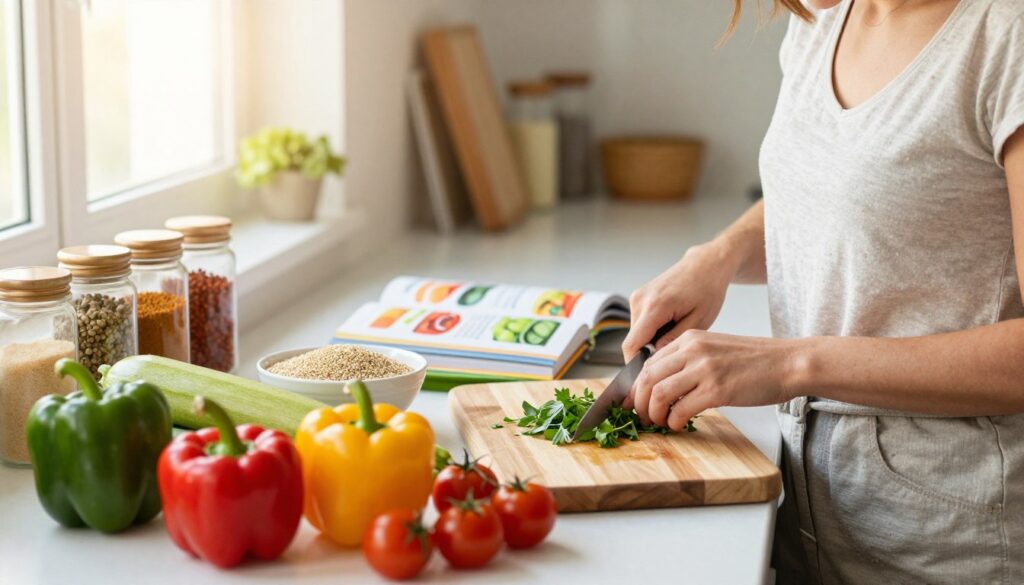
Starting a meal prep routine is easier when you pick the right recipes. Avoid burnout by keeping things simple. Choose recipes that fit your lifestyle and household size.
With the right approach, you’ll make delicious, healthy meals without spending too much time in the kitchen.
The Two-Recipe Rule That Actually Works
Don’t try to cook too many dishes at once. It’s exhausting and often leads to giving up. Instead, pick two recipes that make about four servings each. This gives you eight meals for the week, perfect for one or two people.
If you have a bigger household, you can either double the portions or add a third recipe. The goal is to keep things manageable. This way, meal prep won’t feel like a chore. Use a customizable vegan meal planner to track your recipes.
| Household Size | Number of Recipes | Servings Per Recipe | Total Meals Produced |
|---|---|---|---|
| One to two people | Two recipes | Four servings each | Eight meals |
| Three to four people | Two recipes doubled | Eight servings each | Sixteen meals |
| Five or more people | Three recipes | Four to five servings each | Twelve to fifteen meals |
Smart Not-Recipes to Fill the Gaps
Use not-recipes to add variety to your meals. These are simple ingredients that can turn your main dishes into different meals. Think of them as building blocks for endless combinations.
Stock your kitchen with these versatile additions:
- Ready-to-eat proteins: baked tofu, canned beans, store-bought veggie burgers
- Convenient produce: pre-washed greens, frozen vegetables, slaw mixes
- Crunchy toppings: toasted pumpkin seeds, avocado, nuts, coconut flakes
- Briny elements: sauerkraut, kimchi, pickled onions, olives
- Sauces and dressings: tahini dressing, simmer sauces, vinaigrettes, cashew cheese
By mixing your main dishes with these flexible ingredients, you can create many different meals. A batch of chili can become taco salads or loaded baked potatoes. A pot of lentils can be served over toast or in a tortilla. This way, you get variety without spending too much time cooking.
Essential Ingredients Every Vegan Kitchen Needs
Building a vegan pantry is easy and affordable. You don’t need to buy expensive or hard-to-find items. Start by checking what you already have at home. This saves money and reduces waste, making meal prep faster and cheaper.
Choose whole foods over processed substitutes. This keeps your meals nutritious and your grocery bills down. Many recipes are already vegan or can be made vegan with simple changes. For example, use vegetable broth instead of chicken broth, and cashew milk instead of dairy milk.
- Whole grains like brown rice, quinoa, farro, and oats
- Legumes such as dried beans, lentils, and chickpeas
- Plant-based proteins including tofu, tempeh, nuts, and seeds
- Healthy fats like olive oil, avocados, and nut butters
- Plant-based milks such as soy, almond, and oat varieties
- Flavor builders including vegetable broth, soy sauce, and vinegars
- Nutritional boosters like nutritional yeast, tahini, and miso paste
| Ingredient Category | Examples | Storage Method | Shelf Life |
|---|---|---|---|
| Whole Grains | Brown rice, quinoa, farro, oats | Airtight containers in cool, dry place | 6–12 months |
| Legumes | Dried beans, lentils, chickpeas | Airtight containers in pantry | 1–2 years |
| Plant-Based Proteins | Tofu, tempeh, nuts, seeds | Refrigerator or freezer for tofu; pantry for nuts | Varies by type |
| Healthy Fats | Olive oil, avocados, nut butters | Cool pantry or refrigerator | 6–12 months |
| Plant-Based Milks | Soy, almond, oat milk | Shelf-stable pantry or refrigerator once opened | Until expiration date |
| Flavor Builders | Vegetable broth, soy sauce, vinegars | Pantry shelves | 1–2 years |
| Nutritional Boosters | Nutritional yeast, tahini, miso paste | Pantry or refrigerator after opening | 6–12 months |
Stock your spice cabinet with basics like garlic powder, paprika, cumin, and black pepper. These flavor builders can turn simple meals into delicious dishes. Having these staples on hand means you’re always ready for a quick, satisfying meal, even when you didn’t plan to cook.
Explore dairy-free cooking options, including simple desserts. Look at no-oven dessert recipes for ideas. Vegan cooking is about discovering new ingredients and flavors, not about restriction.
How to Prep Like a Pro in Just Two Hours
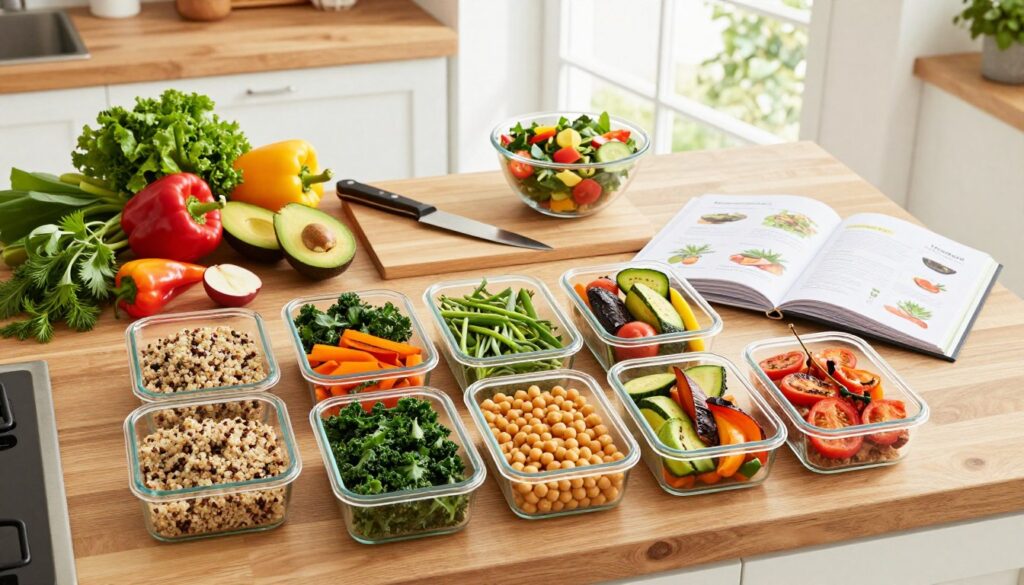
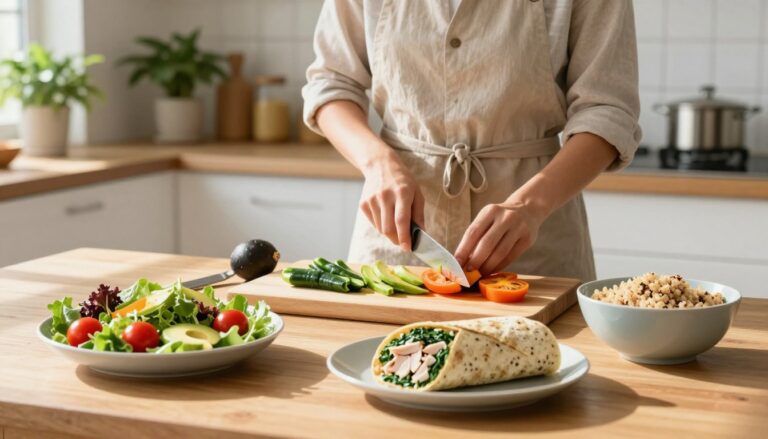
You can do a lot of meal prep in just two hours if you plan well. It’s all about knowing which tasks need your attention and which can do their thing on their own. This way, you can make quick, plant-based meals without feeling rushed or tired.
Passive cooking time is your ally. While some dishes cook, you can work on other parts. This smart way of working means you’re always doing something, not just waiting.
Tackle Slow-Cooking Items First
Begin by starting your longest-cooking items right away. Start boiling grains, simmering beans, or making big-batch soup. These items cook by themselves, freeing you up for other tasks. Brown rice, quinoa, and stews take time but need little effort from you.
With these items cooking, you can focus on other parts. Your slow-cooking base will be the base for your quick meals all week.
Multi-Task Your Way to Efficiency
While your grains and soups cook, use your time wisely:
- Chop all your vegetables for the week
- Wash and massage salad greens
- Prepare versatile dressings or sauces
- Prep garnishes and fresh herbs
This way, you avoid wasting time. Every minute is precious when you’re making meals for the week in one go.
Proper cooling is crucial. Let your food cool for 20-30 minutes before sealing. This stops steam from making your meals soggy. Cool food stays fresh and has better texture all week.
The Best Anchor Recipes for Beginners
Anchor recipes are key to successful meal prep. They are tried-and-true options that won’t let you down. These recipes are forgiving, versatile, and get better with time. Starting your week with these recipes sets you up for success.
These recipes often taste better after a day or two in the fridge. This makes them ideal for high-protein vegan meals that improve with time.
Three types of anchor recipes are great for beginners. Each offers unique benefits and ways to use them. By combining these with smart meal prep strategies, you can have many meal options from just a few cooking sessions.
Big-Batch Soups and Stews
Big-batch soups, stews, and chilis are meal prep champions. They are easy to make and freeze well. A hearty quinoa black bean chili is a great example of versatility in high-protein vegan meals.
Here’s why these dishes are so valuable:
- They’re simple to prepare and require basic ingredients
- They improve in taste after one or two days
- They freeze well for future weeks
- They provide substantial protein and fiber in every serving
- One batch creates multiple meal options
Think about quinoa black bean chili. You can eat it straight from the container. Spoon it over a baked sweet potato. Use it as taco filling. Serve it burrito-bowl style. That’s four different meals from one batch of cooking.
Grain, Green, and Bean Combinations
The grain-green-bean trinity creates complete, satisfying meals. This formula covers all nutritional bases. Grains give energy, greens offer vitamins, and beans provide protein and fiber. Together, they make high-protein vegan meals that keep you full and satisfied.
Your combinations can include:
| Grain | Green | Bean | Sauce or Seasoning |
|---|---|---|---|
| Rice | Steamed broccoli | Lentils | Tahini dressing |
| Quinoa | Sautéed spinach | Chickpeas | Cumin vinaigrette |
| Farro | Roasted kale | Black beans | Lime-cilantro sauce |
| Millet | Steamed bok choy | Pinto beans | Ginger soy dressing |
You can mix and match these components based on what you enjoy. A broccoli tofu stir-fry with quinoa delivers protein, nutrients, and satisfying texture. Cumin-spiced lentils and rice with tahini dressing offers warm comfort in a bowl. These meals adapt to your taste preferences and whatever vegetables are in season.
Make-Ahead Pasta Dishes
Pasta dishes are more than just noodles with jarred sauce. By adding roasted vegetables, leafy greens, and plant-based proteins, you can make nutrient-dense meals. This approach transforms pasta into a balanced, colorful dish that reheats beautifully throughout the week.
Strong pasta options for meal prep include:
- Roasted vegetables with penne and vegan pesto
- Vegan zucchini pasta with marinara and hidden greens
- Baked pasta dishes with cashew cream and spinach
- Lentil bolognese over whole grain noodles
- Creamy chickpea pasta with sun-dried tomatoes
Baked pasta dishes are great for make-ahead meals. You can sneak in extra greens and vegetables without anyone noticing. They hold up well in the fridge and taste just as good reheated as they do fresh from the oven. These dishes create impressive, satisfying high-protein vegan meals that feel like comfort food but deliver serious nutrition.
Simple Vegan Breakfast Ideas to Start Your Day Right
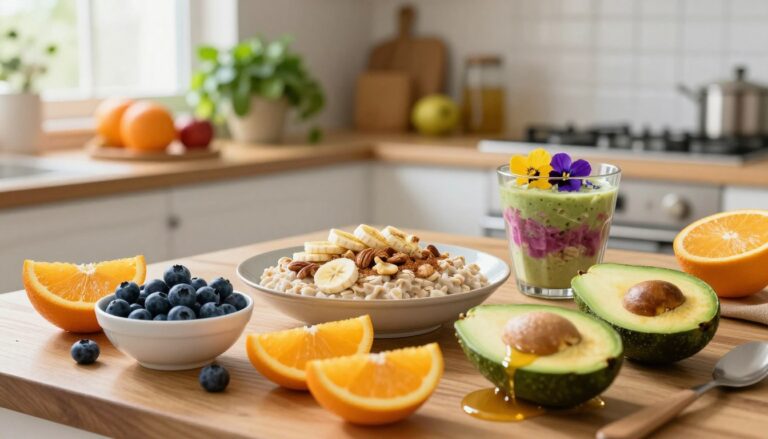
Start your day with quick and nourishing plant-based meals. Vegan breakfasts can be just as comforting as traditional ones. They’re packed with whole grains, fruits, and plant-based proteins.
Choosing the right vegan breakfast sets you up for success. Whole grains, fruits, and plant-based proteins keep you full until lunch. This way, you get sustained energy, not just a quick sugar rush.
Sweet Breakfast Options That Satisfy
Make fluffy vegan pancakes on Sunday and enjoy them all week. Top them with berries or maple syrup. Overnight oats are also a lifesaver for busy mornings. Layer soy or almond milk with oats in jars the night before.
- Fluffy vegan pancakes with maple syrup
- Vegan French toast with cinnamon
- Maple pecan overnight oats
- Vegan chocolate chip pancakes
- Berry-topped oatmeal with nut butter
Savory Breakfast Choices for Variety
Not every morning needs to be sweet. Try a tofu scramble with garlic roasted potatoes for a hearty meal. Or, have peanut butter and banana toast for quick nutrition.
- Tofu scramble with vegetables
- Garlic roasted potatoes with herbs
- Peanut butter and banana toast
- Sliced avocado on whole grain bread
These breakfast ideas are flexible and great for batch cooking. Make multiple jars of overnight oats at once. This way, you have quick, plant-based meals ready whenever you need them. Once you find a few vegan breakfasts you love, your mornings will be a breeze.
Quick Plant-Based Lunches You Can Make Ahead
Preparing your lunch for the week can be easy and fun. Healthy vegan meal prep lets you enjoy tasty lunches that keep you going all day. Plus, vegan foods are safer than dairy and eggs because they don’t grow harmful bacteria at room temperature.
Creating a good lunch routine is all about knowing what makes food filling. Mix proteins, healthy fats, whole grains, and colorful veggies. The great thing about vegan meal prep is how flexible it is. You can change up your lunches every day without spending too much time in the morning.
Protein-Packed Salads and Wraps
Salads and wraps are perfect for make-ahead lunches. They’re easy to customize and travel well. When making protein-packed salads, keep the dressing separate to avoid soggy greens.
- Chickpea salad sandwiches with celery, vegan mayo, and dill
- Colorful hummus wraps stuffed with shredded carrots, cucumber, and bell peppers
- Taco salads with seasoned black beans, corn, avocado, and lime dressing
- Teriyaki chickpea meal prep bowls over quinoa with steamed broccoli
- Tofu-based wraps with fresh greens and tahini sauce
Pro tip: Use divided containers to keep wet and dry ingredients separate. Pack dressings in small jars to shake and pour right before eating.
Five-Minute Soup Solutions
Soups are a quick and comforting option for busy days. They use pantry staples and are ready in no time.
| Soup Type | Main Ingredients | Prep Time | Storage Days |
|---|---|---|---|
| Creamy Tomato Soup | Tomato paste, coconut milk, vegetable broth, garlic | 5 minutes | 4 days |
| Bean and Vegetable Soup | Canned beans, diced tomatoes, spinach, herbs | 7 minutes | 5 days |
| Lentil Chickpea Soup | Lentils, chickpeas, carrots, onion, cumin | 7 minutes | 5 days |
These soups fit well into a healthy vegan meal prep plan. Make a big batch on Sunday and portion it out for lunches all week. You can reheat them in the microwave or eat them cold, whichever you prefer.
Easy One-Pot Vegan Dinners for Busy Weeknights
After a long day, the last thing you want is a messy kitchen. One-pot vegan dinners make mealtime easy. They cook everything together, making cleanup a breeze. Your weeknights just got a lot easier.
One-pot cooking is perfect for busy days. Start with onions and garlic, then add veggies and proteins. Finish with sauces and seasonings. This method makes delicious meals without needing to be a pro in the kitchen.
Many of these dinners don’t need oil. You can use vegetable broth instead for sautéing. This makes vegan recipes easy to follow, even for those who follow a whole food plant-based diet.
Popular One-Pot Vegan Dinner Options
- Creamy Cajun pasta that comes together in 20 minutes
- One-pot spinach pasta loaded with greens and protein
- Hearty vegan shepherd’s pie with lentils
- Vegan sloppy joes for comfort food cravings
- Broccoli cheddar soup that warms you right up
Quick Weeknight Dinner Solutions
| Dinner Type | Cook Time | Cleanup Time | Best For |
|---|---|---|---|
| Creamy pasta dishes | 20-25 minutes | 5 minutes | Busy families wanting comfort food |
| Hearty soups with noodles | 25-30 minutes | 5 minutes | Cold evenings and meal prep |
| Vegetable and bean stews | 30-35 minutes | 5 minutes | Batch cooking for leftovers |
| Tofu-based dishes | 15-20 minutes | 5 minutes | Quick protein-packed dinners |
| Grain bowls with broth | 25-30 minutes | 5 minutes | Customizable family meals |
The beauty of one-pot cooking is that fewer dishes mean more time for yourself. Instead of scrubbing multiple pans, you wash one pot and you’re done. Your easy vegan dinner ideas can include creamy spinach pasta, cajun-seasoned rice and beans, or vegetable-packed soups that taste like you spent hours cooking.
These dinners shine because you can customize them based on what vegetables you have available. Don’t like broccoli? Use Brussels sprouts. Need to add more protein? Toss in extra beans or tofu. Your one-pot meals adapt to your preferences and pantry staples.
One-pot meals turn hectic weeknights into manageable moments where nourishing food and minimal cleanup go hand in hand.
Oil-free vegan recipes work beautifully in this format because the natural moisture from vegetables creates steam and flavor without added fat. Water or vegetable broth sautés your aromatics perfectly while keeping everything whole-food focused. Your family gets delicious, satisfying dinners while you maintain your dietary goals.
These easy vegan dinner ideas range from international-inspired flavors like orange tofu and sesame tofu to classic comfort foods. Whether you’re cooking for yourself or feeding a family, one-pot dinners deliver maximum flavor with minimum effort. Your weeknight stress disappears when dinner cooks in one place and cleanup takes just minutes.
Storage Tips and Container Essentials for Meal Prep Success
Your meal prep work doesn’t end when you finish cooking. How you store your vegan recipes is just as important. Smart storage keeps your food fresh and tasting great. It also makes sure your meals are safe to eat.
Most vegan dishes stay fresh for three to four days in the fridge. This gives you time to enjoy your meals without waste. Quality storage solutions protect your investment and make healthy eating easier all week.
Proper Cooling and Food Safety
Never put hot food straight into the fridge. Let your cooked vegan recipes cool for twenty to thirty minutes first. This prevents your fridge temperature from dropping too low and keeps your meals from getting soggy.
Use the “store half, freeze half” strategy if you won’t finish everything in four days. Freeze the extra portions right away. This keeps your food fresh and gives you ready-made meals for future weeks.
When you’re ready to eat frozen meals, thaw them overnight in your fridge. Avoid leaving food on the counter to thaw, as this creates food safety risks.
The Best Containers for Different Foods
Glass snap-top containers are better than plastic. Brands like Pyrex Snapware are great because they don’t stain, hold odors, or leach chemicals into your vegan recipes.
- Wide-mouth mason jars in eight, ten, and sixteen-ounce sizes work great for overnight oats and dressings
- Leakproof dressing containers keep salads crisp and fresh
- Divided containers like LunchBots trio containers hold varied snacks and sandwich sides
- Reusable silicone storage bags from brands like Stasher replace disposable plastic bags
These containers protect your carefully prepared vegan recipes and make grab-and-go eating simple. Your storage choices directly affect how much you enjoy eating throughout your week.
Conclusion
Starting with vegan cooking is a journey, not a race. You don’t have to be perfect right away. Begin with simple things like a jar of salad dressing and baked tofu. This is enough to start.
Starting small helps you see what works for you. Over time, you’ll find a rhythm that fits your life. This rhythm will make meal prep easier and more enjoyable.
Meal prep is a kind act for your future self. Imagine coming home after a long day and finding a healthy meal ready. It’s a big relief. You don’t have to be fully vegan to enjoy the benefits.
Just adding one plant-based dinner a week can make a big difference. It’s good for your health, your wallet, and your stress levels. These small changes can have a big impact.
Vegan cooking doesn’t have to be hard. This guide gives you real tools for your life. Take what works and leave the rest. Your vegan cooking journey is unique to you.
Start somewhere, keep going, and enjoy the journey. You have everything you need to make vegan cooking a regular part of your week.