How to Make Cook Halibut: Benefits, Fillet & Smoked Guide

Imagine sitting down for a dinner that feels like a coastal getaway. You crave that perfect bite where the fish melts away.
Mastering how to cook halibut shouldn’t be a mystery for home chefs. Your kitchen can become a sanctuary of flavor.
This lean, white fish offers a mild flavor and stunningly large flakes. It is a nutritional powerhouse, packed with selenium, magnesium, and vital omega-3 fatty acids.
A perfect preparation ensures you keep that firm yet tender texture intact. Eating well should feel like a reward, not a chore.
By choosing high-quality seafood, you provide your body with niacin and essential minerals. You might try an easy baked recipe for a quick, healthy meal.
This guide will help you master every fillet with confidence. The mild profile makes it a favorite for families and foodies alike.
Health benefits abound in every serving, supporting your heart and mind. Let us explore the secrets of this versatile ocean treasure together while keeping things simple and delicious.
Key Takeaways
- This lean protein provides omega-3s and essential minerals.
- Mild flavor and firm texture offer great versatility.
- Baking at 425°F maintains moisture and tenderness.
- Internal temperature should reach 130–135°F for ideal results.
- Simple lemon and garlic marinades enhance natural taste.
- Patting fillets dry before seasoning ensures better searing.
Why Halibut Should Be Your Go-To Fish
Halibut is known for its mild taste, but its nutritional value is even more impressive. It has a firm texture that works well in many healthy fish recipes. Adding this protein to your meals can greatly enhance your dinner experience.
Choosing the right fish can be tough with so many options. But halibut stands out because it’s both tasty and nutritious. It’s a great choice for anyone looking to add more health benefits to their meals.
Halibut Nutrition Facts and Health Benefits
Looking at halibut nutrition facts, you’ll find it’s packed with important nutrients. It’s rich in selenium, which boosts your immune system and thyroid health. Plus, it’s a good source of vitamin B12, keeping your energy up and your mind sharp.
| Nutrient | Amount (per 100g) | Benefit |
|---|---|---|
| Protein | 22.5 g | Muscle Repair |
| Selenium | 45.6 mcg | Immune Support |
| Vitamin B12 | 1.1 mcg | Energy Boost |
| Magnesium | 28 mg | Heart Health |
Omega-3 Fish Benefits for Your Body
Halibut is great because of its omega-3 fish benefits. These fats are key for a healthy heart and reducing body inflammation. Eating it regularly can also lower blood pressure and improve blood vessel health.
Halibut is an excellent source of omega-3 fatty acids, which can help reduce inflammation and improve heart health.
By eating halibut, you protect your heart and enjoy a delicious meal. These healthy fats are essential but not made by our bodies. So, getting them from fresh seafood like halibut is crucial. Your heart will thank you for choosing this tasty option.
Why Halibut Is Perfect for Weight Loss
For those trying to lose weight, halibut is an excellent choice. It’s low in calories and saturated fats, making it a filling and healthy option. Its high protein content helps you stay full longer, reducing the need for snacks.
Finding healthy fish recipes that taste good and are low in calories can be hard. But halibut’s natural sweetness makes it perfect for baking, grilling, or steaming. This way, you can enjoy a flavorful meal without worrying about calories.
- High protein content boosts your metabolism.
- Low calorie density supports a calorie deficit.
- Promotes satiety to prevent overeating.
- Low fat levels make it heart-healthy for weight loss.
Selecting and Cleaning Fresh Halibut

Success in the kitchen starts with halibut selection at your local fishmonger. You want your seafood to be at its best for great flavor and texture. Choosing the right fish makes cooking easier and more rewarding.
When looking for fresh halibut, use your eyes and nose. The meat should be firm and slightly translucent. Always trust your nose; it should smell clean and briny, not fishy or sour.
| Feature | Fresh Halibut | Past Its Prime |
|---|---|---|
| Flesh Color | Translucent white | Dull, yellowish, or gray |
| Texture | Firm and springy | Soft, mushy, or leaves an indent |
| Aroma | Fresh ocean breeze | Strong, sour, or ammonia-like |
| Moisture | Glistening and wet | Slimy or completely dried out |
Once home, knowing how to clean halibut is crucial. Even if the fishmonger did most of the work, a final check is necessary. This ensures your meal is safe, clean, and ready for your favorite recipe.
“The quality of your ingredients dictates the quality of your final dish. Never settle for anything less than the freshest catch from the sea.”
Here’s how to clean halibut and prepare your fillets for cooking:
- Rinse the fillets under cold, running water to remove any loose scales or debris.
- Pat the fish completely dry with paper towels to ensure a better sear later.
- Feel along the flesh for any missed pin bones and remove them with tweezers.
- Trim away any ragged edges or dark “bloodline” portions for a milder flavor.
Spending extra time on halibut selection and preparation is worth it. You’ll notice the difference in taste and texture. Your hard work sets the stage for a professional-grade meal in your own kitchen.
How to Fillet Halibut Step by Step
Want to enjoy the freshest seafood? Learning to fillet halibut at home is key. It might seem tough for beginners, but with practice, you’ll get the hang of it.
Mastering this skill means you get more meat from your catch. Plus, you save money by avoiding high prices for pre-cut portions. Confidence comes with practice, so don’t rush your first tries.
Tools You’ll Need for Filleting
First, gather the right filleting tools for a safe, clean process. A dull knife is dangerous because it needs more force. You want a knife that glides through the flesh easily.
Use a flexible fillet knife, at least eight to ten inches long. A sturdy, non-slip cutting board is crucial for stability. Some anglers also wear a cut-resistant glove on their non-dominant hand for safety.
- Flexible Fillet Knife: Allows you to follow the curve of the bones.
- Sharpening Stone: Keeps your edge honed for precise cuts.
- Large Cutting Board: Provides enough space for the entire fish.
- Clean Towels: Helps you maintain a grip on the slippery skin.
Breaking Down the Halibut
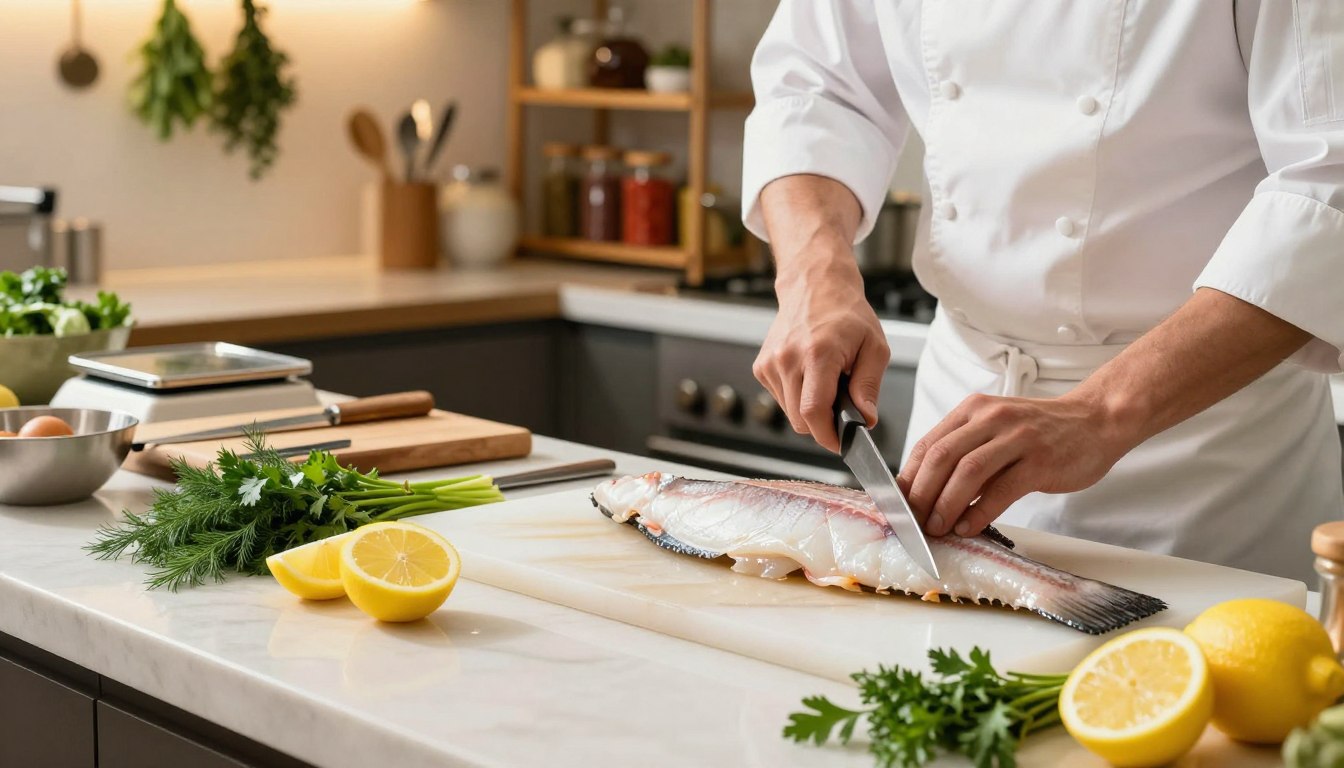
Place the fish flat on your board and find the lateral line. Make your first cut along this line, down until you hit the spine. This divides the fish into four main parts.
Work your knife from the center out, using long, smooth strokes. This keeps the meat intact. For more tips, check out how to fillet halibut to master the blade angle.
When you reach the fins, lift the halibut fillet away from the carcass. Do this for all four quarters. Always keep your fingers away from the blade to avoid accidents.
Removing Skin and Bones Properly
Now, remove the skin from your large pieces. Lay the piece skin-side down and grip the tail end firmly. Insert your knife between the skin and meat at a slight angle.
Slide the knife forward while pulling the skin in the opposite direction. This keeps the blade close to the skin, saving the meat. Then, check the edges for any remaining trim or small bones.
| Step or Tool | Purpose | Pro Tip |
|---|---|---|
| Filleting Tools | Preparation | Always sharpen your knife before starting the first cut. |
| Initial Cut | Division | Follow the lateral line to split the fish into four parts. |
| Skinning | Finishing | Keep the blade flat against the board for a clean halibut fillet. |
| Trimming | Quality Control | Remove any dark “blood line” meat for a milder flavor. |
How to Cook Halibut Without Drying It Out
Learning how to cook halibut without drying it out is easier than you think. This fish is very lean, unlike salmon or tuna. It needs careful handling to keep its delicate texture and sweet taste.
Mastering the perfect fillet is all about controlling heat and timing. Many home cooks overcook it by just a minute. With a few professional tips, you can serve juicy, top-quality seafood every time.
Finding the Right Halibut Cooking Temperature
The key to success is keeping an eye on the halibut cooking temperature. The USDA says 145°F is best, but many prefer 130°F to 135°F for a juicier fish.
Carryover cooking will raise the temperature after you take it off the heat. Use a digital meat thermometer for accuracy. This ensures your fish is tender and melts in your mouth.
Essential Cooking Time Guidelines
Your cooking time guidelines depend on the fish’s thickness and cooking method. A good rule is 10 minutes of heat for every inch of thickness. Check it a few minutes early to avoid overcooking.
| Method | Heat Level | Time (per inch) |
|---|---|---|
| Baking | 400°F (204°C) | 10-12 Minutes |
| Pan Searing | Medium-High | 3-4 Minutes per side |
| Poaching | Gentle Simmer | 8-10 Minutes |
Cold fillets take longer to heat than room-temperature ones. Letting the fish sit at room temperature for 15 minutes helps even heating.
Effective Moisture-Locking Techniques
Several methods can help keep the fish moist. Brining in salt water for 15 minutes keeps the cells hydrated. It also seasons the fish deeply, boosting its flavor.
“Halibut is a blank canvas that rewards patience and precise timing more than any other white fish.”
Using parchment paper or foil packets is another great method. It creates a steamy environment that keeps moisture in. You can also coat the fish with mayonnaise or olive oil to seal in juices.
Baked Halibut with Lemon Recipe
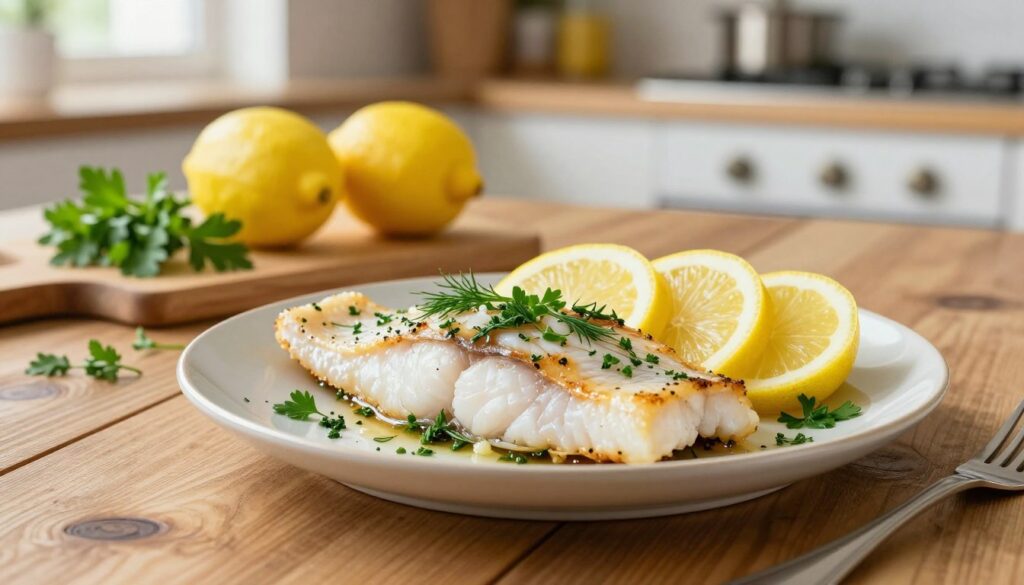
Bring the coast’s bright flavors to your kitchen with this lemon halibut dish. It highlights the fish’s natural sweetness and is easy to make. The fresh citrus adds a nice touch to the rich fillet.
Freshness is key for a great baked halibut recipe. Choose moist and ocean-smelling fillets. Real lemons make a big difference in taste.
Start by preheating your oven to 400°F (200°C). Place the fillets on a parchment-lined baking sheet. Pat them dry to help seasonings stick.
Brush the fish with melted butter or olive oil. Add sea salt, black pepper, and garlic on top. Place lemon slices on the fish for moisture.
Bake the lemon halibut for 12 to 15 minutes. It’s done when it’s opaque and flakes with a fork. Don’t overcook to keep it moist.
Baking is the most forgiving method for lean white fish because it surrounds the fillet with even, gentle heat.
This easy halibut recipe goes well with roasted asparagus or quinoa salad. Serve it hot for the best flavor. Your family will love this quick and healthy dinner.
| Fillet Thickness | Oven Temperature | Cooking Time | Desired Texture |
|---|---|---|---|
| 1 Inch | 400°F | 10-12 Minutes | Moist & Flaky |
| 1.5 Inches | 400°F | 15-18 Minutes | Tender & Opaque |
| 2 Inches | 400°F | 20-25 Minutes | Firm & Juicy |
Pan Seared Halibut for Beginners
Learning to cook fish can seem daunting, but pan seared halibut is easy. This method makes a crispy crust while keeping the inside moist. It’s a great easy halibut recipe that makes you feel like a pro.
Many worry about the fish sticking or falling apart. But with a few tips, you can master it on your first try. Halibut’s firm texture holds up well to high heat.
You need just a few ingredients and a good skillet to start. By focusing on temperature and timing, you’ll make a dish that rivals fancy seafood restaurants. Let’s explore how to prepare your fish for the best results.
Preparing Your Halibut Fillet
Before cooking, make sure your fish is dry. Use a paper towel to pat it dry on both sides. Moisture leads to steam, not a good crust.
Season the fish with salt and pepper just before cooking. Seasoning too early can make it too wet. You want the surface to stay dry for a perfect crust.
Take the fish out of the fridge 15 minutes before cooking. This helps it cook evenly. It prevents the outside from burning while the inside stays raw.
Achieving the Perfect Sear
Heat a heavy skillet over medium-high with avocado or grapeseed oil. When it shimmers, place the fillet in the pan away from you. This keeps the oil from splashing on your skin.
Press down lightly with a spatula for a few seconds to ensure even contact. Then, leave it alone for 3 to 4 minutes. You’ll see the edges turn golden and opaque.
Flip the fish carefully and add butter and herbs. Spoon the melted butter over the fish for the last minute. This adds flavor and keeps the meat juicy.
Best Sides to Serve with Pan Seared Halibut
Choosing the right sides makes your pan seared halibut meal complete. Since the fish is light, look for sides with crunch or acidity. A lemon risotto or roasted asparagus is perfect.
Try a simple arugula salad with citrus vinaigrette. The peppery greens balance the buttery fish. For something heartier, garlic mashed potatoes or sautéed baby spinach work well.
Pan-searing is the most honest way to cook fish because it highlights the natural quality of the fillet.
| Cooking Step | Action Required | Pro Tip |
|---|---|---|
| Preparation | Pat the fish dry with towels | Dry fish equals a better crust |
| Searing | Cook for 3-4 minutes per side | Do not move the fish once it hits the pan |
| Finishing | Baste with melted butter | Add thyme or garlic for extra aroma |
| Serving | Pair with citrus or greens | Lemon juice brightens the pan seared halibut |
Grilled Halibut Recipe
Get your grill ready for a delicious grilled halibut recipe on a sunny day. Grilling brings out the best in this firm fish. It adds a smoky flavor that pairs well with the fish’s natural sweetness.
Fresh seafood is a top choice for summer recipes. Halibut is great for grilling because it stays firm. It won’t fall apart like some other fish.
Use medium-high heat for the best halibut grill. This heat gives a nice sear without drying out the fish. Timing is key, so stay close to the grill.
| Ingredient | Amount | Purpose |
|---|---|---|
| Halibut Fillets | 4 (6oz each) | Main Protein |
| Olive Oil | 2 Tablespoons | Prevents Sticking |
| Lemon Wedges | 1 Whole | Bright Acidic Finish |
| Sea Salt | To Taste | Enhances Flavor |
Make sure your grill grates are clean and oiled before grilling. This prevents the fish from sticking. Try this easy fresh herbed grilled halibut with lemon for a burst of flavor.
Here’s how to make a perfect meal:
- Preheat your grill to about 400°F.
- Pat the fillets dry with a paper towel for a good sear.
- Brush both sides with olive oil and season well.
- Place the fish on the hot grates and cook for 4 minutes without moving.
- Flip carefully and cook for another 4-5 minutes until it’s opaque.
“Grilling is not just a cooking method; it is a way to bring people together over a delicious, healthy meal.”
Adding this dish to your summer recipes will impress your guests. Enjoy the process of mastering the halibut grill and savor every flaky bite!
How to Smoke Halibut at Home
Many people grill or bake their catch, but smoking halibut at home brings a unique flavor. This method keeps the fish fresh while adding wood aromas. With basic gear and patience, you can master it.
Smoking turns the fish into a savory treat. It makes the meat firm, perfect for snacks or meals. The smoke enhances the fish’s natural sweetness.
Choosing Your Smoker and Wood
You need a steady heat source for low temperatures. Electric smokers are great for beginners. They keep the heat stable with little effort. Pellet grills also offer consistent results.
The wood you choose affects the taste. Alder is classic for Pacific Northwest seafood, offering a light smoke. Apple or cherry woods add a sweet flavor without overpowering the fish.
| Wood Type | Flavor Profile | Intensity |
|---|---|---|
| Alder | Sweet and light | Low |
| Apple | Fruity and mild | Medium-Low |
| Hickory | Bacon-like and pungent | High |
Preparing Halibut for Smoking
First, brine your fillets for the best taste. A brine of salt, brown sugar, and water seasons the fish. This step keeps the smoked halibut recipe moist and flavorful.
After brining, rinse and dry the fish. Let it sit in a cool place until a tacky skin forms. This skin, called the pellicle, helps the smoke adhere.
Smoking Process and Temperature Control
Keep your smoker at 180°F to 200°F. This low heat prevents the fish from drying out. You want a gentle “blue smoke” for the best how to smoke halibut experience.
Use a digital meat probe to check the fish’s temperature. Remove it when it reaches 140°F. This usually takes two to three hours, depending on the cut.
“Patience is the secret ingredient in every great smokehouse.”
Storing Your Smoked Halibut
Let the fish cool completely before storing. Avoid wrapping it when warm to prevent moisture. Smoking halibut at home lets you make large batches for later.
Keep leftovers in an airtight container in the fridge for up to a week. Vacuum sealing is best for freezer storage to keep the flavor. This way, your smoked halibut recipe stays fresh for months.
Halibut Marinade Ideas and Flavor Combinations
Enhance the natural sweetness of white fish by trying out halibut flavor combinations. Marinating adds moisture and depth to the lean meat. Halibut’s mild taste makes it a great canvas for your favorite ingredients.
Marinating tenderizes the fish and adds complexity to each bite. Balance fats, acids, and aromatics for a well-rounded taste. This keeps your dinner juicy and vibrant.
Classic Herb and Citrus Marinades
Citrus is key in most halibut recipes because it cuts through the fish’s richness. A mix of lemon juice, garlic, and parsley is great for a quick lunch. Try using lime or orange for a sweeter taste.
Limit marinating time to 30 minutes with lots of citrus. Acid can “cook” the fish, changing its texture. A short soak is all you need for a refreshing flavor.
Asian-Inspired Halibut Flavors
For savory and sweet flavors, try Eastern ingredients. A halibut recipe with honey soy glaze uses ginger and sesame oil for a bold taste. This marinade caramelizes well when seared in a hot pan.
The mix of soy sauce and honey creates a deep umami flavor. Add red pepper flakes for heat. Serve with steamed jasmine rice and bok choy.
“The key to a great marinade is balance; too much acid can cook the fish before it even hits the pan.”
Mediterranean Style Seasonings
Mediterranean flavors add a bright, earthy taste with little effort. Use oregano, lemon zest, and extra virgin olive oil. These halibut flavor combinations are great with cherry tomatoes, olives, and capers.
Add fresh dill or thyme for a floral note. This seasoning is perfect for baking or grilling. It’s a healthy way to enjoy your catch without heavy sauces.
| Flavor Profile | Primary Ingredients | Recommended Time |
|---|---|---|
| Zesty Citrus | Lemon, Garlic, Parsley | 20 Minutes |
| Sweet Savory | Soy Sauce, Honey, Ginger | 30 Minutes |
| Earthy Herb | Oregano, Olive Oil, Zest | 30 Minutes |
Try these halibut recipes to find your family’s favorite. Whether you like citrus or soy, the right prep makes a big difference. Enjoy exploring new ways to serve this amazing fish.
Conclusion
You now know how to cook halibut in your kitchen. This guide shows you how to make healthy meals for your family. You can go from simple cleaning to advanced smoking techniques easily.
Cooking halibut takes patience and attention to detail. Experts at Whole Foods Market say fresh fillets are best. Keeping the meat flaky and juicy is all about temperature control.
Try different halibut recipes to find your favorite flavors. You might like Mediterranean herbs or an Asian marinade. Your seafood journey is just starting.
Start with your favorite seasonings and get cooking. Use your Traeger grill or a simple pan for a top-notch dish. Your friends and family will love the effort you put into these meals.