
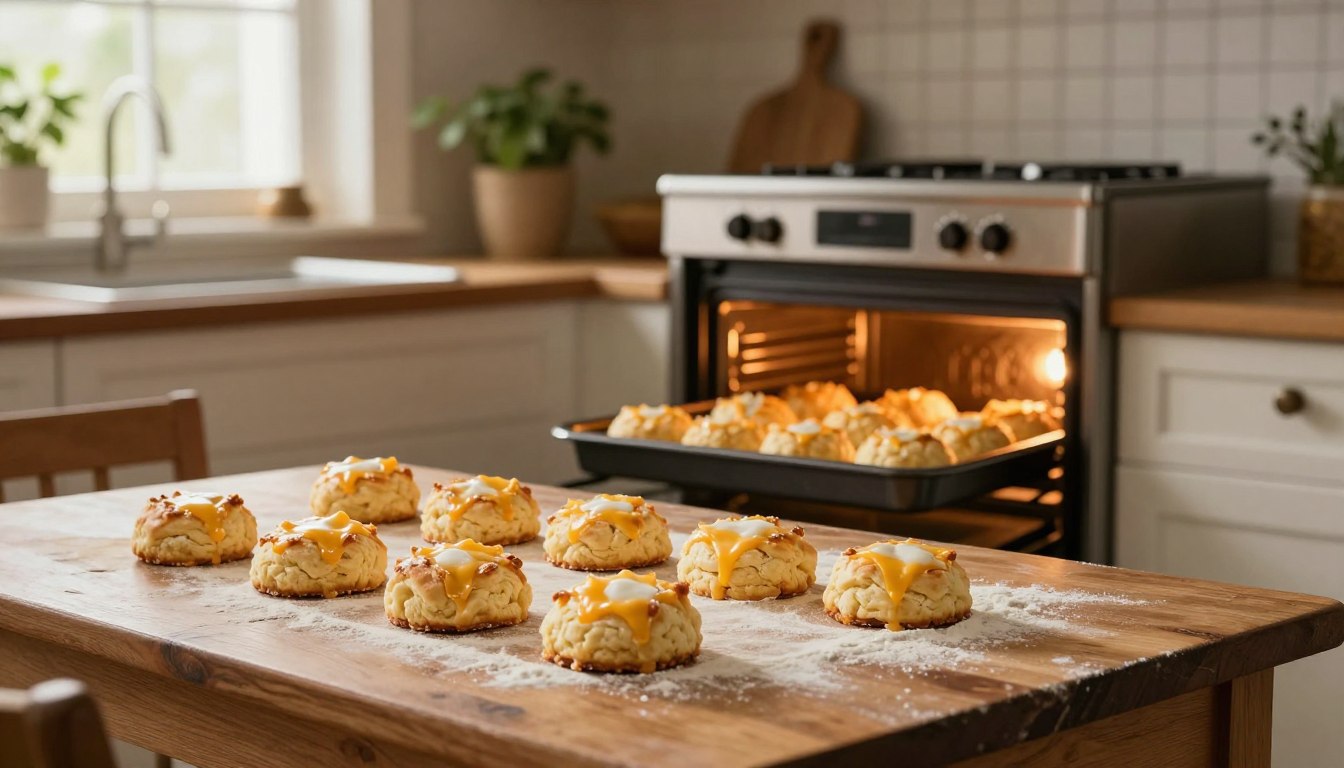
How to Make Homemade White Cheddar Buttermilk Biscuits
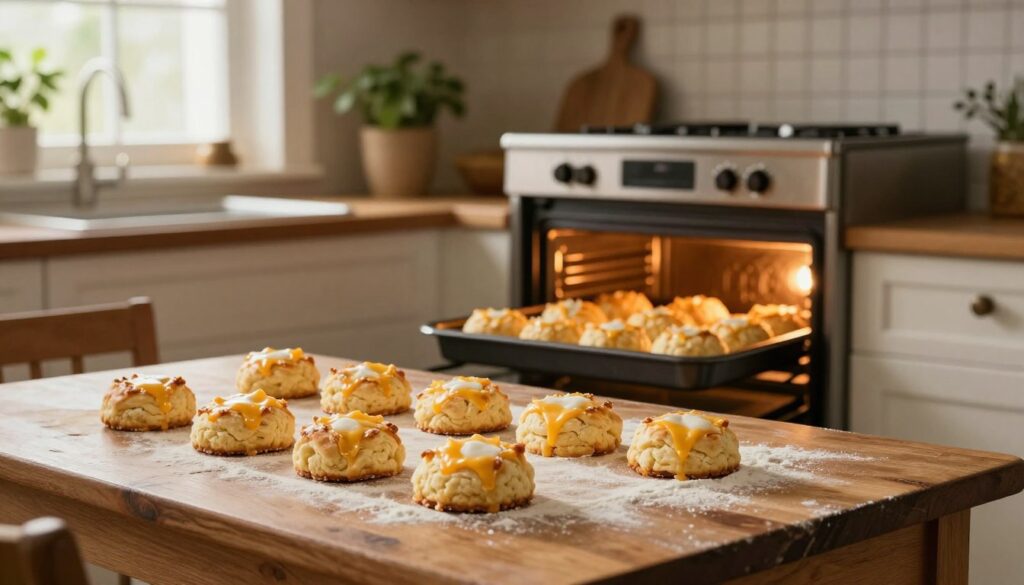
There’s something special about pulling warm biscuits from the oven. The aroma alone fills your kitchen with comfort and promise. Making homemade white cheddar biscuits is easier than you think. These buttermilk white cheddar biscuits come together in about 30 minutes, even for beginners.
The magic happens when tangy buttermilk meets sharp white cheddar cheese. This combination creates a flavor that’s both savory and satisfying. You’ll get biscuits that are fluffy on the inside, golden on the outside, and absolutely irresistible. Whether you’re preparing breakfast, hosting a dinner party, or planning ahead for busy mornings, this recipe delivers every single time.
What makes buttermilk white cheddar biscuits so special is their versatility. Serve them alongside a steaming bowl of soup, crumble them with your favorite stew, or pair them with BBQ. Eat them warm with butter for a simple breakfast treat. The possibilities feel endless. You can also prepare these biscuits ahead of time and freeze them. Then bake them from frozen whenever you need fresh, warm biscuits without the fuss.
In this guide, you’ll learn everything you need to know. We’ll walk through ingredient selection, reveal the technique behind perfectly fluffy homemade white cheddar biscuits, share expert tips, and show you how to freeze and bake them later. You’ll also discover common mistakes to avoid, cheese selection secrets, and shaping techniques that guarantee beautiful results.
Key Takeaways
- These homemade white cheddar biscuits take only about 30 minutes from start to finish, making them perfect for busy schedules.
- The combination of buttermilk and sharp white cheddar creates a savory flavor that stands out from regular biscuits.
- You can use either a traditional mixing method or a food processor approach for preparing the dough.
- Bake at 400°F for 15-17 minutes until the tops are golden brown and the centers are fully cooked.
- These biscuits freeze beautifully and can be baked directly from frozen with just a few extra minutes of baking time.
- The recipe yields 8-12 biscuits depending on how you cut and size your portions.
- Shredding your own white cheddar cheese makes a noticeable difference in texture and melting quality compared to pre-shredded varieties.
Why Homemade White Cheddar Biscuits Are Worth Making
Making fluffy cheddar biscuits from scratch is quick, taking less than 30 minutes. You don’t need to wait for them to rise. They’re perfect for busy weeknights or sudden gatherings. The joy is in the first bite of a warm biscuit straight from the oven.
Homemade biscuits are fresher and tastier than those from restaurants. You get to choose every ingredient. This makes a big difference in taste.
When you bake flaky white cheddar biscuits at home, magic happens. Cold butter and buttermilk create steam pockets for flaky layers. The buttermilk also makes the dough soft and fluffy. Sharp white cheddar adds golden specks and cheesy goodness in every bite.
The Perfect Balance of Fluffy and Flaky
You want biscuits that are light inside but crispy outside. Freshly milled flour and whole grain make them taste better than store-bought. Keep your butter cold and handle the dough quickly for the right texture.
- Airy, light interiors with perfect flakiness
- Cheddar pieces woven throughout for flavor
- Golden-brown exteriors that are crispy and tender
- Tenderness that melts in your mouth
Versatile for Any Meal
Your homemade fluffy cheddar biscuits are great with almost any meal. Enjoy them with soup, chili, or stews in fall and winter. In summer, pair them with BBQ for a classic combo. Breakfast gets special when you fill these biscuits with fried eggs, ham, or sausage.
| Meal Type | Perfect Pairings | Serving Style |
|---|---|---|
| Breakfast | Eggs, bacon, sausage | Split and filled |
| Lunch | Soup, salad, sandwiches | Whole or halved |
| Dinner | Stew, chili, roasted meats | Whole for dipping |
| Summer Entertaining | BBQ, grilled chicken, pulled pork | Whole or split |
Your flaky white cheddar biscuits are perfect for soaking up gravies or sauces. Freeze them for easy make-ahead meals. You’ll always have a reason to bake these delicious biscuits.
Essential Ingredients for White Cheddar Buttermilk Biscuits
Making delicious white cheddar biscuits starts with the right ingredients. Each one is important for those fluffy, flaky biscuits you love. Using quality ingredients sets you up for success.
The base of your biscuits is all-purpose flour. It gives your biscuits structure and shape. You’ll need 2 to 3 cups for the right amount.
Leavening agents make your biscuits light and fluffy. Baking powder and baking soda work together. Baking powder does most of the work, while baking soda reacts with buttermilk.
| Ingredient | Amount | Purpose |
|---|---|---|
| All-Purpose Flour | 2–3 cups | Creates structure and body |
| Baking Powder | 1–2.5 tablespoons | Primary leavening agent |
| Baking Soda | 0.5–1 teaspoon | Reacts with buttermilk for rise |
| Salt | 0.75–1 teaspoon | Enhances all flavors |
| Cold Butter | 0.75 cup (1.5 sticks) | Creates flaky layers |
| White Cheddar Cheese | 0.67–1 cup shredded | Adds sharp, tangy flavor |
| Buttermilk | 0.5–0.75 cup cold | Tenderizes dough, activates leavening |
| Egg | 1 large | Adds richness and binds ingredients |
Cold butter is key to flaky biscuits. Keep it cold until you’re ready to mix. This cold fat makes your biscuits flaky and delicious.
Buttermilk is crucial for tender biscuits. It makes the dough soft and adds rise. Its acidity works with baking soda for lift.
White cheddar cheese adds a sharp flavor. Use two-thirds to one cup, depending on your taste. The egg enriches the dough and binds it. Salt enhances all flavors.
For a golden finish, try an egg wash. Mix one egg with a tablespoon of water or milk. This gives your biscuits a beautiful shine.
- Use freshly shredded white cheddar for better flavor
- Keep all wet ingredients cold until mixing
- Don’t skip the salt—it brings out the cheese flavor
- Quality butter makes a noticeable difference in flakiness
Choosing the Right Cheese for Your Biscuits
The cheese you pick can really make your sharp white cheddar biscuits stand out. It affects both taste and texture in ways you might not expect. Knowing the differences between cheeses helps you make the perfect cheddar biscuits recipe for your taste.
Sharp vs. Extra Sharp White Cheddar
White cheddar has different aging levels, each adding something special to your biscuits. Sharp white cheddar, aged six to nine months, has a nice tangy taste. It’s great if you’re making biscuits for kids or like a milder cheese flavor.
Extra sharp white cheddar, aged over a year, is bold and complex. It has a crumbly texture that makes cheese pockets in your biscuits. If you love strong cheese, extra sharp is perfect for homemade sharp white cheddar biscuits.
Why pick white cheddar over yellow? White cheddar doesn’t have added coloring, so your biscuits look homemade with visible cheese flecks.
Shredding Your Own Cheese Makes a Difference
Store-bought pre-shredded cheese has anti-caking agents like cellulose. These can make your biscuits feel gummy.
Shredding cheese yourself lets it melt evenly and mix well into your dough. Here’s a tip: toss your shredded cheese with a small spoonful of flour before mixing it into the dough. This helps prevent clumps and ensures cheese is spread evenly in every bite.
- Use a box grater or food processor to shred cheese from a solid block
- Coat shredded cheese lightly with flour before adding to dough
- Choose aged varieties for better flavor development
- Keep cheese cold until you’re ready to use it
Kitchen Tools You’ll Need
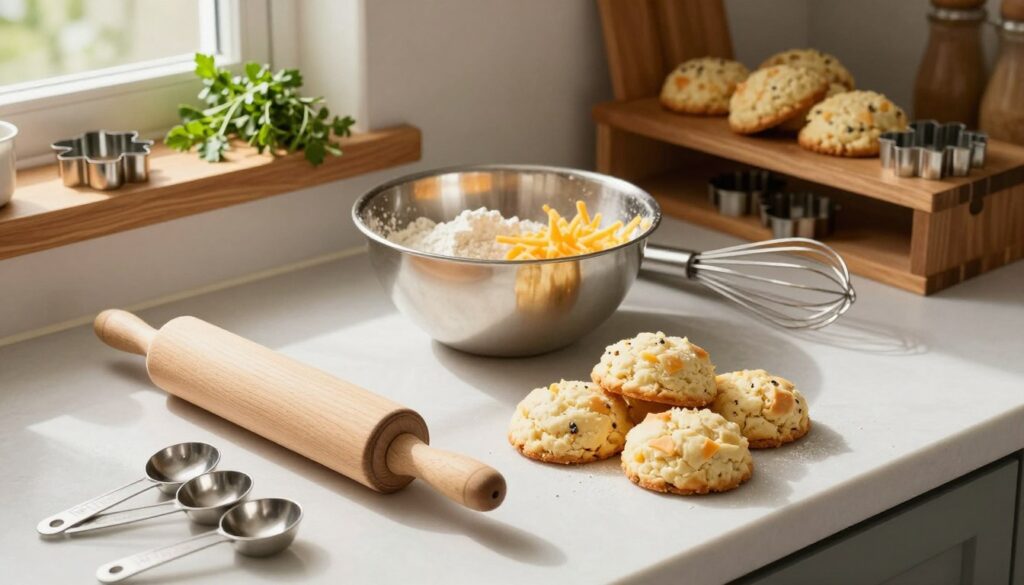
Making easy homemade cheese biscuits is easier with the right tools. You likely have most of what you need in your kitchen. You don’t need fancy or expensive gear to make tasty, fluffy biscuits. Let’s look at the essential items for a smooth baking experience.
First, gather your basic mixing and measuring tools. You’ll need a large mixing bowl for mixing ingredients. Also, measuring cups and spoons for accuracy. Precision is key in baking, so choose quality measuring tools. With these basics, your easy biscuit recipe will always be a hit.
- A box grater or food processor with a grating attachment for shredding cheese
- A pastry cutter or two forks for cutting cold butter into flour
- A rolling pin for shaping your dough
- A sharp knife or biscuit cutter for portioning your biscuits
For baking and finishing, you’ll need a baking sheet lined with parchment paper and a pastry brush for egg wash. A food processor is optional but speeds up the process. It can shred cheese, mix dry ingredients, cut in butter, and add wet ingredients all at once.
The main tip? Have everything ready before you start. This keeps your butter cold, which is crucial for flaky layers in homemade biscuits.
Step-by-Step Guide to Making Fluffy Cheddar Biscuits from Scratch
Making white cheddar buttermilk biscuits from scratch is simple. This guide will help you make light, fluffy biscuits with a rich cheese flavor. First, preheat your oven to 400-425°F. This temperature helps get a crispy outside and even baking inside.
Mixing the Dry Ingredients
Start by mixing all dry ingredients together. In a big bowl, whisk these items:
- All-purpose flour
- Baking powder
- Baking soda
- Salt
- A small amount of sugar (optional)
Whisking these ingredients ensures even distribution of leavening agents. This helps your biscuits rise evenly. Then, add shredded white cheddar cheese to the dry mix. If you’ve tossed the cheese in flour, add it now and stir gently.
Cutting in the Butter Properly
This step is key to flaky biscuits. Cut cold butter into small cubes. Then, mix it into your flour using:
- A pastry cutter or blender
- Two forks in a crossing motion
- A food processor with short pulses
Work towards a mixture that looks like coarse crumbs with pea-sized butter pieces. These small butter pockets create flaky layers. Be quick to avoid warming the butter, which would melt it into the flour.
Incorporating the Buttermilk and Egg
In another bowl, whisk together cold buttermilk and one egg. Pour this mix into your dry ingredients. Use a fork or spatula to gently fold everything together until just combined. The dough should look shaggy and slightly crumbly.
Don’t overmix. Overmixing can make your biscuits tough. Less mixing means they’ll be tender. Your dough should hold together but still feel crumbly. This texture is what makes homemade biscuits special.
The Secret to Flaky White Cheddar Biscuits
What makes some biscuits stand out? It’s a few secrets known by pro bakers. These tips will help you make the flakiest, most tender cheddar biscuits that wow your guests.
Keeping everything cold is key. Chill your butter, buttermilk, and mixing bowl before starting. Cold butter creates steam in the oven, making the dough flaky. Warm butter, on the other hand, makes biscuits dense and heavy.
Another important tip is to mix less. Your dough should look shaggy and rough. Overmixing makes the dough tough and chewy. Just mix until the ingredients come together.
Here are the key techniques for success:
- Use ice-cold butter cut into small cubes
- Keep buttermilk in the refrigerator until mixing time
- Mix until the dough just comes together
- Fold the dough 3-4 times like folding a letter
- Bake at 400-425°F for quick rise and flake development
Folding the dough creates even more layers, like puff pastry but easier. This step turns your biscuits into something truly special, every time.
Shaping and Cutting Your Biscuits
Now that your dough is ready, it’s time to shape and portion your homemade biscuits. This step is key for uniform baking and beautiful presentations. Proper shaping techniques help you achieve that perfect balance between fluffy centers and golden edges.
Rolling Out the Dough
Start by turning your dough out onto a well-floured work surface. Don’t skimp on the flour here. A generous coating prevents sticking without forcing you to add more flour into the dough itself, which would make your biscuits tough and dense.
Use your hands to gently pat the dough together, bringing all those crumbly bits into one cohesive mass. Give the dough 3 to 4 light folds, turning it 90 degrees between each fold. This helps develop structure while keeping things tender.
Pat or gently roll your dough into a rectangle about 1 inch thick. This thickness is ideal for tall, fluffy biscuits. If you roll thinner, you’ll end up with flatter biscuits that are crisper than fluffy. Stick with that 1-inch height for the best results.
Cutting Techniques for Perfect Portions
You have two excellent options for cutting your homemade biscuits. Your choice depends on what works best for your kitchen setup and preferences.
| Cutting Method | Tools Needed | Yield | Best For |
|---|---|---|---|
| Round Biscuit Cutter | 2 to 3 inch biscuit cutter | 6 to 8 biscuits | Traditional appearance and presentation |
| Square Knife Cut | Sharp, floured knife | 8 to 12 biscuits | Zero waste and faster preparation |
For round biscuits, use a biscuit cutter and press straight down without twisting. Twisting seals the edges and prevents proper rise. Dip your cutter in flour between cuts to prevent sticking. You can gather scraps and gently re-roll once, though these second-cut biscuits won’t be quite as tender.
For easier preparation, simply cut your rectangle into squares using a sharp, floured knife. You can make 8 large biscuits or 12 smaller ones. Square biscuits are just as delicious and save preparation time with zero waste from scraps.
Here’s a smart placement tip: placing your biscuits close together with sides touching on the baking sheet makes them rise taller. Spacing them apart creates biscuits with crispy edges all around. Choose the arrangement that matches what you’re craving.
- Always use a floured work surface
- Keep your dough at 1 inch thick for fluffy results
- Press straight down with cutters, never twist
- Place biscuits close together for height or apart for crispy edges
Baking Tips for the Best Cheddar Biscuits Recipe
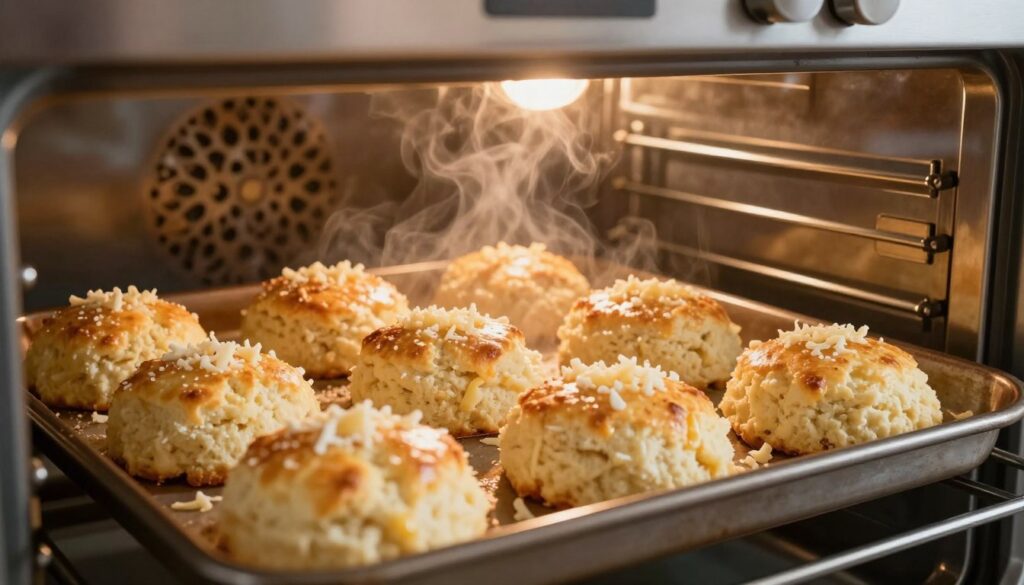
To get your biscuits just right, pay attention to a few key things. The temperature and where you place your rack in the oven are crucial. Place your rack in the center for even heat. This prevents burnt bottoms and ensures the centers are cooked.
The temperature you choose also matters. Baking at 400°F makes the crust softer. But, baking at 425°F gives you a crisper, golden top. Most people find 425°F is best for that perfect golden color.
Before baking, brush your biscuit tops with an egg wash for a shiny look. Mix one egg with a tablespoon of water or milk. This step adds a touch of professionalism to your biscuits.
| Biscuit Size | Baking Temperature | Baking Time | Expected Result |
|---|---|---|---|
| Smaller (12 biscuits) | 425°F | 15-18 minutes | Golden brown tops, fully cooked centers |
| Larger (8 biscuits) | 425°F | 20-25 minutes | Deep golden color, crispy exterior |
| Smaller (12 biscuits) | 400°F | 15-17 minutes | Light golden tops, soft crusts |
| Larger (8 biscuits) | 400°F | 20-23 minutes | Medium golden color, tender texture |
The baking time depends on the size of your biscuits. Smaller ones bake in 15 to 18 minutes. Larger ones take 20 to 25 minutes. Look for golden tops and fully cooked centers.
To check if your biscuits are done, press the top gently. It should spring back. If the tops brown too fast but the centers aren’t done, cover them with foil for a few minutes.
- Keep your oven door closed for the first 12 minutes of baking
- Opening the door releases heat and affects how your biscuits rise
- Transfer baked biscuits to a cooling rack right away
- Serve your fluffy buttermilk biscuits warm for the best taste and texture
Warm biscuits with melting butter are the best. Follow these tips to make professional-quality biscuits every time.
How to Freeze and Bake Biscuits from Frozen
Preparing white cheddar buttermilk biscuits ahead of time makes mornings easier. You can make unbaked biscuits and bake them when you need them. This way, you can enjoy warm, homemade biscuits without the morning rush.
Frozen biscuits bake up just as fluffy and flaky as fresh ones. This is great for busy mornings.
Freezing Instructions for Make-Ahead Breakfasts
Start by cutting your dough. Place the formed biscuits on a baking sheet lined with parchment paper. Make sure they don’t touch each other. This prevents sticking during freezing.
Let them freeze solid for about an hour. Once they’re hard, move them to a freezer bag or airtight container. Remove as much air as you can before sealing. Label the bag with today’s date and baking instructions.
According to how to freeze bake biscuits, unbaked biscuits can stay fresh in your freezer for up to three months.
- Use a single layer on your baking sheet during flash freezing
- Transfer to a freezer bag after biscuits freeze solid
- Remove excess air from storage containers
- Label with the date for tracking purposes
- Store in the coldest part of your freezer
Baking from Frozen
You don’t need to thaw your biscuits before baking. This is a big advantage of having them ready in your freezer. Just take out the biscuits you need and put them on a fresh parchment-lined baking sheet.
Bake them at 450°F for 15 to 18 minutes until they’re golden brown. They might take a few extra minutes than fresh biscuits. But the difference is small. You’ll get a biscuit that tastes like it was just made, with a warm texture and aroma.
| Baking Method | Temperature | Time | When to Use |
|---|---|---|---|
| Frozen Biscuits | 450°F | 15-18 minutes | Straight from freezer |
| Single Frozen Biscuit | 450°F | 12-15 minutes | Individual breakfast |
| Full Batch | 450°F | 15-18 minutes | Family or guests |
This method works for one biscuit or a dozen. You can bake biscuits whenever you need them. On busy mornings, bake a few while you get ready. For unexpected guests, serve fresh biscuits in 20 minutes.
Brush warm biscuits with melted butter and sprinkle black pepper for extra flavor. Keep frozen biscuits for busy mornings and dinner guests. This method makes baking easy and keeps your freezer full of comfort food.
Serving Suggestions for Your Buttermilk White Cheddar Biscuits
Your homemade white cheddar buttermilk biscuits are ready to shine on any table. These golden, cheesy treats work beautifully for breakfast, lunch, dinner, or snack time. Learn how to serve them in ways that will make your family and guests come back for more.
Breakfast and Brunch Ideas
Start your morning with an easy southern-style biscuit recipe with cheese that transforms into something special. Split your warm biscuits and fill them with crispy bacon, sausage patties, or a fried egg. The white cheddar flavor inside pairs perfectly with these classic breakfast meats. You can spread salted butter and honey across a fresh biscuit for a sweet touch.
For a traditional Southern breakfast, serve your biscuits alongside sausage gravy. The creamy gravy soaks into the flaky layers beautifully. Create a breakfast sandwich bar where guests choose their own toppings and fillings for a fun, interactive meal.
Lunch, Dinner, and Special Occasions
An easy southern-style biscuit recipe with cheese makes the perfect side dish for soups and stews. Pair them with chicken noodle soup, tomato basil soup, or loaded baked potato soup. Your guests will love using the biscuits to soak up every last drop of broth.
During summer cookouts, serve your white cheddar biscuits alongside pulled pork, brisket, ribs, and grilled chicken. The cheesy flavor complements smoky barbecue beautifully. Your biscuits become an essential part of the meal.
| Meal Type | Perfect Pairings | Serving Temperature |
|---|---|---|
| Breakfast | Eggs, bacon, sausage gravy, honey butter | Hot or warm |
| Lunch | Soups, salads, sandwich fillings | Warm |
| Dinner | Stews, chili, gumbo, grilled meats | Hot or warm |
| Entertaining | Biscuit bar with multiple toppings and spreads | Warm |
| Casual Snack | Herb butter, jam, cheese spreads | Warm or room temperature |
Creative Serving Options
- Create an easy southern-style biscuit recipe with cheese biscuit bar for entertaining
- Use biscuits as the base for eggs Benedict instead of English muffins
- Split and toast day-old biscuits for breakfast
- Transform leftover biscuits into savory bread pudding
- Serve with various butters: honey butter, herb butter, or cinnamon butter
- Pair with jams, jellies, or preserves for sweet options
Your white cheddar buttermilk biscuits deserve a spot on your table at every meal. The versatility of this easy southern-style biscuit recipe with cheese means you’ll be baking them weekly once you discover all the delicious ways to enjoy them.
Common Mistakes to Avoid When Making Easy Homemade Cheese Biscuits
Making white cheddar buttermilk biscuits from scratch can seem daunting. But, most mistakes are small and easy to fix. Knowing what goes wrong helps you make perfect biscuits every time.
The main issue is using warm or room-temperature butter. Cold butter is essential for flaky layers. Warm butter mixes into the dough, leading to dense biscuits. Always use cold butter from the fridge. On hot days, chill your flour and mixing bowl too.
- Overmixing the dough develops gluten and makes biscuits tough. Mix until the ingredients just come together with a rough, shaggy look
- Twisting your biscuit cutter seals the edges and stops them from rising. Press straight down and pull straight up instead
- Using pre-shredded cheese with anti-caking powder creates gummy biscuits. Always shred your own cheese from a block
- Skipping the full oven preheat means biscuits enter a cooler environment and don’t rise properly
- Rolling dough too thin produces flat results. Keep your dough at one inch thick
- Opening the oven door early releases heat and affects your rise
- Measuring flour incorrectly by scooping directly packs too much flour. Use the spoon-and-level method instead
Follow these tips, and your biscuits will be fluffy and delicious every time.
Conclusion
Making homemade white cheddar biscuits is easier than you think. Just keep your butter cold, mix little, and roll them right. You’ll get bakery-quality biscuits in your kitchen.
These biscuits are forgiving. Even if your first batch isn’t perfect, they’ll still taste amazing. They’re better than anything you can buy.
Your homemade white cheddar biscuits are perfect for any time. Enjoy them warm at breakfast or as a snack. They’re great with jam, butter, soup, salad, or dinner.
They’re also great for lunch or as a dinner side. You can freeze them for up to three months. Then, bake them in just 24 to 25 minutes.
Once you learn the basic recipe, you can get creative. Try different cheeses or herbs. Mix in bacon for extra taste. The basic recipe stays the same, but you can experiment.
Check out cheddar buttermilk biscuits that are indulgent for inspiration. Your kitchen will smell amazing, and your family will be impressed.
Warm biscuits from your oven are always better than frozen ones. Get your mixing bowl and cast-iron skillet ready. You’re about to make incredible biscuits at home. Share your results and photos on social media. Your friends will love what you baked.