
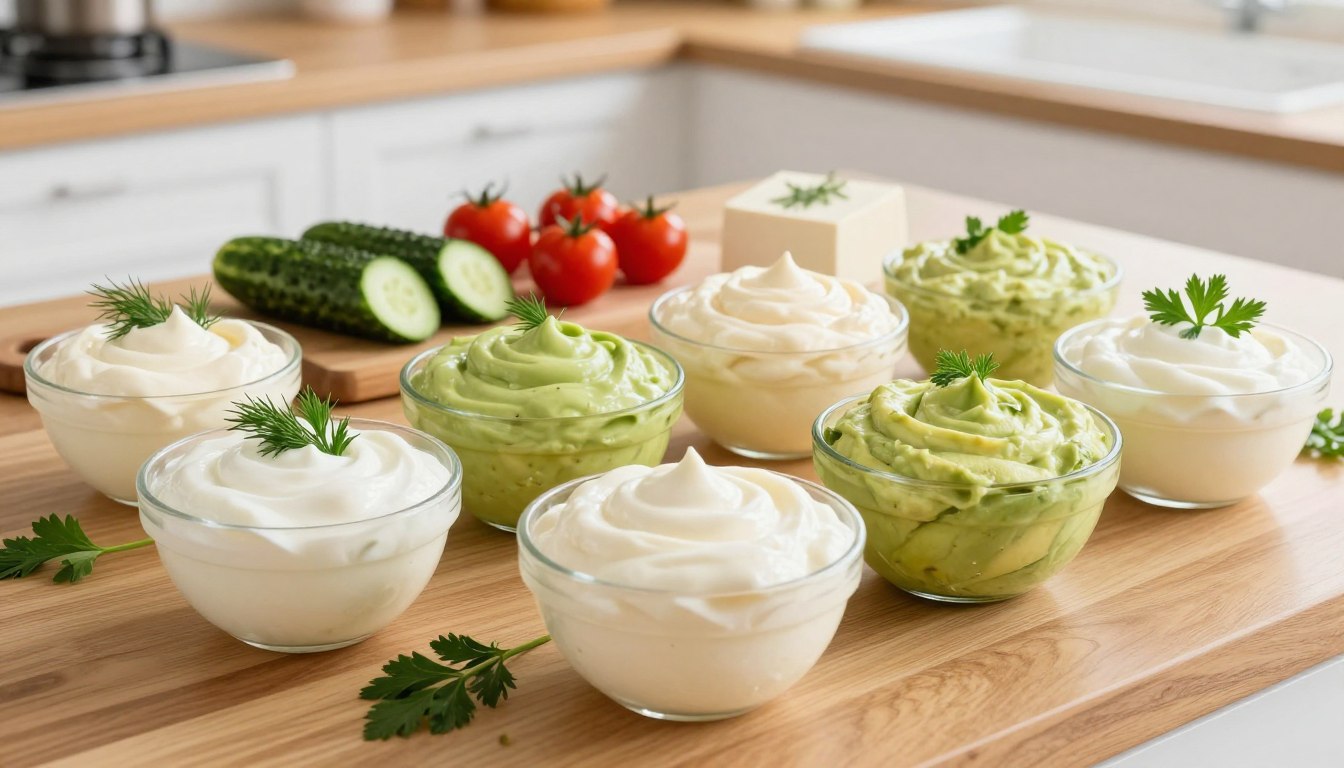
The Best Easy Low-Calorie Mayo Substitute
You’re standing in front of your fridge, reaching for mayonnaise out of habit. You love its taste on sandwiches but hate the empty calories. You want to enjoy your favorite foods without feeling guilty.
Traditional mayonnaise is high in calories. It’s made from egg yolks, vinegar, oil, and spices. Just a few tablespoons can add hundreds of calories to your diet. But, there’s a low-calorie substitute that can change that.
You don’t have to lose the creamy, tangy taste you love. Healthy mayo alternatives can cut your calorie intake in half or more. Some, like mustard, have less than 10% of mayonnaise’s calories.
This guide will show you the best healthy mayo alternatives. You’ll find options for sandwiches, wraps, salads, dressings, and dips. Each substitute has its own flavor and nutrition benefits. By the end, you’ll have easy solutions for your cooking.
Key Takeaways
- Low calorie mayonnaise substitutes can reduce your calorie intake by half or more per serving.
- Healthy mayo alternatives deliver creamy texture and great taste without the guilt.
- Greek yogurt, avocado, and sour cream offer protein-packed and nutrient-dense options.
- Mustard varieties contain less than 10% of the calories found in traditional mayonnaise.
- Hummus, tahini, and pesto provide unique flavors for sandwiches, wraps, and salads.
- You can make your own low calorie mayonnaise substitute at home in minutes.
- Choosing the right substitute depends on your recipe and flavor preferences.
Why You Need a Low Calorie Mayonnaise Substitute
Traditional mayonnaise is a favorite in many kitchens. But, many want to eat fewer calories or avoid eggs. Good news: switching to reduced fat or light mayo can change your diet without losing flavor. Knowing why you need these alternatives helps you make healthier choices.
The Calorie Problem with Traditional Mayonnaise
Regular mayonnaise has a lot of calories in small amounts. One tablespoon has about 90 calories, mostly from fat. Using mayo on sandwiches, in salads, or as dips quickly adds up calories.
For example, a sandwich with mayo can have 180 calories. Add other ingredients, and it’s even more. This can lead to a lot of extra calories in your diet.
Here’s how mayo calories can add up:
- One sandwich with mayo: 180 calories
- Tuna salad with regular mayo: 250+ calories
- Potato salad side dish: 300+ calories
- Weekly consumption could add 2,000+ extra calories
Choosing reduced fat or light mayo options greatly reduces these numbers. This keeps your meals tasty and satisfying.
Health Benefits of Switching to Lighter Alternatives
Switching to light mayo isn’t about giving up. It’s about choosing better foods for your body. Many substitutes offer real health benefits, not just fewer calories.
Discover these benefits:
- Increased protein intake from options like Greek yogurt and hummus
- Better vitamin and mineral profiles supporting your immune system
- Heart-healthy fats from avocado-based alternatives
- Added fiber promoting digestive health and longer-lasting fullness
- Reduced saturated fat helping your cardiovascular system
- Lower sodium content protecting your blood pressure
Reduced fat mayonnaise alternatives help you keep or reach your ideal weight. You’ll feel full and get better nutrition. This avoids the energy crash from empty calories.
Greek Yogurt: The Creamy Protein-Packed Alternative
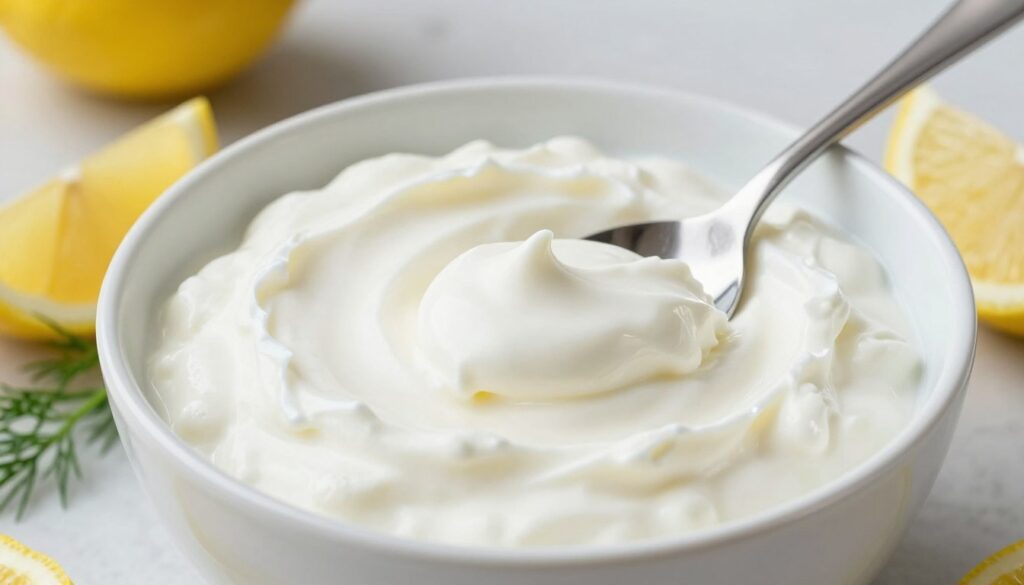
Want to cut calories without losing flavor? Greek yogurt is a great mayo substitute. It’s creamy and packed with nutrients, unlike regular mayo.
Using Greek yogurt adds a lot of protein to your meals. A 7-ounce serving has about 20 grams of protein. This makes you feel full longer.
- 146 calories per 7-ounce serving
- 22% daily value of phosphorus for energy metabolism
- 20% daily value of vitamin A for immune health
- 18% daily value of calcium for strong bones
- 11% daily value of zinc for cell function
Switching to Greek yogurt makes your salads healthier. Try it in chicken, tuna, or egg salad. It adds a tangy flavor and creamy texture without the guilt.
For the best results, pick plain, low-fat Greek yogurt. These varieties offer the most nutrition without added sugars. Start by using half Greek yogurt and half mayo, then adjust to taste.
Avocado-Based Mayo Substitutes for Healthy Fats
Avocados add a creamy texture and rich flavor to your cooking. They are full of heart-healthy fats that your body needs. An avocado mayonnaise substitute has fewer calories but still offers creaminess.
Avocados are versatile. Use them in tuna salad, chicken salad, sandwiches, and wraps. They blend well into any recipe that needs mayo. Your meals will get a buttery flavor that enhances taste.
How to Make Your Own Avocado Mayo at Home
Making your own avocado mayonnaise takes just minutes. Here’s what you need:
- 1 ripe avocado, mashed
- 2 tablespoons olive oil
- 1/2 teaspoon fresh lemon juice
- 1/2 tablespoon Dijon mustard
- Salt, garlic powder, onion powder, and black pepper to taste
Put mashed avocado, olive oil, lemon juice, and Dijon mustard in a food processor. Blend until smooth or chunky, as you like. Season with salt, garlic powder, onion powder, and black pepper. Your homemade avocado mayonnaise is ready to use.
Nutritional Benefits of Avocado Replacements
Choosing an avocado mayonnaise substitute over traditional mayo is better for your body. Here’s what one cup of sliced avocados gives you:
| Nutrient | Amount Per Cup (146g) | Daily Value % |
|---|---|---|
| Calories | 234 | — |
| Protein | 3 grams | 6% |
| Total Fat | 21.5 grams | 33% |
| Carbohydrates | 12.5 grams | 4% |
| Fiber | 10 grams | 40% |
| Copper | — | 31% |
| Folate | — | 30% |
| Vitamin E | — | 20% |
| Vitamin C | — | 16% |
| Potassium | — | 15% |
Avocados are good for your digestive system because of their fiber. They also have folate, vitamin E, and potassium. These nutrients help your cells and keep your blood pressure in check.
The healthy fats in avocados help your body absorb vitamins better. This means you get more nutrients from your food. Unlike regular mayo, this substitute boosts your nutrition while cutting calories. Your heart will appreciate this healthy choice.
Sour Cream as a Tangy Low Calorie Mayonnaise Substitute
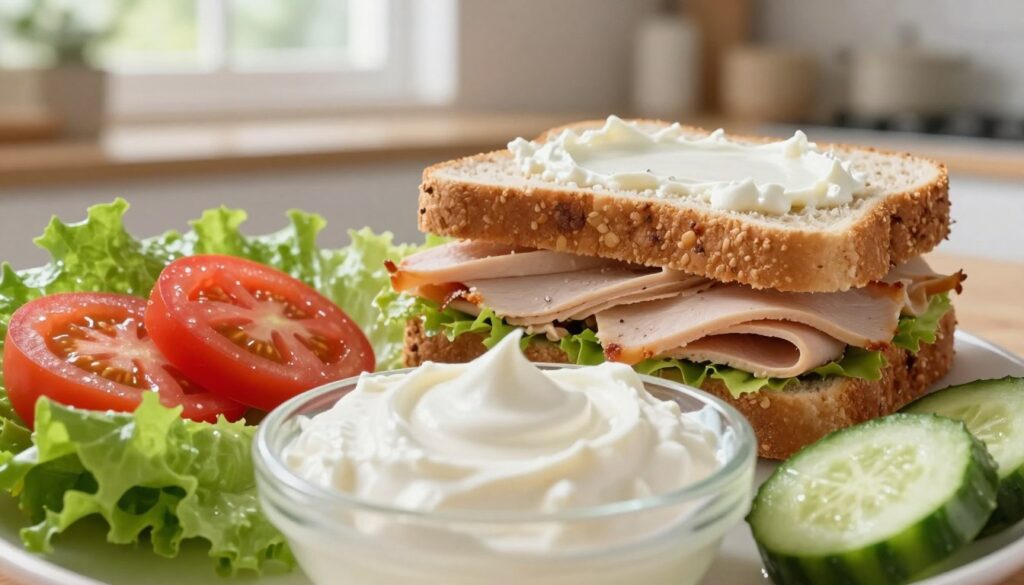
Sour cream is a simple, low-calorie swap for mayonnaise. It adds a tangy flavor that mayo can’t match. Plus, you can use it in the same amount as mayo, making it easy to substitute.
Choosing sour cream means picking a spread with health benefits. Two tablespoons have only 59 calories, less than mayo. It’s a great choice if you want to cut calories without losing flavor or texture.
Here’s what you get in each serving of sour cream:
- 1 gram of protein
- 6 grams of fat
- 1.5 grams of carbohydrates
- 4% Daily Value of vitamin A
- 4% Daily Value of riboflavin
- 3% Daily Value of vitamin B12
- 2% Daily Value of calcium
- 2% Daily Value of phosphorus
Sour cream’s B vitamins help with energy, and vitamin A is good for your eyes. These nutrients make it a better choice than regular mayonnaise.
Sour cream is versatile in recipes. Use it in chicken or tuna salad, potato salad, coleslaw, and more. It’s also great for homemade ranch dressing and adds creaminess to wraps. Check out Dr. Rachel Paul’s guide for more ideas.
The creamy texture of sour cream feels indulgent but is low in calories. You can choose from regular, light, or fat-free options to fit your taste and diet.
Mustard Varieties for Bold Flavor with Minimal Calories
Looking for healthier sandwich spreads that pack serious flavor without the calorie overload? Mustard might be your new best friend. This classic condiment delivers bold taste while keeping your meals light and nutritious. One tablespoon of mustard contains just 9 calories, making it one of the smartest choices for anyone watching their intake. Compare that to mayonnaise, which has around 90 calories per tablespoon, and you see why mustard stands out as an excellent swap.
Mustard comes in many varieties, each bringing its own personality to your plate. You can explore different options to find what works best for your favorite recipes. The best part? All mustard varieties remain incredibly low in calories while delivering serious taste satisfaction.
| Nutritional Component | Amount per Tablespoon (15g) |
|---|---|
| Calories | 9 |
| Protein | 0.5g |
| Fat | 0.5g |
| Carbohydrates | 1g |
Honey Mustard for Sweet and Savory Dishes
Honey mustard brings a delightful sweet and tangy balance to your meals. This variety works wonderfully when you want to add complexity without drowning your food in calories. Use it on chicken sandwiches, turkey wraps, and grain salads where that hint of honey creates beautiful flavor layers. The sweetness complements savory proteins perfectly, making it ideal for healthier sandwich spreads that satisfy your taste buds.
Honey mustard pairs well with:
- Grilled chicken breast sandwiches
- Turkey and vegetable wraps
- Chicken salad recipes
- Roasted vegetable platters
Dijon Mustard for Sophisticated Spreads
Dijon mustard offers a more sophisticated approach to healthier sandwich spreads. This French-style mustard brings a slightly spicy, bold kick that elevates your lunch game. The complexity works beautifully in vinaigrettes, chicken salads, and tuna preparations. When you need depth and elegance, Dijon delivers without any guilt.
You can also explore these mustard varieties for different occasions:
- Yellow mustard – Classic American flavor for traditional sandwiches
- Spicy brown mustard – Perfect for deli-style sandwiches with more heat
- French mustard – Gourmet option for upscale recipes
Mustard contains less than 10% of the calories found in mayonnaise, making it a game-changing option for anyone seeking lighter alternatives.
Each mustard variety brings unique character to your meals while keeping you on track with your health goals. Experiment with different types to discover your favorite healthier sandwich spreads for every situation.
Hummus: The Fiber-Rich Mediterranean Option
Looking for a mayo substitute that’s good for you? Hummus is a Mediterranean choice that makes sandwiches and wraps better. It’s creamy, made from chickpeas, and adds flavor without the extra fat of mayo.
Hummus is a top pick for mayo alternatives because it’s packed with nutrients. Two tablespoons have only 156 calories. But what’s really great is the protein, fiber, and healthy fats it offers. These keep you full longer than mayo.
Hummus is also rich in important vitamins and minerals. It has copper for your immune system, folate for cell growth, iron for energy, and selenium for antioxidants. These nutrients boost your health in ways mayo can’t.
| Nutrient (Per 2 Tablespoons) | Amount | Daily Value |
|---|---|---|
| Calories | 156 | — |
| Protein | 5g | 10% |
| Fat | 11g | — |
| Carbohydrates | 12g | 4% |
| Fiber | 3.5g | 14% |
| Copper | — | 34% |
| Folate | — | 17% |
| Iron | — | 11% |
| Zinc | — | 10% |
| Selenium | — | 10% |
Using hummus is great in many ways, not just sandwiches and wraps. It adds a creamy touch to your meals. Mix it into salads or pasta for a nutritious twist.
When picking hummus, go for plain to control your flavors. This way, you can season it to match your dishes perfectly. It’s ideal for those who like to experiment with their food.
Hummus brings Mediterranean health to your meals. It’s high in fiber for digestion and protein for energy. It’s a must-have for quick lunches or dinners.
Olive Oil-Based Dressings for Heart-Healthy Swaps
Olive oil is a top choice for a low calorie salad dressing substitute. It’s packed with health benefits and keeps meals light. It’s full of monounsaturated fats, which are good for your heart.
Studies show olive oil fights inflammation and supports heart health. It also has antioxidants your body needs.
Using olive oil in your cooking is vegan-friendly. It’s great in pasta salads and Mediterranean grain bowls. One tablespoon has 119 calories and vitamins E and K.
Making Your Own Olive Oil Mayo Substitute
Making your own olive oil-based mayo substitute is quick and tasty. It’s creamy like mayo but has fewer calories.
Here’s what you’ll need:
- 1 egg yolk
- 1 cup olive oil
- 1 tablespoon fresh lemon juice
- Salt to taste
Simple preparation steps:
- Whisk lemon juice and egg yolk together
- Slowly add olive oil while whisking
- Add salt to taste
Important note: If you’re pregnant, use pasteurized eggs to avoid health risks from raw eggs.
| Ingredient | Calories per Serving | Key Nutrients | Best Uses |
|---|---|---|---|
| Olive Oil (1 tbsp) | 119 | Vitamin E (13%), Vitamin K (7%) | Pasta salads, grain bowls, dressings |
| Traditional Mayo (1 tbsp) | 94 | Minimal vitamins | Sandwiches, dips, spreads |
| Tahini Dressing (2 tbsp) | 180 | Calcium, magnesium | Drizzles, salad dressings |
Knowing when to use olive oil is key. It makes dishes taste richer and fruitier than mayo. It’s perfect for Mediterranean recipes but might not work for all sandwiches. Try it in your favorite dishes to see where it’s best.
Tahini Dressing as a Nutty Alternative
Looking for healthy mayo alternatives? Tahini dressing is a great choice. It’s made from ground sesame seeds and has a rich, nutty flavor. This makes ordinary dishes special. It’s perfect for pasta salads, grain bowls, and more.
Tahini is a standout for its nutrition. A tablespoon has only 89 calories. Here’s what else it offers:
- 3 grams of protein for muscle support
- 8 grams of fat (the healthy kind)
- 3 grams of carbohydrates
- 1.5 grams of fiber for digestion
- 27% of your daily copper needs
- 15% of your daily thiamine for energy
- 9% of your daily phosphorus
- 9% of your daily selenium for thyroid health
- 7% of your daily iron
Making tahini dressing is quick. Just mix these ingredients in a bowl:
| Ingredient | Amount |
|---|---|
| Tahini | 2 tablespoons |
| Olive oil | 2 tablespoons |
| Lemon juice | 2 tablespoons |
| Water | 2 tablespoons |
| Salt | To taste |
| Pepper | To taste |
| Garlic powder | To taste |
Whisk everything until smooth. For a thinner dressing, add more water. For thicker, use less. The lemon juice adds a nice brightness to the sesame flavor.
Tahini is great for vegan and plant-based dishes. It’s free from dairy and eggs. Store your homemade dressing in the fridge for up to a week in an airtight container.
Pesto for a Flavorful Twist on Traditional Mayo
Pesto adds a special touch to your meals. It’s made with pine nuts, fresh basil, garlic, cheese, and olive oil. This mix creates a bold flavor that makes any dish unforgettable. Even though pesto is richer, its strong taste lets you use less of it.
A quarter-cup of pesto has 260 calories but is packed with nutrients. It has 3 grams of protein, 26 grams of fat, and 4 grams of carbs. It’s also rich in vitamin K, vitamin E, and manganese, supporting bone health and metabolism.
Think of pesto as a flavor bomb. A little goes a long way, making it perfect for adding taste to your meals. The olive oil in it is good for your heart.
Best Recipes for Using Pesto as a Spread
Pesto is great in many ways, not just as a mayo substitute:
- Spread on turkey and mozzarella sandwiches for Italian-inspired flavor
- Mix into chicken salad for a vibrant twist on a classic
- Layer in wraps with grilled vegetables and lean proteins
- Stir into pasta salad for eye-catching color and herbaceous taste
- Use as a pizza sauce alternative on whole grain bases
You can try different pesto flavors. Classic basil pesto has a traditional taste. Sun-dried tomato pesto is sweeter. Kale pesto is earthier. If pesto is too thick, add olive oil or lemon juice.
How to Choose the Right Substitute for Your Recipe
Finding the right low calorie mayonnaise substitute is key. It depends on your recipe and taste preferences. Each option has its own strengths for different dishes.
Choosing the right substitute is crucial. What works for one dish might not work for another. It’s important to know what each option brings to your dish.
- Flavor profile – Do you want something tangy, creamy, nutty, or bold?
- Texture – Do you need thick and spreadable or thin and pourable?
- Nutrition goals – Are you after high protein, healthy fats, or just fewer calories?
- Your specific dish – What are you making: a sandwich, salad, dip, or dressing?
Here’s a quick guide to match each low calorie mayonnaise substitute to common recipes:
| Substitute | Best For | Why It Works |
|---|---|---|
| Greek Yogurt | Chicken, tuna, and egg salads | Creamy texture with extra protein |
| Mustard | Sandwiches and wraps | Bold flavor, minimal calories |
| Avocado | Salads and veggie dishes | Healthy fats and mild taste |
| Hummus | Mediterranean wraps and dips | Fiber-rich and satisfying |
| Tahini | Grain bowls and Middle Eastern recipes | Nutty flavor and nutrition |
| Sour Cream | Dips and coleslaw | Tangy flavor and creamy feel |
| Olive Oil | Vinaigrettes and pasta salads | Heart-healthy and light |
Try mixing two substitutes together for the best results. Blend Greek yogurt with a touch of Dijon mustard for a creamy-tangy mix. This combo offers the best of both worlds in a low calorie mayonnaise substitute.
Don’t be afraid to experiment with different options. Your personal taste matters most. Test these alternatives and see what you enjoy the most.
Conclusion
You now have a full toolkit of light mayo options at your fingertips. Whether you ran out of traditional mayonnaise or you want to cut your calorie intake in half, these substitutes deliver real results. Greek yogurt, avocado, sour cream, mustard, hummus, olive oil dressings, tahini, and pesto all bring something special to your plate.
The best part about exploring light mayo options is that you are not giving up taste or texture. Many of these swaps actually pack more nutrition into every bite. You get extra protein from Greek yogurt, heart-healthy fats from avocado, and fiber from hummus. Your body gets what it needs while you enjoy creamy, satisfying meals. These light mayo options open doors to flavors you may have never tried before in your own kitchen.
Start your culinary adventure this week. Try Greek yogurt in your chicken salad on Monday. Spread avocado on your sandwich on Wednesday. Drizzle tahini dressing over your grain bowl on Friday. Each swap teaches you something new about what you love to eat. Healthy eating does not feel like a burden when you discover how delicious these alternatives taste.
Your journey toward better health starts with simple changes. These light mayo options cut calories while boosting your nutrition and expanding your cooking skills. You have everything you need to transform your favorite recipes into healthier versions that you will crave just as much as the originals.