The Best Ruske Kape Easy Russian Chocolate
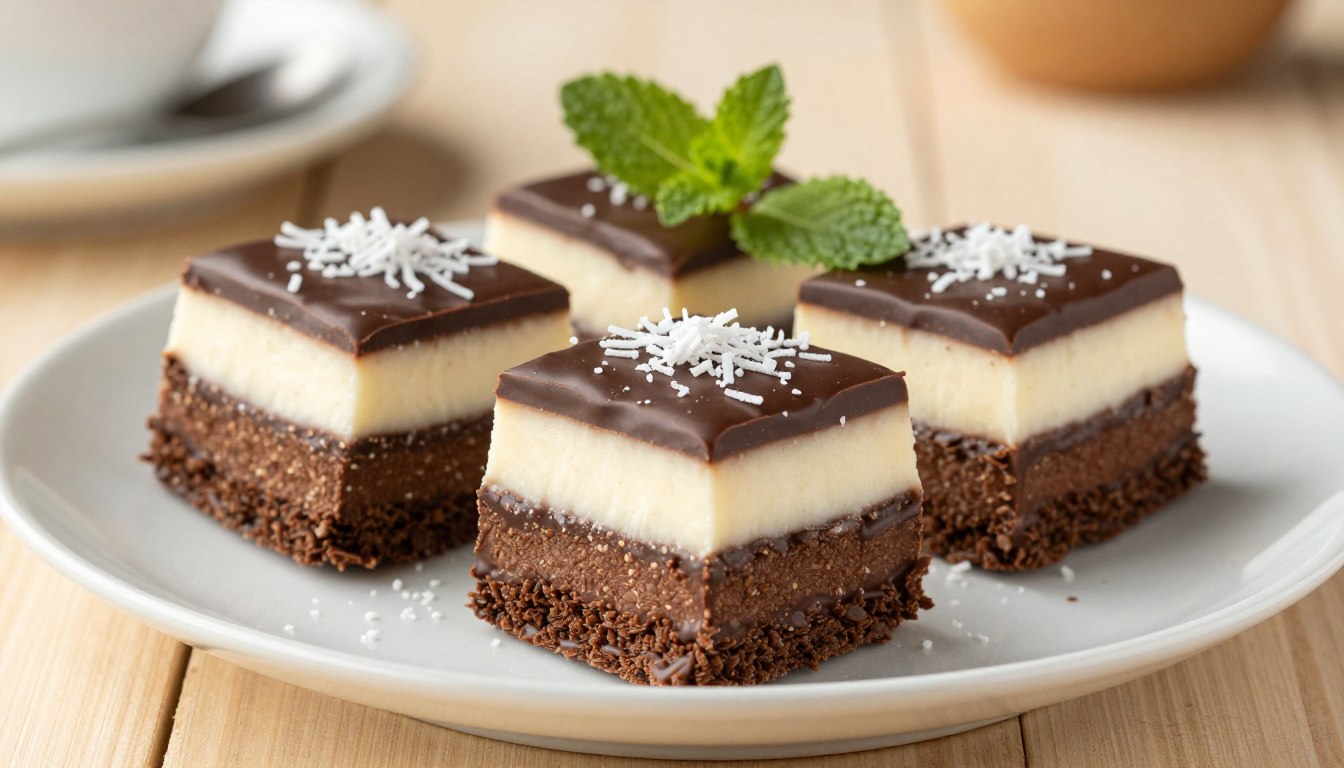
There’s magic in biting into a dessert that feels like it came from a pro bakery. Ruske kape, with their soft chocolate, creamy custard, toasted coconut, and chocolate glaze, bring joy. They’re a favorite at weddings and family gatherings.
Creating this traditional ruske kape dessert at home is easy. This guide shows you how to make it without stress. The key is making your custard from scratch. This unlocks flavors that make these treats stand out.
Ruske kape look like Russian fur hats, earning their name. In Balkan kitchens, they bring families together. You’ll make about 15 pieces that will wow your guests.
This recipe is special because it’s both traditional and easy. Your chocolate sponge cake is moist. The vanilla custard is silky. The coconut adds crunch, and the chocolate glaze finishes it off.
Making ruske kape takes time and effort. But the result is worth it. You’ll enjoy the taste and see your guests’ smiles. This recipe lets you make bakery-quality desserts at home.
Key Takeaways
- Ruske kape are traditional Balkan desserts with a chocolate sponge base, vanilla custard filling, coconut coating, and chocolate glaze
- Making homemade custard filling creates superior flavor compared to instant pudding options
- This easy ruske kape recipe yields about 15 dome-shaped pieces perfect for special occasions
- The recipe balances traditional authenticity with home baker accessibility
- Proper assembly techniques prevent filling from oozing and ensure professional presentation
- Storage and serving methods keep your ruske kape fresh and delicious for multiple days
What Are Ruske Kape and Why You’ll Love This Balkan Dessert
Ruske kape dessert is a favorite in the Balkans. It has a soft sponge cake, creamy custard, coconut flakes, and chocolate glaze. Its dome shape makes it a hit at any event.
These treats are common in Bosnia, Croatia, and Serbia. They’ve been a part of local cuisine for generations.
The name “ruske kape” means “Russian hats” in Balkan languages. It looks like traditional Russian fur hats. This name shows the cultural ties between Eastern Europe and the Balkans.
Russian hats cookies are a big part of celebrations. They’re at weddings and slava dinners. Bakeries in big cities love to sell them.
Making traditional ruske kape is a family tradition. It’s loved by many for its authentic European taste.
Why This Traditional Dessert Is Perfect for Special Occasions
Ruske kape dessert is great for many reasons. They can be made ahead of time. They look good at room temperature or chilled.
Here are some reasons to try them at your next event:
- Visually impressive dome shapes that catch every eye
- Sophisticated flavor profile appealing to both adults and children
- Can be made one or two days in advance
- Serve elegantly with a fork or enjoyed casually by hand
- Store well in refrigeration without losing quality
Ruske kape dessert is like Australian Lamingtons. It has a soft cake, creamy filling, coconut, and chocolate. It’s a memorable treat that everyone will love.
Essential Ingredients for Authentic Ruske Kape
Making homemade ruske kape starts with the right ingredients. This Balkan dessert needs quality parts for its dome shape and creamy texture. You’ll need three main things: the chocolate sponge cake, the smooth vanilla custard, and the coconut-chocolate coating.
The authentic ruske kape recipe at home uses simple pantry items. Most ingredients are baking basics you probably have at home. This makes making this impressive dessert easier than you think. Quality is key—fresh eggs and real butter make a big difference.
| Component | Key Ingredients | Important Notes |
|---|---|---|
| Sponge Cake Base | 6 eggs, 200g sugar, vanilla extract, oil, milk, baking powder, 2 cups flour, cocoa powder | Use fresh eggs for best results; some recipes use 12 eggs for extra fluffiness |
| Vanilla Custard Filling | 4 cups milk, sugar, vanilla sugar, flour, cornstarch, 1.5 sticks butter, powdered sugar | Real butter is essential; avoid margarine for authentic texture |
| Coconut-Chocolate Coating | 100g dark chocolate, oil, unsweetened coconut flakes | Use unsweetened coconut; sweetened varieties would oversweeten the dessert |
When making your authentic ruske kape recipe at home, focus on the ingredient qualities. Dark baking chocolate makes the glaze right, and unsweetened coconut flakes keep it from being too sweet. Vanilla sugar, used in Balkan baking, is different from vanilla extract. Choose what you like better.
These measurements work in both US customary units and metric conversions. Making homemade ruske kape needs patience and detail, but the ingredients are easy to find and use for home bakers.
Kitchen Tools and Equipment You’ll Need
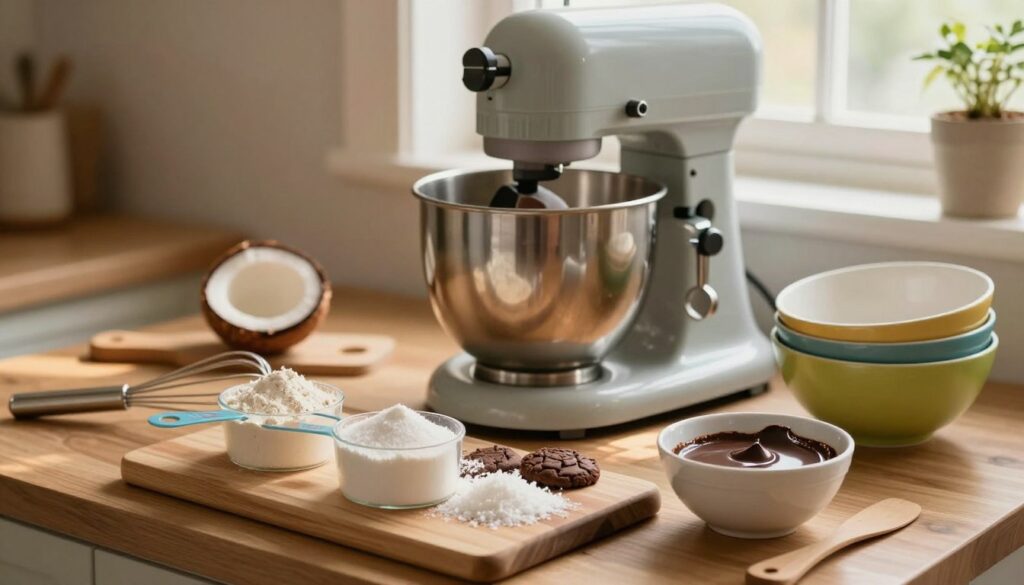
Before you start making your chocolate coconut cookies, gather the right tools. You don’t need expensive or specialized equipment. What matters is having reliable basics that make your baking process smooth and enjoyable.
Most items you need are probably already in your kitchen. A hand mixer or whisk helps you beat eggs and cream your custard filling. A medium saucepan with a heavy bottom prevents scorching when you melt chocolate or simmer your filling. Several mixing bowls keep wet and dry ingredients separated during preparation. A rubber spatula scrapes every last bit of batter from the sides.
You’ll also need plastic wrap to cover your phyllo sheets and keep them from drying out. A damp towel works beautifully for this purpose as well. According to guidelines found at sparkling.wiki.edu.rs, keeping phyllo sheets moist is essential for layered desserts that need proper texture and rise.
Choosing the Right Baking Pan Size
Your pan size decision directly affects how many pieces you’ll create and their height. A 9×13 inch pan produces taller, more dramatic chocolate coconut cookies with impressive dome shapes. This size yields approximately 15 finished pieces with greater height and visual impact. A larger sheet pan measuring 27×40 centimeters creates flatter cookies and produces 30 or more pieces.
An enameled pan works best for even heat distribution. Avoid greasing the sides of your pan. This technique lets your pastry rise and cling naturally to the edges, creating the structure you need for proper baking and cooling.
| Pan Size | Finished Pieces | Cookie Height | Best For |
|---|---|---|---|
| 9×13 inches | Approximately 15 pieces | Taller domes | Smaller gatherings, dramatic presentation |
| 27×40 centimeters | 30+ pieces | Flatter profile | Large parties, more servings |
Best Cookie Cutters for Perfect Dome Shapes
Round cookie cutters between 2 to 4 inches in diameter create the best coconut dome cookies. Larger cutters produce more impressive individual servings that stand out on any dessert table. Smaller cutters work well if you prefer bite-sized treats.
- Round biscuit cutters (2-inch diameter) for standard-sized pieces
- Large round cutters (3-4 inches) for impressive presentation
- Drinking glasses as affordable alternatives
- Jar lids you can cut around with a sharp knife
- Scalloped cutters for decorative edges
Don’t worry if you lack traditional cookie cutters. A drinking glass or jar lid works beautifully. Simply cut around it with a sharp knife to create perfect circles. This creative approach costs nothing and produces equally delicious results for your chocolate coconut cookies.
You’ll need a fork for beating eggs in your filling mixture. A heavy-bottomed pot or Dutch oven works wonderfully for slow-braising layers or melting chocolate and coconut mixtures together. Keep cups or cans handy for supporting your baked creation as it cools upside down, maintaining that fluffy interior texture everyone loves.
How to Make the Chocolate Sponge Cake Base
The foundation of your ruske kape starts with a perfect chocolate sponge cake. This cake is light, moist, and serves as the base for your chocolate coconut cake balls. Getting this step right ensures your dessert will be sturdy enough to hold the filling and coating without falling apart.
Begin by preparing your baking pan. Grease a 9×13-inch pan thoroughly with butter or baking spray. Make sure you coat every corner and edge. Preheat your oven to 350°F (175°C). This temperature creates the ideal baking environment for your sponge cake chocolate coconut creation.
Mix your wet ingredients first. Whisk 6 eggs until they become foamy and light. Add sugar, oil, vanilla extract, and milk to your eggs. The foaming action incorporates air into your batter, which is essential for that tender, fluffy texture.
In a separate bowl, combine your dry ingredients:
- All-purpose flour
- Baking powder
- Cocoa powder
Gently fold the dry ingredients into your wet mixture. Be careful not to overmix. Overmixing creates a dense, tough cake instead of the light sponge you want for your chocolate coconut cake balls.
Pour your batter into the prepared pan. Bake for 30 minutes at 350°F. Your cake is done when a toothpick inserted in the center comes out clean or with just a few moist crumbs.
Always cool your cake completely before cutting. Warm cake crumbles easily and won’t cut cleanly. This cooling time is non-negotiable for success. Once cooled, you can cut perfect circles for your ruske kape assembly.
Creating the Perfect Vanilla Custard Filling from Scratch
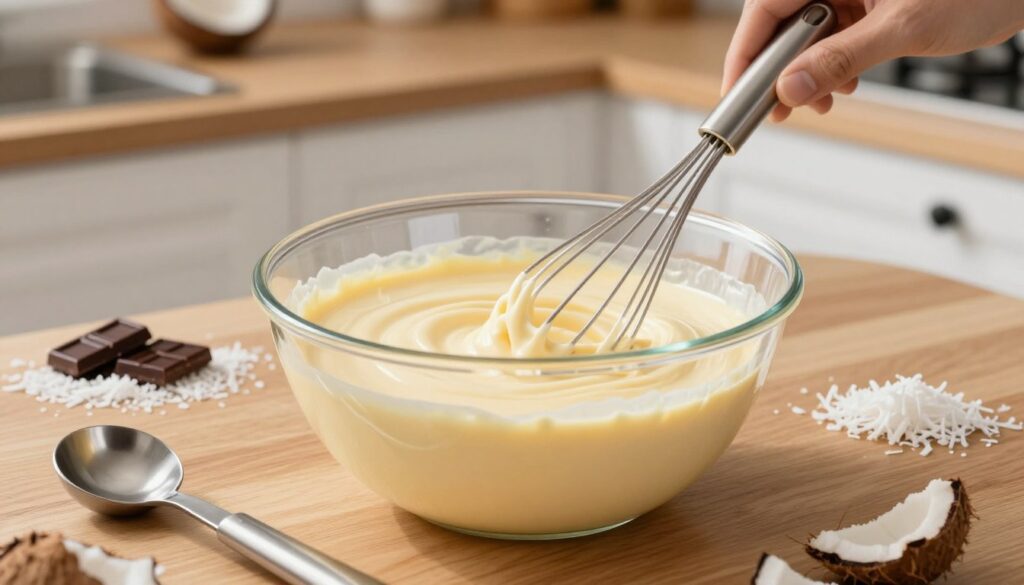
The ruske kape filling makes this Balkan dessert special. It turns your homemade dessert into something amazing. Making your own custard lets you control every ingredient, giving you better flavors than store-bought mixes.
To start a no fail ruske kape recipe, focus on the custard base. Heat three cups of milk with sugar and vanilla until it’s just below boiling. This method brings out the vanilla’s flavors without burning them. Be careful not to let it boil over.
Why Homemade Filling Beats Instant Pudding
Making custard from scratch for your ruske kape filling has big advantages. It gives you superior vanilla flavor and a smooth and creamy texture. Your dessert will honor the traditional recipe that families have loved for generations.
Instant pudding can be rubbery, but homemade custard is silky. This difference is key when you’re serving guests or celebrating. Your no fail ruske kape recipe deserves this quality.
Tips for Achieving the Right Custard Consistency
To get the perfect consistency for your ruske kape filling, follow these steps:
- Mix one cup of cold milk with flour and cornstarch until smooth
- Slowly whisk this mixture into the hot milk
- Whisk constantly for six minutes until it’s like pudding
- Let it cool completely for one hour at room temperature
- Press plastic wrap directly onto the surface to prevent skin
- Beat in creamed butter and powdered sugar after cooling
- Chill for forty-five minutes to one hour until very thick
The custard will seem thin when you first remove it from heat. This is normal. It thickens a lot as it cools. Be patient to get the perfect pipeable thickness.
Don’t overbeat your mixture after adding butter. This can cause it to curdle and ruin your recipe. Keep your motion gentle and controlled. Your custard should be thick and creamy, not grainy or separated.
The Best Ruske Kape Recipe Step-by-Step Assembly Guide
Now that you have your sponge cake and vanilla custard filling ready, it’s time to put it all together. Learning how to make ruske kape step by step will turn your parts into beautiful desserts. This assembly is simpler than you think, and with a few tricks, you’ll make stunning treats that wow your guests.
Begin by cutting your cooled sponge cake into perfect circles using your chosen cookie cutter. Use a gentle sawing motion to avoid tearing or crumbling the cake. Once cut, slice each circle in half horizontally using a long serrated knife. Rotate the cake as you cut to ensure even thickness on both pieces.
The filling step requires precision but takes just moments:
- Place the bottom cake layer on your work surface
- Spoon about one teaspoon of custard filling onto the center
- Spread the filling gently toward the edges without overfilling
- Place the top layer directly on the filling and press down lightly
Now comes the coating stage. Spread a thin layer of filling around just the sides of your assembled cake. This coating acts as glue for the coconut and keeps the easy russian chocolate coconut dessert recipe coming together beautifully. Pour shredded coconut into a shallow dish and gently roll each assembled cake until the sides are completely covered.
This recipe typically yields about 15 pieces using a standard-sized cutter. Don’t waste those leftover cake scraps—crumble them with jam and form them into delicious cake balls for another treat.
Coating Your Russian Hats with Coconut and Chocolate Glaze
The final step is adding the glaze that makes these treats irresistible. Your cakes will now get a polished, professional look. The coconut coating you applied earlier is the perfect base. Now, a glossy chocolate glaze will turn your dessert into a showstopper.
Choosing the right coconut is crucial. You need unsweetened coconut flakes for the best results. Sweetened coconut would make your dessert too sweet and change the texture. Roll each cake in unsweetened flakes, ensuring no spots are left bare. This gives your dessert its signature look.
- 100 grams of dark baking chocolate
- 2 tablespoons of coconut oil or butter
- A saucepan or double boiler
- A spoon for spreading
Melt the chocolate with oil in a saucepan or double boiler until smooth. Let it cool slightly before using. The glaze should be thin enough to spread smoothly but not too runny. Test the thickness on one cake first.
Spoon the melted chocolate onto the top center of each cake. Then, spread it outward to the edges where it meets the coconut border. Work quickly since the glaze thickens as it cools. Refrigerate until the chocolate sets into a firm, glossy coating.
Common Mistakes to Avoid When Making Ruske Kape
Making homemade ruske kape can be tough when things go wrong. Knowing common mistakes helps you make perfect Russian chocolate coconut desserts right away. Most errors are simple to avoid once you know what to look out for.
Understanding common problems makes your ruske kape journey smoother. Temperature, timing, and technique are key. Small changes can make a big difference in your desserts.
Preventing Curdled Buttercream
Curdled buttercream is a big mistake when making ruske kape. It happens when butter and custard separate, making a grainy mess. This usually comes from temperature issues or overmixing.
Here’s how to avoid it:
- Always cool your custard completely in the refrigerator before adding butter
- Use softened butter at room temperature, not cold or melted
- Beat the mixture just until smooth and combined, not for extended periods
- Start with small butter additions if you’re nervous about the process
If your buttercream curdles, try warming it gently over a bowl of warm water while stirring. The warmth helps the mixture come back together. If that doesn’t work, start fresh with just the butter portion and rebeat it until fluffy before trying again.
How to Keep the Filling from Oozing Out
Filling that oozes out means it wasn’t chilled enough. This custard-butter mixture needs time to set properly. It should be dense and stable.
Follow this chilling timeline:
| Chilling Stage | Time Required | What Happens |
|---|---|---|
| Initial custard cooling | 1-2 hours | Custard reaches full refrigerator temperature |
| After butter mixing | 1-2 hours | Buttercream becomes thick and pipeable |
| Total minimum time | 2-3 hours | Filling holds shape and won’t ooze |
Your filling is ready when it holds its shape on a spoon and feels completely cold. Thick, almost solid buttercream won’t squeeze out when you bite into these delicious cookies. Don’t rush this step—patience rewards you with perfect results.
Watch for these additional issues when assembling your homemade ruske kape:
- Dry, crumbly cake: Don’t overbake your sponge layers; remove them when a toothpick still has moist crumbs
- Uneven layers: Use a serrated knife and rotate the cake as you cut horizontally
- Chocolate glaze problems: Glaze that’s too hot runs off, while glaze that’s too cool won’t spread smoothly
- Skin on custard: Press plastic wrap directly onto the custard surface to prevent this barrier
A cool kitchen temperature helps everything cooperate better. Keep your work surface and tools chilled when possible. Your homemade ruske kape turns out beautifully when you respect the timing and temperature guidelines these traditional Balkan desserts require.
Storage Tips and How Long Ruske Kape Last
After making ruske kape, they need the right care. Storing them correctly keeps them fresh and tasty. The good news is that they get even better in the fridge, blending flavors beautifully.
For perfect ruske kape, use an airtight container. Cold temperatures are key for the dairy-based custard. The fridge also keeps the chocolate glaze firm and the coconut crisp, enhancing the texture.
Best Storage Methods for Your Ruske Kape
Here’s how to store your desserts right:
- Place ruske kape in a shallow airtight container rather than a deep one
- Avoid stacking them too high to prevent damage to the chocolate tops
- Put parchment paper between layers if you must stack them
- Keep the container in your refrigerator at 40°F or below
- Store them away from strong-smelling foods that might affect the flavor
| Storage Location | Shelf Life | Serving Temperature | Notes |
|---|---|---|---|
| Refrigerator | 3-4 days | Chilled or room temperature | Best storage option for dairy-based filling |
| Freezer | Up to 1 month | Thawed overnight in refrigerator | Wrap individually in plastic wrap first |
| Counter (not recommended) | 1-2 hours maximum | Room temperature | Only for serving purposes |
For a firm treat, serve them straight from the fridge. Chilled, the chocolate snaps and the filling stays solid. For a softer texture, let them sit at room temperature for 15 to 20 minutes. This enhances the custard flavor and makes the sponge cake lighter.
Freeze them for future celebrations. Wrap in plastic wrap and then in a freezer-safe container. Thaw overnight before your event for a fresh taste.
“If they last till then” – a baker’s humorous reminder that these desserts disappear quickly because they’re so delicious.
Proper storage keeps ruske kape fresh and tasty. The fridge time allows flavors to blend perfectly. Store them right, and enjoy a delightful treat whenever you want.
Creative Variations on the Traditional Ruske Kape Dessert
Making ruske kape your own doesn’t mean you have to change everything. This Balkan treat is loved for its dome shape and rich flavors. You can try new fillings, coatings, or make it plant-based while keeping its essence.
In the Balkans, ruske kape is made in many ways. Some use lots of butter for extra richness. Others make it like custard. The chocolate glaze might have rum or cherry liqueur for extra flavor.
Try adding almond extract to the filling for a European twist. Or, add espresso powder to the chocolate sponge for a mocha taste. You can also use white chocolate ganache for a lighter look but still rich taste. Different coatings like toasted nuts or edible gold flakes can also change things up.
Vegan Russian Chocolate Coconut Dessert Options
It’s easy to make a vegan version of ruske kape that tastes just as good. The trick is to make smart swaps that keep the dessert true to its roots. A detailed guide can show you how to do it right.
For the chocolate sponge, use plant-based milk instead of dairy. Replace butter with coconut oil for a lighter taste. Adding apple cider vinegar to plant-based milk creates a natural lift, just like eggs.
The filling is key. Soak 200 grams of raw cashews in hot water for 30 minutes. Then blend them with plant-based milk, coconut oil, vanilla, and sugar until smooth. This cashew cream is creamy and vegan-friendly.
Make sure your chocolate is dairy-free for the ganache. Pair it with unsweetened shredded coconut for the classic look. Your vegan ruske kape will look and taste just like the traditional version.
| Component | Traditional Ingredient | Vegan Substitute | Result Quality |
|---|---|---|---|
| Milk | Whole dairy milk | Almond, oat, or soy milk | Identical texture and taste |
| Butter | European-style butter | Coconut oil | Lighter fat profile, same moisture |
| Eggs | Chicken eggs | Apple cider vinegar + baking soda | Perfect lift and structure |
| Custard filling | Cream and egg yolks | Blended cashew cream | Luxurious and creamy texture |
| Chocolate glaze | Dark chocolate with cream | Dairy-free dark chocolate | Rich flavor without dairy |
Creating vegan versions of ruske kape doesn’t mean losing the authentic taste. Your plant-based versions will have the same beautiful shape and delicious taste as the original.
Serving Suggestions for Your Homemade Russian Hats
Your homemade ruske kape should be presented beautifully. They’re perfect for many occasions, from family gatherings to formal events. Learning how to serve them will make your guests appreciate their taste and cultural value.
The austrian russian hats recipe makes treats great for special events. Ruske kape are a big part of Balkan weddings, slava dinners, birthdays, and holidays. Serving them at these events honors a cherished tradition that brings people together.
Presentation and Arrangement Ideas
How you display your ruske kape matters a lot. Place them on serving platters or cake stands for a stunning look. Your guests will love the neat dome shapes covered in coconut and chocolate.
- Arrange in circular patterns for an elegant look
- Place in organized rows on dessert buffets
- Use casual clustering for family gatherings
- Display on elevated cake stands for drama
Eating and Beverage Pairings
You can eat your russian hats with a fork at formal events or as finger food at casual gatherings. Pair them with strong Turkish-style coffee or espresso. American coffee, black tea, and cold milk also pair well. The slight bitterness of coffee balances the sweetness perfectly.
| Serving Setting | Eating Method | Best Beverage Pairing |
|---|---|---|
| Formal Wedding | With Fork | Turkish Coffee or Espresso |
| Family Gathering | By Hand | Regular Coffee or Tea |
| Dessert Buffet | Either Method | Espresso or Black Tea |
Creative Serving Occasions
Think beyond traditional celebrations. Your austrian russian hats recipe is perfect for cookie exchanges, dessert buffets, or homemade gifts. They’re great for sharing because they store well.
- Package as homemade gifts for special people
- Include in holiday cookie exchanges
- Feature on dessert tables at gatherings
- Enjoy as a weekend family treat
- Serve chilled or at room temperature
Whether you’re starting new traditions or honoring old ones, your ruske kape will impress everyone. These beautiful treats deserve to be shared and celebrated.
Conclusion
You’ve learned how to make ruske kape, a favorite Balkan dessert. It’s a recipe that needs time and patience, but it’s not hard. Every step, from making the sponge cake to chilling the custard, leads to something amazing.
The effort you put in will make your dessert taste and look great. It will impress everyone at your table. Success comes from paying attention to the details.
Keep your custard cold and don’t rush. Homemade ruske kape taste better than store-bought ones. Even if it’s not perfect the first time, you’ll get better with practice.
These treats are for sharing. Take them to family gatherings or celebrations. Start a tradition of making ruske kape for important moments. You’re connecting with Balkan bakers who made this dessert for special times.
Once you master this recipe, try other Balkan sweets. Continue your culinary journey. You have the skills to make wonderful ruske kape. Enjoy making and sharing them with loved ones.
That’s what these traditional desserts are all about. They bring people together to celebrate life’s sweetest moments.