
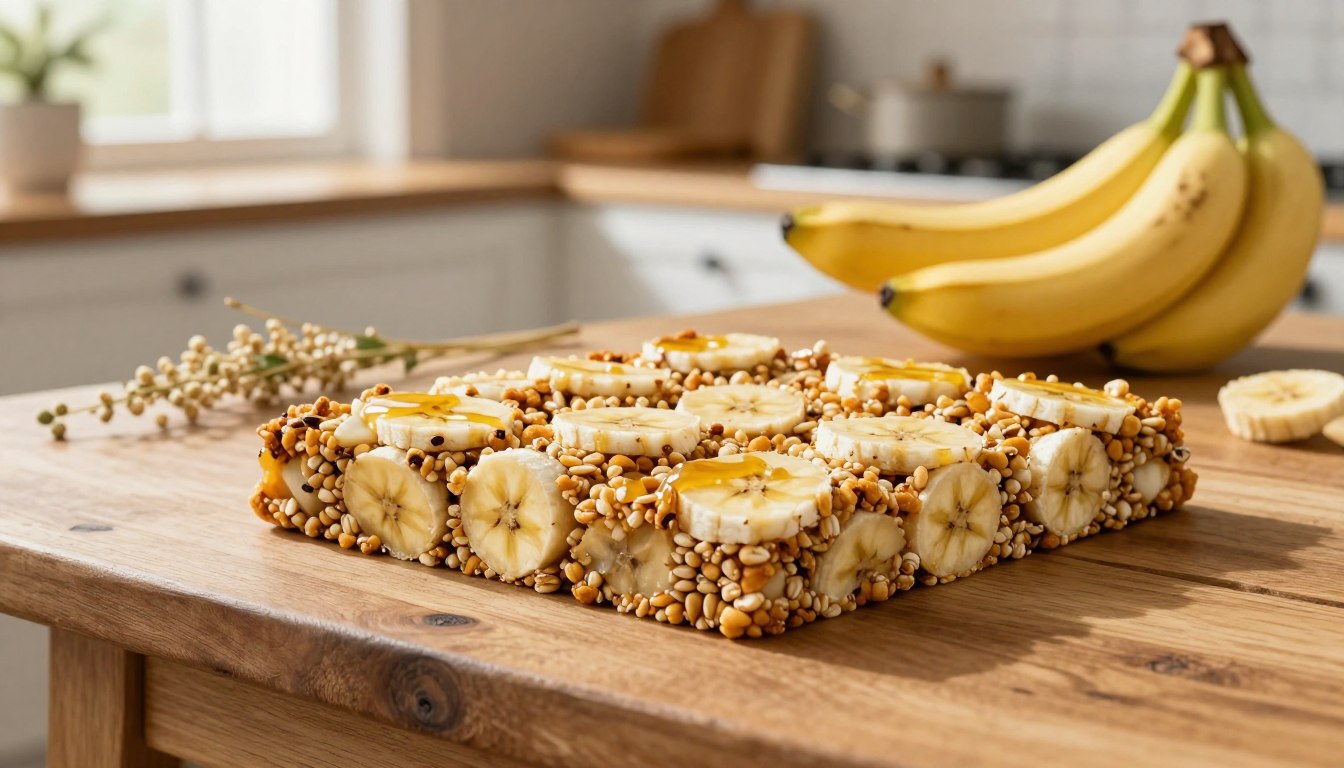
The Best Banana, quinoa and puffed rice energy bar
Ever felt that afternoon slump? Your energy drops, and you grab something that doesn’t help. What if you could find a snack that actually boosts your energy? Something you make with ingredients you know? That’s what a homemade banana quinoa energy bar offers.
These bars transform your snack time. They’re made with real bananas, quinoa for protein, and puffed rice for crunch. No artificial additives or unknown ingredients.
Making these energy bars is quick and easy. It takes 15 to 30 minutes, no oven needed. Just mix five to seven simple ingredients, press into a pan, chill, and you’re set. You’ll have eight to ten bars ready to go whenever you need them.
A banana quinoa energy bar packs about 22 grams of protein with the right protein powder. This means real energy that lasts. Your body gets actual fuel, not just empty calories.
Homemade energy bars are cheaper than store-bought ones. They taste fresher and better. You control the sweetness, texture, and every ingredient. They’re perfect for vegans, gluten-free diets, or those cutting back on refined sugar.
Key Takeaways
- Homemade energy bars take just 15 to 30 minutes of active prep time with no baking required
- A single banana quinoa energy bar contains approximately 22 grams of protein per serving
- You need only five to seven basic ingredients that you likely already have at home
- These healthy energy bars recipe works for vegan, gluten-free, and refined sugar-free diets
- Making your own bars costs far less than buying them at the store
- Natural sweeteners like maple syrup and brown rice syrup replace artificial ingredients found in store-bought options
Why Banana Quinoa Energy Bars Are the Perfect Healthy Snack
You’re looking for a snack that works hard as you do. Banana quinoa energy bars deliver nutrition, taste, and convenience in every bite. They combine whole grains, natural sweeteners, and plant-based proteins to fuel your body without weighing you down.
The secret lies in how the ingredients work together. Each component brings something valuable to the table, creating a snack that satisfies hunger and supports your health goals. Whether you need a quick breakfast or post-workout fuel, these bars adapt to your lifestyle.
Nutritional Benefits of Quinoa in Energy Bars
Quinoa stands out as a complete protein source containing all nine essential amino acids your body needs. When you choose a quinoa energy bar recipe, you’re selecting an ingredient that packs serious nutritional power into a compact form.
Here’s what quinoa brings to your high fiber energy bars:
- Complete protein for muscle recovery and growth
- High fiber content that keeps you feeling full longer
- Manganese for bone health and metabolism support
- Iron for energy production throughout your day
- Antioxidants that protect your cells from damage
Whole-grain oats work alongside quinoa to boost the fiber count even more. This combination creates bars with impressive nutritional density. You’ll get sustained energy without the energy crashes that come from refined sugars.
How Bananas Boost Energy and Flavor
Bananas are nature’s perfect energy package. They provide quick-release carbohydrates that give you immediate fuel, while their natural sweetness eliminates the need for added sugars. When you bite into healthy banana breakfast bars, you taste pure fruit flavor.
Beyond taste, bananas offer real benefits:
- Potassium supports muscle function and recovery
- Natural sugars provide quick energy for active lifestyles
- Moisture that binds ingredients without eggs or dairy
- Creamy texture that makes bars satisfying to eat
This makes vegan quinoa energy bars naturally possible without compromising texture or taste. Bananas are the binding hero that holds everything together.
The Role of Puffed Rice in Creating Crunch
Texture matters when you’re eating a snack bar. Puffed rice creates that satisfying crunch you crave, similar to cereal treats from childhood. The difference is that these bars contain real nutrition instead of empty calories.
| Component | Texture Benefit | Nutritional Contribution |
|---|---|---|
| Puffed Rice | Light, crispy crunch | Low calorie volume |
| Puffed Quinoa | Airy texture contrast | Protein and fiber retention |
| Creamy Nut Butter | Smooth contrast | Healthy fats and protein |
The puffing process creates an airy structure that makes bars filling without feeling heavy. You get volume and satisfaction without excessive calories. This combination turns ordinary snack bars into something special that your taste buds and body appreciate equally.
Essential Ingredients for Homemade Banana Quinoa Energy Bars
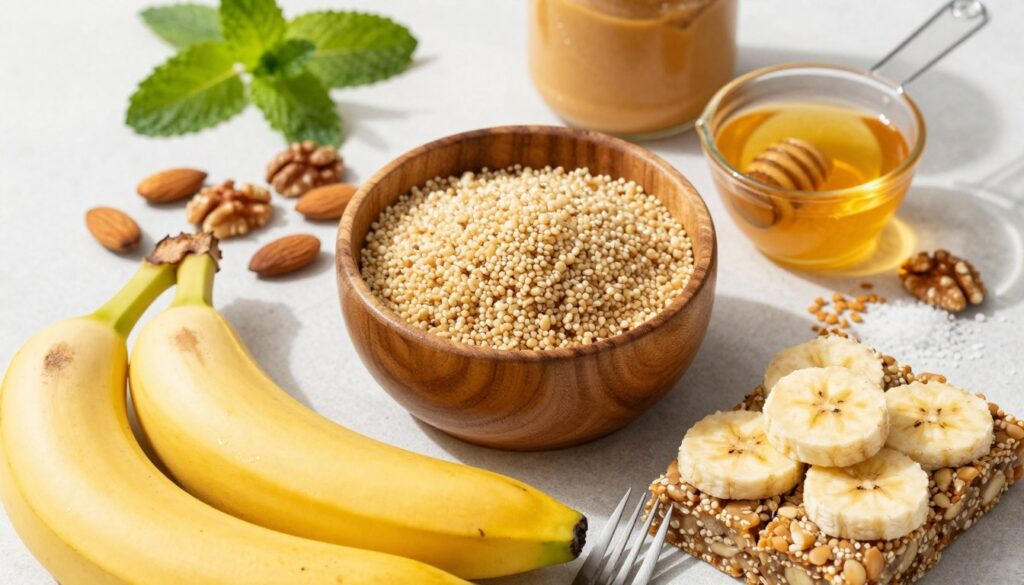
Making natural snack energy bars starts with the right ingredients. You’ll need to gather the basics before you start. This way, you won’t have to make a trip to the store later.
The base of your banana puffed rice bars is 2 cups of puffed cereals. You can pick puffed quinoa for extra protein, puffed brown rice for a lighter taste, or puffed amaranth for something different. Choose fresh, crispy grains to avoid chewy bars.
For binding and sweetness, you’ll need these key items:
- 1 to 2 ripe bananas (mashed for easy mixing)
- 1/2 cup nut butter (peanut, almond, or cashew with a drippy consistency)
- 1/4 to 1/2 cup liquid sweetener (maple syrup, brown rice syrup, or agave)
- 1 teaspoon vanilla extract
- Pinch of sea salt
Adding 1.9 ounces of protein powder (about 2 scoops) boosts nutrition. This is optional but adds 22 grams of protein per bar. Pea, soy, and rice proteins are all good choices.
The bars get their smart carbs from puffed grains and bananas. For more on balanced nutrition for busy lives, check out protein bowl dinner ideas for busy nights.
Adding fun ingredients makes your bars special:
- Mini chocolate chips
- Whole or slivered almonds
- Coconut flakes
- Dried fruit pieces
- 1 to 2 teaspoons coconut oil for better binding
Use a fresh jar of nut butter for smooth mixing. Old jars won’t mix as well. Your choice of ingredients affects the quality of your bars.
How to Make Banana Quinoa Energy Bar at Home
https://www.youtube.com/watch?v=DVVaWdE3yoU
Making banana quinoa energy bars at home is easy. You don’t need special equipment or baking skills. This recipe takes about 15 minutes to prepare. The magic happens when you chill the bars until they set.
Preparing Your Ingredients
First, gather all your ingredients. Measure your puffed cereals carefully without pressing them down. Make sure your bananas are smooth with no big chunks. Ingredients at room temperature mix better than cold ones.
- Line an 8-inch square pan with parchment paper
- Lightly oil the parchment to prevent sticking
- Measure puffed quinoa or puffed rice without compacting
- Mash bananas until completely smooth
- Gather nut butter, sweetener, and vanilla extract
Mixing the Wet and Dry Components
Now, your recipe starts to come together. In a big bowl, mix your dry ingredients like puffed cereals and protein powder. In another bowl, mix your wet ingredients like mashed banana, nut butter, and sweetener. Microwave the wet mix for 30 seconds to make it easier to stir.
Then, mix the wet and dry ingredients together with a spatula. Stir gently until it’s a thick, sticky batter. If it’s too dry, add a little melted coconut oil. Keep mixing until it’s just right.
Pressing and Setting Your Bars
Put your mix in the pan and press it down with a spatula or your hands. Make it about one inch thick. Press evenly to avoid crumbling or crushing the grains.
For a special touch, melt dark chocolate with coconut oil and spread it on top. Chill for at least an hour or freeze for 15 minutes. Like other no-bake desserts, chilling makes them firm. Once set, lift the bars out with the parchment paper and cut them into 8 to 10 pieces. Your homemade energy bars are now ready to eat!
| Step | Action | Time |
|---|---|---|
| 1 | Prepare pan with parchment and oil | 2 minutes |
| 2 | Mix dry ingredients together | 3 minutes |
| 3 | Combine wet ingredients and microwave | 2 minutes |
| 4 | Fold wet into dry and adjust texture | 5 minutes |
| 5 | Press mixture into pan firmly | 3 minutes |
| 6 | Chill in refrigerator or freezer | 60 or 15 minutes |
| 7 | Cut into individual bars | 5 minutes |
Pro tip: Store your puffed cereals in an airtight container before making your snacks. Stale cereal won’t give you the crunch you want.
No-Bake vs Baked Energy Bar Methods
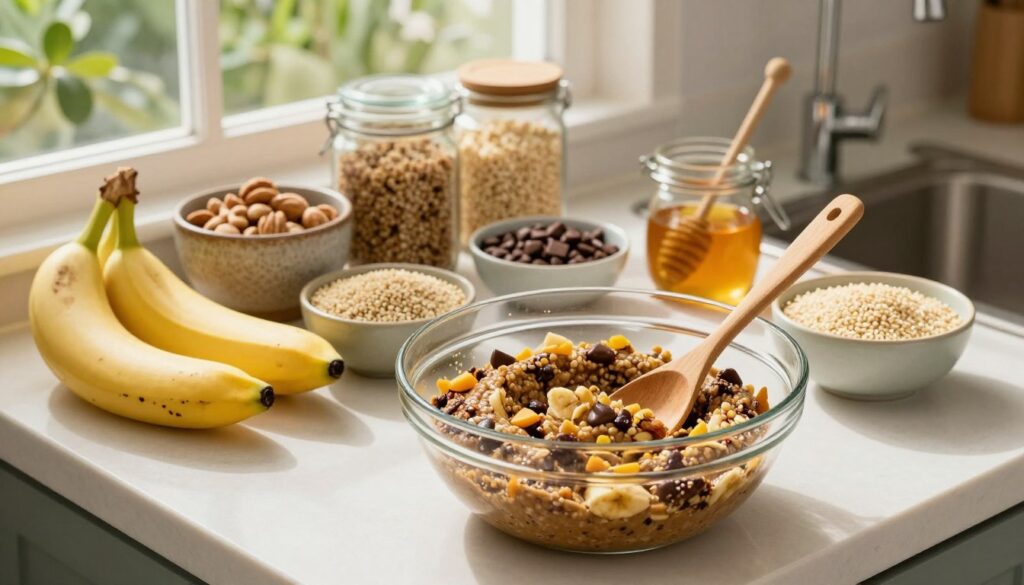
When making banana quinoa energy bars, you have a big choice: bake or no-bake? Both ways work, but they have their own perks. Knowing the differences helps you pick the best method for you.
The no-bake method is often the best choice. Just mix your ingredients, press them into a pan, and chill until firm. This takes about 15 to 30 minutes of work and 1 hour to chill. It’s quick and keeps nutrients like vitamins and antioxidants from bananas and nut butters.
Baked energy bars need a different step. Bake at 350 degrees Fahrenheit for 15 to 20 minutes until they’re golden. They get a crunchy texture but take more time and use oven energy.
Making gluten free energy bars works well with both methods. No-bake is easier for beginners because it avoids over-baking or drying out. Nut butters, mashed bananas, and sweeteners help the ingredients stick together when chilled, making them chewy and fudgy.
| Feature | No-Bake Method | Baked Method |
|---|---|---|
| Active Time | 15-30 minutes | 10 minutes prep + 20 minutes baking |
| Chilling/Cooling Time | 1 hour | 20-30 minutes cooling |
| Texture | Fudgy and chewy | Crunchier and firmer |
| Nutrient Preservation | Maximum (no heat exposure) | Some nutrient loss from heat |
| Storage Requirements | Must refrigerate | Can store at room temperature |
| Difficulty Level | Beginner-friendly | Moderate (baking skills needed) |
| Kitchen Energy Use | None (no oven) | Oven preheating and baking |
No-bake recipes, like no-oven desserts, are quick and perfect for hot weather. They use natural ingredients for binding, making them easy to make.
Baking is better for a crunchier texture or storing at room temperature. Baked bars keep their shape better in warm places, great for lunches or outdoor activities. The flourless banana quinoa breakfast bars show how baking works, but no-bake is better for this recipe.
- No-bake bars preserve fresh banana flavor and vibrant nutrients
- No-bake method maintains the delightful contrast between crispy puffed grains and creamy binding
- No-bake bars require less skill and equipment
- Baked bars offer longer shelf stability at room temperature
- Baked bars develop a cookie-like crunch throughout
For banana quinoa puffed rice bars, no-bake is usually the best choice. It takes under 15 minutes to prepare. Your gluten free energy bars stay fresh in the fridge for 4 to 5 days. No-bake gives you more nutrition, less effort, and better taste.
Choosing the Right Puffed Cereals for Your Energy Bars
Choosing the right puffed grain is key for great-tasting and nutritious energy bars. Not all puffed cereals are the same. The right choice can make your bars a hit. Knowing what each grain offers helps you create snacks that meet your health and taste needs.
Different puffed grains have different amounts of protein, fiber, and flavor. Some are perfect for gluten-free banana quinoa bars, while others are better for other recipes. Your choice affects the texture, crunch, and nutrition of each bite.
Puffed Quinoa vs Puffed Rice
Puffed quinoa and puffed rice are top choices for energy bars, each with its own benefits. Puffed quinoa is a nutritional powerhouse. It has all nine essential amino acids and more fiber, iron, magnesium, and manganese than rice. You get 4-6 grams of protein from quinoa alone, before adding more.
Puffed rice, mainly white, is high in carbs but low in protein and fiber. Brown rice puffs offer more nutrients than white rice but have a neutral taste. Rice puffs make bars lighter and milder, appealing to many.
Choose puffed quinoa if:
- You want maximum nutrition and protein
- You enjoy the slightly nutty flavor
- You’re making bars for health-conscious adults
Choose puffed rice if:
- You prefer a milder taste
- You’re introducing bars to picky eaters or children
- You want a lighter, crispier texture
Alternative Puffed Grain Options
There are many other puffed grains to explore for gluten-free banana quinoa bars or banana nut quinoa bites. Each offers unique flavors and textures.
| Puffed Grain | Protein Content | Best For | Special Notes |
|---|---|---|---|
| Soy Puffs | 8-10g per serving | Vegan protein needs | Highest protein option available |
| Puffed Buckwheat | High plant-based | Gluten-free diets | Hearty, slightly earthy flavor |
| Puffed Amaranth | High in calcium | Ancient grain preference | Extremely light, requires careful mixing |
| Puffed Millet | Moderate | Sensitive digestive systems | Mild, slightly sweet taste |
| Puffed Spelt | Good protein | Great flavor preference | Harder to find in stores |
Soy puffs made from edamame are the highest-protein option for vegans. They make bars satisfying with up to 8-10 grams of protein per serving. Puffed buckwheat is great for gluten-free banana quinoa bars, despite its name. Puffed amaranth is gluten-free and nutritious but very light, so it can be blown away during mixing.
You can find specialty puffed grains at bulk food stores, health food retailers, Amazon, or Thrive Market. Store them in airtight containers in cool, dry places to keep them crispy. Test freshness by listening for crispness—they should snap, not bend.
Pro tip: Mix different puffed grains in one batch. Try one cup puffed quinoa plus one cup puffed rice for balanced nutrition with lighter texture and milder flavor in your best healthy energy bars with puffed rice creations.
Customizing Your Energy Bars with Add-Ins and Toppings
Your homemade banana quinoa energy bars can be so much more than just a snack. Once you learn the basic recipe, you can turn them into a variety of flavors. Think of your bars as a blank canvas, ready for your creative touch. Just remember, not too many add-ins are best to keep the bars together.
Remember, less is more when adding extras to your bars. Too many can make them fall apart. Aim for 1/2 to 3/4 cup of add-ins, choosing 1 to 3 flavors that go well together.
Popular Add-In Options for Your Bars
Adding the right ingredients can make your quinoa oat energy bars even better. Here are some top picks:
| Add-In Type | Amount | Benefits | Flavor Profile |
|---|---|---|---|
| Mini Chocolate Chips | 1/4 cup | Rich flavor, melts into mixture | Sweet, indulgent |
| Chopped Nuts (almonds, walnuts, pecans) | 1/3 cup | Healthy fats, protein, omega-3s | Nutty, crunchy |
| Chia Seeds | 3 tablespoons | Omega-3s, fiber, slight gel texture | Mild, nutty |
| Hemp Hearts | 3 tablespoons | Complete protein, subtle nutrition | Nutty, earthy |
| Pumpkin Seeds | 1/4 cup | Zinc, magnesium, crunch | Savory, nutty |
| Dried Cranberries or Raisins | 1/3 cup | Natural sweetness, chewy texture | Tart or sweet |
| Chopped Dates | 1/4 cup | Caramel sweetness, natural binder | Sweet, caramel-like |
| Cacao Nibs | 1/4 cup | Chocolate flavor, less sugar, crunch | Chocolate, bitter |
| Shredded Coconut | 1/4 cup | Tropical flavor, texture variety | Sweet, tropical |
| Ground Cinnamon | 1/2 to 1 teaspoon | Warmth, snickerdoodle effect | Spicy, warm |
When making your high fiber banana snack bars, pair flavors that go well together. For example, cinnamon and chopped dates with walnuts are a great mix. Cacao nibs and coconut with almonds create a sophisticated chocolate-coconut taste.
Topping Ideas That Elevate Your Bars
Toppings can make your bars look and taste like they came from a bakery. Apply these after pressing the mixture into the pan but before chilling:
- Melted dark chocolate drizzle for visual appeal and extra richness
- Chopped nuts pressed into the top surface for crunch and style
- Sea salt flakes sprinkled over chocolate for a salted chocolate effect
- Drizzled nut butter in decorative patterns for smooth creaminess
- Crushed freeze-dried fruit for bright color and fruity notes
Flavor Combinations That Work
Here are some proven flavor pairings for your quinoa oat energy bars:
- Chocolate Almond Joy: Mini chocolate chips, shredded coconut, chopped almonds
- Tropical Paradise: Coconut flakes, dried pineapple, macadamia nuts
- Trail Mix: Mixed nuts, raisins, mini chocolate chips, pumpkin seeds
- Superfood Power: Goji berries, cacao nibs, hemp hearts, chia seeds
- Chai Spice: Ground cinnamon, cardamom, ginger powder, vanilla extract
- PB&J: Extra peanut butter drizzle, dried strawberries, walnuts
You can customize your bars in many ways, not just flavor. Need allergy-friendly bars? Use sunflower seeds and sunflower butter instead of nuts. Want lower sugar? Choose sugar-free chocolate chips. Looking for post-workout recovery? Add extra protein powder to boost your bars.
The beauty of making your own bars is that you control every ingredient. You’re not stuck with store-bought options that don’t fit your taste or needs. Your taste buds, dietary needs, and nutritional goals guide every choice you make in your kitchen.
Best Protein Powder Options for Vegan Energy Bars
Adding protein powder to your vegan energy bars with banana makes them more than just snacks. They become a powerful fuel source. With protein powder, your bars go from 6-8 grams of protein to 20-22 grams. This is great for post-workout recovery or as a light meal substitute.
Protein powder is optional but boosts your bars’ quality. Without it, your recipe still works well. But with it, your bars become even better.
Choosing the right protein powder is key. You have many plant-based options, each with its own benefits for your energy bars.
Plant-Based Protein Powder Varieties
Vanilla pea protein is a top choice for vegan energy bars with banana. Look for simple ingredients like pea protein isolate, natural vanilla, and stevia or monk fruit sweetener. This formula ensures a smooth texture and all nine essential amino acids.
Brown rice protein is also good but absorbs more liquid. You might need to add 1-2 tablespoons more wet ingredients. Soy protein offers complete amino acids and a mild flavor. Hemp protein adds omega-3 fatty acids, but its earthy taste is better in chocolate bars. Pumpkin seed protein offers a nutty flavor and extra minerals.
Stay away from protein powders with added sugars, artificial flavors, or unknown ingredients. These can ruin your goal of making clean, healthy snacks.
How Protein Powder Affects Texture
Protein powder absorbs moisture from your ingredients, helping your bars firm up. But too much or the wrong type can make them dry and crumbly.
- Pea protein and soy protein are moderate absorbers that work with standard recipes
- Rice protein and hemp protein are high absorbers needing extra wet ingredients
- Use approximately 1.9 ounces (about 2 scoops) for 22 grams of protein per bar
Check the texture when mixing. Your mixture should be sticky but not slimy. It should compact into a solid mass when pressed. If it’s too dry, add liquid slowly. If too wet, add more cereal or protein powder.
Vanilla or unflavored protein powder is best for customizing flavors. Bold flavors like chocolate should be balanced with other ingredients for the best taste.
Storage Tips and Shelf Life for Homemade Energy Bars
Your homemade gluten free banana quinoa snack bars need proper storage to stay fresh and delicious. Keeping them in the right conditions ensures you always have energy bars for gym and fitness at home ready to grab when you need them most. Let’s explore the best ways to store your bars so they maintain their texture and taste.
The refrigerator is your best friend when storing no-bake energy bars. Place your cut bars in an airtight glass container or BPA-free plastic container with a tight-fitting lid. Your bars will stay fresh for up to 10 days when refrigerated this way. The sealed container prevents them from absorbing odors from other foods in your fridge and keeps moisture from escaping. If you’re stacking bars, place parchment paper between layers to prevent them from sticking together.
Freezing is perfect for extending the storage life of your energy bars for gym and fitness at. Wrap each bar individually in parchment paper or plastic wrap before placing them in a freezer-safe bag or airtight container. Your bars will keep for up to 6 weeks in the freezer. Individual wrapping lets you remove one bar at a time without thawing everything. Thaw bars in the refrigerator overnight, at room temperature for 30–60 minutes, or microwave for 15–20 seconds if you’re in a hurry.
| Storage Method | Temperature | Duration | Best For |
|---|---|---|---|
| Refrigerator | 35–40°F | Up to 10 days | Weekly snacks and quick access |
| Room Temperature | Below 75°F | 3–5 days | Lunch boxes and gym bags |
| Freezer | 0°F or below | Up to 6 weeks | Long-term storage and meal prep |
Room temperature storage works for short periods. Your gluten free banana quinoa snack bars can stay out for 3–5 days if the environment stays cooler than 75°F. For packing in lunch boxes or gym bags, wrap each bar in parchment paper individually. This makes them portable and prevents them from getting sticky. Never leave bars unrefrigerated for more than 4–6 hours in warm weather.
Consider these portable storage ideas for your busy lifestyle:
- Wrap bars in parchment paper for lunch boxes
- Pack bars with an ice pack in insulated lunch containers
- Store individual wrapped bars in your gym bag
- Keep frozen bars in a small cooler for outdoor activities
- Date your containers and rotate oldest bars first
Make sure chocolate coating fully hardens before freezing your bars. Fresh banana and nut butter need cold storage to prevent spoilage. Always trust your senses—discard any bar that smells off or shows signs of mold. With smart storage practices, your homemade energy bars stay delicious and convenient for all your health and fitness goals.
Common Mistakes to Avoid When Making Puffed Quinoa Bars
Making healthy energy bars at home is usually easy. But, a few mistakes can make your project go wrong. Your bars might get dry, crumbly, or fall apart. Luckily, most problems have simple fixes before chilling your bars.
Knowing these common mistakes helps you make better bars on your first try. You’ll learn what causes problems and how to avoid them.
Fixing Dry or Crumbly Bar Texture
Dry, crumbly texture is a common issue with homemade energy bars. This problem usually comes from a few specific causes that you can easily identify and fix.
Your mixture becomes too dry when:
- Protein powder absorbs too much moisture without adjusting liquid ingredients
- Nut butter is old, separated, or has lost its natural oils
- You don’t use enough liquid sweetener or banana for binding
- You add too many dry ingredients that throw off the wet-to-dry balance
Before pressing your mixture into the pan, test its consistency. The mixture should feel sticky and cohesive, not dry and powdery. If it crumbles apart immediately, it needs more moisture.
Fix this problem by adding liquid ingredients one teaspoon at a time. Melted coconut oil works best because it adds binding power and healthy fats without extra sweetness. You can also use additional nut butter, maple syrup, or plant milk. Mix thoroughly after each addition and test again.
To prevent dry texture in future batches of healthy energy bars for weight loss, use fresh nut butter from a newly opened jar with a pourable consistency. Warm your nut butter slightly in the microwave for 10-15 seconds to make it more liquid. Choose ripe, moist bananas rather than underripe ones. Start with the lower amount of protein powder and add more only if your mixture can handle it.
Preventing Bars from Falling Apart
Bars that fall apart when you cut them or pick them up are frustrating. Several factors contribute to this problem. Understanding each one helps you create sturdy healthy energy bars for weight loss.
Bars fall apart because of:
| Problem | Solution |
|---|---|
| Insufficient pressing when shaping | Press firmly and evenly using the back of a spatula or measuring cup. Press in multiple directions to ensure tight compaction throughout |
| Inadequate chilling time | Chill for at least 45-60 minutes in the refrigerator or 15 minutes in the freezer. Test by gently pressing the center—it should feel solid without leaving an indent |
| Large or irregular puffed cereals | Use small, uniform puffed quinoa or rice that packs together well rather than large, fluffy cereals |
| Improper wet-to-dry ratio | Ensure you have enough binding agents to hold everything together. Too much puffed cereal means insufficient “glue” |
| Cutting while bars are too warm | Wait until bars are completely firm. Use a large, sharp knife, run it under hot water between cuts, and use firm downward motions |
When pressing your mixture, use significant pressure. Place parchment paper over your mixture and press through it for even more force without sticking. Pay special attention to corners and edges, which tend to be under-pressed and crumble more easily.
Patience with chilling is essential. Resist cutting your bars early. Use the freezer if you’re in a hurry, but allow at least 15 minutes minimum. If bars start to fall apart after cutting, return them to the refrigerator for another 30 minutes to firm up.
Use proper cutting technique to minimize crumbling. Run your knife under hot water and dry it before each cut—the warm blade cuts more cleanly through sticky mixtures. Use firm, decisive downward motions instead of sawing. Wipe the blade clean between cuts to prevent buildup.
Don’t skip parchment paper lining in your pan. Greasing alone often isn’t enough, and you’ll damage your bars trying to remove them. Use the correct pan size for your recipe. A 9×13 pan with an 8×8 recipe creates bars that are too thin and fragile. Store bars properly in an airtight container. Leaving them uncovered in the fridge will dry them out within a couple of days.
If your bars are beyond saving, don’t waste them. Crumble them completely and use them as a topping for yogurt or smoothie bowls. Press the crumbles into muffin tins to create energy bar bites with more structural support. Mix crumbles with extra nut butter and roll into energy balls. Learn from the experience and adjust your technique for your next batch of healthy energy bars for weight loss.
Conclusion
You now have all the info to make banana quinoa puffed rice energy bars at home. These homemade bars are better than store-bought ones in many ways. You choose what goes into them, save money, and enjoy a better taste from real ingredients like bananas and natural nut butters.
These bars are a fraction of the cost of similar products at the grocery store. Making your own energy bars lets you customize them for your needs. You can adjust the recipe to fit your lifestyle, whether you follow a vegan diet, avoid gluten, or skip refined sugar.
Your bars are great for busy mornings, afternoon energy slumps, post-workout recovery, and quick snacks between activities. They give you sustained energy without the crash from commercial bars. These bars are loaded with added sugars and artificial ingredients.
Start with the basic banana quinoa recipe to get comfortable with the process. Then, try different puffed grains, add-ins, and flavor combinations to find your perfect version. Even if your first batch needs tweaking, you’ll learn something valuable for batch two.
Keep them in your fridge or freezer for easy access. Share them with family and friends who will be amazed at how delicious and healthy they are. Making these bars is an investment in your health and wellbeing.
You’re choosing to fuel your body with real nutrition and whole food ingredients. Get started this week with ingredients from any supermarket. You’ll find that healthy snacks don’t have to be boring or expensive. Your homemade energy bars will become a staple in your routine, supporting your fitness goals and satisfying your cravings the right way.
FAQ
How much protein do homemade banana quinoa energy bars contain per serving?
Can I make banana quinoa energy bars without baking?
How long do homemade energy bars last in the refrigerator?
What’s the best puffed cereal to use in energy bars?
How do I prevent my energy bars from falling apart?
Can I make these bars if I have a nut allergy?
How much does it cost to make homemade energy bars compared to store-bought?
FAQ
How much protein do homemade banana quinoa energy bars contain per serving?
Homemade banana quinoa energy bars have about 22 grams of protein per serving with protein powder. Without it, they still have 6-8 grams of protein. This depends on the ingredients and puffed cereal used.
Can I make banana quinoa energy bars without baking?
Yes! Making no-bake energy bars is perfect for banana quinoa puffed rice bars. This method keeps nutrients safe and saves time. It’s also great for beginners.
How long do homemade energy bars last in the refrigerator?
Homemade energy bars stay fresh for up to a week in the fridge. You can freeze them for three months. Wrap each bar in parchment paper before freezing.
What’s the best puffed cereal to use in energy bars?
Puffed quinoa is better for nutrition, offering complete protein and more fiber. It tastes slightly nutty. Puffed brown or white rice is good for a milder taste and lighter texture.
How do I prevent my energy bars from falling apart?
Press the mixture firmly into the pan and chill it for 45-60 minutes. Use a sharp knife warmed under hot water to cut. If bars fall apart, chill them again for 30 minutes.
Can I make these bars if I have a nut allergy?
Absolutely! Use sunflower seed butter or soy nut butter instead of nut butter. Choose nut-free add-ins like seeds and dried fruit. Always check labels for allergies.
How much does it cost to make homemade energy bars compared to store-bought?
Homemade bars cost
FAQ
How much protein do homemade banana quinoa energy bars contain per serving?
Homemade banana quinoa energy bars have about 22 grams of protein per serving with protein powder. Without it, they still have 6-8 grams of protein. This depends on the ingredients and puffed cereal used.
Can I make banana quinoa energy bars without baking?
Yes! Making no-bake energy bars is perfect for banana quinoa puffed rice bars. This method keeps nutrients safe and saves time. It’s also great for beginners.
How long do homemade energy bars last in the refrigerator?
Homemade energy bars stay fresh for up to a week in the fridge. You can freeze them for three months. Wrap each bar in parchment paper before freezing.
What’s the best puffed cereal to use in energy bars?
Puffed quinoa is better for nutrition, offering complete protein and more fiber. It tastes slightly nutty. Puffed brown or white rice is good for a milder taste and lighter texture.
How do I prevent my energy bars from falling apart?
Press the mixture firmly into the pan and chill it for 45-60 minutes. Use a sharp knife warmed under hot water to cut. If bars fall apart, chill them again for 30 minutes.
Can I make these bars if I have a nut allergy?
Absolutely! Use sunflower seed butter or soy nut butter instead of nut butter. Choose nut-free add-ins like seeds and dried fruit. Always check labels for allergies.
How much does it cost to make homemade energy bars compared to store-bought?
Homemade bars cost $0.75-$1.50 each when buying in bulk. Store-bought bars cost $2-4 each. Making them is budget-friendly and healthy.
What’s the difference between puffed quinoa and soy puffs?
Soy puffs have 8-10 grams of protein per serving, great for vegans. Puffed quinoa has complete protein and a nutty flavor. Choose soy puffs for more protein or puffed quinoa for balanced nutrition.
Can I add protein powder to the basic recipe?
Yes! Adding protein powder boosts protein to 20-22 grams per serving. Use vanilla or unflavored protein powder for flexibility. Adjust wet ingredients if needed.
What are the best add-ins for customizing my energy bars?
Add 1-3 complementary add-ins for flavor. Try chocolate chips, nuts, seeds, dried fruit, and spices. Limit add-ins to 1/2 to 3/4 cup.
Is it better to eat these bars cold or at room temperature?
Both ways are delicious. Many prefer them slightly frozen for a refreshing treat. They’re firmer and more satisfying.
Why did my energy bars turn out dry and crumbly?
Dry bars often result from using too much protein powder or old nut butter. Add liquid 1 teaspoon at a time until sticky. Use fresh nut butter for better binding.
Can these bars accommodate a gluten-free diet?
Absolutely! Use gluten-free oats and puffed grains for celiac-safe bars. Check labels for gluten-free ingredients. These bars are great for those with gluten sensitivity.
How many bars does one batch make?
One batch makes 12 to 16 bars, depending on size. Cut them into 2-inch squares for smaller bars or 2.5-inch squares for larger ones.
What’s the best way to pack energy bars for the gym or hiking?
Wrap each bar in parchment paper and pack in an insulated bag with an ice pack. This keeps them firm and fresh.
Can I use store-bought nut butter alternatives?
Yes! Use peanut butter, almond butter, or sunflower seed butter. Stir old nut butter to mix oils evenly. Fresh nut butter is essential for binding.
What liquid sweetener works best for these bars?
Maple syrup, brown rice syrup, and agave nectar are good options. Use 1/4 to 1/2 cup, depending on sweetness preference.
How do I create a chocolate-topped version?
Melt 1.5 ounces of dark chocolate with 1 teaspoon of coconut oil. Spread over the bars and chill until set. This adds richness and visual appeal.
What’s the nutritional difference between puffed amaranth and puffed quinoa?
Both are gluten-free and nutritious. Puffed quinoa has complete protein and moderate fiber. Puffed amaranth has higher calcium and is easily digestible. Choose based on nutritional needs and texture preference.
How many servings does one batch provide?
One batch yields 12-16 servings, depending on bar size. Cut them to your preferred size for portion control.
FAQ
How much protein do homemade banana quinoa energy bars contain per serving?
Homemade banana quinoa energy bars have about 22 grams of protein per serving with protein powder. Without it, they still have 6-8 grams of protein. This depends on the ingredients and puffed cereal used.
Can I make banana quinoa energy bars without baking?
Yes! Making no-bake energy bars is perfect for banana quinoa puffed rice bars. This method keeps nutrients safe and saves time. It’s also great for beginners.
How long do homemade energy bars last in the refrigerator?
Homemade energy bars stay fresh for up to a week in the fridge. You can freeze them for three months. Wrap each bar in parchment paper before freezing.
What’s the best puffed cereal to use in energy bars?
Puffed quinoa is better for nutrition, offering complete protein and more fiber. It tastes slightly nutty. Puffed brown or white rice is good for a milder taste and lighter texture.
How do I prevent my energy bars from falling apart?
Press the mixture firmly into the pan and chill it for 45-60 minutes. Use a sharp knife warmed under hot water to cut. If bars fall apart, chill them again for 30 minutes.
Can I make these bars if I have a nut allergy?
Absolutely! Use sunflower seed butter or soy nut butter instead of nut butter. Choose nut-free add-ins like seeds and dried fruit. Always check labels for allergies.
How much does it cost to make homemade energy bars compared to store-bought?
Homemade bars cost
FAQ
How much protein do homemade banana quinoa energy bars contain per serving?
Homemade banana quinoa energy bars have about 22 grams of protein per serving with protein powder. Without it, they still have 6-8 grams of protein. This depends on the ingredients and puffed cereal used.
Can I make banana quinoa energy bars without baking?
Yes! Making no-bake energy bars is perfect for banana quinoa puffed rice bars. This method keeps nutrients safe and saves time. It’s also great for beginners.
How long do homemade energy bars last in the refrigerator?
Homemade energy bars stay fresh for up to a week in the fridge. You can freeze them for three months. Wrap each bar in parchment paper before freezing.
What’s the best puffed cereal to use in energy bars?
Puffed quinoa is better for nutrition, offering complete protein and more fiber. It tastes slightly nutty. Puffed brown or white rice is good for a milder taste and lighter texture.
How do I prevent my energy bars from falling apart?
Press the mixture firmly into the pan and chill it for 45-60 minutes. Use a sharp knife warmed under hot water to cut. If bars fall apart, chill them again for 30 minutes.
Can I make these bars if I have a nut allergy?
Absolutely! Use sunflower seed butter or soy nut butter instead of nut butter. Choose nut-free add-ins like seeds and dried fruit. Always check labels for allergies.
How much does it cost to make homemade energy bars compared to store-bought?
Homemade bars cost $0.75-$1.50 each when buying in bulk. Store-bought bars cost $2-4 each. Making them is budget-friendly and healthy.
What’s the difference between puffed quinoa and soy puffs?
Soy puffs have 8-10 grams of protein per serving, great for vegans. Puffed quinoa has complete protein and a nutty flavor. Choose soy puffs for more protein or puffed quinoa for balanced nutrition.
Can I add protein powder to the basic recipe?
Yes! Adding protein powder boosts protein to 20-22 grams per serving. Use vanilla or unflavored protein powder for flexibility. Adjust wet ingredients if needed.
What are the best add-ins for customizing my energy bars?
Add 1-3 complementary add-ins for flavor. Try chocolate chips, nuts, seeds, dried fruit, and spices. Limit add-ins to 1/2 to 3/4 cup.
Is it better to eat these bars cold or at room temperature?
Both ways are delicious. Many prefer them slightly frozen for a refreshing treat. They’re firmer and more satisfying.
Why did my energy bars turn out dry and crumbly?
Dry bars often result from using too much protein powder or old nut butter. Add liquid 1 teaspoon at a time until sticky. Use fresh nut butter for better binding.
Can these bars accommodate a gluten-free diet?
Absolutely! Use gluten-free oats and puffed grains for celiac-safe bars. Check labels for gluten-free ingredients. These bars are great for those with gluten sensitivity.
How many bars does one batch make?
One batch makes 12 to 16 bars, depending on size. Cut them into 2-inch squares for smaller bars or 2.5-inch squares for larger ones.
What’s the best way to pack energy bars for the gym or hiking?
Wrap each bar in parchment paper and pack in an insulated bag with an ice pack. This keeps them firm and fresh.
Can I use store-bought nut butter alternatives?
Yes! Use peanut butter, almond butter, or sunflower seed butter. Stir old nut butter to mix oils evenly. Fresh nut butter is essential for binding.
What liquid sweetener works best for these bars?
Maple syrup, brown rice syrup, and agave nectar are good options. Use 1/4 to 1/2 cup, depending on sweetness preference.
How do I create a chocolate-topped version?
Melt 1.5 ounces of dark chocolate with 1 teaspoon of coconut oil. Spread over the bars and chill until set. This adds richness and visual appeal.
What’s the nutritional difference between puffed amaranth and puffed quinoa?
Both are gluten-free and nutritious. Puffed quinoa has complete protein and moderate fiber. Puffed amaranth has higher calcium and is easily digestible. Choose based on nutritional needs and texture preference.
How many servings does one batch provide?
One batch yields 12-16 servings, depending on bar size. Cut them to your preferred size for portion control.
.75-
FAQ
How much protein do homemade banana quinoa energy bars contain per serving?
Homemade banana quinoa energy bars have about 22 grams of protein per serving with protein powder. Without it, they still have 6-8 grams of protein. This depends on the ingredients and puffed cereal used.
Can I make banana quinoa energy bars without baking?
Yes! Making no-bake energy bars is perfect for banana quinoa puffed rice bars. This method keeps nutrients safe and saves time. It’s also great for beginners.
How long do homemade energy bars last in the refrigerator?
Homemade energy bars stay fresh for up to a week in the fridge. You can freeze them for three months. Wrap each bar in parchment paper before freezing.
What’s the best puffed cereal to use in energy bars?
Puffed quinoa is better for nutrition, offering complete protein and more fiber. It tastes slightly nutty. Puffed brown or white rice is good for a milder taste and lighter texture.
How do I prevent my energy bars from falling apart?
Press the mixture firmly into the pan and chill it for 45-60 minutes. Use a sharp knife warmed under hot water to cut. If bars fall apart, chill them again for 30 minutes.
Can I make these bars if I have a nut allergy?
Absolutely! Use sunflower seed butter or soy nut butter instead of nut butter. Choose nut-free add-ins like seeds and dried fruit. Always check labels for allergies.
How much does it cost to make homemade energy bars compared to store-bought?
Homemade bars cost $0.75-$1.50 each when buying in bulk. Store-bought bars cost $2-4 each. Making them is budget-friendly and healthy.
What’s the difference between puffed quinoa and soy puffs?
Soy puffs have 8-10 grams of protein per serving, great for vegans. Puffed quinoa has complete protein and a nutty flavor. Choose soy puffs for more protein or puffed quinoa for balanced nutrition.
Can I add protein powder to the basic recipe?
Yes! Adding protein powder boosts protein to 20-22 grams per serving. Use vanilla or unflavored protein powder for flexibility. Adjust wet ingredients if needed.
What are the best add-ins for customizing my energy bars?
Add 1-3 complementary add-ins for flavor. Try chocolate chips, nuts, seeds, dried fruit, and spices. Limit add-ins to 1/2 to 3/4 cup.
Is it better to eat these bars cold or at room temperature?
Both ways are delicious. Many prefer them slightly frozen for a refreshing treat. They’re firmer and more satisfying.
Why did my energy bars turn out dry and crumbly?
Dry bars often result from using too much protein powder or old nut butter. Add liquid 1 teaspoon at a time until sticky. Use fresh nut butter for better binding.
Can these bars accommodate a gluten-free diet?
Absolutely! Use gluten-free oats and puffed grains for celiac-safe bars. Check labels for gluten-free ingredients. These bars are great for those with gluten sensitivity.
How many bars does one batch make?
One batch makes 12 to 16 bars, depending on size. Cut them into 2-inch squares for smaller bars or 2.5-inch squares for larger ones.
What’s the best way to pack energy bars for the gym or hiking?
Wrap each bar in parchment paper and pack in an insulated bag with an ice pack. This keeps them firm and fresh.
Can I use store-bought nut butter alternatives?
Yes! Use peanut butter, almond butter, or sunflower seed butter. Stir old nut butter to mix oils evenly. Fresh nut butter is essential for binding.
What liquid sweetener works best for these bars?
Maple syrup, brown rice syrup, and agave nectar are good options. Use 1/4 to 1/2 cup, depending on sweetness preference.
How do I create a chocolate-topped version?
Melt 1.5 ounces of dark chocolate with 1 teaspoon of coconut oil. Spread over the bars and chill until set. This adds richness and visual appeal.
What’s the nutritional difference between puffed amaranth and puffed quinoa?
Both are gluten-free and nutritious. Puffed quinoa has complete protein and moderate fiber. Puffed amaranth has higher calcium and is easily digestible. Choose based on nutritional needs and texture preference.
How many servings does one batch provide?
One batch yields 12-16 servings, depending on bar size. Cut them to your preferred size for portion control.
.50 each when buying in bulk. Store-bought bars cost -4 each. Making them is budget-friendly and healthy.
What’s the difference between puffed quinoa and soy puffs?
Soy puffs have 8-10 grams of protein per serving, great for vegans. Puffed quinoa has complete protein and a nutty flavor. Choose soy puffs for more protein or puffed quinoa for balanced nutrition.
Can I add protein powder to the basic recipe?
Yes! Adding protein powder boosts protein to 20-22 grams per serving. Use vanilla or unflavored protein powder for flexibility. Adjust wet ingredients if needed.
What are the best add-ins for customizing my energy bars?
Add 1-3 complementary add-ins for flavor. Try chocolate chips, nuts, seeds, dried fruit, and spices. Limit add-ins to 1/2 to 3/4 cup.
Is it better to eat these bars cold or at room temperature?
Both ways are delicious. Many prefer them slightly frozen for a refreshing treat. They’re firmer and more satisfying.
Why did my energy bars turn out dry and crumbly?
Dry bars often result from using too much protein powder or old nut butter. Add liquid 1 teaspoon at a time until sticky. Use fresh nut butter for better binding.
Can these bars accommodate a gluten-free diet?
Absolutely! Use gluten-free oats and puffed grains for celiac-safe bars. Check labels for gluten-free ingredients. These bars are great for those with gluten sensitivity.
How many bars does one batch make?
One batch makes 12 to 16 bars, depending on size. Cut them into 2-inch squares for smaller bars or 2.5-inch squares for larger ones.
What’s the best way to pack energy bars for the gym or hiking?
Wrap each bar in parchment paper and pack in an insulated bag with an ice pack. This keeps them firm and fresh.
Can I use store-bought nut butter alternatives?
Yes! Use peanut butter, almond butter, or sunflower seed butter. Stir old nut butter to mix oils evenly. Fresh nut butter is essential for binding.
What liquid sweetener works best for these bars?
Maple syrup, brown rice syrup, and agave nectar are good options. Use 1/4 to 1/2 cup, depending on sweetness preference.
How do I create a chocolate-topped version?
Melt 1.5 ounces of dark chocolate with 1 teaspoon of coconut oil. Spread over the bars and chill until set. This adds richness and visual appeal.
What’s the nutritional difference between puffed amaranth and puffed quinoa?
Both are gluten-free and nutritious. Puffed quinoa has complete protein and moderate fiber. Puffed amaranth has higher calcium and is easily digestible. Choose based on nutritional needs and texture preference.
How many servings does one batch provide?
One batch yields 12-16 servings, depending on bar size. Cut them to your preferred size for portion control.
Similar Posts
The Best Simple Top 88 salad recipes
Discover the best salad recipes with our collection of 88 simple and delicious ideas. Perfect for quick meals and healthy eating all week long!
The Simple Homemade Desserts with Few Ingredients
Simple homemade desserts with few ingredients that are quick, easy, and delicious. Perfect for busy days, beginners, and budget-friendly sweet cravings.
The Best Foolproof Dessert Recipes That Never Fail
Discover the best foolproof dessert recipes that never fail. Easy, stress-free, and perfect for beginners—delicious results every time!
Few Ingredient Desserts Everyone Loves
Simple, Sweet & Impossible to Resist Introduction When it comes to desserts, simple is often better. Few ingredient desserts prove that you don’t need a long shopping list or advanced baking skills to create something delicious. Whether you’re short on time, new to baking, or just craving something sweet, these easy desserts with minimal ingredients…
The Best Entremets and pastry desserts Easy
Discover easy-to-make entremets and pastry desserts with our step-by-step guide. Learn how to create delicious, professional-looking treats at home.
How to Make 5 Game Day Recipes
Score big with 5 easy game day recipes perfect for your next watch party. Quick crowd-pleasers from dips to wings everyone will love.