The Best Swiss chard gratin: the best recipe Easy
There’s a special moment when you pull a dish from the oven and it’s delicious. This feeling comes when you make an easy Swiss chard recipe that tastes like a French bistro. You don’t need fancy skills or rare ingredients. What you need is the right guidance and a good recipe.
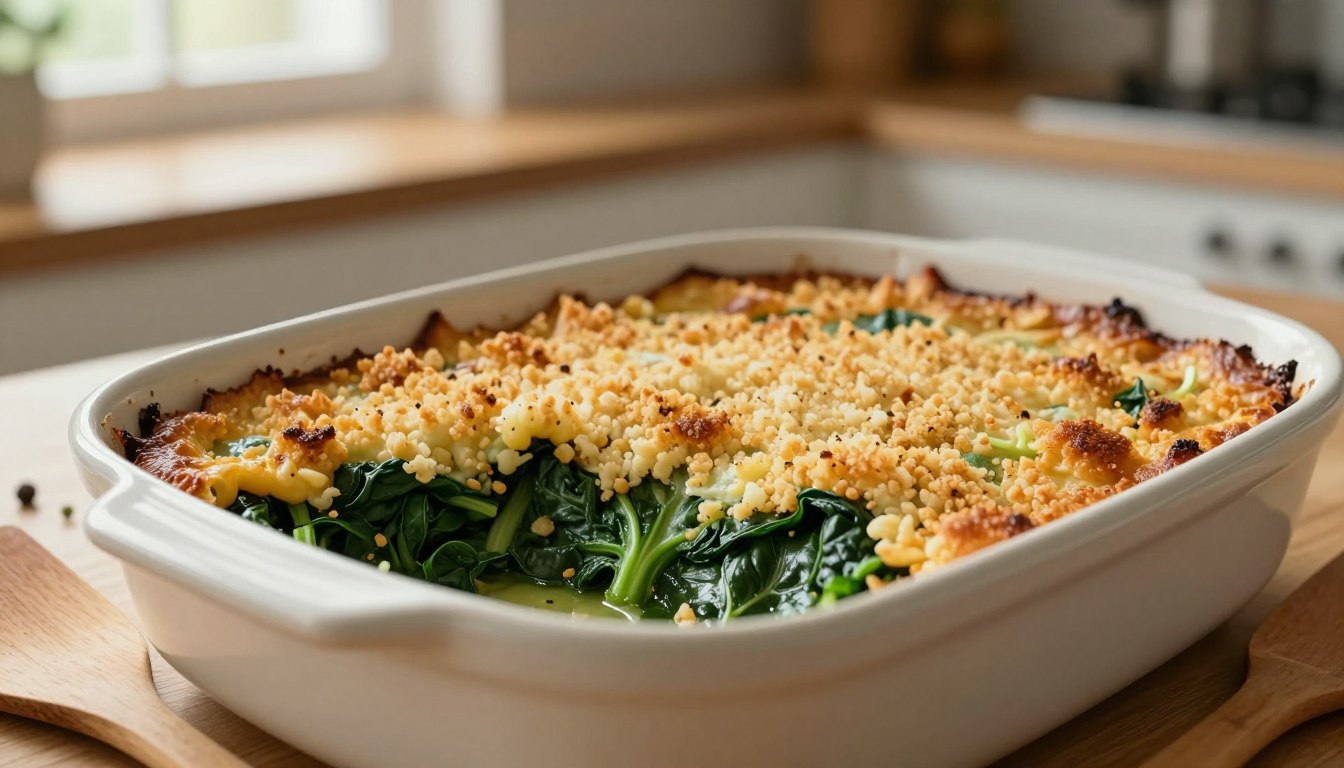
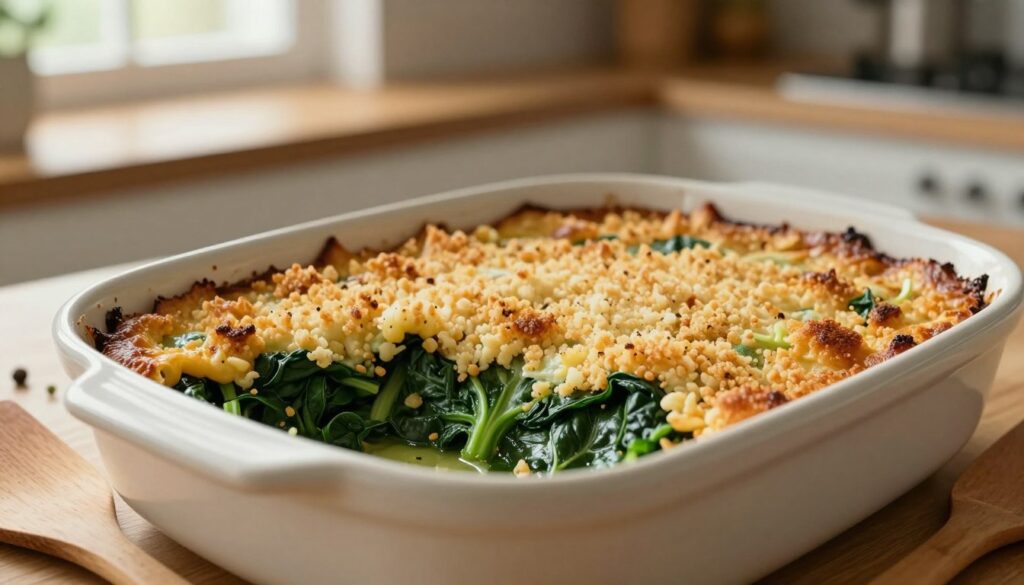
Making Swiss chard gratin at home is easier than you think. It combines tender greens, creamy sauce, and a crispy topping. This makes a dish that’s like something from a restaurant. Plus, you can make this best Swiss chard gratin recipe in about 45 minutes with ingredients you probably have.
This dish is great for any occasion, whether it’s for yourself or guests. You can use different chard types like rainbow, red, or green. Adding other greens like spinach or kale can also change it up. This means you’ll want to make it again and again.
Key Takeaways
- Swiss chard gratin comes together in just 45 minutes to an hour with simple pantry staples
- The creamy sauce and crispy topping create an impressive dish that tastes gourmet yet stays easy to prepare
- You can swap different greens or use a mix to customize your gratin based on what you have available
- This recipe works perfectly as a side dish for both everyday dinners and special occasions
- Leftovers store well and reheat beautifully, making this a practical choice for meal planning
- Melting butter with breadcrumbs creates the golden topping that makes this dish visually stunning
- Building the creamy sauce base takes just five minutes but adds incredible flavor throughout
Why This Easy Swiss Chard Recipe Will Become Your Go-To Side Dish
Looking for a quick Swiss chard side dish that impresses your family? This creamy Swiss chard gratin is perfect. It’s easy to make and tastes like a restaurant dish. It’s great for busy nights or special occasions.
This recipe is more than just a meal. It’s packed with nutrition. The chard is the star, not hidden in heavy cream.
The Perfect Balance of Creamy and Crispy Textures
This dish is loved for its texture. The chard is tender, and the topping is crispy. It’s a mix of soft and crunchy.
Every bite is a delight. The soft greens and crunchy topping offer a unique experience. It’s both comforting and exciting.
- Tender, creamy chard interior
- Golden, crispy breadcrumb topping
- Rich sauce that coats every leaf
- Satisfying crunch with each bite
Packed with Nutrients Without Sacrificing Flavor
Swiss chard is a nutritional powerhouse. It’s full of vitamins A, C, and K, and minerals like magnesium and potassium. It’s good for your eyes, immune system, and bones.
This recipe is special because it’s light. Unlike many, it doesn’t use too much cream and cheese. The sauce enhances the chard’s flavor. Find the recipe here.
| Nutrient | Amount per Serving | Health Benefit |
|---|---|---|
| Vitamin A | 1,098 IU | Supports eye health and vision |
| Vitamin C | 8 mg | Boosts immune system function |
| Fiber | 1 g | Aids digestive health |
| Potassium | 124 mg | Supports heart and muscle function |
| Protein | 3 g | Builds and repairs tissues |
Serving this dish makes you feel good. It’s nutritious and delicious. It’s a healthy choice that nourishes your body.
This Swiss chard side dish is a must-have. It’s impressive, nutritious, and flavorful. It’s a simple dish that’s perfect for any occasion.
Understanding Swiss Chard: Your Guide to This Versatile Leafy Green
Swiss chard is a hearty, colorful, and nutritious vegetable. It belongs to the same family as spinach and beets. If you’re new to this leafy green, don’t worry. Once you understand what makes chard special, you’ll see why it deserves a regular spot on your dinner table.
This vegetable features large, dark green leaves paired with thick stalks that come in many colors. You might find white stems, golden yellow, vibrant red, or pink varieties at your local market. Rainbow chard recipe options feature multiple stalk colors in a single bunch. The good news? All swiss chard varieties offer the same nutritional benefits, so you can choose based on what looks freshest.
The flavor profile sets chard apart from other greens. You’ll experience an earthy, slightly mineral taste that’s heartier than spinach. The stems offer a subtle sweetness that complements the more robust leaves. When you learn how to cook swiss chard, you’ll discover that both the stems and leaves deserve your attention. Don’t skip those stems—they add wonderful texture and flavor.
Availability varies by season. Spring and fall bring peak harvests, though you can find chard year-round in most areas. For gardeners interested in growing swiss chard, this vegetable rewards your efforts. It tolerates both cool and warm weather, making it perfect for home gardens. Chard also serves as a great companion plant for nearby root vegetables.
| Feature | Swiss Chard | Spinach | Kale |
|---|---|---|---|
| Leaf Texture | Large, tender | Delicate, thin | Tough, crinkly |
| Stem Quality | Edible, sweet | Not typically used | Not typically used |
| Cooking Stability | Holds up well | Wilts quickly | Very hardy |
| Flavor Profile | Earthy, mineral | Mild, grassy | Bold, bitter |
| Best Season | Spring and fall | Cool seasons | Fall and winter |
Understanding chard’s characteristics helps you make smart choices in the kitchen. You’ll feel confident selecting bunches and preparing them for your favorite dishes. Whether you’re sautéing, adding to soups, or creating a gratin, this versatile green adapts beautifully to many cooking styles and flavor combinations.
Essential Ingredients for the Perfect Swiss Chard Gratin
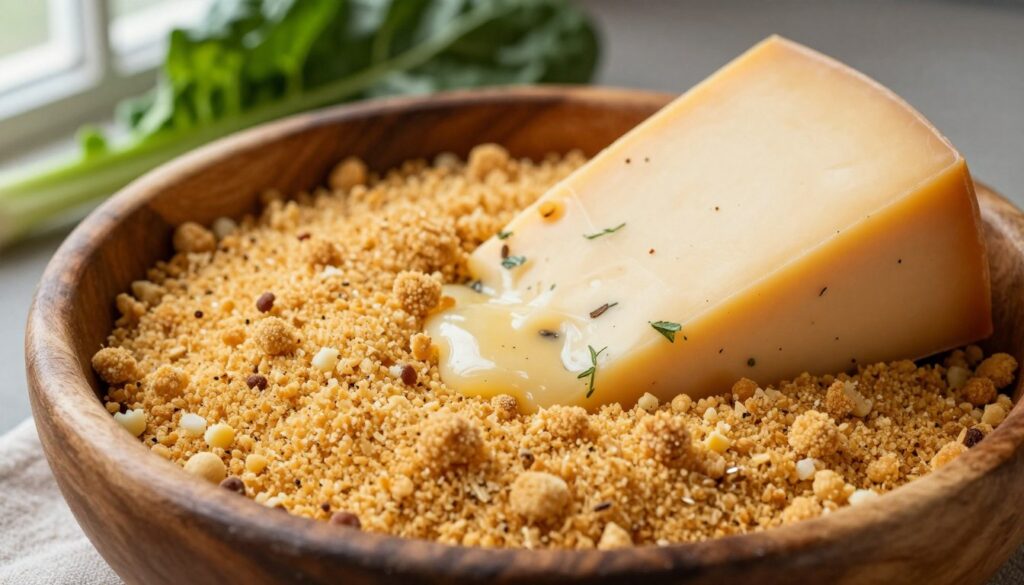
Creating a tasty Swiss chard gratin starts with quality ingredients. Each part is crucial for creamy layers and a crispy top. Knowing what you need makes cooking fun and easy.
Fresh Swiss Chard: Choosing the Best Bunches
When buying Swiss chard, pick vibrant, crisp bunches. Aim for 1 to 1.5 pounds, which is 2 to 3 bunches. Chard cooks down a lot, so don’t worry about the amount.
Use both the leaves and stems of Swiss chard. The stems add crunch and sweetness. Choose bunches with firm, colorful stems for freshness.
Creating the Creamy Sauce Base
Your sauce needs just a few ingredients. You’ll need:
- 2 to 4 tablespoons of butter for richness
- 1 to 2 tablespoons of flour for thickening
- 3/4 to 1.5 cups of milk for a lighter version, or 1 cup heavy cream for richness
- 1 to 2 shallots or onions, finely chopped
- 2 cloves of garlic, minced
- Salt, pepper, and a pinch of nutmeg for warmth
For cheese, Gruyere offers a French flavor that melts well. Parmesan adds a sharp taste. Some recipes mix both for more flavor.
The Secret to a Golden Breadcrumb Topping
Fresh breadcrumbs make a better topping than dried ones. You’ll need 1/4 to 2 cups. Mix them with melted butter or olive oil for even browning.
Add Parmesan cheese and herbs like oregano or thyme to the breadcrumbs. This makes the topping amazing. The butter-coated breadcrumbs will be golden and crispy, with creamy cheese underneath.
| Ingredient | Amount | Purpose |
|---|---|---|
| Fresh Swiss Chard | 1-1.5 lbs (2-3 bunches) | Main vegetable base |
| Butter | 2-4 tablespoons | Sauce richness and coating |
| Flour | 1-2 tablespoons | Thickening agent |
| Milk or Heavy Cream | 3/4-1.5 cups | Sauce liquid base |
| Gruyere Cheese | 1 cup (optional) | Traditional French flavor |
| Parmesan Cheese | 2-4 oz | Sharp, tangy taste |
| Fresh Breadcrumbs | 1/4-2 cups | Golden, crispy topping |
| Aromatics (Shallots, Garlic) | 1-2 shallots, 2 cloves garlic | Flavor foundation |
With these ingredients, you can make a delicious Swiss chard gratin. It’s a side dish your family will love.
How to Prepare Swiss Chard for Your Gratin
Getting your swiss chard ready is key before making your gratin. Proper preparation ensures every bite is delicious and evenly cooked. Cleaning and cutting your greens correctly makes cooking smoother.
Begin by washing your swiss chard well. Fill a large bowl or clean sink with cold water. Place your chard bunches inside and swish them gently. This lets dirt settle at the bottom.
Lift the chard out carefully and place it on a clean surface. If the water looks dirty, wash the chard again. The ruffled leaves trap soil, so this extra step is important.
Then, stem the chard leaves. Hold each leaf lengthwise and fold it along the thick center rib. Use a sharp knife to slice away the stem. Don’t throw away the stems yet.
The tender upper parts of the stems are great in your dish. Discard only the tough bottom parts. Chop the tender stem pieces into small 1/4 to 1/2 inch pieces.
For the leaves, stack several together and roll them into a tight cigar shape. Slice crosswise into ribbons about 1/2 to 1 1/2 inches wide. This method, called chiffonade, makes handling the greens easier and helps them cook evenly.
- Fill a large bowl with cold water
- Swish the chard around gently
- Lift greens out and repeat if needed
- Fold leaves lengthwise along the rib
- Cut away the stem from each leaf
- Chop tender stem pieces small
- Stack and roll leaves into a cigar shape
- Slice crosswise into ribbons
Leave some water clinging to your cleaned chard. This moisture helps create steam when cooking. It makes wilting the greens much easier. Your greens are now ready for the next step in creating that perfect creamy gratin.
Step-by-Step Instructions for Making Swiss Chard Gratin
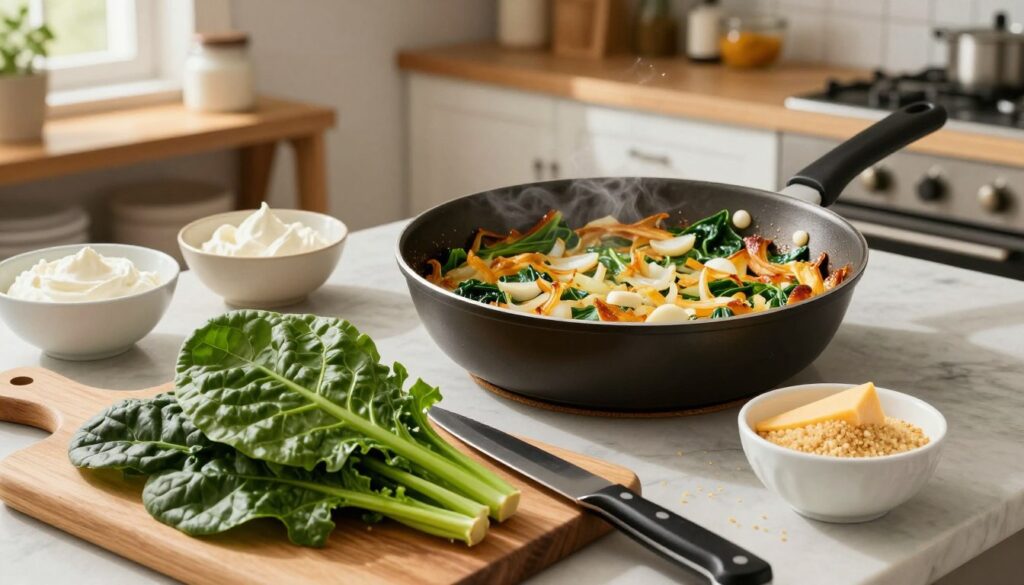
Now that you have your ingredients ready, it’s time to learn how to make swiss chard gratin step by step. This section breaks down the process into three manageable phases. You’ll start by cooking your greens, move into building a rich creamy sauce, and finish by assembling everything for a perfect golden bake. Don’t worry if you’re new to cooking—this easy creamy swiss chard gratin recipe for beginners walks you through each action with confidence-building detail.
Sautéing the Aromatics and Wilting the Greens
Begin by melting 1 to 2 tablespoons of butter or olive oil in a large skillet over medium heat. Add your diced onion or finely chopped shallots and cook gently for 1 to 2 minutes until they soften and release their aroma. Next, add your minced garlic and cook for just 30 seconds—garlic burns quickly, so brief cooking keeps it from turning bitter.
Now comes the impressive part: add your chopped chard all at once. Yes, it will look like an enormous pile, but watch what happens! The greens will shrink dramatically as they wilt. Cover the skillet and let the chard steam for 2 to 3 minutes. Remove the lid and continue cooking, stirring occasionally with tongs, until all the liquid evaporates. This process of cooking swiss chard until tender typically takes 5 to 10 minutes total. Season with salt and pepper to taste.
Building the Creamy Sauce Layer
Making béchamel sauce is the key to creating that luxurious texture your gratin needs. In a separate saucepan, melt 2 tablespoons of butter over medium heat. Whisk in 2 tablespoons of flour, stirring constantly for about 1 minute until the mixture bubbles and turns a light golden color. This roux creates the base for your sauce.
Pour in 3/4 to 1 1/2 cups of cold milk all at once while whisking vigorously. This vigorous whisking prevents lumps from forming. Bring the mixture to a boil while continuing to whisk, turning the heat down to medium-low. Simmer for 2 to 5 minutes, stirring occasionally, until the sauce thickens enough to coat the back of a spoon.
Stir in 1/2 to 1 cup of grated cheese (Gruyere, Parmesan, or Romano all work beautifully), a small pinch of freshly grated nutmeg, and your choice of herbs like oregano or thyme. Combine this creamy sauce with your cooked chard mixture and blend everything together smoothly.
Assembling and Baking Your Gratin to Perfection
Preheat your oven to 350 to 375 degrees Fahrenheit. Butter a baking dish and coat the bottom lightly with breadcrumbs—this prevents sticking and adds extra crunch to the finished dish. Spread your creamy chard mixture evenly into the prepared dish.
For the topping, combine 1/4 to 2 cups of fresh breadcrumbs with 2 to 4 tablespoons of melted butter or olive oil and 1/4 to 1/2 cup of grated cheese. Mix these ingredients together and sprinkle the mixture evenly across the top of your gratin. You can reference Alice Waters’ classic approach for inspiration on achieving that perfect golden finish.
Bake uncovered for 20 to 35 minutes, checking at the 20-minute mark. You’ll know it’s done when the gratin bubbles around the edges and the top turns a beautiful golden brown. Let your finished gratin rest for 5 minutes before serving—this resting time allows the sauce to set slightly for cleaner, prettier portions.
| Cooking Stage | Time | Temperature | Key Action |
|---|---|---|---|
| Sauté aromatics | 1-2 minutes | Medium heat | Cook onion until soft |
| Add garlic | 30 seconds | Medium heat | Quick cooking to avoid burning |
| Steam chard covered | 2-3 minutes | Medium heat | Release moisture from greens |
| Cook chard uncovered | 5-10 minutes | Medium heat | Evaporate all liquid |
| Make roux | 1 minute | Medium heat | Whisk flour into melted butter |
| Simmer sauce | 2-5 minutes | Medium-low heat | Thicken until coats back of spoon |
| Bake gratin | 20-35 minutes | 350-375°F | Bake until golden and bubbly |
| Rest gratin | 5 minutes | Room temperature | Allow sauce to set |
Following this easy creamy swiss chard gratin recipe for beginners takes away any guesswork from your cooking. Each step builds on the previous one, creating layers of flavor and texture that make this dish unforgettable.
Expert Tips for the Best Results Every Time
Creating the best vegetarian Swiss chard gratin recipe is more than just following steps. You need insider knowledge to avoid common mistakes and achieve restaurant-quality results. This section shares professional tips that will transform your gratin from good to extraordinary.
Preventing Watery Gratin
The biggest challenge when making gratin is ending up with a soggy, watery dish. Swiss chard releases a lot of moisture during cooking, which can ruin your texture. The secret lies in thoroughly cooking out this water before you add the cream sauce.
Sauté your chard uncovered until you can drag a spoon across the pan without water pooling in the path. This step is crucial and worth the extra time.
Let your baked gratin rest for 10 minutes after removing it from the oven. This resting period allows the dish to set properly and excess moisture to evaporate, preventing watery gratin from becoming a problem.
Making Gratin Ahead of Time
Life gets busy, and you need flexibility in your cooking schedule. Good news: you can prepare your entire gratin up to 24 hours before baking. Assemble everything, cover it tightly with plastic wrap, and refrigerate. When you’re ready to bake, add 5-10 minutes to your cooking time to account for the cold start.
For the breadcrumb topping, consider toasting your breadcrumbs separately before adding them to the dish. This guarantees crispy texture and prevents soggy toppings. Use day-old bread pulsed in a food processor for the freshest crumbs.
Smart Cooking Techniques
When following tips for cooking Swiss chard, use an oven-safe skillet for your initial sautéing. This approach lets you build your entire gratin right in that same pan, then transfer it directly to the oven. You’ll save yourself from washing multiple dishes, similar to how one-pan dinner recipes minimize cleanup.
Mixing different greens creates complex, interesting flavors. Combine your chard with spinach, kale, or beet greens in whatever proportions you have available. Each green brings unique taste notes to your dish.
Cheese and Sauce Adjustments
While Gruyere is traditional and wonderfully nutty, you have flexibility with cheese choices. Swiss, fontina, or white cheddar work beautifully, or blend several types together based on what you have available.
If your sauce becomes too thick, whisk in additional milk. Too thin? Simmer longer or add more cheese. Lumpy sauce? Strain it through a fine mesh or use an immersion blender.
| Cheese Option | Flavor Profile | Best Use |
|---|---|---|
| Gruyere | Nutty and rich | Classic choice for traditional gratin |
| Swiss | Mild and slightly sweet | Lighter, more delicate flavor |
| Fontina | Creamy and earthy | Creates smooth, luxurious sauce |
| White Cheddar | Sharp and tangy | Adds bold flavor dimension |
| Mixed Blend | Complex and layered | Combines multiple flavor elements |
Seasoning and Presentation
Always taste your chard mixture before baking. Add salt, pepper, or nutmeg as needed. This step ensures proper seasoning throughout your best vegetarian Swiss chard gratin recipe.
For elegant dinner parties, use individual gratin dishes. For casual family meals, prepare the gratin in a beautiful dish you can bring straight to the table. Much like creating swiss chard with feta and pine, presentation matters as much as taste.
- Prepare components ahead and assemble just before baking
- Toast breadcrumbs separately for guaranteed crunch
- Use oven-safe cookware to reduce cleanup
- Mix greens for complex flavor development
- Taste and adjust seasonings before baking
- Let finished gratin rest for 10 minutes
- Experiment with different cheese combinations
These expert tips guarantee success every time you make making gratin ahead or from scratch. You’ll achieve perfect texture, exceptional flavor, and a dish your family will love.
Serving Suggestions and Pairing Ideas for Your Swiss Chard Gratin
Your quick and easy swiss chard casserole for dinner deserves the perfect accompaniments. Whether you’re preparing a weeknight meal or hosting a special gathering, understanding how to build a complete plate around this dish transforms it from a simple side into the centerpiece of your table. The creamy, rich nature of this gratin pairs beautifully with many proteins and vegetable sides, making it incredibly versatile for any occasion.
Perfect Main Dishes to Complement This Side
Serving swiss chard gratin alongside the right protein creates a balanced, satisfying meal. Because your gratin is already creamy and indulgent, you’ll want to pair it with proteins that won’t compete for attention on your plate.
- Herb-roasted chicken breast or thighs with lemon and garlic
- Pan-seared pork chops finished with a light apple sauce
- Grilled lamb chops with rosemary and olive oil
- Roasted salmon with dill and capers
- Beef tenderloin or prime rib for holiday dinners
- Duck confit for a French-inspired evening
- Roasted turkey or glazed ham for Thanksgiving and Christmas
Balance your plate by adding a crisp green salad with vinaigrette to cut through the richness. Crusty bread works wonderfully for soaking up every drop of the creamy sauce. Roasted root vegetables like carrots, parsnips, or Brussels sprouts round out your side dish pairings with color and texture.
Making It a Complete Vegetarian Meal
Transform your quick and easy swiss chard casserole for dinner into a filling main course by increasing your portion size. The cheese and milk in your gratin provide protein, while the chard contributes fiber and essential nutrients.
Create satisfying vegetarian dinner ideas by pairing your gratin with:
| Grain Options | Soup Pairings | Salad Complements |
|---|---|---|
| Quinoa with herbs | Tomato bisque | Arugula with lemon vinaigrette |
| Wild rice pilaf | French onion soup | Mixed greens with walnut dressing |
| Farro with roasted vegetables | Creamy mushroom soup | Spinach salad with goat cheese |
For a cozy weeknight dinner, simply pair your gratin with a simple arugula salad and a glass of crisp white wine like Sauvignon Blanc. When entertaining guests, build a complete vegetarian dinner menu starting with a light appetizer salad, your gratin as the main event, and finishing with a delicate dessert such as poached pears or lemon sorbet. These side dish pairings elevate your meal from ordinary to restaurant-quality.
Storage and Reheating Instructions for Leftovers
Your healthy baked swiss chard with cheese is worth enjoying more than once. To keep it fresh, store leftovers properly. Let the gratin cool down to room temperature within two hours after baking. Then, cover it tightly with aluminum foil or plastic wrap.
You can also put portions in airtight containers for easier storage and reheating.
Your make-ahead gratin stays fresh in the fridge for three to four days. This is great for meal planning and quick dinners during the week. When you’re ready to eat it again, you have several reheating options.
| Reheating Method | Temperature/Time | Best For | Results |
|---|---|---|---|
| Oven Reheating | 350°F for 15-20 minutes (covered), then 5 minutes uncovered | Whole gratin or larger portions | Restores crispy topping and creamy center |
| Microwave Reheating | Heat in 1-minute intervals, stirring between each | Single portions | Quick reheating but softer texture |
| Stovetop Reheating | Low heat in a skillet with a lid, 5-10 minutes | Smaller portions or bulk reheating | Gentle warming with maintained texture |
For the best results, reheat casserole portions in the oven. Preheat to 350°F and cover with foil to avoid over-browning. Heat for fifteen to twenty minutes, then remove the foil for the last five minutes. This method re-crisps the golden breadcrumb topping.
If your casserole feels dry after refrigeration, add a bit of milk before warming. This keeps the creamy texture and prevents it from becoming too firm.
Leftovers can be creative and delicious. Mix cooled gratin into scrambled eggs for a luxurious breakfast. You can also use it as a filling for omelets, crepes, or on toasted bread for an open-faced sandwich.
Freezing your gratin is also an option, though cream-based dishes might separate when thawed. Wrap portions tightly in plastic wrap and foil. It will keep frozen for up to two months. Thaw overnight in the fridge and reheat in the oven as described above. Learn more about preserving vegetables like freezing Swiss chard for longer storage.
- Cool gratin to room temperature before storing
- Use airtight containers or cover tightly with foil
- Refrigerate for three to four days maximum
- Reheat in oven for best texture and crispiness
- Add milk if gratin seems dry before reheating
- Freeze for up to two months in wrapped portions
- Repurpose leftovers in eggs, omelets, or sandwiches
Storing leftovers properly means you can enjoy your healthy baked swiss chard with cheese all week. This smart approach saves time, reduces waste, and makes your meals more enjoyable.
Conclusion
You now know how to make a top-notch Swiss chard gratin at home. This recipe is easy to follow and makes a dish that looks and tastes amazing. It’s perfect for any occasion, from dinner parties to cozy nights in.
The dish is also very flexible. You can use different cheeses, add other greens, and even change the creaminess level. This makes cooking with leafy greens fun and exciting.
Swiss chard is great for more than just gratin. It’s mild and tender, perfect for many dishes. Try it in gluten-free vegan recipes like rolls, soups, and salads. It’s a healthy way to add flavor and nutrients to your meals.
Now, it’s time to get cooking! Make this gratin for your loved ones. Enjoy the joy of making healthy, delicious food. Your Swiss chard recipe is ready to become a staple in your kitchen.