How to Make Praline Paris-Brest: the easy recipe
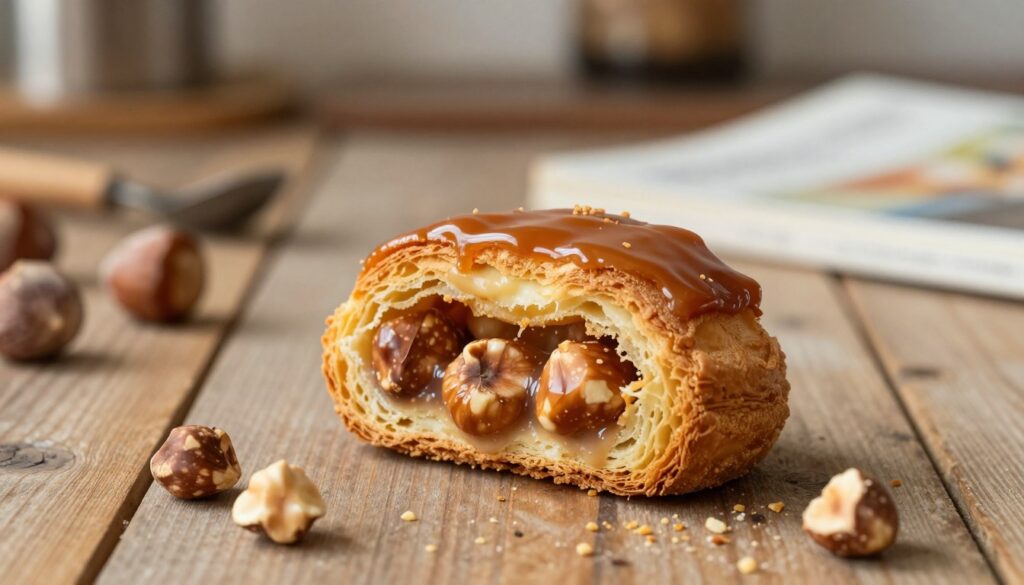
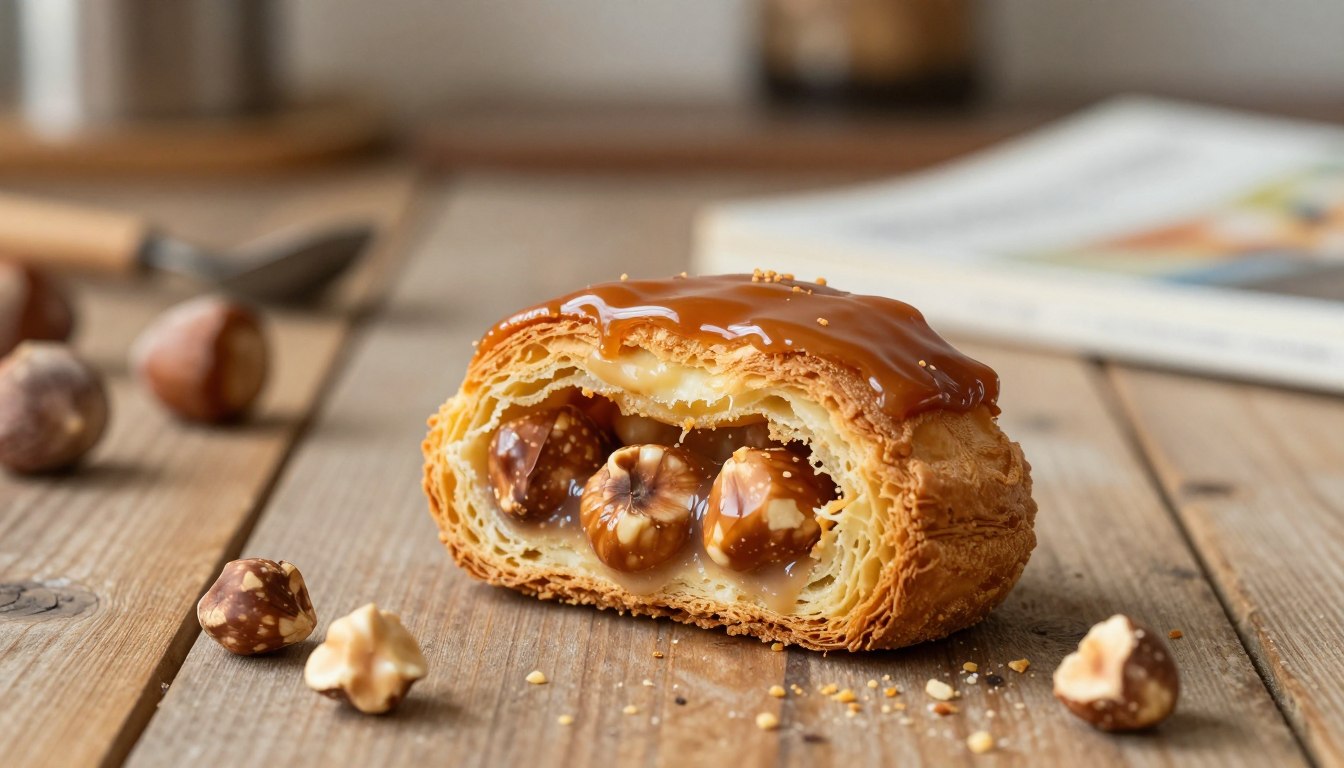
Imagine biting into a dessert that tastes like it came straight from a fancy Parisian bakery. The crispy choux pastry crackles between your teeth. Rich, creamy praline filling melts on your tongue. You can make this stunning French masterpiece right in your own kitchen.
The praline Paris-Brest recipe might sound intimidating at first glance. But, making this impressive dessert is totally achievable, even if you’ve never baked French pastries before. This classic treat combines three simple components into one show-stopping creation.
Your journey starts with crispy choux pastry shaped like a bicycle wheel. It’s named after the famous Paris-Brest-Paris cycling race that started back in 1910. Next, you’ll work with homemade hazelnut praline paste that fills the pastry with incredible flavor. Then, you’ll create a luxurious mousseline cream that brings everything together with silky richness.
Learning how to make Paris-Brest opens a door to French baking confidence. With our step-by-step guidance, you’ll master each element and create something beautiful. Your family and friends will be amazed when you reveal you baked it yourself.
Key Takeaways
- The praline Paris-Brest recipe combines choux pastry, hazelnut praline, and mousseline cream into one elegant dessert
- This French pastry gets its distinctive wheel shape from the 1910 Paris-Brest-Paris bicycle race
- Making this pastry at home is easier than you might expect with proper guidance
- You’ll learn to create three main components that work together perfectly
- The result looks like it came from a professional patisserie but comes from your kitchen
- Each step builds your baking skills and confidence with French techniques
What is Paris-Brest and Why You’ll Love This Classic French Dessert
The French Paris-Brest dessert is a true gem of French pastries. It’s made with light choux pastry and a rich praline filling. This mix creates a delightful contrast that makes every bite unforgettable.
If you enjoy buttery and sweet flavors with a hint of nuttiness, this dessert is for you. It’s a treat that’s both indulgent and not too heavy.
The Paris-Brest is known for its unique design. It’s topped with sliced almonds for extra texture and looks. Inside, a creamy praline mousseline cream adds caramel and hazelnut flavors. This combination makes it a sophisticated yet satisfying dessert.
The History Behind the Bicycle Wheel-Shaped Pastry
In 1910, a French pastry chef created the Paris-Brest to celebrate a big achievement. The Paris-Brest-Paris bicycle race started in 1891, challenging riders to travel a long distance. To honor these athletes, a baker made a dessert shaped like a bicycle wheel.
This pastry quickly became a favorite in France. Its circular shape was both practical and symbolic. It reminded cyclists of their journey and became a beloved classic.
What Makes This Praline Paris-Brest Recipe So Special
The secret to this dessert is its balanced ingredients. The classic paris-brest choux pastry gives it structure and crunch. The praline filling adds depth with roasted nut and caramel flavors.
Modern twists have kept the tradition alive. Chef Philippe Conticini introduced a new way of making it by piping individual portions. This makes it easier to serve and adds a touch of elegance.
| Element | Texture | Flavor Profile |
|---|---|---|
| Choux Pastry Shell | Crispy exterior, hollow center | Buttery, slightly sweet |
| Sliced Almonds Topping | Crunchy, toasted | Nutty, roasted |
| Praline Mousseline Cream | Smooth, creamy, luxurious | Caramel, hazelnut, rich |
Understanding the layers of the Paris-Brest dessert reveals its true value. Each part works together to create a balanced and delightful experience.
Essential Ingredients for Your Praline Paris-Brest Recipe
Creating a great Paris-Brest recipe for beginners starts with the right ingredients. You’ll need choux pastry dough, praline paste, and mousseline cream. Each part is crucial for this famous French dessert. Let’s look at what you need to buy before you start.
Organize your shopping list by component for a clear plan. The best Paris-Brest recipe for beginners uses simple, quality ingredients. Having these ready means you can bake smoothly without any hitches.
Choux Pastry Foundation
The choux dough needs basic pantry items. You’ll need water or milk, butter, flour, eggs, salt, and sugar. Milk makes the pastry softer, while water makes it firmer. Eggs are essential for structure, and butter adds richness and color.
Praline Paste and Filling Components
For the praline paste, choose hazelnuts, almonds, or both. Add sugar and a pinch of salt. Roasting the nuts yourself adds a homemade flavor. For convenience, Cacao Barry hazelnut praline paste is a good store-bought option.
The mousseline cream needs milk, sugar, cornstarch, egg yolks, vanilla, salt, and butter. These ingredients mix to create a creamy filling that makes your Paris-Brest irresistible.
| Component | Key Ingredients | Purpose |
|---|---|---|
| Choux Pastry | Water/milk, butter, flour, eggs, salt, sugar | Creates the ring structure |
| Praline Paste | Hazelnuts or almonds, sugar, salt | Provides distinctive nutty flavor |
| Mousseline Cream | Milk, sugar, cornstarch, egg yolks, butter, praline paste | Rich, creamy filling |
| Optional Toppings | Sliced almonds, pearl sugar, craquelin | Adds texture and visual appeal |
Optional Finishing Touches
Sliced almonds, pearl sugar, or craquelin pieces can make your Paris-Brest look and taste amazing. These toppings add crunch and beauty without needing special skills.
- Sliced almonds for a classic look
- Pearl sugar for sparkle and crunch
- Craquelin for authentic French bakery appearance
Now you’re set to start your Paris-Brest adventure. Having everything ready before you begin ensures a fun and stress-free baking experience.
Making Perfect Choux Pastry for Paris-Brest
Starting your paris-brest choux pastry is easy once you know the basics. Choux pastry might seem hard, but it’s actually quite easy. It makes those hollow shells that make paris-brest so fun to eat.
To make great choux pastry paris-brest, pay attention to every step. You mix butter, water, salt, and flour in a special way. This turns the dough into something smooth and easy to work with.
Choosing the Right Ingredients for Choux Pastry Dough
The ingredients you choose affect your pastry’s texture. The liquid you pick is key to your paris-brest choux pastry’s success.
- Water makes the pastry crispier and crunchier
- Milk gives it a softer, richer texture
- Bread flour makes a thicker shell
- All-purpose flour makes it lighter and airier
Butter, salt, and eggs are always in the recipe. Fresh eggs are crucial for the dough to rise well in the oven.
Step-by-Step Instructions for Foolproof Choux Pastry
Follow these steps for perfect results every time:
- Mix butter, water, salt, and sugar in a saucepan and boil it
- Take it off the heat and mix in flour until it’s fully incorporated
- Put it back on low heat and cook until it’s like mashed potatoes and shows a thin film at the bottom (about 2-3 minutes)
- Move the dough to a bowl and cool it for 5-10 minutes
- Beat eggs in another bowl
- Add eggs to the cooled dough a little at a time, mixing well after each addition
- Keep adding eggs until the dough is shiny, thick, and smooth
- Test it by lifting a spoon—dough should form a “V” shape
Cooling the dough prevents scrambled eggs in your paris-brest choux pastry. This small step is crucial for success.
| Egg Addition | Dough Appearance | Baking Result |
|---|---|---|
| Too Little Egg | Stiff, dry mixture | Dense, collapsed pastry |
| Just Right Egg | Shiny, thick, pipeable | Light, airy rings with hollow centers |
| Too Much Egg | Thin, runny batter | Flat pastry that spreads during baking |
The “V” shape test is your best friend. When you lift your spoon, the dough should hold a shape that looks like the letter V. This means you’ve added just the right amount of egg for perfect choux pastry paris-brest results.
How to Pipe the Traditional Paris-Brest Ring Shape
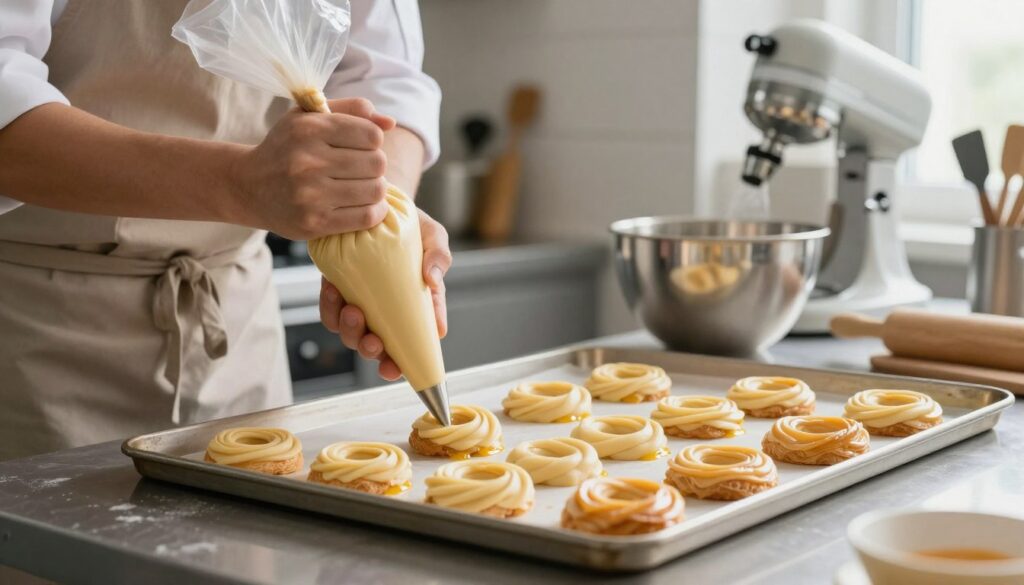
Getting the iconic ring shape right is exciting. The traditional method uses three dough rings that bake into one beautiful wheel. Don’t worry if piping seems hard—we’ll guide you through it.
Choosing the right piping tips is key. French star tips like Ateco 863, 865, or 866 are best. They have serrated edges for even dough expansion. Use a smaller tip for the bottom rings and a larger one for the top.
Creating Your Template for Perfect Rings
Begin by drawing three circles on parchment paper with a 5-inch guide. This template ensures your rings are shaped right and spaced well. Place the parchment on a baking sheet with the drawn side down. Pipe on the blank side to avoid pencil marks.
The Piping Process for Your Ring Dessert Recipe
Here’s how to pipe your ring dessert recipe:
- Fill your piping bag with choux pastry dough using the smaller star tip
- Pipe two complete rings side by side along the bottom of your template
- Switch to the larger star tip for the final ring
- Pipe one ring on top, centered between the first two rings
- Dip your finger in water and gently smooth any rough seams where rings meet
Smoothing with water helps your ring dessert recipe bake into one solid piece. It prevents separate sections.
Alternative Shaping Methods
Want to try something different? Use silicone dome-shaped molds for foolproof placement. This method is easier for your easy choux pastry ring dessert recipe. You can also try a modern flower shape with eight individual choux arranged in a pattern.
Creating Homemade Hazelnut Praline Paste from Scratch
Making your own hazelnut praline paste is easier than you think. It turns your Paris-Brest into something truly special. You’ll mix caramelized sugar with roasted nuts to make a smooth paste for your cream filling.
It’s all about combining caramelized sugar and toasted nuts. Unlike other methods, this one is simple and stress-free. You’ll have better control over each step.
Roasting and Caramelizing Nuts for Praline
Begin by roasting hazelnuts until they smell great and are lightly golden. Preheat your oven to 350 degrees Fahrenheit. Spread 200 grams of raw hazelnuts on a baking sheet. Roast for 8 to 10 minutes until the skins darken and crack.
While the nuts roast, make your caramel. Mix 200 grams of caster sugar with 30 milliliters of water in a skillet over medium heat. Watch it carefully for 10 to 15 minutes until it turns golden amber. Turn off the heat, add 1/2 teaspoon of sea salt, and stir to dissolve. Pour the hot caramel onto a parchment-lined baking sheet and let it harden for 30 minutes to 1 hour.
| Ingredient | Amount | Purpose |
|---|---|---|
| Raw Hazelnuts | 200 g | Nutty base for praline |
| Caster Sugar | 200 g | Creates caramelization |
| Water | 30 ml | Dissolves sugar |
| Sea Salt | 1/2 teaspoon | Balances sweetness |
| Neutral Oil | 1 tablespoon (optional) | Aids blending process |
Blending Your Praline to Smooth Perfection
Once your caramel hardens, break it into chunks and mix it with your roasted hazelnuts in a food processor. Be patient. Start processing on low speed to break everything into rough powder, then increase to medium-high speed.
The texture will change in stages. First, it looks chunky and dry. Then, it forms a ball as the nuts release their oils. Keep processing for 15 to 20 minutes until it’s smooth and spreadable. Your processor might get hot—pause to let it cool.
- Place caramelized nut chunks in your food processor
- Start on low speed for 2 to 3 minutes
- Increase to medium-high for 15 to 20 minutes
- Add 1 tablespoon of neutral oil if the mixture seems dry
- Process until you reach your desired consistency
- Transfer to an airtight container for storage
For more tips on making the perfect paste, check out the complete hazelnut praline paste recipe. Your homemade hazelnut praline will last a week or two at room temperature or several months in the fridge. This rich base makes your praline mousseline cream filling top-notch.
Preparing the Rich Praline Mousseline Cream Filling
The magic of an authentic paris-brest with hazelnut praline cream lies in its luxurious filling. Mousseline cream combines silky pastry cream with whipped butter. This creates a texture that melts on your tongue. It turns your choux pastry ring into something truly special.
Creating your praline cream filling recipe starts with mastering pastry cream. You need to heat milk until steam rises from the surface. Whisk your egg yolks with sugar, salt, cornstarch, and vanilla into a thick paste. This step prevents lumps in your final cream.
The tempering technique keeps your eggs from scrambling. Slowly drizzle your hot milk into the egg mixture while whisking constantly. This gradual process raises the egg temperature safely. Return everything to heat and whisk continuously until it boils. Cook for one to two minutes longer to eliminate any starchy taste.
Your praline cream filling recipe requires proper cooling. Add half the butter to your hot pastry cream, strain it through a fine sieve, and cover the surface with plastic wrap. Cool to room temperature, then refrigerate overnight. This step develops the best texture for your authentic paris-brest with hazelnut praline cream.
Now transform your pastry cream into mousseline. Warm your chilled cream to room temperature. Whip softened butter with your praline paste until creamy and light. Add your custard tablespoon by tablespoon while mixing continuously. Avoid over-whipping, or your filling becomes too airy like buttercream. The result should be smooth, rich, and spreadable.
- Heat milk until steaming
- Whisk eggs with sugar and cornstarch
- Temper eggs slowly with hot milk
- Cook until boiling, then one to two minutes more
- Cool overnight before whipping
- Whip butter with praline paste
- Combine with pastry cream gradually
For extra stability in warm weather, add one to two grams of gelatin leaf soaked in cold water to your hot pastry cream. This helps your filling hold its shape beautifully when piped. Your authentic paris-brest with hazelnut praline cream will look and taste professional-quality with this technique.
Baking Your Paris-Brest Choux Pastry to Golden Perfection
Now it’s time to see your dough turn into a beautiful, crispy pastry. Baking is where the magic happens. The right temperature, timing, and technique will make your choux pastry golden and puffy. This section will teach you how to get bakery-quality results at home.
Optimal Temperature and Timing for Best Results
Your oven temperature is key for perfect, puffy rings. Preheat your conventional oven to 375°F (190°C) at least 15 minutes before baking. For a convection oven, set it to 170°C (338°F).
This preheating time ensures your oven is ready for the choux to rise properly.
For the best results in your homemade paris-brest step by step guide:
- Bake only one tray at a time for even heat distribution
- Place the rack in the middle of your oven
- Brush with egg wash for a shiny, mahogany-colored crust (skip this for a lighter finish)
- Bake for 35-40 minutes in a conventional oven
- Bake for 20 minutes at 170°C with the fan on, then 25 minutes without the fan in convection mode
- Rotate your pan at the 20-minute mark for even browning
Consider topping your rings with sliced almonds, pearl sugar, or elegant craquelin disks before baking. Press craquelin gently to help it stick to the dough.
Preventing Common Baking Mistakes and Collapse
The biggest fear when baking choux pastry is collapse. Here’s the secret: five minutes before your paris-brest is done baking, prick the pastry all around with a toothpick. This releases excess steam and prevents the dreaded collapse that ruins so many homemade attempts.
After baking, prick your rings again and cool them on a wire rack. This cooling method is important—it allows the interior to dry slightly while keeping the exterior crisp and firm. Your finished paris-brest should look deeply golden, feel firm to the touch, and show no pale spots.
| Oven Type | Temperature | First Phase | Second Phase | Total Time |
|---|---|---|---|---|
| Conventional | 375°F (190°C) | Bake continuously | Prick at 35 minutes | 35-40 minutes |
| Convection | 170°C (338°F) | 20 minutes with fan | 25 minutes without fan | 45 minutes total |
Following these steps in your homemade paris-brest step by step guide guarantees beautiful results. Trust the process, watch your pastry puff up, and enjoy the satisfaction of pulling perfect golden rings from your oven every single time.
Topping Options for Your Paris-Brest Pastry
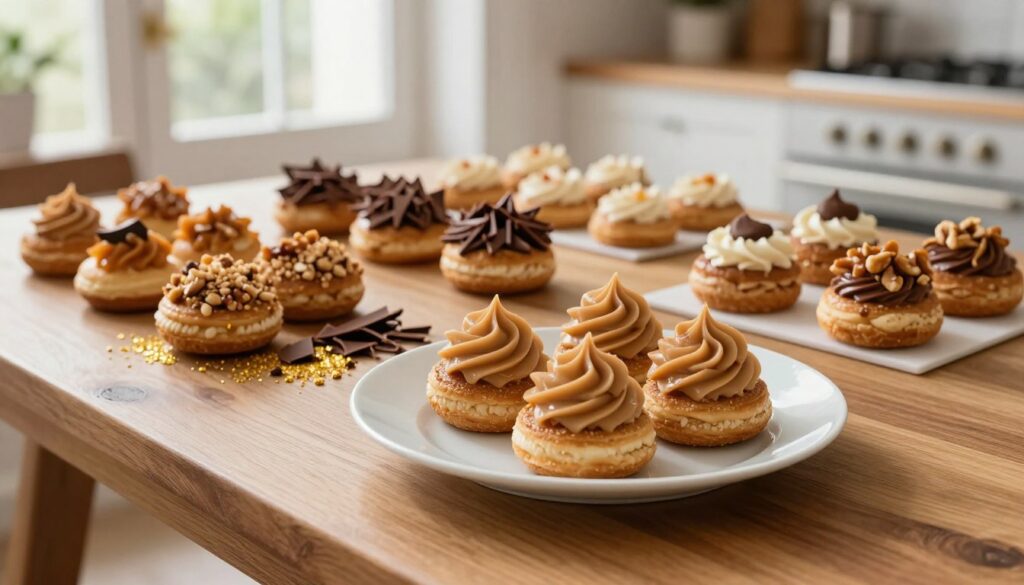
Your quick french pastry recipe with praline cream needs a special touch. Paris-Brest is great because you can skip the topping. But, adding one makes it look and feel amazing. The right topping can make your pastry taste like it’s from a fancy restaurant.
For years, people have chosen classic toppings for Paris-Brest. Your choice changes how it tastes and looks. Let’s look at your options so you can pick the best one for you.
Traditional and Popular Topping Choices
Sliced almonds are a top pick for Paris-Brest. They add a nice crunch and a nutty taste that goes well with praline cream. But, make sure to use thicker slices. Thin ones can burn too fast.
Pearl sugar is also loved by many. It’s crunchy and sweet, without the risk of burning. It looks beautiful on your pastry, catching the light and making it look fancy.
| Topping Option | Texture | Flavor Profile | Burn Risk | Difficulty Level |
|---|---|---|---|---|
| Sliced Almonds | Delicate Crunch | Nutty, Subtle | Medium (if thin) | Easy |
| Pearl Sugar | Crunchy Crystals | Sweet, Sparkly | Very Low | Easy |
| Craquelin | Crispy, Layered | Rich, Buttery, Sweet | Low (protected) | Advanced |
| Powdered Sugar Dust | Soft, Fine | Sweet, Subtle | None (added after) | Very Easy |
Creating Craquelin for Professional Results
Craquelin is for the more experienced bakers. It’s a thin cookie dough that bakes on your pastry. It creates a beautiful crackled look and a sweet, crispy layer. You’ll need just a few ingredients you probably have at home.
Here’s what you need for your craquelin:
- 40g softened butter
- 50g brown sugar
- 50g flour
- A pinch of salt
Mix these ingredients until they form a paste. Roll it between parchment paper until it’s about 2mm thick. Cut circles that are about 3cm in diameter. Chill them in the fridge for 1 hour, or freeze for 15 minutes if you’re in a rush.
Put one craquelin circle on top of each choux ring before baking. It bakes into your pastry, giving it a professional look. This method is a bit more work, so try it when you’re comfortable with basic choux pastry.
Simple Finishing Touches
A light dusting of powdered sugar is also a great choice. After you’ve put your Paris-Brest with praline cream together, it adds sweetness and looks nice. Dust it just before serving to keep it fresh and white. This is perfect for any quick french pastry with praline cream, whether it’s for a special event or just at home.
Your topping choice is up to you and what you like. Start with pearl sugar or powdered sugar. Once you get the hang of it, try craquelin to wow your family and friends with a dessert that looks like it’s from a pro.
Assembling Your Paris-Brest with Praline Cream
You’ve baked a beautiful choux ring and made rich praline cream. Now, it’s time to put them together. This is where your hard work turns into a stunning dessert.
Success comes from working carefully and keeping things organized. Your pastry ring must be cool. Your cream should be chilled and ready. And your praline paste should be firm.
Cutting and Filling Techniques for Beautiful Presentation
Place your cooled choux ring on a clean surface. Use a sharp knife to slice the top third off. This makes a lid and a base.
Remove excess dough from inside. This makes room for your praline cream. Keep the top and base separate.
Set your pastry on a platter before filling. This keeps crumbs and pieces from falling. You want your Paris-brest to look great when guests see it.
Piping Decorative Patterns with Your Filling
Fill a pastry bag with chilled cream. Pipe a layer of cream into the pastry ring. Make sure to cover the surface well.
Place a praline dome in the center, or pipe a line of praline paste. This adds a special flavor surprise.
Now, pipe your cream in decorative patterns:
- Swirls and rosettes across the top
- Shell patterns with the wide part facing outward
- Rope borders around the edges
- Piped blobs for added texture
Fill your Paris-brest generously. The filling should peek out between layers and along the sides. This makes the presentation stunning.
Once filled, place the top back on. Dust with powdered sugar. Step back and admire your work. You’ve made a professional-quality dessert at home.
Serving Suggestions and Storage Tips
Your homemade easy paris-brest recipe is best served with care. The pastry ring grows to about 7 inches when baked. It looks stunning and tastes amazing. You can enjoy it all by yourself or share it with others by slicing it like a cake.
Before serving, chill the Paris-Brest in the fridge for at least 45 minutes. This step is essential, more so if you used frozen praline inserts. It lets everything chill and the praline center defrost fully. Just before serving, sprinkle powdered sugar on top for a sweet and professional touch.
Storing your easy paris-brest recipe is easy. Most parts can be made ahead of time, making entertaining less stressful.
| Component | Storage Method | Duration | Preparation Before Use |
|---|---|---|---|
| Praline Paste | Airtight Container | Up to 3 weeks | Use directly from storage |
| Craquelin | Freezer Bag | Up to 3 weeks | Use frozen, no thawing needed |
| Unbaked Choux | Piped on Sheet, Frozen | Up to 1 month | Thaw 30 minutes before baking |
| Baked Choux Ring | Zip-Lock Freezer Bag | Up to 1 month | Thaw at room temperature |
| Assembled Paris-Brest | Refrigerator | Up to 2 days | Dust with powdered sugar before serving |
Your easy paris-brest recipe is flexible for making ahead. Praline paste lasts weeks in an airtight container. Craquelin can be frozen and used straight away. Choux pastry can be frozen for a month, thawing for 30 minutes before baking. Baked choux rings also freeze well for a month.
The assembled Paris-Brest stays fresh in the fridge for two days. This makes it great for special occasions. You can prepare it ahead, saving you from last-minute stress.
- Refrigerate assembled Paris-Brest for 45 minutes minimum before serving
- Dust with powdered sugar just before bringing to the table
- Use a serrated knife for clean, elegant slices
- Freeze unbaked choux for up to one month
- Store assembled dessert in the refrigerator for up to two days
By planning ahead, your easy paris-brest recipe is a stress-free yet impressive dessert for any event.
Troubleshooting Common Paris-Brest Problems
Even experienced bakers face challenges when learning how to make easy praline paris-brest at home. Your pastries might collapse after baking, refuse to puff up, or come out misshapen. Understanding what went wrong helps you succeed on your next attempt. Most problems stem from simple mistakes that you can easily fix once you know what to look for.
The egg ratio stands as the number one cause of Paris-Brest failures. Too much egg creates runny dough that spreads instead of holding its shape, resulting in flat, collapsed pastries that never rise properly. Too little egg makes your dough too stiff and dense, preventing the choux from puffing up during baking. The perfect consistency should form a “V” shape when you lift your spatula out of the mixture. This simple test tells you whether your dough is ready to pipe.
Your piping technique matters more than you might think. Uneven pressure while piping causes stretched or bunched dough, leading to misshapen rings that bake unevenly. Keep steady, consistent pressure as you pipe your crown shape. When learning how to make easy praline paris-brest at, practice piping on parchment paper first to build muscle memory before working with actual batter.
| Problem | Main Cause | Solution |
|---|---|---|
| Choux won’t puff up | Too much egg or low oven temperature | Check egg ratio using the V-test; preheat oven fully to 180°C (gas 4) |
| Pastries collapse after baking | Too much egg, opening oven door early, or insufficient steam release | Reduce egg slightly; keep oven closed until 25 minutes pass; prick with toothpick at 30 minutes and again after baking |
| Misshapen rings | Uneven piping pressure or stretched dough | Pipe with steady, consistent pressure; maintain even thickness throughout the crown |
| Dense, heavy texture | Too little egg or dough not cooked long enough initially | Add more egg gradually; ensure film forms at pot bottom during initial cooking stage |
| Burning on outside, raw inside | Oven temperature too high | Reduce temperature to 180°C; bake for full 25-35 minutes |
Steam management determines whether your pastries collapse or stay crisp. That film forming at the bottom of your pot during the initial cooking stage signals proper dough consistency. Prick your pastries with a toothpick at the five-minute mark before they finish baking, then prick again immediately after removing them from the oven. This releases trapped steam that causes soggy interiors and collapse.
Oven temperature and timing require careful attention. An oven that runs too cool prevents proper rising, while excessive heat burns the outside before the interior cooks through. Open the oven door only to check color near the end of baking. Opening it early releases essential steam and causes immediate collapse. Your pastry should turn golden brown and sound crisp when done.
- Cool your panada dough for five minutes before adding eggs to prevent scrambling
- Add eggs one at a time in four to five batches for proper emulsion
- Ensure your mixing bowl is clean and grease-free before whipping egg whites
- Use room-temperature eggs for best incorporation
- Maintain steady piping pressure for even-sized rings
- Never skip the toothpick-pricking step for steam release
- Resist the urge to open your oven door during baking
- Let baked pastries cool completely before filling with praline cream
Choux dough consistency holds the key to success. Your dough should feel smooth and slightly glossy, dropping slowly from a spatula rather than flowing like batter. If your mixture seems too firm, add a little cold milk until it reaches the right consistency. This flexibility lets you adjust your dough texture without starting over.
Storage affects your finished pastries too. Keep baked rings in an airtight container at room temperature for up to two days. Refrigerate filled pastries for up to four hours before serving. These storage practices help maintain the crispy exterior while keeping your praline cream fresh and properly set.
“Perfect Paris-Brest comes from understanding why each step matters, not just following instructions blindly.”
Your troubleshooting success depends on careful observation and small adjustments. Write notes about what worked and what didn’t in each baking session. With practice, how to make easy praline paris-brest at home becomes second nature, and those occasional failures teach you the most valuable lessons.
Conclusion
You’ve done something amazing. Making a Paris-Brest from scratch is a big accomplishment. You’ve learned to make three key parts: the crispy choux pastry, the rich hazelnut praline paste, and the creamy mousseline.
When you put these parts together, you get a dessert that’s as good as those in French patisseries. The Paris-Brest is special because of its contrasts. The outside is crispy, while the inside is smooth and nutty.
Each bite is a mix of textures and tastes that work well together. What seemed hard at first is now something you can make easily at home.
Your homemade Paris-Brest is great for any special event or just to treat yourself. It looks impressive, and your guests will be amazed. They’ll see the effort you put into making it.
Don’t be afraid to try new things with your Paris-Brest. You could shape it like a flower or add extra crunch. You can also try different fillings to match your taste. Every new thing you try makes you a better baker. You’ve mastered a French pastry classic and can share your beautiful creation with pride.