The Best Traditional French pastry Millefeuille Easy
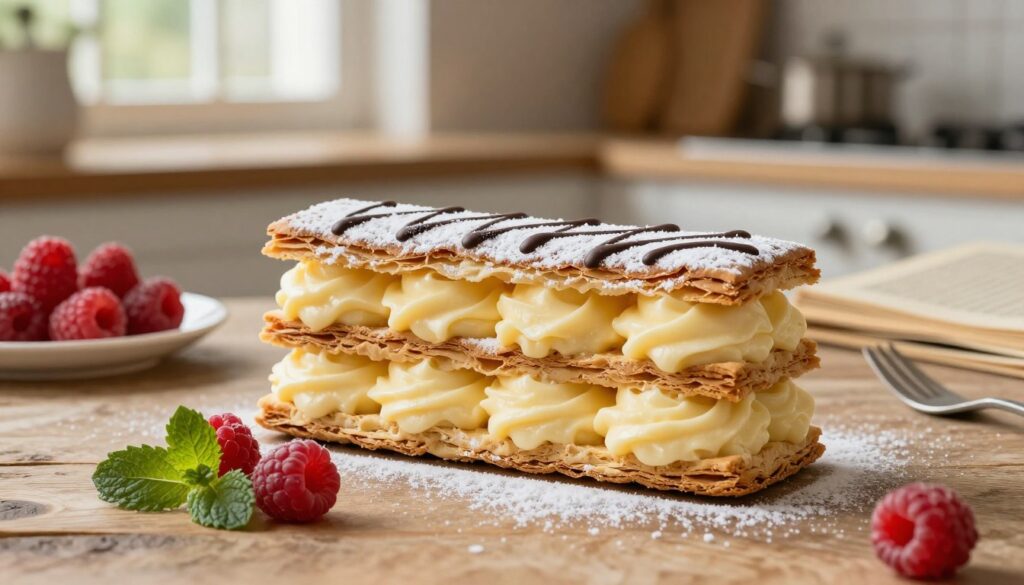
Do you remember the first time you bit into a perfectly crisp, golden puff pastry dessert? It’s magical how those delicate layers shatter, showing a rich, velvety cream center. Many home bakers feel scared by this classic mille feuille. But, you can make it easily.
You don’t need to be a pro chef to make a stunning homemade millefeuille at home. This easy millefeuille recipe will teach you how to make a top-notch french vanilla slice recipe. For more easy recipes, check out these stress-free dessert recipes to keep baking fun.
Whether it’s called a napoleon pastry recipe or a french dessert millefeuille, it’s a hit with everyone. Get ready to wow your friends and family with one of the best french pastries you’ll ever make.
Key Takeaways
- Mastering a millefeuille recipe is simpler than you might think with the right approach.
- Using high-quality store-bought dough makes this classic french desserts project much more manageable.
- Focus on achieving crisp, golden layers for the perfect texture in every bite.
- Proper chilling of your cream filling ensures your dessert holds its shape beautifully.
- Practice makes perfect, so do not be afraid to experiment with your own flavor variations.
Understanding the Art of the Traditional French Pastry
Walking into a classic french patisserie, you see a millefeuille that takes your breath away. This dessert is the top of traditional French pastry, needing precision and patience. It’s not just a sweet treat; it’s a culinary masterpiece.
The History and Elegance of the Napoleon
The millefeuille, also known as the Napoleon, has a rich history. Its exact origins are a mystery, but it’s known for sophistication in European kitchens. The name itself suggests grandeur, fitting the dessert’s complex structure.
Making authentic french pastries like this needs a deep understanding of lamination. Achieving the signature thousand leaves requires balancing butter and dough. This dedication to quality makes it more than just a cake.
Why Millefeuille Remains a Staple in Every French Pastry Shop
Visiting a high-end french bakery without seeing the millefeuille is incomplete. It’s a favorite for its gourmet french pastries experience. The contrast between the pastry and cream is unmatched.
Every french pastry shop is proud of its millefeuille. The skill to layer without crushing is a sign of a professional. Below is a comparison of what makes these classic desserts stand out in the culinary world.
| Pastry Type | Key Texture | Flavor Profile | Complexity |
|---|---|---|---|
| Millefeuille | Crispy & Flaky | Rich Vanilla | High |
| Éclair | Soft & Airy | Chocolate/Coffee | Medium |
| Fruit Tart | Buttery & Firm | Fresh Fruit | Medium |
Essential Ingredients for Your Homemade Millefeuille
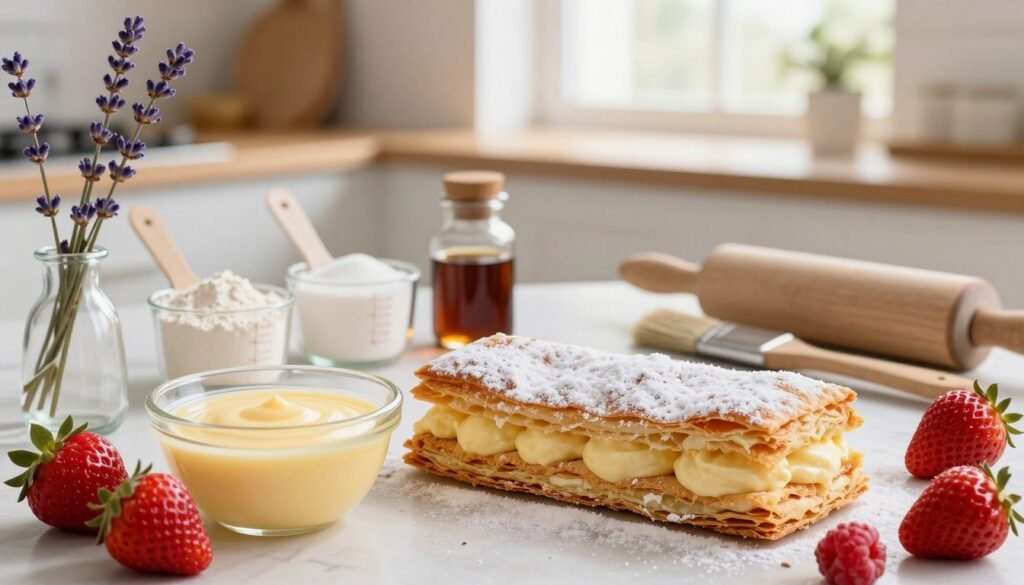
Starting your journey to make authentic french pastries means picking top-notch ingredients. For a homemade millefeuille, the quality of what you use affects taste and texture. Choosing the best ingredients ensures your dessert looks and tastes like a pro’s.
Selecting High-Quality Butter for Puff Pastry
The core of a napoleon pastry recipe is the puff pastry. Always go for all-butter puff pastry over ones made with vegetable shortenings. Shortenings can make your pastry taste waxy, ruining the delicate flavor.
Quality butter is key for richness and flaky layers in your pastry. For tips on using these ingredients, check out mille-feuille napoleon pastry techniques. Good butter is the secret to that golden crunch.
Choosing the Right Vanilla for Authentic Flavor
The flavor of your cream filling is crucial. Use pure vanilla extract for that deep, aromatic taste found in French desserts. Synthetic vanillas can’t match the complexity needed to balance the sweetness.
Choosing pure vanilla makes your cream stand out. It adds a warm, floral taste that pairs well with the buttery layers. Using these key ingredients ensures a memorable dessert experience.
Preparing the Perfect Puff Pastry Base
Creating a stunning dessert begins with a flaky base. Whether you’re new or experienced, mastering the base is key for a puff pastry dessert. Focus on a few details to keep your layers light and tasty.
Working with Store-Bought Puff Pastry for Efficiency
You don’t need to spend hours to get great results. High-quality, all-butter store-bought dough is perfect for an easy millefeuille recipe. This shortcut lets you focus on the cream filling.
Make sure your dough is thawed in the fridge before starting. Cold dough is easier to handle and keeps the butter from melting too soon. For more tips on traditional puff pastry, check out this resource.
Techniques for Achieving a Crisp and Golden Crust
Getting that perfect crunch takes patience and precision. A golden, caramelized finish is key for a top-notch puff pastry dessert. Control how the dough expands in the oven for the best texture.
Managing Oven Temperature for Even Rise
Even heat is crucial for a uniform rise. Start with a higher oven temperature for a quick steam burst. Then, lower the heat to bake the center without burning the edges.
Preventing Excessive Puffing with Weight
To keep the dough flat, prevent it from puffing too much. Docking the dough with a fork helps steam escape evenly. Also, use a second baking sheet or cooling rack on top to keep the layers thin and crisp.
| Method | Result | Best For |
|---|---|---|
| Docking with Fork | Controlled Rise | Uniform Layers |
| Using Weights | Flat Surface | Professional Assembly |
| High Heat Start | Golden Color | Crispy Texture |
By following this easy millefeuille recipe, your base will be strong enough for your cream. With these tips, you’re on your way to making a bakery-quality treat at home.
Crafting the Silky Crème Pâtissière
A velvety, rich filling is key to an authentic french vanilla slice recipe. This custard is the heart of your dessert. It gives a luxurious feel that contrasts with the crisp pastry.
The Science of Thickening Your Pastry Cream
To get the perfect texture, egg yolks and starch must work together. When heated, the starch absorbs liquid, making the cream thick and stable.
Whisking constantly is crucial to avoid lumps. This keeps your cream smooth, just like in a creamiest slice of heaven.
Achieving the Perfect Consistency for Piping
Your cream must be thick enough to hold its shape when piped. If it’s too thin, the pastry will collapse.
Always chill your cream before assembling. A cold, set custard ensures a clean, sharp presentation.
Infusing Flavor Profiles into Your Cream
Mastering french patisserie lets you try different flavors. Traditional vanilla is classic, but you can also add citrus or floral notes.
For a lighter texture, make Diplomat cream. Mix cooled custard with whipped cream for a decadent filling that elevates your french vanilla slice recipe.
Assembling Your Classic French Dessert
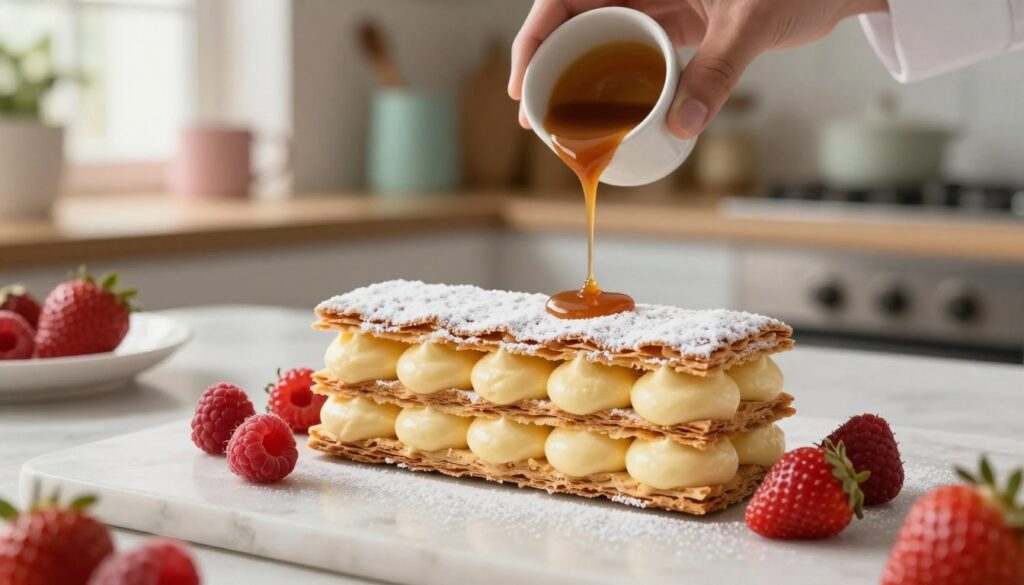
Assembly is where your hard work truly shines in the form of a beautiful pastry. This stage transforms your individual components into one of the most beloved classic french desserts. By following a systematic approach, you ensure that your final creation stands tall and looks perfect.
Layering Techniques for Structural Integrity
To build a stable base, start by placing your first sheet of baked puff pastry on a flat surface. Apply a thin layer of cream directly to the board to act as an anchor for the pastry. This simple trick prevents your dessert from sliding while you work.
When stacking, ensure your layers are perfectly aligned. Consistency is key to achieving that signature look found in high-end bakeries. If your pastry sheets have uneven edges, use a serrated knife to trim them gently before you begin the final assembly.
Piping the Cream for a Professional Look
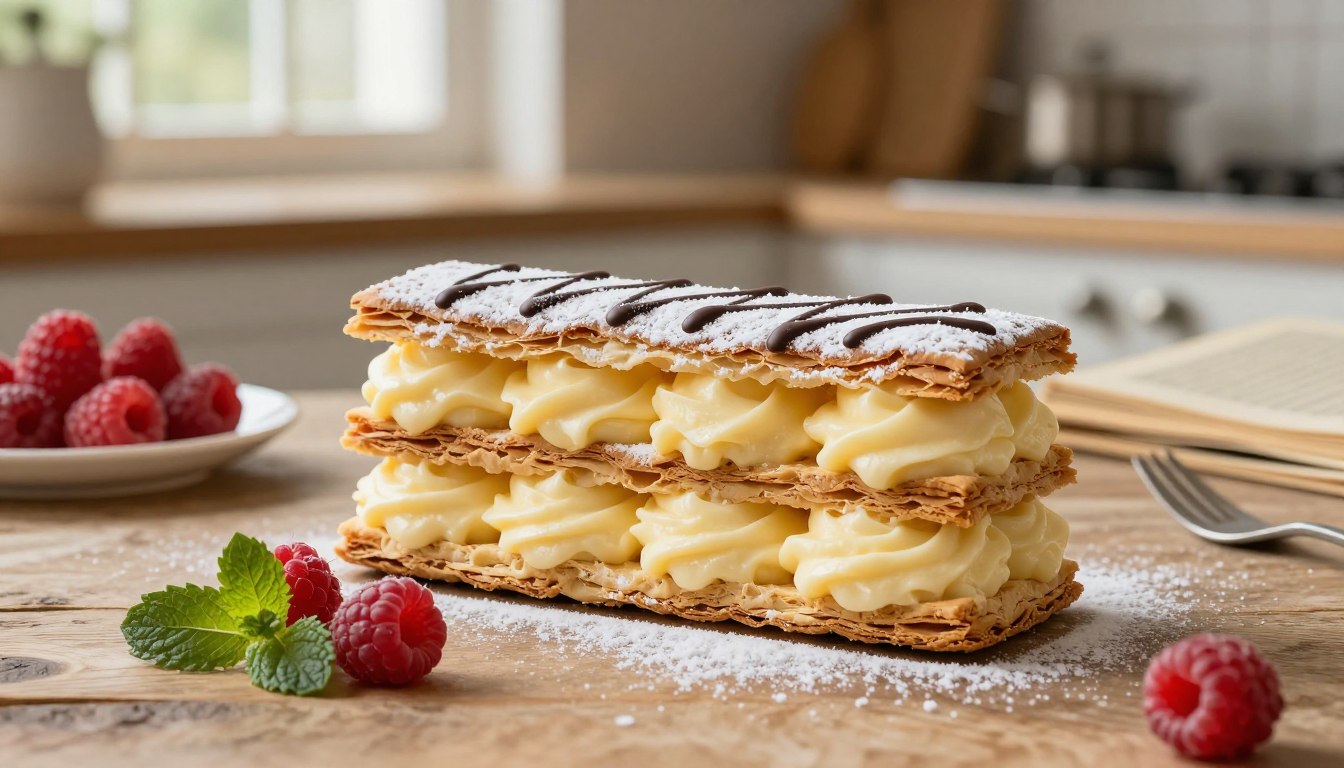
Using a piping bag is the secret to creating gourmet french pastries that look professionally made. Select a large round or star tip to create uniform mounds of cream across the surface of the pastry. This method provides better control than spreading with a spatula.
Space your piped mounds evenly to ensure the weight of the next layer is distributed correctly. This technique not only looks elegant but also makes slicing much easier later on. You will find that uniform piping creates a beautiful, airy texture in every bite.
Handling Delicate Layers Without Breaking
Working with a french dessert millefeuille requires a gentle touch because the puff pastry is incredibly fragile. Always use a wide offset spatula to lift and position your layers. If you feel resistance, stop and adjust your grip to avoid cracking the crisp crust.
Take your time during this phase to maintain the integrity of the pastry. If a piece does break, do not worry, as the cream will act as a delicious glue to hold it together. The following table outlines key tips for successful assembly.
| Component | Assembly Tip | Result |
|---|---|---|
| Puff Pastry | Trim edges before stacking | Clean, sharp lines |
| Pastry Cream | Pipe in uniform rows | Stable classic mille feuille |
| Final Layer | Press down very lightly | Perfect structural balance |
Mastering the Iconic Fondant Glaze
The final touch that makes your pastry look like a pro is the glossy fondant glaze. It’s not just for looks; it adds sweetness that balances the cream and pastry’s crunch. Learning this skill makes your dessert as tasty as it looks.
To make a glaze that shines and sets well, you need a few simple things. The trick is in the right mix of ingredients. This mix keeps the glaze smooth and shiny, not too runny or too hard.
- Powdered sugar: It’s the base and adds sweetness.
- Milk or water: It makes the glaze pour smoothly.
- Corn syrup: This is what gives it that signature mirror-like shine.
Creating the Traditional Marbled Pattern
The classic chevron design is simpler than it seems. Spread white fondant over the pastry, then work fast before it hardens.
Pipe thin, parallel lines of melted dark chocolate across the glaze. Use a toothpick or knife to drag through the chocolate lines in opposite directions. This simple action makes the iconic marbled pattern that’s a hallmark of French millefeuille.
Applying the Glaze for a Smooth Finish
Getting a smooth surface needs a steady hand and the right temperature. Make sure your glaze is a bit warm. This helps it spread evenly over the pastry.
Pour the glaze in the center of the pastry and spread it gently to the edges with an offset spatula. Don’t overwork it to avoid air bubbles and a dull finish. Let it set until it’s firm. This keeps your beautifully decorated dessert perfect when you serve it.
Pro Tips for Achieving Bakery-Quality Results
You can make your kitchen feel like a french bakery with a few key steps. The baking is important, but how you present your dessert matters a lot. These tips will help you make best french pastries that look and taste amazing.
The Importance of Chilling Your Components
Temperature control is key in every french pastry shop. Chill your pastry cream until it’s firm. This keeps the layers together when you press on them.
After you put your dessert together, chill it for two hours. This lets the pastry absorb moisture from the cream. It makes cutting easier. Chilling is crucial for keeping your dessert intact.
Slicing Your Millefeuille Without Crushing the Layers
Slicing can be tricky, but with the right knife and technique, you can do it. Use a long, serrated knife and saw gently. Pressing too hard can ruin the layers.
To get the best french pastries, clean your knife with a warm, damp cloth between each slice. This keeps the cream from smearing. Follow these steps for a perfect dessert.
| Preparation Step | Why It Matters | Pro Result |
|---|---|---|
| Chilling Cream | Sets the structure | Stable layers |
| Resting Dessert | Softens pastry edges | Clean, easy cuts |
| Serrated Knife | Prevents crushing | Bakery-quality finish |
| Wiping Blade | Removes excess cream | Professional look |
Troubleshooting Common Millefeuille Challenges
Getting a classic French treat just right can be tricky. Even with a great millefeuille recipe, things like humidity or temperature can affect your dessert. Don’t worry if your first try has small problems. These are chances to get better at making it.
Fixing Runny Pastry Cream
If your pastry cream is too runny, it won’t hold the puff pastry layers well. This might happen if the starch didn’t activate fully or if it wasn’t chilled enough. You can fix a runny cream by whisking in a bit of softened butter or chilling it more to firm up.
For beginners, learning the basics is key. You can find tips on how to make mille-feuille to get the right balance. Remember, cooling properly is crucial for a stable cream. If it’s still too runny, don’t add more sugar, as it will only make it thinner.
Preventing Soggy Pastry Layers
A great dessert has crisp pastry and smooth cream. To keep layers from getting soggy, don’t put the dessert together too early. Moisture from the cream can soak into the pastry, so timing is key when serving.
Brushing a thin layer of melted cocoa butter or white chocolate on the pastry before assembling helps. This keeps the crust delightfully crunchy longer. By following these tips, your dessert will look as good as it tastes.
Conclusion
Making a perfect millefeuille at home turns your kitchen into a pro patisserie. This classic dessert rewards your patience with crisp layers and rich, velvety cream.
You now have the skills to take your baking to the next level. Trying out different french pastry recipes lets you play with unique flavors and textures. Each try brings you closer to that perfect crunch and delicate balance found in Ladurée or Pierre Hermé.
Pay attention to the quality of your butter and the precision of your piping. This ensures every bite is a delight for your guests. Your hard work in these techniques makes all the difference in the final look.
Keep practicing these methods to get better at your craft. Sharing your thousand-layer masterpiece with friends and family creates lasting memories. We hope these french pastry recipes inspire you to keep exploring your culinary adventures with joy and creativity.