How to Make a 30-Day Low-Carb Meal
Imagine waking up feeling clear and full of energy. You deserve to feel good in your own skin and confident in your choices. Starting a new journey can be scary, but you’re not alone.
Studies show a healthy eating plan helps with weight management and blood sugar control. By choosing a 30-day low carb meal plan, you set a clear path to your wellness goals.
This plan takes away the daily guesswork that can be frustrating. You can now focus on feeling your best every day. Your health is a journey worth taking.
Key Takeaways
- Improve blood sugar control naturally and effectively.
- Achieve sustainable weight loss results with a clear structure.
- Reduce daily decision fatigue regarding your food choices.
- Enjoy a variety of nutrient-dense and delicious whole foods.
- Build long-term healthy lifestyle habits that actually stick.
- Gain more consistent energy levels throughout the entire day.
Understanding the Low Carb Diet Benefits and What to Expect
Wondering what happens when you cut back on sugars and starches? This change is a big step toward a healthier you. By eating whole foods, you set yourself up for lasting success and enjoy many low carb diet benefits.
Switching to this lifestyle is more than just changing your shopping list. It’s about how your body uses energy. Instead of quick sugar highs, your body learns to use more stable energy sources.
Why Choose a Low-Carb Eating Approach
High-carb meals can cause energy crashes in the afternoon. A low-carb diet makes your body burn fat for energy. This keeps your energy steady all day.
This diet also makes you feel full longer. Start with healthy breakfast ideas to keep hunger away. The right morning food helps you stay focused and avoid mid-day hunger.
Health Benefits You Can Experience in 30 Days
In just one month, the low carb diet benefits become clear. You’ll likely see weight loss as your body burns fat. This initial success motivates you to keep going.
Another big plus is better blood sugar control. By cutting out refined grains and sweets, your insulin levels stabilize. This reduces cravings and improves your mood all day.
A low-carb diet is not just about what you lose, but what you gain in terms of metabolic health and mental clarity.
Studies show it also boosts heart health. It can improve “good” cholesterol and lower blood pressure. You’re not just losing weight; you’re protecting your health for the long term.
What Makes a Diet Truly “Low-Carb”
“Low-carb” can mean different things depending on your goals. It usually means keeping your daily net carbs between 20 and 100 grams. This lets you eat healthy while avoiding processed foods and added sugars.
Focus on nutrient-dense foods like leafy greens and quality proteins. You won’t need to count every calorie with the right foods. Good fats and fibers help keep you full.
| Carb Level | Daily Carb Limit | Primary Goal |
|---|---|---|
| Strict (Keto) | Under 20g | Rapid Fat Burning |
| Moderate | 20g – 50g | Steady Weight Loss |
| Liberal | 50g – 100g | Weight Maintenance |
Essential Low Carb Foods List for Your Pantry and Fridge

Starting your 30-day transformation begins with a smart grocery trip. Having the right ingredients makes it easier to resist cravings and cook quick meals. Look for foods low in sugar but high in nutrients.
Stocking your kitchen with the right items sets you up for success. A low carb foods list guides you through the grocery aisles. It helps you avoid processed snacks and choose whole foods that nourish your body.
High-Protein Foods That Keep You Satisfied
Proteins are key to your new lifestyle. They keep you full and help maintain muscle mass while losing weight. Choose high protein foods that are minimally processed for the best benefits.
Fill your fridge with grass-fed beef, poultry, and fatty fish like salmon or mackerel. Eggs are great for any meal and are affordable. For plant-based options, tofu or tempeh are excellent meat substitutes.
Healthy Fats to Include in Your Meal Plan
Don’t fear fat; it’s your main energy source now. Seek out healthy fats for stable energy without blood sugar spikes. These fats help your body absorb vitamins and keep your brain sharp.
Use avocado oil, extra virgin olive oil, and grass-fed butter for cooking and dressing salads. Enjoy walnuts or macadamia nuts for a quick snack. Adding healthy fats to meals keeps you from feeling hungry soon after eating.
“Choosing nutrient-dense whole foods is the most effective way to manage your hunger hormones and sustain energy levels on a low-carb plan.”
Low-Carb Vegetables and Fruits You Can Enjoy
Your plate should be filled with colorful, fiber-rich low carb vegetables. They provide essential vitamins and keep digestion smooth. Choose leafy greens like spinach and kale, and cruciferous options like broccoli and cauliflower.
While many fruits are high in sugar, berries are okay in moderation. Blackberries, raspberries, and strawberries are lower in carbs and full of antioxidants. Always choose low carb vegetables over fruit to keep carbs in check.
Foods to Avoid or Limit on Your Low-Carb Journey
To see the best results in 30 days, watch out for hidden sugars and starches. Many processed items contain fillers that can slow your progress. Keep a low-carb food shopping list handy to avoid impulse buys.
Consistency is key when you are retraining your metabolism. Even small amounts of sugar can trigger cravings that make the 30-day challenge harder. Use the table below to understand which swaps will help you stay on track.
| Food Category | What to Choose | What to Avoid | Key Benefit |
|---|---|---|---|
| Proteins | high protein foods like Steak | Breaded Chicken | Muscle Retention |
| Vegetables | Zucchini Noodles | Wheat Pasta | Lower Calories |
| Fats | Avocado | Margarine | Heart Health |
| Snacks | Almonds | Potato Chips | Sustained Energy |
By sticking to this low carb foods list, meal prep becomes simpler. Your kitchen will be full of approved options. Focus on quality over quantity, and your body will thank you.
How to Create a Low Carb Meal Plan for 30 Days
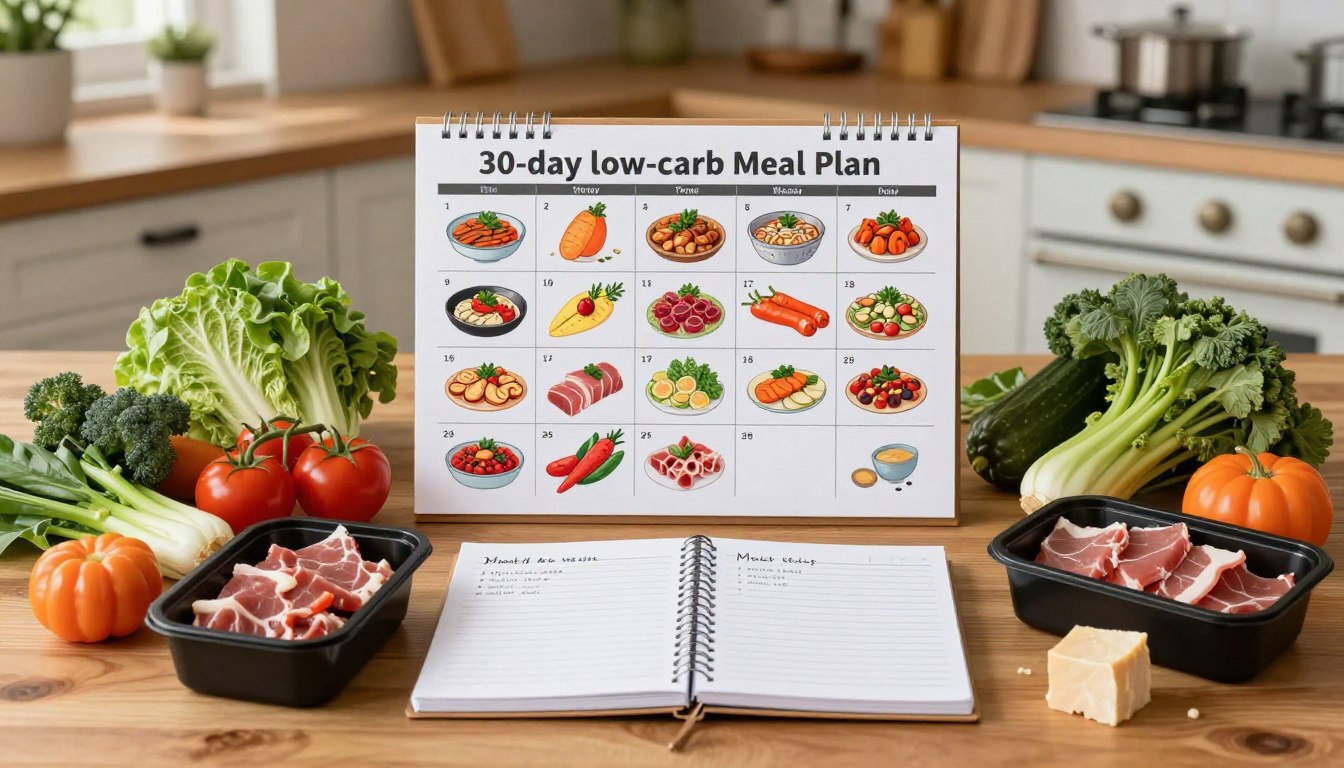
Making your own low carb meal plan is the best way to stick to it for a month. You need a plan that fits your daily life and keeps your meals tasty. A good 30 day meal plan starts with knowing your goals and what you like to eat.
First, check your schedule for busy nights when you need quick meals. Pick recipes that use similar ingredients to save money and reduce waste. This makes your healthy eating plan easier to keep up with over time.
Being flexible is key to lasting changes. If you don’t like a certain vegetable, try something else. Your low carb meal plan should feel like a treat, not a punishment.
Organizing your 30 day meal plan means batch cooking on Sundays. This saves time during the week and keeps you away from high-carb foods. A well-planned healthy eating plan helps you make better choices every day.
Planning is bringing the future into the present so that you can do something about it now.
Having essentials like olive oil, nuts, and spices in your pantry is crucial. These add flavor without extra carbs. Having these items ready makes sticking to your low carb meal plan easier, even when you’re busy.
Don’t forget to drink plenty of water and listen to your hunger. Adjust your portion sizes based on how active you are. This makes your healthy eating plan fit your unique needs.
Here’s a simple structure for your first few days of a 30 day meal plan. It balances protein, healthy fats, and fiber-rich veggies.
| Day | Breakfast | Lunch | Dinner |
|---|---|---|---|
| Monday | Scrambled eggs with spinach | Grilled chicken salad | Baked salmon with broccoli |
| Tuesday | Greek yogurt with walnuts | Turkey lettuce wraps | Zucchini noodles with pesto |
| Wednesday | Avocado and bacon omelet | Tuna salad with celery | Beef stir-fry with peppers |
| Thursday | Chia seed pudding | Egg salad over greens | Roasted chicken thighs |
Low Carb Breakfast Ideas to Start Your Day Right

You don’t have to give up taste or time for a good low-carb breakfast. Starting with the right food makes a big difference in your day. Choosing low carb breakfast ideas avoids the blood sugar swings from sugary foods.
Using top ingredients like eggs, avocado, and spinach gives you lasting energy. These foods keep you full and focused, helping with weight loss. Starting with a savory meal often leads to better choices all day.
Quick and Easy Morning Meals
For busy mornings, a quick and easy breakfast is key. A simple scramble with eggs and spinach takes less than five minutes. Add feta cheese or hot sauce for extra flavor.
Try slicing an avocado and filling it with a poached egg or tuna. This meal is full of healthy fats and protein, with no cooking time. Simplicity is often the key to long-term success when starting a new diet.
For a fast “omelet in a mug,” whisk eggs and peppers in a cup. Cook for ninety seconds for a hot, nutritious meal. This quick and easy breakfast is perfect for busy mornings.
Make-Ahead Breakfast Options for Busy Weekdays
Preparation is key for a low-carb diet during a busy week. Making a make ahead breakfast on Sunday saves you from bad choices when tired. Egg muffins are great because you can bake a batch and store them.
Whisk eggs with bacon, onions, and cheese, then pour into muffin tins. Bake until firm for portable protein bites. Reheat or eat cold while commuting.
Chia seed pudding is another great make ahead breakfast that tastes like a treat. Mix chia seeds with almond milk and vanilla before bed. By morning, it’s a thick, creamy pudding topped with raspberries.
High Protein Low Carb Breakfast Combinations
For extra energy, choose protein-rich low carb breakfast ideas. Smoked salmon with cream cheese on cucumber is refreshing and filling. It also gives you omega-3s for brain health.
For a hearty meal, try a small steak with two sunny-side-up eggs. This quick and easy breakfast combo is satisfying and keeps your metabolism going. Aim for a balance that energizes you, not slows you down.
| Breakfast Option | Prep Time | Main Ingredients | Best Feature |
|---|---|---|---|
| Egg Muffins | 30 Mins | Eggs, Bacon, Spinach | Perfect make ahead breakfast |
| Avocado Boat | 5 Mins | Avocado, Egg, Spices | High in healthy fats |
| Smoked Salmon | 5 Mins | Salmon, Cream Cheese | Rich in Omega-3s |
| Veggie Scramble | 10 Mins | Eggs, Peppers, Feta | Great low carb breakfast ideas |
Meal Prep Low Carb Strategies for Success
Mastering meal prep is key for sticking to a 30-day low-carb plan. Having a fridge full of ready-to-eat meals makes it easier to stay on track. It removes the stress of making healthy choices when you’re tired or hungry.
Preparing food in advance lets you control every ingredient. You’ll save money and reduce food waste by only buying what you need. A little effort on the weekend can make your week stress-free.
“Success depends upon previous preparation, and without such preparation there is sure to be failure.”
Weekly Meal Prep Schedule and Tips
Creating a consistent weekly meal prep routine is crucial for success. Most people find that dedicating a few hours on Sunday works best. Start by reviewing your low-carb food shopping list to ensure your pantry is stocked.
Focus on preparing the longest-cooking items first. While proteins roast, chop veggies or portion snacks. This approach keeps your kitchen time efficient.
Keep your schedule flexible for social events or late nights. If you know Tuesday will be busy, prep that meal ahead. Consistency is more important than perfection when starting out.
Batch Cooking Low Carb Recipes
Batch cooking means making large quantities of a single recipe. Cook five pounds of ground beef or roast several chickens at once. This ensures a high-protein option is always ready.
Think of batch-cooked items as building blocks for different flavors. One batch of shredded chicken can become taco salad on Monday and a Mediterranean bowl on Wednesday. This variety keeps your 30-day journey exciting.
| Food Item | Fridge Life | Freezer Life | Best Practice |
|---|---|---|---|
| Cooked Chicken | 3-4 Days | 4 Months | Seal in airtight bags |
| Roasted Broccoli | 4-5 Days | 3 Months | Reheat in an air fryer |
| Hard-Boiled Eggs | 7 Days | Not Recommended | Keep in their shells |
| Ground Beef | 3-4 Days | 3 Months | Drain fat before storing |
Storage Solutions to Keep Food Fresh
Invest in good storage solutions to keep meals fresh. Glass containers are best because they don’t leach chemicals and are safe for the microwave. They also let you see what’s inside your fridge.
Use airtight seals to prevent veggies from wilting or meats from drying out. If freezing meals, leave space at the top for expansion. Labeling containers with the date helps track freshness.
Organize your fridge so older meals are at the front. This “first-in, first-out” method prevents waste. Good organization makes your meal prep low carb efforts feel professional and manageable.
Time-Saving Meal Prep Ideas for Beginners
If you’re new, start with small tasks instead of prepping every meal. Begin by washing and chopping all your salad greens for the week. These small steps can save you ten minutes during a busy lunch hour.
Use pre-cut veggies or rotisserie chickens if you’re short on time. While these options might cost more, they save you a lot of time. Your goal is to make healthy choices easy.
- Pre-portion snacks: Divide nuts and cheese into small bags immediately after shopping.
- Double the recipe: Whenever you cook dinner, make twice as much for lunch the next day.
- Use a slow cooker: Let your appliances do the work while you focus on other tasks.
Budget Low Carb Meal Plan Tips Without Sacrificing Quality
Creating a budget low carb meal plan is easy with whole, seasonal foods. You don’t need pricey “superfoods” or fancy keto snacks to see results. By picking affordable low carb basics, you can feed your body well without breaking the bank.
Buying in bulk is a smart move for healthy eating on a budget. Look for big packs of chicken thighs, ground beef, or eggs. They’re cheaper per pound. Freeze what you don’t use right away to save money and prevent waste.
“The secret to a successful diet is not how much you spend, but how well you plan your resources.”
Frozen veggies are a great choice for an affordable low carb life. They’re as nutritious as fresh ones but cost less. They also last months in your freezer, making them ideal for a 30-day low-carb meal plan.
Seasonal produce is another way to save money. When veggies are in season, they’re cheaper and plentiful. Always check the weekly ads for sales on proteins and healthy fats like olive oil or butter.
Here are some easy swaps for your budget low carb meal plan:
| Expensive Option | Budget-Friendly Swap | Key Benefit |
|---|---|---|
| Fresh Salmon Fillets | Canned Tuna or Sardines | High protein, shelf-stable |
| Almond Flour | Crushed Pork Rinds | Zero carb, very cheap |
| Avocado Oil | Extra Virgin Olive Oil | Heart-healthy and accessible |
Lastly, healthy eating on a budget means getting creative in the kitchen. Use leftovers for lunch the next day to avoid buying more. This habit makes sure every dollar you spend helps you reach your health goals.
Your Sample 30-Day Low Carb Meal Plan Structure
Having a solid plan for the next four weeks lets you focus on feeling good. This meal plan is your guide to success. You’ll learn to balance your meals without feeling hungry or deprived.
Following a plan helps avoid decision fatigue. Knowing what’s in your fridge keeps you from grabbing high-carb foods. Let’s break your journey into stages to keep you consistent.
Week One: Getting Started with Simple Meals
Your first week is about building confidence and keeping things simple. Focus on basic whole foods that don’t take hours to make. You’ll enjoy familiar dishes like scrambled eggs and grilled chicken.
Keep your seasonings simple with salt, pepper, and olive oil. Clear out high-carb items from your pantry for fresh greens. By week one, your body will start using fat for energy.
Week Two: Expanding Your Recipe Repertoire
Now, get creative with low carb recipes that remind you of old favorites. Try zucchini ribbons instead of pasta or cauliflower “rice” bowls.
This week, try one or two new cooking techniques. Adding variety keeps your meals exciting. You might love these new versions more than the originals.
Week Three: Incorporating More Variety
By week three, you’ll notice more energy. It’s time to try different proteins like salmon, shrimp, or lamb. Low carb recipes from around the world make dinner special.
Add healthy fats like avocado or olives to your lunches. These keep you full longer. Your sugar cravings should be fading by now.
| Phase | Primary Focus | Key Ingredients |
|---|---|---|
| Week 1 | Simplicity | Eggs, Spinach, Chicken |
| Week 2 | Substitution | Cauliflower, Zucchini, Beef |
| Week 3 | Flavor Variety | Seafood, Avocado, Spices |
| Week 4 | Sustainability | Nuts, Seeds, Healthy Oils |
Week Four: Maintaining Momentum and Building Habits
The final week focuses on making these changes last. Use your favorite recipes and perfect your meal prep. This proves you can keep up this eating style long-term.
Focus on how much better you feel now than at the start. Practice eating out and handling social events while staying on track. You’ve built the discipline to keep these healthy habits.
“The secret of getting ahead is getting started. The secret of getting started is breaking your complex overwhelming tasks into small manageable tasks, and then starting on the first one.”
Remember to listen to your body as you progress. Everyone’s nutritional needs are different, so adjust portion sizes as needed. Consistency is key to reaching your health goals in these thirty days.
Smart Shopping Strategies for Your Low Carb Weekly Meal Plan
Your journey to a low-carb diet starts at the grocery store. Learning smart shopping strategies helps you avoid impulse buys. This keeps you on track. When you shop with a plan, you save time and keep your kitchen full of healthy foods.
First, make a detailed low carb grocery list for the week. Stick to the store’s perimeter for fresh, whole foods. Here, you’ll find great veggies, meats, and dairy.
Reading labels is key for healthy grocery shopping. Many foods hide sugars in names like maltodextrin. Check the Total Carbohydrates and Fiber to know the net carbs. This helps keep your blood sugar stable.
Look for convenient items that fit your diet. Pre-washed greens or frozen cauliflower can be a big help. For lunch ideas, check out these meal prep lunch ideas.
Bulk buying can save you money. Nuts, seeds, and berries are cheaper in bulk. Just make sure you have space to store them.
| Instead of buying… | Choose this… | The Benefit |
|---|---|---|
| Sugary Fruit Yogurt | Plain Greek Yogurt | Lower sugar and higher protein content. |
| Traditional Wheat Pasta | Zucchini Noodles | Significantly fewer carbs and more fiber. |
| Refined Vegetable Oil | Extra Virgin Olive Oil | Better heart-healthy fat profile. |
“The food you eat can be either the safest and most powerful form of medicine or the slowest form of poison.”
Learning these smart shopping strategies helps your environment support your health goals. A well-stocked pantry makes healthy choices easy. Consistent healthy grocery shopping is key to lasting change.
Overcoming Common Low Carb Diet Challenges
Changing your diet is more than just finding good recipes. You’ll face times when you feel weak or your energy drops. Knowing about low carb diet challenges helps you stay on track when it gets hard.
Everyone’s journey is different, so don’t get down about small setbacks. You’re building habits that will help your health for years. Focus on your progress and keep moving forward with confidence.
Managing Cravings and Social Situations
Cravings for carbs or sugar often hit in the first week. To manage them, eat meals rich in healthy fats and fiber. If you feel a snack attack, choose almonds or cheese over sweets.
Social events can be tough, like birthday parties or office lunches. Eat a small snack before you go to avoid hunger. Look for high protein lunches to stay full at work.
At social gatherings, focus on talking rather than the food. Most restaurants have grilled options that fit your diet. Being prepared is your best defense against temptation.
Dealing with the Initial Adjustment Period
Your body takes time to switch from sugar to fat for fuel. You might feel tired or have headaches, known as the “low carb flu.” This is a sign your metabolism is changing.
Drink plenty of water and add sea salt to your meals to balance electrolytes. Most people find these symptoms go away in a few days, leaving them more energetic.
Staying Motivated Throughout Your 30 Days
Staying motivated is easier when you look for non-scale victories every day. Notice if your skin looks better, your sleep is deeper, or your jeans fit better. These small changes show your hard work is paying off.
Keep a journal to track how you feel after meals. This helps you see how your food choices affect your health. Having supportive friends or online communities can also help you stay strong.
What to Do When You Hit a Plateau
Weight loss can slow down after the first water weight loss. If the scale doesn’t move for a week, don’t think you’ve failed at your low carb diet challenges. Your body might just be adjusting to its new state.
| Common Plateau Cause | Simple Solution | Expected Result |
|---|---|---|
| Hidden Sugars | Check labels on sauces and dressings | Restarts fat burning |
| Too Many Nuts/Dairy | Limit these calorie-dense snacks | Creates a better deficit |
| Lack of Sleep | Aim for 7-9 hours of rest | Lowers cortisol levels |
Consistency is key when you hit a stall. Stick to your plan, stay active, and trust the process. Staying motivated through a plateau is often the last hurdle before seeing big results.
“Success is the sum of small efforts, repeated day in and day out.”
Conclusion
You’ve reached the end of your first journey. Your body feels different now. You’ve learned to make better food choices.
This low carb meal plan has been a big help. It shows how far you’ve come. You’ve built a strong foundation for the future.
Don’t stop now. Keep using your favorite recipes from brands like Applegate or Kerrygold. Staying consistent is key to your new lifestyle. Remember, health is a long-term journey.
Finishing the 30 day low carb challenge shows you can adapt. You’ve handled cravings and planned meals well. Keep this focus as you move forward.
Your healthy eating plan is a flexible tool for the future. Adjust it as your goals change. Explore new low-carb ingredients at stores like Sprouts Farmers Market. A good plan keeps you on track, even when life gets busy.
You have the power to make choices that support your well-being every day. Keep going!