
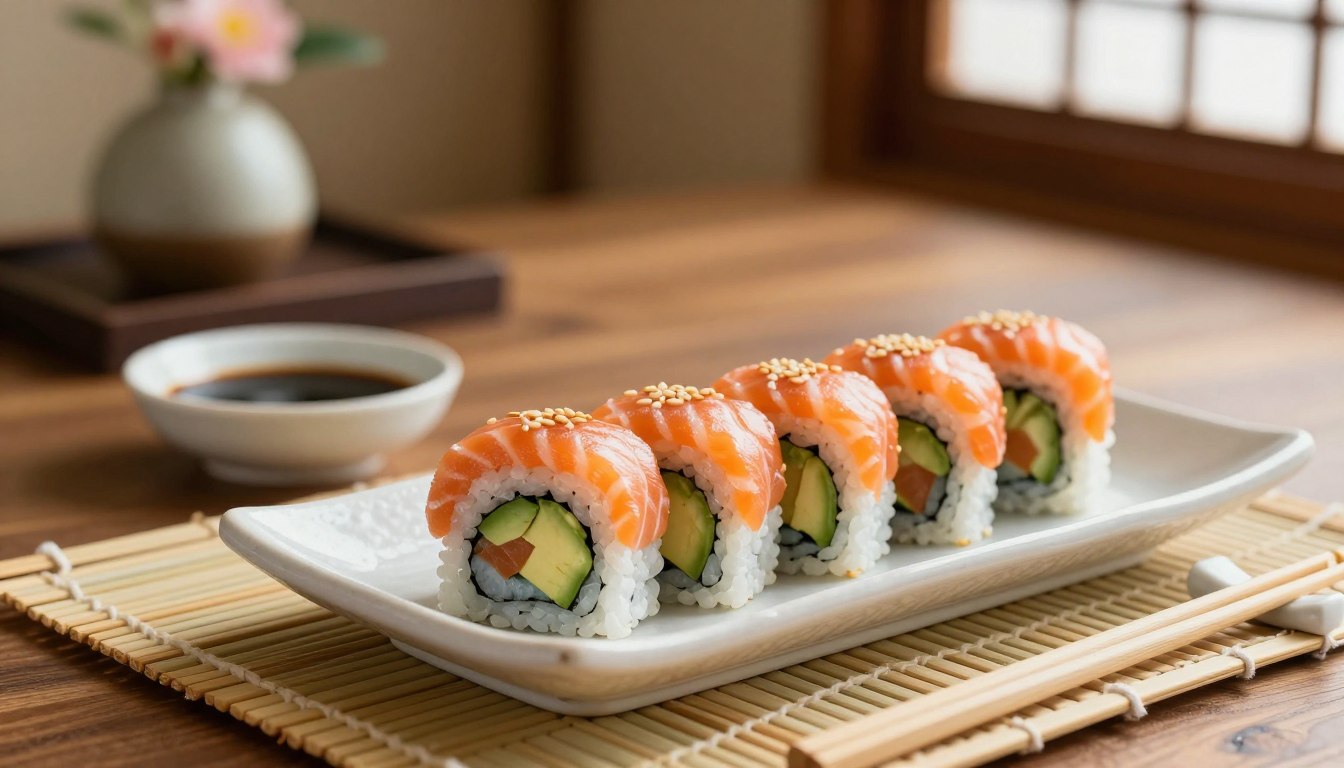
The Best Simple Miso Salmon Maki Recipes Easy
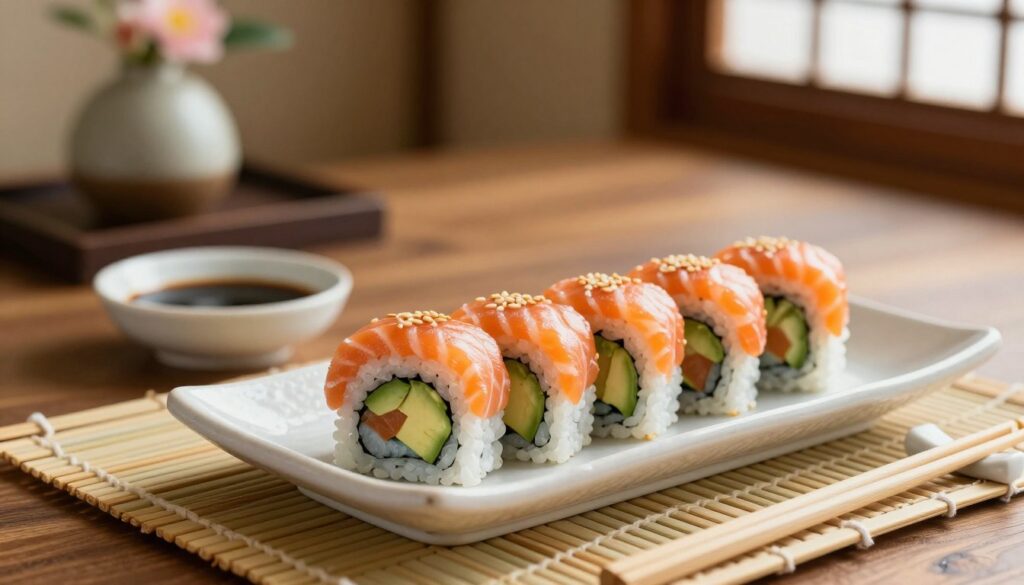
Imagine making a meal that feels like a warm hug. You might remember the first time you tasted japanese cuisine and felt that spark of delight. It’s a memory that stays with you, like a favorite song.
Bringing those flavors into your kitchen is a beautiful way to show love. Making homemade sushi is not hard. It’s a special process that you can learn with a little patience.
This dish is all about sophistication and deep flavors. Start by learning to make a miso marinated side of salmon. It needs a long soak but only takes fifteen minutes to cook. Balancing these textures will make your maki rolls special.
Your journey into sushi starts here. We’ll guide you through every step. Your rolls will be tight and seasoned just right. Let’s make your kitchen your favorite dining spot tonight.
Key Takeaways
- Discover how to balance savory flavors for a perfect bite.
- Master the technique of rolling with ease and confidence.
- Learn to prepare high-quality ingredients in your own kitchen.
- Save time with efficient fifteen-minute cooking methods.
- Understand the importance of seasoning your rice correctly.
- Create a restaurant-quality meal that serves five to six people.
Why Miso Salmon Maki Is Your New Favorite Homemade Sushi
If you love the savory depth of fermented soybeans and fresh fish, you’re in for a treat. This dish is a perfect blend of asian fusion at its best. It combines the salty, umami kick of miso with the buttery texture of salmon.
Sushi is a traditional japanese dish, but adding a miso glaze gives it a modern twist. This mix creates a rich flavor that will satisfy your taste buds. It’s no surprise that this roll is a hit in trendy restaurants across the U.S.
What’s great is that you can make this gourmet dish without spending hours in the kitchen. Many people look for an easy sushi recipe that’s simple yet impressive. This maki roll is perfect for that, offering a sophisticated taste without the hassle.
If you enjoy trying new seafood recipes, check out some best fish recipes for lunch. These options add variety to your meal planning. Making sushi at home lets you control the ingredients and save money.
Introduction to Miso Salmon Maki
Miso salmon maki is more than a meal; it’s a culinary journey. It combines the classic maki roll with the bold, fermented taste of miso. This dish is popular because it’s fancy yet easy for home cooks to make.
Miso has been a key part of Japanese cooking for centuries. By adding it to a sushi roll, you honor traditional techniques while adding a modern twist. This asian fusion makes the dish unique compared to standard rolls.
These rolls are perfect for dinner parties or a quiet night in. The mix of sweet, salty, and savory flavors ensures everyone will want more. Finding a traditional japanese dish that’s also an easy sushi recipe is a rare win for any home chef.
| Feature | Classic Salmon Roll | Miso Salmon Roll |
|---|---|---|
| Primary Flavor | Mild and Clean | Rich and Umami |
| Salmon Prep | Freshly Sliced Raw | Glazed and Sired |
| Culinary Style | Traditional Japanese | Modern Asian Fusion |
Essential Ingredients for Your Miso Salmon Maki Recipe
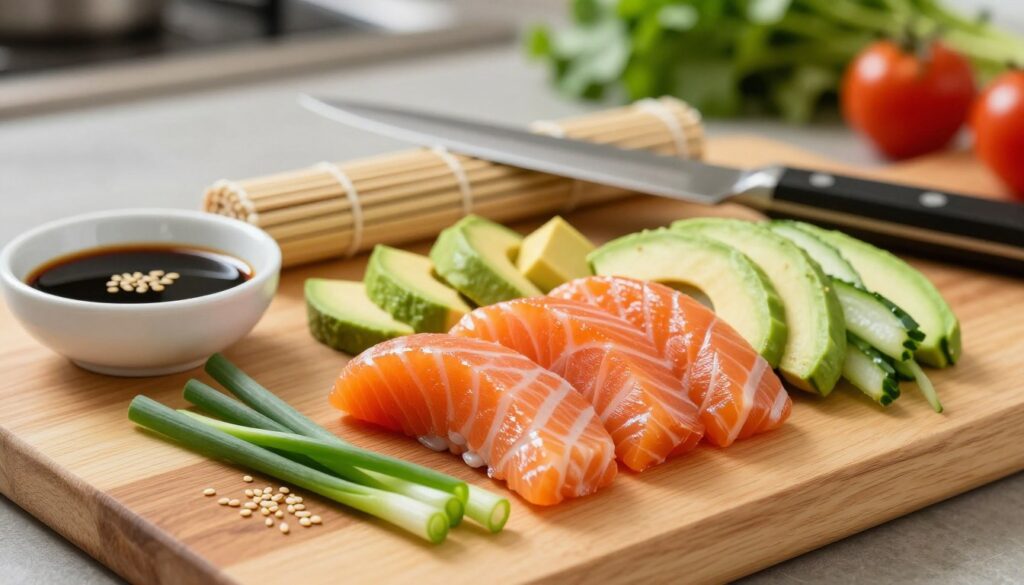
Making sushi at home is all about fresh ingredients. You want each bite to be full of flavor and soft. The right ingredients make your homemade maki sushi taste like it’s from a restaurant.
Quality ingredients are key to a great dish. They make your meal special for everyone. Let’s see what you need in your kitchen.
Fresh Salmon and Miso Paste Selection
Choose sashimi-grade salmon from a trusted fishmonger. This ensures the fish is safe to eat raw and has a great texture. Freshness is crucial for a delicious easy miso salmon sushi experience.
For the marinade, pick a good white miso paste, also known as Shiro miso. It has a mellow, sweet, and salty taste that goes well with the fish. Stay away from darker misos, as they’re too strong.
Sushi Rice and Seasoning Components
Your rice choice is important for your homemade salmon maki. Use short-grain Japanese rice for its sticky texture. Long-grain rice won’t stick together well.
You’ll also need some pantry items for seasoning. Rice vinegar, sugar, and sea salt are essential for the sushi vinegar. They add a tangy balance that complements the salmon.
| Ingredient | Best Variety | Role in Recipe |
|---|---|---|
| Salmon | Sashimi-Grade | Main protein for easy miso salmon sushi |
| Miso | White (Shiro) | Sweet and savory glaze base |
| Rice | Short-Grain | Sticky base for the roll |
Nori Sheets and Additional Fillings
Find crisp, dark green nori sheets that are dry and brittle. Good seaweed adds a toasted smell to your homemade maki sushi. Keep them in an airtight container to stay fresh.
For extra texture and color, try these fillings:
- English Cucumber: Adds a refreshing crunch.
- Ripe Avocado: Provides a creamy contrast.
- Toasted Sesame Seeds: Adds a nutty flavor and looks good.
“The secret of great sushi lies in the harmony between the seasoned rice and the freshest gifts from the sea.”
Preparing these ingredients ahead makes cooking easier. It lets you enjoy making your homemade salmon maki.
Kitchen Tools You’ll Need to Make Maki Sushi
Making maki rolls is easier with the right tools. You don’t need a pro setup to make a japanese salmon sushi roll at home. But, a few key items will help you get that restaurant look.
The bamboo sushi mat, or makisu, is crucial. It helps you roll your miso glazed salmon sushi evenly. Without it, your rolls might not turn out right.
A sharp knife is vital for fresh fish and sticky rice. You need a knife that cuts through nori without squashing the fillings. A dull knife will ruin your sushi.
You’ll also need a sturdy cutting board for assembling your japanese salmon sushi roll. Keep water nearby to dip your fingers in. This prevents rice from sticking to your skin.
| Essential Tool | Primary Purpose | Importance Level |
|---|---|---|
| Bamboo Mat | Shapes the miso glazed salmon sushi | Essential |
| Sharp Knife | Creates clean, even slices | High |
| Cutting Board | Provides a stable work surface | Essential |
Having these tools ready makes cooking fun and easy. The right gear makes rolling more satisfying and successful. Get your station ready so you can enjoy the flavors.
How to Prepare Perfect Sushi Rice at Home
Learning to make sushi rice is key for anyone wanting to try easy sushi recipes at home. This rice is crucial for the texture and taste of your sushi. Great rice turns a simple snack into a work of art.
When you follow a salmon maki roll step by step guide, start with the rice. It should be sticky but also light. Here’s how to get that perfect result at home.
Rinsing and Cooking Your Rice
Begin with high-quality Japanese short-grain rice. Put the rice in a large bowl and cover it with cool water. Gently swirl the grains with your hand until the water turns cloudy.
Drain the water and repeat this process until the water is clear. This removes excess starch, preventing your easy sushi recipes at home from being gummy. Use a 1:1.1 ratio of rice to water in your rice cooker.
Making the Rice Vinegar Seasoning
While your rice cooks, prepare the seasoning, known as sushi-zu. Mix rice vinegar, sugar, and a pinch of salt in a small saucepan over low heat. Stir until the sugar dissolves.
Don’t let the mixture boil, as it can lose its delicate flavor. This sweet and tangy liquid gives your rice its shine and classic taste. Proper seasoning is what makes Japanese sushi famous.
“The rice is the heart of the sushi; the fish is just the topping that follows its lead.”
Cooling and Handling Sushi Rice Properly
Once the rice is done, transfer it to a large bowl. Pour the vinegar seasoning over the warm rice. Use a slicing motion with a spatula to mix it in.
Avoid mashing the grains to keep them fluffy and distinct. Use a handheld fan to cool the rice quickly as you gently fold it. This cooling step is crucial for your salmon maki roll step by step journey.
| Preparation Step | Key Action | Desired Result |
|---|---|---|
| Rinsing | Wash 3-4 times | Clear water/No starch |
| Cooking | 1:1.1 Water ratio | Fluffy, tender grains |
| Seasoning | Slice and fold | Glossy, tart flavor |
| Cooling | Use a fan | Perfect sticky texture |
Creating the Miso Marinade for Your Salmon
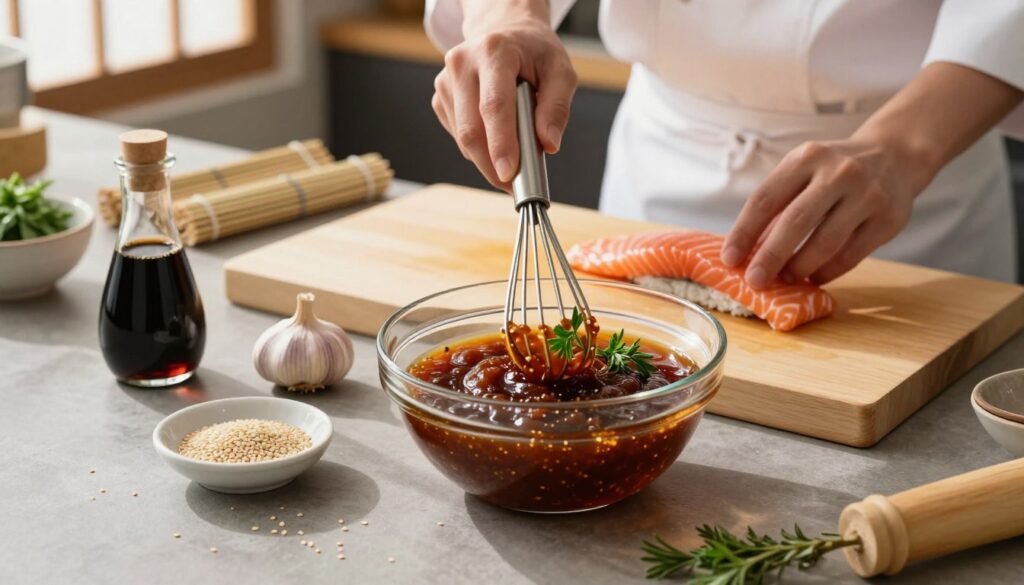
Making a bold miso marinade is key for how to make maki sushi at home. This sauce gives your dish a rich umami flavor. It balances salt, sweetness, and depth, making your fish stand out.
The marinade does more than add flavor. It breaks down the fish’s proteins, making it tender. This simple step makes your homemade rolls taste like they’re from a pro kitchen.
Mixing Your Miso Glaze Ingredients
Start with high-quality miso paste. White miso is milder and sweeter, perfect for quick sushi recipes. Mix it with liquid ingredients until it’s smooth and creamy.
Add mirin and brown sugar for a caramelized glaze. These ingredients give the glaze a velvety consistency that sticks to the salmon. A bit of grated ginger adds a refreshing zing.
Marinating and Cooking the Salmon
Once your glaze is ready, coat your salmon fillets on all sides. For the best results, let the miso-marinated salmon sit in the fridge for at least thirty minutes. This tenderizes the fish and infuses it with flavor.
Then, sear the salmon in a hot pan or broil it in the oven. Cook until it’s just opaque in the center and flakes easily. Properly cooked salmon makes your maki rolls buttery and tender.
Achieving the Perfect Miso Glazed Finish
The secret to a pro finish is a dark, bubbly caramelization. Be careful not to burn the sugars, as they can turn bitter. This creates a rich crust that contrasts beautifully with the soft sushi rice.
Always let the cooked salmon cool down before rolling. Hot fish can make the nori sheets wilt. A cooled glaze also keeps the flavor inside your quick sushi recipes better.
| Component | Role in Marinade | Key Benefit |
|---|---|---|
| Miso Paste | Primary Flavor | Adds deep umami |
| Mirin | Liquid Sweetener | Creates a shiny glaze |
| Rice Vinegar | Acidic Balance | Cuts through the fat |
| Toasted Sesame Oil | Aroma | Enhances the nutty scent |
Preparing Your Nori Sheets for Rolling
Getting your seaweed sheets ready is key to making sushi that sticks together well. Nori adds a salty flavor and a nice crunch to your healthy salmon sushi recipe. Always use dry hands when handling nori to avoid it getting soggy.
Nori has a shiny side and a rough side. Place the shiny side down on your bamboo mat. This helps the rice stick better to the textured surface. It’s a secret to making great sushi rice preparation and assembly.
For smaller rolls, fold the nori sheet in half and cut it with sharp shears. Keeping nori crisp is crucial for the best texture in your healthy salmon sushi recipe. Store nori in a sealed bag until you’re ready to use it.
“A crisp sheet of nori transforms a simple roll into a gourmet experience.”
Managing your nori right is key to a strong maki. If nori gets too damp, it becomes chewy and hard to bite. Follow these tips to keep your ingredients ready for sushi rice preparation:
- Keep your workspace dry to prevent the nori from tearing.
- Use sharp scissors for clean edges when cutting sheets.
- Only remove nori from its packaging right before rolling.
Treat your nori with care to get that restaurant look. When handled right, nori contrasts beautifully with salmon and rice. This prep is crucial for a perfect roll.
| Nori Feature | Shiny Side | Rough Side |
|---|---|---|
| Placement | Faces the outside | Faces the rice |
| Function | Provides a sleek look | Helps rice adhere |
| Key Tip | Keep dry for shine | Essential for grip |
Step-by-Step Salmon Maki Roll Assembly
Assembling your maki is the most rewarding part of exploring japanese cuisine recipes at home. This stage requires a steady hand and patience. Don’t worry if your first few rolls look messy. Practice makes perfect.
You are about to turn simple ingredients into a beautiful meal. The process is meditative and fun, as you see the vibrant colors come together. Take your time and enjoy the craft of sushi making.
Laying Out Your Nori and Rice
Place your bamboo mat on a flat surface in front of you. Lay one nori sheet sushi on the mat with the rough side facing up toward you. This texture helps the rice and fillings stay in place as you roll.
Wet your fingers with a bit of water to prevent the rice from sticking to your skin. Spread a thin, even layer of sushi rice over the nori. Leave about an inch of empty space at the top edge to act as a seal later.
Adding the Miso Salmon and Fillings
Place your prepared miso salmon in a straight horizontal line across the center of the rice. Add your chosen vegetable strips, like cucumber or avocado, right next to the fish. Consistency ensures every bite is perfect and easy to chew.
Avoid overfilling the roll, as this can cause the nori to tear during the process. Balance is key here. Keep the fillings compact so the roll remains sturdy once you start moving the mat.
Sushi Rolling Tips for Beginners
Lift the edge of the bamboo mat closest to you and fold it over the fillings. Use your fingers to keep the salmon and vegetables in place as you tuck the edge. Apply gentle but firm pressure to create a tight cylinder.
Continue rolling forward until you reach the bare strip of nori at the top. Dab a small amount of water on that strip to help it stick. This creates a secure seal that keeps your roll from falling apart.
“The secret to great sushi is in the pressure of the roll—firm enough to hold, light enough to breathe.”
Slicing Your Maki Rolls Like a Pro
Use a very sharp knife to ensure you get clean cuts without squishing the rice. Wipe the blade with a damp cloth between every single cut you make. This prevents the starch from sticking and tearing the nori.
Cut the roll in half first, then into quarters, and then into eighths. This method helps you keep all the pieces uniform in size. A clean blade is your best friend when aiming for a professional look.
| Assembly Step | Action to Take | Key Benefit |
|---|---|---|
| Rice Spreading | Leave 1-inch top gap | Creates a secure seal |
| Filling Placement | Center the salmon | Balanced flavor profile |
| Rolling | Use firm pressure | Prevents roll from falling apart |
| Slicing | Wipe knife with water | Ensures clean, professional cuts |
Expert Tips for Easy Sushi Recipes at Home
Making sushi at home can be easy and fun. You don’t need to be a pro to enjoy easy japanese food at home with your loved ones. With a bit of patience and the right steps, your sushi will look and taste amazing.
Getting ready is key. Organize your space before starting. This will make you feel more confident. Now, let’s improve your rolling skills and make sure your miso marinade salmon is a hit.
Keeping Your Hands Moist While Rolling
Sticky sushi rice is a big challenge for beginners. Dry hands make the rice stick to your skin, not the nori sheet. This messes up your miso marinade salmon rolls.
Keep a bowl of water with rice vinegar nearby. This is called “Tezu.” Dip your fingers in it before touching the rice. This keeps everything smooth and clean.
Avoiding Common Beginner Mistakes
Many think more filling means more flavor. But too much salmon or veggies makes the roll hard to close. Aim for a balance so every bite is perfect.
| Common Mistake | The Result | The Expert Fix |
|---|---|---|
| Using too much rice | Bulky, flavorless rolls | Use a thin, even layer |
| Pressing rice too hard | Mushy, dense texture | Spread rice with light touch |
| Using a dull knife | Squashed, messy slices | Wipe blade with damp cloth |
Making Your Rolls Tight and Even
A loose roll falls apart with chopsticks. Start rolling and use your bamboo mat to tuck the nori over the filling tightly. Press gently but firmly across the mat to keep the shape.
“The secret to great sushi isn’t just the fish; it’s the harmony between the rice and the seasoning.”
Practice makes perfect for salmon maki sushi. Leave half an inch of bare nori at the top to seal the roll. A bit of moisture on this edge helps keep your roll together.
Delicious Variations on Traditional Japanese Salmon Sushi Rolls
Once you’re good at sushi rolling tips, it’s time to try new toppings and fillings. You can change ingredients to fit your taste or what you have at home. Adding crunch or creaminess can totally change your meal.
Trying new flavors is the best part of making beginner sushi recipes at home. The miso glaze gives a rich taste, but you can add bright, acidic, or spicy touches. This way, you can serve a variety of dishes that look like they’re from a pro sushi bar.
| Variation Name | Key Addition | Flavor Profile |
|---|---|---|
| Spicy Miso Crunch | Sriracha & Tempura | Bold and Crispy |
| Creamy Miso Dream | Cream Cheese | Rich and Smooth |
| Zesty Salmon Roll | Lemon Zest & Radish | Bright and Peppery |
To wow your guests, play with textures inside the roll. Contrast is the secret to a memorable bite. Mix soft salmon with something firm or juicy. With these sushi rolling tips, you can make tight, beautiful rolls with any ingredients.
“The beauty of sushi lies in its versatility; every roll is a canvas for your culinary imagination.”
Here are a few quick ways to make your beginner sushi recipes better:
- Top your rolls with toasted black sesame seeds for a nutty aroma.
- Add thin slices of jalapeño if you enjoy a lingering heat.
- Drizzle a small amount of unagi sauce for a touch of sweetness.
- Include pickled ginger inside the roll for a refreshing zing.
Serving Suggestions and Storage Tips for Your Homemade Salmon Maki
Now that your rolls are ready, let’s talk about how to make them even better. You can serve them with sides that balance the flavors. This will make your meal complete and exciting for your guests.
Setting up your table nicely makes your sushi feel special. Whether it’s a big party or a quiet dinner, these details matter. Here are some tips for serving your sushi.
Best Accompaniments and Dipping Sauces
Start with traditional soy sauce, but try low-sodium for a lighter taste. Using a miso salmon base is great, and extra marinade makes a tasty dipping sauce. It adds a sweet and salty flavor that goes well with the fish.
Pickled ginger (gari) cleanses your palate between bites. A little wasabi adds heat for those who like it. These simple touches enhance the miso glaze’s flavors.
Plating Your Sushi Beautifully
When serving Japanese food at home, how you present it matters. Use a flat wooden board or a ceramic plate for an authentic feel. Arrange the pieces neatly and sprinkle sesame seeds on top for texture.
Wasabi and ginger on the side complete the look. Adding cilantro or microgreens adds color. These details turn your omega-3 rich meals into a feast for the eyes.
How to Store Leftover Maki Rolls
Sushi is best when fresh, but you can store leftovers. Wrap the rolls in plastic wrap to keep the rice moist. Store them in an airtight container in the fridge for up to 24 hours.
Don’t freeze your maki, as it changes texture. If the rice gets hard, let the rolls sit at room temperature for 15 minutes. This makes the fish safe and improves the texture.
“Japanese food is not just about the taste; it’s about the harmony of color and texture on the plate.”
| Accompaniment | Flavor Profile | Why It Works |
|---|---|---|
| Pickled Ginger | Spicy & Sweet | Cleanses the palate between bites |
| Wasabi | Pungent & Sharp | Adds a kick to the rich salmon |
| Miso Soup | Savory & Warm | Provides a comforting start to the meal |
Conclusion
Making your own miso salmon maki brings Japan’s authentic taste to your kitchen. You now know how to make fresh, healthy rolls like your favorite sushi bar. Using top brands like Marukan rice vinegar and Kikkoman soy sauce makes your meal taste like a pro’s.
This dish is a great mix of protein and healthy fats, perfect for your lifestyle. Many home cooks look for gluten-free sushi options. You can easily make this recipe gluten-free by using San-J Tamari instead of regular soy sauce.
These simple changes make delicious gluten-free sushi for everyone. You get to enjoy the rich, savory miso glaze while keeping your meal safe and inclusive.
Start your sushi-making journey today with these easy steps. The more you practice, the smoother and faster your rolling will get. Share your beautiful maki rolls with friends at your next gathering. Your homemade creations will bring joy and flavor to every bite.