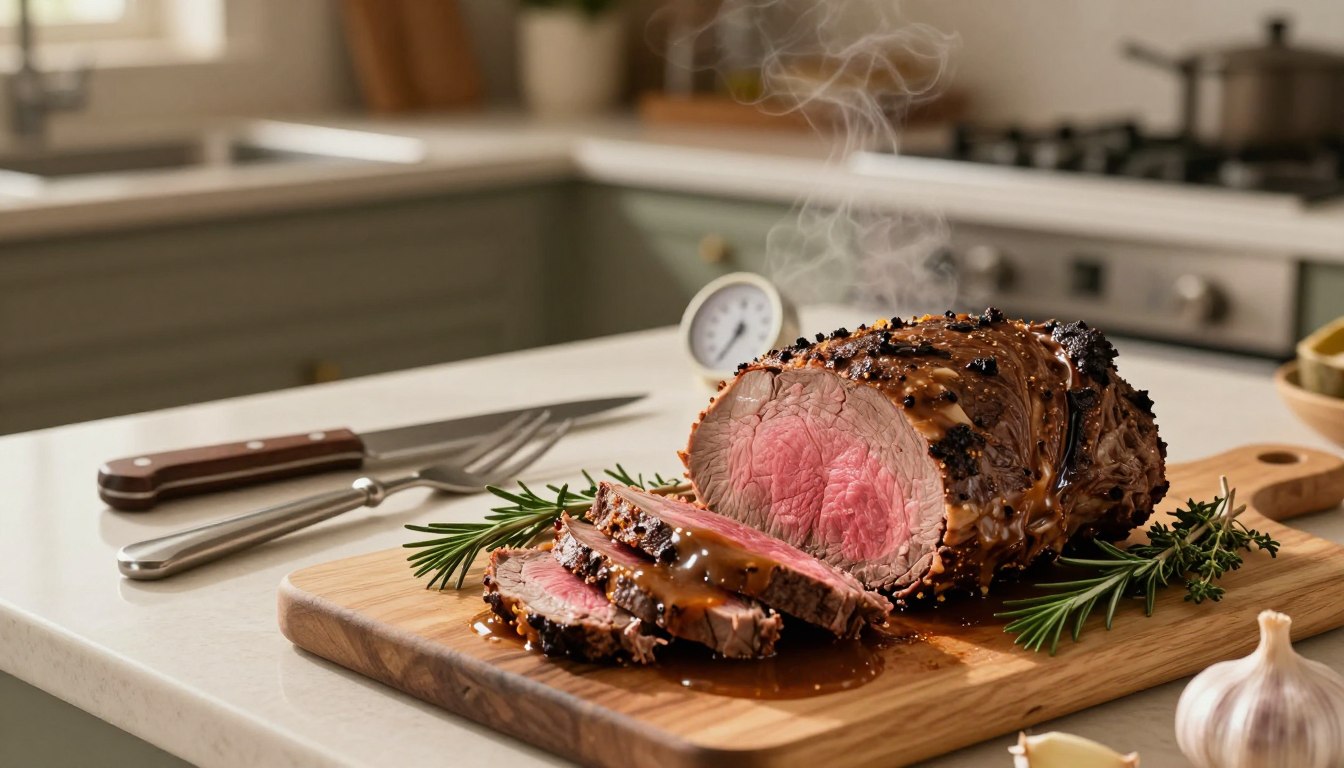
The Best Simple Perfect Roast Beef Easy Recipe
Do you remember those cozy Sunday afternoons at your childhood home? The smell of slow-cooked dinner welcomed you, offering genuine comfort and warmth. You can bring that same feeling into your kitchen today.
Ever wondered how to keep meat from getting dry or tough? The answer is simple: a garlic rub and fresh herbs. This method makes your savory main dish tender and flavorful for all your guests.
Pay close attention to the internal temperature for the perfect doneness. With a few high-quality ingredients, you’ll have a centerpiece that will be remembered for years.
Key Takeaways
- Apply a garlic and herb rub for deep flavor.
- Choose a good cut to ensure the best texture.
- Watch the heat for consistent and juicy results.
- Let the meat rest to preserve essential juices.
- Use fresh items to enhance the final presentation.
Why This Easy Roast Beef Recipe Works Every Time
Many home cooks struggle with dry meat. But the right approach changes everything for your oven roasted beef recipe. You don’t need expensive tools or a long list of items for professional results. This method focuses on the basics, keeping your meat tender and flavorful.
A simple process lets you enjoy the meal more. These roast beef cooking tips will help you master the core steps. You’ll feel more confident every time you prepare this classic dish for your family.
The Importance of Using a Simple Recipe
A simple recipe removes unnecessary anxiety that often leads to kitchen mistakes. By following a clear path, you let the natural, robust taste of the beef shine through. This straightforward approach gives you the most consistent results for your Sunday dinner.
Too many steps can hide the natural flavor of the meat instead of making it better. When you keep things simple, you can focus on critical factors like oven temperature and resting time. This leads to a juicy roast beef that is easy to slice and serve for any special occasion.
| Benefit | Simple Method | Complex Method |
|---|---|---|
| Preparation Time | Fast and easy | Slow and difficult |
| Beef Flavor | Very strong and natural | Often hidden by spices |
| Success Rate | Always works well | Hard to repeat exactly |
The Role of Quality Ingredients in Roast Beef
The foundation of any great meal is the quality of the ingredients you select at the store. Since this recipe uses only a few items, each one must be of the highest standard. A well-marbled cut of beef provides the necessary fat to keep the roast moist while it cooks.
Fresh herbs and premium sea salt make a significant difference in how the final dish tastes. High-quality ingredients do the heavy lifting for you, so you don’t have to perform complex tasks. Choosing the right beef ensures that every bite is rich, savory, and completely satisfying.
“The secret of a good meal is not how many ingredients you use, but how you treat the ones you have.”
Best Cuts for Roast Beef: Choosing Your Meat
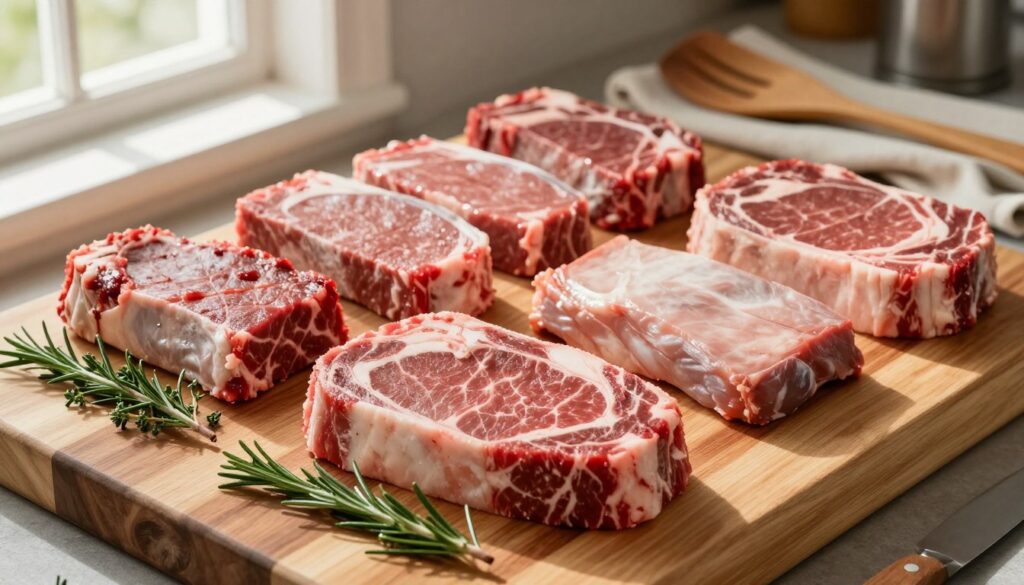
Choosing the right beef can be tough at the butcher counter. The cut you pick affects the taste, texture, and success of your dish. For roast beef for beginners, start with a cut that’s easy to work with.
Different cuts of beef have different tenderness and fat levels. Some stay juicy even if you cook them a bit too long. Knowing this helps you pick the best cut for a tasty meal.
Prime Rib vs. Ribeye Roast
Many say prime rib is the top choice for holidays. It has lots of marbling and a thick fat cap that keeps the meat moist. You can buy it with the ribs on, which helps it cook evenly.
A ribeye roast is the same muscle but without bones. It tastes rich and is tender, making it easy to slice. This cut is great for guests because it’s easy to serve.
Top Sirloin and Round Roasts
You don’t have to spend a lot for a great Sunday dinner. Top sirloin offers a strong flavor and is lean. It’s a best cut for roast beef for a hearty meal without being too heavy.
Round roasts, like the eye of round and top round, are leaner and tougher. They’re best sliced thin. Knowing what cut of beef to use helps match the meat to your cooking method.
What to Look for When Buying Beef
When shopping, look for meat that’s bright cherry-red. Avoid grey or dark brown spots. Freshness is key for a great meal, even for roast beef for beginners.
Look for marbling, the white flecks of fat. These melt during roasting, adding moisture and flavor. Also, ask your butcher to tie the roast for even cooking.
| Beef Cut | Tenderness Level | Fat Content | Best Usage |
|---|---|---|---|
| Prime Rib | Very High | High | Holiday Feasts |
| Top Sirloin | Medium | Moderate | Family Dinners |
| Eye of Round | Low | Low | Deli Slices |
“The quality of the meat is the soul of the roast; choose wisely and the oven will do the rest of the work for you.”
Simple Ingredients You’ll Need for Homemade Roast Beef
To make a stunning centerpiece, you only need a few simple, fresh ingredients. You don’t need a long list of expensive spices to make it great. A few kitchen staples will help you create a homemade roast beef that tastes like it came from a five-star restaurant.
Start with high-quality meat. Since the seasoning is minimal, the natural flavor of the beef must shine through. Choosing a fresh cut ensures your delicious roast beef recipe turns out tender and juicy every single time.
Garlic and fresh herbs are the stars of this show. They provide an aromatic crust that smells amazing while it cooks in your oven. Simplicity is the key to letting the beef’s rich texture take center stage.
You likely already have most of these items in your pantry. Using fresh rosemary and thyme adds a bright, earthy note that dried spices cannot match. Combine these with minced garlic for a classic, savory profile.
- Beef Roast: A 3 to 5-pound cut like top sirloin or eye of round.
- Olive Oil: This helps the seasonings stick and creates a beautiful sear.
- Garlic: Freshly minced cloves provide the best punch of flavor.
- Fresh Herbs: Use sprigs of rosemary and thyme for an authentic aroma.
- Kosher Salt and Cracked Pepper: These basic seasonings enhance the meat’s natural juices.
| Ingredient | Amount | Purpose |
|---|---|---|
| Beef Roast | 3-5 lbs | Main Protein |
| Fresh Garlic | 4-6 cloves | Savory Depth |
| Rosemary/Thyme | 2 tbsp | Herbal Aroma |
| Olive Oil | 2 tbsp | Browning Agent |
Gathering these items is the first step toward a successful dinner. Keeping the list short allows you to focus on the cooking process itself. You will love how these basic elements transform into a homemade roast beef masterpiece.
How to Season Roast Beef for Maximum Flavor
Seasoning your roast beef can turn it from ordinary to extraordinary. A good piece of meat needs a seasoning that brings out its natural taste. You can use a simple salt rub or a bold spice blend to make a big difference.
Learning how to season roast beef is key for every home cook. It can turn a simple Sunday dinner into a family favorite. You don’t need fancy tools, just basic pantry items and patience.
Garlic Herb Roast Beef Seasoning
A favorite among many is a garlic herb roast beef rub. It creates a savory crust and a wonderful smell that fills your home. Mix minced garlic with fresh rosemary, thyme, and black pepper for the best flavor.
Using fresh herbs gives a brighter taste than bottled ones. If you only have dried herbs, rub them between your palms first. This trick releases oils and makes the flavor stronger.
| Ingredient | Flavor Profile | Best Feature |
|---|---|---|
| Kosher Salt | Savory | Enhances natural juices |
| Fresh Garlic | Pungent | Creates a fragrant crust |
| Rosemary | Woody | Pairs perfectly with beef |
Dry Rub vs. Wet Marinade Options
When seasoning your roast beef, you can choose between a dry rub or a wet marinade. Dry rubs make a thick, salty crust. They usually include salt, pepper, garlic powder, and onion powder.
Wet marinades use liquids like olive oil or balsamic vinegar. They keep the meat moist and add a tangy flavor. Most chefs prefer a dry rub for traditional oven-roasted beef.
When to Season Your Roast
Timing is key for tender results. Season the meat at least 40 minutes before cooking. This lets the salt draw out moisture and then reabsorb it, seasoning the beef deeply.
For the best flavor, season the roast the night before. Keep it in the fridge uncovered or lightly wrapped. This method, called dry brining, keeps the meat juicy and develops a superior crust.
“The secret to a great roast is not just the quality of the meat, but the patience you have with the salt.”
- Use Kosher salt for a more even flavor.
- Pat the meat dry with paper towels before adding oil or spices.
- Press the spices firmly into the surface so they do not fall off during cooking.
How to Cook Roast Beef in the Oven Step-by-Step

You’re about to turn a simple cut of meat into a masterpiece. This guide on how to cook roast beef will help. By following these steps, your meat will stay juicy and develop a savory crust. Your kitchen will soon smell like a steakhouse.
Cooking a large roast might seem daunting, but it’s easy. A few techniques will give you that tender texture. Let’s go through the key steps for success every time you use the oven.
Bringing Your Roast to Room Temperature
First, take the beef out of the fridge. Let it sit for 60 to 90 minutes on your counter. This step is crucial because it warms the meat evenly.
Putting a cold roast in a hot oven can make the outside overcook before the inside is done. Tempering the meat ensures a more even cook. You’ll see a big difference in the beef’s tenderness.
Searing for a Perfect Crust
A great oven roasted beef recipe needs a deep, brown crust. Heat a large skillet with a bit of oil over high heat. Place your seasoned beef in the pan and sear each side.
Look for a rich, dark brown color on all sides of the meat. This step adds complex flavors. Once it’s golden, it’s ready for the oven.
Slow Roasted Beef Technique
Lowering the heat is key for a tender bite when learning how to cook roast beef. Place your seared meat on a rack in a shallow roasting pan. The rack lets hot air circulate under the beef.
Roasting at a lower temperature keeps the outside from getting tough. You want the internal temperature to rise slowly. This gentle heat breaks down tissues without losing juices.
Resting Your Roast Beef
The resting phase tests your patience, but it’s crucial. Move the roast to a warm platter and cover it loosely with foil. Let it rest for at least 20 minutes before slicing.
During this time, the heat moves to the center, and juices spread throughout. If you slice too soon, juices will spill out. Resting ensures every slice is moist and flavorful.
“Cooking is a craft, but roasting is an art that requires patience and the right temperature to truly shine.”
| Cooking Stage | Action Required | Benefit to the Beef |
|---|---|---|
| Tempering | Sit at room temperature | Ensures even internal cooking |
| Searing | Brown in a hot skillet | Creates a flavorful, dark crust |
| Roasting | Cook at a steady low heat | Maintains a tender, juicy texture |
| Resting | Wait 20 minutes before slicing | Retains moisture in every slice |
Roast Beef Temperature Guide and Cooking Time
Knowing when to take your meat out of the oven is key to avoiding dry dinners. Finding the right balance of heat and time is crucial. This roast beef temperature guide will help you achieve a juicy center and a tender exterior.
Every oven is different, so timing alone won’t do. You need to understand how the meat’s internal heat keeps rising after it’s removed. This carryover cooking is what makes your roast beef taste like it was cooked by a pro.
Internal Temperature for Doneness Levels
The only way to know if your beef is cooked right is by checking its internal temperature. Always aim to remove the meat 5 degrees before your desired doneness. Here’s a table showing the ideal temperatures for different preferences.
| Doneness Level | Pull Temperature | Final Temperature |
|---|---|---|
| Rare | 120°F (49°C) | 125°F (52°C) |
| Medium-Rare | 130°F (54°C) | 135°F (57°C) |
| Medium | 140°F (60°C) | 145°F (63°C) |
| Medium-Well | 150°F (66°C) | 155°F (68°C) |
Most chefs say Medium-Rare is the best for flavor and texture. At this level, the fats melt, making the meat tender. If you like it firmer, go for Medium.
Calculating Cooking Time by Weight
While temperature is the most important factor, you also need a basic roast beef cooking time for planning. The cooking time depends on the meat’s weight and your oven’s settings. A lower oven temperature helps cook the meat evenly.
- For Rare: Plan for 15 to 18 minutes per pound.
- For Medium-Rare: Plan for 18 to 20 minutes per pound.
- For Medium: Plan for 20 to 25 minutes per pound.
Bone-in roasts take a bit longer than boneless ones. Start checking the temperature about 30 minutes before you think it will be done. This prevents overcooking during the last minutes.
Using a Meat Thermometer Correctly
A good roast beef temperature guide is only useful if you use your tools right. Insert the probe into the thickest part of the meat for accurate readings. Avoid touching bones or large fat pockets, as they can give wrong readings.
“The only way to know if your meat is cooked perfectly is to measure its internal temperature.”
Digital instant-read thermometers are popular among home cooks today. They give a quick and clear reading in seconds. If using a leave-in probe, set the alert for your pull temperature to avoid overcooking.
By following these tips, you’ll master the roast beef cooking time every time. Your family will love the tender and juicy results. Remember, practice makes perfect, so keep these tips handy for your next roast.
Perfect Roast Beef Recipe
Get ready to turn a simple cut of meat into a delicious centerpiece for your Sunday dinner. This simple roast beef recipe uses high-quality ingredients and basic techniques. You’ll find that a little effort goes a long way in bringing out the flavor.
Start by picking fresh herbs and a prime cut of beef from your local butcher. Fresh rosemary and thyme make a big difference in the dish’s aroma. This perfect roast beef recipe ensures every slice is tender and juicy for your guests.
Before cooking, prepare your workspace and ingredients. A simple garlic and herb rub enhances the meat’s natural flavors. Use the table below to check your supplies for this simple roast beef recipe.
| Ingredient | Amount | Purpose |
|---|---|---|
| Beef Roast | 3-4 lbs | Main Protein |
| Garlic | 4 cloves | Savory Depth |
| Fresh Herbs | 3 tbsp | Aromatic Finish |
| Olive Oil | 2 tbsp | Binding Agent |
Follow these easy steps for professional results in your kitchen. First, make sure your meat is at room temperature before roasting. For more ideas, check out this perfect roast beef recipe.
- Preheat your oven and prepare a roasting pan with a wire rack.
- Mix your minced garlic, chopped herbs, salt, and pepper with olive oil to create a paste.
- Rub the herb mixture over the entire surface of the beef, pressing it firmly into the meat.
- Roast the beef until it reaches your desired internal temperature.
Remember, resting the meat is crucial in this simple roast beef recipe. Cutting it too soon lets all the juices out. You want that moisture to stay inside the meat for the best taste.
“The secret to a great roast is not complexity, but the quality of the beef and the patience of the cook.”
Making Rich Roast Beef Gravy from Pan Drippings
Don’t wash that roasting pan yet. The secret to the best meal is in those browned bits. These caramelized pieces, known as fond, hold the concentrated essence of your meat and seasonings. They provide a depth of flavor that store-bought broth simply cannot match.
Using a traditional roast beef gravy recipe lets you capture every ounce of effort you put into the roast. You only need a few pantry staples to transform these drippings into a velvety sauce. This process is quick and happens while your meat rests on the counter.
If you want to master how to make roast beef gravy, start by separating the fat from the liquid juices. Place your roasting pan directly over two stove burners on medium heat. You will use the fat to create a roux, which serves as the thickening base for your sauce.
- Deglaze the Pan: Pour in a splash of beef broth or red wine to loosen the browned bits.
- Whisk in Flour: Add equal parts flour to the fat and whisk until it smells slightly nutty.
- Slowly Add Liquid: Gradually pour in beef stock while whisking constantly to prevent lumps.
- Season to Perfection: Taste the gravy before adding extra salt, as the drippings are already savory.
“A well-made gravy is not just a side; it is the velvet ribbon that ties the entire Sunday meal together.”
Consistency is key when learning how to make roast beef gravy from scratch. You want a sauce that coats the back of a spoon without feeling heavy or pasty. Use the table below as a quick guide for your thickening ratios.
| Component | Ratio | Purpose |
|---|---|---|
| Fat to Flour | 1:1 | Creates a stable roux |
| Liquid to Roux | 1 cup per tbsp | Sets the final thickness |
| Simmer Time | 3-5 Minutes | Removes raw flour taste |
Always remember to strain your gravy through a fine-mesh sieve if you prefer a perfectly smooth texture. This extra step removes any large herb stems or peppercorns. Your guests will appreciate the professional touch this adds to your classic roast beef dinner.
Serving Your Classic Sunday Roast Beef
You’ve worked hard in the kitchen, so let’s talk about serving your classic sunday roast beef. This moment is where your patience pays off. Your family will gather for a hearty meal. Serving it with the right sides makes it special.
Presentation is key, just like the flavor of the meat. You want a plate that looks vibrant and smells great. A well-rested roast is the star of any weekend gathering.
Best Side Dishes to Pair
A great roast needs excellent sides to complete the meal. Look for a mix of textures, like crispy potatoes and tender veggies. These balance the rich flavors of the classic sunday roast beef.
| Side Dish | Flavor Profile | Preparation Tip |
|---|---|---|
| Roasted Potatoes | Crispy and Salty | Parboil them before roasting for extra crunch. |
| Honey Glazed Carrots | Sweet and Earthy | Add a pinch of thyme for a fresh herb aroma. |
| Yorkshire Pudding | Light and Airy | Use the hot beef fat for the best rise. |
| Creamy Horseradish | Sharp and Tangy | Mix with sour cream to mellow the heat. |
Don’t forget to serve hot gravy on the side. It ties everything together and keeps the meat moist. A simple green salad adds a refreshing contrast to the heavy meal.
Carving Tips for Tender Slices
Carving is crucial for roast beef for beginners. Use a sharp knife for clean, even slices. Wait until the meat has rested before carving.
Look at the meat to find the muscle fibers. Slice across the grain for tender bites. This makes every bite of your perfect roast beef melt in your mouth.
Keep the slices the same thickness for a professional look. Thicker slabs are great for hearty appetites. Thinner slices are better for sandwiches the next day.
Storing Leftover Roast Beef
If you have leftovers, don’t waste them. Knowing how to store the meat is key for roast beef for beginners. Cool the beef completely before wrapping it tightly.
- Refrigeration: Place the beef in an airtight container for up to four days.
- Freezing: Wrap it in foil and a freezer bag to keep it for two months.
- Reheating: Warm it slowly in the oven with a splash of broth to prevent drying.
“The secret to a great second meal is keeping the moisture locked inside the beef during storage.”
Leftover beef is versatile for weekday lunches. Slice it thin for cold sandwiches or toss it into a stir-fry. Enjoying the fruits of your labor for a second time is a highlight of cooking a large roast.
Conclusion
Learning to make roast beef is easier than you might think. You don’t need fancy tools or hard-to-find spices to get it right. The key is to pay attention to timing and temperature.
To make a great roast beef, start by heating your oven to 500 degrees for seven minutes per pound. Then, turn off the oven and let it sit for two and a half hours. This slow cooking turns an affordable cut into a juicy, tender dish, just like prime rib. Check out this perfect eye of round roast guide for more details on this foolproof technique.
For the best results, aim for an internal temperature of 130 to 150 degrees. Use the lower end of this range for a medium-rare roast. Let the meat rest for ten minutes before slicing it into half-inch pieces. If you’re using a gas oven, keep the temperature at 170 degrees during the waiting time for safety.
Enjoy your roast beef with root vegetables or a rich pan sauce. Your family will love the tender texture and bold flavor. Try making this roast beef recipe in your kitchen today and become the star of your next Sunday dinner.