The Best Roast beef Easy
Do you remember the comforting aroma of a slow-cooked meal filling your home? It’s magical to gather loved ones around the dinner table. A hearty, home-cooked meal feels like a warm hug on a chilly evening.
It turns a regular Sunday into a cherished memory. You won’t have to spend all afternoon in the kitchen. Preparing this savory dish shouldn’t be stressful.
Using a top round cut and a garlic rub makes it juicy. This homemade meal is all about high-quality flavor with little effort. It’s great for any special occasion or a quiet night with family.
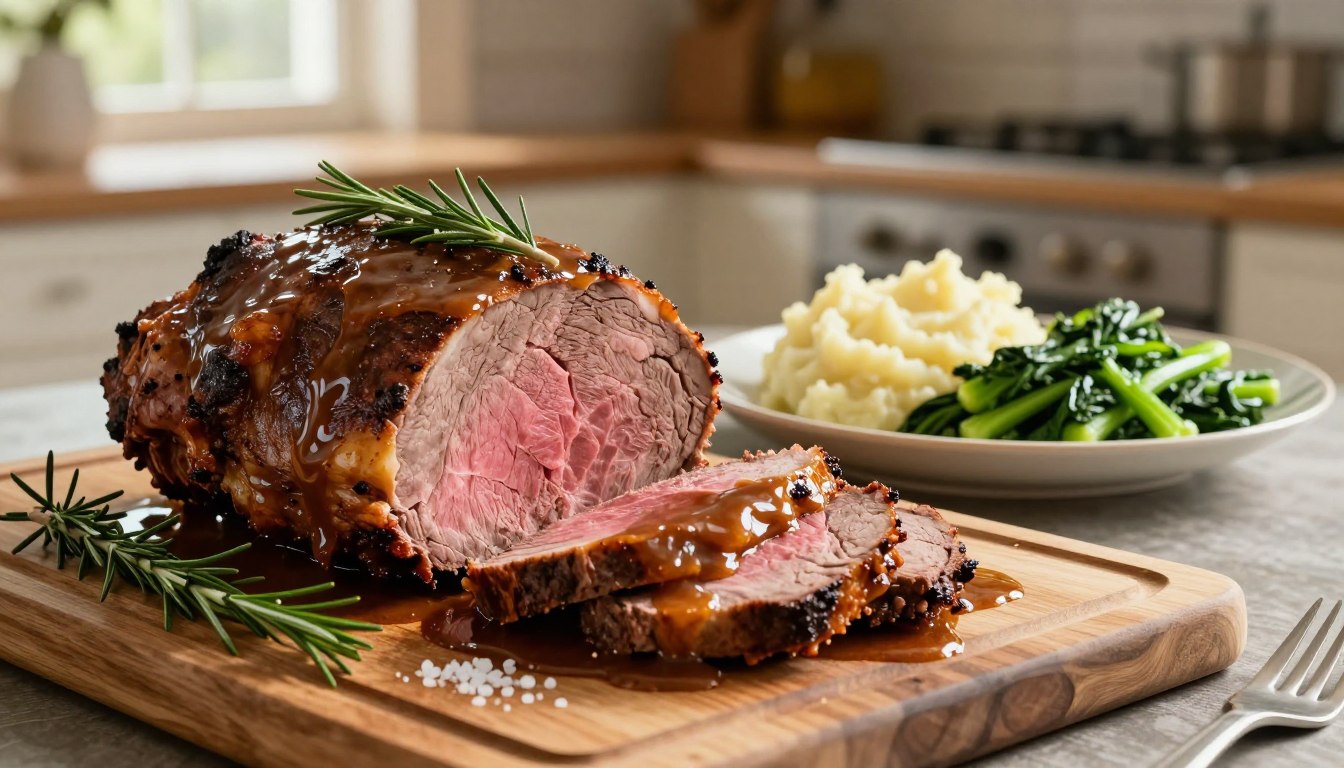
Imagine slicing into a seasoned crust to reveal a tender center. Serve it over creamy mashed potatoes with rich gravy. This easy recipe is the best way to enjoy food and create lasting bonds.
Key Takeaways
- Select a top round cut for the best balance of lean meat and tenderness.
- A simple garlic and herb rub significantly enhances the natural flavors.
- Low-effort preparation makes this ideal for busy family gatherings.
- Serving with mashed potatoes and gravy creates a classic comfort meal.
- Proper slicing ensures every bite remains juicy and tender.
Why This Simple Roast Beef Recipe Works Every Time
Creating a delicious meal starts with understanding why certain techniques produce the best results. You don’t need fancy equipment or professional training to make this best roast beef recipe a success in your own kitchen. By focusing on quality ingredients and precise timing, you ensure a meal that is both tender and incredibly flavorful.
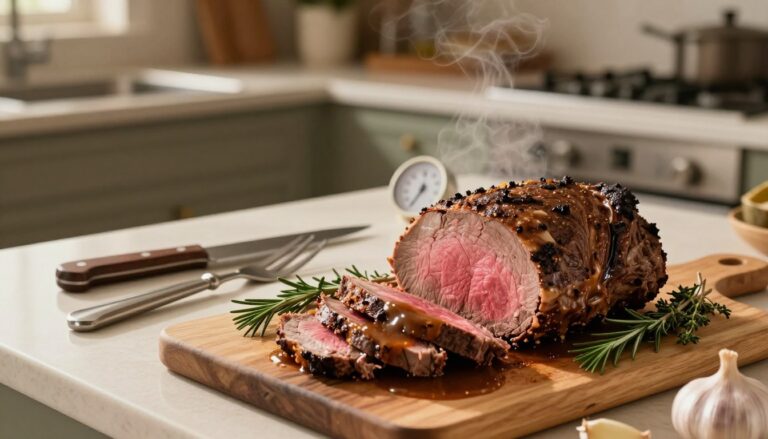
One of the biggest reasons this method succeeds is the focus on temperature control. Using a meat thermometer removes all the guesswork from your cooking process. This simple tool helps you achieve a juicy roast beef every single time by preventing the meat from drying out in the heat.
A classic roast beef dinner relies on the natural juices of the meat to provide moisture. When you follow a reliable process, you allow the fibers to relax and the fats to melt perfectly. This creates a melt-in-your-mouth texture that your family will request for every holiday or Sunday gathering.
The Importance of Using the Right Cut of Beef
Choosing the right meat is the foundation of any great meal. You want a cut that balances lean protein with enough connective tissue to stay moist during the roasting process. While expensive cuts are nice, many affordable options work beautifully when you prepare them correctly.
Different cuts offer various textures and flavor profiles. For example, some are better for thin deli-style slices, while others provide a more robust, beefy bite. Understanding these differences helps you shop with confidence at the local butcher shop or grocery store.
| Beef Cut | Texture | Best Use |
|---|---|---|
| Top Round | Lean and Firm | Thinly sliced sandwiches |
| Top Sirloin | Tender and Bold | Premium family dinners |
| Bottom Round | Tight Grain | Slow roasting on a budget |
Selecting a juicy roast beef cut like the top sirloin ensures a tender result even with simple seasonings. Always look for meat with a healthy color and a small amount of surface fat. This fat acts as a natural baster while the meat cooks in the oven.
The Role of Garlic and Herbs in Enhancing Flavor
Seasoning is where you can truly make the oven roasted beef your own. While salt and pepper are essential, adding aromatic elements elevates the dish to a gourmet level. Fresh ingredients penetrate the surface of the meat to create a savory, fragrant crust.
- Fresh Garlic: Provides a sharp, pungent base that mellows into sweetness.
- Rosemary: Adds a woody, evergreen scent that pairs perfectly with red meat.
- Thyme: Offers subtle earthy notes that enhance the natural beef flavor.
- Black Pepper: Gives a gentle heat and adds texture to the outer rub.
When you rub these ingredients onto the meat, you create a layer of protection and taste. This step is vital for a best roast beef recipe because it builds complexity in every bite. The aroma alone will make your kitchen feel warm and inviting.
“The secret to a great roast is not just the heat, but the patience to let the flavors marry with the meat.”
Taking the time to prepare your classic roast beef with these herbs ensures a professional finish. You will notice the difference in the depth of flavor compared to unseasoned meat. This attention to detail transforms a simple oven roasted beef into a memorable feast for your guests.
Best Cuts for Roast Beef
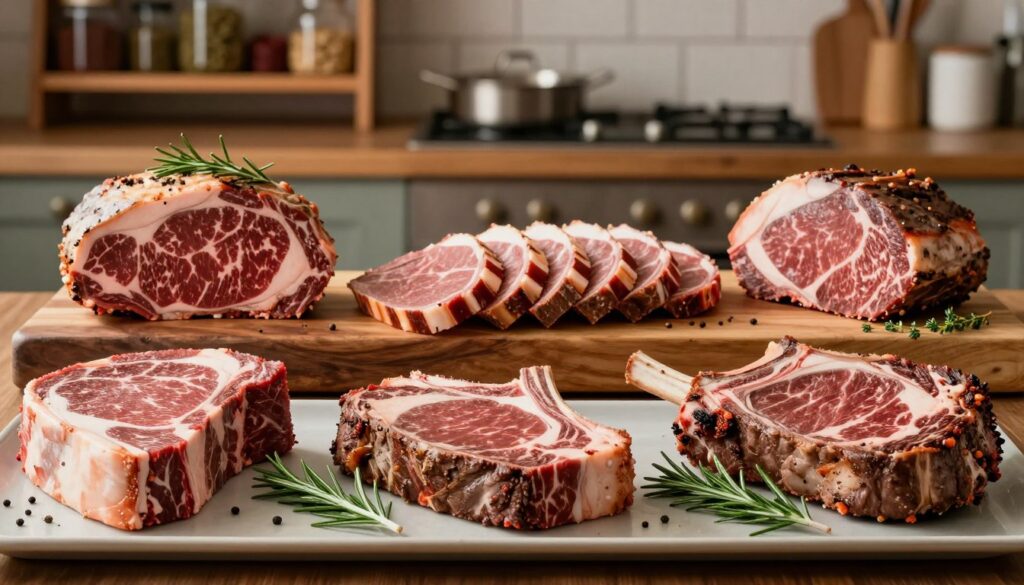
Choosing the right cut is key for a great roast beef oven recipe. You want a mix of fat and muscle for the best taste. Whether you like lean or marbled meat, your choice makes the meal.
Home cooks often pick the eye of round, top round, or bottom round. These cuts are perfect for a garlic and herb rub. The right meat makes your dinner tasty and easy to slice.
Top Round Roast for Budget-Friendly Meals
The top round is a classic for a simple roast beef dinner. It’s lean and comes from the hindquarters. It’s also very affordable, great for big gatherings or meal prep.
Since it’s lean, slice it thinly against the grain. This makes every bite easy to chew. It takes seasonings well, like salt and pepper.
“The secret to a great roast isn’t just the heat, but the quality of the muscle you choose to cook.”
Ribeye Roast for Maximum Flavor
The ribeye roast is the best for juicy roast beef. It’s marbled, which melts and bastes the meat. This creates a rich flavor that guests will love.
It’s richer than lean cuts and perfect for holidays or special occasions. Simple seasonings are all it needs to impress.
Sirloin Tip Roast for Lean and Tender Results
The sirloin tip is tender without being too fatty. It’s a great choice for beginners learning how to cook roast beef. You can find high-quality beef roasts to make it gourmet.
This cut is great for a simple roast beef that’s good hot or cold. It’s perfect for sandwiches the next day. Look for a bright red color and firm texture.
Choosing the right cut is crucial for a roast beef oven recipe. A juicy roast beef needs the right fat and cooking method. Use the guide below to compare before you shop.
| Beef Cut Name | Flavor Profile | Tenderness | Best Use Case |
|---|---|---|---|
| Top Round | Mild & Clean | Moderate | Budget Family Meals |
| Ribeye Roast | Rich & Buttery | Very High | Holiday Dinners |
| Sirloin Tip | Savory & Beefy | High | Weekly Roasts |
| Eye of Round | Very Mild | Lean | Deli-Style Slices |
Ingredients You’ll Need for Delicious Roast Beef
Starting with quality ingredients is key to a tasty meal. You don’t need a long list of expensive items for a classic roast beef dinner. Focus on fresh ingredients that highlight the beef’s natural flavor.
Having everything ready makes cooking smooth and fun. Quality really matters in simple recipes. With the right items, you’re halfway to a great meal.
The Beef and Basic Seasonings
The star of this tender roast beef recipe is a top round roast. It’s lean, affordable, and perfect for seasonings. Choose a piece with a bit of fat to stay moist.
You’ll need kosher salt and black pepper for a savory crust. A bit of avocado or grapeseed oil helps the spices stick.
Garlic and Herb Options for Extra Flavor
A garlic herb roast beef needs aromatic ingredients for flavor. Fresh garlic adds a strong taste that infuses into the meat. You can slice or crush it.
Fresh herbs like rosemary and thyme add a nice scent. If you don’t have fresh, dried herbs work too. Just use less because they’re stronger.
Optional Vegetables to Roast Alongside
Roasting vegetables with the beef saves time and makes a side dish. Carrots, yellow onions, and red potatoes are great choices. They stay firm even with a longer roast beef cooking time.
These veggies soak up the beef’s fat and juices. This makes them taste rich and savory, unlike boiled or steamed ones. Just toss them in oil and salt before roasting.
| Ingredient Category | Best Selection | Primary Benefit |
|---|---|---|
| Main Meat | Top Round Roast | Lean and easy to slice |
| Aromatics | Fresh Garlic & Rosemary | Deep, savory fragrance |
| Vegetables | Carrots & Potatoes | Absorbs rich pan juices |
| Seasoning | Kosher Salt | Creates a perfect crust |
Preparing Your Roast Beef for the Oven
Turning a simple cut of meat into a masterpiece starts with preparation. Take your beef out of the fridge an hour before cooking. This lets it warm up evenly, from edge to center.
While it warms up, dry the surface with a paper towel. This step is key for a flavorful crust. If the meat is wet, it will steam instead of sear, ruining the crust.
Then, season the meat on all sides. Use lots of salt and pepper to get into the meat. Here are some great seasonings to try:
- Coarse sea salt and freshly cracked black pepper.
- Minced garlic mixed with olive oil.
- Fresh rosemary and thyme chopped finely.
- A light coating of Dijon mustard to help spices stick.
Put the seasoned meat in a roasting pan on a wire rack. This setup lets air circulate under the meat, preventing it from getting soggy. It’s the secret to a great easy sunday roast beef that looks amazing.
Always watch the roast beef internal temperature as it cooks. A meat thermometer is the only way to ensure it stays juicy. Checking the temperature early helps avoid drying out the meat later.
“The secret to a great roast is not just the heat of the oven, but the care you take before the door even closes.”
To get a perfect roast beef, make sure your oven is hot. A cold start can lead to uneven textures and longer cooking times. Here’s a quick checklist to get ready for the oven:
| Preparation Step | Action Required | Main Benefit |
|---|---|---|
| Tempering | Sit at room temperature | Even cooking |
| Drying | Pat with paper towels | Better browning |
| Seasoning | Rub spices on all sides | Enhanced flavor |
Easy Roast Beef Recipe: Step-by-Step Cooking Instructions
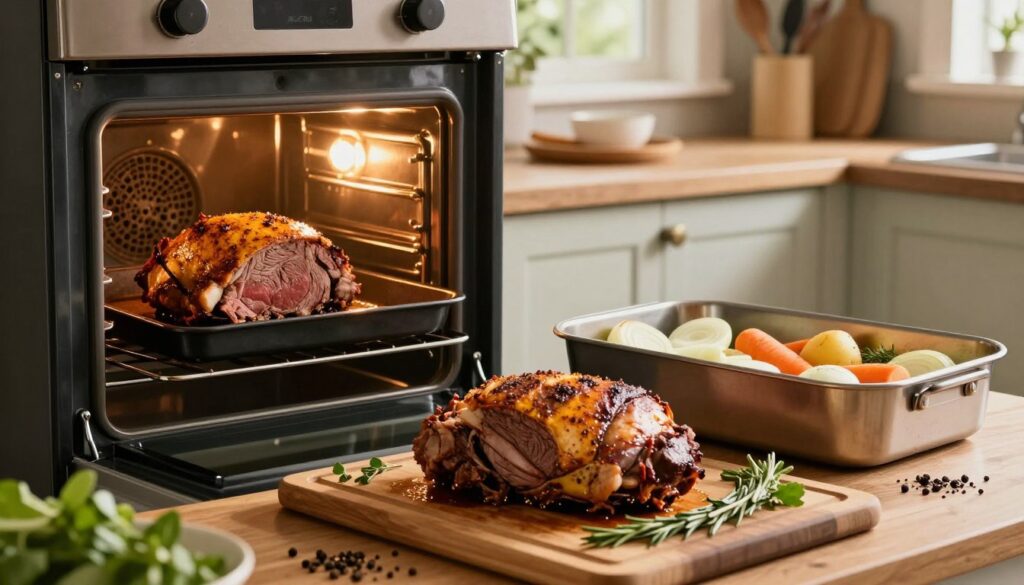
Now that your meat is seasoned, it’s time to turn it into a masterpiece. The cooking process is where the magic happens. You’ll love the aroma of garlic and herbs filling your home.
Success in the kitchen comes down to timing and heat management. Make sure your oven is at the right temperature before cooking. This ensures even cooking from edge to center.
Follow these steps carefully for a result like a professional steakhouse. Your patience will be rewarded with a juicy roast that slices perfectly every time.
Perfect Roast Beef Cooking Time and Temperature
The secret to a great roast is a high-heat sear followed by a lower temperature. Preheat your oven to 450°F for a beautiful crust. After 15 minutes, lower the temperature to 325°F to finish cooking.
This method keeps the inside tender and the outside flavorful. Cooking time varies based on meat size. Plan for 15 to 20 minutes per pound. Remember, every oven is different.
| Level of Doneness | Internal Temperature | Center Color |
|---|---|---|
| Rare | 120°F – 125°F | Cool Red |
| Medium-Rare | 130°F – 135°F | Warm Red/Pink |
| Medium | 140°F – 145°F | Warm Pink |
How to Cook Roast Beef Without Drying It Out
No one wants a dry, chewy dinner. Your goal is to keep the meat moist. Use a slow cooked roast beef method for a tender texture. Avoid opening the oven door too often to keep heat and moisture in.
Using a roasting pan with a rack helps prevent drying. The rack lets hot air circulate under the meat. If the pan gets too dry, add a splash of beef broth to keep it moist.
“Cooking is like love. It should be entered into with abandonment or not at all.”
Save the golden brown bits at the bottom of the pan for your roast beef gravy recipe. These drippings are full of flavor. Keeping them ensures both the meat and gravy stay rich and delicious.
Oven Roasted Beef Tips for Beginners
If you’re new to roasting, don’t worry. Start with a best cuts for roast beef like top round or sirloin tip. These cuts are easy to handle and provide great flavor.
Key tips for a successful roast:
- Use a meat thermometer: This is the only way to know for sure when your meat is done.
- Let the meat sit: Take the beef out of the fridge 30 minutes before cooking to bring it to room temperature.
- Don’t skip the sear: That initial blast of high heat locks in the flavors you worked hard to add.
While the meat cooks, start gathering ingredients for your roast beef gravy recipe. Having your flour and extra broth ready will make the transition from oven to table smoother. Mastering the slow cooked roast beef style takes practice, but even your first attempt will be better than store-bought versions.
Remember, choosing the best cuts for roast beef makes your job easier. A quality cut provides natural tenderness. Trust the process and enjoy the journey of becoming a home-cooking pro.
Checking Your Roast Beef Internal Temperature
Success with any beginner roast beef recipe comes down to checking the meat’s internal heat. You want it to be safe, tender, and juicy. A thermometer makes this easy.
Getting the meat to the right temperature is key for consistent results. It stops the disappointment of a dry roast. Precision is your best friend for a perfect Sunday dinner.
Guide for Your Preferred Doneness
Everyone likes their meat cooked differently. For a healthy roast beef recipe, medium-rare is often best. It keeps the meat tender and flavorful.
Remember, the meat’s temperature will rise a bit after it’s out of the oven. This is called carryover cooking. So, take it out a bit early than your target number.
A healthy roast beef recipe uses lean cuts that can get tough if overcooked. Keep an eye on the temperature to catch the peak tenderness. Let the meat rest to let the juices spread out.
How to Use a Meat Thermometer Correctly
Put the probe into the thickest part of the beef, avoiding bones or fat. This gives you an accurate reading of the core temperature. Start checking about 15 minutes before the end for a perfect roast beef recipe.
Timing is crucial, just like with easy oven-baked fish recipes for beginners. For a roast beef with vegetables, the heat may spread differently. Always check the center for the most accurate reading.
Digital thermometers give quick and accurate readings. Just press the button, wait a bit, and read the display. This small step makes your roast beef with vegetables taste like it’s from a pro kitchen.
| Doneness Level | Pull Temp (F) | Final Temp (F) | Center Appearance |
|---|---|---|---|
| Rare | 115°F | 120-125°F | Cool Red |
| Medium-Rare | 125°F | 130-135°F | Warm Red |
| Medium | 135°F | 140-145°F | Warm Pink |
| Medium-Well | 145°F | 150-155°F | Slightly Pink |
| Well Done | 155°F | 160°F+ | Mostly Brown |
Resting and Slicing Your Juicy Roast Beef
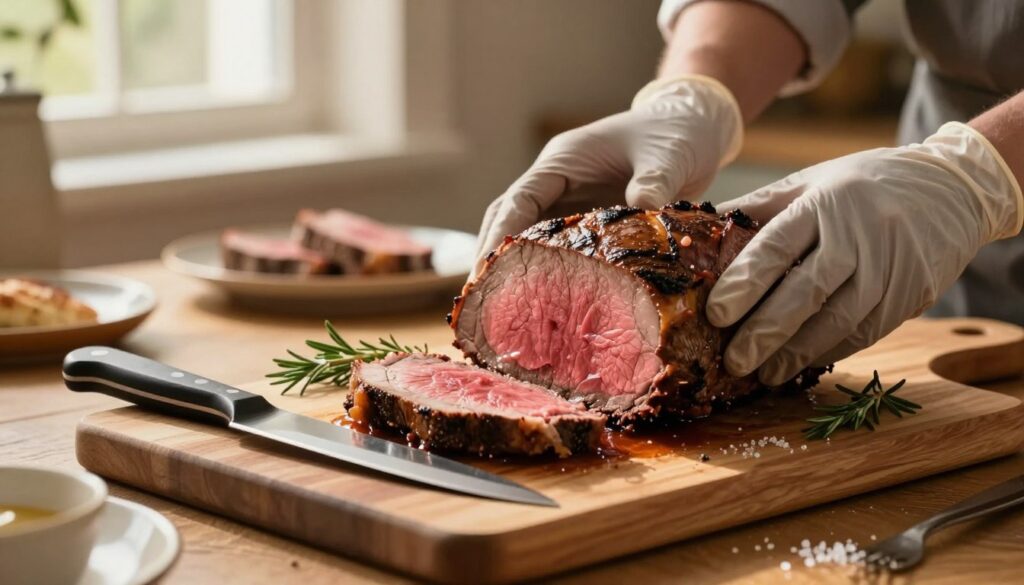
Your kitchen smells amazing, but don’t grab that carving knife just yet. The resting phase is a critical step in making juicy and tender roast beef recipe step by step. If you cut into the meat right away, all those delicious juices will spill out.
Instead, move your roast to a warm plate or a clean cutting board. Cover it loosely with aluminum foil to keep the heat in. Letting it rest for 15 to 20 minutes helps the fibers relax and soak up moisture.
To make easy roast beef at home, understand the “grain” of the meat. Look for the muscle fibers’ direction. Always slice across these lines, not parallel to them.
Slicing against the grain makes every bite tender. Use a sharp knife to get thin, even slices. This method is key for beginners, making your roast look and taste like a pro’s.
| Resting Time | Result | Best For |
|---|---|---|
| 5 Minutes | Too Short | Small Steaks |
| 15-20 Minutes | Perfect Balance | Standard Roasts |
| 30 Minutes | Maximum Juiciness | Large Holiday Roasts |
“The rest is just as important as the cook. It transforms a good piece of meat into a spectacular meal.”
Remember, patience is your best friend in the kitchen. By following these simple steps, your beef will stay moist and flavorful. Now, you’re ready to serve a masterpiece that looks as good as it tastes!
Making the Perfect Roast Beef Gravy and Serving Suggestions
No roast beef dinner is complete without homemade gravy and classic sides. You’ve roasted the meat, now it’s time to enhance those flavors. A good sauce makes every bite moist and flavorful.
Serving a roast is more than just the meat. You want a balanced plate with different textures and colors. Finishing touches turn a simple meal into a special occasion for your family.
Simple Roast Beef Gravy Recipe from Pan Drippings
The best part of an oven roast is the flavorful liquid left in the pan. You can make a homemade beef gravy using these drippings. This simple roast beef recipe with gravy ensures no flavor is wasted.
To start, whisk flour into the warm fat to make a smooth roux. Slowly add beef stock while whisking to avoid lumps. The result is a thick, savory sauce that complements the meat perfectly.
“A good gravy is the soul of a roast dinner, bringing warmth and depth to every single component on the plate.”
Always taste your sauce before serving to check the salt. If you followed a simple roast beef recipe with gravy, the drippings should already have a deep, beefy flavor. You might only need a pinch of black pepper to finish it off.
Classic Roast Beef Dinner Side Dishes
Choosing the right sides balances the richness of the beef. You want flavors that stand out without overpowering the main dish. Here are some popular choices for a traditional American dinner.
| Side Dish | Flavor Profile | Preparation Tip |
|---|---|---|
| Mashed Potatoes | Creamy and buttery | Use Yukon Gold for the smoothest texture. |
| Glazed Carrots | Sweet and earthy | Add a touch of honey or maple syrup. |
| Yorkshire Pudding | Light and airy | Use the hot beef fat for the best rise. |
Roast Beef with Vegetables for a Complete Meal
Cooking your vegetables in the roasting pan is efficient. This easy roast beef recipe with garlic and herbs lets vegetables soak up the herb-infused fats. Carrots, potatoes, and onions become tender and caramelized.
Remember to adjust your perfect roast beef cooking time and temperature if you crowd the pan. Leaving space between the meat and vegetables ensures even browning. Your family will love the combined flavors of the seasoned beef and roasted roots.
Conclusion
You now know how to make a meal your family will love. Using a meat thermometer, like a Thermapen, ensures perfect internal temperature. This simple trick keeps the meat juicy and tender.
This easy roast beef recipe makes planning your Sunday dinner a breeze. It’s all about the meat staying moist and flavorful. You’ll enjoy the simplicity of this recipe.
Cooking roast beef without drying it out makes your kitchen time relaxing. You can enjoy your guests while the oven works its magic. Low heat and a rest period keep the meat juicy.
This recipe brings a classic tradition back to your table. Serve it with mashed potatoes or fresh greens for a full meal. Your friends will love the effort you put into this delicious feast.
Grab your favorite roasting pan from Le Creuset and start cooking today. You’ll see how easy it is to get professional results at home. Enjoy making a meal that everyone will remember for years.